Introduction
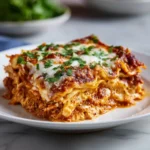
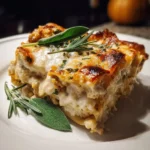
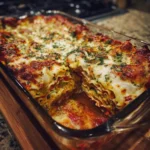
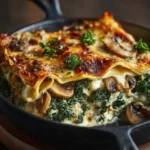
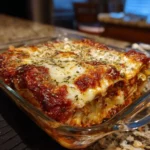
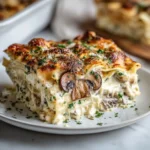
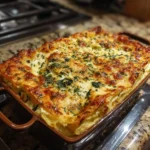
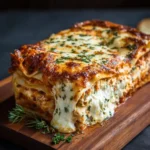
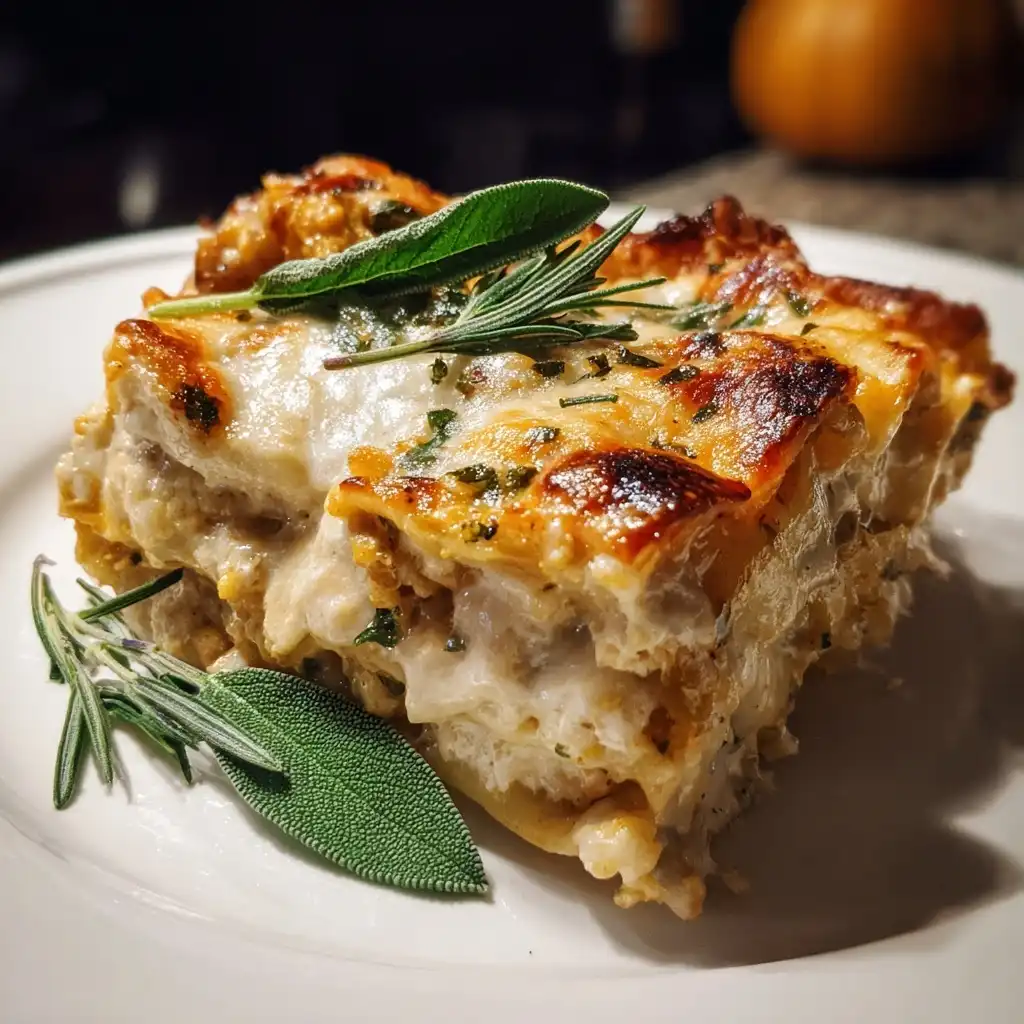
Welcome to the rich, aromatic world of Pumpkin Sage White Lasagna — a luxurious, seasonal twist on the classic Italian comfort dish. This isn’t your grandmother’s lasagna (though she’d absolutely approve), but rather a harmonious marriage of earthy roasted pumpkin, fragrant fresh sage, creamy béchamel, and tender layers of no-boil pasta — all elevated with a whisper of nutmeg, a kiss of garlic, and the subtle tang of Parmigiano-Reggiano. Designed for fall and winter gatherings — yet elegant enough for holiday dinner parties — this recipe delivers depth, warmth, and sophistication in every forkful. Whether you’re hosting Thanksgiving guests, seeking a vegetarian centerpiece that satisfies meat-eaters and plant-based diners alike, or simply craving something soul-soothing and deeply flavorful, Pumpkin Sage White Lasagna promises to become an instant heirloom recipe in your culinary repertoire.
The History
Lasagna’s origins trace back over 700 years to medieval Italy — with early references appearing in the 13th-century text De honesta voluptate et valetudine (On Honest Pleasure and Good Health) by Bartolomeo Sacchi, known as Platina. These earliest versions featured layered sheets of dough (often fried or boiled), cheese, and spices — but no tomatoes, which hadn’t yet arrived from the Americas. The “white lasagna” tradition evolved in Northern Italy, particularly in Emilia-Romagna and Lombardy, where rich dairy — butter, cream, and aged cheeses — replaced tomato-based sauces in favor of velvety béchamel (balsamella) and delicate herb infusions. Pumpkin (zucca) has long been celebrated in Italian cucina povera, especially in regions like Mantua and Ferrara, where tortelli di zucca and risotto alla zucca showcase its natural sweetness and silky texture. The fusion of pumpkin and sage is both ancient and intuitive: sage (Salvia officinalis) was revered by Roman herbalists for its digestive and warming properties — a perfect botanical companion to dense, starchy squash. Modern American interpretations began gaining traction in the late 20th century, buoyed by farm-to-table movements and renewed interest in heirloom squashes like Sugar Pie, Kabocha, and Long Island Cheese pumpkins. Today’s Pumpkin Sage White Lasagna stands at the crossroads of tradition and innovation — honoring centuries-old techniques while embracing seasonal abundance, plant-forward intentionality, and chef-level layering precision.
Ingredients Breakdown
Every element in this lasagna serves a distinct sensory and structural purpose — nothing is arbitrary. Let’s explore the philosophy behind each component:
- Pumpkin Puree: Not canned pie filling (which contains added sugar and spices), but roasted, unsweetened, homemade puree — ideally from Sugar Pie or Baby Bear pumpkins. Roasting deepens caramelized notes and concentrates flavor while evaporating excess moisture — critical for preventing a soggy bake.
- Fresh Sage: Used in three ways — finely minced for the filling, whole leaves for crisping, and gently infused into warm butter for the béchamel. Its camphorous, peppery aroma cuts through richness and adds herbal complexity.
- Béchamel Sauce: A true French-Italian hybrid — made with whole milk infused with onion, bay leaf, clove, and a bouquet garni, then thickened with a butter-flour roux. Unlike heavy cream-based shortcuts, this technique yields a luminous, silken sauce with unparalleled body and balance.
- No-Boil Lasagna Noodles: Specifically oven-ready durum wheat noodles, engineered to hydrate perfectly during baking. They eliminate pre-cooking hassle while delivering ideal chew and structural integrity — essential when supporting a moist, dense pumpkin layer.
- Cheese Trio: Ricotta (whole-milk, drained overnight for creaminess without weeping), mozzarella (low-moisture, grated for stretch and browning), and Parmigiano-Reggiano (aged minimum 24 months for umami depth and crystalline texture).
- Aromatics & Seasonings: Shallots (sweeter and more nuanced than onions), garlic (roasted for mellow sweetness), freshly grated nutmeg (not pre-ground — volatile oils peak within minutes of grating), white pepper (for heat without visual specks), and flaky sea salt (to enhance every note without harshness).
- Finishing Touches: Toasted pine nuts for nutty crunch, micro-sage for freshness, and a final drizzle of browned butter infused with crispy sage — transforming the dish from comforting to truly transcendent.
Step-by-Step Recipe
This recipe unfolds in four intentional phases — each designed to build flavor, control moisture, and ensure flawless layering. Allow 3 hours total (including cooling and resting time) for optimal results.
- Phase One: Roast & Puree the Pumpkin (45–60 min, plus cooling)
Preheat oven to 400°F (200°C). Halve a 3–4 lb Sugar Pie pumpkin; scoop seeds and stringy pulp. Rub cut sides with olive oil, place cut-side down on a parchment-lined sheet pan, and roast until deeply golden and knife-tender (40–50 min). Cool 20 min. Scoop flesh into a food processor; blend until ultra-smooth (2–3 min). Spread puree on a triple-layered cheesecloth-lined fine-mesh strainer set over a bowl; refrigerate uncovered 2–4 hours (or overnight) to remove excess water. You’ll yield ~1¾ cups concentrated, velvety puree. - Phase Two: Prepare the Sage-Browned Butter & Crispy Sage (10 min)
In a small saucepan, melt 4 tbsp unsalted butter over medium-low heat. Add 12–15 fresh sage leaves; cook gently until butter foams, turns golden, and sage becomes crisp and fragrant (~3–4 min). Strain through a fine-mesh sieve into a heatproof bowl, reserving both butter and leaves. Cool butter to room temperature; finely chop crispy sage. - Phase Three: Craft the Béchamel (25 min)
In a heavy-bottomed saucepan, combine 2½ cups whole milk, 1 small peeled shallot (halved), 1 bay leaf, 3 black peppercorns, ¼ tsp grated nutmeg, and a small bundle of thyme and parsley stems. Warm over medium heat until steaming (do not boil); cover and steep 15 min. Strain milk into a measuring cup, discarding solids. In same pan, melt 4 tbsp butter; whisk in ¼ cup all-purpose flour. Cook roux, stirring constantly, until pale blonde and nutty (3–4 min). Gradually whisk in warm milk in 3 additions, ensuring no lumps. Simmer gently 5–7 min until thick enough to coat the back of a spoon. Remove from heat; stir in ½ tsp flaky salt, ¼ tsp white pepper, and reserved sage-browned butter. Cool to lukewarm. - Phase Four: Assemble & Bake (20 min prep + 55 min bake + 30 min rest)
Preheat oven to 375°F (190°C). In a large bowl, combine pumpkin puree, 15 oz whole-milk ricotta (drained overnight), 1 cup grated mozzarella, 1 cup finely grated Parmigiano-Reggiano, 2 tbsp minced fresh sage, 2 roasted garlic cloves (squeezed), 1 tsp lemon zest, ½ tsp flaky salt, and ¼ tsp white pepper. Fold gently until uniform. Lightly grease a 9×13-inch ceramic or stainless steel baking dish. Spread ¾ cup béchamel on bottom. Layer 4 no-boil noodles (slightly overlapping). Top with ⅓ pumpkin mixture, then ⅓ remaining béchamel (¾ cup), and ¼ cup mozzarella. Repeat two more times (noodles → pumpkin → béchamel → cheese). Finish with final noodle layer, remaining béchamel, remaining mozzarella, and remaining Parmigiano. Cover tightly with greased foil. Bake 40 min. Remove foil; bake uncovered 15 min until top is golden and edges bubble vigorously. Let rest full 30 minutes before slicing — this allows starches to set and layers to cohere.
Tips
- Moisture Is the Enemy — Control It Relentlessly: Excess water in pumpkin puree causes separation and sogginess. Always strain overnight — even 15 minutes helps, but 4+ hours yields transformative texture.
- Ricotta Must Be Drained: Line a fine-mesh strainer with cheesecloth or paper towels; place ricotta inside. Refrigerate 2–8 hours. Discard liquid. This prevents “weeping” during baking.
- No-Boil Noodles Need Hydration Help: If your kitchen is dry or altitude is high, brush each noodle layer lightly with warm béchamel before adding filling — ensures full absorption.
- Béchamel Temperature Matters: Never add cold béchamel to warm filling — it can cause curdling. Cool sauce to lukewarm (100–110°F) before mixing or layering.
- Resting Is Non-Negotiable: Cutting too soon releases steam and destabilizes layers. Set a timer — 30 minutes minimum, 45 ideal. The lasagna firms up dramatically as it cools.
- Use a Sharp, Serrated Knife: For clean slices, dip a long serrated knife in hot water, wipe dry, and cut with gentle sawing motion. Wipe blade between cuts.
- Make-Ahead Mastery: Assemble unbaked lasagna up to 2 days ahead; cover and refrigerate. Add 10–15 min to covered bake time. Or freeze assembled (unbaked) for up to 3 months — thaw overnight in fridge before baking.
- Golden Crust Secret: For extra browning, broil 1–2 minutes after final bake — watch closely! Sprinkle with extra Parmigiano 2 min before end.
Variations and Customizations
This recipe is a canvas — adaptable for dietary needs, seasonal shifts, pantry constraints, and personal taste:
- Vegan Version: Substitute pumpkin puree as-is. Use cashew ricotta (soaked raw cashews + lemon juice + nutritional yeast + garlic), coconut milk béchamel (infused with onion and bay), vegan mozzarella shreds, and nutritional yeast instead of Parmigiano. Brown vegan butter with sage.
- Gluten-Free: Swap no-boil noodles for certified GF oven-ready lasagna sheets (like Barilla GF or Tinkyada). Ensure all sauces are GF-certified (check thickeners).
- Protein-Enhanced: Add 1 cup cooked, crumbled Italian sausage (fennel-forward) or lentils (French green or black beluga, simmered in vegetable broth) to the pumpkin mixture.
- Herb Variations: Replace half the sage with fresh rosemary (finely minced) for piney depth, or add 1 tbsp chopped fresh thyme for floral brightness.
- Squash Swaps: Try roasted butternut squash (sweeter, milder), kabocha (denser, chestnut-like), or delicata (creamy, edible skin — peel if preferred).
- Umami Boost: Stir 1 tbsp white miso paste into béchamel or 2 tsp soy sauce into pumpkin mixture for savory depth without overpowering.
- Spice Profile Shift: Add ¼ tsp ground cinnamon + ⅛ tsp ground cloves for warm, nostalgic notes — or ½ tsp smoked paprika for subtle earthiness.
- Low-Carb/Keto: Replace noodles with thin, blanched zucchini ribbons or roasted eggplant slices. Increase cheese ratio slightly to compensate for moisture absorption.
- Mini Individual Lasagnas: Layer in 6-ounce ramekins. Reduce bake time to 30–35 min covered, then 8–10 min uncovered.
Health Considerations and Nutritional Value
Per generous 1-cup serving (approx. 1/12 of recipe), Pumpkin Sage White Lasagna delivers a thoughtfully balanced nutritional profile — emphasizing whole-food ingredients, mindful fats, and functional nutrients:
- Calories: ~380 kcal — substantial enough to satisfy, yet portion-controlled with fiber and protein to prevent blood sugar spikes.
- Macronutrients: 18g protein (from ricotta, mozzarella, Parmigiano), 16g fat (mostly unsaturated from olive oil, pumpkin, and dairy fats), and 42g complex carbohydrates (primarily from whole-grain optional noodles or pumpkin’s natural starches).
- Vitamins & Minerals: Exceptionally high in Vitamin A (over 300% DV from beta-carotene in pumpkin), Vitamin K (from sage and greens), calcium (35% DV from dairy), and potassium (15% DV). Contains notable folate, magnesium, and zinc.
- Dietary Fiber: ~5g per serving — primarily from pumpkin and optional whole-wheat noodles — supports gut health and satiety.
- Functional Benefits: Pumpkin’s antioxidants (alpha- and beta-carotene, lutein) support eye and immune health. Sage contains rosmarinic acid and carnosic acid — potent anti-inflammatory and neuroprotective compounds. Fermented dairy (Parmigiano) contributes beneficial bacteria and bioactive peptides.
- Considerations: Naturally higher in sodium due to cheeses — reduce added salt by 25% if using low-sodium ricotta or omitting added salt entirely. For lactose sensitivity, use lactose-free ricotta/mozzarella and aged Parmigiano (naturally low-lactose). To lower saturated fat, substitute half the ricotta with strained Greek yogurt (full-fat, unsweetened).
Ingredients
- 1 (3–4 lb) Sugar Pie pumpkin, halved, seeded, and rinsed
- Olive oil, for roasting
- 8 tbsp (1 stick) unsalted butter, divided
- 20–24 fresh sage leaves, plus 2 tbsp finely minced
- 2½ cups whole milk
- 1 small shallot, peeled and halved
- 1 bay leaf
- 3 black peppercorns
- ¼ tsp freshly grated nutmeg
- Small bundle: 2 thyme sprigs + 2 parsley stems
- ¼ cup all-purpose flour
- 15 oz whole-milk ricotta cheese, drained overnight
- 2 cups shredded low-moisture mozzarella cheese, divided
- 1½ cups finely grated Parmigiano-Reggiano cheese, divided
- 2 cloves roasted garlic, cooled and squeezed from skins
- 1 tbsp finely grated lemon zest
- 1½ tsp flaky sea salt, divided
- ½ tsp freshly ground white pepper, divided
- 12 no-boil oven-ready lasagna noodles (regular or whole wheat)
- ¼ cup pine nuts, toasted
- Micro-sage or additional fresh sage leaves, for garnish
Directions
- Preheat oven to 400°F (200°C). Place pumpkin halves cut-side down on a parchment-lined baking sheet. Drizzle cut sides lightly with olive oil. Roast until flesh is very tender and deeply caramelized at edges, 40–50 minutes. Cool 20 minutes. Scoop flesh into a food processor; purée until completely smooth, scraping sides, 2–3 minutes. Transfer to a fine-mesh strainer lined with triple-layered cheesecloth or paper towels, set over a bowl. Refrigerate uncovered 2–4 hours (or overnight). Discard liquid; measure puree — you need 1¾ cups. Reserve any extra for soup or oatmeal.
- Meanwhile, prepare crispy sage: In a small saucepan, melt 4 tbsp butter over medium-low heat. Add 12–15 sage leaves; cook gently, swirling pan, until butter turns golden and sage is crisp and fragrant, 3–4 minutes. Immediately strain through a fine-mesh sieve into a heatproof bowl, pressing leaves to extract all butter. Let cool to room temperature. Finely chop crispy sage leaves; reserve both butter and sage.
- For the béchamel: In same saucepan, combine milk, shallot halves, bay leaf, peppercorns, nutmeg, and herb bundle. Heat over medium until steaming (do not boil); cover and steep 15 minutes. Strain milk into a liquid measuring cup, discarding solids. Rinse and dry pan. Melt remaining 4 tbsp butter over medium heat. Whisk in flour; cook, whisking constantly, until pale blonde and nutty, 3–4 minutes. Gradually whisk in warm milk in 3 additions, ensuring no lumps form. Bring to a gentle simmer; cook, whisking often, until thickened enough to coat the back of a spoon, 5–7 minutes. Remove from heat. Whisk in reserved sage-browned butter, 1 tsp flaky salt, and ¼ tsp white pepper. Cool to lukewarm (100–110°F), stirring occasionally.
- Lower oven to 375°F (190°C). In a large bowl, combine strained pumpkin puree, drained ricotta, 1 cup mozzarella, 1 cup Parmigiano-Reggiano, 2 tbsp minced sage, roasted garlic, lemon zest, ½ tsp flaky salt, and ¼ tsp white pepper. Fold gently with a spatula until fully combined and smooth.
- Lightly grease a 9×13-inch baking dish (ceramic or stainless recommended). Spread ¾ cup béchamel evenly over bottom. Arrange 4 no-boil noodles in a single layer, slightly overlapping. Spread ⅓ (about 1½ cups) pumpkin mixture evenly over noodles. Drizzle with ¾ cup béchamel. Sprinkle with ¼ cup mozzarella. Repeat layering two more times (noodles → pumpkin → béchamel → cheese). Top with final 4 noodles. Pour remaining béchamel over top, spreading evenly. Sprinkle with remaining ½ cup mozzarella and remaining ½ cup Parmigiano-Reggiano.
- Cover dish tightly with greased aluminum foil. Bake 40 minutes. Carefully remove foil. Bake uncovered 15 minutes, until top is deeply golden, bubbling vigorously at edges, and internal temperature reads 165°F (74°C) when checked with an instant-read thermometer inserted into center.
- Remove from oven. Let rest, uncovered, for full 30 minutes — do not skip. This allows structure to set and flavors to meld. Gently run a thin spatula around edges before cutting.
- To serve: Cut into 12 rectangles using a sharp serrated knife (dipped in hot water and wiped between cuts). Top each portion with a sprinkle of toasted pine nuts, reserved crispy sage, and a few micro-sage leaves. Optional: Drizzle lightly with remaining sage-browned butter.
FAQ
- Can I use canned pumpkin?
- Yes — but only 100% pure pumpkin puree (not “pumpkin pie filling,” which contains sugar, spices, and thickeners). Drain canned puree in a fine-mesh strainer for 30 minutes to remove excess moisture. Homemade roasted puree is strongly preferred for superior flavor and texture.
- Why does my lasagna turn out watery?
- Most commonly due to insufficient draining of pumpkin and/or ricotta. Even “dry” ricotta holds surprising water. Always drain both overnight — it’s the single most impactful step for structural integrity.
- Can I make this ahead and freeze it?
- Absolutely. Assemble unbaked lasagna, cover tightly with plastic wrap + foil, and freeze up to 3 months. Thaw overnight in the refrigerator before baking. Add 10–15 minutes to covered bake time.
- What if I don’t have no-boil noodles?
- You can use traditional lasagna noodles — cook them 1 minute less than package directions (al dente), rinse under cold water, and lay flat on oiled parchment to prevent sticking. Layer immediately while still pliable.
- Is there a way to lighten this without sacrificing flavor?
- Yes. Substitute half the ricotta with nonfat cottage cheese (blended until smooth) and use part-skim mozzarella. Keep full-fat Parmigiano for flavor impact — its umami means you’ll need less overall cheese.
- Can I add spinach?
- Yes — 5 oz fresh baby spinach, wilted in olive oil with garlic, squeezed *very* dry, and chopped, can be folded into the pumpkin mixture. Adds color, iron, and mild vegetal notes.
- Why use white pepper instead of black?
- White pepper provides the same warm, earthy heat without visible black specks — preserving the pristine ivory appearance of the white lasagna. It’s also slightly more nuanced and less aggressive in flavor.
- My béchamel broke — what went wrong?
- Common causes: Adding cold milk to hot roux (always warm milk), overheating after thickening (causes separation), or whisking too vigorously once thickened. To fix: Remove from heat, whisk in 1 tbsp cold butter or 1 tsp Dijon mustard, then gently reheat.
- How do I store leftovers?
- Cool completely. Store covered in refrigerator up to 5 days. Reheat individual portions in a 350°F oven (covered with foil) for 20–25 minutes, or microwave at 50% power in 90-second intervals until heated through.
- What wine pairs best with this dish?
- A medium-bodied, aromatic white: Think Pinot Gris from Alsace (rich, spicy, textured) or Vermentino from Sardinia (bright, saline, herbal). For red lovers, choose a lighter, low-tannin option like chilled Beaujolais Villages or Barbera d’Alba.
Summary
Pumpkin Sage White Lasagna is a masterclass in seasonal elegance — marrying roasted pumpkin’s velvety sweetness, fresh sage’s earthy perfume, and a luxuriously smooth, herb-infused béchamel, all layered between tender no-boil noodles and a triumvirate of Italian cheeses.
It’s a make-ahead marvel, nutritionally thoughtful, endlessly customizable, and guaranteed to transform any autumn table into a celebration of comfort, craft, and culinary heritage — served best with patience, a sharp knife, and a generous pour of wine.