Introduction
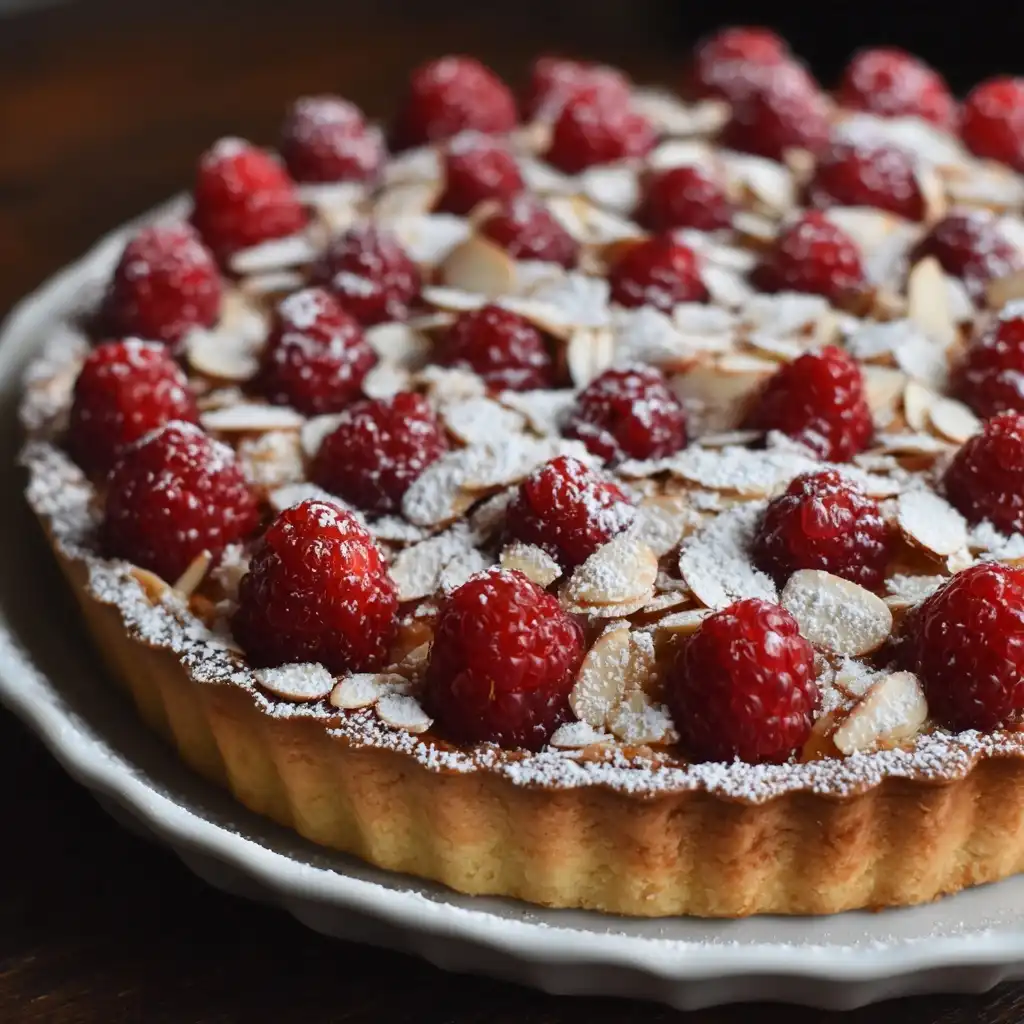
The Raspberry Almond Tart is a timeless, elegant dessert that marries the bright, tart-sweet vibrancy of fresh raspberries with the rich, nutty depth of almond cream—a harmonious balance of simplicity and sophistication. Revered in both French patisseries and modern home kitchens alike, this tart transcends seasonal boundaries: it dazzles at summer garden parties with jewel-toned berries spilling over golden crusts, comforts during autumnal gatherings with its warm, toasty notes, and even lends itself beautifully to festive holiday platters when adorned with edible gold leaf or candied rose petals. Unlike overly sweet confections, the Raspberry Almond Tart respects the integrity of its core ingredients—allowing the raspberry’s natural acidity to cut through the luxurious richness of almond, while the buttery shortcrust provides structural grace and subtle contrast. It’s more than a dessert—it’s an invitation to slow down, savor texture and contrast, and appreciate the artistry inherent in minimal, high-quality components.
The History
The origins of the Raspberry Almond Tart trace back to the broader lineage of French frangipane tarts—pastries rooted in 16th-century Renaissance Europe. Though the term “frangipane” is often mistakenly attributed to Marquis Muzio Frangipani, a 16th-century Italian nobleman who allegedly created an almond-scented glove perfume later adapted into pastry fillings, historical culinary scholarship suggests the filling evolved organically across Provence and Burgundy as bakers experimented with ground almonds, eggs, sugar, and butter to create stable, flavorful custard-like layers for fruit-topped tarts. By the 1800s, regional variations flourished: in Alsace, plum and almond tarts (Quetschentaart) became staples; in the Loire Valley, raspberries—then foraged wild along hedgerows and riverbanks—began appearing atop frangipane in rustic tarte aux framboises. The modern iteration gained widespread popularity in the mid-20th century, aided by advances in refrigerated transport (making fresh raspberries accessible year-round) and the rise of artisanal almond paste producers like Marie Morin and Lenôtre, whose ultra-fine, low-moisture pastes yielded unparalleled smoothness and depth. Today, the Raspberry Almond Tart stands as a benchmark dessert in culinary schools worldwide—not only for its technical demands (proper blind-baking, moisture control, caramelization timing) but also for its philosophical elegance: a reminder that restraint, precision, and reverence for ingredient provenance yield the most resonant flavors.
Ingredients Breakdown
Every element of this tart plays a distinct, non-negotiable role—each chosen not just for flavor, but for function, texture, and chemical interaction:
- Unbleached All-Purpose Flour (1 ¼ cups): Provides gluten structure for the crust without toughness; unbleached retains natural carotenoids that lend warmth to color and subtle nuttiness to flavor.
- Granulated Sugar (¼ cup + 2 tbsp, divided): One portion sweetens the crust for browning and tenderness via caramelization; the remainder balances acidity in the frangipane and enhances raspberry gloss during baking.
- Salted Butter (½ cup / 1 stick, cold, cubed): High-fat (82–84%) European-style butter yields superior flakiness and rich mouthfeel; salt amplifies all other flavors and inhibits excessive gluten development.
- Ice Water (3–5 tbsp): Hydrates flour without activating excess gluten; ice-cold temperature keeps butter solid until baking, ensuring steam pockets form for lift and flakiness.
- Almond Paste (1 cup, finely ground, not marzipan): The heart of frangipane—pure ground almonds, sugar, and minimal binder (often glucose or invert sugar); marzipan contains too much sugar and added egg white, yielding a gummy, overly sweet filling that cracks or weeps.
- Unsalted Butter (¼ cup, softened): Emulsifies the frangipane, adding silkiness and preventing graininess; unsalted ensures precise salt control.
- Large Egg (1, room temperature): Binds frangipane, contributes leavening via steam, and aids browning (Maillard reaction); room temperature ensures uniform emulsification.
- Vanilla Extract (1 tsp, pure Madagascar bourbon): Enhances almond’s benzaldehyde compounds and rounds out raspberry’s sharp phenolics; imitation vanillin lacks complexity and can taste medicinal.
- Pinch of Salt (⅛ tsp): Critical for flavor balancing—suppresses bitterness, lifts sweetness, and deepens umami notes in both almond and berry components.
- Fresh Raspberries (3–3 ½ cups, approx. 12 oz): Must be ripe but firm—overripe berries release too much juice and turn jammy; underripe lack aromatic esters (like raspberry ketone). Organic preferred for minimal pesticide residue on delicate skins.
- Almond Extract (¼ tsp, optional but recommended): A whisper amplifies true almond character without overpowering; use only alcohol-based, not oil-based, which can separate and taste artificial.
- Apricot Glaze (for finishing: ¼ cup apricot preserves + 1 tsp water, strained and warmed): Adds glossy sheen, seals in moisture, and introduces complementary stone-fruit acidity that brightens without competing.
- Flaked Almonds (¼ cup, lightly toasted): For textural contrast and visual appeal; toasting unlocks volatile aromatics (hexanal, benzaldehyde) and deepens nuttiness.
- Confectioners’ Sugar (for dusting, optional): A final ethereal snowfall—adds delicate sweetness and professional polish; best applied just before serving to prevent absorption.
Step-by-Step Recipe
- Prepare the Pâte Sucrée (Sweet Shortcrust Pastry): In a food processor, pulse flour, ¼ cup sugar, and salt until combined. Add cold, cubed butter; pulse in 1-second bursts until mixture resembles coarse cornmeal with visible pea-sized butter pieces (≈12–15 pulses). Drizzle in ice water 1 tbsp at a time, pulsing just until dough begins to clump—do not overmix. Turn onto parchment; gather into a disc, wrap tightly, and chill ≥2 hours (or up to 48 hours). *Why?* Chilling relaxes gluten, solidifies butter, and prevents shrinkage during baking.
- Roll & Blind-Bake the Crust: Preheat oven to 375°F (190°C). On a lightly floured surface, roll chilled dough to 12-inch circle, ⅛-inch thick. Gently transfer to 10-inch fluted tart pan with removable bottom. Trim edges; prick base with fork. Line with parchment and fill with pie weights or dried beans. Bake 20 minutes. Remove weights and parchment; bake 12–15 more minutes until golden and dry to touch. Cool completely on wire rack. *Critical step:* Underbaking causes soggy bottoms; overbaking leads to brittleness.
- Make the Frangipane Filling: In stand mixer with paddle attachment, beat softened butter on medium until creamy (1 min). Add almond paste in 3 additions, beating 1 minute after each until fully incorporated and smooth. Scrape bowl thoroughly. Add egg, vanilla, almond extract, and pinch of salt; beat 2 minutes until pale, fluffy, and no streaks remain. *Texture check:* Should hold soft peaks when lifted—gritty or separated = under-beaten or cold ingredients.
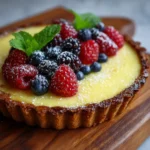
- Assemble the Tart: Spread frangipane evenly into cooled crust, smoothing top with offset spatula. Arrange raspberries in concentric circles, stem-end up, pressing gently to embed ⅓ into filling. Leave ¼-inch border exposed for visual framing. Optional: brush exposed crust edge with milk for extra browning.
- Bake with Precision: Reduce oven to 350°F (175°C). Bake 45–52 minutes—until frangipane is puffed, deeply golden, and springs back lightly when touched (center should not jiggle). Raspberries will deepen to burgundy, some may burst slightly, releasing jewel-toned juices that caramelize at edges. Rotate pan halfway through for even baking. *Don’t open oven before 35 minutes—temperature shock causes collapse.*
- Cool & Glaze: Cool tart in pan on wire rack for 1 hour—this sets frangipane and prevents cracking. Run knife around edge, remove outer ring. Warm apricot glaze; strain through fine mesh to remove solids. Using pastry brush, apply thin, even coat over berries only—avoiding crust (which would soften). Let set 15 minutes. Sprinkle with toasted flaked almonds.
- Final Rest & Serve: Refrigerate uncovered 2 hours minimum (up to 12 hours)—this firms frangipane, concentrates flavors, and allows juices to reabsorb slightly. Bring to cool room temperature (15–20 min) before slicing. Use hot, thin-bladed knife dipped in hot water and wiped clean between cuts for pristine slices.
Tips
- Butter Temperature Is Non-Negotiable: Butter for crust must be ice-cold (35–40°F); for frangipane, softened but cool (65–68°F). Too warm = greasy crust or curdled filling; too cold = crumbly dough or lumpy frangipane.
- Raspberry Prep Matters: Gently rinse berries in colander under cool water just before using, then spread on triple-layered paper towels. Pat *very* gently—excess moisture guarantees soggy crust. Remove any crushed or moldy berries—they’ll ferment and sour adjacent fruit.
- Prevent Leaks & Sogginess: Brush baked, cooled crust interior with thin layer of melted white chocolate (cooled slightly) before adding frangipane. This creates an impermeable, subtly sweet barrier against raspberry juice.
- Frangipane Consistency Check: If filling seems too stiff after mixing, add ½ tsp room-temperature heavy cream—not milk or water—to adjust without diluting flavor. Never add liquid to cold frangipane.
- Oven Thermometer Required: Built-in oven thermostats are often inaccurate by ±25°F. An oven thermometer ensures precise temperature control—critical for frangipane setting and crust browning.
- Cutting Technique: For flawless slices, chill tart fully, then dip knife in near-boiling water, wipe dry, and slice in one confident motion—no sawing. Wipe and reheat knife before each cut.
- Storage Wisdom: Store uncovered in fridge (prevents condensation) for up to 3 days. Do not freeze assembled tart—raspberry texture degrades severely. Freeze unbaked crust or frangipane separately instead.
- Reviving Leftovers: Slightly dried edges? Brush with warmed honey-almond syrup (1 tbsp honey + 1 tsp almond extract + 1 tsp warm water) before serving.
Variations and Customizations
This tart is a canvas for creativity—rooted in tradition but endlessly adaptable:
- Seasonal Fruit Swaps: Blackberries (tarter, earthier), blueberries (sweeter, thicker juice—reduce baking time by 5 min), sliced strawberries (hull, halve, toss with 1 tsp cornstarch to absorb juice), or mixed summer berries. For fall, poach pears in ginger-spiced syrup, cool, and arrange over frangipane.
- Nut Variations: Replace ¼ cup almond paste with finely ground pistachios (adds minty, floral notes and vibrant green flecks) or hazelnuts (roast first for deeper, coffee-like richness). Always maintain total nut paste volume.
- Crust Twists: Add 1 tbsp finely grated orange zest + 1 tsp orange flower water to dough for Provençal brightness. Or substitute ¼ cup flour with toasted oat flour for earthy, wholesome depth.
- Glaze Alternatives: Warm red currant jelly (tart, sophisticated), blackberry coulis (intense, jammy), or a glossy mix of 2 tbsp maple syrup + 1 tsp lemon juice (warm, autumnal).
- Herbal Infusions: Steep 1 tsp fresh thyme or lemon verbena in warm cream used for frangipane adjustment; strain before adding. Or tuck tiny edible violets or borage flowers between berries pre-glaze.
- Decadent Upgrades: Press 2 oz high-cacao (70%+) dark chocolate shards into frangipane before adding berries. Or drizzle finished tart with white chocolate ganache infused with cardamom.
- Dietary Adaptations: Gluten-Free: Use 1:1 GF flour blend with xanthan gum; add 1 tbsp ground almonds to compensate for binding loss. Vegan: Substitute almond paste with homemade (blanch, dry, grind almonds + powdered sugar + agave), use vegan butter and flax egg (1 tbsp ground flax + 2.5 tbsp water, rested 10 min).
- Mini-Tart Version: Use 3-inch tartlet pans. Scale recipe: 1 crust yields 8–10 mini tarts. Bake at 350°F for 22–26 minutes. Perfect for weddings or plated desserts.
Health Considerations and Nutritional Value
A single generous slice (1/10 of tart) contains approximately 320–360 calories, with nuanced nutritional benefits and mindful considerations:
- Almonds & Heart Health: Rich in monounsaturated fats (≈14g/slice), vitamin E (a potent antioxidant), magnesium, and plant sterols—all clinically shown to support healthy cholesterol levels and vascular function.
- Raspberry Power: Exceptionally high in dietary fiber (≈5g/slice), ellagic acid (anti-inflammatory polyphenol), and vitamin C (≈25% DV), supporting gut microbiota diversity and cellular repair.
- Smart Sweetening: Natural sugars from fruit and minimal added sugar (≈18g total/slice) mean lower glycemic impact vs. cakes or cookies. Pairing with fat and fiber slows glucose absorption.
- Considerations: Contains gluten, dairy, tree nuts, and eggs—unsuitable for those with related allergies or strict autoimmune protocols (e.g., AIP). The crust’s saturated fat (≈10g) warrants moderation for those managing LDL cholesterol, though recent meta-analyses suggest dietary saturated fat’s link to CVD is less direct than once thought—context (whole food matrix, overall diet pattern) matters profoundly.
- Mindful Enjoyment: This tart aligns with the Mediterranean and Nordic diets’ principles: whole-food ingredients, plant-forward emphasis, and celebration of seasonal produce. Serving size awareness (1 slice, not 2) and pairing with herbal tea or sparkling water enhances satiety and reduces overall calorie load.
- Not a “Health Food”—But a Nourishing Indulgence: Its value lies in quality, not quantity: organic raspberries minimize pesticide exposure; grass-fed butter offers higher CLA (conjugated linoleic acid); and artisanal almond paste avoids emulsifiers and preservatives common in commercial versions.
Ingredients
- For the Pâte Sucrée Crust:
– 1 ¼ cups (160g) unbleached all-purpose flour
– ¼ cup (50g) granulated sugar
– ¼ tsp fine sea salt
– ½ cup (113g / 1 stick) cold unsalted butter, cubed
– 3–5 tbsp ice water - For the Frangipane Filling:
– 1 cup (225g) high-quality almond paste, finely chopped
– ¼ cup (57g) unsalted butter, softened to 65°F
– 1 large egg, room temperature
– 1 tsp pure vanilla extract
– ¼ tsp pure almond extract
– Pinch of fine sea salt - For Assembly & Finishing:
– 3–3 ½ cups (340–395g) fresh raspberries, impeccably dry
– ¼ cup (30g) slivered or flaked almonds, toasted
– ¼ cup (85g) apricot preserves
– 1 tsp water
– Confectioners’ sugar, for dusting (optional)
Directions
- In a food processor, combine flour, ¼ cup sugar, and salt; pulse 3 times to mix. Add cold butter; pulse in 1-second bursts until mixture resembles coarse meal with visible pea-sized butter pieces (12–15 pulses). Drizzle in 3 tbsp ice water; pulse 4–5 times. If dough doesn’t clump, add water ½ tsp at a time, pulsing once after each addition, until it just begins to form moist clumps. Do not over-process.
- Turn dough onto a large sheet of parchment paper. Gather into a cohesive disc, flattening slightly. Wrap tightly in plastic; refrigerate ≥2 hours or up to 48 hours.
- Preheat oven to 375°F (190°C). Roll chilled dough on lightly floured surface to 12-inch circle, ⅛-inch thick. Carefully drape over 10-inch fluted tart pan with removable bottom. Gently press into corners and up sides. Trim excess dough flush with rim using rolling pin. Prick base all over with fork. Line with parchment; fill with pie weights or dried beans.
- Bake 20 minutes. Carefully lift out parchment with weights. Return crust to oven; bake 12–15 minutes more until golden brown and dry to touch. Cool completely in pan on wire rack (≥1 hour).
- While crust cools, make frangipane: In stand mixer fitted with paddle, beat softened butter on medium 1 minute until creamy. Add almond paste in 3 batches, beating 1 minute after each until completely smooth and no streaks remain. Scrape bowl thoroughly. Add egg, vanilla, almond extract, and salt; beat 2 minutes on medium-high until pale, thick, and fluffy.
- Spread frangipane evenly into cooled crust. Arrange raspberries stem-side up in tight, overlapping concentric circles, gently pressing each berry ⅓ into filling. Leave ¼-inch crust border visible.
- Reduce oven temperature to 350°F (175°C). Bake tart 45–52 minutes—until frangipane is deeply golden, puffed, and springs back when lightly touched; center should not jiggle. Rotate pan halfway through. Cool in pan on wire rack 1 hour.
- Run thin knife around inner edge of tart pan. Carefully remove outer ring. Warm apricot preserves with water in small saucepan over low heat 2 minutes; strain through fine-mesh sieve into bowl. Brush thinly and evenly over berries only.
- Let glaze set 15 minutes. Sprinkle toasted almonds over berries. Refrigerate uncovered 2+ hours (ideal: overnight). Before serving, bring to cool room temperature 15–20 minutes. Dust with confectioners’ sugar if desired. Slice with hot, thin knife wiped between cuts.
FAQ
- Can I use frozen raspberries?
- Yes—but with caveats. Thaw completely in colander, then press gently between paper towels to remove *all* excess liquid. Toss thawed berries with 1 tsp cornstarch to absorb residual moisture. Expect slightly softer texture and deeper juice pooling; reduce baking time by 3–5 minutes.
- Why did my frangipane sink or crack?
- Sinking indicates under-baking or opening the oven too early. Cracking usually means over-baking, too-rapid cooling, or frangipane was too warm when berries were added (causing steam pockets). Ensure full baking time, cool gradually in turned-off oven with door ajar for 10 minutes, and let frangipane sit 5 minutes after mixing before spreading.
- Can I prepare this tart ahead?
- Absolutely. Bake crust and frangipane up to 2 days ahead; store separately, covered, in fridge. Assemble and bake day-of. Fully baked tart keeps beautifully refrigerated (uncovered) for 3 days. Glaze and garnish within 2 hours of serving for optimal shine and crunch.
- What’s the difference between almond paste and marzipan?
- Almond paste is ~50% almonds, 50% sugar, with minimal binder—dense, gritty, intensely almond-flavored, ideal for baking. Marzipan is ~70% sugar, 30% almonds, often includes egg white—sweeter, smoother, designed for molding, not baking. Using marzipan yields a cloying, gummy, overly sweet filling that cracks and weeps.
- My crust shrank dramatically. What went wrong?
- Three main causes: dough wasn’t chilled long enough (gluten relaxed mid-bake), overworked during rolling (activated gluten), or not allowed to rest after shaping in pan (relaxation time needed before blind-baking). Always chill ≥2 hours, handle minimally, and let shaped crust rest 15 minutes before baking.
- Can I omit the almond extract?
- You can, but you’ll lose dimensionality. Pure almond extract enhances the Maillard-derived benzaldehyde notes in roasted almonds and complements raspberry’s fruity esters. If avoiding, boost vanilla to 1 ½ tsp and add 1/8 tsp orange blossom water for aromatic lift.
- Is there a way to make this dairy-free?
- Yes—with careful substitutions: Use vegan butter (Miyoko’s or Country Crock Plant Butter) for both crust and frangipane. Replace egg with flax egg (1 tbsp ground flax + 2.5 tbsp water, rested 10 min). Ensure almond paste is dairy-free (check labels—some contain whey). Texture remains excellent; flavor is slightly earthier.
- How do I prevent raspberry juice from bleeding into the frangipane?
- Beyond thorough drying, the most effective method is brushing the *baked, cooled crust* with a thin layer of melted white chocolate (cooled to 85°F), then chilling 10 minutes to set before adding frangipane. This creates a hydrophobic seal that repels berry moisture.
Summary
The Raspberry Almond Tart is a masterclass in balanced contrast—where the vibrant, tart-sweet burst of peak-season raspberries meets the velvety, nutty richness of house-made frangipane, all enrobed in a buttery, golden shortcrust that shatters with every bite.
Rooted in centuries of French pastry tradition yet endlessly adaptable to modern tastes and dietary needs, it rewards patience, precision, and respect for exceptional ingredients—transforming simple pantry staples into an unforgettable, soul-satisfying celebration of seasonal abundance and timeless craftsmanship.