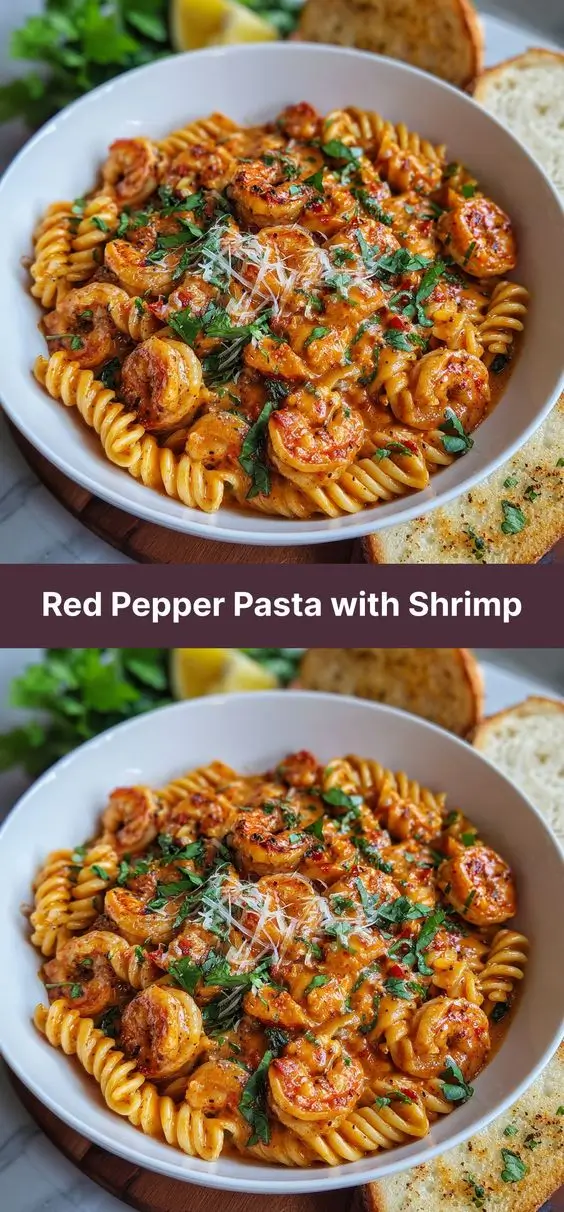
Red Pepper Pasta with Shrimp is a vibrant, restaurant-quality dish that combines the sweetness of roasted red peppers with succulent shrimp and al dente pasta. Packed with bold Mediterranean flavors and ready in under 30 minutes, this recipe is perfect for busy weeknights or elegant dinner parties. Creamy, slightly smoky, and delicately spiced, it’s a celebration of fresh ingredients coming together in harmony.
The History
The roots of Red Pepper Pasta with Shrimp can be traced to Southern Italian coastal cuisine, where seafood and garden-fresh vegetables form the foundation of many traditional dishes. Regions like Campania, Calabria, and Sicily have long incorporated bell peppers, tomatoes, garlic, and seafood into their cooking, influenced by centuries of Mediterranean trade and agricultural abundance. While pasta itself has ancient origins, the use of bell peppers—native to the Americas—entered European kitchens after the Columbian Exchange in the 15th century. Over time, Italian cooks embraced the sweet, fleshy red pepper, roasting and blending it into sauces that enhanced both flavor and color.
Shrimp, commonly harvested from the Tyrrhenian and Ionian Seas, became a staple protein in coastal towns, often sautéed simply with olive oil, garlic, and herbs. The fusion of these elements—roasted red pepper sauce and pan-seared shrimp—emerged as a modern interpretation of rustic Italian cooking, elevated with cream or plant-based alternatives for a luxurious texture. Today, this dish reflects a balance between tradition and innovation, widely popularized in American-Italian restaurants and home kitchens alike for its quick preparation and gourmet appeal.
Ingredients Breakdown
The magic of Red Pepper Pasta with Shrimp lies in its carefully curated ingredients, each contributing depth, aroma, and texture:
- Roasted Red Peppers (jarred or fresh): Sweet, smoky, and tender, they form the base of the sauce. Jarred peppers offer convenience, while freshly roasted ones provide an intensified flavor.
- Fresh Shrimp: Medium to large shrimp (21–25 count), peeled and deveined, add a delicate sweetness and satisfying bite. Wild-caught shrimp are preferred for sustainability and flavor.
- Pasta: Linguine, fettuccine, or penne work best due to their ability to hold creamy sauces. Gluten-free or whole wheat options can be substituted.
- Garlic: Freshly minced garlic brings pungent warmth and aromatic complexity.
- Onion or Shallot: A finely diced shallot or yellow onion adds subtle sweetness and body to the sauce.
- Heavy Cream or Coconut Milk: For a rich, velvety texture. Heavy cream delivers indulgence; full-fat coconut milk makes a delicious dairy-free alternative.
- Dry White Wine: Enhances the umami and acidity, deglazing the pan and lifting flavors (optional but recommended).
- Olive Oil: Extra virgin olive oil is used for sautéing and finishing, contributing fruitiness and depth.
- Lemon Juice: Brightens the dish, cutting through the richness with a touch of acidity.
- Crushed Red Pepper Flakes: Adds a gentle heat that complements the sweetness of the peppers.
- Fresh Herbs: Basil, parsley, or thyme are used for garnish and freshness.
- Grated Parmesan or Pecorino Cheese: Salty, nutty cheese enhances savoriness (omit for vegan version).
- Salt and Black Pepper: Essential seasonings to balance all components.
Step-by-Step Recipe
- Prepare the Ingredients: Peel and devein the shrimp, pat them dry, and season lightly with salt and pepper. Mince the garlic, dice the shallot, and measure out all other ingredients for smooth cooking.
- Cook the Pasta: Bring a large pot of salted water to a boil. Add the pasta and cook until al dente according to package instructions. Reserve ½ cup of pasta water before draining.
- Sauté the Aromatics: In a large skillet over medium heat, warm 2 tablespoons of olive oil. Add the diced shallot and cook for 3–4 minutes until soft and translucent. Add the minced garlic and red pepper flakes, stirring for 30 seconds until fragrant (do not burn).
- Build the Sauce: Add the roasted red peppers (drained if jarred) to the skillet. Use a wooden spoon to break them down slightly. Pour in ¼ cup of white wine (if using) and simmer for 2 minutes to reduce. Stir in ¾ cup of heavy cream or coconut milk. Simmer gently for 5–7 minutes, allowing the sauce to thicken. For a smoother texture, blend the sauce with an immersion blender or transfer to a countertop blender and puree until silky. Return to the skillet.
- Cook the Shrimp: Push the sauce to the side of the skillet or temporarily remove it. Add another tablespoon of olive oil to the pan. Increase heat to medium-high and add the shrimp in a single layer. Sear for 1–2 minutes per side until pink, opaque, and slightly caramelized. Avoid overcrowding to ensure proper browning.
- Combine Everything: Return the sauce to the shrimp (if removed) and stir gently to coat. Add the drained pasta and toss thoroughly to combine. If the sauce is too thick, gradually add reserved pasta water, 2 tablespoons at a time, until the desired consistency is reached.
- Finish and Season: Remove from heat. Stir in 1 tablespoon of fresh lemon juice and chopped parsley or basil. Taste and adjust seasoning with salt, black pepper, and additional red pepper flakes if desired.
- Serve Immediately: Plate the pasta, garnish with grated Parmesan, a drizzle of olive oil, and extra herbs. Serve hot with crusty bread or a crisp green salad.
Tips
- Don’t Overcook the Shrimp: Shrimp cook quickly—overcooking makes them rubbery. Remove them from the heat just as they turn opaque.
- Use High-Quality Roasted Peppers: Look for peppers packed in water or brine without preservatives. Rinse jarred peppers if they’re overly salty.
- Reserve Pasta Water: The starchy liquid helps bind the sauce to the pasta, improving texture and silkiness.
- Bloom the Spices: Cooking red pepper flakes with garlic and oil for 20–30 seconds enhances their flavor and distributes heat evenly.
- Prevent Sauce Separation: Keep the heat at medium when adding cream to avoid curdling. Never boil cream-based sauces vigorously.
- Boost Umami: Add a teaspoon of tomato paste when sautéing aromatics or a splash of fish sauce for deeper savoriness (use sparingly).
- Make Ahead Components: The roasted red pepper sauce can be made 2 days in advance and refrigerated. Reheat gently before adding shrimp and pasta.
Variations and Customizations
- Vegetarian Version: Omit shrimp and add grilled zucchini, artichoke hearts, or chickpeas for protein.
- Vegan Option: Use coconut milk instead of cream, skip cheese, and use nutritional yeast for a cheesy flavor.
- Spicier Kick: Add harissa paste, sliced fresh jalapeños, or smoked paprika for a bolder profile.
- Creamy Avocado Twist: Blend ripe avocado into the sauce for extra creaminess and healthy fats.
- Protein Swaps: Replace shrimp with scallops, chicken, pancetta, or smoked tofu.
- Herb Variations: Try tarragon for a slight anise note, dill for freshness, or oregano for earthiness.
- Different Pasta Shapes: Try fusilli, farfalle, or casarecce—they trap sauce beautifully.
- Roast Your Own Peppers: Char whole red bell peppers over a gas flame or under the broiler, then steam in a bowl covered with plastic wrap. Peel off the skin and slice.
- Tomato-Infused Version: Add sun-dried tomatoes or ½ cup of crushed tomatoes to deepen the sauce’s complexity.
Health Considerations and Nutritional Value
Red Pepper Pasta with Shrimp offers a balanced nutritional profile when prepared with mindful ingredient choices:
- Shrimp: Low in calories and high in protein (about 20g per 3 oz), shrimp also provides selenium, iodine, omega-3 fatty acids, and vitamin B12. However, those with shellfish allergies must avoid it entirely.
- Red Peppers: Extremely rich in vitamin C (one pepper exceeds daily needs), antioxidants (like lycopene and beta-carotene), and fiber. Roasting preserves nutrients while enhancing flavor.
- Healthy Fats: Olive oil contributes heart-healthy monounsaturated fats. Coconut milk contains medium-chain triglycerides (MCTs), though higher in saturated fat—use in moderation.
- Carbohydrates: Pasta provides energy-rich carbs. Opt for whole grain or legume-based pasta to increase fiber and lower glycemic impact.
- Sodium Awareness: Jarred roasted peppers and Parmesan can be high in sodium. Choose low-sodium versions and control added salt.
- Cream Content: Heavy cream increases saturated fat and calories. Substitute with Greek yogurt, cashew cream, or evaporated milk for lighter versions.
- Portion Control: This dish is rich—serve with a side salad to balance the meal. Ideal portion: 1.5 to 2 oz shrimp and 2 oz dry pasta per serving.
- Allergens: Contains shellfish, dairy (if using cream and cheese), and possibly gluten (unless GF pasta is used). Always label accordingly when serving guests.
Ingredients
- 12 oz (340g) linguine or penne
- 1 lb (450g) large shrimp, peeled and deveined
- 1 cup (about 6 oz) roasted red peppers, drained and chopped
- 3 tbsp extra virgin olive oil, divided
- 1 small shallot or ½ small onion, finely diced
- 3 garlic cloves, minced
- ½ tsp crushed red pepper flakes (adjust to taste)
- ¼ cup dry white wine (such as Pinot Grigio or Sauvignon Blanc)
- ¾ cup heavy cream or full-fat coconut milk
- 1 tbsp fresh lemon juice
- Salt and freshly ground black pepper, to taste
- ¼ cup fresh parsley or basil, chopped
- ½ cup grated Parmesan or Pecorino cheese (optional)
- Optional: 1 tsp smoked paprika or 1 tbsp tomato paste
Directions
- Bring a large pot of generously salted water to a boil. Cook pasta according to package directions until al dente. Reserve ½ cup of pasta water, then drain and set aside.
- In a large skillet over medium heat, warm 2 tablespoons of olive oil. Add diced shallot and cook until soft and translucent, about 3–4 minutes.
- Add minced garlic and red pepper flakes. Stir constantly for 30 seconds until fragrant.
- Stir in chopped roasted red peppers and cook for 2 minutes. Pour in white wine and simmer for 2 minutes to reduce.
- Add heavy cream (or coconut milk) and bring to a gentle simmer. Cook for 5–7 minutes, stirring occasionally, until sauce begins to thicken.
- For a smoother sauce, use an immersion blender directly in the pan to puree until creamy. Alternatively, transfer to a blender, puree, then return to the skillet.
- Push sauce to one side of the skillet. Add remaining 1 tablespoon of olive oil to the empty space. Increase heat to medium-high.
- Add shrimp in a single layer and sear for 1–2 minutes per side until pink and opaque. Do not overcook.
- Return any sauce that was moved and gently mix with shrimp.
- Add cooked pasta and toss to coat. Gradually add reserved pasta water as needed to loosen the sauce.
- Remove from heat. Stir in lemon juice, chopped herbs, and Parmesan (if using). Season with salt and pepper to taste.
- Serve immediately in warmed bowls, garnished with extra herbs, a sprinkle of cheese, and a drizzle of olive oil.
FAQ
Can I make this dish ahead of time?
While best served fresh, you can prepare the sauce and cook the shrimp separately up to one day in advance. Reheat sauce gently, add freshly cooked pasta and warmed shrimp just before serving.
How do I store leftovers?
Store in an airtight container in the refrigerator for up to 3 days. Reheat gently on the stove with a splash of water or broth to restore creaminess. Avoid microwaving at high power to prevent rubbery shrimp.
Can I freeze Red Pepper Pasta with Shrimp?
Freezing is not recommended due to the cream-based sauce (may separate) and shrimp (becomes tough when frozen and reheated). The sauce alone can be frozen for up to 2 months; thaw overnight and reheat gently before adding fresh shrimp and pasta.
Is this dish gluten-free?
Yes, if you use gluten-free pasta and confirm all other ingredients (like wine and broth) are certified GF.
What wine pairs well with this dish?
A crisp white wine such as Pinot Grigio, Vermentino, or unoaked Chardonnay complements the creamy, slightly sweet, and briny notes. For non-alcoholic pairing, try sparkling lemon water or herbal iced tea.
Can I use frozen shrimp?
Yes, but thaw them first in cold water or the refrigerator. Pat dry thoroughly to ensure proper searing and prevent excess moisture in the sauce.
Why is my sauce too thin/thick?
If too thin, simmer longer to reduce. If too thick, add reserved pasta water, warm broth, or milk 1–2 tablespoons at a time until desired consistency is achieved.
Can I roast my own peppers?
Absolutely! Roasting your own peppers intensifies flavor. Char over a flame, seal in a bowl, peel skin, and deseed. One large red bell pepper yields about ¾ cup chopped.
Summary
Red Pepper Pasta with Shrimp is a luscious, flavorful dish that blends sweet roasted peppers, tender shrimp, and silky sauce over perfectly cooked pasta. Quick to make yet elegant enough for guests, it’s a modern classic that brings the taste of the Mediterranean to your table.