Introduction
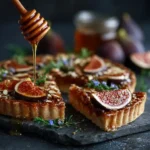
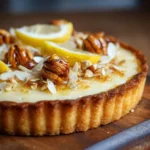
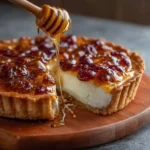
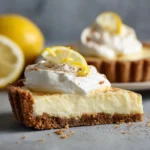
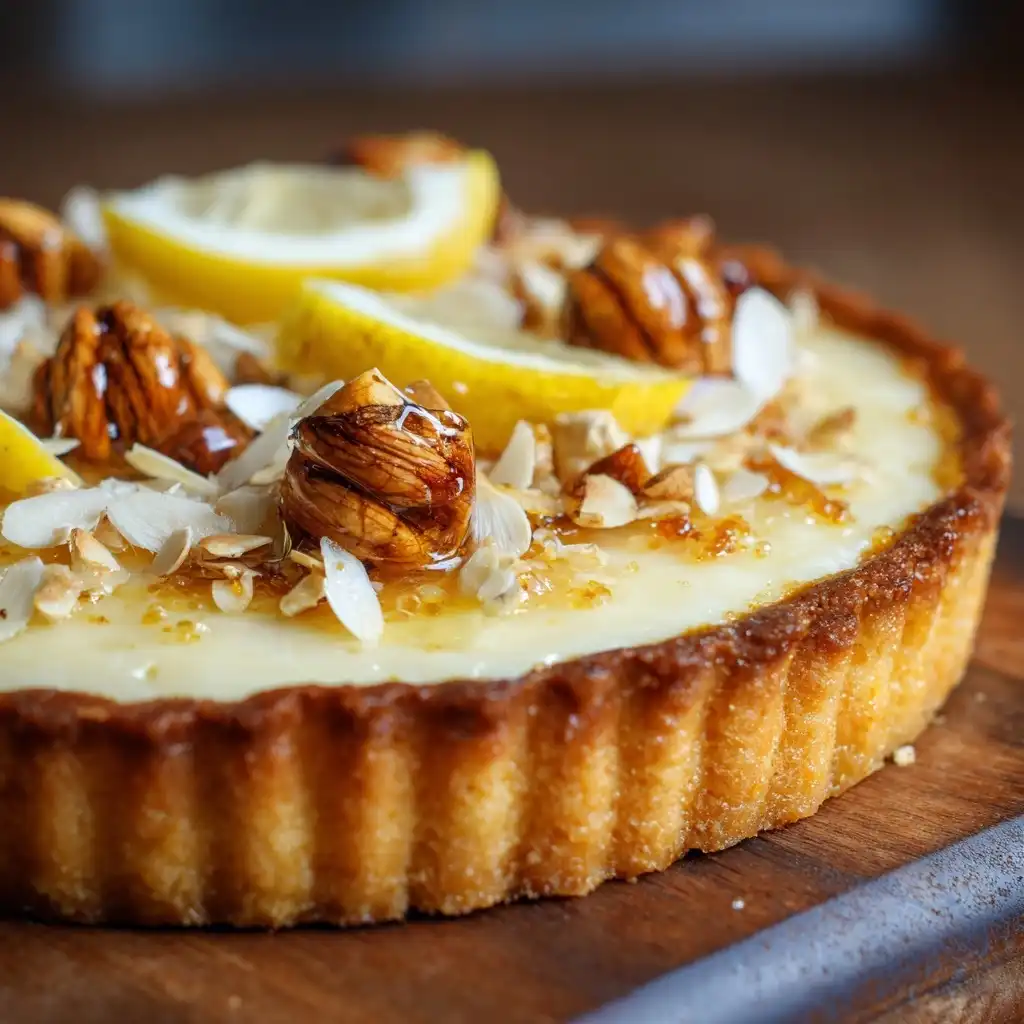
The Ricotta Honey Lemon Tart is a luminous celebration of Italian pastry tradition reimagined with modern elegance and restrained indulgence. Unlike heavier custard-based tarts or overly sweet lemon desserts, this confection strikes an exquisite balance—creamy yet airy, bright yet mellow, rich yet refreshingly light. Its golden shortbread crust cradles a luxuriously smooth, cloud-like filling infused with the floral sweetness of raw honey, the vibrant acidity of freshly squeezed lemon juice and zest, and the delicate, milky richness of high-quality ricotta cheese. Served chilled—often adorned with edible flowers, a whisper of lemon verbena, or a delicate drizzle of amber honey—it transcends seasonality: equally at home on a sun-drenched spring brunch table, a sophisticated summer soirée dessert platter, or a cozy winter gathering where its citrus brightness cuts through richer fare. More than just a dessert, it’s a study in harmony—where simplicity becomes sophistication, and restraint reveals depth.
The History
While no single documented “origin story” pins the Ricotta Honey Lemon Tart to a specific village or century, its lineage is deeply rooted in centuries-old Mediterranean baking traditions that prized local, seasonal, and minimally processed ingredients. Ricotta—a byproduct of sheep’s or cow’s milk cheese-making—has been a cornerstone of Italian rural cuisine since at least the Bronze Age, appearing in ancient Roman texts as recotta (“recooked”), referencing the process of reheating whey to coagulate residual proteins. In southern Italy and Sicily, ricotta was traditionally used in savory pies (scaccia), stuffed pastas (manicotti, cannoli), and rustic sweets like ricciarelli or pastiera napoletana. The addition of lemon—a fruit cultivated across the Amalfi Coast and Sorrento since the Middle Ages—brought natural tartness and preservative qualities to dairy-based preparations. Honey, meanwhile, predates refined sugar in European confectionery by millennia; Etruscan and Greek bakers used it to sweeten grain-and-cheese cakes, and medieval Italian monasteries preserved lemons in honey for medicinal and culinary use. What distinguishes the modern Ricotta Honey Lemon Tart is its 20th- and 21st-century evolution: inspired by French tarte au citron’s sharp elegance and American cheesecake’s textural comfort, yet rejecting heavy cream cheese or excessive eggs in favor of ricotta’s lighter protein structure. Chefs and home bakers in Rome’s Testaccio market, Florence’s artisanal pasticcerie, and California’s farm-to-table movement began refining versions in the 1980s–2000s—emphasizing organic lemons, pasture-raised ricotta, and raw, varietal honeys (like orange blossom or wildflower). Today, it stands as a global emblem of mindful luxury: a dessert that honors terroir, technique, and taste without compromise.
Ingredients Breakdown
Every element in this tart serves both functional and sensory purpose—no ingredient is merely decorative or conventional. Understanding their roles elevates both execution and appreciation:
- Shortbread Crust Ingredients:
- All-purpose flour (plus optional 1–2 tbsp almond flour): Provides structure and tenderness; almond flour adds subtle nuttiness and enhances crumbliness without gluten development.
- Unsalted butter (cold, high-fat, European-style preferred): Critical for flakiness and richness; cold temperature ensures steam pockets form during baking, yielding lift and crispness. Butterfat content (82–86%) directly impacts flavor depth and melt-in-the-mouth quality.
- Powdered sugar (not granulated): Dissolves instantly, contributes to tenderness (by inhibiting gluten formation), and yields a finer, more delicate crumb than granulated sugar.
- Fine sea salt: Not just for seasoning—it balances sweetness, enhances butter’s aroma, and strengthens gluten slightly for better cohesion without toughness.
- Vanilla extract (pure, not imitation): Adds warm, aromatic complexity that bridges the crust and filling; alcohol content also helps inhibit gluten.
- Filling Ingredients:
- Whole-milk ricotta (drained overnight in cheesecloth): The heart of the tart. Must be fresh, not ultra-pasteurized (which denatures proteins and yields graininess). Draining removes excess whey, preventing a watery filling and concentrating flavor. Opt for sheep’s milk ricotta for earthier depth or cow’s milk for milder sweetness.
- Honey (raw, unfiltered, floral-varietal such as acacia, orange blossom, or lavender): Sweetens *and* acidulates—its natural gluconic acid contributes gentle tang, while enzymes add subtle complexity. Never substitute with processed honey or corn syrup; heat-treated versions lose volatile aromatics and enzymatic nuance.
- Freshly squeezed lemon juice (measured after straining) & finely grated zest (only yellow pith—no white!): Juice provides bright acidity essential for cutting richness; zest delivers concentrated citrus oils—the primary source of fragrance and top-note brightness. Always zest before juicing to avoid bitterness from dried rind.
- Large egg + yolk (room temperature): Egg white adds lightness and structure; yolk enriches mouthfeel and emulsifies fat. Room temperature ensures even incorporation and prevents curdling.
- Heavy cream (36–40% fat) or crème fraîche: Adds silkiness and prevents chalkiness. Crème fraîche contributes subtle cultured tang that complements lemon beautifully.
- Grated lemon-infused cane sugar (optional but recommended): Blend granulated sugar with lemon zest for 2–3 minutes until fragrant—this infuses sugar crystals with oil, amplifying citrus presence throughout the filling.
- Pinch of ground cardamom or vanilla bean paste (optional): A whisper of spice or vanilla rounds edges without dominating—cardamom pairs exceptionally well with honey and lemon.
- Garnish & Finishing Elements:
- Additional raw honey (warmed slightly for drizzling): Adds glossy sheen and layered sweetness—not just topping, but a textural and flavor counterpoint.
- Edible lemon balm, mint, or violas: Provide visual freshness and aromatic lift when bitten into.
- Flaky sea salt (Maldon or Fleur de Sel): A single crystal per slice heightens all flavors via contrast—sweet, sour, creamy, salty.
- Microplaned lemon zest (added post-bake): Ensures volatile oils remain intact for maximum fragrance.
Step-by-Step Recipe
- Prepare the Crust (Minimum 1 hour ahead, preferably overnight): In a food processor, pulse 1 ¼ cups all-purpose flour, 2 tbsp almond flour, ¼ cup powdered sugar, ½ tsp fine sea salt, and 1 tsp pure vanilla extract until combined. Add 10 tbsp (1 ¼ sticks) very cold, cubed unsalted butter. Pulse in 1-second bursts until mixture resembles coarse meal with some pea-sized butter pieces visible—do not overmix. Transfer to a bowl; sprinkle 2–3 tbsp ice water, one tablespoon at a time, mixing gently with a fork until dough just begins to clump. Gather into a disc, wrap tightly in parchment-lined plastic wrap, and refrigerate for at least 1 hour (or up to 3 days). For optimal flavor development and gluten relaxation, chill overnight.
- Drain the Ricotta (Critical Step—Start 12–24 Hours Before Baking): Line a fine-mesh sieve with two layers of cheesecloth or a clean linen tea towel. Place over a bowl. Add 2 cups whole-milk ricotta, smooth surface, cover with plastic, and refrigerate for 12–24 hours. Discard accumulated whey. You should yield ~1 ¾ cups dense, dry, spoonable ricotta. This step cannot be rushed—undrained ricotta guarantees a soggy, separated filling.
- Preheat & Prep Pan: Position oven rack in center position. Preheat oven to 350°F (175°C). Lightly butter and flour a 9-inch round, removable-bottom tart pan with straight 1-inch sides (not fluted). Alternatively, use a 9-inch springform pan lined with parchment on bottom and sides.
- Roll & Blind-Bake the Crust: On a lightly floured surface, roll chilled dough into a 12-inch circle, ~⅛-inch thick. Carefully transfer to prepared pan, pressing gently into bottom and up sides without stretching. Trim excess dough; crimp edges decoratively or press with tines of a fork. Prick base all over with a fork. Freeze crust for 15 minutes. Line with parchment and fill with pie weights or dried beans. Bake for 18 minutes. Remove weights and parchment; bake 10–12 more minutes until pale gold and dry to touch. Cool completely on a wire rack—minimum 30 minutes. Reduce oven temp to 325°F (165°C).
- Make the Filling (Room Temperature Essential): In a large bowl, whisk drained ricotta until completely smooth and lump-free (use immersion blender if needed). Whisk in ½ cup raw honey, ¼ cup freshly squeezed lemon juice, 2 tsp finely grated lemon zest, 1 large room-temp egg + 1 yolk, ¼ cup heavy cream (or crème fraîche), and 1 tbsp lemon-infused sugar (if using). Add pinch of cardamom or ½ tsp vanilla bean paste, if desired. Whisk vigorously for 2 full minutes—this incorporates air and ensures velvety texture. Taste and adjust: more honey for sweetness, more zest for aroma, more juice for tang.
- Fill & Bake: Pour filling into cooled crust. Gently tap pan on counter to release air bubbles. Place tart pan on a parchment-lined baking sheet (for stability and spill protection). Bake at 325°F for 45–55 minutes—until edges are set and center jiggles *slightly* like gelatin (not liquid). A toothpick inserted 1 inch from edge should come out clean; center should be moist but not runny. Avoid overbaking—residual heat will finish setting.
- Cool & Chill (Non-Negotiable): Cool tart in pan on wire rack for 1 hour. Run thin knife around inner edge to loosen. Refrigerate, uncovered, for *at least 6 hours*, preferably overnight (12+ hours). This allows flavors to meld, texture to fully set and tighten, and acidity to mellow. Do not slice before full chill—warm tart collapses; cold tart slices cleanly.
- Finish & Serve: Just before serving, gently remove outer ring of tart pan. Drizzle top with 1–2 tbsp warmed raw honey. Sprinkle with flaky sea salt and microplaned lemon zest. Garnish with edible flowers or herbs. Slice with a hot, thin-bladed knife wiped clean between cuts.
Tips
- Temperature Discipline is Everything: Cold butter, room-temp eggs/dairy, and thoroughly chilled crust/filling prevent separation, cracking, and greasiness. Let eggs sit in warm water for 5 minutes if forgotten.
- Ricotta Quality Dictates Outcome: Avoid “whipped” or “part-skim” ricotta—they contain stabilizers and lack fat for richness. Visit an Italian deli or farmer’s market for small-batch, vat-set ricotta.
- Zest First, Juice Second: Zesting a cold lemon is easier and yields more oil. Once zested, roll lemon firmly on counter before juicing to maximize yield.
- No Overmixing After Eggs Are Added: Vigorous whisking is needed initially, but once eggs are incorporated, fold gently to avoid incorporating too much air—which can cause puffing and subsequent collapse.
- Blind-Baking Precision: Under-baked crust absorbs filling moisture; over-baked crust becomes brittle. Watch color—not time. Pale gold = perfect.
- Chill Time is Flavor Time: Acidity softens, honey’s floral notes bloom, and textures harmonize only with extended refrigeration. Skipping this step sacrifices 50% of the experience.
- Knife Technique Matters: Dip knife in hot water, wipe dry, slice, repeat. A serrated knife works best for clean edges without dragging.
- Freeze for Long-Term Storage: Unfrosted, fully chilled tart (without garnish) freezes beautifully for up to 3 months. Wrap tightly in plastic + foil. Thaw overnight in fridge—not at room temperature—to preserve texture.
- Resist Serving Warm: Even if impatient, serve only cold. Warm ricotta filling weeps, loses structure, and tastes flat.
- Batch Scaling Note: This recipe scales reliably up to 12-inch tart or two 6-inch individual tarts—adjust bake time accordingly (reduce by 5–8 minutes for smaller sizes).
Variations and Customizations
This tart is a masterclass in adaptable elegance—each variation honors its core while inviting personal expression:
- Dairy-Free Adaptation: Substitute drained, blended tofu ricotta (1 block firm tofu, pressed 30 mins, blended with 2 tbsp lemon juice, 2 tbsp nutritional yeast, 1 tbsp olive oil, pinch turmeric for color) + coconut cream (chilled, solid part only) for heavy cream. Use maple syrup or date syrup instead of honey (note: not vegan if strict, as honey is bee-derived). Texture will be denser but still luxurious.
- Gluten-Free Crust: Replace all-purpose flour with 1:1 GF blend containing xanthan gum (e.g., King Arthur or Bob’s Red Mill). Add 1 tbsp almond flour + 1 tsp psyllium husk powder for elasticity and binding. Chill dough 20 minutes longer before rolling.
- Herb-Infused: Steep 2 tbsp fresh thyme or rosemary sprigs in warm honey for 1 hour; strain. Use infused honey in filling. Garnish with same herb. Pairs magically with lemon and ricotta’s earthiness.
- Berry Swirl: Fold ⅓ cup seedless raspberry or blackberry coulis (simmered berries + 1 tsp honey, strained) into filling *just before pouring*. Use chopstick to marble gently—don’t over-swirl.
- Nutty Crust Upgrade: Toast ¼ cup pistachios or hazelnuts; pulse into crust dough with flour. Or replace 2 tbsp butter with 1 tbsp walnut oil for deeper nuttiness.
- Chocolate-Ricotta Fusion: Whisk 2 oz finely chopped dark chocolate (70% cacao) into warm (not hot) filling just before pouring. Creates stunning marbled effect and bittersweet contrast.
- Savory-Sweet Appetizer Version: Omit honey and zest; add 2 tbsp grated pecorino, 1 tsp black pepper, and 1 tbsp chopped fresh chives to filling. Bake in mini tart pans—serve with crostini.
- Vegan “Honey” Option: Use high-quality date syrup or apple butter (unsweetened) + 1 tsp apple cider vinegar for acid balance. Texture remains creamy; flavor profile shifts to caramel-apple brightness.
- Boozy Accent: Stir 1 tbsp limoncello or elderflower liqueur into filling after eggs. Reduces alcohol during baking but leaves aromatic lift.
- Deconstructed Individual Servings: Layer crumbled shortbread, lemon-ricotta mousse (fold whipped cream into filling), and honey drizzle in glasses. Top with candied lemon peel.
Health Considerations and Nutritional Value
While undeniably a dessert, the Ricotta Honey Lemon Tart offers notable nutritional distinctions from many conventional sweets—making it a conscious choice rather than a compromise:
- Protein-Rich Base: Ricotta is a complete dairy protein source (~14g per cup), supporting satiety and muscle maintenance. Its whey protein content is highly bioavailable and easier to digest than casein-heavy cheeses.
- Natural Sweeteners: Raw honey contains trace enzymes (diastase, invertase), antioxidants (polyphenols), and prebiotics (oligosaccharides) that support gut microbiome health—unlike refined sugar, which offers only empty calories and glycemic spikes.
- Lemon’s Phytonutrient Power: Lemon zest contains limonene (a potent anti-inflammatory terpene) and flavonoids like hesperidin, linked to improved vascular function and reduced oxidative stress. Juice contributes vitamin C (though some lost to heat, zest retains most).
- Healthy Fat Profile: Butter provides fat-soluble vitamins (A, D, E, K2) and butyrate—a short-chain fatty acid shown to reduce gut inflammation. Using grass-fed butter increases CLA (conjugated linoleic acid), associated with metabolic benefits.
- Lower Glycemic Impact: The combination of protein (ricotta), fat (butter, cream), fiber (from almond flour, if used), and acidity (lemon) significantly slows glucose absorption versus high-sugar, low-protein desserts—resulting in gentler blood sugar curves.
- No Artificial Additives: Traditional preparation avoids gums, emulsifiers, artificial flavors, or preservatives common in commercial desserts.
- Portion-Conscious Design: A standard slice (1/12 of tart) contains approx. 280–320 kcal, 5–7g protein, 18–22g carbohydrates (of which 12–15g are natural sugars), 20–24g fat (12–14g saturated), and 1–2g fiber. Compare to a slice of lemon meringue pie (~450 kcal, 35g sugar, minimal protein).
- Considerations for Specific Diets: Naturally low in sodium (unless oversalted); contains lactose (though ricotta is lower than milk); not suitable for strict vegans or those with dairy allergy. Gluten-free option available (see Variations). For diabetics: consult provider, but the balanced macro profile makes it a more favorable occasional choice than many alternatives.
- Mindful Indulgence Principle: Its richness means smaller portions satisfy—encouraging slower, more intentional eating, which supports digestive ease and satiety signaling.
Ingredients
For the Shortbread Crust:
• 1 ¼ cups (160g) all-purpose flour, plus extra for dusting
• 2 tablespoons (14g) blanched almond flour (optional, for added richness)
• ¼ cup (30g) powdered sugar
• ½ teaspoon fine sea salt
• 1 teaspoon pure vanilla extract
• 10 tablespoons (140g) unsalted butter, very cold and cubed
For the Ricotta Honey Lemon Filling:
• 2 cups (500g) whole-milk ricotta cheese, drained overnight (see Tips)
• ½ cup (170g) raw, unfiltered honey (acacia, orange blossom, or wildflower)
• ¼ cup (60ml) freshly squeezed lemon juice (about 2 large lemons)
• 2 teaspoons finely grated lemon zest (yellow pith only)
• 1 large egg + 1 large egg yolk, at room temperature
• ¼ cup (60ml) heavy cream (36–40% fat) or crème fraîche
• 1 tablespoon lemon-infused cane sugar (see Ingredients Breakdown)
• Pinch of ground cardamom or ½ teaspoon vanilla bean paste (optional)
For Garnish & Finish:
• 1–2 tablespoons raw honey, gently warmed
• Flaky sea salt (e.g., Maldon)
• Fresh microplaned lemon zest
• Edible flowers (violets, borage, lemon balm) or fresh mint leaves
Directions
- Drain the Ricotta: At least 12 hours before baking, line a fine-mesh sieve with double-layer cheesecloth or a clean linen tea towel. Place over a bowl. Add ricotta, smooth top, cover with plastic wrap, and refrigerate. Discard whey daily if draining longer than 24 hours.
- Make the Crust Dough: In a food processor, combine flour, almond flour (if using), powdered sugar, salt, and vanilla. Pulse to mix. Add cold butter cubes. Pulse in 1-second bursts until mixture resembles coarse crumbs with visible pea-sized butter bits—about 12–15 pulses. Transfer to a bowl. Sprinkle with 2 tablespoons ice water; stir with fork until clumps form. If too dry, add 1 more tsp water. Gather into disc, wrap in parchment-lined plastic, and chill 1 hour (or up to 3 days).
- Preheat & Prep: Preheat oven to 350°F (175°C). Butter and flour a 9-inch removable-bottom tart pan.
- Roll & Blind-Bake Crust: Roll chilled dough on floured surface to 12-inch circle, ⅛-inch thick. Transfer to pan; press in gently. Trim, crimp edges. Prick base. Freeze 15 min. Line with parchment, fill with weights. Bake 18 min. Remove weights/parchment; bake 10–12 min more until pale gold. Cool completely on rack (30+ min). Reduce oven to 325°F (165°C).
- Prepare Filling: In large bowl, whisk drained ricotta until silky smooth. Whisk in honey, lemon juice, zest, egg + yolk, cream, lemon sugar, and cardamom/vanilla (if using). Whisk vigorously 2 minutes until homogeneous and slightly aerated.
- Bake Tart: Pour filling into cooled crust. Tap pan to settle. Place on parchment-lined baking sheet. Bake 45–55 min until edges set and center jiggles slightly. Cool in pan 1 hour on rack.
- Chill Thoroughly: Loosen edges with knife. Refrigerate uncovered 6–24 hours (overnight strongly recommended).
- Serve: Remove outer ring. Drizzle with warmed honey. Sprinkle flaky salt and fresh zest. Garnish. Slice with hot, clean knife.
FAQ
- Can I use part-skim ricotta?
- No. Part-skim lacks the fat necessary for richness and smooth texture, resulting in a dry, grainy, or rubbery filling. Whole-milk ricotta is non-negotiable.
- Why does the recipe insist on draining ricotta overnight?
- Excess whey dilutes flavor, causes separation during baking, creates a watery layer under the filling, and prevents proper setting. Overnight draining concentrates taste and ensures structural integrity.
- My tart cracked on top—is it ruined?
- Minor surface cracks are common and purely aesthetic—often caused by rapid cooling or slight overbaking. Flavor and texture remain exceptional. To minimize: cool gradually (leave in turned-off oven with door ajar for 15 min), and never rush refrigeration.
- Can I make this ahead for an event?
- Absolutely—and it’s encouraged! Fully baked and chilled tarts hold beautifully for 3 days refrigerated (covered loosely with parchment, not plastic, to prevent condensation). Add garnishes within 1 hour of serving.
- What if I don’t have a tart pan?
- A 9-inch springform pan works perfectly. Line bottom and sides with parchment for easy removal. Avoid pie plates—the shallow depth won’t hold the generous filling.
- Is there a way to reduce the sweetness without ruining texture?
- Yes. Reduce honey to ⅓ cup and increase lemon zest to 1 tbsp + add ½ tsp lemon juice. The acidity balances perceived sweetness without affecting structure. Never reduce eggs or dairy—they’re functional, not sweeteners.
- Can I freeze the baked tart?
- Yes. Fully chilled, unfrosted tart freezes for up to 3 months. Wrap tightly in plastic wrap, then aluminum foil. Thaw overnight in refrigerator. Refresh garnish before serving.
- Why does the recipe specify “raw” honey?
- Raw honey retains live enzymes, pollen, and volatile aromatic compounds destroyed by pasteurization. These contribute nuanced flavor, subtle tang, and health properties absent in processed honey.
- My filling seems lumpy even after whisking—what went wrong?
- Undrained ricotta or cold ricotta straight from the fridge. Always drain *and* let ricotta sit at room temperature for 30 minutes before whisking. An immersion blender resolves stubborn lumps instantly.
- Can I add blueberries or raspberries?
- Yes—but fold in *fresh, dry* berries gently at the very end, or swirl in coulis (see Variations). Wet or frozen berries release water and create sinkholes or sogginess.
Summary
The Ricotta Honey Lemon Tart is a masterwork of Mediterranean minimalism—where the profound depth of slow-drained ric