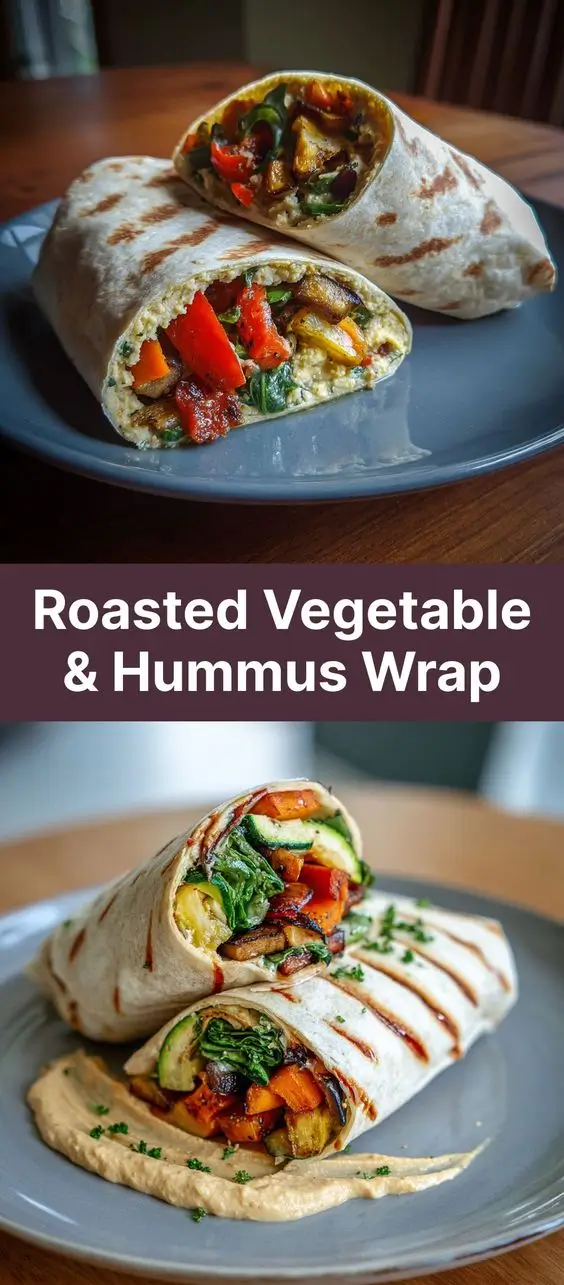
Roasted Vegetable & Hummus Wrap: A Flavorful, Nutritious Delight
Introduction
The Roasted Vegetable & Hummus Wrap is a vibrant, satisfying meal that combines the earthy richness of roasted vegetables with the creamy smoothness of hummus, all wrapped in a soft tortilla. Perfect for lunch, a light dinner, or even a picnic, this wrap offers a balanced blend of textures and flavors while being naturally plant-based and packed with nutrients. Whether you’re a seasoned vegan or simply looking to incorporate more wholesome, vegetable-forward meals into your diet, this wrap is an excellent choice. It’s not only delicious but also incredibly versatile—easily customizable to suit dietary preferences, spice levels, and seasonal produce.
The History
While wraps as we know them today became popular in Western cuisine during the late 20th century, their roots can be traced back to ancient food traditions around the globe. Flatbreads filled with various ingredients have been staples across cultures for thousands of years—from Middle Eastern pita stuffed with falafel and vegetables to Indian parathas filled with spiced potatoes, and Mexican tortillas holding beans and grilled peppers.
Hummus itself has a rich history originating in the Levant region, with variations found in Lebanon, Palestine, Egypt, and Turkey. The combination of hummus and roasted vegetables gained popularity as Mediterranean cuisine spread globally, celebrated for its heart-healthy fats, fiber-rich legumes, and colorful, nutrient-dense vegetables. Wrapping these ingredients together in a portable format made perfect sense for modern lifestyles, leading to the creation of the Roasted Vegetable & Hummus Wrap as a go-to healthy option in cafes, delis, and home kitchens worldwide.
Ingredients Breakdown
The beauty of this wrap lies in its simplicity and balance. Each ingredient plays a crucial role in building flavor, texture, and nutrition:
- Hummus: Acts as both a creamy base and a protein-rich spread. Choose classic tahini-based hummus or experiment with roasted red pepper, garlic, or lemon zest varieties.
- Tortilla: Whole wheat, spinach, gluten-free, or low-carb options work well. Look for pliable, medium-sized wraps (8–10 inches) that won’t crack when rolled.
- Assorted Vegetables: Zucchini, bell peppers (red, yellow, orange), eggplant, red onion, cherry tomatoes, mushrooms, and carrots are ideal for roasting. They caramelize beautifully, enhancing natural sweetness.
- Olive Oil: Used to coat vegetables before roasting, aiding browning and adding heart-healthy monounsaturated fats.
- Herbs & Spices: Garlic powder, smoked paprika, dried oregano, salt, and black pepper elevate flavor without overpowering. Fresh herbs like parsley, cilantro, or basil add brightness when added post-roast.
- Optional Add-ins: Spinach, arugula, avocado slices, sun-dried tomatoes, pickled onions, feta cheese (for non-vegan version), or olives for extra tang and complexity.
Step-by-Step Recipe
- Preheat Oven: Set oven to 400°F (200°C). Line one or two large baking sheets with parchment paper for easy cleanup.
- Prepare Vegetables: Wash and dry all vegetables. Cut zucchini and eggplant into ½-inch half-moons, bell peppers into thin strips, red onion into wedges, mushrooms in halves or quarters depending on size, and carrots into matchsticks.
- Season & Roast: Place chopped vegetables in a large bowl. Drizzle with 2–3 tablespoons of olive oil. Sprinkle with 1 teaspoon garlic powder, ½ teaspoon smoked paprika, ½ teaspoon dried oregano, ¾ teaspoon salt, and freshly ground black pepper. Toss until evenly coated. Spread in a single layer on baking sheets.
- Roast: Bake for 25–35 minutes, flipping halfway through, until vegetables are tender and caramelized at the edges. Remove from oven and let cool slightly.
- Warm Tortillas: Lightly warm tortillas in a dry skillet over medium heat for 15–20 seconds per side. This makes them more pliable and prevents cracking when rolling.
- Assemble Wrap: Lay a tortilla flat. Spread ¼ cup of hummus evenly over the surface, leaving about 1 inch around the edge. Layer a generous amount of roasted vegetables down the center third of the tortilla. Add fresh greens (spinach or arugula), avocado slices, and any optional toppings like pickled onions or feta.
- Roll Tightly: Fold the sides of the tortilla inward, then roll from the bottom up firmly but gently to enclose the filling. If desired, wrap in parchment paper or foil to hold shape.
- Serve or Store: Serve immediately, or slice in half diagonally for presentation. Can be refrigerated for later consumption (best eaten within 24 hours).
Tips
- Don’t Overfill: Too many ingredients make rolling difficult and increase the chance of tearing. Stick to a balanced amount of veggies and spreads.
- Dry Roasted Veggies: After roasting, let vegetables cool slightly and blot with a paper towel if they seem too moist—this prevents a soggy wrap.
- Spread to the Edges: When applying hummus, spread it close to the edges (but not too close) to create a moisture barrier that helps bind the wrap.
- Use Fresh Tortillas: Older or dry tortillas crack easily. If needed, microwave tortillas briefly (10–15 seconds) wrapped in a damp paper towel to soften.
- Cut Before Serving: For neat presentation, use a sharp serrated knife to cut the wrap in half at a 45-degree angle.
- Meal Prep Friendly: Roast a large batch of vegetables at the beginning of the week and store in airtight containers. Assemble wraps fresh daily for quick lunches.
Variations and Customizations
This wrap is highly adaptable—here are some creative twists to keep it exciting:
- Mediterranean Style: Add kalamata olives, crumbled feta, cucumber slices, and a drizzle of tzatziki or lemon-tahini dressing.
- Spicy Kick: Mix harissa paste into the hummus or sprinkle with crushed red pepper flakes before wrapping.
- Protein Boost: Add grilled tofu, tempeh, chickpeas, or lentils for extra satiety.
- Low-Carb Option: Use large lettuce leaves (romaine or butter lettuce) instead of tortillas for a refreshing, crunchy “wrap.”
- Seasonal Rotations: In fall, use roasted butternut squash and kale; in spring, try asparagus, peas, and radishes.
- Different Spreads: Swap hummus for white bean dip, guacamole, baba ganoush, or pesto for new flavor profiles.
- Sweet-Savory Twist: Include roasted sweet potatoes and a touch of maple syrup in the seasoning mix for a delightful contrast.
Health Considerations and Nutritional Value
The Roasted Vegetable & Hummus Wrap is a nutrition powerhouse, offering a wide array of essential nutrients:
- Fiber-Rich: From whole grains (in whole wheat tortillas), legumes (hummus), and a rainbow of vegetables, supporting digestive health and promoting fullness.
- Heart-Healthy Fats: Olive oil and tahini provide monounsaturated fats, which help reduce bad cholesterol levels.
- Plant-Based Protein: Hummus contributes about 4–6 grams of protein per ¼ cup, making this a satisfying meatless meal, especially when enhanced with legumes or tofu.
- Vitamins & Antioxidants: Bell peppers (vitamin C), carrots (beta-carotene), leafy greens (vitamin K), and eggplant (anthocyanins) deliver a broad spectrum of phytonutrients.
- Low in Saturated Fat: Naturally low in unhealthy fats, especially when prepared without cheese or processed meats.
- Diabetes-Friendly: With careful carbohydrate pairing (fiber + protein + fat), this wrap has a moderate glycemic load, helping stabilize blood sugar.
Note: Be mindful of sodium content in store-bought hummus and tortillas. Opt for low-sodium versions or make your own hummus at home for better control.
Ingredients
- 1 cup hummus (homemade or store-bought)
- 4 medium whole wheat tortillas (8–10 inch)
- 1 medium zucchini, sliced
- 1 medium yellow squash, sliced (optional)
- 1 red bell pepper, sliced
- 1 yellow bell pepper, sliced
- 1 small eggplant, cubed
- 1 red onion, cut into wedges
- 1 cup mushrooms, halved
- 1 large carrot, julienned
- 2–3 tbsp extra virgin olive oil
- 1 tsp garlic powder
- ½ tsp smoked paprika
- ½ tsp dried oregano
- ¾ tsp sea salt
- Freshly ground black pepper, to taste
- 1 cup fresh spinach or arugula
- 1 ripe avocado, sliced (optional)
- 2 tbsp chopped fresh parsley or cilantro
- Optional: crumbled feta, pickled red onions, sun-dried tomatoes
Directions
- Preheat oven to 400°F (200°C). Line baking sheets with parchment paper.
- In a large mixing bowl, combine zucchini, yellow squash, bell peppers, eggplant, red onion, mushrooms, and carrots.
- Drizzle with olive oil and season with garlic powder, smoked paprika, oregano, salt, and black pepper. Toss thoroughly to coat.
- Spread vegetables in a single layer on the prepared baking sheets. Avoid overcrowding to ensure even roasting.
- Roast for 25–35 minutes, flipping once halfway, until vegetables are tender and golden brown at the edges.
- Remove from oven and allow to cool slightly. Blot excess moisture with a paper towel if necessary.
- While vegetables roast, warm tortillas in a dry skillet over medium heat for 15–20 seconds per side.
- To assemble, lay a tortilla flat. Spread ¼ cup hummus evenly across the surface, leaving a 1-inch border.
- Layer roasted vegetables down the center. Top with spinach, avocado slices, fresh herbs, and any additional toppings.
- Fold the left and right sides of the tortilla inward, then begin rolling tightly from the bottom upward.
- Press gently to seal. Repeat with remaining tortillas and fillings.
- Serve immediately, or wrap in foil/parchment for later. Slice in half diagonally for serving.
FAQ
Can I make this wrap ahead of time?
Yes! Prepare the roasted vegetables in advance and store them in an airtight container in the fridge for up to 4 days. Assemble wraps just before eating to prevent sogginess.
Can I freeze this wrap?
It’s not recommended to freeze fully assembled wraps due to texture changes in vegetables and tortillas. However, roasted veggies can be frozen separately for up to 3 months.
Is this wrap vegan?
Yes, if you omit feta cheese or use a vegan alternative. Ensure your hummus and tortilla are certified vegan.
How do I prevent my wrap from falling apart?
Don’t overfill, warm the tortilla first, and roll tightly. Using a spread like hummus helps “glue” ingredients together.
Can I use canned or pre-cooked vegetables?
Freshly roasted is best for flavor and texture. Canned vegetables tend to be too soft and watery. Pre-grilled or jarred roasted peppers can be used sparingly as a shortcut.
What can I use instead of hummus?
Try mashed avocado, white bean spread, baba ganoush, dairy-free cream cheese, or tahini sauce.
Are there gluten-free options?
Yes! Use gluten-free tortillas made from corn, almond flour, or cassava. Always check labels to confirm gluten-free certification.
Summary
The Roasted Vegetable & Hummus Wrap is a delicious, nutrient-packed meal that celebrates fresh produce and plant-based goodness. Easy to customize and perfect for meal prep, it’s a wholesome choice for any day of the week.