Introduction
Roasted Veggie Buddha Bowls are more than just a meal—they’re a celebration of vibrant colors, bold flavors, and nourishing ingredients. These wholesome bowls have taken the health food world by storm, and for good reason. Packed with plant-based goodness, they offer a balanced blend of complex carbohydrates, healthy fats, fiber, and plant-powered protein. Whether you’re a seasoned vegan, a flexitarian exploring meatless meals, or simply someone looking to eat more vegetables, Buddha bowls provide an incredibly satisfying way to fuel your body and delight your taste buds. Their versatility allows for endless customization, making them perfect for meal prep, weeknight dinners, or even impressing guests at a brunch gathering.
The History
The concept of the Buddha Bowl traces its roots not directly to Buddhist cuisine, but rather to modern wellness culture inspired by mindfulness and holistic living. The name “Buddha Bowl” likely emerged in the early 2010s as part of the clean eating movement, symbolizing peace, balance, and harmony—values associated with Buddhism. While there is no historical link to ancient Buddhist monks’ diets, the philosophy behind the bowl reflects mindful eating: a harmonious combination of whole, unprocessed foods arranged thoughtfully on one plate.
Buddha bowls evolved from grain bowls, mezze platters, and traditional rice-based meals found in cultures around the world—from Japanese bento boxes to Middle Eastern falafel plates and Latin American burrito bowls. Chefs and home cooks alike began assembling nutrient-dense combinations of roasted vegetables, whole grains, legumes, greens, and flavorful sauces into single-serving masterpieces. As plant-based eating gained popularity, so did the Buddha bowl, becoming a staple in health-conscious kitchens, cafés, and Instagram feeds worldwide.
Ingredients Breakdown
A well-crafted Roasted Veggie Buddha Bowl is built like a symphony—each ingredient playing a vital role in flavor, texture, and nutrition. Here’s a detailed breakdown of the components:
- Base Grains: Quinoa, brown rice, farro, barley, or freekeh form the hearty foundation. These whole grains add fiber, B vitamins, and sustained energy.
- Roasted Vegetables: Sweet potatoes, beets, Brussels sprouts, carrots, cauliflower, zucchini, bell peppers, and red onions caramelize beautifully in the oven, developing rich, sweet, and smoky notes.
- Leafy Greens: Baby spinach, kale, arugula, or mixed greens boost micronutrients like vitamin K, iron, and antioxidants.
- Plant-Based Protein: Chickpeas (roasted or plain), lentils, black beans, tofu, tempeh, or edamame deliver essential amino acids and keep you full longer.
- Healthy Fats: Avocado slices, olives, nuts (like almonds or walnuts), seeds (such as pumpkin, sunflower, or sesame) add creaminess and support nutrient absorption.
- Tangy Accents: Pickled red onions, sauerkraut, kimchi, or fermented vegetables introduce probiotics and bright acidity.
- Creamy Elements: Tahini dressing, hummus, cashew cream, or guacamole bind the bowl together and enhance mouthfeel.
- Crunchy Toppings: Toasted seeds, croutons, pita chips, or granola-style clusters add textural contrast.
- Flavor Boosters: Fresh herbs (cilantro, parsley, dill), citrus zest, lemon juice, sea salt, cracked pepper, chili flakes, or nutritional yeast elevate the overall taste profile.
Step-by-Step Recipe
- Preheat Oven: Set your oven to 400°F (200°C). Line two large baking sheets with parchment paper for easy cleanup.
- Prepare Vegetables: Wash and chop 1 large sweet potato, 1 small beet, 1 cup Brussels sprouts (halved), 1 red bell pepper (sliced), and 1 carrot into uniform bite-sized pieces. Toss them in olive oil, salt, pepper, garlic powder, smoked paprika, and a drizzle of maple syrup. Spread evenly across the baking sheets in a single layer.
- Rinse and Cook Grains: Rinse 1 cup quinoa under cold water. In a medium saucepan, combine quinoa with 2 cups water or vegetable broth. Bring to a boil, then reduce heat, cover, and simmer for 15 minutes until liquid is absorbed. Let it sit covered for 5 minutes, then fluff with a fork.
- Roast Veggies: Roast vegetables for 25–35 minutes, flipping halfway through, until tender and caramelized at the edges. For extra crispiness, broil for 1–2 minutes at the end (watch closely).
- Prepare Chickpeas: Drain and rinse a can of chickpeas. Pat dry, toss with olive oil, cumin, turmeric, salt, and a pinch of cayenne. Roast on a separate tray for 20–25 minutes until golden and slightly crunchy.
- Make Dressing: Whisk together ¼ cup tahini, 2 tbsp lemon juice, 1 tbsp maple syrup, 1 clove minced garlic, ½ tsp ground cumin, and 3–4 tbsp warm water until smooth and creamy. Adjust seasoning to taste.
- Assemble Components: While ingredients cook, wash and dry 2 cups baby spinach or kale. Slice half an avocado, chop fresh herbs, prepare pickled onions (thinly slice red onion and soak in vinegar, sugar, and salt for 15+ minutes).
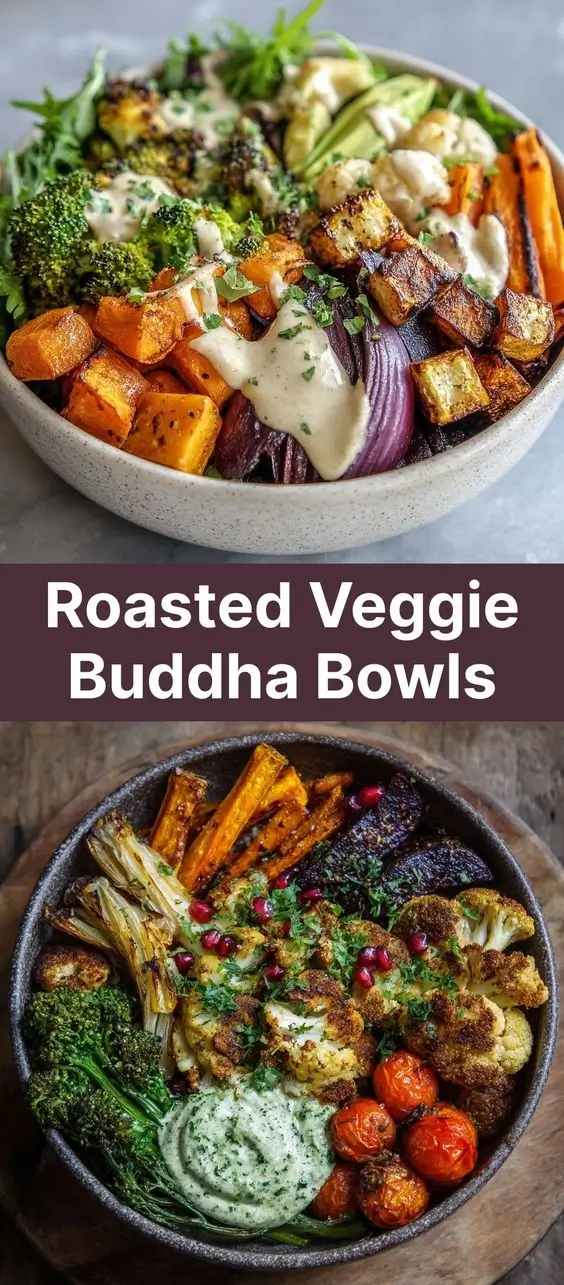
- Build Each Bowl: Start with a base of quinoa, then arrange roasted veggies, chickpeas, greens, avocado, pickled onions, and any additional toppings. Drizzle generously with tahini dressing and finish with a sprinkle of sesame seeds and fresh cilantro.
<
Tips
- Uniform Cutting: Chop vegetables into similar sizes to ensure even roasting—no one wants mushy carrots next to raw beets!
- Don’t Crowd the Pan: Overcrowding causes steaming instead of roasting. Use two trays if needed to allow space for browning.
- Dry Chickpeas Thoroughly: Moisture is the enemy of crispy chickpeas. Pat them completely dry before tossing with oil and spices.
- Boost Flavor with Umami: Add depth with a dash of soy sauce, tamari, miso paste, or nutritional yeast to dressings or roasted veggies.
- Meal Prep Smart: Roast veggies and cook grains ahead of time. Store separately in airtight containers for up to 4 days. Assemble bowls fresh to maintain texture.
- Balanced Composition: Aim for visual balance—colors, textures, temperatures. A mix of warm and cool elements keeps each bite interesting.
- Dressing on the Side: If packing for lunch, keep dressing separate until ready to eat to prevent sogginess.
- Revive Leftovers: Reheat grains and roasted veggies gently in a toaster oven or skillet to restore crispness.
Variations and Customizations
The beauty of Roasted Veggie Buddha Bowls lies in their adaptability. Here are some creative spins to keep things exciting:
- Mediterranean Twist: Use farro or couscous as the base, add roasted eggplant, cherry tomatoes, cucumbers, kalamata olives, feta (or vegan feta), and a lemon-oregano vinaigrette. Top with tzatziki or hummus.
- Asian-Inspired: Swap quinoa for brown rice or sushi rice. Include roasted broccoli, snap peas, shredded cabbage, edamame, and marinated baked tofu. Drizzle with ginger-sesame dressing and top with green onions and nori flakes.
- Mexican Fiesta: Base with cilantro-lime brown rice. Add black beans, corn, roasted poblano peppers, pico de gallo, avocado, and tortilla strips. Finish with a chipotle-lime crema.
- Autumn Harvest: Feature roasted delicata squash, apples, red cabbage, and caramelized onions over wild rice. Add toasted pecans, goat cheese, and a maple-mustard dressing.
- Protein-Powered: Double up on legumes—add lentils alongside chickpeas—or include grilled tempeh, seitan, or hard-boiled eggs for omnivores.
- Low-Carb Option: Replace grains with riced cauliflower, massaged kale, or shredded Brussels sprouts. Load up on roasted low-carb veggies and healthy fats.
- Raw & Fresh: Skip roasting altogether. Use spiralized zucchini, shredded carrots, sliced radishes, sprouts, and mango with a creamy avocado dressing.
- Kid-Friendly Version: Make it fun with sweet potato “coins,” banana slices, nut butter drizzle, and granola for crunch—turn it into a sweet-savory hybrid that kids love.
Health Considerations and Nutritional Value
Roasted Veggie Buddha Bowls are a powerhouse of nutrition when thoughtfully composed. A typical bowl (using the recipe above) contains approximately:
- Calories: 550–700 kcal per serving
- Protein: 18–25g (from quinoa, chickpeas, and greens)
- Fiber: 15–20g (supports digestion and satiety)
- Complex Carbohydrates: Slow-digesting, blood sugar-friendly energy
- Healthy Fats: Monounsaturated and polyunsaturated fats from avocado, olive oil, and seeds support heart and brain health
- Vitamins & Minerals: High in vitamin A (from sweet potatoes and carrots), vitamin C (bell peppers), vitamin K (kale and spinach), potassium, magnesium, and folate
- Antioxidants: Beets and colorful veggies contain phytonutrients that combat oxidative stress
- Low in Saturated Fat and Cholesterol-Free: Naturally heart-healthy and suitable for plant-based diets
These bowls are excellent for weight management due to high fiber and water content, promoting fullness without excess calories. They also support gut health through prebiotic fibers and fermented toppings. However, those monitoring sodium should use low-sodium soy sauce or tamari and limit added salt. People with specific allergies should watch for common triggers like nuts, sesame (in tahini), or gluten (if using barley or farro). Diabetics can enjoy this meal in moderation, focusing on portion control of starchy vegetables and grains.
Ingredients
- 1 cup quinoa, rinsed
- 2 cups water or vegetable broth
- 1 large sweet potato, peeled and cubed
- 1 small beet, peeled and cubed
- 1 cup Brussels sprouts, halved
- 1 red bell pepper, sliced
- 1 carrot, sliced
- 1 can (15 oz) chickpeas, drained and rinsed
- 3 tbsp olive oil (divided)
- 1 tsp garlic powder
- 1 tsp smoked paprika
- ½ tsp ground cumin
- ¼ tsp turmeric
- Salt and black pepper to taste
- 1 tbsp maple syrup (optional)
- 2 cups baby spinach or kale
- 1 ripe avocado, sliced
- ¼ cup pickled red onions
- 2 tbsp sesame seeds or pumpkin seeds
- ¼ cup fresh cilantro or parsley, chopped
- For the Tahini Dressing:
- ¼ cup tahini
- 2 tbsp fresh lemon juice
- 1 tbsp maple syrup or agave
- 1 clove garlic, minced
- 3–4 tbsp warm water
- Pinch of salt
Directions
- In a medium saucepan, combine rinsed quinoa and water (or broth). Bring to a boil, then reduce heat to low, cover, and simmer for 15 minutes. Remove from heat and let stand, covered, for 5 minutes. Fluff with a fork and set aside.
- Preheat oven to 400°F (200°C). Line two large baking sheets with parchment paper.
- On one sheet, toss sweet potato, beet, Brussels sprouts, bell pepper, and carrot with 2 tbsp olive oil, garlic powder, smoked paprika, salt, and pepper. Spread in a single layer.
- On the second sheet, toss chickpeas with 1 tbsp olive oil, cumin, turmeric, salt, and a drizzle of maple syrup. Spread evenly.
- Roast both trays for 25–35 minutes, flipping veggies halfway. Chickpeas should be golden and slightly crisp; vegetables tender and caramelized.
- While ingredients roast, prepare dressing: whisk tahini, lemon juice, maple syrup, garlic, salt, and warm water until smooth. Add more water as needed for pourable consistency.
- Assemble each bowl: Start with ¾ cup quinoa, top with roasted vegetables, chickpeas, spinach, avocado slices, pickled onions, and herbs.
- Drizzle with tahini dressing and sprinkle with sesame seeds. Serve immediately and enjoy!
FAQ
Can I make Buddha bowls ahead of time?
Yes! Roast the veggies and cook the grains up to 4 days in advance. Store separately in airtight containers. Assemble bowls fresh or pack components individually for grab-and-go lunches.
Are Buddha bowls vegan and gluten-free?
They can be! This recipe is naturally vegan. To make it gluten-free, ensure all ingredients (especially sauces and grains) are certified GF. Quinoa, rice, and certified GF oats are safe choices.
How do I keep my bowl from getting soggy?
Keep wet ingredients like dressing separate until serving. Avoid overloading with juicy veggies unless patted dry. Reheat only the roasted components, not greens or avocado.
Can I use frozen vegetables?
Fresh is best for roasting, but you can use frozen cauliflower or peas as add-ins. Avoid frozen root vegetables—they tend to become mushy.
What can I substitute for tahini?
Try almond butter, cashew butter, or sunflower seed butter for a nutty alternative. For a lighter option, use a lemony vinaigrette or yogurt-based dressing.
Are Buddha bowls good for weight loss?
Yes, when portion-controlled and rich in fiber and protein. Focus on non-starchy veggies, moderate grains, and healthy fats. Avoid excessive oils, sugary dressings, or calorie-dense toppings.
Can I freeze roasted Buddha bowl components?
Grains and roasted vegetables freeze well for up to 3 months. Cool completely, store in freezer-safe bags, and reheat in oven or microwave. Avoid freezing greens, avocado, or dressings.
Summary
Roasted Veggie Buddha Bowls are a vibrant, nutrient-packed meal that combines roasted seasonal vegetables, whole grains, plant-based protein, and creamy dressings into a harmonious, customizable dish.
Perfect for meal prep, dietary preferences, and boosting vegetable intake, these bowls are as delicious as they are nutritious—making healthy eating joyful and sustainable.