Introduction
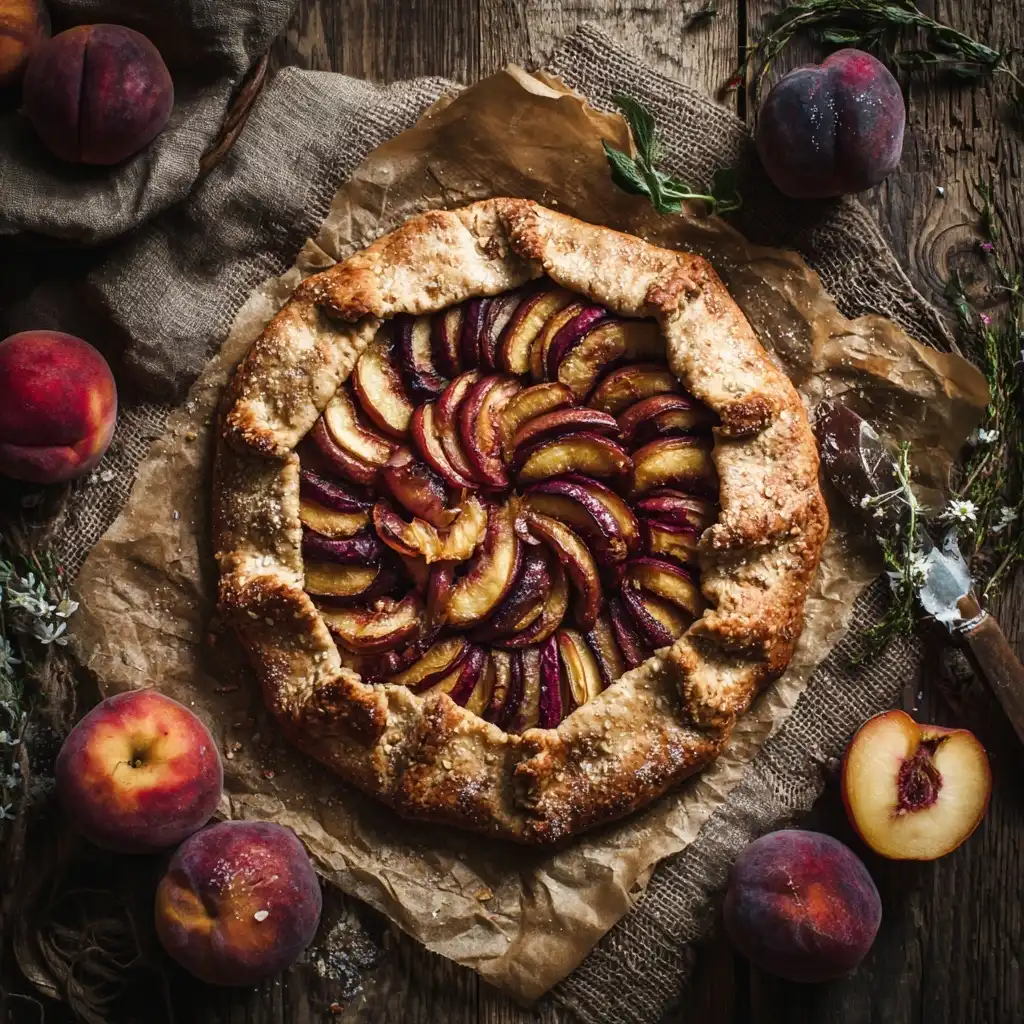
The Rustic Peach Galette is more than just a dessert—it’s a celebration of summer’s sweetest bounty, wrapped in buttery, flaky pastry and baked to golden, caramelized perfection. Unlike its more formal cousin, the pie, the galette embraces imperfection: free-form edges, gently folded crusts, and an artful rustic charm that makes it as comforting to bake as it is delightful to serve. This humble French-inspired tart embodies simplicity, seasonality, and soul-warming nostalgia—equally at home on a sun-dappled farmhouse table, a backyard picnic spread, or a cozy weeknight dessert platter. With no fancy equipment required and minimal technique needed, the Rustic Peach Galette invites bakers of all levels to connect with ingredients, trust their hands, and savor the joy of something beautifully imperfect.
The History
The galette traces its origins to rural France—particularly Brittany and Normandy—where resourceful home cooks transformed humble pantry staples into nourishing, satisfying fare. Traditionally made with buckwheat flour (souchet) and filled with savory ingredients like eggs, cheese, or ham, the savory galette was a staple of Breton farm life. Over centuries, the concept evolved, and in central and southern France, wheat-based versions emerged featuring seasonal fruits—apples in autumn, cherries in spring, and peaches in high summer. The word “galette” itself derives from the Old French *gale*, meaning “flat cake” or “pancake,” underscoring its unpretentious, flat-tart identity. Unlike the precise geometry of a classic pie, the galette’s loose, hand-crimped form reflects agrarian practicality: no pie plates needed, no crimping tools required—just a sheet pan, a rolling pin, and intuition. Its arrival in American kitchens surged in the late 20th century, championed by chefs like Alice Waters and food writers who extolled its “effortless elegance.” Today, the Rustic Peach Galette stands as a beloved emblem of slow food philosophy—honoring peak-season fruit, artisanal butter, and the quiet dignity of handmade desserts.
Ingredients Breakdown
Every element of the Rustic Peach Galette serves both function and flavor—no ingredient is arbitrary. Let’s explore each component in depth:
- All-Purpose Flour (2½ cups, chilled): Provides gluten structure for tenderness without toughness. Chilling prevents overdevelopment during mixing and ensures crisp, shattering layers when baked. A small percentage of bread flour (up to ¼ cup) can be substituted for added strength if desired—but keep it minimal to preserve tenderness.
- Unsalted Butter (1 cup / 2 sticks, very cold and cubed): The heart of flakiness. European-style butter (82–84% fat) yields superior lamination and richer flavor, but high-quality American butter works beautifully. Cold temperature is non-negotiable—warm butter melts prematurely, leading to greasy, dense crust. Freezing cubes for 10 minutes before use guarantees optimal texture.
- Granulated Sugar (1 tbsp): Not just for sweetness—the small amount enhances browning via the Maillard reaction and subtly tenderizes gluten strands.
- Fine Sea Salt (¾ tsp): Balances sweetness, deepens overall flavor, and controls yeast activity (though not used here, salt remains essential for dough integrity).
- Ice Water (6–8 tbsp, measured separately): Hydrates flour without activating excessive gluten. Start with 6 tbsp; add sparingly until dough just holds together when pinched. Too much water = tough crust; too little = crumbly, unworkable dough.
- Heavy Cream or Whole Milk (1 tbsp, for egg wash alternative): Used instead of egg wash for a deeper golden hue and subtle richness without the potential for oversaturation or speckling.
- Ripe Freestone Peaches (6–7 medium, ~2 lbs peeled, pitted, and sliced ¼-inch thick): Freestone varieties (e.g., Red Haven, O’Henry, Elberta) separate cleanly from the pit, minimizing bruising and preserving delicate flesh. Peak ripeness—yielding slightly to gentle palm pressure, fragrant at the stem end—is critical. Underripe peaches lack juice and sweetness; overripe ones turn mushy and bleed excess liquid.
- Light Brown Sugar (⅔ cup, packed): Adds molasses depth and moisture retention—critical for preventing dry filling and encouraging gentle caramelization. Dark brown sugar may be used for richer notes but increases acidity slightly.
- Granulated Sugar (¼ cup): Brightens peach flavor and balances brown sugar’s earthiness.
- Lemon Juice (1½ tbsp freshly squeezed): Brightens sweetness, preserves vibrant peach color via acidity, and inhibits enzymatic browning. Bottled lemon juice lacks nuance and may introduce off-notes.
- Lemon Zest (1 tsp, finely grated): Introduces volatile citrus oils that lift the entire aromatic profile—don’t skip this subtle but transformative step.
- Cornstarch (3 tbsp): The ideal thickener for stone fruit—neutral flavor, clear gel, and reliable performance at high heat. Arrowroot may substitute but lacks cornstarch’s stability under prolonged baking; tapioca starch can create stringiness.
- Ground Cinnamon (½ tsp): Warm, woody, and subtly sweet—enhances peach’s natural spice notes without overpowering. Vietnamese cinnamon offers higher oil content and greater complexity than standard cassia.
- Fine Sea Salt (¼ tsp): Reinforces flavor perception across both crust and filling—especially important to offset the fruit’s natural acidity.
- Raw Turbinado Sugar (2–3 tbsp, for finishing): Adds textural contrast and sparkling crunch. Its coarse crystals resist melting, delivering bursts of caramelized sweetness with each bite.
Step-by-Step Recipe
- Prepare the Dough (30 minutes + 2 hours chilling): In a large bowl, whisk together flour, 1 tbsp granulated sugar, and ¾ tsp salt. Add cubed, ice-cold butter. Using a pastry cutter, two forks, or fingertips, cut butter into flour until mixture resembles coarse meal with visible pea-sized butter pieces—this takes 3–5 minutes. Sprinkle 6 tbsp ice water over mixture; gently toss with a silicone spatula. Squeeze a small amount—if it holds together without crumbling, stop adding water. If dry, add ½ tbsp more, repeating only as needed. Gather dough into a shaggy mass, divide into two equal disks, flatten slightly, wrap tightly in parchment-lined plastic wrap, and refrigerate for at least 2 hours (or up to 3 days). For best results, freeze one disk for future use.
- Prep the Peaches (15 minutes): Bring a large pot of water to boil. Score an “X” on the bottom of each peach. Blanch for 30–45 seconds until skins loosen, then transfer immediately to an ice bath. Peel, halve, remove pits, and slice into ¼-inch wedges. Place in a large colander set over a bowl; toss gently with 1 tbsp lemon juice to prevent browning and drain for 10 minutes—discard accumulated liquid to avoid soggy crust.
- Make the Filling (5 minutes): In a large non-reactive bowl, combine drained peaches, brown sugar, granulated sugar, remaining lemon juice and zest, cornstarch, cinnamon, and ¼ tsp salt. Gently fold with a silicone spatula until evenly coated. Let sit at room temperature while dough chills—or for 15 minutes minimum—to allow flavors to meld and starch to hydrate.
- Roll & Assemble (10 minutes): Preheat oven to 400°F (200°C) with rack in center position. Line a large rimmed baking sheet with parchment paper. On a lightly floured surface, roll one chilled dough disk into a 12–13 inch circle, ~⅛-inch thick. Carefully drape over parchment-lined sheet. Spoon filling into center, leaving a 2-inch border. Gently fold edges over filling, pleating as you go—overlapping folds should be snug but not tight. Brush exposed crust with heavy cream or milk. Sprinkle generously with turbinado sugar.
- Bake to Golden Perfection (45–55 minutes): Place galette in preheated oven. Bake for 20 minutes, then rotate pan 180° for even browning. Continue baking until crust is deeply golden brown, filling is bubbling vigorously at edges, and peaches are tender when pierced with a thin knife (approx. 25–35 more minutes). Total bake time varies based on oven accuracy, humidity, and peach juiciness—trust visual and textural cues over strict timing.
- Cool & Set (At least 2 hours): Remove from oven and cool completely on baking sheet placed on a wire rack. This critical step allows cornstarch to fully set and filling to thicken—cutting too soon releases syrupy juices and compromises structure. For clean slices, refrigerate uncovered for 1 hour before serving (optional but recommended for make-ahead).
Tips
- Chill Everything—Twice: Chill dough before rolling AND chill rolled dough for 15 minutes after shaping—this prevents butter from softening and ensures maximum flakiness.
- Measure Peaches by Weight, Not Count: Size varies dramatically—aim for 2 lbs peeled, pitted, and sliced fruit for consistent results.
- Don’t Skip the Drain Step: Even “dry-looking” peaches release surprising liquid—colander draining removes up to 3 tbsp excess juice, preventing a soggy bottom.
- Use a Bench Scraper for Clean Transfers: Lift rolled dough onto parchment with a bench scraper instead of stretching or folding—preserves delicate layers.
- Rotate Mid-Bake—Without Opening the Oven Fully: Crack oven door just enough to insert oven mitts and rotate pan—minimizes heat loss and prevents temperature shock.
- Test Doneness with a Knife—not Just Bubbling: Bubbling alone doesn’t guarantee thickening; pierce a peach wedge—if it slides in with gentle resistance (not mush), filling is set.
- Rest Before Cutting—Even If It’s Torture: Minimum 2-hour cooling locks in structure. Serve warm—not hot—for ideal texture contrast.
- Freeze Unbaked Galettes Successfully: Assemble fully, freeze solid on tray (2 hours), then wrap tightly in double-layer plastic + foil. Bake from frozen—add 15–20 minutes to total time.
- Revive Leftovers with a Quick Toast: Reheat individual slices on a skillet over medium-low heat, crust-side down, until crisp—then top with vanilla ice cream.
- Save Peach Scrap for Infusions: Simmer pits, skins, and stems in 1 cup water + ¼ cup sugar for 20 minutes; strain to make fragrant peach syrup for cocktails or drizzling.
Variations and Customizations
The Rustic Peach Galette is gloriously adaptable—here’s how to make it your own:
- Peach-Plum Fusion: Replace 2 cups peaches with ripe purple plums (halved, pitted, quartered). Their tartness balances peach sweetness; reduce brown sugar by 2 tbsp.
- Herb-Infused: Stir 1 tsp finely chopped fresh thyme or ½ tsp lavender buds into filling. Pair with honey-sweetened whipped cream.
- Nutty Crunch Crust: Pulse ¼ cup toasted sliced almonds or pecans into flour-butter mixture before adding water—adds toasty depth and subtle crunch.
- Maple-Ginger Variation: Substitute Grade B maple syrup for 2 tbsp brown sugar and add 1 tbsp finely grated fresh ginger to filling. Garnish with candied ginger.
- Vegan Adaptation: Use plant-based butter (Miyoko’s or Earth Balance) and ice-cold almond milk + ½ tsp apple cider vinegar (to mimic buttermilk tang) in dough. Thicken filling with arrowroot and use coconut sugar.
- Gluten-Free Option: Substitute 1:1 gluten-free flour blend (with xanthan gum) + 1 tbsp psyllium husk powder for binding. Chill dough longer (3 hours) for stability.
- Spiced Chai Version: Add ¼ tsp ground cardamom, ⅛ tsp ground cloves, and a 1-inch piece of black tea-infused milk (steep 1 tsp loose-leaf chai in warm milk, strain) to filling.
- Savory-Sweet Twist: Sprinkle crust edge with flaky sea salt + cracked black pepper before baking. Serve with crumbled goat cheese and arugula salad on the side.
- Mini Galettes: Divide dough into 4 portions; roll each into 6-inch rounds. Fill with ½ cup peach mixture per galette. Bake 20–25 minutes—perfect for portion control or entertaining.
- Brandy-Soaked Peaches: Toss drained peaches with 1 tbsp brandy and let macerate 30 minutes before mixing with other filling ingredients—adds sophisticated warmth.
Health Considerations and Nutritional Value
A single generous slice (1/8 of galette, approx. 220g) contains approximately:
- Calories: 385 kcal
- Total Fat: 19g (11g saturated, primarily from butter)
- Carbohydrates: 51g (34g sugars—naturally occurring fructose from peaches accounts for ~22g; added sugars ~12g)
- Dietary Fiber: 3g (peaches contribute 2g; whole grain flour substitution would increase this significantly)
- Protein: 4g
- Vitamin C: 18mg (30% DV)—boosted by lemon juice and raw peaches
- Vitamin A (as beta-carotene): 520 IU (10% DV)—peaches are rich in carotenoids supporting eye health
- Potassium: 310mg (9% DV)—supports fluid balance and muscle function
- Phytonutrients: Chlorogenic acid (antioxidant), quercetin (anti-inflammatory), and anthocyanins (in red-blushed skin) offer cellular protection.
Considerations for Health-Conscious Bakers:
• Reduced-Sugar Option: Cut total sugar by ¼ cup (replace with 1 tbsp honey + extra ½ tsp lemon juice for balance); accept slightly looser set.
• Whole Grain Boost: Substitute ½ cup white whole wheat flour for all-purpose—adds fiber, B vitamins, and nutty flavor (increase water by 1 tsp).
• Lower-Fat Crust: Replace 2 tbsp butter with 2 tbsp full-fat Greek yogurt—maintains tenderness with less saturated fat.
• Allergen Notes: Naturally nut-free and soy-free (verify butter label). For dairy-free, use certified vegan butter and non-dairy milk.
• Glycemic Impact: Moderate—peaches have low glycemic index (~30), but added sugars elevate overall load. Pair with protein (Greek yogurt, cottage cheese) to slow absorption.
Ingredients
- For the All-Butter Flaky Crust:
– 2½ cups (315g) all-purpose flour, chilled
– 1 cup (227g / 2 sticks) unsalted butter, very cold and cubed
– 1 tablespoon (12g) granulated sugar
– ¾ teaspoon (4g) fine sea salt
– 6–8 tablespoons (90–120ml) ice water, measured separately
– 1 tablespoon (15ml) heavy cream or whole milk (for brushing)
– 2–3 tablespoons (25–35g) raw turbinado sugar (for finishing) - For the Luscious Peach Filling:
– 6–7 medium freestone peaches (about 2 pounds / 900g), peeled, pitted, and sliced ¼-inch thick
– ⅔ cup (135g) light brown sugar, packed
– ¼ cup (50g) granulated sugar
– 1½ tablespoons (22ml) fresh lemon juice
– 1 teaspoon (2g) finely grated lemon zest
– 3 tablespoons (24g) cornstarch
– ½ teaspoon (1g) ground cinnamon (preferably Vietnamese)
– ¼ teaspoon (1g) fine sea salt
Directions
- In a large bowl, whisk together flour, 1 tablespoon granulated sugar, and ¾ teaspoon salt. Add cold, cubed butter. Using a pastry cutter or two knives, cut butter into flour until mixture resembles coarse crumbs with numerous pea-sized butter pieces remaining—about 4 minutes. Avoid overworking.
- Sprinkle 6 tablespoons ice water over mixture. Gently toss with a silicone spatula until shaggy clumps form. Squeeze a small amount—if it holds together without crumbling, proceed. If dry, add water ½ tablespoon at a time, tossing gently between additions. Stop as soon as dough begins to cohesion.
- Turn dough onto a lightly floured surface. Divide into two equal portions. Shape each into a 1-inch-thick disk. Wrap tightly in parchment-lined plastic wrap. Refrigerate for at least 2 hours—or overnight for optimal flavor development and ease of rolling.
- Bring a large pot of water to boil. Score an “X” on the base of each peach. Blanch for 30–45 seconds until skins begin to lift, then immediately plunge into an ice water bath. Drain, peel, halve, pit, and slice into ¼-inch wedges.
- Place peach slices in a large colander set over a bowl. Toss with 1 tablespoon lemon juice. Let drain 10 minutes—discard liquid thoroughly.
- In a large non-reactive bowl, combine drained peaches, brown sugar, granulated sugar, remaining lemon juice and zest, cornstarch, cinnamon, and ¼ teaspoon salt. Fold gently until evenly coated. Let rest at room temperature for 15 minutes.
- Preheat oven to 400°F (200°C). Position rack in center. Line a large rimmed baking sheet with parchment paper.
- On a lightly floured surface, roll one chilled dough disk into a 12–13 inch circle, rotating and lightly flouring as needed to prevent sticking. Aim for even ⅛-inch thickness. Carefully drape over parchment-lined sheet.
- Spoon filling into center of dough, leaving a generous 2-inch border. Gently lift edges and fold over filling, pleating every 2 inches to create a ruffled, overlapping rim. Press seams lightly to seal.
- Brush exposed crust with heavy cream or milk. Sprinkle liberally with turbinado sugar, focusing on folded edges.
- Bake for 20 minutes. Rotate pan 180°. Continue baking until crust is deep golden brown and filling bubbles thickly at edges—25 to 35 additional minutes. Total time: 45–55 minutes.
- Transfer baking sheet to a wire rack. Cool galette completely—minimum 2 hours—before slicing. For clean cuts, refrigerate uncovered for 1 hour prior to serving.
- Serve at room temperature or slightly warmed, accompanied by vanilla bean ice cream, crème fraîche, or lightly sweetened whipped cream.
FAQ
- Can I make the dough ahead?
- Absolutely! Dough disks keep well refrigerated for up to 3 days or frozen for 3 months. Thaw overnight in fridge before rolling.
- What if my peaches are super juicy?
- Extend draining time to 15 minutes—and consider adding an extra ½ tablespoon cornstarch. You may also toss peaches with 1 tsp sugar and let macerate 10 minutes before draining to draw out even more liquid.
- Why does my crust shrink or slump?
- Under-chilling is the #1 culprit. Ensure dough rests 2+ hours chilled before rolling AND 15 minutes after shaping. Also, avoid stretching dough when transferring—it should relax naturally over filling.
- Can I use canned or frozen peaches?
- Fresh, in-season peaches are strongly recommended for texture and flavor. If using frozen, thaw completely and drain *excessively* (press gently with paper towels). Canned peaches in syrup add unwanted water and sweetness—use only those packed in water or juice, drained and patted dry.
- My galette leaked everywhere—how do I prevent that?
- Leaking usually means too much liquid or insufficient thickener. Double-check draining step, verify cornstarch is fresh (it loses potency after 12–18 months), and ensure filling is bubbling *vigorously* before removing from oven.
- Can I bake this in a cast iron skillet?
- Yes—with caveats. Preheat empty skillet in oven for 10 minutes before carefully placing galette inside. Reduce initial temp to 375°F to prevent scorching; monitor closely. Skillet yields ultra-crisp bottom crust but requires caution handling.
- Is there a way to make it gluten-free?
- Yes—use a reputable 1:1 gluten-free flour blend containing xanthan gum (like King Arthur or Bob’s Red Mill), plus 1 tablespoon psyllium husk powder for elasticity. Chill dough 3+ hours before rolling, and handle minimally.
- How do I store leftovers?
- Cover loosely with parchment and store at room temperature for up to 2 days—or refrigerate for up to 5 days. Reheat individual slices in a 350°F oven for 8–10 minutes for best texture. Do not microwave (crust turns leathery).
- Can I add other spices besides cinnamon?
- Delicious options include a pinch of ground cardamom, star anise, or black pepper—add no more than ⅛ tsp each to preserve peach’s delicate profile. Vanilla bean paste (½ tsp) stirred into filling adds luxurious depth.
- What’s the best way to peel peaches without blanching?
- While blanching is most efficient, you can use a sharp Y-peeler on *very* ripe peaches—just work quickly and accept minor flesh loss. Never use a knife—it’s unsafe and wasteful.
Summary
The Rustic Peach Galette is a timeless, forgiving, and profoundly satisfying dessert that celebrates summer’s fleeting sweetness through simple techniques, quality ingredients, and intentional imperfection.
With its shatteringly flaky crust, warmly spiced caramelized peaches, and effortless elegance, it transforms humble components into a soul-nourishing experience—best shared slowly, with good company and even better ice cream.