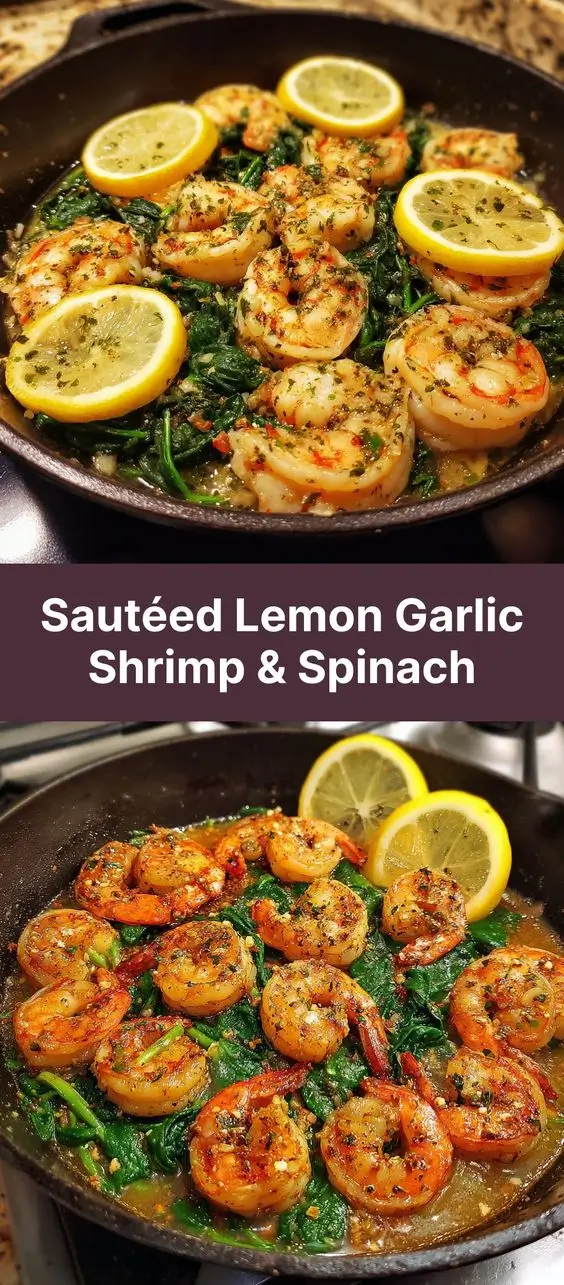
Sautéed Lemon Garlic Shrimp & Spinach: A Zesty, Healthy Delight in Under 20 Minutes
Introduction
If you’re searching for a quick, nutritious, and incredibly flavorful dish that feels gourmet but is simple enough for a weeknight dinner, look no further than Sautéed Lemon Garlic Shrimp & Spinach. This vibrant one-pan meal bursts with bright citrus notes, aromatic garlic, tender-crisp spinach, and succulent shrimp—all coming together in under 20 minutes. Perfect for busy professionals, health-conscious eaters, or anyone craving a restaurant-quality seafood dish at home, this recipe delivers on taste, texture, and nutrition without breaking a sweat.
Whether you’re serving it over fluffy quinoa, zucchini noodles, or enjoying it straight from the pan, this dish is versatile, low-carb, high-protein, and packed with heart-healthy fats and antioxidants. The tangy lemon cuts through the richness of the olive oil and butter, while the garlic adds depth and warmth, creating a harmonious balance that dances on your palate. Let’s dive into the delicious details of this modern classic.
The History
While sautéed shrimp with garlic and lemon may seem like a contemporary healthy eating staple, its roots trace back centuries across Mediterranean coastal cuisines—particularly in Italy, Greece, Spain, and Southern France. In these regions, fresh seafood has long been prepared simply to highlight its natural flavor, often using just olive oil, citrus, garlic, and herbs.
The combination of lemon and garlic with shellfish became especially popular in Italian coastal towns, where fishermen would return with fresh catch and cook their meals quickly over open flames or stovetops using pantry staples. Dishes like Gamberi al Limone (Lemon Shrimp) or Aglio e Olio-inspired preparations laid the foundation for what we now recognize as a global favorite.
Spinach, too, has a rich culinary history, having been cultivated since ancient Persia and later introduced to Europe via Spain during the Middle Ages. Its pairing with seafood in sautéed dishes gained popularity in the 20th century as nutrition science began highlighting leafy greens’ health benefits.
Modern food trends have embraced this fusion—melding traditional Mediterranean techniques with today’s demand for fast, clean-eating recipes. As a result, Sautéed Lemon Garlic Shrimp & Spinach has become a go-to recipe in kitchens around the world, symbolizing both timeless flavor and contemporary wellness values.
Ingredients Breakdown
Every great dish starts with quality ingredients. Here’s a detailed look at each component of this recipe and why they matter:
- Shrimp (Peeled and Deveined): Opt for large or jumbo shrimp (16–20 count per pound) for the best texture. Freshness is key—look for firm, translucent flesh with a mild ocean scent. Frozen wild-caught shrimp are excellent if thawed properly.
- Fresh Spinach: Baby spinach is ideal due to its tender leaves and mild flavor. It wilts beautifully without becoming stringy. Organic is preferred when possible to reduce pesticide exposure.
- Garlic: Freshly minced garlic provides an unmatched pungent aroma and savory depth. Avoid pre-minced jarred versions which often contain preservatives and lack brightness.
- Lemon: Both zest and juice play crucial roles. The zest contains fragrant essential oils, while the juice adds acidity that lifts the entire dish. Use organic lemons to avoid wax and chemicals on the peel.
- Olive Oil: Extra virgin olive oil brings fruity richness and supports heart health. Choose cold-pressed, unrefined oil stored in dark glass bottles for optimal flavor and nutrient retention.
- Butter (Optional): Adds silkiness and rounds out sharp flavors. For a dairy-free version, substitute with vegan butter or additional olive oil.
- Red Pepper Flakes: A pinch introduces gentle heat and complexity. Adjust based on spice tolerance.
- Salt and Black Pepper: Essential seasonings that enhance all other flavors. Sea salt or kosher salt works best for even distribution.
- Fresh Herbs (Parsley or Basil): Chopped parsley adds freshness and color, while basil can introduce a slightly sweet, herbal note. Cilantro is also a bold alternative for those who enjoy it.
Step-by-Step Recipe
- Prep Ingredients: Pat the shrimp dry with paper towels to ensure proper searing. Mince 3–4 cloves of garlic. Zest one lemon and juice half to yield about 2 tablespoons. Measure out 5 oz (about 5 cups) of fresh baby spinach. Chop 2 tablespoons of fresh parsley.
- Heat the Pan: Place a large skillet or sauté pan over medium-high heat. Add 2 tablespoons of extra virgin olive oil and allow it to shimmer—this ensures a good sear without sticking.
- Sear the Shrimp: Add the shrimp in a single layer. Season lightly with salt and black pepper. Cook for 1–2 minutes per side until pink and opaque. Do not overcrowd the pan—work in batches if necessary. Remove shrimp to a plate and set aside.
- Sauté the Aromatics: In the same pan, reduce heat to medium. Add 1 tablespoon of butter (or olive oil) and let it melt. Stir in the minced garlic and a pinch of red pepper flakes. Cook for 30–60 seconds until fragrant—do not let garlic brown or it will turn bitter.
- Wilt the Spinach: Add the fresh spinach in batches, stirring frequently as it cooks down. This should take 2–3 minutes until fully wilted and glossy. If needed, use tongs to press down and help it cook evenly.
- Combine and Deglaze: Return the cooked shrimp to the pan. Pour in the fresh lemon juice and sprinkle in the lemon zest. Toss everything together and cook for another 1–2 minutes to reheat the shrimp and meld the flavors.
- Finish with Herbs: Remove from heat. Stir in chopped parsley (or basil). Taste and adjust seasoning with more salt, pepper, or lemon juice as desired.
- Serve Immediately: Plate hot, optionally over grains, pasta, or cauliflower rice. Garnish with extra lemon wedges and a sprinkle of fresh herbs.
Tips
- Dry Shrimp = Better Sear: Moisture prevents browning. Always pat shrimp thoroughly before cooking.
- Don’t Overcook Shrimp: They cook quickly and become rubbery if left too long. Remove them from the pan as soon as they turn opaque.
- Use Fresh Lemon Juice: Bottled lemon juice lacks brightness and can taste metallic. Always use freshly squeezed.
- Add Liquid if Needed: If the pan gets too dry during spinach wilting, splash in a few tablespoons of chicken broth, white wine, or water to prevent sticking.
- Infuse the Oil: For deeper flavor, gently warm the olive oil with crushed garlic and red pepper flakes before adding other ingredients.
- Reserve Pasta Water (if serving with pasta): If tossing with spaghetti or linguine, save some starchy pasta water to create a silky sauce that clings to the ingredients.
- Cook Spinach Just Until Wilted: Overcooked spinach turns mushy and loses nutrients. Aim for vibrant green and tender texture.
- Rest Before Serving: Let the dish sit for a minute after finishing—it allows flavors to settle and meld beautifully.
Variations and Customizations
This recipe is highly adaptable—here are creative ways to switch it up based on dietary needs, preferences, or what’s in your pantry:
- Low-Carb/Keto Version: Serve over roasted cauliflower, zucchini noodles, or shirataki noodles. Increase healthy fats by adding sliced avocado or a drizzle of garlic-infused olive oil.
- Paleo/Whole30 Approved: Skip the butter and use only olive oil or ghee. Ensure shrimp are wild-caught and free of additives.
- Vegan Option: Replace shrimp with marinated tofu, tempeh, or king oyster mushrooms. Use plant-based butter and boost umami with a dash of tamari or nutritional yeast.
- Creamy Twist: Stir in 2–3 tablespoons of heavy cream, coconut milk, or Greek yogurt at the end for a richer sauce.
- With White Wine: After sautéing garlic, deglaze the pan with ¼ cup dry white wine (like Sauvignon Blanc or Pinot Grigio), letting it reduce by half before adding spinach.
- Extra Veggies: Add cherry tomatoes, artichoke hearts, bell peppers, or asparagus for added color, fiber, and volume.
- Protein Boost: Mix in grilled chicken strips or white beans for a heartier meal.
- Spicier Kick: Increase red pepper flakes or add a few dashes of hot sauce like Sriracha or Calabrian chili paste.
- Herb Variations: Swap parsley for dill (great with lemon), chives, tarragon, or even mint for a unique twist.
- Mediterranean Style: Top with crumbled feta cheese, Kalamata olives, and sun-dried tomatoes for a Greek-inspired flair.
- Asian Fusion: Use sesame oil instead of olive oil, swap lemon for yuzu or lime, add ginger, and garnish with green onions and toasted sesame seeds.
Health Considerations and Nutritional Value
Beyond its exquisite taste, Sautéed Lemon Garlic Shrimp & Spinach is a powerhouse of nutrition. Let’s break down the health benefits:
Nutritional Highlights (Per Serving, Approximate):
- Calories: ~220–280 kcal (depending on oil/butter used)
- Protein: 25–30g – Excellent source for muscle repair and satiety
- Fat: 10–14g – Primarily heart-healthy monounsaturated fats from olive oil
- Carbohydrates: 5–7g – Mostly from spinach, making it low-glycemic
- Fiber: 2–3g – Supports digestion and gut health
- Vitamin A: Over 100% DV – From spinach, vital for vision and immunity
- Vitamin C: ~50% DV – From lemon and spinach, boosts immune function and collagen production
- Iron: ~15% DV – Plant-based iron from spinach (enhanced by vitamin C absorption)
- Selenium: High – Found in shrimp, acts as a powerful antioxidant
- Omega-3 Fatty Acids: Moderate – Especially in wild-caught shrimp, supporting brain and heart health
Health Benefits:
- Heart Health: Olive oil and omega-3s help reduce inflammation and improve cholesterol levels.
- Weight Management: High protein and low carbs promote fullness and support metabolism.
- Antioxidant-Rich: Spinach contains lutein, beta-carotene, and flavonoids; lemon offers citric acid and limonoids.
- Low Mercury Risk: Shrimp are among the lowest-mercury seafood options, safe for regular consumption (including pregnant women in moderation).
- Bone and Eye Health: Spinach provides vitamin K and lutein, protecting bones and reducing age-related macular degeneration.
Dietary Notes:
- Gluten-Free ✅
- Dairy-Free (if omitting butter) ✅
- Keto-Friendly ✅
- Low-Carb ✅
- High-Protein ✅
- Refined Sugar-Free ✅
Considerations:
- Allergies: Shellfish allergy is common. Substitute with chicken, tofu, or mushrooms if needed.
- Sodium: Control salt content by seasoning mindfully, especially for those managing hypertension.
- Cholesterol: While shrimp contain dietary cholesterol, recent studies show minimal impact on blood cholesterol for most people.
- Sustainability: Choose MSC-certified or sustainably farmed shrimp to protect marine ecosystems.
Ingredients
- 1 lb (450g) large shrimp, peeled and deveined
- 5 oz (about 5 cups) fresh baby spinach
- 3–4 cloves garlic, finely minced
- Zest and juice of 1 lemon (juice: ~2 tbsp)
- 2 tbsp extra virgin olive oil
- 1 tbsp unsalted butter (optional, omit for dairy-free)
- ½ tsp red pepper flakes (adjust to taste)
- Salt and freshly ground black pepper, to taste
- 2 tbsp fresh parsley, chopped (or sub basil, dill, or cilantro)
- Lemon wedges, for serving
Directions
- In a large skillet over medium-high heat, warm the olive oil until shimmering.
- Add shrimp in a single layer; season with salt and pepper. Cook 1–2 minutes per side until pink and opaque. Transfer to a plate and set aside.
- Reduce heat to medium. Add butter (if using) and let melt. Stir in garlic and red pepper flakes; cook 30–60 seconds until fragrant.
- Add spinach in batches, stirring constantly until wilted and tender (~2–3 minutes).
- Return shrimp to the pan. Add lemon juice and zest. Toss well and cook 1–2 minutes to combine.
- Remove from heat. Stir in chopped parsley. Taste and adjust seasoning with additional salt, pepper, or lemon juice.
- Serve immediately with optional sides and garnish with lemon wedges.
FAQ
Can I use frozen shrimp?
Yes! Thaw frozen shrimp in the refrigerator overnight or under cold running water. Pat dry thoroughly before cooking to prevent steaming.
Can I make this ahead of time?
Best served fresh, but components can be prepped in advance. Store cooked dish in an airtight container for up to 2 days. Reheat gently to avoid overcooking shrimp.
What can I serve with this dish?
Great options include: quinoa, brown rice, couscous, mashed potatoes, crusty bread, zucchini noodles, or a simple arugula salad.
Is this recipe gluten-free?
Yes, as written. Just ensure all ingredients (especially shrimp) are certified gluten-free if cross-contamination is a concern.
Can I use garlic powder instead of fresh garlic?
Fresh is best, but in a pinch, use ¾ tsp garlic powder. However, fresh garlic provides superior aroma and flavor complexity.
Why did my shrimp turn rubbery?
Overcooking is the main culprit. Shrimp cook very quickly—remove them from heat as soon as they turn opaque and form a loose “C” shape.
Can I add other proteins?
Absolutely! Try adding scallops, chicken breast, or even salmon flakes for variety.
How do I store leftovers?
Cool completely and store in an airtight container in the refrigerator for up to 2 days. Reheat in a skillet over low heat with a splash of water or broth.
Can I freeze this dish?
Not recommended. Spinach becomes watery upon thawing, and shrimp can become tough. Best enjoyed fresh.
Is canned spinach okay?
No—canned spinach is overly processed, salty, and lacks texture. Always use fresh or frozen (thawed and drained) spinach for best results.
Summary
Sautéed Lemon Garlic Shrimp & Spinach is a quick, nutritious, and dazzlingly flavorful dish that brings Mediterranean elegance to your table in under 20 minutes.
Packed with protein, vitamins, and heart-healthy fats, it’s a balanced meal that satisfies the senses and supports overall wellness—perfect for any night of the week.