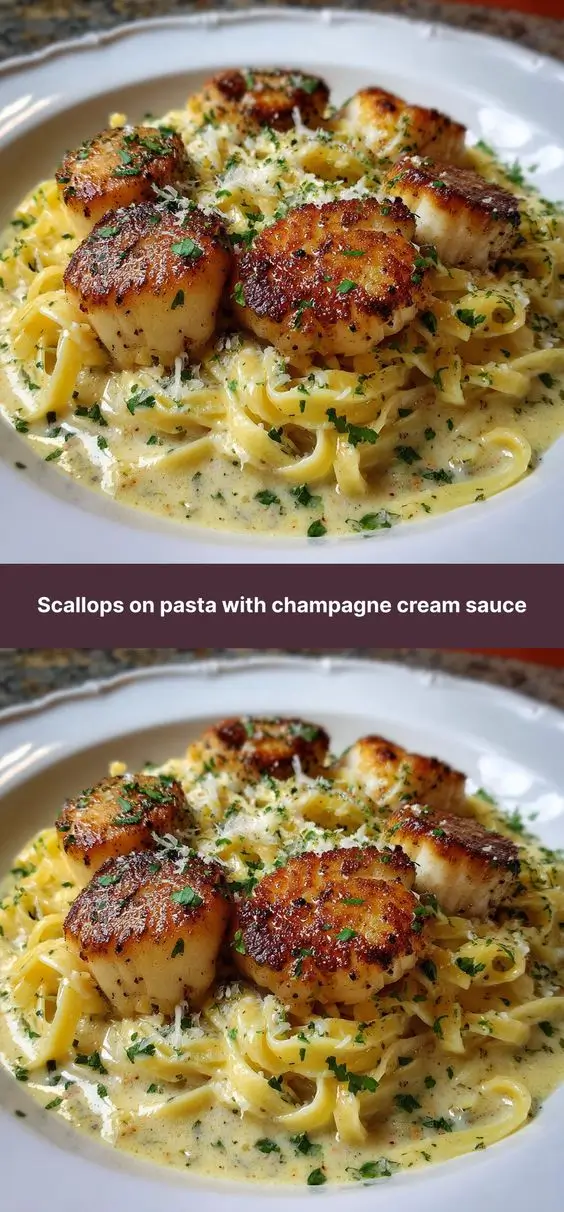
Scallops on Pasta with Champagne Cream Sauce
The History
The elegant dish of scallops served over pasta with a champagne cream sauce is a modern culinary masterpiece that bridges the sophistication of French technique with the comforting allure of Italian cuisine. While seafood and pasta have been staples in Mediterranean cooking for centuries, the use of champagne in sauces can be traced back to 19th-century France, where chefs in regions like Reims began incorporating the sparkling wine into reductions to elevate fish and shellfish dishes.
Champagne, produced exclusively in the Champagne region of France, brings a unique acidity, effervescence, and subtle fruitiness that cuts through rich dairy elements, making it ideal for balancing creamy sauces. The marriage of seared sea scallops—renowned for their sweet, delicate flavor—with al dente pasta and a velvety champagne-infused cream sauce reflects the rise of fusion gastronomy in the late 20th century, particularly in fine dining restaurants along coastal cities from Marseille to Manhattan.
This dish gained popularity in upscale American bistros during the 1990s and early 2000s, as chefs sought to create luxurious yet approachable meals using high-quality ingredients. Today, “Scallops on Pasta with Champagne Cream Sauce” symbolizes indulgence and refinement, often appearing on menus during special occasions or romantic dinners. Its enduring appeal lies not only in its exquisite taste but also in its ability to showcase the harmony between land (pasta), sea (scallops), and vineyard (champagne).
Ingredients Breakdown
To achieve the perfect balance of textures and flavors in this dish, each ingredient plays a critical role:
- Sea Scallops (U-10 or 10–20 count per pound): Fresh, dry-packed sea scallops are preferred for their superior texture and ability to develop a golden sear without excess moisture. Avoid wet-packed scallops treated with sodium tripolyphosphate, which can inhibit browning.
- Pasta (Linguine, Fettuccine, or Pappardelle): Long, flat noodles provide an ideal surface for clinging to the rich sauce. High-quality bronze-die extruded pasta enhances sauce adhesion due to its slightly rough texture.
- Champagne (Brut or Extra Brut): A dry, crisp champagne adds brightness and complexity. Avoid sweet varieties; the acidity helps deglaze the pan and balances the richness of cream.
- Heavy Cream: Provides body and silkiness to the sauce. Opt for pasteurized (not ultra-pasteurized) cream for better emulsification and flavor.
- Shallots: Finely minced shallots add aromatic sweetness without overpowering the delicate scallop flavor.
- Garlic: Used sparingly to enhance depth without dominating the palate.
- Unsalted Butter: Adds richness and helps create a glossy finish. Clarified butter may be used for higher smoke point when searing scallops.
- Olive Oil: A neutral oil blended with olive oil provides a clean base for searing while adding a hint of fruitiness.
- Fresh Thyme and Parsley: Thyme imparts earthy notes that complement both scallops and champagne, while parsley adds freshness and color at the end.
- Lemon Juice and Zest: Brightens the sauce and lifts the overall flavor profile, cutting through the fat.
- White Wine (optional backup): If champagne is unavailable, a dry white wine like Sauvignon Blanc or Chardonnay can substitute, though it lacks the same effervescent lift.
- Salt and Freshly Ground Black Pepper: Essential for seasoning every layer of the dish.
- Grated Parmesan or Pecorino Romano (optional): Adds umami and saltiness, though traditionally omitted to preserve the purity of the seafood flavor.
- Nutritional Yeast (vegan alternative): For plant-based versions, nutritional yeast can mimic cheesy notes without dairy.
Step-by-Step Recipe
- Prepare the Scallops: Remove the side muscle (if present) from each scallop. Pat them extremely dry with paper towels—this is crucial for achieving a proper sear. Season lightly with salt and pepper on both sides. Let rest at room temperature for 15 minutes.
- Cook the Pasta: Bring a large pot of generously salted water to a boil. Add pasta and cook according to package instructions until al dente. Reserve 1 cup of starchy pasta water before draining. Do not rinse the pasta.
- Sear the Scallops: Heat a large skillet (preferably stainless steel or cast iron) over medium-high heat. Add a blend of olive oil and a small amount of clarified butter (about 1 tbsp each). Once shimmering hot but not smoking, place scallops in the pan, ensuring they are not touching. Sear undisturbed for 2–3 minutes until a deep golden crust forms. Flip and cook 1–2 minutes more, depending on thickness. Remove scallops to a plate and cover loosely with foil.
- Build the Champagne Cream Sauce: In the same skillet (do not clean), reduce heat to medium. Add 1 tbsp unsalted butter and sauté finely minced shallots for 2–3 minutes until translucent. Add minced garlic and cook for 30 seconds until fragrant.
- Deglaze with Champagne: Pour in ½ cup of chilled champagne, scraping up any browned bits (fond) from the bottom of the pan. Allow the liquid to simmer and reduce by half—this concentrates flavor and removes raw alcohol taste (about 3–4 minutes).
- Add Cream and Herbs: Stir in ¾ cup heavy cream, fresh thyme leaves (about 1 tsp), and a pinch of lemon zest. Simmer gently for 4–5 minutes until the sauce begins to thicken. Taste and season with salt and white pepper.
- Incorporate Pasta: Add the drained pasta to the sauce. Toss well using tongs, gradually adding reserved pasta water (¼ cup at a time) to help the sauce coat the strands evenly. Continue until the desired creamy consistency is reached.
- Finish the Dish: Return scallops to the pan, nestling them into the pasta. Drizzle with a final spoonful of cold butter (optional, for shine) and squeeze in a few drops of fresh lemon juice. Garnish with chopped parsley and additional thyme.
- Serve Immediately: Plate promptly while hot. Serve with extra lemon wedges and freshly cracked black pepper on the side.
Tips
- Dry Scallops Are Key: Always choose “dry-packed” scallops. Wet-packed ones release too much water and won’t sear properly.
- Don’t Crowd the Pan: Searing scallops in batches ensures even browning. Overcrowding causes steaming instead of searing.
- Use Cold Champagne: Chilled champagne stabilizes the reduction process and prevents curdling when added to heat.
- Reserve Pasta Water: The starchy liquid is essential for emulsifying the sauce and creating a restaurant-quality cling.
- Control Sauce Thickness: If the sauce becomes too thick, loosen with warm champagne or pasta water. If too thin, simmer longer or add a cornstarch slurry (use sparingly).
- Time It Right: Coordinate timing so scallops are seared just before pasta finishes. They should rest no more than 5 minutes to avoid cooling.
- Pre-Warm Plates: Serving on warm plates keeps the dish hot longer and enhances presentation.
- Avoid Overcooking Scallops: They should be opaque in center but still tender—like firm jelly. Overcooked scallops become rubbery.
- Balance Acidity: Taste sauce before finishing; if too tart, a tiny pinch of sugar can round it out.
- Garnish Thoughtfully: Microgreens, edible flowers, or lemon twists can elevate plating for special occasions.
Variations and Customizations
Gluten-Free Option:
Substitute traditional pasta with gluten-free linguine made from rice, quinoa, or legumes. Be mindful of cooking times and stir gently to prevent breaking.
Dairy-Free / Vegan Version:
Replace heavy cream with full-fat coconut milk or cashew cream. Use vegan butter and omit Parmesan. For scallop substitutes, consider king oyster mushroom slices or marinated tofu steaks, seared until golden.
Low-Carb/Keto Adaptation:
Swap pasta for spiralized zucchini (zoodles), sautéed shirataki noodles, or roasted spaghetti squash. Reduce champagne slightly to account for added moisture from vegetables.
Protein Swaps:
While sea scallops are classic, you can use bay scallops (adjust sear time), shrimp, lobster meat, or even poached chicken breast for variation.
Sauce Twists:
– Herb-Infused: Add tarragon or chives for a French bistro flair.
– Spicy Kick: Include red pepper flakes or a dash of cayenne during sauté.
– Mushroom Enhancement: Sauté sliced cremini or wild mushrooms with shallots for an earthy contrast.
– Luxury Upgrade: Finish with a drizzle of truffle oil or shaved black truffle.
Pasta Alternatives:
Try fettuccine, tagliatelle, bucatini, or even stuffed agnolotti for textural variety. Short pastas like casarecce or campanelle also work well with creamy sauces.
Wine Pairing Suggestions:
Serve alongside a glass of the same champagne used in cooking, or pair with Chablis, Albariño, or a crisp Pinot Gris. These wines echo the brininess of scallops and cut through creaminess.
Health Considerations and Nutritional Value
Nutritional Overview (Per Serving, Approximate):
Serving size: 1 plate (120g scallops, 80g pasta, 60ml sauce)
Calories: ~450–520 kcal
Protein: 28–32g
Fat: 20–25g (Saturated Fat: 12g)
Carbohydrates: 35–40g (Fiber: 2g, Sugar: 3g)
Cholesterol: ~75mg
Sodium: ~500–700mg (varies with added salt)
Health Benefits:
- High-Quality Protein: Scallops are low in fat and rich in complete protein, supporting muscle repair and satiety.
- Omega-3 Fatty Acids: Contain beneficial EPA and DHA, promoting heart and brain health.
- Vitamins and Minerals: Excellent source of B12, phosphorus, magnesium, and selenium—an antioxidant essential for thyroid function.
- Low Mercury: Unlike many seafood options, scallops are among the safest choices during pregnancy due to minimal mercury accumulation.
Considerations:
- Saturated Fat Content: Heavy cream and butter contribute significant saturated fats. To reduce, use half-and-half or whole milk with a thickener like cornstarch, though texture will differ.
- Sodium Levels: Can be moderated by reducing added salt and using low-sodium broth as part of the liquid base.
- Calorie Density: This is a moderate-to-high calorie dish, best enjoyed occasionally or portion-controlled for weight management.
- Allergens: Contains shellfish, dairy, and wheat (unless substituted). Not suitable for those with related allergies.
- Gout Concerns: Seafood is purine-rich, so individuals with gout should consume in moderation.
Dietary Modifications Summary:
With thoughtful substitutions, this dish can align with various dietary needs including keto, gluten-free, and even plant-based lifestyles, though the original version remains a celebration of decadent, balanced fine dining.
Ingredients
- 12 large sea scallops (about 1 lb / 450g), dry-packed
- 8 oz (225g) linguine or fettuccine
- ½ cup (120ml) dry brut champagne
- ¾ cup (180ml) heavy cream
- 2 tbsp unsalted butter, divided
- 1 tbsp olive oil
- 2 medium shallots, finely minced
- 2 cloves garlic, minced
- 1 tsp fresh thyme leaves (or ¼ tsp dried)
- 1 tbsp fresh lemon juice
- 1 tsp lemon zest
- ¼ cup fresh parsley, chopped
- Salt and freshly ground black pepper to taste
- Optional: Grated Parmesan, red pepper flakes, microgreens
Directions
- Pat scallops dry with paper towels and remove any tough side muscles. Season lightly with salt and let sit at room temperature for 15 minutes.
- Bring a large pot of salted water to a rolling boil. Add pasta and cook until al dente (usually 8–10 minutes). Reserve 1 cup of pasta water, then drain and set aside.
- Heat a large skillet over medium-high heat. Add olive oil and ½ tbsp clarified butter. When hot, add scallops one at a time, making sure they aren’t touching. Sear for 2–3 minutes per side until deeply golden. Transfer to a plate, tent with foil, and set aside.
- In the same pan, reduce heat to medium. Melt 1 tbsp butter and add minced shallots. Sauté for 2–3 minutes until soft and translucent.
- Add garlic and thyme; cook for 30 seconds until aromatic.
- Pour in champagne carefully—it will sizzle and foam. Use a wooden spoon to scrape up all browned bits from the bottom of the pan. Simmer for 3–4 minutes until reduced by half.
- Stir in heavy cream, lemon zest, and a pinch of salt. Simmer gently for 4–5 minutes until the sauce coats the back of a spoon.
- Add cooked pasta to the sauce. Toss thoroughly, adding reserved pasta water gradually (¼ cup at a time) until sauce clings smoothly to the noodles.
- Return scallops to the pan, placing them gently on top. Warm through for 1 minute. Drizzle with lemon juice and remaining ½ tbsp cold butter for gloss (optional).
- Remove from heat. Garnish with parsley and black pepper. Serve immediately with extra lemon wedges.
FAQ
Can I make this dish ahead of time?
Yes, but best assembled last-minute. You can prep components separately: chop aromatics, measure liquids, and even reduce the champagne base ahead. However, sear scallops and toss pasta just before serving for optimal texture.
Why didn’t my scallops brown?
Most likely cause: moisture. Wet-packed scallops or insufficient drying leads to steaming rather than searing. Also ensure the pan is hot enough and avoid moving scallops too soon.
Can I freeze leftovers?
Not recommended. Cream-based sauces tend to separate upon reheating, and scallops become rubbery when frozen and thawed. Best consumed fresh within 2 hours of cooking.
What kind of champagne should I use?
Choose a dry (brut or extra brut) champagne without strong oak or sweetness. Rosé champagne can work but may tint the sauce pink. Avoid cheap “champagne-style” drinks; opt for real Champagne AOC or quality sparkling wine labeled Crémant, Cava, or Franciacorta.
Are bay scallops okay to use?
Yes, but they’re smaller and more delicate. Reduce sear time to 1–1.5 minutes per side. They may break easily, so handle gently. Great for bite-sized presentations.
How do I store unused champagne?
Seal tightly with a champagne stopper and refrigerate. Will keep carbonation and flavor for 2–3 days. Use leftover bubbly in cocktails, salad dressings, or baking.
Can I use canned or frozen scallops?
Frozen scallops (properly thawed and dried) are acceptable in a pinch, but avoid canned—they are often pre-cooked and mushy. Always thaw frozen scallops slowly in the refrigerator overnight.
Is this dish safe during pregnancy?
Yes, provided scallops are fully cooked (no translucent centers) and sourced from reputable suppliers. Ensure all dairy is pasteurized. Moderation advised due to mercury levels in some seafood, but scallops are very low-risk.
Summary
Indulge in the luxurious harmony of perfectly seared sea scallops atop silky pasta bathed in a vibrant champagne cream sauce—where elegance meets comfort in every bite.
A sophisticated yet approachable dish that celebrates fresh seafood, balanced acidity, and velvety richness, ideal for date nights, celebrations, or elevating your weeknight dinner repertoire.