Introduction
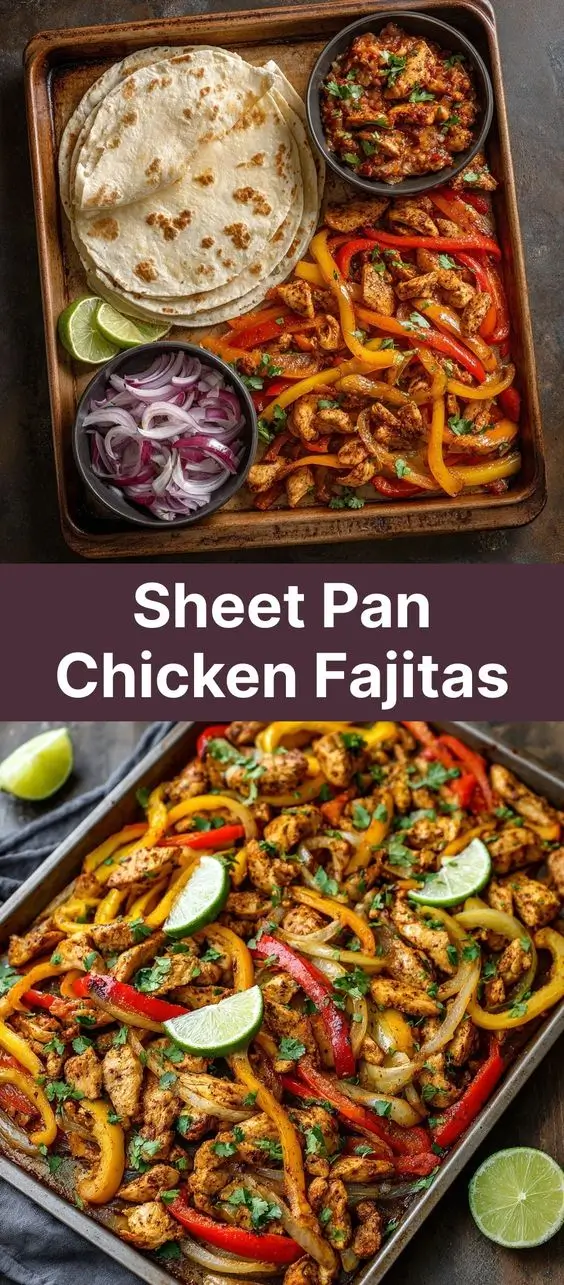
Sheet Pan Chicken Fajitas are a vibrant, flavorful, and hassle-free way to enjoy one of America’s favorite Tex-Mex dishes. Perfect for busy weeknights, meal prep, or even entertaining guests, this recipe brings together tender chicken, colorful bell peppers, and caramelized onions—all seasoned to perfection and roasted on a single sheet pan. Not only does this method reduce cleanup time significantly, but it also allows the ingredients to cook evenly while absorbing bold, zesty flavors. Whether you’re new to cooking or a seasoned home chef, Sheet Pan Chicken Fajitas offer an accessible and delicious meal that everyone at the table will love.
The History
Fajitas have their roots in Mexican-American cuisine, particularly in South Texas during the early 20th century. Originally, “fajita” referred to the cut of meat—specifically skirt steak—that was given to Mexican ranch workers as part of their pay. The word “fajita” comes from the Spanish word “faja,” meaning “belt” or “girdle,” which describes the strip-like shape of the skirt steak. These workers would marinate the tough cuts with spices and grill them over open flames, serving the meat in warm tortillas with onions and peppers.
Over time, fajitas evolved beyond their humble beginnings and gained popularity across the United States, especially in the 1970s and 1980s when restaurants began serving sizzling platters of grilled meat and vegetables at the table. While traditional fajitas were made with beef, modern variations now include chicken, shrimp, pork, and even plant-based alternatives. The sheet pan version is a contemporary twist designed for convenience without sacrificing taste, making it ideal for today’s fast-paced lifestyle while still honoring its rich cultural heritage.
Ingredients Breakdown
The beauty of Sheet Pan Chicken Fajitas lies in the simplicity and accessibility of the ingredients, each contributing to the dish’s bold flavor profile and satisfying texture.
- Chicken Breast: Boneless, skinless chicken breasts are sliced into thin strips for quick and even cooking. They provide lean protein and absorb marinade exceptionally well.
- Bell Peppers: A mix of red, green, orange, and yellow peppers adds not only vibrant color but also natural sweetness and crunch. Red peppers tend to be sweeter when roasted, enhancing the overall flavor.
- Onion: Yellow or red onions are sliced into strips and caramelize beautifully in the oven, adding depth and a touch of sweetness.
- Olive Oil: Used to coat the ingredients, helping them roast evenly and develop a light char. Extra virgin olive oil provides heart-healthy fats and enhances flavor.
- Lime Juice: Freshly squeezed lime juice adds brightness and acidity, balancing the smoky spices and cutting through richness.
- Garlic: Minced fresh garlic delivers aromatic pungency that elevates the entire dish.
- Spices: A blend of chili powder, ground cumin, smoked paprika, onion powder, salt, and black pepper creates the signature fajita seasoning. Smoked paprika adds a subtle smokiness reminiscent of grilled meats.
- Tortillas: Warm flour or corn tortillas are essential for serving, acting as edible vessels for the fajita filling.
- Garnishes (optional): Fresh cilantro, sour cream, guacamole, shredded cheese, salsa, or pickled jalapeños can be added for extra layers of flavor and texture.
Step-by-Step Recipe
- Preheat Oven: Begin by preheating your oven to 425°F (220°C). This high temperature ensures the vegetables caramelize and the chicken browns nicely.
- Prepare Ingredients: Slice 1.5 lbs (about 700g) of boneless, skinless chicken breasts into ½-inch thick strips. Cut 3 large bell peppers (assorted colors) into thin strips and slice 1 large onion into half-moons.
- Make the Marinade: In a large mixing bowl, whisk together 3 tablespoons olive oil, juice of 1 lime (about 2–3 tablespoons), 3 minced garlic cloves, 1 teaspoon chili powder, 1 teaspoon ground cumin, 1 teaspoon smoked paprika, ½ teaspoon onion powder, ½ teaspoon salt, and ¼ teaspoon black pepper.
- Marinate Chicken: Add the chicken strips to the marinade and toss until fully coated. Let sit for at least 15 minutes at room temperature (or up to 2 hours in the refrigerator for deeper flavor).
- Coat Vegetables: In a separate bowl, toss the sliced peppers and onions with 1 tablespoon olive oil, ½ teaspoon salt, and a pinch of black pepper. You can add a sprinkle of the same spice blend if desired.
- Arrange on Sheet Pan: Line a large rimmed baking sheet with parchment paper or lightly grease it. Spread the marinated chicken in a single layer on one side of the pan and the seasoned vegetables on the other. Avoid overcrowding to ensure proper roasting instead of steaming.
- Roast: Place the sheet pan in the preheated oven and roast for 15 minutes. Then, remove the pan, flip the chicken, and stir the vegetables. Return to the oven and roast for another 10–15 minutes, or until the chicken is cooked through (internal temperature reaches 165°F / 74°C) and the vegetables are tender with slightly charred edges.
- Warm Tortillas: While the fajitas finish roasting, wrap a stack of tortillas in aluminum foil and place them in the oven for the last 5–7 minutes to warm through.
- Serve: Remove everything from the oven. Squeeze additional lime juice over the top if desired. Serve hot with warm tortillas and your choice of garnishes like chopped cilantro, sour cream, guacamole, or shredded cheese.
Tips
- Uniform Sizing: Cut chicken and vegetables into similar-sized pieces to ensure even cooking. If some pepper strips are too thick, halve them lengthwise.
- Dry Ingredients: Pat the chicken dry with paper towels before slicing and marinating. Moisture can prevent browning and lead to steaming.
- Use a Hot Oven: Roasting at 425°F or higher promotes caramelization and helps develop rich, roasted flavors.
- Don’t Overcrowd the Pan: Use two sheet pans if necessary. Overlapping ingredients will steam rather than roast, resulting in soggy fajitas.
- Flip Midway: Stirring and flipping halfway through ensures all sides get exposure to heat, promoting even browning.
- Rest Before Serving: Let the fajitas rest for 2–3 minutes after roasting so juices redistribute in the chicken.
- Prep Ahead: Slice vegetables and marinate chicken up to a day in advance. Store separately in airtight containers in the fridge.
- Add Garlic Later: To prevent garlic from burning, consider adding minced garlic only during the last 10 minutes of cooking or sautéing it separately and mixing in afterward.
Variations and Customizations
Sheet Pan Chicken Fajitas are incredibly versatile and can be tailored to suit various dietary preferences and flavor profiles.
- Protein Swaps: Replace chicken with thinly sliced flank steak, shrimp, pork tenderloin, tofu, or tempeh for different textures and tastes.
- Vegetable Variations: Add zucchini, mushrooms, cherry tomatoes, or poblano peppers for more variety and nutrition.
- Spice Level: Increase heat with diced jalapeños, crushed red pepper flakes, or a dash of cayenne pepper. For mild versions, reduce chili powder and skip spicy additions.
- Gluten-Free: Use certified gluten-free tortillas or serve over rice, quinoa, or salad greens.
- Keto-Friendly: Skip tortillas altogether and serve the fajita mixture over cauliflower rice or wrapped in lettuce cups.
- Dairy-Free: Omit cheese and sour cream; use dairy-free alternatives or avocado slices for creaminess.
- Mediterranean Twist: Swap traditional spices for oregano, lemon zest, and sumac, and serve with tzatziki and pita bread.
- Citrus Variation: Substitute lime with orange or lemon juice for a tangier, fruit-forward profile.
- Meal Prep Version: Double the batch and store portions in containers for up to 4 days. Reheat in the oven or skillet to maintain texture.
- Breakfast Fajitas: Top with fried or scrambled eggs and serve with hash browns for a brunch twist.
Health Considerations and Nutritional Value
Sheet Pan Chicken Fajitas are not only delicious but also a nutritious option when prepared with mindful ingredient choices.
Nutritional Highlights (per serving, approximately 1/4 of recipe including 3 oz chicken and 1 cup veggies, without tortillas or heavy toppings):
- Calories: ~220–250
- Protein: 25–30g (supports muscle repair and satiety)
- Fat: 9–12g (mostly healthy monounsaturated fats from olive oil)
- Carbohydrates: 10–15g (primarily from vegetables)
- Fiber: 3–4g (aids digestion and gut health)
- Vitamin C: High content from bell peppers—supports immune function
- Vitamin A: From red peppers and spices—beneficial for vision and skin
- Iron & B Vitamins: Found in chicken—important for energy metabolism
Health Benefits:
- The dish is naturally low in saturated fat and free from trans fats when prepared with minimal oil.
- Bell peppers are rich in antioxidants like capsanthin and vitamin C, which combat oxidative stress.
- Lean chicken breast supports weight management due to its high protein-to-calorie ratio.
- Using whole food ingredients avoids processed additives commonly found in restaurant versions.
- Customizable sodium levels allow those monitoring blood pressure to control salt intake.
Considerations:
- Be cautious with store-bought fajita seasoning mixes, which may contain excess sodium, sugar, or preservatives. Opt for homemade blends when possible.
- While tortillas add carbs, choosing whole grain or low-carb options increases fiber and reduces glycemic impact.
- High-fat toppings like sour cream, cheese, and guacamole should be used in moderation for calorie-conscious diets.
- Individuals with nightshade sensitivities (to peppers, tomatoes, etc.) may need to substitute with non-nightshade vegetables like carrots or cabbage.
Ingredients
- 1.5 lbs (700g) boneless, skinless chicken breasts, sliced into strips
- 3 large bell peppers (red, green, yellow, or orange), sliced into strips
- 1 large yellow or red onion, sliced into half-moons
- 4 tablespoons olive oil, divided
- Juice of 1–2 limes (about 3–4 tablespoons)
- 3 cloves garlic, minced
- 1 teaspoon chili powder
- 1 teaspoon ground cumin
- 1 teaspoon smoked paprika
- ½ teaspoon onion powder
- ½ teaspoon salt (plus more to taste)
- ¼ teaspoon black pepper
- 8–12 small flour or corn tortillas
- Fresh cilantro, chopped (for garnish)
- Optional toppings: sour cream, guacamole, shredded cheese, salsa, pickled jalapeños
Directions
- Preheat oven to 425°F (220°C). Line a large rimmed baking sheet with parchment paper or lightly grease it.
- In a large bowl, combine 3 tablespoons olive oil, lime juice, minced garlic, chili powder, cumin, smoked paprika, onion powder, salt, and black pepper. Whisk into a smooth marinade.
- Add chicken strips to the marinade and toss until fully coated. Let sit for 15 minutes at room temperature or refrigerate for up to 2 hours.
- In another bowl, toss bell peppers and onions with 1 tablespoon olive oil, ½ teaspoon salt, and a pinch of pepper.
- Spread marinated chicken in a single layer on one side of the prepared sheet pan and vegetables on the other. Keep them separated for optimal browning.
- Roast in the preheated oven for 15 minutes. Remove pan, flip chicken pieces, and stir vegetables.
- Return to oven and roast for another 10–15 minutes, until chicken is fully cooked (165°F internal temperature) and vegetables are tender with charred edges.
- While fajitas roast, wrap tortillas in foil and place in the oven for the last 5–7 minutes to warm.
- Remove from oven. Squeeze additional lime juice over the top if desired. Garnish with fresh cilantro.
- Serve immediately with warm tortillas and preferred toppings. Enjoy!
FAQ
Can I make Sheet Pan Chicken Fajitas ahead of time?
Yes! You can slice the vegetables and marinate the chicken up to 24 hours in advance. Store them separately in airtight containers in the refrigerator. When ready, simply arrange on the pan and roast.
Can I freeze leftovers?
Absolutely. Cooked fajita components can be stored in freezer-safe containers for up to 3 months. Thaw in the refrigerator overnight and reheat in a skillet or oven to preserve texture. Avoid freezing with tortillas.
Why are my fajitas soggy?
Sogginess usually results from overcrowding the pan or using wet ingredients. Make sure to pat chicken dry, avoid overlapping items, and use a hot oven for proper roasting.
Can I cook everything on one pan?
Yes, as long as the pan is large enough (typically a half-sheet pan, about 18×13 inches) and ingredients are arranged in a single layer. If needed, use two pans for better air circulation.
What kind of tortillas work best?
Flour tortillas are traditional and more pliable, but corn tortillas offer a gluten-free, authentic alternative. Street taco-sized tortillas (6-inch) work perfectly for portion control.
How do I store leftovers?
Store cooled fajita mixture in an airtight container in the refrigerator for up to 4 days. Reheat in a skillet over medium heat for best results.
Can I grill instead of bake?
Definitely! Thread chicken and vegetables onto skewers or use a grill basket. Grill over medium-high heat for 10–15 minutes, turning occasionally, until chicken is cooked and veggies are charred.
Are fajitas spicy?
Traditional fajita seasoning is mildly spiced. Adjust the heat level by adding jalapeños, cayenne, or hot sauce according to your preference.
Summary
Sheet Pan Chicken Fajitas deliver bold Tex-Mex flavors with minimal effort—tender chicken, caramelized peppers, and onions roasted together on one pan for easy cleanup. Perfect for weeknight dinners, meal prep, or entertaining, this customizable recipe is both delicious and nutritious.