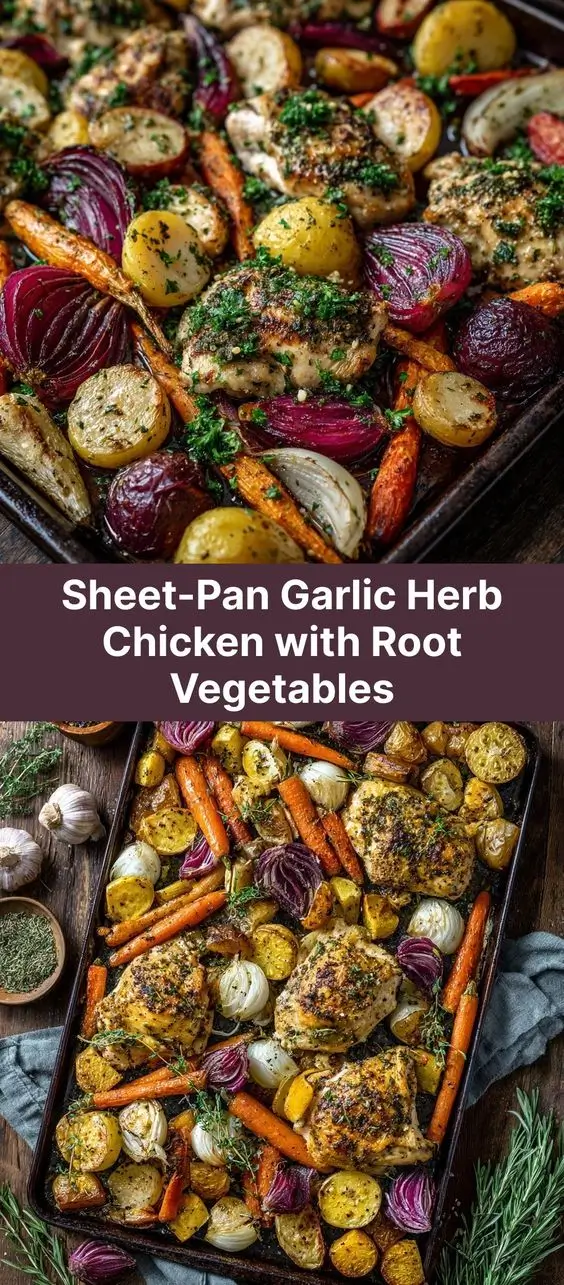
Sheet-Pan Garlic Herb Chicken with Root Vegetables
The ultimate one-pan wonder for busy weeknights, Sheet-Pan Garlic Herb Chicken with Root Vegetables combines succulent chicken thighs, earthy root vegetables, and a fragrant garlic-herb marinade roasted to golden perfection. Minimal cleanup, maximum flavor—this dish is as practical as it is delicious.
The History
The concept of roasting meat and vegetables together on a single pan has roots that stretch back centuries, long before modern ovens or sheet pans existed. In traditional European farmhouse cooking, families would slow-roast whatever meats and seasonal vegetables were available in communal ovens or over open hearths. The idea was simple: combine hearty ingredients in one vessel, apply heat, and let time work its magic. This rustic method ensured even cooking and allowed flavors to meld beautifully.
In the 20th century, particularly during and after World War II, home cooks in North America began embracing convenience without sacrificing flavor. The rise of electric ovens and standardized bakeware like the half-sheet pan (18×13 inches) revolutionized home cooking. By the 1970s and ’80s, “sheet-pan dinners” started gaining traction as a time-saving technique, especially among working families.
The modern iteration of Sheet-Pan Garlic Herb Chicken with Root Vegetables reflects both tradition and innovation. Inspired by Mediterranean and French country cuisine—where herbs de Provence, garlic, olive oil, and root crops like carrots, parsnips, and potatoes reign supreme—this recipe has evolved into a go-to favorite for health-conscious and efficiency-driven cooks alike. With the farm-to-table movement and emphasis on whole foods in the 2000s, this dish found new life on food blogs, Pinterest boards, and Instagram feeds, celebrated for its simplicity, vibrant colors, and nourishing balance.
Today, it’s not just a meal—it’s a culinary philosophy: less mess, more taste, and a celebration of seasonal abundance.
Ingredients Breakdown
Every ingredient in this recipe plays a crucial role in building layers of flavor, texture, and nutrition. Let’s take a deep dive into what goes into this masterpiece:
- Chicken Thighs (Bone-in, Skin-on): We recommend using bone-in, skin-on chicken thighs instead of breasts for several reasons. They’re richer in fat and connective tissue, which means they stay juicy and tender throughout roasting. The skin crisps up beautifully, adding a satisfying crunch. Plus, thighs are more forgiving than breasts when it comes to timing—they won’t dry out if left in the oven a few extra minutes.
- Olive Oil: High-quality extra-virgin olive oil acts as the base of our marinade. It helps conduct heat evenly across the pan, promotes browning, carries flavor, and prevents sticking. Its monounsaturated fats also contribute heart-healthy benefits.
- Fresh Garlic: Minced fresh garlic releases pungent, aromatic compounds when heated, transforming into sweet, nutty notes during roasting. Fresh is non-negotiable here—jarred garlic lacks depth and can have an off-flavor.
- Fresh Herbs: A blend of rosemary, thyme, and parsley brings complexity. Rosemary offers pine-like sharpness, thyme adds earthiness, and parsley lends brightness. Together, they elevate the entire dish from simple to gourmet.
- Lemon Juice and Zest: Acid is essential for balancing richness. Lemon juice brightens the dish, while the zest infuses citrus oils directly into the chicken and vegetables, enhancing aroma without overwhelming tartness.
- Dijon Mustard: More than just a binder, Dijon adds tang and emulsifies the marinade so it clings to every surface. It also helps create a golden crust on the chicken.
- Honey or Maple Syrup: Just a touch balances acidity and encourages caramelization. It reacts with amino acids in the Maillard reaction, giving the chicken a gorgeous glaze.
- Salt and Black Pepper: Fundamental seasoners. Kosher salt penetrates deeply into the meat, enhancing juiciness and flavor. Freshly cracked black pepper provides warmth and subtle spice.
- Root Vegetables: Carrots, parsnips, sweet potatoes, and red onions form the vegetable base. Each brings unique textures and natural sugars that caramelize under high heat:
- Carrots: Sweet, firm, and colorful—rich in beta-carotene.
- Parsnips: Nutty and slightly peppery—often overlooked but deeply flavorful.
- Sweet Potatoes: Creamy and naturally sweet—add moisture and color contrast.
- Red Onions: Mild when roasted, they melt into the mix and add visual appeal.
- Optional Additions: Turnips, rutabaga, celery root, or beets can be incorporated depending on seasonality and preference. Toss in cherry tomatoes at the end for freshness, or sprinkle feta before serving for a creamy twist.
Step-by-Step Recipe
Follow these detailed steps for foolproof results every time:
- Preheat Oven & Prepare Pan: Preheat your oven to 425°F (220°C). Line a large rimmed baking sheet (half-sheet pan) with parchment paper or lightly grease it with olive oil to prevent sticking. For easier cleanup and better browning, avoid aluminum foil unless coated (non-stick side up).
- Make the Marinade: In a small bowl, whisk together:
- ¼ cup extra-virgin olive oil
- 6 cloves minced garlic (about 2 tablespoons)
- 1 tbsp Dijon mustard
- 1 tbsp honey or pure maple syrup
- Zest and juice of one lemon (about 3 tbsp juice)
- 1½ tsp kosher salt
- 1 tsp freshly ground black pepper
- 1 tbsp chopped fresh rosemary (or 1 tsp dried)
- 1 tbsp chopped fresh thyme (or 1 tsp dried)
- 2 tbsp chopped fresh parsley (reserve some for garnish)
Mix until smooth and fragrant. Taste and adjust seasoning if needed.
- Prepare the Chicken: Pat 4–6 bone-in, skin-on chicken thighs dry with paper towels (this ensures crispy skin). Place them in a large mixing bowl and pour about two-thirds of the marinade over the chicken. Use clean hands or tongs to rub the mixture thoroughly over each piece, getting under the skin and into crevices. Let marinate for at least 30 minutes at room temperature—or ideally, cover and refrigerate for 2–4 hours for deeper flavor infusion.
- Chop the Vegetables: While the chicken rests, peel and cut:
- 3 medium carrots – sliced diagonally into ½-inch thick pieces
- 2 parsnips – peeled and cut similarly
- 1 large sweet potato – peeled and cubed into ¾-inch chunks
- 1 large red onion – cut into wedges
Place all vegetables in a large bowl. Drizzle with remaining marinade and toss well to coat. Season with a pinch more salt and pepper.
- Arrange on Sheet Pan: Spread the vegetables in a single layer across the prepared baking sheet, ensuring space between pieces for airflow and even roasting. Nestle the marinated chicken thighs on top, skin-side up, spacing them apart. Do not overcrowd—if necessary, use two pans to ensure proper browning.
- Roast: Place the pan in the center rack of the preheated oven. Roast for 35–45 minutes, rotating halfway through. After 25 minutes, use a spoon or spatula to gently stir the vegetables, checking for doneness. The chicken is done when internal temperature reaches 165°F (74°C) at the thickest part (not touching bone), and juices run clear. Vegetables should be fork-tender and lightly charred at the edges.
- Brown the Skin (Optional Broil): If you want extra-crispy skin, switch the oven to broil for the final 2–3 minutes. Watch closely to prevent burning.
- Rest and Serve: Remove from oven and let chicken rest for 5–7 minutes. This allows juices to redistribute. Garnish with reserved fresh parsley and a final squeeze of lemon juice before serving.
Tips for Success
- Dry the Chicken Skin: Moisture is the enemy of crispiness. Always pat chicken dry before applying marinade.
- Cut Vegetables Evenly: Uniform size ensures everything cooks at the same rate. Larger chunks like sweet potatoes may need slightly longer than carrots, so consider cutting them smaller or par-cooking briefly.
- Don’t Overcrowd the Pan: Crowding leads to steaming rather than roasting. Use two pans if needed.
- Use a Meat Thermometer: Guessing can lead to undercooked or dry chicken. Invest in an instant-read thermometer for perfect results.
- Elevate the Chicken: For ultra-crisp skin, place chicken on a wire rack set inside the sheet pan. This allows hot air to circulate underneath.
- Add Delicate Veggies Later: If including cherry tomatoes, zucchini, or greens, add them in the last 10–15 minutes to prevent mushiness.
- Double the Batch: This dish reheats beautifully and makes excellent leftovers for meal prep. Store in airtight containers for up to 4 days.
- Rotate the Pan: Ovens have hot spots. Rotating the pan halfway ensures even cooking.
Variations and Customizations
This recipe is highly adaptable. Here are creative ways to customize it based on dietary needs, flavor preferences, or seasonal availability:
- Protein Swaps:
- Chicken Breasts: Use boneless, skinless breasts, but reduce cooking time to 25–30 minutes to prevent drying. Baste with pan juices midway.
- Drumsticks: Great for kids or casual meals—roast alongside veggies.
- Tofu or Chickpeas: For a vegetarian version, use extra-firm tofu cubes or canned chickpeas tossed in the same marinade. Roast until golden (20–25 min).
- Salmon Fillets: Replace chicken with salmon for a pescatarian twist. Add in the last 12–15 minutes of cooking.
- Vegetable Variations:
- Winter: Try turnips, rutabaga, celeriac, or Brussels sprouts.
- Spring: Swap in asparagus, baby potatoes, and leeks (add delicate asparagus in the last 10 minutes).
- Summer: Use bell peppers, zucchini, cherry tomatoes, and red potatoes.
- Fall: Incorporate delicata squash, acorn squash, or apples for sweetness.
- Flavor Twists:
- Mediterranean: Add olives, sun-dried tomatoes, artichoke hearts, and crumbled feta after roasting.
- Indian-Inspired: Replace herbs with garam masala, turmeric, cumin, and ginger. Serve with yogurt raita.
- Herbes de Provence: Use a classic French blend instead of individual herbs.
- Spicy Kick: Add red pepper flakes, harissa paste, or sliced jalapeños to the marinade.
- Citrus Swap: Use orange or grapefruit instead of lemon for a sweeter profile.
- Dietary Adaptations:
- Keto/Low-Carb: Replace starchy vegetables with cauliflower, radishes, broccoli, or cabbage.
- Paleo: Ensure honey is acceptable; omit dairy and grains.
- Vegan: Use plant-based protein and skip honey (use maple syrup).
- Gluten-Free: Naturally gluten-free—just confirm all ingredients (like Dijon) are certified GF if needed.
Health Considerations and Nutritional Value
This dish strikes a thoughtful balance between indulgence and nourishment. Here’s a breakdown per serving (assuming 4 servings):
| Nutrient | Amount (Approx.) |
|---|---|
| Calories | 480 kcal |
| Protein | 32g |
| Total Fat | 24g |
| Saturated Fat | 5g |
| Carbohydrates | 34g |
| Dietary Fiber | 6g |
| Sugars | 14g (mostly natural from honey, sweet potatoes, carrots) |
| Sodium | 680mg |
Key Health Benefits:
- High-Quality Protein: Chicken thighs support muscle repair and satiety.
- Fiber-Rich Vegetables: Root crops provide complex carbs, fiber, and gut-friendly nutrients.
- Heart-Healthy Fats: Olive oil contributes anti-inflammatory monounsaturated fats.
- Vitamin A Powerhouse: Carrots and sweet potatoes are loaded with beta-carotene, vital for vision and immunity.
- Vitamin C & Antioxidants: From lemon, parsley, and vegetables—boosts immune function and fights oxidative stress.
- Low Glycemic Impact: Despite natural sugars, the fiber and fat content help moderate blood sugar spikes.
Considerations:
- Sodium Levels: Can be reduced by using low-sodium Dijon or reducing added salt. Rinsing canned items (if used) also helps.
- Fat Content: While healthy, olive oil and chicken skin increase calorie density. For lower-fat versions, use skinless chicken and reduce oil slightly (replace with broth).
- Allergens: Contains no common allergens except possible mustard (in Dijon)—substitute with mustard-free alternatives if needed.
Ingredients
- 4–6 bone-in, skin-on chicken thighs (about 2 lbs / 900g)
- ¼ cup extra-virgin olive oil
- 6 cloves garlic, minced
- 1 tablespoon Dijon mustard
- 1 tablespoon honey or pure maple syrup
- Zest and juice of 1 medium lemon
- 1½ teaspoons kosher salt (divided)
- 1 teaspoon freshly ground black pepper (divided)
- 1 tablespoon chopped fresh rosemary (or 1 tsp dried)
- 1 tablespoon chopped fresh thyme (or 1 tsp dried)
- 2 tablespoons chopped fresh parsley (plus extra for garnish)
- 3 medium carrots, peeled and sliced diagonally
- 2 parsnips, peeled and cut into similar-sized pieces
- 1 large sweet potato, peeled and cubed
- 1 large red onion, cut into wedges
Directions
- Preheat oven to 425°F (220°C). Line a large rimmed baking sheet with parchment paper or lightly grease it.
- In a bowl, whisk together olive oil, garlic, Dijon mustard, honey, lemon zest, lemon juice, 1 tsp salt, ½ tsp pepper, rosemary, thyme, and 1 tbsp parsley.
- Pat chicken thighs dry and place in a bowl. Pour two-thirds of the marinade over them, rubbing it all over. Marinate for 30 minutes at room temp or up to 4 hours in the fridge.
- In another bowl, combine carrots, parsnips, sweet potato, and red onion. Drizzle with remaining marinade and season with remaining salt and pepper. Toss well.
- Spread vegetables in a single layer on the sheet pan. Place chicken thighs on top, skin-side up, spaced apart.
- Roast for 35–45 minutes, rotating the pan halfway and stirring vegetables once, until chicken reaches 165°F internally and skin is golden and crisp.
- Optional: Broil for 2–3 minutes for extra browning (watch carefully).
- Let chicken rest 5–7 minutes. Garnish with fresh parsley and a final squeeze of lemon. Serve warm.
FAQ
Q: Can I use frozen chicken?
A: Not recommended for even cooking. Always thaw completely in the refrigerator first.
Q: Can I make this ahead of time?
A: Yes! Marinate the chicken up to 24 hours in advance. Chop vegetables up to 1 day ahead and store separately in airtight containers.
Q: Why are my vegetables soggy?
A: Likely due to overcrowding or excess moisture. Ensure single-layer placement and dry vegetables well before tossing with oil.
Q: Can I cook this at a lower temperature?
A: You can roast at 375°F for 50–60 minutes, but higher heat yields better browning and texture.
Q: How do I reheat leftovers?
A: Reheat in a 350°F oven for 15–20 minutes or in a skillet over medium heat to preserve crispiness. Microwaving will soften the skin.
Q: Is this recipe suitable for meal prep?
A: Absolutely. Divide into containers and refrigerate for up to 4 days. Freeze for up to 3 months (best without delicate herbs).
Q: Can I add potatoes?
A: Yes! Yukon Gold or red potatoes work well. Cut into ¾-inch cubes and roast with other vegetables.
Q: What sides pair well with this dish?
A: A simple arugula salad, quinoa, crusty bread, or dollop of tzatziki complements the flavors perfectly.
Summary
Sheet-Pan Garlic Herb Chicken with Root Vegetables is a harmonious blend of tender, herb-marinated chicken and caramelized seasonal vegetables, all roasted to perfection on one easy-to-clean pan. Packed with flavor, nutrition, and flexibility, it’s the ideal solution for wholesome, stress-free meals any night of the week.