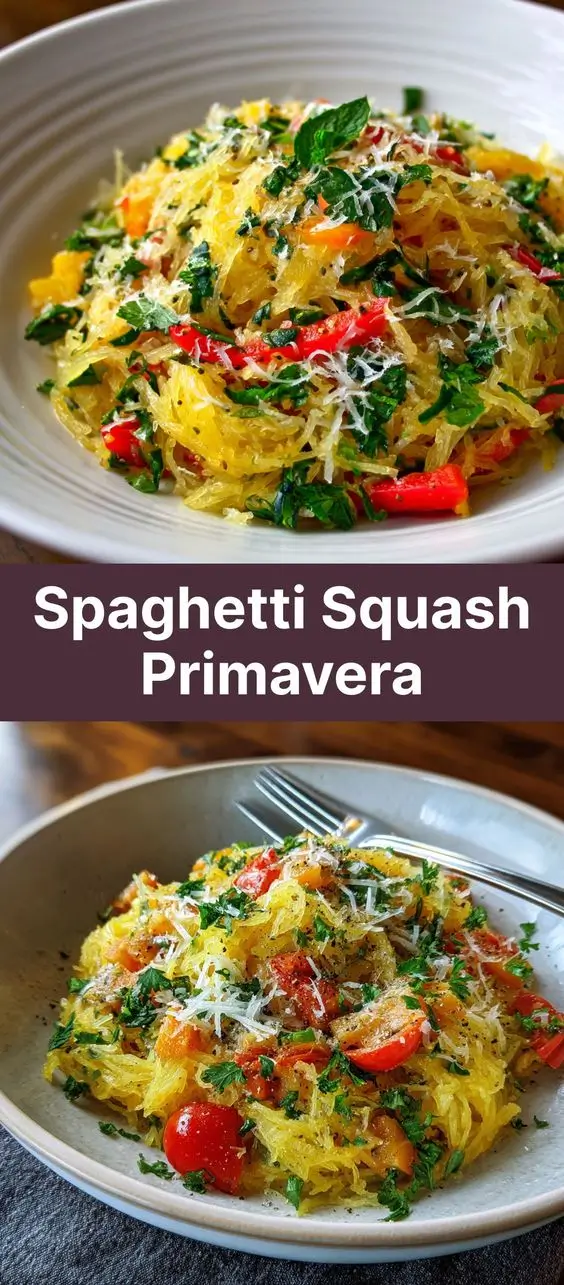
Spaghetti Squash Primavera: A Vibrant, Healthy Twist on a Classic Favorite
Imagine a dish that’s both light and satisfying, bursting with color, flavor, and fresh seasonal produce—welcome to Spaghetti Squash Primavera. This modern twist on the traditional Italian “spaghetti primavera” swaps out heavy pasta for tender, naturally sweet spaghetti squash strands, creating a nutritious, gluten-free base that soaks up the flavors of a vibrant medley of vegetables and a light garlic-herb sauce. Whether you’re following a low-carb lifestyle, aiming to increase your vegetable intake, or simply looking for a refreshing weeknight dinner, this recipe delivers in every way. From its humble roots in 1970s Italian-American cuisine to today’s health-conscious kitchens, Spaghetti Squash Primavera has evolved into a beloved staple that celebrates freshness, simplicity, and wholesome eating.
The History of Spaghetti Squash Primavera
The story of Spaghetti Squash Primavera begins with two culinary traditions converging: the ancient cultivation of summer vegetables and the modern embrace of health-forward cooking. The original spaghetti alla primavera, meaning “spaghetti in springtime,” emerged in New York City during the 1970s, credited to chefs at iconic restaurants like Le Cirque and Rao’s. It was a response to the growing interest in fresh, seasonal ingredients and lighter sauces, moving away from heavy cream and cheese-laden pastas. Typically made with long pasta tossed in olive oil, garlic, Parmesan, and a rainbow of spring vegetables like peas, asparagus, cherry tomatoes, and broccoli, it quickly became a symbol of elegant, healthy Italian-American dining.
Fast forward to the 2000s and 2010s, when the wellness movement and low-carb diets (like Paleo, Whole30, and Keto) surged in popularity. Enter spaghetti squash—a winter squash with flesh that, when cooked, separates into long, noodle-like strands resembling spaghetti. Though native to North America and cultivated by Indigenous peoples for centuries, spaghetti squash gained widespread attention as a low-calorie, high-fiber pasta alternative. Chefs and home cooks alike began substituting traditional pasta with roasted spaghetti squash in classic dishes, giving birth to the modern Spaghetti Squash Primavera. Today, it stands as a testament to culinary innovation, combining tradition with nutrition, seasonality with sustainability.
Ingredients Breakdown: What Makes This Dish Shine?
The magic of Spaghetti Squash Primavera lies not just in its appearance but in the thoughtful selection of each ingredient. Every component contributes to a harmonious balance of texture, taste, and nutritional value. Here’s a detailed look at what goes into this vibrant dish:
- Spaghetti Squash – The star of the show. When roasted, its flesh transforms into delicate, golden strands with a mild, slightly nutty sweetness. Low in calories and carbohydrates, yet rich in fiber, vitamin C, and antioxidants, it provides a satisfying base without weighing you down.
- Olive Oil – Extra virgin olive oil is used both for roasting the squash and sautéing the vegetables. It adds heart-healthy monounsaturated fats, enhances flavor, and helps absorb fat-soluble vitamins from the vegetables.
- Garlic – Freshly minced garlic brings aromatic depth and immune-boosting properties. Sautéed gently to avoid bitterness, it forms the flavor foundation of the dish.
- Shallot or Onion – Adds a subtle sweetness and complexity. Shallots are preferred for their milder, more refined taste, but yellow onion works well too.
- Seasonal Vegetables – The “primavera” element comes alive through a colorful mix:
- Asparagus – Tender-crisp spears add freshness and are rich in folate and vitamin K.
- Cherry Tomatoes – Burst with juicy acidity and lycopene, enhancing both flavor and visual appeal.
- Zucchini or Yellow Squash – Mild in flavor but excellent sources of water content and potassium.
- Broccoli or Broccolini – Offers crunch and a boost of fiber, vitamin C, and sulforaphane, a powerful antioxidant.
- Snap Peas or Snow Peas – Sweet and crisp, they retain their bright green color when lightly cooked.
- Carrots – Julienned or thinly sliced, they add natural sweetness and beta-carotene.
- Fresh Herbs – Basil, parsley, chives, or dill lend brightness and aroma. Basil, in particular, complements tomatoes beautifully and contains anti-inflammatory compounds.
- Lemon – Both zest and juice provide a citrusy lift that cuts through richness and enhances all the other flavors.
- Vegetable or Chicken Broth – Used sparingly to deglaze the pan and create a light, flavorful sauce that coats the vegetables and squash.
- Salt and Pepper – Essential seasonings that bring everything into balance.
- Cheese (Optional) – While traditionalists may skip dairy for a lighter version, many enjoy a sprinkle of grated Parmesan, Pecorino Romano, or crumbled feta for umami and creaminess. Nutritional yeast can be used as a vegan alternative.
- Pine Nuts or Toasted Almonds (Optional) – Add a buttery crunch and extra protein, making the dish more satiating.
Step-by-Step Recipe: How to Make Spaghetti Squash Primavera
Creating the perfect Spaghetti Squash Primavera is easier than you might think. With a little planning and attention to timing, you can have a restaurant-quality meal ready in under an hour. Follow these detailed steps for delicious results every time.
Ingredients
- 1 medium spaghetti squash (about 2.5–3 lbs)
- 3 tablespoons extra virgin olive oil (divided)
- 1 medium shallot or small yellow onion, finely diced
- 4 cloves garlic, minced
- 1 cup asparagus, trimmed and cut into 1-inch pieces
- 1 cup cherry tomatoes, halved
- 1 small zucchini, sliced into half-moons
- 1 cup broccoli florets
- 1/2 cup snap peas, trimmed
- 1 medium carrot, julienned or thinly sliced
- 1/4 cup dry white wine or vegetable broth (optional)
- 1/2 cup reserved pasta water or low-sodium broth
- Zest and juice of 1 lemon
- 1/3 cup fresh basil, chopped
- 2 tablespoons fresh parsley, chopped
- Salt and freshly ground black pepper, to taste
- 1/4 cup grated Parmesan cheese (optional)
- 2 tablespoons toasted pine nuts (optional)
Directions
- Preheat Oven & Prepare Squash: Preheat your oven to 400°F (200°C). Carefully slice the spaghetti squash in half lengthwise using a sharp chef’s knife. Use caution—the skin is tough! Scoop out the seeds and stringy pulp with a spoon (save the seeds for roasting if desired).
- Rub & Roast: Drizzle the inside of each squash half with 1 tablespoon of olive oil and season lightly with salt and pepper. Place cut-side down on a parchment-lined baking sheet. Roast for 35–45 minutes, or until the flesh is tender and easily pierced with a fork. The exact time depends on the size of the squash.
- Cool & Scrape: Remove from oven and let cool for 10–15 minutes. Once cool enough to handle, use a fork to scrape the flesh from the skin. The strands should separate naturally into spaghetti-like ribbons. Set aside. Reduce oven temperature to 375°F (190°C) if keeping warm.
- Prep Vegetables: While the squash roasts, prepare all vegetables. Cut them into uniform sizes to ensure even cooking.
- Sauté Aromatics: In a large skillet or Dutch oven over medium heat, warm 1 tablespoon olive oil. Add the shallot and sauté for 3–4 minutes until translucent. Add the garlic and cook for another 30 seconds until fragrant—do not let it brown.
- Cook Harder Vegetables First: Add carrots and broccoli to the pan. Cook for 4–5 minutes, stirring occasionally, until they begin to soften. If needed, add a splash of broth to steam them slightly.
- Add Medium Vegetables: Stir in zucchini, asparagus, and snap peas. Cook for another 4–5 minutes until tender-crisp. Avoid overcooking to preserve texture and nutrients.
- Finish with Delicate Veggies: Add cherry tomatoes and cook for just 1–2 minutes until they start to release their juices but still hold their shape.
- Deglaze the Pan: Pour in white wine or broth, scraping up any browned bits from the bottom of the pan. Let it simmer for 1–2 minutes to reduce slightly.
- Combine with Squash: Add the roasted spaghetti squash strands to the skillet. Toss gently to combine, allowing the squash to absorb the flavors. If the mixture seems dry, add reserved broth or pasta water a few tablespoons at a time.
- Season & Finish: Stir in lemon zest, lemon juice, salt, and pepper to taste. Fold in fresh herbs. Taste and adjust seasoning—add more acid, salt, or herbs as needed.
- Serve: Divide among plates. Top with grated Parmesan (if using), toasted pine nuts, and an extra sprinkle of herbs. Serve immediately while warm.
Pro Tips for the Best Spaghetti Squash Primavera
- Choose the Right Squash: Look for a medium-sized spaghetti squash with firm, unblemished skin. A golden-yellow hue often indicates ripeness and better flavor.
- Don’t Overcook the Squash: Over-roasting can make the strands mushy. Check early and remove when just tender.
- Uniform Vegetable Cuts: Chop vegetables to similar sizes so they cook evenly. Smaller pieces cook faster, so adjust based on density (e.g., carrots vs. tomatoes).
- Roast Instead of Microwave: While microwaving speeds up cooking, roasting enhances the squash’s natural sweetness and gives it a richer flavor.
- Toast Your Nuts: Lightly toast pine nuts or almonds in a dry pan for 2–3 minutes until golden and fragrant. This deepens their flavor dramatically.
- Use High Heat for Searing: When sautéing vegetables, keep the heat at medium-high to encourage browning without steaming.
- Reserve Some Raw Herbs: Add half the herbs while cooking and reserve the rest for garnish to preserve freshness and aroma.
- Make Ahead Tips: Roast the squash up to 2 days in advance and store in an airtight container. Reheat gently before combining with vegetables.
- Add Protein: Boost this into a complete meal by adding grilled chicken, shrimp, tofu, or chickpeas.
- Customize Seasonally: Swap vegetables based on what’s in season—try artichokes in spring, bell peppers in summer, or mushrooms in fall.
Variations and Customizations
One of the greatest strengths of Spaghetti Squash Primavera is its versatility. You can tailor it to suit dietary needs, flavor preferences, or whatever produce you have on hand. Here are some creative variations:
- Vegan Version: Skip the cheese or use nutritional yeast. Ensure broth is plant-based. Add marinated tempeh or lentils for protein.
- Keto-Friendly: Limit higher-carb vegetables like carrots and tomatoes. Focus on low-carb options like zucchini, asparagus, mushrooms, spinach, and cauliflower. Use full-fat coconut milk or heavy cream (if not dairy-free) for a creamy sauce.
- Creamy Primavera: Stir in 1/4 cup of cashew cream, Greek yogurt, or Alfredo-style sauce for a richer texture.
- Mediterranean Twist: Add kalamata olives, sun-dried tomatoes, capers, and crumbled feta. Finish with oregano and a drizzle of balsamic glaze.
- Asian-Inspired: Replace garlic with ginger, use sesame oil instead of olive oil, and toss with tamari, rice vinegar, and a touch of honey or maple syrup. Top with sesame seeds and green onions.
- Spicy Kick: Add red pepper flakes, sriracha, or diced jalapeño while sautéing aromatics.
- Herb-Forward: Double the amount of fresh herbs—try tarragon, dill, or cilantro for unique flavor profiles.
- Nut-Free: Replace pine nuts with sunflower seeds or omit entirely.
- Bulk It Up: Add cooked quinoa, farro, or lentils to make it heartier and more filling.
- Seafood Addition: Fold in sautéed shrimp, scallops, or flaked salmon at the end for a luxurious upgrade.
Health Considerations and Nutritional Value
Spaghetti Squash Primavera isn’t just delicious—it’s a powerhouse of nutrition. By replacing traditional pasta with spaghetti squash and loading up on colorful vegetables, this dish becomes a nutrient-dense, low-glycemic meal that supports overall wellness.
- Low in Calories: A serving of roasted spaghetti squash (1 cup) contains only about 40–50 calories, compared to ~220 calories in cooked wheat spaghetti.
- High in Fiber: Spaghetti squash offers around 2.2 grams of fiber per cup, promoting digestive health and satiety. Combined with vegetables, total fiber can reach 8–10 grams per serving.
- Rich in Vitamins & Minerals: Packed with vitamin C (from tomatoes, broccoli, bell peppers), vitamin A (from carrots, squash), potassium (zucchini, spinach), and folate (asparagus, greens).
- Antioxidant-Rich: Colorful vegetables contain phytonutrients like lycopene, beta-carotene, and flavonoids, which help combat oxidative stress and inflammation.
- Heart-Healthy Fats: Olive oil provides monounsaturated fats linked to reduced risk of cardiovascular disease.
- Gluten-Free & Grain-Free: Naturally suitable for those with celiac disease, gluten sensitivity, or grain-free diets.
- Blood Sugar Friendly: With a low glycemic index, this dish won’t spike blood sugar, making it ideal for diabetics or insulin-resistant individuals.
- Hydration Support: Many of the vegetables (zucchini, tomatoes, squash) have high water content, contributing to daily fluid intake.
- Weight Management: High volume, low calorie, and fiber-rich—perfect for those managing weight without feeling deprived.
Nutritional Estimate (per serving, serves 4):
Calories: ~220 | Carbohydrates: 28g | Fiber: 8g | Sugars: 10g | Protein: 6g | Fat: 11g (mostly unsaturated) | Sodium: ~300mg (varies with added salt)
Frequently Asked Questions (FAQ)
Can I microwave the spaghetti squash?
Yes, for speed: Pierce the whole squash several times with a knife, microwave on high for 10–12 minutes, flip, then cook another 8–10 minutes. Let rest 5 minutes before cutting. However, roasting yields better flavor.
How do I store leftovers?
Store in an airtight container in the refrigerator for up to 4 days. Reheat in a skillet over medium heat with a splash of broth to refresh moisture.
Can I freeze Spaghetti Squash Primavera?
While the squash can be frozen (though it may become slightly softer upon thawing), the vegetables—especially tomatoes and zucchini—don’t freeze well due to high water content. Best enjoyed fresh or refrigerated short-term.
Why is my spaghetti squash watery?
Overcooking or under-draining can cause excess moisture. After roasting, let the squash sit in a colander for 5–10 minutes to drain any liquid. Also, avoid overcrowding vegetables during sautéing.
Can I use frozen vegetables?
Fresh is best for texture and flavor, but in a pinch, use thawed and drained frozen vegetables like peas or mixed stir-fry blend. Avoid frozen tomatoes or zucchini.
Is this dish kid-friendly?
Absolutely! The mild taste of spaghetti squash and colorful veggies appeal to children. Try blending in a bit of cheese or serving with grilled chicken nuggets to win over picky eaters.
Can I make this in a slow cooker or Instant Pot?
Yes. Cook the squash in the Instant Pot: 7 minutes on high pressure, quick release. For the vegetables, a slow cooker isn’t ideal due to texture loss, but you can sauté them separately and mix in later.
What can I substitute for spaghetti squash?
Zucchini noodles (zoodles), yellow squash noodles, or a mix of spiralized vegetables work well. However, spaghetti squash holds up better in warm dishes without becoming soggy.
Summary
Spaghetti Squash Primavera is a vibrant, nutrient-rich dish that reimagines a classic Italian favorite with a healthy, modern twist—featuring roasted spaghetti squash tossed with seasonal vegetables in a garlicky lemon-herb sauce. Light yet satisfying, gluten-free and adaptable, it’s perfect for weeknights, meal prep, or impressing guests with a colorful, wholesome masterpiece.