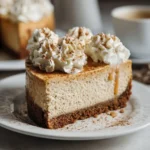
Introduction
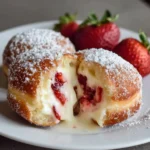
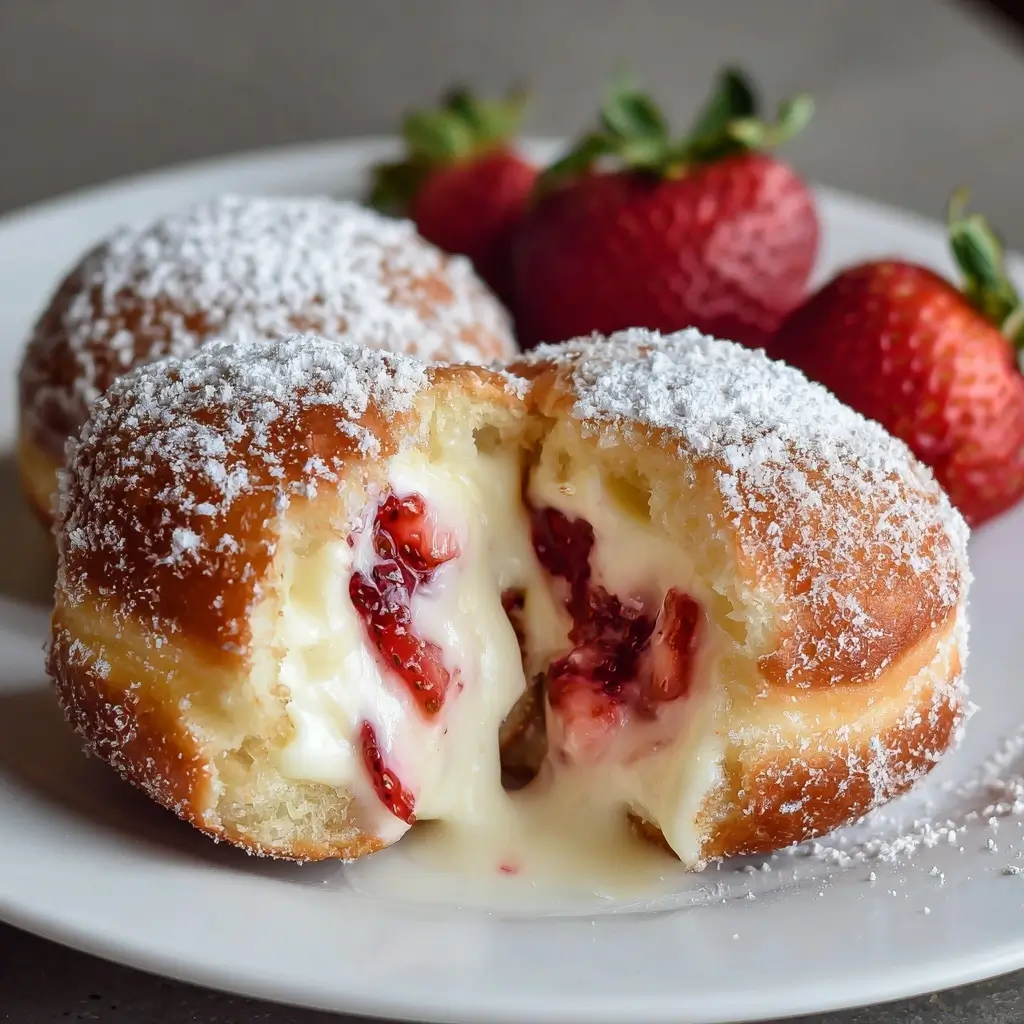
Imagine biting into a warm, pillowy donut—golden-brown on the outside, impossibly tender within—only to be met with a luscious, velvety burst of real strawberry cheesecake. That’s not dessert fantasy; that’s the Strawberry Cheesecake Stuffed Donut: a decadent fusion of two beloved American classics reimagined into one showstopping treat. These aren’t just filled donuts—they’re handcrafted experiences, where every element is thoughtfully balanced: the subtle tang of cream cheese, the bright sweetness of ripe strawberries, the delicate vanilla-kissed yeast dough, and a finish that’s equal parts nostalgic and innovative. Whether you’re hosting a weekend brunch, surprising loved ones on a special occasion, or simply treating yourself to something extraordinary, these donuts deliver joy in every bite—elevating comfort food to artisanal heights.
The History
The evolution of the Strawberry Cheesecake Stuffed Donut is a delicious convergence of culinary timelines. Donuts, with roots tracing back to Dutch olykoeks (“oil cakes”) brought to New Amsterdam in the 17th century, evolved through centuries of innovation—from the invention of the ring-shaped donut by Hanson Gregory in 1847 to the rise of gourmet, fillable varieties in mid-20th-century American bakeries. Meanwhile, cheesecake boasts an even older lineage, dating to ancient Greece (served at Olympic games as early as 776 BC) and later refined in Roman and European traditions before becoming an iconic New York staple in the early 1900s. Strawberry’s role as a beloved fruit filling surged alongside advances in food preservation and refrigeration in the 1920s–30s, and its natural pairing with cream cheese became cemented in recipes like strawberry cream cheese frosting and no-bake strawberry cheesecakes. The modern stuffed donut trend exploded in the 2010s, led by artisanal doughnut shops like Voodoo Doughnut and Dynamo Donut, who pioneered imaginative fillings—caramel balsamic, lavender honey, matcha white chocolate—and paved the way for layered flavor narratives. The Strawberry Cheesecake Stuffed Donut emerged organically from this movement: a response to consumer demand for both indulgence and familiarity, merging the creamy richness of New York–style cheesecake with the handheld joy of a freshly fried or baked donut. Today, it appears on menus from Brooklyn to Bangkok—and in home kitchens worldwide—as a testament to how tradition and creativity can rise, swirl, and shine together.
Ingredients Breakdown
Every exceptional Strawberry Cheesecake Stuffed Donut begins with intentionality—not just in measurement, but in ingredient quality and function. Below is a meticulous breakdown of each component, explaining *why* it matters:
For the Yeast Donut Dough:
- Whole milk (warmed to 110°F): Provides lactose for yeast fermentation, adds tenderness, and contributes to browning via Maillard reaction. Using whole milk—not skim—ensures optimal fat content for softness and flavor retention.
- Active dry yeast or instant yeast: The leavening engine. Instant yeast dissolves faster and doesn’t require proofing, while active dry benefits from blooming in warm milk + sugar to verify viability. Both yield excellent rise—but precise temperature control (never above 115°F) prevents killing the culture.
- Granulated sugar: Feeds yeast during bulk fermentation and adds subtle caramel notes when fried. Also balances acidity in the filling.
- Large egg + egg yolk: The yolk adds richness, emulsification, and golden hue; the whole egg contributes structure and moisture. Room temperature ensures even incorporation.
- Unsalted butter (softened, not melted): Critical for flakiness and mouthfeel. Softened (not greasy) butter integrates smoothly without tearing gluten strands. European-style butter (82–84% fat) yields superior tenderness.
- High-protein bread flour (or all-purpose + vital wheat gluten): Bread flour (12–13% protein) creates strong yet extensible gluten—essential for holding air pockets during frying and supporting the dense filling without collapsing. All-purpose works, but adding 1 tsp vital wheat gluten per cup improves elasticity.
- Fine sea salt: Enhances all other flavors and regulates yeast activity. Never omit—even in sweet doughs.
For the Strawberry Cheesecake Filling:
- Full-fat brick-style cream cheese (cold, cubed): Must be cold and full-fat (not low-fat or spreadable). Cold cubes incorporate evenly without overheating or breaking the emulsion. Philadelphia or Kraft are reliable; organic or local brands work if properly chilled.
- Powdered sugar (sifted): Dissolves instantly, adds sweetness and stabilizes texture. Sifting prevents lumps and aerates the filling for pipeability.
- Heavy cream (cold): Adds luxurious silkiness and helps achieve a thick-but-scoopable consistency. Too much thins the filling; too little makes it stiff and grainy. Exact amount depends on ambient humidity and cream cheese temperature.
- Real vanilla extract (not imitation): Deep, floral, and complex—complements both strawberry and cheesecake notes. Madagascar Bourbon vanilla is ideal.
- Fresh, ripe strawberries (hulled & finely diced, then strained): Not frozen, not canned. Ripe berries offer natural pectin and vibrant acidity. Dicing small (<¼") ensures even distribution; straining removes excess juice that could destabilize the filling or cause leakage during frying.
- Freeze-dried strawberry powder (optional but highly recommended): Intensifies berry flavor without adding moisture. Made by grinding freeze-dried strawberries—adds depth, aroma, and a rosy hue. Substitute with 1 tsp high-quality strawberry extract *only* if unavailable.
- Lemon zest (from ½ lemon): Brightens richness and cuts through fat. Microplane only the yellow layer—avoid bitter white pith.
For the Glaze & Finish:
- Powdered sugar (sifted): Base of glaze—must be lump-free for smooth application.
- Heavy cream or whole milk: Adjusts viscosity. Cream yields richer, slower-drying glaze; milk dries faster and sets firmer.
- Vanilla extract & pinch of salt: Balances sweetness and enhances complexity.
- Fresh strawberry slices or freeze-dried strawberry crumbles: Garnish adds visual appeal, textural contrast (crunch vs. soft), and aromatic freshness.
Step-by-Step Recipe
This recipe yields approximately 12 generously stuffed donuts (plus 3–4 “test” donut holes). Plan for ~4 hours total, including rising time. Patience is non-negotiable—rushed fermentation compromises texture and flavor.
Phase 1: Prepare the Strawberry Cheesecake Filling (Do First — Chill 3+ Hours)
- In the bowl of a stand mixer fitted with the paddle attachment, beat cold, cubed cream cheese on medium speed for 1 minute until smooth and creamy—scrape bowl thoroughly.
- Add sifted powdered sugar in 3 additions, beating on low after each until fully incorporated. Scrape bowl between additions.
- Add cold heavy cream, vanilla extract, lemon zest, and freeze-dried strawberry powder. Beat on medium-low for 1½ minutes—do not overmix. Overbeating incorporates air and causes separation.
- Gently fold in strained, finely diced fresh strawberries using a silicone spatula—just until evenly distributed. Avoid stirring vigorously.
- Transfer filling to a piping bag fitted with a wide (½”) round tip (or use a zip-top bag with corner snipped). Refrigerate uncovered for at least 3 hours—or preferably overnight—to firm up. This ensures clean, leak-free injection and prevents melting during frying.
Phase 2: Make the Yeast Donut Dough
- In a small saucepan, gently warm whole milk to 110°F (use instant-read thermometer). Pour into the bowl of a stand mixer. Sprinkle yeast and 1 tsp granulated sugar over milk. Let sit 5–8 minutes until foamy and fragrant—proofing confirms yeast vitality.
- Add remaining granulated sugar, egg, egg yolk, softened butter, and fine sea salt. Mix on low with the paddle attachment for 1 minute to combine.
- Gradually add bread flour (½ cup at a time), mixing on low until shaggy dough forms (~3–4 minutes). Switch to the dough hook.
- Knead on medium-low for 8–10 minutes, until dough is smooth, elastic, and clears the sides of the bowl—but still slightly tacky (not sticky). If overly wet, add flour 1 tbsp at a time; if dry and crumbly, add milk ½ tsp at a time.
- Lightly oil a large bowl. Place dough inside, turning to coat. Cover tightly with plastic wrap and a damp kitchen towel. Let rise in a warm, draft-free place (75–78°F) for 1 hour 45 minutes—or until doubled in volume. A clear glass bowl helps monitor rise accurately.
Phase 3: Shape, Fill, and Proof
- Generously flour a clean work surface. Gently punch down risen dough to release gas. Turn out and divide into 12 equal pieces (~95g each). Roll each into a smooth, tight ball. Place on parchment-lined baking sheets, spaced 3″ apart. Cover loosely with oiled plastic wrap and let rest 15 minutes.
- Using a lightly floured rolling pin, flatten each ball into a 4″ circle. Place 2 generous tablespoons (≈45g) of chilled filling in center. Carefully gather edges upward, pinching firmly to seal completely—like a dumpling. Rotate seam-side down and gently roll between palms to smooth and round. Ensure no cracks remain—any opening will leak during frying.
- Place sealed donuts seam-side down on parchment-lined trays. Cover loosely with oiled plastic wrap. Proof in a warm spot (ideally 80°F) for 45–60 minutes—or until nearly doubled and very soft to the touch. They should jiggle slightly when nudged. Do *not* over-proof—this causes collapse during frying.
Phase 4: Fry to Golden Perfection
- Fill a heavy-bottomed Dutch oven or deep fryer with 3–4″ of neutral oil (peanut, canola, or high-oleic sunflower). Heat to 355–360°F—maintain with a reliable candy/deep-fry thermometer. Temperature is critical: too low = greasy, soggy donuts; too high = burnt exterior, raw interior.
- Working in batches of 2–3 (never overcrowd), carefully lower donuts seam-side down using a slotted spoon or spider strainer. Fry for 1 minute 15 seconds per side—or until deeply golden brown and puffed. Rotate gently halfway for even color.
- Remove with slotted spoon and drain upright on a wire rack set over paper towels. Let cool 5–7 minutes before glazing—warm (not hot) donuts accept glaze best without melting it off.
Phase 5: Glaze & Garnish
- Whisk together 2 cups sifted powdered sugar, 3–4 tbsp heavy cream, 1 tsp vanilla, and ⅛ tsp salt until smooth and glossy. Adjust cream for desired thickness: more for drip effect, less for opaque coverage.
- Dip tops of warm donuts into glaze, letting excess drip off. Immediately sprinkle with freeze-dried strawberry crumbles or arrange fresh strawberry slices artfully.
- Let glaze set 15–20 minutes before serving. For best texture, serve within 2 hours of frying.
Tips
- Yeast Confidence Check: Always proof yeast—even “instant”—if your pantry is older than 6 months or stored in a warm/humid area. A failed proof means discard and start fresh.
- Cold Filling Is Non-Negotiable: Warm filling melts on contact with warm dough during frying, causing explosive leaks. Chill minimum 3 hours—even overnight is better.
- Seam Integrity Matters: Pinch seams *twice*: first to close, second to reinforce. Then roll seam-side down to “weld” the closure. Test by gently pressing—if filling bulges, reseal.
- Oil Thermometer Is Essential: Visual cues fail. Use a clip-on digital thermometer. Reset oil temp between batches—let it return to 355°F before adding next batch.
- No Overcrowding: Frying more than 3 donuts at once drops oil temp drastically, leading to uneven cooking and oil absorption.
- Room-Temperature Eggs & Butter: Ensure both are truly room temp (68–72°F)—take them out 90 minutes ahead. Cold ingredients cause curdling and poor gluten development.
- Proofing Environment Hack: On cool days, preheat oven to 200°F, turn OFF, then place covered dough inside with oven light ON. Creates perfect 80°F microclimate.
- Glaze Timing Precision: Glaze only when donuts are warm—not hot (melts glaze) and not cool (glaze won’t adhere). Ideal temp: 105–110°F.
- Freezing Success: Unfilled, shaped donuts freeze beautifully. Place on tray, freeze solid (2 hrs), then transfer to freezer bag for up to 3 weeks. Thaw overnight in fridge, then proof 45 min at room temp before frying.
- Fry vs. Bake Decision: While traditional, frying delivers irreplaceable crisp-yet-tender texture. For baked version: brush shaped, filled donuts with melted butter, bake at 375°F for 14–16 min until golden. Texture will be cakey—not airy—but still delicious.
Variations and Customizations
These donuts invite joyful personalization—whether adapting to dietary needs, seasonal produce, or global flavor palettes. Here’s how to innovate while preserving integrity:
Dietary Adaptations:
- Gluten-Free: Substitute bread flour with certified GF all-purpose blend containing xanthan gum (e.g., King Arthur Measure-for-Measure or Bob’s Red Mill 1-to-1). Add 1 tsp psyllium husk powder per cup to improve elasticity. Expect slightly denser crumb—adjust proofing time (+10 min).
- Dairy-Free: Use full-fat coconut milk (canned, stirred well) instead of dairy milk; vegan butter (Miyoko’s or Earth Balance) for dough; and dairy-free cream cheese (Kite Hill or Tofutti) + coconut cream for filling. Note: Coconut notes will subtly emerge—pair with toasted coconut garnish.
- Lower-Sugar: Replace half the granulated sugar in dough with monk fruit–erythritol blend (e.g., Lakanto). In filling, use ¾ cup powdered erythritol blend + 2 tbsp inulin for creaminess. Glaze: powdered erythritol + almond milk. Flavor remains robust; texture slightly less glossy.
Flavor Twists:
- Balsamic Strawberry: Fold 1 tbsp aged balsamic glaze into filling + top glaze with balsamic reduction drizzle. Adds sophisticated sweet-tart depth.
- White Chocolate–Strawberry: Melt and cool ½ cup high-cocoa white chocolate; fold into filling just before adding strawberries. Garnish with white chocolate curls.
- Matcha Cheesecake: Replace freeze-dried strawberry powder with 1½ tsp ceremonial-grade matcha. Pair with black sesame glaze and roasted strawberry compote.
- Coconut-Lime: Use coconut milk in dough; lime zest + juice in filling; toasted coconut in glaze. Top with candied lime peel.
Textural & Visual Upgrades:
- Crunch Layers: Press donuts into crushed graham cracker crumbs or shortbread cookie dust *before* glazing. Or sandwich two mini donuts with filling and dip edges in sprinkles.
- Swirled Glaze: Divide glaze; tint one portion pink with natural beet powder or strawberry powder. Swirl together with toothpick before dipping.
- Dehydrated Strawberry Rosettes: Thinly slice strawberries, dehydrate at 135°F for 6–8 hrs until leathery but pliable. Twist into roses and nestle atop glazed donuts.
- Edible Flower Finish: Top with organic violas, pansies, or borage flowers for elegant, photogenic presentation.
Global Inspirations:
- Japanese-Inspired: Use matcha-infused dough, yuzu-kissed filling, and black sesame glaze. Serve with kinako (roasted soybean powder) dusting.
- Mediterranean: Infuse milk with orange blossom water; fill with mascarpone-strawberry blend; glaze with rosewater–powdered sugar mix and pistachio crumble.
- Mexican-Inspired: Add ½ tsp ground cinnamon + pinch of cayenne to dough; fill with strawberry-cream cheese + dulce de leche swirl; glaze with cinnamon-sugar and candied jalapeño ribbons.
Health Considerations and Nutritional Value
While undeniably indulgent, understanding the nutritional composition empowers mindful enjoyment—and reveals surprising functional benefits when made with whole-food ingredients:
Nutrition Snapshot (Per Donut, Approximate):
- Calories: 420–460 kcal
- Total Fat: 22–24g (13–15g saturated)
- Carbohydrates: 51–55g (32–35g sugars, including natural strawberry fructose)
- Protein: 7–9g (from milk, egg, cream cheese)
- Fiber: 1.5–2g (enhance with whole wheat pastry flour substitution or oat fiber addition)
- Vitamin C: 25–35mg (≈40% DV) from fresh strawberries—supports immunity and collagen synthesis
- Calcium: 120–140mg (≈12% DV) from dairy components
- Vitamin A: 180–220mcg RAE (≈20% DV) from egg yolk and butter—vital for vision and skin health
Functional Ingredients Spotlight:
- Fresh Strawberries: Rich in anthocyanins (antioxidants linked to reduced inflammation and improved cognitive function), folate (critical for cellular repair), and manganese (supports bone metabolism).
- Full-Fat Dairy: Contains conjugated linoleic acid (CLA), associated in studies with improved body composition and anti-inflammatory effects. Fat also slows gastric emptying, promoting satiety.
- Yeast-Raised Dough: Fermentation partially breaks down gluten and phytic acid, improving digestibility and mineral absorption compared to quick-bread versions.
Mindful Enjoyment Strategies:
- Portion Awareness: One donut satisfies most cravings. Pair with Greek yogurt and mixed berries for balanced breakfast.
- Timing Matters: Enjoy earlier in the day—allows metabolic processing before sleep. Avoid late-night consumption, which may disrupt circadian glucose regulation.
- Hydration Synergy: Drink 1–2 glasses of water before eating—helps distinguish thirst from hunger cues and supports digestion.
- Activity Pairing: Schedule a 20-minute walk post-enjoyment—enhances insulin sensitivity and mitigates blood sugar spikes.
- Occasional Indulgence Framework: View as part of a nutrient-dense pattern—not “cheat food.” Regular intake of fruits, vegetables, whole grains, and lean proteins builds metabolic resilience.
Who Should Modify or Avoid:
- Lactose Intolerance: Use lactose-free milk and dairy-free alternatives as noted in variations.
- Yeast Sensitivity: Consider sourdough-based donut dough (longer fermentation reduces FODMAPs) or baked version with baking powder.
- Gestational or Type 2 Diabetes: Consult dietitian for carb-counting adjustments—e.g., reduce sugar in dough by 25%, use low-glycemic glaze (erythritol + almond milk), and pair with protein.
- Allergies: Tree nut allergies? Avoid almond milk substitutes—use oat or soy. Egg allergy? Try flax “egg” (1 tbsp ground flax + 2.5 tbsp water per egg), though texture will be denser.
Ingredients
For the Donut Dough:
- 1 cup (240ml) whole milk, warmed to 110°F
- 2¼ tsp (7g) active dry yeast or instant yeast
- ¼ cup (50g) granulated sugar, divided
- 1 large egg + 1 large egg yolk, room temperature
- ¼ cup (60g) unsalted butter, softened (not melted)
- 4 cups (520g) bread flour (or all-purpose + 1½ tsp vital wheat gluten), plus extra for dusting
- 1½ tsp fine sea salt
For the Strawberry Cheesecake Filling:
- 16 oz (450g) full-fat brick-style cream cheese, cold and cubed
- 1¼ cups (150g) powdered sugar, sifted
- ⅓ cup (80ml) cold heavy cream, plus more as needed
- 2 tsp pure vanilla extract
- 1½ cups (225g) fresh strawberries, hulled, finely diced, and strained
- 3 tbsp (12g) freeze-dried strawberry powder (recommended)
- Zest of ½ lemon (about 1 tsp)
For the Vanilla Strawberry Glaze:
- 2 cups (240g) powdered sugar, sifted
- 3–4 tbsp heavy cream or whole milk
- 1 tsp pure vanilla extract
- ⅛ tsp fine sea salt
- Optional garnishes: fresh strawberry slices, freeze-dried strawberry crumbles, edible flowers
Directions
- Make the filling first: In stand mixer with paddle attachment, beat cream cheese on medium 1 minute until smooth. Add powdered sugar in 3 parts, beating low after each. Scrape bowl. Add heavy cream, vanilla, lemon zest, and strawberry powder; beat medium-low 1½ minutes. Gently fold in strawberries. Transfer to piping bag. Refrigerate ≥3 hours.
- Activate yeast: Warm milk to 110°F. Pour into mixer bowl. Sprinkle yeast + 1 tsp sugar over milk. Let foam 5–8 min.
- Mix dough: Add remaining sugar, egg, yolk, butter, and salt. Mix low 1 min. Gradually add flour. Switch to dough hook. Knead 8–10 min until smooth, elastic, and tacky.
- First rise: Oil bowl. Place dough in, turning to coat. Cover. Rise 1 hr 45 min at 75–78°F until doubled.
- Shape & fill: Punch down. Divide into 12 pieces. Roll each into 4″ circle. Place 45g filling in center. Gather and pinch edges to seal. Roll smooth. Place seam-down on parchment. Cover. Proof 45–60 min at 80°F until puffy and jiggly.
- Fry: Heat oil to 355–360°F in Dutch oven. Fry 2–3 donuts at a time, 1 min 15 sec per side, until golden. Drain on wire rack.
- Glaze: Whisk glaze ingredients until smooth. Dip warm donut tops. Garnish immediately. Set 15–20 min.
- Serve: Enjoy within 2 hours for peak texture. Store unfilled dough or baked donuts as directed in Tips section.
FAQ
- Can I make these ahead of time?
- Absolutely—with strategy. Unfilled, shaped donuts freeze beautifully for up to 3 weeks (freeze solid first, then bag). Thaw overnight in fridge, proof 45 min, then fry. Fully assembled donuts are best enjoyed same-day—but unfilled, cooled donuts reheat well: 10 sec in air fryer or toaster oven restores crispness. Glaze fresh before serving.
- Why did my filling leak during frying?
- Three likely culprits: (1) Filling wasn’t cold enough—refrigerate ≥3 hours;