Introduction
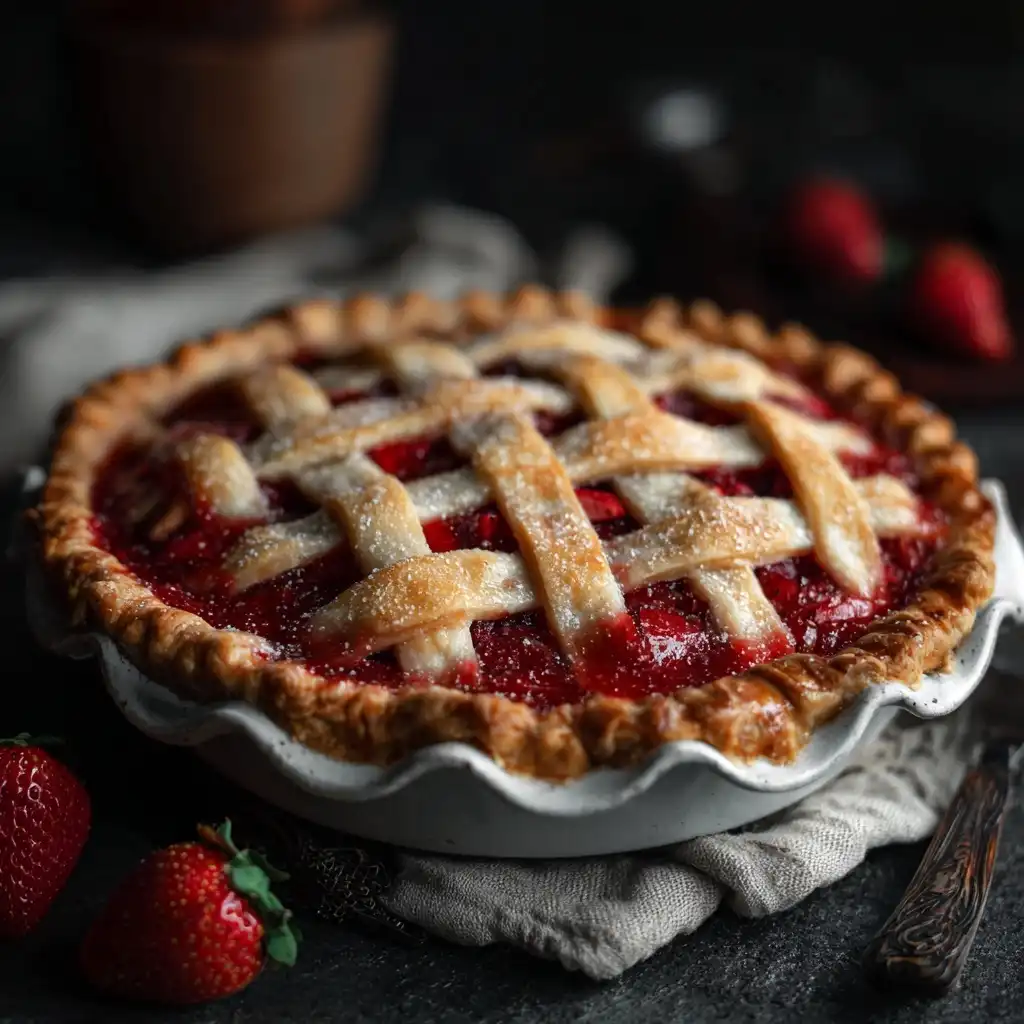
Strawberry Rhubarb Pie is a quintessential American dessert that embodies the perfect balance of sweet and tart—a harmonious union of spring’s boldest flavors. With its vibrant ruby-red filling, flaky golden crust, and irresistible aroma wafting from the oven, this pie evokes nostalgia, farmhouse kitchens, sun-dappled farmers’ markets, and generations of home bakers who understood that great flavor begins with seasonal integrity. More than just a treat, it’s a celebration of contrast: the bright, jammy sweetness of ripe strawberries against the bold, tangy, almost wine-like sharpness of rhubarb stalks—tempered only by buttery pastry and a whisper of spice. Whether served warm with a scoop of vanilla bean ice cream, dusted with powdered sugar at a summer picnic, or presented proudly at holiday gatherings (yes—even Thanksgiving and Easter!), Strawberry Rhubarb Pie holds a cherished place in the pantheon of classic fruit pies. Its enduring popularity lies not only in its stunning visual appeal and complex flavor profile but also in its remarkable versatility—it adapts beautifully to heirloom recipes, modern dietary needs, and regional interpretations across North America and beyond.
The History
The origins of Strawberry Rhubarb Pie trace back to early 19th-century New England and Ontario, where both strawberries and rhubarb thrived in cool, temperate climates—and where resourceful settlers sought ways to preserve seasonal abundance. Rhubarb, originally cultivated in Asia for medicinal purposes (its roots used in traditional Chinese herbalism), was introduced to Europe in the 17th century and brought to North America by European colonists, who quickly discovered that its leafless, celery-like stalks—though toxic when raw—became delightfully tart and tender when cooked with sugar. Strawberries, native to North America and long gathered wild by Indigenous peoples (including the Haudenosaunee and Anishinaabe nations), were later cultivated by colonists using varieties like the Virginia strawberry (Fragaria virginiana) and eventually crossbred with Chilean imports to yield the large-fruited Fragaria × ananassa we know today.
By the mid-1800s, cookbooks such as The Boston Cooking-School Cook Book (1896) by Fannie Farmer and Miss Parloa’s Kitchen Companion (1887) included rhubarb-based desserts—often paired with apples or currants—but the strawberry-rhubarb combination gained widespread traction in the 1920s and ’30s, buoyed by improved transportation networks that allowed strawberries to reach rhubarb-growing regions earlier each spring. The pairing proved scientifically synergistic: strawberries contain natural pectin and sugars that help thicken and mellow rhubarb’s aggressive acidity, while rhubarb contributes structure, depth, and a refreshing counterpoint to strawberry’s sometimes cloying sweetness. During the Great Depression and WWII rationing era, the pie became a symbol of resilient homemaking—using inexpensive, homegrown, or foraged ingredients to create something luxurious and comforting. Today, it’s recognized as the official state pie of Vermont (designated in 2015), a testament to its cultural resonance—and continues to inspire food historians, pastry chefs, and backyard gardeners alike.
Ingredients Breakdown
Every exceptional Strawberry Rhubarb Pie begins not with technique alone, but with deep respect for each ingredient’s role in texture, flavor, chemistry, and tradition. Below is an exhaustive, function-driven breakdown:
- Fresh Rhubarb (about 4 cups, 1-inch diced): Choose firm, crisp, cherry-red or magenta stalks—avoid green-tinged or limp ones, as color often correlates with anthocyanin concentration and thus tart intensity. Rhubarb contains negligible natural sugar but high levels of malic and oxalic acids; its fibrous cellulose structure softens dramatically when heated, releasing water and pectin. The tartness is essential for cutting through richness and preventing cloying sweetness.
- Fresh Strawberries (about 3 cups, hulled and quartered or halved): Opt for fully ripe, fragrant, locally grown berries—ideally at peak season (late spring to early summer). Their natural fructose and low-methoxyl pectin activate during cooking, aiding gel formation. Overripe berries add excess juice; underripe ones lack aromatic esters (like furaneol and mesifurane) responsible for that signature “strawberry” perfume. Note: Frozen strawberries (unsweetened, thawed and drained) may be substituted in winter—but expect reduced fragrance and slightly muted color.
- Granulated Sugar (¾–1¼ cups, depending on fruit ripeness and preference): Functions as sweetener, preservative, and texture modulator. Sugar draws out fruit juices via osmosis, dissolves pectin, and raises the boiling point to encourage thickening. Less sugar yields a brighter, more acidic pie; more sugar creates deeper caramelized notes but risks masking rhubarb’s complexity. Consider reserving 1–2 tbsp to sprinkle over the top crust before baking for subtle crunch and shine.
- Brown Sugar (¼ cup, light or dark): Adds molasses-derived minerals, rich caramel tones, and hygroscopic moisture retention—keeping the filling lusciously juicy without sogginess. Dark brown sugar imparts deeper toffee notes; light offers subtler warmth.
- Cornstarch (¼–⅓ cup): The most reliable thickener for this pie due to its neutral flavor, high clarity, and freeze-thaw stability. It forms a clear, glossy, non-stringy gel when heated to 203°F (95°C) and held for 1–2 minutes. Too little results in a runny pie; too much yields a slimy, pasty texture. Arrowroot or tapioca starch are viable alternatives—tapioca gives a chewier, glossier set; arrowroot is more delicate and heat-sensitive.
- Lemon Juice (1½–2 tbsp, freshly squeezed): Not merely for acidity—citric acid enhances perception of fruit brightness, stabilizes anthocyanin pigments (preventing dull gray-pink discoloration), and helps activate pectin. Bottled juice lacks volatile citrus oils critical for aromatic lift.
- Lemon Zest (from 1 lemon): Contains limonene and other terpenes that amplify freshness and cut through density. Always zest before juicing, and use a microplane for maximum surface area and oil release.
- Unsalted Butter (1–2 tbsp, cold, cubed): Added to the filling just before pouring into the crust, it enriches mouthfeel, adds subtle dairy roundness, and helps prevent excessive bubbling/boil-over during baking.
- Ground Cinnamon (½ tsp) and Ground Ginger (¼ tsp): Warm, aromatic spices that complement—not compete with—the fruit. Cinnamon enhances strawberry’s fruity esters; ginger adds a peppery lift that balances rhubarb’s vegetal edge. Nutmeg or cardamom (a pinch) may be added for further nuance.
- Salt (½ tsp fine sea salt): A crucial flavor amplifier—underscoring sweetness, taming bitterness, and unifying all components. Never omit.
- Pie Dough (for double crust—approx. 2½ cups flour, 1 cup cold fat, 6–8 tbsp ice water + vinegar): Traditionally made with a 50/50 blend of all-butter and shortening (or lard) for optimal flakiness + tenderness. Butter provides unparalleled flavor and laminated layers; shortening/lard delivers superior plasticity and moisture resistance—critical for preventing soggy bottoms. Vinegar or vodka (1 tsp) inhibits gluten development for tenderness. Chilling dough for ≥1 hour (preferably overnight) relaxes gluten and solidifies fat—key for clean cuts and minimal shrinkage.
- Egg Wash (1 large egg + 1 tbsp cream/milk + pinch salt): Creates a radiant, mahogany-golden crust with gentle sheen. Optional additions: turbinado sugar for sparkle, sesame or poppy seeds for crunch, or a light brush of apricot glaze post-bake for extra gloss.
Step-by-Step Recipe
- Prep & Chill (Day Before or Morning Of): Make pie dough. In a food processor or large bowl, combine 2½ cups all-purpose flour, 1 tsp sugar, and ½ tsp salt. Add ½ cup very cold unsalted butter (cut into ½” cubes) and ½ cup cold vegetable shortening (or lard). Pulse or cut in until mixture resembles coarse meal with visible pea-sized butter pieces. Drizzle in 6–8 tbsp ice water mixed with 1 tsp apple cider vinegar, 1 tbsp at a time, pulsing just until dough begins to clump. Divide into two equal disks, wrap tightly in parchment-lined plastic wrap, and refrigerate ≥2 hours—or preferably overnight—to hydrate flour and chill fat thoroughly.
- Prepare the Filling (1 Hour Before Baking): In a large nonreactive bowl (stainless steel or glass), gently combine 4 cups 1-inch diced rhubarb, 3 cups hulled and quartered strawberries, 1 cup granulated sugar, ¼ cup brown sugar, ¼ cup cornstarch, 1½ tbsp fresh lemon juice, 1 tsp lemon zest, ½ tsp ground cinnamon, ¼ tsp ground ginger, and ½ tsp fine sea salt. Toss with a silicone spatula—just until evenly coated. Let macerate at room temperature for 30–45 minutes, stirring gently every 15 minutes. You’ll notice deep pink liquid pooling—this is ideal. Do not skip maceration: it jumpstarts pectin extraction and ensures even thickening.
- Roll Out the Bottom Crust: Lightly flour a cool marble or wooden surface. Remove one dough disk from fridge; let sit 5 minutes if overly firm. Roll from center outward into a 12-inch circle, rotating dough ¼ turn after each roll to prevent sticking and ensure even thickness (⅛” thick). Lift and re-flour surface as needed. Carefully drape over a 9-inch deep-dish pie plate (not standard 9″). Gently press into bottom and sides without stretching. Trim overhang to ½ inch beyond rim. Refrigerate uncovered while preparing top crust.
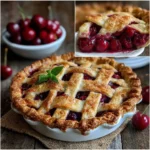
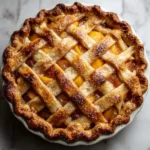
- Roll Out the Top Crust & Vent: Roll second disk into an 11½-inch circle. Transfer to parchment or wax paper. Using a small cookie cutter, paring knife, or lattice template, cut vents—either 4–5 generous steam slits (½” wide × 2″ long), a decorative cut-out (e.g., leaf, heart), or weave a full lattice (cut 10–12 strips, ½” wide). Chill top crust 10 minutes.
- Assemble & Chill Again: Pour macerated filling (including all accumulated juices) into chilled bottom crust. Dot evenly with 1 tbsp cold unsalted butter. Carefully place top crust over filling. Trim excess to match bottom overhang. Fold both edges under together to form a thick, seamless rim. Crimp decoratively using fingers, fork, or pie crimper. Freeze assembled pie for 15–20 minutes—this solidifies fat and prevents crust collapse during initial bake.
- Preheat & Prep for Baking: Position oven rack in lowest third. Preheat to 425°F (220°C) for ≥30 minutes—oven thermometers highly recommended. Place a heavy-duty baking sheet (rimmed) on rack to preheat—it catches spills and radiates heat upward for crisp bottom crust.
- Bake Strategically: Brush chilled pie generously with egg wash. Sprinkle with 1–2 tsp turbinado sugar. Place frozen pie directly onto hot baking sheet. Bake at 425°F for 20 minutes—this sets the crust and jumpstarts thickening. Reduce heat to 375°F (190°C); rotate pie ½ turn. Continue baking 40–55 minutes, until crust is deep golden brown and filling bubbles vigorously *through the vents* (not just around edges). Internal temperature should read 205–210°F (96–99°C) when inserted into center with instant-read thermometer—confirming starch gelatinization.
- Cool Completely—Non-Negotiable: Remove pie from oven and place on a wire rack. Cool *undisturbed* for at least 4 hours—and ideally 6–8 hours or overnight. This allows the cornstarch network to fully set and the filling to transition from molten syrup to sliceable, jewel-toned custard. Cutting too soon guarantees leakage and structural failure.
- Serve & Store: Slice with a sharp, serrated knife dipped in hot water and wiped clean between cuts. Serve at room temperature or slightly warmed (15 sec in microwave per slice). Store covered at room temperature up to 2 days; refrigerate up to 5 days. Reheat individual slices in a 350°F oven for 10–12 minutes to restore crispness.
Tips
- Select Rhubarb with Intention: Look for stalks no thicker than your thumb—thicker ones can be woody and fibrous. Early-season rhubarb (April–May) tends to be more tender and less stringy than late-harvest stalks.
- Don’t Peel Rhubarb—Unless Necessary: Young, thin stalks need no peeling; their skin is tender and nutrient-rich (high in fiber and polyphenols). Only peel older, ribbed, or excessively fibrous stalks—with a vegetable peeler, not a knife—to avoid waste.
- Freeze Fruit for Off-Season Pies: Chop rhubarb and hull/slice strawberries; spread on parchment-lined trays; freeze solid; then transfer to airtight freezer bags. Use directly from frozen—no thawing required—adding 5–10 minutes to bake time.
- Prevent Soggy Bottoms Relentlessly: Beyond preheating the baking sheet: blind-bake the bottom crust for 12–15 minutes with pie weights before adding filling; brush unbaked bottom crust with lightly beaten egg white (creates moisture barrier); or sprinkle 1 tsp dried breadcrumbs or crushed graham cracker crumbs over bottom before filling.
- Thicken Like a Pro: If your filling seems excessively juicy after maceration, drain ¼ cup liquid and reduce it on the stove with 1 tsp cornstarch until syrupy—then stir back in. Or add 1 tsp additional cornstarch mixed with 1 tsp cold water as a slurry during final stir.
- Crust Confidence Starts Cold: Keep everything cold—dough, bowls, rolling pin, even your hands (rinse in ice water). Warm fat = greasy, tough, non-flaky crust.
- Steam Is Your Friend—And Your Warning: Vigorous bubbling *through vents* signals proper set. If only edges bubble, continue baking. If filling erupts, you likely under-thickened or overfilled—next time, reduce fruit by ½ cup or increase cornstarch by 1 tsp.
- Acidity Adjustments Are Normal: Taste a tiny bit of macerated filling (before adding thickener). If overwhelmingly sour, add 1–2 tsp more sugar. If bland, add another ½ tsp lemon juice. Trust your palate—not just the recipe.
- Golden Crust Hack: For deeper color and flavor, substitute 2 tbsp of the flour in your dough with toasted almond flour or finely ground gingersnaps.
- Make-Ahead Mastery: Dough freezes beautifully for 3 months. Fully assembled (unbaked) pie freezes for up to 4 weeks—wrap tightly in plastic + foil. Bake from frozen: add 20 minutes to total time and tent with foil if top browns too fast.
Variations and Customizations
Strawberry Rhubarb Pie is a canvas—not a cage. Its sturdy structure welcomes creativity while preserving its soul. Explore these thoughtfully crafted adaptations:
- Vegan Strawberry Rhubarb Pie: Replace butter in crust with chilled coconut oil (refined for neutral taste) or vegan shortening; use ice-cold almond or oat milk + 1 tsp apple cider vinegar as egg wash substitute. For filling, swap honey or maple syrup for part of the sugar (reduce liquid elsewhere), and use arrowroot instead of cornstarch (more stable at lower pH). Optional: add 1 tsp flaxseed gel (1 tbsp ground flax + 3 tbsp water) for binding.
- Gluten-Free Pie: Use a 1:1 GF flour blend containing xanthan gum (e.g., Bob’s Red Mill or King Arthur). Add 1 tsp psyllium husk powder to dough for elasticity. Pre-bake crust 10 minutes to prevent grittiness. Ensure cornstarch is certified GF (some brands process with wheat).
- Oat-Infused Crust: Substitute ¼ cup of flour with certified GF rolled oats (blended fine) for earthy, nutty depth. Toast oats first for enhanced aroma.
- Herbal Elegance: Infuse sugar with 1 tsp finely chopped fresh rosemary or lavender (steep 24 hrs, then sieve) — use infused sugar in filling. Or stir 1 tsp finely minced lemon verbena or basil into cooled filling before baking for surprising aromatic brightness.
- Spiced Rum Swirl: After filling is in crust, drizzle 1 tbsp dark rum (or bourbon) mixed with 1 tsp melted butter over top. Creates pockets of boozy, caramelized richness.
- Maple-Ginger Variation: Replace all granulated sugar with Grade B maple syrup (reduce lemon juice to 1 tbsp to balance acidity) and increase ginger to ½ tsp. Add 2 tbsp crystallized ginger, finely chopped, to filling for chewy, spicy bursts.
- Champagne-Enhanced Filling: Replace 2 tbsp lemon juice with dry brut champagne or prosecco—adds effervescent acidity and delicate floral notes. Reduce other liquids slightly.
- Streusel-Topped Pie: Skip top crust entirely. Mix ½ cup flour, ⅓ cup brown sugar, ¼ tsp cinnamon, ¼ tsp salt, and 4 tbsp cold butter (cut in) until crumbly. Sprinkle thickly over filling before baking. Yields rustic, crunchy, coffee-cake-inspired contrast.
- Mini Hand Pies: Roll dough thinner (⅛”), cut 4-inch circles, fill with 2 tbsp filling + ¼ tsp butter, seal with fork, vent, egg wash, and bake at 400°F for 18–22 minutes. Perfect for portion control or gift-giving.
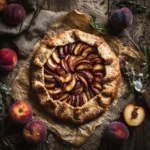
- Deconstructed Galette: Shape dough into 14-inch free-form round. Mound filling (slightly reduced liquid) in center, leaving 2-inch border. Fold edges over, pleating as you go. Brush crust with cream, sprinkle with demerara sugar and flaky salt. Bake same as pie. Effortless, elegant, forgiving.
Health Considerations and Nutritional Value
A single generous slice (1/8 of a 9-inch pie, approx. 225g) of traditionally prepared Strawberry Rhubarb Pie contains roughly:
- Calories: 420–480 kcal
- Total Fat: 20–24g (12–15g saturated, primarily from butter/shortening)
- Carbohydrates: 62–68g (38–42g sugars, including natural fruit sugars and added sucrose)
- Fiber: 4–5g (rhubarb contributes ~1.8g/cup; strawberries ~3g/cup—excellent for digestive health and satiety)
- Vitamin C: ~75–90mg (nearly 100% DV—supports immunity, collagen synthesis, and iron absorption)
- Vitamin K: ~35–45mcg (rhubarb is exceptionally rich—vital for blood clotting and bone metabolism)
- Calcium & Potassium: Moderate amounts—rhubarb contains more calcium than oranges; strawberries contribute potassium for electrolyte balance.
- Antioxidants: High in anthocyanins (rhubarb red pigment), ellagic acid (strawberries), and quercetin—linked to reduced inflammation and cardiovascular protection.
Important Considerations:
- Oxalate Awareness: Rhubarb leaves contain dangerously high levels of soluble oxalates (toxic)—but stalks contain only trace amounts (safe for most). Individuals with kidney stones (calcium-oxalate type) or renal impairment may wish to moderate intake.
- Sugar Sensitivity: While fruit provides natural sugars, the added refined sugar elevates glycemic load. For diabetics or low-sugar diets, reduce sugar to ½ cup total and increase cornstarch to ⅓ cup; add 1 tsp stevia extract (baking-stable) or erythritol blend. Monitor blood glucose response.
- Gluten & Allergen Notes: Traditional pie contains gluten (wheat flour) and dairy (butter, egg wash). Vegan/GF versions address these, but always verify labels on pre-made crusts or thickeners.
- Portion Mindfulness: Enjoying 1–2 slices weekly fits within balanced eating patterns. Pair with Greek yogurt (protein/fat slows sugar absorption) or a handful of walnuts (healthy fats, fiber) to enhance satiety and nutrient synergy.
- Homemade Advantage: Unlike commercial pies, homemade versions avoid hydrogenated oils, artificial colors (e.g., “strawberry flavor”), preservatives (BHA/BHT), and high-fructose corn syrup—making them nutritionally superior despite similar calorie counts.
Ingredients
Makes one 9-inch double-crust pie (8 servings)
- For the Flaky All-Butter Crust:
– 2½ cups (300g) all-purpose flour, plus more for dusting
– 1 tsp granulated sugar
– ½ tsp fine sea salt
– 1 cup (227g) unsalted butter, very cold, cut into ½-inch cubes
– 6–8 tbsp (90–120ml) ice water
– 1 tsp apple cider vinegar - For the Luscious Filling:
– 4 cups (about 450g) fresh rhubarb, trimmed and cut into 1-inch pieces
– 3 cups (about 450g) fresh strawberries, hulled and quartered (or halved if small)
– 1 cup (200g) granulated sugar (adjust ±¼ cup based on fruit tartness)
– ¼ cup (50g) light or dark brown sugar
– ¼ cup (30g) cornstarch (or 3 tbsp tapioca starch)
– 1½–2 tbsp (22–30ml) fresh lemon juice (from 1 large lemon)
– 1 tsp (6g) finely grated lemon zest
– ½ tsp ground cinnamon
– ¼ tsp ground ginger
– ½ tsp fine sea salt
– 1 tbsp (14g) cold unsalted butter, cubed - For Finishing:
– 1 large egg + 1 tbsp heavy cream or milk, whisked (egg wash)
– 1–2 tsp turbinado or coarse sugar, for sparkle
Directions
- Make the Dough: In a large bowl or food processor, whisk together flour, sugar, and salt. Add cold butter cubes. Using a pastry cutter, fork, or pulse button, cut butter into flour until mixture resembles coarse crumbs with visible pea-sized butter pieces. Drizzle in ice water mixed with vinegar, 1 tablespoon at a time, tossing gently with a spatula or pulsing briefly, just until dough begins to clump together when pinched. Do not overmix. Turn out onto lightly floured surface; divide into two equal portions. Shape each into a 1-inch-thick disk, wrap tightly in plastic wrap, and refrigerate ≥2 hours or overnight.
- Prep Filling: In a large nonreactive bowl, combine rhubarb, strawberries, granulated sugar, brown sugar, cornstarch, lemon juice, lemon zest, cinnamon, ginger, and salt. Gently toss with a silicone spatula until evenly coated. Let stand at room temperature for 30–45 minutes, stirring once or twice, until deep pink juices pool at bottom.
- Roll Bottom Crust: On a lightly floured surface, roll one chilled dough disk into a 12-inch circle, about ⅛-inch thick, rotating and reflouring as needed. Drape over a 9-inch deep-dish pie plate. Gently press into bottom and up sides without stretching. Trim overhang to ½ inch beyond rim. Refrigerate uncovered while rolling top crust.
- Roll Top Crust & Vent: Roll second disk into an 11½-inch circle. Transfer to parchment. Cut 4–5 parallel steam slits (½” wide × 2″ long) or create a decorative cut-out. Chill 10 minutes.
- Assemble: Pour filling (including all juices) into chilled bottom crust. Dot with cold butter cubes. Carefully lay top crust over filling. Trim excess to match bottom. Fold both edges under together to form a thick, seamless rim. Crimp decoratively. Freeze pie 15–20 minutes.
- Bake: Preheat oven to 425°F (220°C) with rack in lowest third and heavy