Introduction
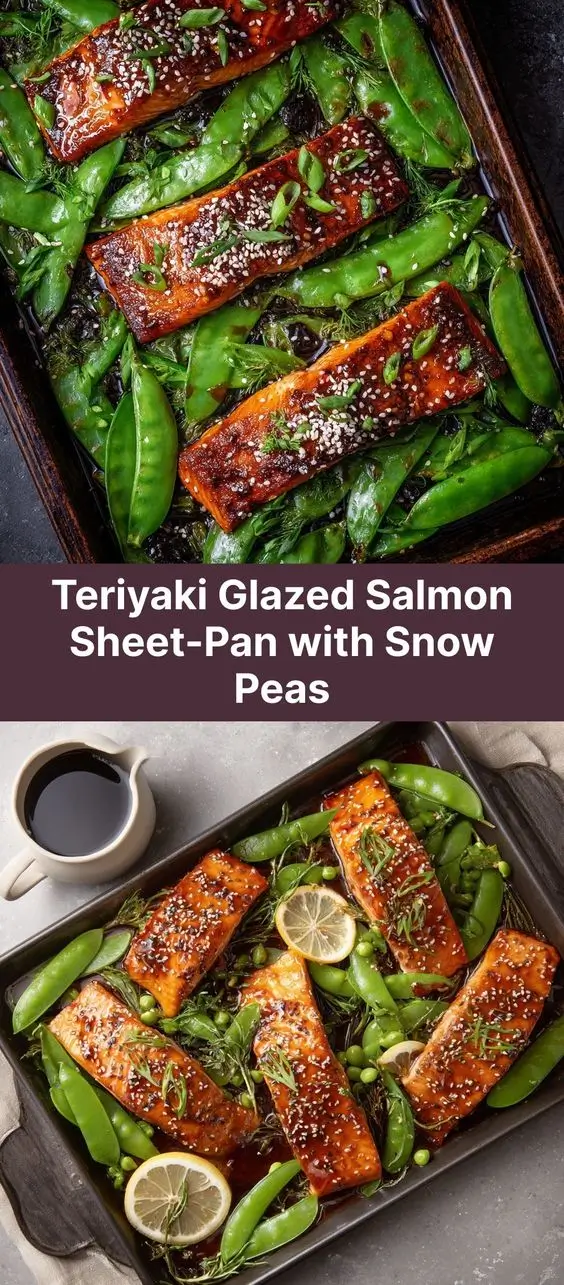
Looking for a quick, nutritious, and restaurant-quality dinner that requires minimal cleanup? The Teriyaki Glazed Salmon Sheet-Pan with Snow Peas is your answer. This one-pan wonder combines tender, flaky salmon fillets with crisp-tender snow peas, all coated in a rich, glossy teriyaki glaze that caramelizes beautifully in the oven. Perfect for busy weeknights or elegant enough for weekend entertaining, this dish delivers bold Asian-inspired flavors with effortless ease. Whether you’re a seasoned home cook or just starting your culinary journey, this recipe promises delicious results every time.
The History
The fusion of Japanese teriyaki cooking techniques with Western sheet-pan meals reflects a broader trend in modern cuisine—blending global flavors with practical, time-saving methods. Teriyaki, which originated in Japan, traditionally involves grilling or broiling fish or meat glazed with a sauce made from soy sauce, mirin, and sugar. The word “teri” refers to the shiny finish, while “yaki” means grilled or broiled. Over time, as Japanese cuisine spread worldwide, adaptations emerged, particularly in North America, where convenience and health-conscious eating became priorities. The sheet-pan dinner trend, popularized in the 2010s, emphasizes efficiency by roasting proteins and vegetables together on a single pan, reducing prep and cleanup time. Combining these two concepts—the umami-rich teriyaki glaze and the efficient sheet-pan method—gives rise to dishes like the Teriyaki Glazed Salmon with Snow Peas, a harmonious blend of tradition and modern lifestyle needs.
Ingredients Breakdown
The success of this dish hinges on quality ingredients that work together to create balanced flavor and texture:
- Salmon Fillets: Choose center-cut, skin-on fillets for optimal moisture and flavor. Wild-caught salmon offers a richer taste and better nutrient profile than farmed varieties.
- Snow Peas: These delicate legumes add a pop of color and fresh crunch. They’re low in calories and high in vitamins C and K.
- Soy Sauce (or Tamari): Provides the salty umami base of the teriyaki glaze. Use reduced-sodium soy sauce to control salt levels, or tamari for a gluten-free option.
- Mirin: A sweet rice wine that adds subtle sweetness and shine to the glaze. If unavailable, substitute with a mix of dry white wine and a touch of honey.
- Brown Sugar: Balances the saltiness and helps create the signature sticky glaze. You can use coconut sugar for a lower glycemic alternative.
- Fresh Ginger: Grated ginger infuses warmth and depth, enhancing the aromatic profile of the sauce.
- Garlic: Minced garlic brings pungency and complexity to the marinade.
- Sesame Oil: Adds a nutty finish; use toasted sesame oil for maximum flavor.
- Lime Juice: Brightens the dish and cuts through the richness of the salmon and glaze.
- Sesame Seeds and Green Onions (optional garnish): For added texture, visual appeal, and freshness.
Step-by-Step Recipe
- Preheat Oven: Set your oven to 400°F (200°C). Line a large rimmed baking sheet with parchment paper or aluminum foil for easy cleanup.
- Prepare the Teriyaki Glaze: In a small saucepan over medium heat, combine 1/3 cup soy sauce, 1/4 cup mirin, 2 tablespoons brown sugar, 1 tablespoon grated fresh ginger, and 2 minced garlic cloves. Bring to a simmer, stirring until the sugar dissolves. In a small bowl, mix 1 teaspoon cornstarch with 1 tablespoon water to make a slurry. Whisk into the sauce and cook for another 2–3 minutes until slightly thickened. Remove from heat and stir in 1 teaspoon toasted sesame oil and 1 tablespoon fresh lime juice. Set aside.
- Prepare the Salmon and Vegetables: Pat 4 salmon fillets (about 6 oz each) dry with paper towels. Place them on one side of the prepared baking sheet. On the other side, arrange 2 cups of trimmed snow peas in a single layer.
- Glaze the Ingredients: Brush half of the teriyaki glaze generously over the salmon fillets. Drizzle the remaining glaze over the snow peas, tossing gently to coat evenly.
- Bake: Roast in the preheated oven for 12–15 minutes, depending on the thickness of the salmon. The salmon is done when it flakes easily with a fork and reaches an internal temperature of 145°F (63°C).
- Optional Broil: For a deeper glaze and slight char, switch the oven to broil for the last 1–2 minutes, watching closely to prevent burning.
- Garnish and Serve: Remove from oven and let rest for 2–3 minutes. Sprinkle with toasted sesame seeds and sliced green onions. Serve immediately with steamed rice or quinoa for a complete meal.
Tips
- Uniform Thickness: Choose salmon fillets of similar size and thickness to ensure even cooking.
- Dry the Salmon: Always pat salmon dry before glazing to help the sauce adhere and promote browning.
- Don’t Overcrowd the Pan: Leave space between fillets and snow peas to allow proper air circulation and roasting, not steaming.
- Use Fresh Ginger and Garlic: Avoid powdered versions for the best flavor; fresh aromatics make a noticeable difference.
- Double the Glaze: Make extra teriyaki sauce to serve on the side or use with other proteins like chicken or tofu.
- Marinate Briefly: For deeper flavor, marinate salmon in half the glaze for 15–30 minutes in the fridge before baking.
- Check Often During Broiling: Broiling happens quickly—stay nearby to avoid charring.
Variations and Customizations
This recipe is highly adaptable to suit various tastes, dietary needs, and seasonal ingredients:
- Vegetable Swaps: Replace snow peas with broccoli florets, asparagus, bell peppers, zucchini, or snap peas. Just adjust roasting times accordingly.
- Protein Alternatives: Use this teriyaki glaze with chicken breasts, shrimp, cod, or tofu for a different twist.
- Sugar-Free Version: Substitute brown sugar with monk fruit sweetener or erythritol and use a xanthan gum-thickened glaze instead of cornstarch.
- Pineapple Addition: Add chunks of fresh pineapple to the pan for a sweet-tart contrast that complements the salmon.
- Spicy Kick: Stir 1/2 teaspoon sriracha or red pepper flakes into the teriyaki sauce for a spicy variation.
- Herb Infusion: Add chopped cilantro or Thai basil after baking for a fresh, aromatic lift.
- Low-Sodium Option: Use low-sodium soy sauce and increase citrus or ginger to maintain flavor without excess salt.
Health Considerations and Nutritional Value
Teriyaki Glazed Salmon with Snow Peas is not only delicious but also packed with nutritional benefits:
- Omega-3 Fatty Acids: Salmon is rich in EPA and DHA, essential fats that support heart and brain health, reduce inflammation, and may improve mood.
- High-Quality Protein: Each serving provides about 35–40 grams of protein, promoting muscle repair and satiety.
- Antioxidants and Vitamins: Snow peas are loaded with vitamin C, vitamin K, and beta-carotene, supporting immune function and bone health.
- Mineral Content: Salmon contains selenium, potassium, and B vitamins, especially B12, crucial for energy metabolism and nerve function.
- Calorie Conscious: A full serving (salmon + snow peas + glaze) contains approximately 380–420 calories, making it suitable for balanced diets.
- Sodium Note: Traditional teriyaki sauce can be high in sodium. To reduce intake, use reduced-sodium soy sauce and limit additional salt.
- Sugar Awareness: Store-bought teriyaki sauces often contain excessive sugar. Making your own allows control over sweetness and additives.
- Allergen Info: Contains fish and soy. Use tamari instead of soy sauce for gluten-free needs. Ensure all ingredients are certified gluten-free if necessary.
This dish fits well within Mediterranean, pescatarian, and heart-healthy eating patterns. Pairing it with whole grains like brown rice or cauliflower rice enhances fiber content and promotes digestive health.
Ingredients
- 4 (6 oz) salmon fillets, skin-on, patted dry
- 2 cups fresh snow peas, ends trimmed
- 1/3 cup low-sodium soy sauce (or tamari)
- 1/4 cup mirin (sweet rice wine)
- 2 tbsp brown sugar (or coconut sugar)
- 1 tbsp fresh ginger, finely grated
- 2 cloves garlic, minced
- 1 tsp cornstarch
- 1 tbsp water
- 1 tsp toasted sesame oil
- 1 tbsp fresh lime juice
- 1 tbsp sesame seeds (for garnish)
- 2 green onions, thinly sliced (for garnish)
Directions
- Preheat oven to 400°F (200°C). Line a large baking sheet with parchment paper or foil.
- In a small saucepan, combine soy sauce, mirin, brown sugar, ginger, and garlic. Bring to a gentle simmer over medium heat.
- In a separate bowl, mix cornstarch and water to create a slurry. Whisk into the sauce and cook for 2–3 minutes until slightly thickened.
- Remove from heat. Stir in sesame oil and lime juice. Reserve 1/4 cup of glaze for serving.
- Place salmon fillets on one side of the baking sheet and snow peas on the other.
- Brush salmon with half the warm glaze. Toss snow peas with the remaining glaze.
- Bake for 12–15 minutes, or until salmon is cooked through and flakes easily.
- For extra browning, broil for 1–2 minutes at the end (optional).
- Let rest for 2–3 minutes. Garnish with sesame seeds and green onions.
- Serve with reserved teriyaki sauce on the side, alongside rice or noodles.
FAQ
Can I make this ahead of time?
Yes, you can prepare the teriyaki glaze up to 5 days in advance and store it in an airtight container in the refrigerator. Reheat gently before using. Assemble and bake the dish just before serving for best texture.
Can I use frozen salmon?
Yes, but thaw it completely in the refrigerator overnight. Pat dry thoroughly before seasoning to prevent excess moisture during baking.
Is this recipe gluten-free?
It can be! Use tamari instead of soy sauce and ensure your mirin is gluten-free (some brands contain wheat). Check labels on all packaged ingredients.
What can I do if I don’t have mirin?
Substitute with 1/4 cup dry white wine or rice vinegar mixed with 1 tablespoon honey or sugar to mimic the sweetness.
Can I grill this instead of baking?
Absolutely! Grill the salmon over medium heat for 4–5 minutes per side, basting with glaze. Toss snow peas in glaze and grill in a foil packet or grill basket for 5–7 minutes.
How do I store leftovers?
Store cooled leftovers in an airtight container in the refrigerator for up to 3 days. Reheat gently in the oven or microwave. Avoid freezing if possible, as the texture of cooked salmon may degrade.
Why did my glaze burn?
High sugar content makes teriyaki prone to burning. Bake at the correct temperature, avoid prolonged broiling, and consider covering salmon loosely with foil if needed.
Summary
The Teriyaki Glazed Salmon Sheet-Pan with Snow Peas is a flavorful, healthy, and easy-to-make meal that brings restaurant-quality elegance to your kitchen with minimal effort. Packed with omega-3s, vibrant veggies, and a glossy homemade glaze, it’s a weeknight favorite that never disappoints.