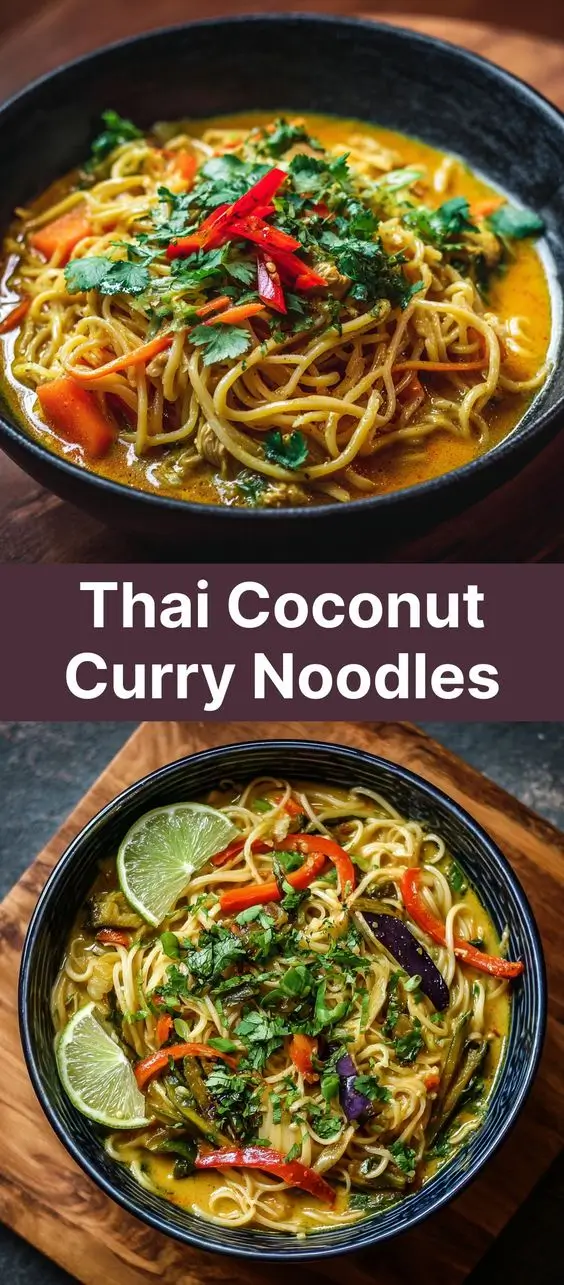
Thai Coconut Curry Noodles: A Flavorful Journey Through Southeast Asia
The History of Thai Coconut Curry Noodles
Thai Coconut Curry Noodles, while not a traditional standalone dish in classic Thai cuisine, is an inspired fusion that captures the essence of Thailand’s rich culinary heritage. The roots of this dish can be traced back to the broader family of Thai curries—red, green, yellow, and massaman—each distinguished by its unique curry paste and flavor profile. These curries have been part of Thai cooking for centuries, influenced by Indian, Chinese, and Malay cuisines due to ancient trade routes.
Coconut milk has long been a staple in Thai kitchens, especially in southern Thailand where coconut palms flourish. It’s used to temper the heat of chilies and add creaminess to curries. Over time, as Thai food gained global popularity, chefs and home cooks began experimenting with combining curry-based sauces with various types of noodles, leading to modern adaptations like Thai Coconut Curry Noodles.
This particular dish reflects contemporary culinary trends that blend authenticity with innovation. It draws inspiration from dishes such as Khao Soi (a northern Thai coconut curry noodle soup) and Pad See Ew, but introduces a creamy, aromatic broth enriched with curry paste and coconut milk. Its rise in Western restaurants and home kitchens showcases how traditional flavors can evolve into comforting, satisfying meals suitable for any occasion.
Ingredients Breakdown: What Makes This Dish Shine
The magic of Thai Coconut Curry Noodles lies in its layered ingredients—each contributing aroma, texture, and taste to create a harmonious balance between spicy, sweet, sour, salty, and umami. Here’s a detailed look at the core components:
- Curry Paste: Whether store-bought or homemade, red or green curry paste forms the soul of the dish. Made from fresh chilies, lemongrass, galangal, kaffir lime peel, shrimp paste, garlic, and coriander root, it delivers depth and complexity.
- Coconut Milk: Full-fat canned coconut milk provides richness and smoothness, balancing the heat while enhancing mouthfeel. It also helps emulsify the spices into a luscious sauce.
- Noodles: Traditionally, rice noodles (like flat rice sticks or vermicelli) are used for their delicate texture and ability to absorb flavors. However, egg noodles, udon, or even zucchini noodles work well for variations.
- Protein: Common choices include chicken, shrimp, tofu, or pork. Each adds its own character—chicken absorbs the sauce beautifully, shrimp brings sweetness, and tofu offers a plant-based alternative.
- Aromatics: Fresh garlic, shallots, ginger, and lemongrass build the foundational flavor base when sautéed at the beginning.
- Vegetables: Bell peppers, bamboo shoots, baby corn, mushrooms, spinach, bok choy, and carrots add color, crunch, and nutrition.
- Seasonings: Fish sauce (or soy sauce/tamari for vegetarians), palm sugar (or brown sugar), and lime juice fine-tune the seasoning, creating that quintessential Thai balance.
- Garnishes: Fresh cilantro, Thai basil, sliced red chili, green onions, crushed peanuts, and lime wedges elevate both presentation and taste.
Step-by-Step Recipe: How to Make Authentic-Tasting Thai Coconut Curry Noodles at Home
Creating restaurant-quality Thai Coconut Curry Noodles in your kitchen is easier than you might think. Follow these detailed steps for a flavorful, aromatic meal that will impress family and guests alike.
Ingredients
- 1 can (13.5 oz) full-fat coconut milk
- 2–3 tbsp Thai red or green curry paste (adjust to taste)
- 8 oz rice noodles (flat or thin)
- 1 lb protein of choice (chicken breast, shrimp, firm tofu, or sliced pork)
- 2 cloves garlic, minced
- 1 small onion or 2 shallots, thinly sliced
- 1 cup bell peppers, julienned
- 1 cup mushrooms (shiitake or button), sliced
- 1 cup baby spinach or bok choy
- 2 tbsp fish sauce (or soy sauce for vegetarian version)
- 1 tbsp palm sugar or brown sugar
- Juice of 1 lime
- 1 stalk lemongrass (bruised) – optional
- 2 kaffir lime leaves (crushed) – optional
- 2 tbsp vegetable oil
- Chopped cilantro, Thai basil, green onions, crushed peanuts, and lime wedges for garnish
Directions
- Prepare the Noodles: Soak rice noodles in hot water according to package instructions until tender but still chewy (usually 6–8 minutes). Drain and rinse under cold water to prevent sticking. Set aside.
- Sauté Aromatics: Heat oil in a large wok or deep skillet over medium heat. Add garlic, shallots, and lemongrass (if using). Sauté for 1–2 minutes until fragrant.
- Bloom the Curry Paste: Stir in the curry paste and cook for another 1–2 minutes to release essential oils and deepen the flavor. This step is crucial for maximizing aroma.
- Add Protein: Push aromatics to one side and add your chosen protein. Cook until nearly done—about 4–5 minutes for chicken, 2–3 minutes per side for shrimp, or until golden for tofu.
- Incorporate Coconut Milk: Pour in the coconut milk, stirring well to combine with the curry paste. Add kaffir lime leaves if available. Bring to a gentle simmer (do not boil vigorously).
- Add Vegetables: Add firmer vegetables like bell peppers and mushrooms first. Simmer for 3–4 minutes. Then stir in softer greens like spinach or bok choy and cook just until wilted.
- Season the Sauce: Stir in fish sauce, sugar, and lime juice. Taste and adjust—add more sugar for sweetness, lime for tang, or curry paste for heat.
- Combine with Noodles: Add the drained noodles to the pan. Toss gently to coat them evenly with the curry sauce. Cook for 1–2 minutes to heat through.
- Serve Immediately: Remove from heat. Discard lemongrass stalk and lime leaves if used. Divide among bowls and garnish generously with cilantro, Thai basil, green onions, crushed peanuts, and a squeeze of fresh lime juice.
Tips for Perfect Thai Coconut Curry Noodles Every Time
- Use Full-Fat Coconut Milk: Low-fat versions lack the creaminess needed for an authentic texture. Shake the can well before opening unless you’re making coconut cream by skimming the top layer.
- Bloom the Curry Paste: Never skip frying the curry paste in oil—it unlocks deeper, toasted flavors and removes raw notes.
- Don’t Overcook Noodles: Rice noodles become mushy if left soaking too long. Rinse with cold water after soaking to stop cooking.
- Balance Your Flavors: Always taste before serving. Thai cuisine thrives on equilibrium—spicy (curry), salty (fish sauce), sweet (sugar), sour (lime), and sometimes bitter (greens).
- Prep Ahead: Mise en place is key. Have all ingredients chopped and ready since the cooking process moves quickly once you start.
- Add Liquid as Needed: If the sauce becomes too thick, add a splash of vegetable broth, water, or even light coconut milk to loosen it.
- Customize Heat Level: Start with less curry paste and add gradually. You can always increase spice, but you can’t remove it!
Variations and Customizations: Make It Your Own
One of the best things about Thai Coconut Curry Noodles is how adaptable it is. Whether you’re catering to dietary needs or simply want to switch things up, here are some creative twists:
- Vegetarian/Vegan Version: Use tofu or tempeh as the protein and substitute fish sauce with soy sauce, tamari, or vegan fish sauce. Ensure curry paste is free from shrimp paste.
- Gluten-Free Option: Stick to rice noodles and use gluten-free soy sauce or tamari instead of regular soy or fish sauce (some brands contain wheat).
- Different Curries: Try yellow curry for mild warmth, Massaman for nutty depth, or Panang for a thicker, peanut-infused sauce.
- Noodle Swap: Experiment with glass noodles (cellophane), soba, ramen, or even spiralized zucchini or sweet potato for low-carb alternatives.
- Add Fruit: Pineapple or mango chunks introduce tropical sweetness that pairs wonderfully with spicy curry—great for a Thai-inspired twist.
- Creamier Texture: Blend in 1–2 tbsp of peanut butter or cashew butter for added richness and a slight nuttiness.
- Extra Umami: Add a splash of oyster sauce (for non-vegetarians) or mushroom soy sauce for deeper savoriness.
- Spice Infusion: Add sliced bird’s eye chilies during cooking or as a garnish for serious heat lovers.
- Seafood Medley: Combine shrimp, scallops, and squid for a luxurious surf-style version.
- Crispy Toppings: Top with fried shallots, crispy garlic, or wonton strips for contrast in texture.
Health Considerations and Nutritional Value
Thai Coconut Curry Noodles can be both indulgent and nutritious, depending on ingredient choices and portion size. Let’s break down what’s inside:
Nutritional Highlights
- Coconut Milk: While high in saturated fat, it contains medium-chain triglycerides (MCTs), which may support metabolism and heart health when consumed in moderation. Opt for BPA-free cans and check for additives like gums or preservatives.
- Protein Source: Lean proteins like chicken breast or shrimp offer high-quality amino acids with relatively low fat. Tofu provides plant-based protein and beneficial isoflavones.
- Vegetables: Packed with fiber, vitamins (A, C, K), antioxidants, and phytonutrients. Colorful veggies like bell peppers and leafy greens boost immune function and digestion.
- Herbs and Spices: Curry paste ingredients like turmeric (in yellow curry), garlic, and ginger have anti-inflammatory and antimicrobial properties.
- Fish Sauce: Though high in sodium, it contains essential minerals and enhances flavor without needing excess salt.
Dietary Notes
- Calorie Content: A typical serving ranges from 450–700 calories, depending on oil, protein, and coconut milk usage.
- Low-Carb Adaptation: Replace noodles with spiralized vegetables like zucchini or shirataki noodles to reduce carbs significantly.
- Sodium Watch: Reduce fish sauce or use reduced-sodium versions. Boost flavor with extra lime, herbs, or a dash of apple cider vinegar.
- Allergens: Common allergens include shellfish (in curry paste or shrimp), peanuts (garnish), soy (tofu, sauces), and gluten (in some soy/fish sauces). Always read labels carefully.
- Balanced Meal: Serve with a side salad or steamed vegetables to increase fiber and nutrient density.
Frequently Asked Questions (FAQ)
Q: Can I make Thai Coconut Curry Noodles ahead of time?
A: Yes! Prepare the curry sauce and store it separately from the noodles. Reheat the sauce gently and toss with freshly soaked or steamed noodles before serving to maintain texture.
Q: How do I store leftovers?
A: Store in an airtight container in the refrigerator for up to 3 days. Reheat gently on the stove with a splash of water or broth to loosen the sauce. Avoid microwaving for too long as it can separate the coconut milk.
Q: Why did my coconut milk separate?
A: Coconut milk naturally separates when heated. To prevent curdling, avoid boiling and stir frequently. Adding acidic ingredients like lime juice too early can also cause splitting—add citrus at the end.
Q: Is there a difference between red, green, and yellow curry paste?
A: Yes! Red curry uses dried red chilies and is typically spicier. Green curry uses fresh green chilies and herbs for a brighter, grassier taste. Yellow curry includes turmeric and is milder with earthy notes.
Q: Can I freeze this dish?
A: Freezing is possible but not ideal for noodles, which may turn mushy upon thawing. Freeze only the curry base for up to 2 months. Thaw overnight and reheat before adding fresh noodles and garnishes.
Q: What can I use instead of fish sauce?
A: For vegetarians, try soy sauce, tamari, coconut aminos, or a vegan fish sauce made from seaweed and mushrooms. Some recipes use miso paste diluted with water for umami depth.
Q: Are rice noodles healthy?
A: They are naturally gluten-free and low in fat, but they have a high glycemic index. Pair with protein and fiber-rich vegetables to stabilize blood sugar levels.
Summary
Thai Coconut Curry Noodles blend aromatic spices, creamy coconut milk, and tender noodles into a vibrant, satisfying dish rooted in Thai culinary tradition yet open to endless customization. Whether you prefer it spicy, mild, vegetarian, or loaded with seafood, this recipe delivers bold flavors and comforting warmth in every bite.