Thai Peanut Chicken Bowls: A Flavorful Journey Through Taste and Tradition
Introduction
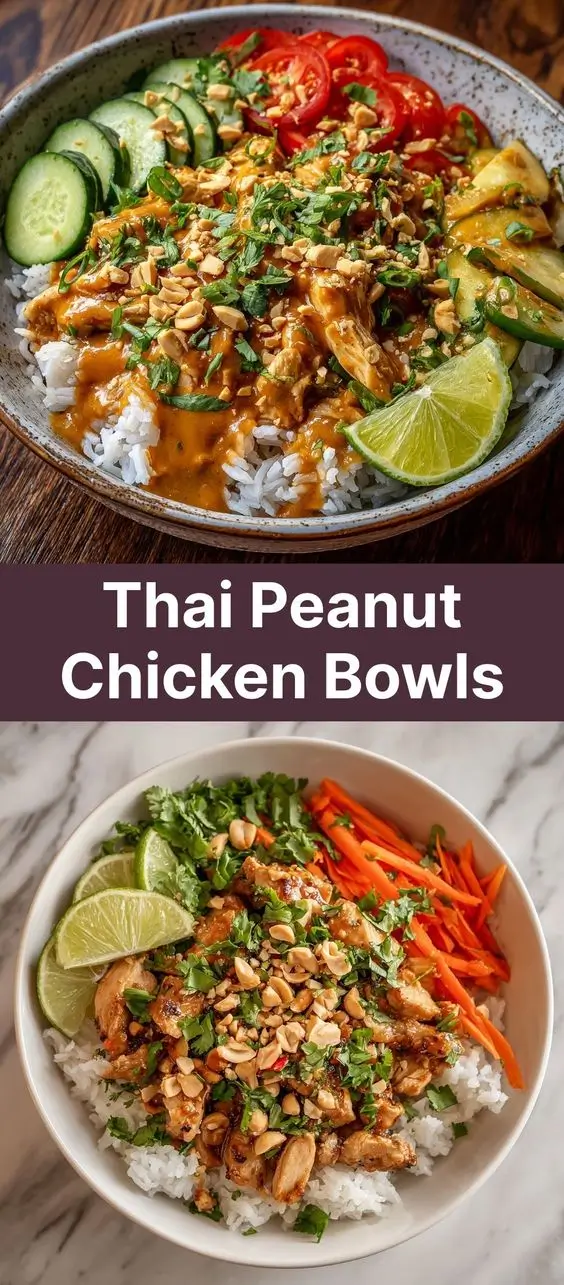
Thai Peanut Chicken Bowls are a modern culinary delight that captures the essence of Southeast Asian flavors in one satisfying, nutrient-packed dish. With their rich, creamy peanut sauce, tender grilled chicken, vibrant vegetables, and fluffy rice base, these bowls offer a perfect balance of sweet, salty, tangy, and savory notes that dance on your palate. Loved by home cooks and food enthusiasts alike, Thai Peanut Chicken Bowls have become a staple in health-conscious kitchens around the world. Whether you’re meal prepping for the week or preparing a quick family dinner, this dish delivers bold taste with minimal effort.
The History
The roots of Thai Peanut Chicken Bowls can be traced back to traditional Thai cuisine, where peanuts have long been used in various forms—from crushed toppings to rich sauces in curries and stir-fries. While there isn’t a direct historical recipe called “Thai Peanut Chicken Bowl” in classic Thai cookbooks, its inspiration comes from iconic dishes such as Gai Pad Med Ma Muang (Chicken with Cashew Nuts) and Satay, the famous grilled meat skewers served with a luscious peanut dipping sauce. Over time, especially in Western countries, chefs and home cooks began adapting these flavors into bowl formats—popularized by the rise of grain bowls and clean eating trends in the 2010s. The fusion of Thai-inspired peanut sauce with protein, grains, and fresh produce created a new global favorite that remains both comforting and exotic at the same time.
Ingredients Breakdown
Creating an authentic and delicious Thai Peanut Chicken Bowl starts with selecting high-quality, fresh ingredients. Each component plays a crucial role in achieving the perfect harmony of textures and flavors:
- Chicken Breast or Thighs: Lean chicken breast is commonly used for its mild flavor and high protein content, though thighs offer more juiciness and depth due to their fat content.
- Rice: Jasmine rice is traditional and aromatic, but brown rice, basmati, quinoa, or cauliflower rice can be substituted for dietary preferences.
- Peanut Butter: Natural, unsweetened smooth peanut butter forms the base of the sauce. Avoid brands with added sugars or hydrogenated oils for a cleaner taste.
- Coconut Milk: Full-fat coconut milk adds creaminess and balances the acidity in the sauce, while light coconut milk can be used for a thinner consistency.
- Soy Sauce or Tamari: Provides umami and saltiness; tamari is a gluten-free alternative.
- Lime Juice: Freshly squeezed lime juice brings brightness and cuts through the richness of the peanut sauce.
- Garlic & Ginger: Freshly minced garlic and grated ginger add pungency and warmth, essential for depth of flavor.
- Honey or Maple Syrup: Adds a touch of sweetness to counterbalance tart and spicy elements.
- Sriracha or Chili Garlic Sauce: For heat—adjust according to spice tolerance.
- Vegetables: Common choices include shredded carrots, red cabbage, cucumber, bell peppers, snap peas, broccoli, and scallions for crunch and color.
- Toppings: Chopped peanuts, cilantro, green onions, sesame seeds, and lime wedges enhance aroma and presentation.
Step-by-Step Recipe
Ingredients
- 1 lb (450g) boneless, skinless chicken breasts or thighs, thinly sliced
- 2 cups cooked jasmine rice (or preferred grain)
- 1/3 cup natural smooth peanut butter
- 1/3 cup full-fat coconut milk
- 3 tbsp soy sauce (or tamari for gluten-free)
- 2 tbsp fresh lime juice (about 1 large lime)
- 1 tbsp honey or maple syrup
- 2 cloves garlic, finely minced
- 1 tbsp fresh ginger, grated
- 1 tsp sriracha (adjust to taste)
- 1 tbsp coconut oil or neutral oil (like avocado or vegetable oil)
- 2 cups mixed vegetables (shredded carrots, sliced bell peppers, snap peas, etc.)
- Optional garnishes: chopped roasted peanuts, chopped cilantro, sliced green onions, sesame seeds, lime wedges
Directions
- Cook the Rice: Prepare 2 cups of jasmine rice according to package instructions. Set aside and keep warm. Alternatively, use a rice cooker for convenience.
- Prepare the Peanut Sauce: In a medium mixing bowl, whisk together peanut butter, coconut milk, soy sauce, lime juice, honey, minced garlic, grated ginger, and sriracha until smooth and creamy. If the sauce is too thick, add warm water 1 tablespoon at a time until it reaches a pourable consistency. Taste and adjust seasoning—add more lime for acidity, honey for sweetness, or sriracha for heat.
- Cook the Chicken: Heat coconut oil in a large skillet or wok over medium-high heat. Add the sliced chicken, season lightly with salt and pepper, and cook for 5–7 minutes, stirring occasionally, until golden brown and cooked through (internal temperature should reach 165°F / 74°C). Remove from heat and set aside.
- Sauté the Vegetables (Optional): In the same pan, add a splash of oil if needed and toss in your choice of vegetables. Stir-fry for 3–5 minutes until crisp-tender. For raw veggies like cabbage or cucumber, you can skip cooking and add them fresh for extra crunch.
- Combine or Assemble: You can either mix everything together or assemble individual bowls for a beautiful presentation. Start with a base of warm rice, top with grilled chicken, sautéed or raw vegetables, and generously drizzle with peanut sauce.
- Garnish and Serve: Finish each bowl with chopped peanuts, fresh cilantro, sliced green onions, a sprinkle of sesame seeds, and a wedge of lime on the side. Serve immediately and encourage mixing before eating to blend all the flavors.
Tips
- Marinate the Chicken: For deeper flavor, marinate the chicken in 2–3 tablespoons of the peanut sauce for 30 minutes to 2 hours before cooking.
- Use Fresh Ingredients: Fresh lime juice, real ginger, and garlic make a significant difference compared to powdered or bottled versions.
- Don’t Overcook the Chicken: Slicing it thinly ensures quick, even cooking. Overcooking leads to dryness, so remove it from the heat just as it turns opaque.
- Batch-Cook the Sauce: Make a double or triple batch of the peanut sauce and store it in an airtight container in the fridge for up to 10 days. Reheat gently with a splash of water to restore consistency.
- Prep Ahead: Chop vegetables and cook rice in advance for easy weekday assembly. Store components separately to maintain texture.
- Customize Consistency: Prefer a soupier sauce? Thin it with vegetable broth or coconut water. Want it thicker? Add more peanut butter.
- High-Heat Cooking: Use high heat when searing chicken to achieve a nice caramelized exterior without drying out the inside.
Variations and Customizations
One of the greatest strengths of Thai Peanut Chicken Bowls is their versatility. Here are some creative ways to tailor the dish to different diets, tastes, and occasions:
- Vegan/Vegetarian Version: Replace chicken with tofu, tempeh, edamame, or chickpeas. Press and pan-sear tofu for a crispy texture, then coat with the peanut sauce.
- Gluten-Free Option: Use tamari instead of soy sauce and ensure your peanut butter doesn’t contain wheat-based additives.
- Low-Carb/Keto Adaptation: Swap rice for riced cauliflower or shredded cabbage. Increase healthy fats by adding avocado slices or using more coconut milk.
- Spice It Up: Add sliced red chilies, gochujang, or chili oil for extra heat. Top with pickled jalapeños for tangy kick.
- Nut-Free Alternative: Use sunflower seed butter or tahini (sesame paste) instead of peanut butter. Note that tahini has a stronger, earthier flavor.
- Different Proteins: Try shrimp, salmon, ground turkey, or beef strips for variety. Shrimp pairs exceptionally well with the sweet-spicy sauce.
- Bowl Themes: Create a “Peanut Noodle Bowl” by replacing rice with soba, rice noodles, or zucchini noodles. Toss everything together like a cold noodle salad.
- Fruit Additions: Mango, pineapple, or apple slices add a refreshing sweetness that complements the savory sauce beautifully.
- Mediterranean Twist: Add crumbled feta, olives, and cherry tomatoes for a fusion twist.
Health Considerations and Nutritional Value
Thai Peanut Chicken Bowls can be a wholesome, balanced meal when prepared with mindful ingredient choices. Let’s break down the nutritional profile per serving (based on 1 bowl with chicken, rice, vegetables, and standard peanut sauce):
| Nutrient | Amount (Approximate) |
|---|---|
| Calories | 550–650 kcal |
| Protein | 30–35g |
| Total Fat | 25–30g (mostly healthy fats from peanut butter and coconut milk) |
| Saturated Fat | 10–12g |
| Carbohydrates | 50–60g |
| Dietary Fiber | 6–8g |
| Sugar | 8–10g (naturally occurring and added) |
| Sodium | 700–900mg (can vary based on soy sauce usage) |
Health Benefits:
- High-Quality Protein: Chicken provides essential amino acids necessary for muscle repair and immune function.
- Healthy Fats: Monounsaturated fats in peanut butter and medium-chain triglycerides (MCTs) in coconut milk support heart and metabolic health.
- Fiber-Rich Vegetables: Promote digestive health, stabilize blood sugar, and increase satiety.
- Antioxidants & Phytonutrients: Garlic, ginger, and colorful veggies contribute anti-inflammatory and immune-boosting properties.
Considerations:
- Sodium Content: Soy sauce is high in sodium. Opt for low-sodium versions or reduce the amount and boost flavor with lime, garlic, or herbs.
- Allergens: Peanuts are a common allergen. Always label dishes accordingly when serving others.
- Calorie Density: The peanut sauce is calorie-rich. Use smaller portions or dilute with broth if managing weight.
- Balancing Macros: To lower carbs, reduce rice and increase non-starchy vegetables. For higher protein, add extra chicken or legumes.
FAQ
Q: Can I make the peanut sauce ahead of time?
A: Absolutely! The sauce stores well in an airtight container in the refrigerator for up to 10 days. Stir or re-blend before using, and thin with warm water if needed.
Q: Is this recipe freezer-friendly?
A: Cooked chicken and sauce freeze well for up to 3 months. Rice may become mushy when thawed, so it’s best to freeze components separately and reassemble upon serving.
Q: Can I use chunky peanut butter?
A: Yes, but smooth peanut butter creates a silkier sauce. If using chunky, blend thoroughly or expect small peanut pieces in the sauce.
Q: Why is my sauce separating?
A: Coconut milk and peanut butter can separate when heated too quickly or stored cold. Whisk vigorously or gently warm while stirring to re-emulsify.
Q: How do I make it spicier without adding more chili?
A: Try adding freshly cracked black pepper, grated horseradish, or a dash of cayenne pepper for layered heat.
Q: Can I bake the chicken instead of pan-frying?
A: Yes! Marinate the chicken, place on a lined baking sheet, and bake at 400°F (200°C) for 18–22 minutes, flipping halfway through.
Q: Are Thai Peanut Chicken Bowls authentic Thai food?
A: Not exactly. While inspired by Thai flavors—especially satay and curry traditions—this bowl format is a modern, Western interpretation designed for convenience and visual appeal.
Summary
Thai Peanut Chicken Bowls combine bold Southeast Asian flavors with modern meal-prep practicality, offering a delicious balance of protein, healthy fats, and fiber-rich ingredients. Easy to customize and packed with nutrition, this dish is a go-to for anyone craving comfort food with a healthy twist.