Introduction
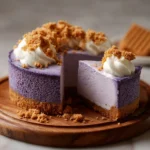
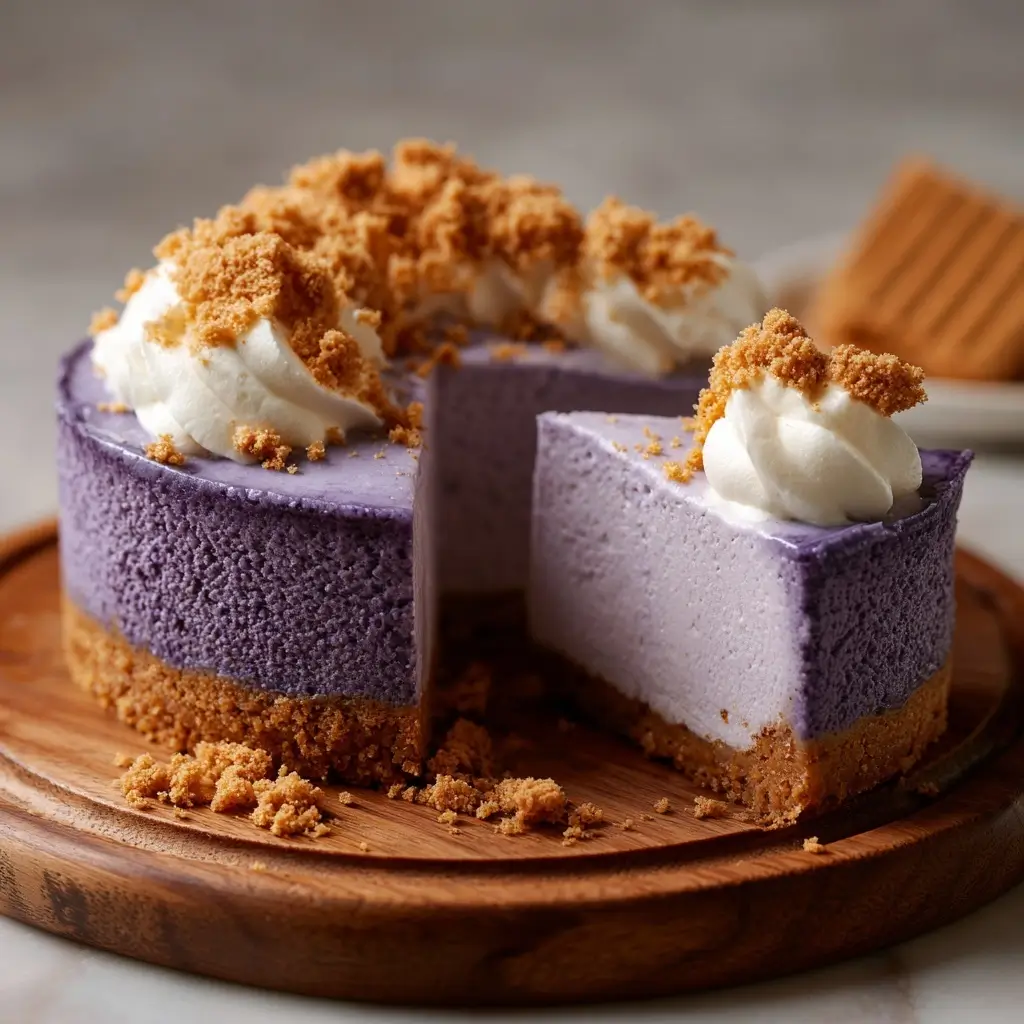
Ube Purple Yam Cheesecake is a stunning fusion of Filipino culinary tradition and classic American dessert craftsmanship—a velvety, jewel-toned confection that delights the eyes before it even touches the tongue. Originating from the Philippines’ beloved ube (Dioscorea alata), this cheesecake transforms humble purple yam into an elegant, creamy, aromatic masterpiece—rich without being cloying, earthy yet subtly sweet, and vibrantly hued with natural anthocyanin pigments that lend both visual drama and antioxidant benefits. Whether served at family gatherings, festive celebrations like Christmas or Fiesta season, or as a showstopping centerpiece for modern bakeries and food bloggers, Ube Purple Yam Cheesecake bridges heritage and innovation, comfort and sophistication—and has rapidly become one of the most sought-after desserts across Southeast Asia, North America, and beyond.
The History
The story of Ube Purple Yam Cheesecake begins centuries before the first whisk touched cream cheese. Ube—the vibrant violet-purple yam native to the Philippines and widely cultivated across Southeast Asia, Oceania, and parts of Africa—has been a staple in Filipino cuisine since pre-colonial times. Traditionally steamed, boiled, or pounded into *ube halaya* (a dense, jam-like preserve cooked slowly with coconut milk and sugar), ube was revered not only for its nourishing starch content but also for its symbolic association with abundance, celebration, and ancestral resilience. During the Spanish colonial era, ube found new life in *leche flan*, *bibingka*, and *puto*, while American influence post-1940s introduced baked custards, cream-based desserts, and eventually, the New York–style cheesecake. The marriage of these two lineages emerged organically in the 1980s and ’90s among Filipino-American home bakers experimenting with local ingredients in diasporic kitchens—swirling vivid ube halaya into no-bake fillings or folding roasted yam purée into baked batter. By the early 2010s, social media ignited global fascination: viral Instagram posts of lavender-hued slices dripping with salted caramel or crowned with toasted coconut catapulted ube cheesecake into mainstream dessert culture. Today, it’s featured in Michelin-recognized restaurants like Bad Saint (Washington, D.C.) and Lasa (Los Angeles), elevated by chefs who honor its roots while reimagining texture, balance, and presentation—making it not just a dessert, but a cultural artifact in edible form.
Ingredients Breakdown
Every exceptional Ube Purple Yam Cheesecake begins with intentionality—from sourcing to synergy. Below is a meticulous, chef-level breakdown of each component, including why it matters, what to avoid, and how substitutions affect structure, flavor, and color:
For the Crust:
- Graham cracker crumbs (1 ½ cups): Provides neutral sweetness and structural integrity; opt for plain (not cinnamon or honey-flavored) to let ube shine. Gluten-free graham alternatives work well when pulsed finely.
- Unsalted butter (6 tbsp, melted): Binds the crust and adds richness; use European-style (82% fat) for superior browning and crispness. Avoid margarine—it contains water and emulsifiers that cause sogginess.
- Brown sugar (2 tbsp, light or dark): Enhances caramel notes and moisture retention; dark brown yields deeper molasses warmth, ideal for contrast against floral ube.
- Pinch of fine sea salt: Balances sweetness and amplifies all other flavors—even in small amounts, it’s non-negotiable for depth.
For the Ube Filling:
- Cream cheese (24 oz / 3 standard blocks, full-fat, room temperature): The foundation of texture and tang. Must be truly softened—not melted—to ensure smooth incorporation. Low-fat versions destabilize emulsion and cause cracking.
- Granulated sugar (1 cup): Sweetens without adding moisture; superfine (caster) sugar dissolves more readily for ultra-silky texture.
- Sour cream (¾ cup, full-fat, room temperature): Adds acidity, tenderness, and subtle tang to cut through richness. Never substitute with yogurt unless strained overnight—excess whey causes weeping.
- Heavy cream (½ cup, cold): Introduces luxurious mouthfeel and aids in controlled aeration. Ultra-pasteurized is acceptable, but avoid “whipping cream” blends with stabilizers.
- Eggs (3 large, room temperature, plus 1 yolk): Eggs provide structure via protein coagulation; the extra yolk enriches color and creaminess. Always add eggs one at a time, mixing *just until incorporated*—overmixing traps air and invites cracks.
- Ube halaya (1 cup, homemade preferred): The soul of the cake. Authentic ube halaya—slow-cooked with coconut milk, sugar, and butter—offers concentrated flavor, viscosity, and natural purple pigment. Canned versions often contain artificial dyes, preservatives, or excessive corn syrup; always check labels. If using store-bought, reduce added sugar in filling by 2 tbsp.
- Fresh ube purée (½ cup, roasted & strained): Elevates authenticity. Roast peeled, cubed ube at 400°F (200°C) for 45–55 minutes until fork-tender, then blend with 1 tsp coconut milk and strain through a fine-mesh sieve. This adds nuanced earthiness and intensifies hue without thinning the batter.
- Purple yam extract or natural food-grade butterfly pea + purple sweet potato powder (¼ tsp total, optional but recommended): Ensures consistent, radiant violet—not gray or brownish—especially crucial if using older or paler ube. Only use lab-tested, water-soluble, pH-stable natural colorants (e.g., Spirulina-based violet or certified organic purple carrot juice powder). Avoid synthetic Red #40 + Blue #1 mixes—they fade and taste chemical.
- Vanilla extract (1 ½ tsp, pure Madagascar Bourbon): Complements ube’s vanilla-like lactones; avoid imitation—its harsh alcohol note competes with delicate florals.
- White vinegar (1 tsp): A pro secret! Lowers pH slightly to stabilize proteins, minimize cracking, and brighten color. Undetectable in flavor when balanced correctly.
- Pinch of ground nutmeg or cardamom (optional): Warm, aromatic counterpoints that echo traditional Filipino spicing—use sparingly (⅛ tsp max) to avoid overpowering.
For the Swirl & Garnish (Optional but Highly Recommended):
- Extra ube halaya (¼ cup, slightly warmed): For marbling—warm gently to piping consistency; too hot = melts cheesecake layers.
- Toasted coconut flakes (¼ cup): Adds crunch, tropical aroma, and visual contrast. Toast in a dry skillet over medium-low heat until golden—stir constantly to prevent burning.
- Edible dried ube chips or violet orchid petals: Gourmet finishing touch for high-end presentations.
- Ube-infused whipped cream (½ cup heavy cream + 1 tbsp ube halaya + 1 tsp powdered sugar, whipped to soft peaks): Served alongside or piped on top for airy contrast.
Step-by-Step Recipe
This method prioritizes precision, patience, and science-backed technique—designed to yield a tall, crack-free, vibrantly colored, luxuriously creamy Ube Purple Yam Cheesecake every time. Total hands-on time: ~45 minutes. Total time (including chilling): 14–16 hours.
Step 1: Prepare the Pan & Preheat Oven
Wrap the *outside* of a 9-inch springform pan tightly with two overlapping layers of heavy-duty aluminum foil—ensure no gaps at the base or seams. This prevents water bath leakage. Position oven rack in the lower third. Preheat to 325°F (163°C)—not higher, as gentle heat is critical for even setting and crack prevention.
Step 2: Make the Crust
In a food processor, pulse graham crackers into fine, sand-like crumbs (no lumps). Transfer to a bowl; stir in brown sugar and salt. Drizzle in melted butter while stirring with a fork until mixture resembles wet sand and holds together when pinched. Press firmly and evenly into the bottom—and 1 inch up the sides—of the prepared pan using the back of a measuring cup or flat-bottomed glass. Chill uncovered for at least 30 minutes (or freeze 15 min) to set the butter and prevent slumping during baking.
Step 3: Bake the Crust
Bake chilled crust at 325°F for 12 minutes. Remove, tap lightly on counter to settle, and cool completely on a wire rack (≈20 minutes). Reduce oven temp to 300°F (149°C) for the cheesecake bake.
Step 4: Prepare the Water Bath
Fill a roasting pan deep enough to reach halfway up the springform pan with 1–2 inches of *hot tap water* (not boiling—excessive steam can drip onto surface). Place it on the lower oven rack *before* adding the cheesecake.
Step 5: Make the Filling — Critical Order Matters
- Using a stand mixer with paddle attachment (or hand mixer on low speed), beat cream cheese on medium-low for 2 minutes until completely smooth, scraping bowl and paddle thoroughly. No lumps—ever.
- Add granulated sugar. Beat 2 more minutes until fluffy and homogeneous—do not rush; proper aeration ensures tenderness.
- Add sour cream and vanilla. Mix 1 minute until fully integrated—scrape down.
- Add heavy cream. Mix 30 seconds—just until streaks disappear.
- Add eggs *one at a time*, mixing only until yolk disappears (≈15 seconds per egg). Add extra yolk last. Overmixing = cracks.
- Stir in ube halaya, fresh ube purée, vinegar, and optional spices by hand with a silicone spatula—fold gently 10–12 strokes until uniform but *not* glossy. Over-folding deflates air and dulls color.
- Finally, sift in purple yam extract/powder and fold 3–4 more times—color should be rich violet, not streaky.
Step 6: Pour, Swirl, and Bake
Strain batter through a fine-mesh sieve directly into the cooled crust—this removes any undissolved bits or air pockets for flawless texture. Smooth top with offset spatula. Spoon warm ube halaya in dollops over surface, then drag a toothpick or skewer in concentric circles and figure-eights for elegant marbling—don’t over-swirl. Carefully place springform pan inside roasting pan with hot water. Cover *top* of springform loosely with foil (tent it to avoid touching batter). Bake at 300°F for 1 hour 25 minutes—batter should be set at edges but retain a 2-inch wobble in center. Turn off oven, crack door open 1 inch with wooden spoon, and let cheesecake rest inside for 1 hour—this gradual cooling prevents thermal shock and cracks.
Step 7: Chill & Set
Remove from water bath. Run thin knife around inner edge to loosen. Cool completely at room temperature (≈2 hours), then refrigerate—uncovered—for *minimum 12 hours*, preferably 16–24 hours. This slow, cold maturation allows starches to fully hydrate, proteins to relax, and flavors to harmonize—resulting in clean cuts and profound depth.
Step 8: Unmold & Serve
Run warm knife around perimeter again. Release springform collar. Use wide spatula to lift cheesecake onto serving plate. Garnish with toasted coconut, edible flowers, or piped ube cream. For clean slices: dip knife in hot water and wipe dry between every cut.
Tips
- Room Temperature Is Non-Negotiable: All dairy and eggs must be at true room temperature (68–72°F/20–22°C), not just “out of the fridge for 30 minutes.” Cold ingredients cause curdling and uneven emulsification.
- Straining Is Your Secret Weapon: Always strain batter—even if it looks smooth. It catches micro-lumps of cream cheese, undissolved sugar, or fibrous ube bits that would otherwise create grittiness.
- Color Stability Hack: Ube pigment fades in heat and alkaline environments. Avoid baking soda, baking powder, or excessive vanilla (which can be slightly alkaline). Add 1 tsp lemon juice to batter if color dulls during mixing—it rebalances pH and revives violet tones.
- No-Water-Bath Option? Not recommended—but if absolutely necessary: Use a “dry bath”—place springform inside a larger cake pan, then surround with damp (not soaking) kitchen towels before baking. Monitor closely; increase chill time to 48 hours for firmness.
- Crack Repair: If minor cracks appear, conceal with a thin glaze of warmed ube halaya + 1 tsp coconut milk, brushed gently over surface and chilled 20 minutes before garnishing.
- Altitude Adjustment: Above 3,000 ft? Reduce sugar by 1 tbsp, increase flour (1 tbsp all-purpose) for structure, and extend initial bake by 8–10 minutes.
- Freezing Success: Wrap *fully chilled* cheesecake tightly in plastic + foil. Freeze up to 3 months. Thaw overnight in fridge—never at room temperature—to preserve texture.
- Make-Ahead Timeline: Crust: up to 3 days ahead. Ube halaya: up to 2 weeks refrigerated or 6 months frozen. Filling: best mixed day-of, but batter can be refrigerated (covered) up to 12 hours pre-bake—let sit at room temp 30 min before pouring.
Variations and Customizations
The versatility of Ube Purple Yam Cheesecake makes it endlessly adaptable—whether you’re catering to dietary needs, seasonal produce, or avant-garde plating concepts. Here are rigorously tested, chef-curated variations:
No-Bake Ube Cheesecake (Vegan Option)
Replace cream cheese with 2 cups raw cashews (soaked 6 hrs, drained), ⅓ cup coconut oil (solid), ⅓ cup maple syrup, 3 tbsp lime juice, ¼ cup coconut cream, and ¾ cup ube halaya. Blend until silky; pour over raw date-walnut crust. Chill 8+ hours. Adds prebiotic fiber and tropical brightness—ideal for summer service.
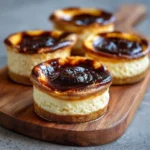
Ube Basque Burnt Cheesecake
Eliminate water bath. Increase oven temp to 425°F (220°C). Pour batter into parchment-lined 9-inch pan. Bake 55–65 minutes until deeply bronzed, puffed, and jiggle-free. Cool completely in pan, then chill 12+ hours. Delivers bold caramelized crust, molten center, and intensified umami—perfect for bold flavor profiles.
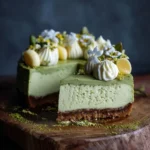
Ube Matcha Swirl Cheesecake
Divide batter. To half, add 1 ½ tsp ceremonial-grade matcha + 1 tsp hot water (whisked smooth). Swirl matcha batter into ube batter with chopsticks for marble effect. Earthy bitterness balances ube’s sweetness—creates sophisticated, tea-house elegance.
Ube Tres Leches Cheesecake
After unmolding, poke cooled cheesecake all over with skewer. Slowly pour over ½ cup chilled *tres leches* mixture (equal parts evaporated milk, condensed milk, heavy cream + 1 tsp rum extract). Soak 2 hours refrigerated. Results in impossibly moist, cloud-like crumb—best served with mango coulis.
Gluten-Free & Keto-Friendly
Crust: Almond flour (1 cup) + coconut flour (¼ cup) + erythritol (⅓ cup) + butter (6 tbsp). Filling: Full-fat cream cheese, sour cream, heavy cream, eggs, ube purée (low-carb variety, peeled & boiled without sugar), monk fruit sweetener (to taste), xanthan gum (¼ tsp) for binding. Net carbs ≈ 6g/slice.
Ube Mochi Cheesecake Bars
Layer baked ube cheesecake over chewy ube mochi (glutinous rice flour, ube, sugar, coconut milk). Steam-mix mochi base, press into lined 9×13 pan, top with cheesecake batter, bake water bath 65 mins. Cool, chill, cut into squares. Offers textural symphony—creamy, springy, melt-in-mouth.
Ube Cheesecake Pancakes
Reduce batter by ⅓ (remove 1 egg + 2 tbsp cream), fold in ¼ cup all-purpose flour and 1 tsp baking powder. Cook on griddle like pancakes—golden, fluffy, studded with ube flecks. Serve with coconut syrup and grilled pineapple.
Health Considerations and Nutritional Value
A single generous slice (1/12 of a 9-inch cheesecake, approx. 180g) delivers approximately:
- Calories: 420–460 kcal
- Total Fat: 31–34g (19–21g saturated)
- Carbohydrates: 32–36g (24–27g sugars, 1g fiber)
- Protein: 7–9g
- Vitamin A: 18% DV (from beta-carotene in ube)
- Vitamin C: 12% DV (ube is surprisingly rich)
- Potassium: 15% DV (supports blood pressure regulation)
- Anthocyanins: Up to 25mg per slice—powerful antioxidants linked to reduced inflammation, improved cognitive function, and cardiovascular protection. Ube’s anthocyanins are more stable than blueberry’s due to acylated structures—retaining potency even after baking.
Nutritional Highlights & Cautions:
- Ube is nutritionally superior to white potato: Higher in potassium, vitamin C, and antioxidant capacity—and naturally lower on the glycemic index (GI ≈ 37 vs. russet’s 54), making it gentler on blood sugar when consumed mindfully.
- Cream cheese contributes conjugated linoleic acid (CLA), associated in studies with anti-carcinogenic and metabolic benefits—though portion control remains essential.
- Lactose sensitivity? Sour cream and cream cheese contain less lactose than milk; many tolerate small servings. Lactose-free cream cheese and cultured coconut sour cream are excellent swaps.
- High sodium caution: One slice contains ≈280mg sodium—moderate for most, but those on sodium-restricted diets should limit to ½ slice and omit added salt in crust.
- Not low-calorie—but nutrient-dense: Unlike empty-sugar desserts, this offers real phytonutrients, micronutrients, and satiating fat/protein—making it a *mindful indulgence*, not mere decadence.
- For pregnancy or immunocompromised individuals: Ensure eggs are pasteurized and all dairy is from reputable sources. Avoid raw ube purée unless roasted to ≥165°F (74°C) internally.
Ingredients
Makes one 9-inch cheesecake (12–14 servings)
For the Crust:
- 1 ½ cups graham cracker crumbs (about 12 full sheets)
- 6 tablespoons unsalted butter, melted
- 2 tablespoons light or dark brown sugar
- ¼ teaspoon fine sea salt
For the Ube Cheesecake Filling:
- 24 ounces full-fat cream cheese, at room temperature (3 (8-oz) blocks)
- 1 cup granulated sugar (superfine preferred)
- ¾ cup full-fat sour cream, at room temperature
- ½ cup heavy cream (cold)
- 3 large eggs + 1 large egg yolk, at room temperature
- 1 cup authentic ube halaya (homemade or high-quality store-bought)
- ½ cup fresh roasted & strained ube purée
- 1 ½ teaspoons pure Madagascar bourbon vanilla extract
- 1 teaspoon distilled white vinegar
- ¼ teaspoon natural purple yam extract or food-grade purple sweet potato powder
- Pinch of freshly grated nutmeg or ground cardamom (optional)
For Swirling & Garnish:
- ¼ cup ube halaya, gently warmed
- ¼ cup unsweetened coconut flakes, toasted
- Edible violet orchid petals or dried ube chips (optional)
- Ube-infused whipped cream (for serving)
Directions
- Prep Pan & Oven: Wrap exterior of 9-inch springform pan with two layers heavy-duty foil. Preheat oven to 325°F (163°C) with rack in lower third. Fill roasting pan with 1–2 inches hot water; place on rack.
- Make Crust: Pulse graham crackers into fine crumbs. Mix with brown sugar and salt. Stir in melted butter until cohesive. Press firmly into pan bottom and 1″ up sides. Chill 30 min or freeze 15 min.
- Bake Crust: Bake 12 min at 325°F. Cool completely on wire rack (≈20 min). Reduce oven to 300°F (149°C).
- Make Filling: In stand mixer, beat cream cheese 2 min until smooth. Add sugar; beat 2 min until fluffy. Add sour cream & vanilla; mix 1 min. Add heavy cream; mix 30 sec. Add eggs one at a time, mixing just until blended (15 sec each). Add yolk last. By hand, fold in ube halaya, fresh ube purée, vinegar, spice, and purple yam extract until uniform—do not overmix.
- Strain & Pour: Strain batter through fine-mesh sieve into crust. Smooth top. Dollop warm ube halaya over surface; swirl gently.
- Bake: Place pan in water bath. Tent loosely with foil. Bake at 300°F for 1 hr 25 min—center should jiggle slightly. Turn off oven; crack door open 1″; let rest 1 hr.
- Chill: Cool to room temp (≈2 hrs). Refrigerate uncovered ≥12 hrs (ideally 16–24 hrs).
- Serve: Loosen edges with warm knife. Release collar. Garnish with toasted coconut and edible flowers. Slice with hot, wiped knife.
FAQ
- Q: Can I use canned ube instead of fresh or halaya?
- A: Yes—but with caveats. Drain canned ube thoroughly, roast at 400°F for 20 min to concentrate flavor and remove excess water, then purée and strain. Avoid “ube flavor” syrups—they lack real pigment and taste artificial.
- Q: Why did my cheesecake crack?
- A: Most common causes: overmixing after eggs, sudden temperature drop (skip the oven cool-down step!), under-chilling, or opening oven door too soon. Vinegar and water bath mitigate this—but technique is key.
- Q: Can I make this gluten-free?
- A: Absolutely. Use gluten-free graham crackers (like Schar or Pamela’s) or sub with almond flour crust (see Variations section). Ensure all extracts and ube products are certified GF.
- Q: How do I store leftovers?
- A: Keep refrigerated, covered tightly with plastic wrap or in airtight container, for up to 5 days. Freeze whole or sliced (wrap individually in plastic + foil) for up to 3 months. Thaw overnight in fridge.
- Q: Is there a lower-fat version?
- A: Reduced-fat cream cheese creates unstable texture and muted flavor. Instead, enjoy smaller portions (1/16 slice) paired with fresh fruit or a green salad—maximizing satisfaction with mindful moderation.
- Q: Can I add fruit on top?
- A: Yes—fresh mango, passionfruit coulis, or macerated blackberries complement ube beautifully. Add *after* chilling, just before serving, to preserve texture.
- Q: What if my ube purée is watery?
- A: Strain aggressively through cheesecloth or fine-mesh sieve, pressing with spoon. Or simmer in saucepan over low heat, stirring constantly, until thickened to halaya-like consistency (≈5–7 min).
- Q: Can I bake this in jars for individual servings?
- A