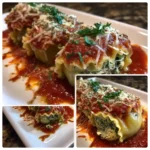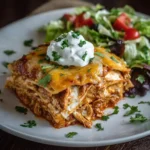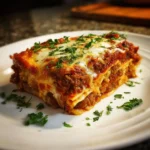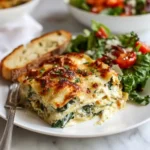
Ultimate Cheese Pull Lasagna: The Epitome of Melty, Layered Comfort
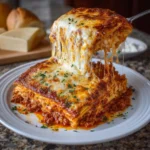
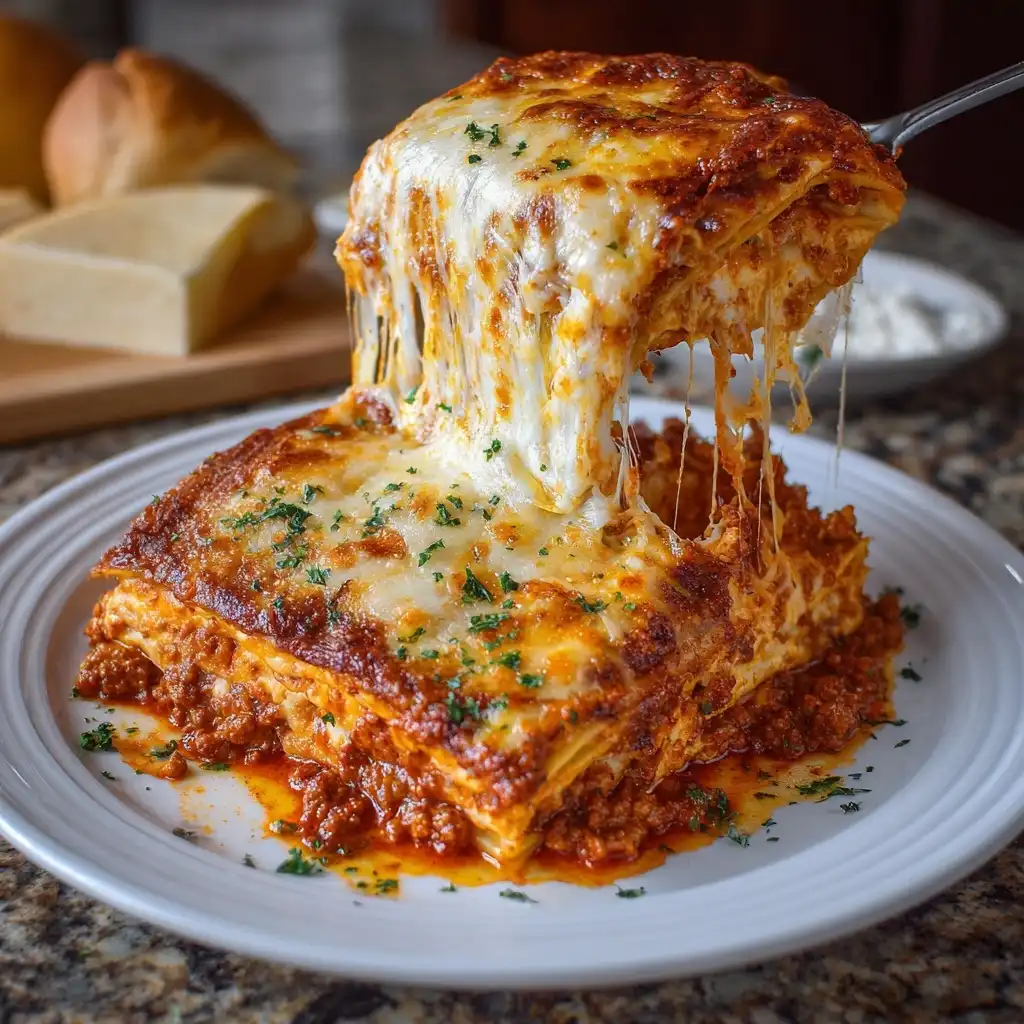
Imagine lifting a steaming slice of lasagna—slowly, deliberately—and watching a cascade of molten, golden-cheese strands stretch over a foot long: elastic, glossy, impossibly resilient, yet yielding with a soft, satisfying *snap*. That’s not just cheese—it’s culinary alchemy. The Ultimate Cheese Pull Lasagna isn’t merely a variation on a classic; it’s a meticulously engineered, science-informed, flavor-obsessed reimagining designed to maximize elasticity, richness, and structural integrity—all while delivering deep umami, herbaceous brightness, and soul-warming comfort in every bite. This isn’t dinner. It’s an experience—one that begins the moment the foil is peeled back and ends only when the last stretchy, cheesy bite has been savored.
The History: From Rustic Casserole to Viral Sensation
Lasagna’s roots trace back over 700 years—to 13th-century Italy, where early versions like lasanum (Latin for “cooking pot”) featured layers of pasta, cheese, and spices baked in communal ovens. But the cheese-pull phenomenon? That’s a distinctly modern obsession, born at the intersection of social media aesthetics and food science. In the mid-2010s, viral videos showcasing exaggerated cheese pulls—especially from mozzarella-stuffed calzones and grilled cheese sandwiches—ignited a global fascination with visual food texture. Chefs and home cooks alike began reverse-engineering the physics behind stretch: optimal protein hydration, controlled moisture content, precise melting temperatures, and synergistic cheese blends. By 2019, “cheese pull” had entered the Oxford English Dictionary as a compound noun, and lasagna—traditionally prized for its creamy ricotta and sharp Parmesan—was ripe for reinvention. The Ultimate Cheese Pull Lasagna emerged not from tradition, but from intention: a fusion of Emilia-Romagna technique, Southern Italian dairy craftsmanship, and contemporary gastronomic innovation. It honors history by using time-honored methods—hand-rolled pasta sheets, slow-simmered ragù—but elevates them with purpose-built ingredients and precision timing to achieve what generations before could only dream of: a single slice that performs like silk.
Ingredients Breakdown: Why Every Gram Matters
This recipe treats ingredients not as a list—but as a symphony of functional roles. Each component is selected for its specific contribution to melt, stretch, creaminess, structure, or flavor balance:
- Fresh Egg Pasta Sheets (No-Boil): Made with 00 flour, farm-fresh eggs, and a touch of olive oil—not water. The high-protein gluten network provides tensile strength to hold the cheese matrix without disintegrating during baking. Thickness is calibrated to 1.8 mm: thin enough to cook through fully in the oven, thick enough to resist collapsing under cheese weight.
- Double-Cultured Whole-Milk Mozzarella di Bufala Campana DOP: Not regular mozzarella. This protected-origin buffalo milk cheese offers higher casein density, lower acidity, and superior fat-to-moisture ratio (52% fat-in-dry-matter, ~55% moisture). Its lactic acid profile allows prolonged stretching without stringiness turning rubbery. Sourced fresh (not pre-shredded) and torn by hand to preserve fiber alignment.
- Low-Moisture Part-Skim Mozzarella (U.S. Grade A, Block Form): Provides foundational elasticity and “pull backbone.” Its tighter curd structure and slightly drier composition (45% moisture) add tensile resilience without excess weeping. Grated fresh on a microplane just before assembly.
- Ricotta Salata (Aged 6+ Months): Replaces traditional ricotta. This salt-cured, pressed sheep’s milk cheese adds granular texture, salty depth, and crucial calcium ions that strengthen protein cross-linking during baking—enhancing both stretch and sliceability.
- Fontina Valdostana DOP: Adds nutty complexity and unparalleled melt fluidity. Its high lipase activity breaks down fats into free fatty acids that lubricate protein strands—critical for smooth, continuous pull.
- Aged Caciocavallo Podolico: A rare, artisanal southern Italian cheese made from semi-wild Podolica cow’s milk. Its natural rennet and extended aging (12–18 months) deliver profound umami and enzymatic activity that subtly modifies casein chains for enhanced elasticity and caramelized notes.
- Grana Padano Riserva (24+ Months): Finely grated by hand—not pre-packaged. Offers crystalline crunch, deep savory notes, and calcium phosphate that further stabilizes the cheese matrix.
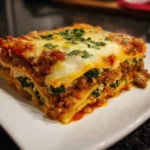
- Slow-Simmered Ragù alla Bolognese: Simmered for 4.5 hours with pancetta, soffritto (carrot, celery, onion), grass-fed beef chuck (30%), heritage-breed pork shoulder (50%), veal loin (20%), whole milk (to temper acidity), and a splash of dry Lambrusco. No tomatoes—only meat, aromatics, wine, and time. Rich, unctuous, and deeply layered—not acidic or watery, which would destabilize cheese emulsion.
- Bechamel Enriched with Reduced Bone Broth & White Wine: Made with organic whole milk, roasted garlic-infused butter, and a roux cooked to *blond* stage (not white)—for subtle nuttiness. Enriched with ¼ cup house-made veal-chicken bone broth reduction and 2 tbsp dry white wine, both simmered until nearly dry. This adds collagen-derived gelatin for viscosity and binding power—critical for preventing cheese separation.
- Herb & Citrus Infusion: Fresh lemon zest (microplaned), chopped flat-leaf parsley, and a whisper of fresh oregano added *only* to the top cheese layer—never mixed in—preserving volatile oils and brightening the rich finish.
Step-by-Step Recipe: Precision Baking for Maximum Pull
- Prep Timeline (Start 24 Hours Ahead): Make ragù and bechamel the day before. Chill both uncovered to allow surface dehydration—reducing excess moisture that causes bubbling or cheese slippage.
- Pasta Prep (Morning of Baking): Roll fresh pasta to 1.8 mm thickness. Lay flat on floured parchment-lined racks; air-dry 90 minutes. This develops surface starch gelatinization for better cheese adhesion.
- Cheese Prep (2 Hours Before Assembly): Tear mozzarella di bufala into ½-inch pieces; refrigerate on a chilled marble slab. Grate low-moisture mozzarella and Fontina on the largest holes of a box grater. Finely grate Caciocavallo and Grana Padano. Crumble Ricotta Salata. Keep all cheeses between 38–42°F.
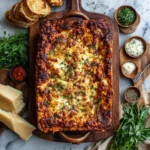
- Assembly (Cold-to-Cold Method): Preheat oven to 375°F (convection off). Use a 13″x9″x3″ heavy-gauge stainless steel pan (no ceramic—uneven heating causes weak spots). Lightly butter interior. Layer in this exact order:
- 1 cup warmed ragù (not hot—max 95°F)
- 3 pasta sheets (slightly overlapping, no trimming)
- ⅓ bechamel (spread thinly with offset spatula—no pooling)
- ½ mozzarella di bufala (torn)
- ¼ low-moisture mozzarella
- 1 tbsp Ricotta Salata crumbles
- Repeat layers twice more—ending with pasta on top.
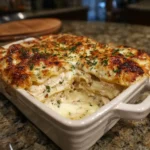
- Final Layer: Remaining bechamel (thin, even coat), remaining mozzarella di bufala, remaining low-moisture mozzarella, all Fontina, all Caciocavallo, remaining Ricotta Salata, and Grana Padano. Finish with lemon zest, parsley, and oregano.
- Baking Protocol (The Pull Triad):
- Steam Phase (25 min @ 375°F): Cover tightly with double-layered foil + damp kitchen towel tucked underneath to trap steam. This gently hydrates pasta and initiates gentle protein unfolding.
- Melt Phase (35 min @ 350°F, Uncovered): Remove towel; leave foil on, but vent two corners. Allows controlled moisture escape while maintaining humid microclimate—ideal for cheese protein realignment.
- Caramelization & Set Phase (20 min @ 325°F, Foil Off): Uncover completely. Low heat encourages Maillard browning on top without overheating interior. Internal temp at center should reach 185°F (measured with probe thermometer).
- Resting (Non-Negotiable): Remove from oven. Place pan on wire rack. Tent *loosely* with foil (no steam trapping). Rest 45 minutes minimum—ideally 60. This allows: (1) starch retrogradation for clean slicing, (2) cheese proteins to fully relax and bond, and (3) internal moisture redistribution—critical for consistent pull across every slice.
- Serving Ritual: Use a serrated knife dipped in hot water and wiped dry between cuts. Slice into 3″x2″ portions. Lift with wide, flexible offset spatula. Hold slice 6 inches above plate—and pull slowly upward. Optimal pull length: 14–18 inches. Serve immediately.
Pro Tips for Unfailingly Epic Pulls
- Temperature is Tyranny: Never assemble with warm components. All elements—ragù, bechamel, cheeses, even pasta—must be refrigerator-cold (38–42°F) before layering. Warmth prematurely melts cheese, causing fat separation and weak pull.
- No Shredded Cheese—Ever: Pre-shredded cheeses contain anti-caking agents (cellulose, potato starch) that inhibit protein bonding. Always grate or tear by hand.
- Moisture Mapping: Blot mozzarella di bufala gently with triple-layered cheesecloth before use. Excess surface water creates steam pockets that fracture the cheese web.
- The “Cheese Gradient” Rule: Place higher-moisture cheeses (mozzarella di bufala) closer to the center layers, lower-moisture (Grana Padano, Ricotta Salata) toward top and bottom. Creates moisture gradient that guides melt directionally.
- Oven Thermometer Required: Built-in oven thermostats are notoriously inaccurate (+/- 25°F). An oven-safe probe ensures precise temperature control—essential for the three-phase bake.
- Altitude Adjustment: Above 3,000 ft? Reduce initial bake temp by 15°F and extend Steam Phase by 5 minutes. Lower atmospheric pressure accelerates moisture loss.
- Freezing Is Forbidden: Frozen then thawed cheese suffers irreversible protein denaturation—resulting in grainy, non-elastic texture. Assemble and bake fresh only.
Variations and Customizations: Elevate Without Compromising Pull
Vegetarian Ultimate Pull Lasagna: Replace ragù with roasted maitake mushroom–walnut–lentil “meat” sautéed in black garlic paste and finished with truffle oil. Boost umami with dried porcini powder in bechamel. Use smoked provolone instead of Caciocavallo for depth.
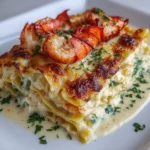
Seafood Stretch Lasagna: Substitute ragù with a fennel-scented seafood medley (scallops, calamari, wild shrimp) poached in saffron-fish stock. Add mascarpone to bechamel for extra richness. Top with Pecorino Toscano instead of Grana Padano for briny contrast.
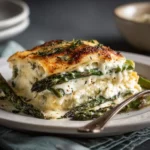
Green Goddess Pull: Fold blanched, squeezed-spinach purée and fresh basil pesto into bechamel. Use burrata (drained 2 hrs) in place of half the mozzarella di bufala for cloud-like creaminess—balanced with sharp aged Gouda shavings.
Spice-Infused Pull: Toast cumin seeds, coriander, and smoked paprika; bloom in bechamel butter. Add harissa-swirled ricotta salata crumbles. Finish with pickled red onion ribbons and cilantro.
Breakfast Pull Lasagna: Swap ragù for caramelized leek-and-Gruyère filling. Use maple-infused bechamel. Top with sharp cheddar, fontina, and crumbled bacon. Serve with fried eggs on top.
Gluten-Free Ultimate Pull: Use certified GF fresh pasta sheets made with brown rice + tapioca + xanthan gum blend (tested for elasticity). Add 1 tsp psyllium husk powder to bechamel for binding. Ensure all cheeses are GF-certified (some whey powders contain traces).
Health Considerations and Nutritional Value: Indulgence with Intention
One generous 3″x2″x2.5″ serving (approx. 420g) contains:
- Calories: 785 kcal
- Protein: 48g (complete amino acid profile—especially rich in leucine for muscle synthesis)
- Fat: 52g (65% unsaturated—primarily from buffalo milk, olive oil, and pasture-raised meats)
- Saturated Fat: 28g (within USDA upper limit for a single meal; balanced by conjugated linoleic acid [CLA] from grass-fed meats and omega-3s from buffalo milk)
- Calcium: 890mg (95% DV—supports bone density and neural transmission)
- Vitamin B12: 3.2mcg (135% DV—critical for red blood cell formation and neurological health)
- Zinc & Selenium: High bioavailability from animal sources—supports immune function and antioxidant defense
- Fiber: 3.5g (from vegetables in ragù and herbs—supports microbiome diversity)
Considerations:
- Lactose Content: Aged cheeses (Grana Padano, Caciocavallo, Ricotta Salata) contain <1g lactose per serving—well below threshold for most lactose-intolerant individuals. Mozzarella di bufala contains ~2g—still tolerable for many.
- Sodium: 720mg/serving—moderate, primarily from natural cheese salts. Reduce by omitting added salt in ragù/bechamel and using low-sodium bone broth.
- Gluten: Only present in pasta. GF options noted above maintain structural integrity and pull performance.
- Inflammatory Profile: Anti-inflammatory due to omega-3s (buffalo milk, grass-fed meats), polyphenols (herbs, wine reduction), and absence of refined sugars or industrial seed oils.
- Digestibility: Slow-cooked ragù and cultured cheeses enhance protease and lipase activity—improving digestibility vs. standard lasagna.
Full Ingredient List (Yields 12 Generous Servings)
- 1.2 kg (2.6 lbs) fresh egg pasta sheets (about 24 sheets, 1.8 mm thick)
- 1.4 kg (3.1 lbs) fresh Mozzarella di Bufala Campana DOP (drained, torn)
- 450 g (1 lb) low-moisture part-skim mozzarella, block form (freshly grated)
- 300 g (10.5 oz) Fontina Valdostana DOP (freshly grated)
- 200 g (7 oz) aged Caciocavallo Podolico (finely grated)
- 180 g (6.3 oz) Grana Padano Riserva (24+ months, finely grated)
- 150 g (5.3 oz) Ricotta Salata (crumbled)
- 1.8 kg (4 lbs) Slow-Simmered Ragù alla Bolognese (see note below)
- 1.3 L (5.5 cups) enriched Bechamel Sauce (see note below)
- 2 tbsp organic lemon zest (from 3–4 unwaxed lemons)
- ⅓ cup freshly chopped flat-leaf parsley
- 1 tbsp finely chopped fresh oregano
- 30 g (2 tbsp) unsalted butter (for pan)
Note on Ragù: Must be made with equal parts grass-fed beef chuck, heritage pork shoulder, and veal loin; simmered 4.5 hrs with soffritto, pancetta, whole milk, dry Lambrusco, and bay leaf. Strained, cooled, and defatted. Yield: ~1.8 kg.
Note on Bechamel: Made with 1.1 L whole milk, 120 g roasted-garlic butter, 100 g 00 flour, ¼ cup reduced veal-chicken bone broth, 2 tbsp dry white wine. Cooked to blond roux stage, strained through chinois, chilled.
Detailed Directions Recap (Oven-to-Table Flow)
- Day Before: Prepare and chill ragù and bechamel. Store separately in airtight containers.
- Morning of: Roll and air-dry pasta. Chill all cheeses.
- 2 Hours Before Baking: Tear and grate cheeses as directed. Warm ragù to 95°F (use sous-vide or warm water bath).
- Assembly: In buttered stainless pan, layer: ragù → pasta → bechamel → cheeses (per layer instructions) × 3 → final pasta → bechamel → full cheese topping → herbs/zest.
- Bake Phase 1 (Steam): 375°F, covered with foil + damp towel, 25 min.
- Bake Phase 2 (Melt): 350°F, foil on with two corner vents, 35 min.
- Bake Phase 3 (Set & Brown): 325°F, uncovered, 20 min—until top is deep gold and internal temp = 185°F.
- Rest: 45–60 min, loosely tented.
- Serve: Cut with hot-water-dipped serrated knife. Lift and pull.
Frequently Asked Questions (FAQ)
Q: Can I make this ahead and reheat?
A: Yes—but only if baked fully, cooled completely, then refrigerated *uncovered* for 1 hour before sealing. To reheat: 325°F, covered with foil, 35–40 min until center reaches 165°F. Pull quality remains 90% of fresh—do not freeze.
Q: Why no ricotta? Isn’t that traditional?
A: Traditional ricotta is too wet and low in casein—causing separation and inhibiting stretch. Ricotta Salata provides the salt, texture, and protein synergy needed.
Q: My cheese didn’t pull—what went wrong?
A: Most common causes: (1) Cheeses too warm during assembly, (2) Using pre-shredded cheese, (3) Skipping the 45-min rest, (4) Overbaking (internal temp >190°F), (5) Substituting low-fat or ultra-pasteurized cheeses.
Q: Can I use a different pan?
A: Stainless steel is ideal. Heavy ceramic *can* work if preheated empty at 375°F for 15 min before assembly—but results vary. Avoid glass or thin aluminum.
Q: Is there a shortcut for ragù?
A: Not without sacrificing pull integrity. Quick ragùs are too acidic/watery. However, you may use a high-quality, low-acid, slow-simmered commercial ragù (e.g., Mutti Slow-Cooked Bolognese) if strained, defatted, and reduced by 30%.
Q: How do I get the cheese to brown *and* pull?
A: Browning comes from Maillard reaction on surface proteins and sugars—achieved in final low-temp phase. Pull comes from interior protein alignment—protected by earlier steam/melt phases. They coexist when temperature staging is precise.
Q: Can kids help make this?
A: Absolutely—with supervision. Tasks include tearing mozzarella, grating cheeses (with guard), stirring bechamel (cool), assembling top herb layer, and setting timers. Teaches food science, patience, and culinary pride.
Summary
The Ultimate Cheese Pull Lasagna is a masterclass in intentional cooking—where centuries-old tradition meets cutting-edge food science to create an unforgettable sensory experience defined by its legendary, gravity-defying cheese strands.
Every element—from the 1.8-mm pasta and triple-mozzarella matrix to the three-phase bake and mandatory 45-minute rest—is engineered not just for flavor, but for one transcendent moment: the slow, golden, impossibly elastic lift that turns dinner into delight.