Introduction
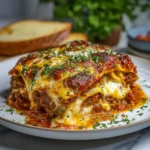
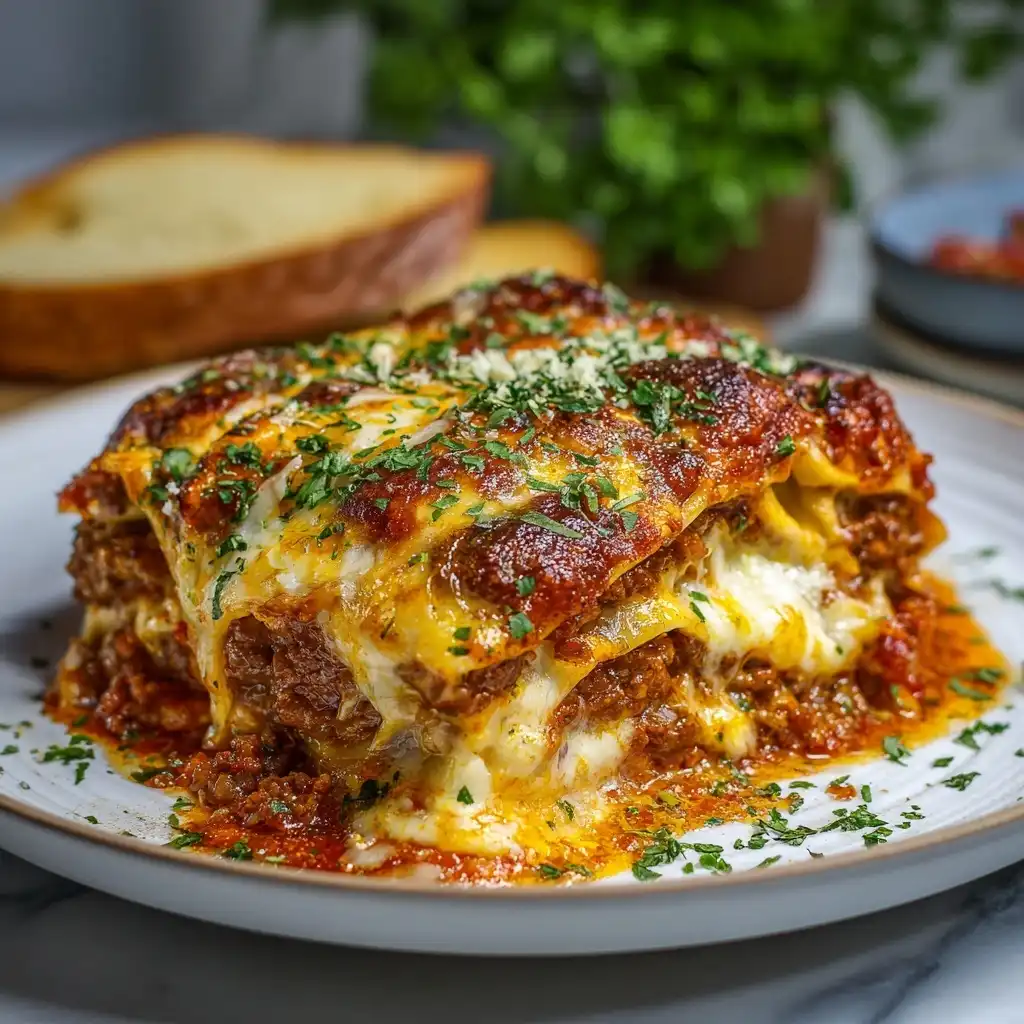
Welcome to the ultimate culinary experience—Ultimate Cheesy Beef Lasagna. This isn’t just another lasagna recipe; it’s a rich, deeply layered, oven-bubbling masterpiece that marries tender ground beef, velvety ricotta, sharp aged Parmesan, creamy mozzarella, and a slow-simmered, herb-infused tomato sauce—all nestled between perfectly al dente, no-boil lasagna noodles. Designed for both weeknight indulgence and holiday centerpiece status, this lasagna delivers unrivaled depth of flavor, luxurious texture, and a golden, stretchy, cheese-draped finish that will have everyone at the table reaching for seconds—and thirds. Whether you’re feeding a crowd, meal prepping for the week, or simply treating yourself to comfort food at its most decadent, this recipe is engineered for reliability, richness, and real satisfaction.
The History
Lasagna’s origins trace back over 700 years—to 13th-century Italy, where early versions appeared in the medieval cookbook Liber de Coquina, describing layered pasta sheets with grated cheese and spices. The word “lasagna” itself derives from the Greek “laganon,” referring to flat sheets of dough, later adopted into Latin as “lasanum” (a cooking pot), reflecting how the dish was traditionally baked and served. While modern American-style lasagna evolved significantly in the early 20th century through Italian-American immigration, it wasn’t until post-WWII supermarket culture—with the advent of canned tomatoes, packaged cheeses, and shelf-stable dried pasta—that the hearty, meat-and-cheese-laden version we now call “beef lasagna” became a household staple. The “cheesy” evolution accelerated in the 1970s and ’80s, as home cooks experimented with triple-cheese blends, cottage cheese substitutions, and generous mozzarella caps. Today’s Ultimate Cheesy Beef Lasagna honors that legacy while elevating every component: using slow-braised beef (not just browned ground), house-made marinara enriched with roasted garlic and fresh basil, and a ricotta–egg–herb filling whipped to cloud-like lightness—transforming tradition into transcendent comfort.
Ingredients Breakdown
Every ingredient in this lasagna serves a precise purpose—not just flavor, but function. Here’s why each one matters:
- Ground Beef (85/15 lean-to-fat ratio): Provides savory depth, moisture retention, and rich mouthfeel. Too lean = dry; too fatty = greasy. The 85/15 balance ensures juiciness without pooling oil.
- Pancetta or Guanciale (finely diced): Adds umami backbone and subtle smokiness—far more complex than bacon alone. Rendered slowly, it builds foundational fat for sautéing aromatics.
- Yellow Onion & Carrots (finely minced): The classic soffritto base—onion for sweetness and bite, carrots for earthy balance and natural pectin that helps thicken the sauce.
- Celery (finely minced): Contributes aromatic bitterness and textural contrast; often overlooked but essential for rounded flavor architecture.
- Fresh Garlic (pressed or minced): Adds pungent brightness—added late to preserve volatile compounds and avoid bitterness.
- Tomato Paste (double-concentrated, San Marzano–style): Cooked until brick-red and fragrant (“fond”), it delivers deep caramelized sweetness and body—acting as the sauce’s structural anchor.
- Dry Red Wine (Chianti, Sangiovese, or Barbera): Deglazes the pan, lifts fond, adds acidity and tannic complexity that cuts through richness—evaporates fully during simmering.
- Canned Whole San Marzano Tomatoes (DOP-certified preferred): Crushed by hand for ideal texture—juicy, sweet, low-acid, with balanced acidity and herbal notes. Never substitute with generic “tomato sauce” or paste-heavy blends.
- Fresh Basil (whole leaves, added at the end of sauce cooking): Imparts vibrant, floral top notes—heat-sensitive, so stirred in off-heat to preserve aroma.
- Ricotta Cheese (whole-milk, drained overnight in cheesecloth): Ensures creaminess without wateriness. Draining removes excess whey, preventing a soggy middle layer.
- Mozzarella (low-moisture, whole-milk, freshly shredded): Melts evenly, browns beautifully, and provides superior stretch. Pre-shredded contains anti-caking starches that inhibit melt and cause graininess.
- Parmigiano-Reggiano (aged 24+ months, finely grated by hand): Offers nutty, salty, crystalline depth—unsubstitutable for authentic umami and granular texture.
- Eggs (large, pasture-raised): Bind the ricotta mixture without making it rubbery—just enough structure to hold layers, not so much that it firms up like custard.
- Fresh Italian Parsley & Nutmeg (micro-grated): Parsley adds grassy freshness; a whisper of nutmeg (¼ tsp max) enhances dairy warmth without tasting “spicy.”
- No-Boil Lasagna Noodles (oven-ready, extra-thin): Absorb liquid precisely during baking—no pre-cooking required, reducing prep time and eliminating mushiness. Look for brands with minimal gums or fillers.
- Heavy Cream (optional, 2 tbsp swirled into ricotta): For ultra-luxurious silkiness—adds fat-soluble richness without diluting flavor.
- Sea Salt & Freshly Cracked Black Pepper (Maldon or flaky sea salt preferred): Season every layer—not just the sauce—to build dimension from base to crown.
Step-by-Step Recipe
- Prep & Drain Ricotta (Start 12–24 Hours Ahead): Line a fine-mesh sieve with two layers of cheesecloth or a coffee filter. Spoon in 2 cups whole-milk ricotta. Place over a bowl and refrigerate uncovered. Discard accumulated whey daily. You’ll yield ~1¾ cups dense, creamy, ultra-thick ricotta—critical for non-watery layers.
- Render Pancetta (15 min): In a heavy-bottomed Dutch oven or large saucier, cook 6 oz finely diced pancetta over medium-low heat until golden and crisp (~10–12 min). Use a slotted spoon to transfer to a paper-towel-lined plate. Reserve 3 tbsp rendered fat (discard excess).
- Sauté Aromatics (8 min): Add 1½ cups finely minced yellow onion, 1 cup minced carrot, and ½ cup minced celery to reserved fat. Cook, stirring frequently, until soft and translucent but not browned (~6–7 min). Stir in 4 cloves pressed garlic and cook 60 seconds until fragrant.
- Bloom Tomato Paste (5 min): Push veggies to edges. Add ¼ cup double-concentrated tomato paste to center. Cook, stirring constantly, until paste darkens to brick red and smells caramelized (~4–5 min). Scrape all fond.
- Deglaze & Simmer Sauce (25 min active + 2 hr passive): Pour in ½ cup dry red wine. Scrape vigorously. Simmer 2 min until nearly evaporated. Add 2 (28-oz) cans San Marzano tomatoes (crushed by hand, juices included), 1 tsp sugar, 1 tbsp fresh oregano, 1 tsp dried basil, 1 bay leaf, 1½ tsp kosher salt, and ½ tsp black pepper. Bring to gentle simmer. Reduce heat to lowest setting, partially cover, and cook for 2 hours—stirring every 20 minutes. Discard bay leaf. Stir in ½ cup fresh basil leaves (torn) off-heat. Cool sauce to room temp before assembling.
- Brown Beef (10 min): In a separate skillet, heat 1 tbsp olive oil. Add 1½ lbs 85/15 ground beef in even layer. Press flat. Let sear 3 min undisturbed. Flip in large chunks and sear second side 3 min. Break into small crumbles, add reserved pancetta, and cook until no pink remains (~2–3 min). Drain excess fat (leave ~1 tbsp). Cool completely.
- Prepare Ricotta Filling (5 min): In a large bowl, combine drained ricotta, 1½ cups shredded mozzarella, 1 cup grated Parmigiano-Reggiano, 2 large eggs, 2 tbsp heavy cream (optional), ¼ tsp freshly grated nutmeg, ¼ cup chopped fresh parsley, 1 tsp salt, and ½ tsp black pepper. Whisk gently until *just* combined—do not overmix or whip (to prevent air pockets and graininess).
- Assemble Lasagna (15 min): Preheat oven to 375°F (190°C). Grease a 9×13-inch heavy-gauge metal or ceramic baking dish (avoid glass for even browning). Spread 1 cup cooled sauce thinly across bottom. Layer 4 no-boil noodles (slightly overlapping if needed). Top with ⅓ of beef mixture, then ⅓ of ricotta mixture (spread evenly with offset spatula), then 1 cup sauce. Repeat twice more: noodles → beef → ricotta → sauce. Final layer: 4 noodles, remaining sauce, then remaining 1½ cups mozzarella + ½ cup Parmigiano-Reggiano, evenly scattered.
- Bake Covered (25 min): Cover tightly with heavy-duty foil (tent slightly to prevent cheese sticking). Bake 25 min.
- Bake Uncovered (20–25 min): Remove foil. Continue baking until top is deeply golden, edges bubble vigorously, and internal temperature reads 165°F (74°C) in center (use instant-read thermometer). Total bake time: 45–50 min.
- Rest (Crucial — 30–45 min): Remove from oven. Let stand, uncovered, on wire rack—at least 30 minutes (45 ideal). This allows starches to set, layers to cohere, and cheese to re-emulsify. Cutting too soon causes collapse and sauce leakage.
- Serve: Cut into 12 generous squares with a sharp chef’s knife wiped clean between cuts. Garnish with extra torn basil, microplaned Parmigiano, and drizzle of high-quality extra-virgin olive oil.
Tips
- Temperature Matters: Always cool sauce and beef completely before assembling. Warm components steam noodles prematurely, leading to disintegration.
- No-Boil Noodle Hack: If using standard dried noodles, soak in hot tap water for 10 minutes before layering—no boiling needed, and they’ll hydrate perfectly in the oven.
- Layering Logic: Sauce on bottom prevents sticking; sauce between layers hydrates noodles; cheese on top ensures browning—not underneath, where it can burn.
- Shred Your Own Cheese: Pre-shredded cheese contains cellulose and natamycin—anti-caking agents that repel moisture and impede melting. Grating fresh guarantees seamless melt and superior flavor.
- Resting Is Non-Negotiable: Skipping the rest results in “lasagna soup”—a tragic, sloppy slide of layers. Set a timer. Trust the science: starch retrogradation and fat re-solidification require time.
- Oven Rack Position: Place rack in lower third of oven for even bottom heating and crisp noodle integrity—prevents undercooked bases.
- Double-Layer Foil Seal: Prevents steam escape and ensures gentle, even cooking. Lightly grease underside of foil to stop cheese from adhering.
- Freeze Smart: Assemble unbaked lasagna, wrap tightly in plastic + foil, freeze up to 3 months. Thaw overnight in fridge before baking (add 10–15 min covered time).
- Leftover Sauce?!: Freeze in 1-cup portions for future pizzas, meatball subs, or shakshuka—never waste that labor-of-love marinara.
- Knife Technique: Use a serrated knife for clean cuts—gentle sawing motion, not downward pressure. Wipe blade after each slice for pristine edges.
Variations and Customizations
This Ultimate Cheesy Beef Lasagna is endlessly adaptable—without sacrificing its soul. Here are chef-tested, crowd-approved variations:
- Vegetarian Powerhouse: Replace beef with 2 cups cooked lentils + 1 cup finely chopped portobello mushrooms (sautéed until dry). Boost umami with 2 tbsp soy sauce or tamari in sauce, plus 1 tsp miso paste whisked in at the end.
- Spicy Arrabbiata Style: Add 1–2 tsp crushed Calabrian chiles or 1 finely minced chipotle in adobo to sauce. Stir in ¼ cup chopped fresh oregano and increase black pepper to 1 tsp.
- White Lasagna (Besciamella Version): Omit tomatoes entirely. Build a rich béchamel with 4 cups whole milk, ½ cup butter, ½ cup flour, nutmeg, white pepper, and lemon zest. Layer with sautéed spinach, roasted butternut squash, and fontina cheese.
- Greek-Inspired: Swap ricotta for 2 cups well-drained whole-milk Greek yogurt + ½ cup feta. Use ground lamb instead of beef. Add 1 tsp cinnamon, ¼ cup chopped mint, and top with crumbled feta + oregano.
- Low-Carb/Keto: Replace noodles with thin, blanched zucchini ribbons (salted, pressed, patted dry) or thinly sliced eggplant (salted, grilled, cooled). Increase cheese ratio slightly to compensate for moisture loss.
- Make-Ahead Breakfast Lasagna: Add ½ cup cooked crumbled breakfast sausage, ¼ cup chopped sun-dried tomatoes, and fold 4 beaten eggs into ricotta mixture. Bake as directed—perfect for holiday brunch.
- Gluten-Free: Use certified GF no-boil lasagna noodles (Tinkyada or Barilla GF). Confirm all sauces, cheeses, and seasonings are GF—some Parmigiano blends contain wheat starch.
- Mini Individual Lasagnas: Layer in greased 8-oz ramekins or muffin tin cups. Reduce bake time to 25–30 min covered + 10 min uncovered. Great for portion control or entertaining.
- Smoky Chipotle-Mole Twist: Blend 2 tbsp ancho chile powder, 1 tsp chipotle powder, 1 tbsp cocoa powder, and 1 tsp cinnamon into sauce. Finish with 1 tbsp maple syrup and 1 tsp apple cider vinegar for balance.
- Seafood Lasagna (Luxury Edition): Replace beef with 1 lb lump crabmeat (picked), ½ lb shrimp (diced), and ½ cup clams (chopped, rinsed). Use lemon-zest ricotta and dill instead of parsley. Top with Gruyère instead of mozzarella.
Health Considerations and Nutritional Value
While “ultimate cheesy” implies indulgence, this lasagna is nutritionally thoughtful—built for satiety, balance, and mindful richness. Per standard serving (1/12 of recipe):
- Calories: ~580–620 kcal (varies with cheese/fat choices)
- Protein: 34–38g (high-quality complete protein from beef, eggs, and dairy—supports muscle maintenance and prolonged fullness)
- Fat: 32–36g total (≈18g saturated); primarily from whole-milk cheeses and pancetta—but includes heart-healthy monounsaturated fats from olive oil and beneficial CLA from grass-fed beef options)
- Carbohydrates: 32–36g (mostly complex carbs from whole-wheat or high-fiber no-boil noodles—opt for brands with ≥4g fiber/serving)
- Fiber: 3–5g (enhance with 1 cup finely grated zucchini or spinach folded into ricotta, or swap ½ noodles for lentil-based GF noodles)
- Sodium: ~820mg (well within FDA’s 2,300mg/day limit; reduce by using low-sodium tomatoes, omitting added salt in sauce, and choosing unsalted butter/pancetta)
- Vitamins & Minerals: Excellent source of calcium (45% DV), vitamin B12 (85% DV), zinc (40% DV), selenium (55% DV), and lycopene (from slow-cooked tomatoes—bioavailability increases 3x vs. raw)
Smart Swaps for Specific Diets:
- Lower Saturated Fat: Use 93/7 lean beef + replace half the mozzarella with part-skim ricotta and reduced-fat provolone.
- Higher Fiber: Incorporate ½ cup cooked quinoa or farro into beef mixture; add 1 cup chopped kale to ricotta.
- Dairy-Sensitive?: Substitute lactose-free ricotta/mozzarella and nutritional yeast (2 tbsp) for Parmigiano’s umami punch.
- Heart-Healthy Focus: Boost omega-3s with 1 tbsp ground flaxseed in ricotta; use extra-virgin olive oil exclusively; emphasize herbs (oregano, basil, parsley) for antioxidant density.
- Diabetic-Friendly: Prioritize low-glycemic index noodles (legume-based), monitor portion size (1 serving = 1 slice), pair with large side salad dressed in vinegar-based vinaigrette to blunt glucose response.
Note: This lasagna is naturally gluten-free *if* GF noodles are used—and contains no added sugars (only naturally occurring fructose from tomatoes). It’s also free of artificial preservatives, colors, or MSG when made from scratch.
Ingredients
- 6 oz pancetta or guanciale, finely diced
- 1½ lbs 85/15 ground beef
- 1½ cups finely minced yellow onion (2 medium onions)
- 1 cup finely minced carrot (2 medium carrots)
- ½ cup finely minced celery (2 ribs)
- 4 large garlic cloves, pressed or finely minced
- ¼ cup double-concentrated tomato paste
- ½ cup dry red wine (Chianti, Barbera, or Sangiovese)
- 2 (28-oz) cans DOP San Marzano whole tomatoes, hand-crushed with juices
- 1 tsp organic cane sugar
- 1 tbsp fresh oregano leaves, chopped
- 1 tsp dried basil
- 1 large bay leaf
- 1½ tsp kosher salt (plus more to taste)
- ½ tsp freshly cracked black pepper (plus more to taste)
- ½ cup fresh basil leaves, torn (plus extra for garnish)
- 2 cups whole-milk ricotta cheese (drained 12–24 hrs)
- 3 cups low-moisture whole-milk mozzarella, freshly shredded (divided)
- 1½ cups Parmigiano-Reggiano, finely grated (divided)
- 2 large pasture-raised eggs
- 2 tbsp heavy cream (optional, for richness)
- ¼ tsp freshly grated nutmeg
- ¼ cup fresh Italian parsley, finely chopped
- 16 no-boil lasagna noodles (standard or whole-wheat/GF)
- Extra-virgin olive oil, for finishing drizzle
- Maldon sea salt flakes, for finishing
Directions
- Drain ricotta: Line a fine-mesh sieve with double-layer cheesecloth. Spoon in ricotta. Refrigerate uncovered 12–24 hours. Discard whey. You’ll need 1¾ cups thickened ricotta.
- Render pancetta: In a heavy Dutch oven, cook pancetta over medium-low heat 10–12 min until golden-crisp. Remove with slotted spoon; drain on paper towels. Reserve 3 tbsp fat.
- Sauté soffritto: Add onion, carrot, and celery to reserved fat. Cook 6–7 min until soft. Stir in garlic; cook 1 min until fragrant.
- Bloom tomato paste: Push veggies aside. Add tomato paste to center. Cook 4–5 min, stirring constantly, until brick-red and caramelized.
- Build sauce: Pour in wine; scrape fond. Simmer 2 min. Add tomatoes, sugar, oregano, dried basil, bay leaf, salt, and pepper. Bring to gentle simmer.
- Simmer sauce: Reduce heat to lowest setting. Partially cover. Cook 2 hours, stirring every 20 min. Discard bay leaf. Off-heat, stir in torn fresh basil. Cool completely.
- Brown beef: Heat 1 tbsp olive oil in skillet. Add beef in even layer. Sear 3 min undisturbed. Flip; sear 3 min. Crumble; add pancetta. Cook 2–3 min. Drain excess fat (keep ~1 tbsp). Cool completely.
- Make ricotta filling: In large bowl, whisk drained ricotta, 1½ cups mozzarella, 1 cup Parmigiano, eggs, cream (if using), nutmeg, parsley, salt, and pepper—just until combined.
- Preheat & prep dish: Preheat oven to 375°F (190°C). Grease 9×13-inch baking dish.
- Assemble: Spread 1 cup sauce on bottom. Layer 4 noodles. Top with ⅓ beef, ⅓ ricotta mixture, 1 cup sauce. Repeat twice. Top with final 4 noodles, remaining sauce, then remaining 1½ cups mozzarella + ½ cup Parmigiano.
- Bake covered: Cover tightly with foil. Bake 25 min.
- Bake uncovered: Remove foil. Bake 20–25 min until golden, bubbling, and internal temp reaches 165°F.
- Rest: Cool on wire rack 30–45 min before slicing.
- Serve: Cut into 12 squares. Garnish with extra basil, microplaned Parmigiano, olive oil drizzle, and flaky salt.
FAQ
- Can I make this lasagna ahead of time?
- Absolutely. Assemble up to 24 hours in advance, cover tightly, and refrigerate unbaked. Add 5–10 minutes to covered bake time. Or freeze assembled (unbaked) lasagna for up to 3 months—thaw overnight in fridge before baking.
- Why do I need to drain the ricotta?
- Excess whey creates watery layers, causing separation and sogginess. Draining concentrates flavor and ensures the ricotta binds smoothly without releasing liquid during baking.
- Can I use regular lasagna noodles instead of no-boil?
- Yes—but soak them first. Place noodles in a single layer in a large pan. Cover with hot tap water. Soak 10 minutes. Drain well and pat dry before layering. Do not boil—they’ll overcook in the oven.
- My lasagna came out watery. What went wrong?
- Most common causes: (1) Sauce wasn’t cooled before assembly, (2) Ricotta wasn’t drained, (3) Using pre-shredded cheese (starches repel moisture), (4) Skipping the rest period, or (5) Over-saucing—stick to the specified amounts per layer.
- Can I substitute cottage cheese for ricotta?
- You can—but it’s not recommended. Cottage cheese has higher moisture and curd structure that doesn’t blend seamlessly. If necessary, blend 2 cups low-fat cottage cheese with ¼ cup cream cheese and 1 egg until smooth, then drain 2 hours.
- How do I reheat leftovers without drying them out?
- Individual slices: Cover loosely with damp paper towel; microwave 60–90 sec. Full pan: Cover with foil; bake at 325°F for 20–25 min until heated through. Add 1–2 tbsp water or broth to pan before covering if dry.
- Is there a way to make this vegetarian without losing richness?
- Yes! Use 2 cups cooked brown lentils + 1 cup finely chopped cremini mushrooms (sautéed until dry), add 2 tbsp tomato paste to sauce for depth, and stir 2 tbsp nutritional yeast + 1 tsp soy sauce into ricotta for umami boost.
- What wine pairs best with this lasagna?
- A bold, high-acid Italian red: Chianti Classico, Montepulciano d’Abruzzo, or Barbera d’Alba. The acidity cuts through cheese richness; tannins complement beef. For non-alcoholic, try sparkling pome