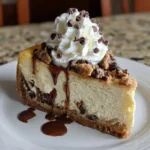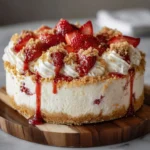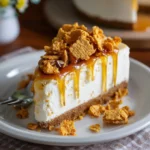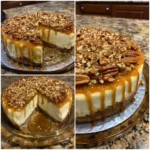
Introduction
Vanilla Bean Cheesecake is the quintessential embodiment of elegance, comfort, and culinary artistry—where creamy richness meets floral depth in perfect harmony. Unlike standard vanilla extract versions, this dessert celebrates the full sensory experience of real Madagascar Bourbon vanilla beans: their tiny black specks glisten like edible stardust, their aroma is intoxicatingly floral and sweet with subtle hints of caramel and rum, and their flavor lingers luxuriously on the palate. This isn’t just a dessert—it’s a slow, mindful indulgence, a centerpiece for celebrations, a nostalgic nod to classic American bake shops, and a testament to the transformative power of quality ingredients. Whether served at a summer garden party, a holiday gathering, or as a quiet reward after a long week, Vanilla Bean Cheesecake commands attention—not through flashiness, but through its profound simplicity, velvety texture, and layered complexity.
The History
The lineage of cheesecake traces back over 2,300 years—to ancient Greece, where early versions were made with fresh cheese (often ricotta or goat cheese), honey, and wheat flour, baked on hot stones and served to athletes during the first Olympic Games in 776 BCE for stamina and energy. The Romans later adopted and adapted the recipe, adding eggs and crushed cheese curds, eventually spreading it across their empire. By the Middle Ages, European monasteries preserved cheesecake knowledge, evolving regional variations—from Italy’s ricotta-based cheesecake to Germany’s quark-heavy Käsekuchen. In the United States, the modern baked cream cheese cheesecake emerged in the late 19th century, popularized by William Lawrence of Chester, New York, who accidentally invented cream cheese in 1872 while attempting to replicate French Neufchâtel. The iconic New York–style cheesecake—with its dense, ultra-creamy, slightly tangy profile—rose to prominence in the early 20th century, notably at Reuben’s Restaurant and later Junior’s in Brooklyn. Vanilla, long prized since the Aztecs used it to flavor xocolātl, became integral to American cheesecake as both extract and, more authentically, whole beans. The use of scraped vanilla beans gained renewed prestige in the 1980s and ’90s with the farm-to-table movement and rising awareness of ingredient provenance—elevating cheesecake from diner staple to fine-dining signature. Today, Vanilla Bean Cheesecake stands as a bridge between ancient tradition and contemporary craftsmanship: honoring centuries of technique while demanding modern precision, patience, and respect for botanical nuance.
Ingredients Breakdown
Every component in this Vanilla Bean Cheesecake serves a precise functional and sensory role—no element is arbitrary. Below is an in-depth, chef-level analysis of each ingredient:
Graham Cracker Crust
- Graham Crackers (1 ½ cups, finely ground): Provide structure, subtle honeyed sweetness, and gentle whole-wheat nuttiness. Their low moisture content ensures crispness without sogginess—even after prolonged chilling. Opt for original (not cinnamon or chocolate) for neutral balance.
- Granulated Sugar (¼ cup): Enhances browning via caramelization, adds structural integrity to the crust, and balances the crackers’ natural bitterness. Brown sugar may be substituted for molasses depth—but increases moisture and softness.
- Unsalted Butter (6 tbsp, melted and cooled): Acts as the binding agent; its milk solids contribute golden color and rich flavor. Clarified butter yields a crisper, more stable crust; regular unsalted butter offers better flavor and cohesion. Temperature matters—too warm causes greasiness; too cool leads to clumping.
- Pinch of Fine Sea Salt: Critical for flavor contrast—suppresses cloying sweetness and heightens all other notes. Kosher salt is avoided here due to inconsistent dissolution.
Filling
- Cream Cheese (24 oz / 3 (8-oz) blocks), full-fat, room temperature: The structural and textural backbone. Must be truly room temperature (68–72°F)—cold cream cheese creates lumps that no amount of mixing can fully eliminate. Philadelphia brand is preferred for its consistent fat content (33%) and smooth emulsification. Low-fat or whipped varieties destabilize the batter, causing cracking and graininess.
- Full-Fat Sour Cream (1 cup, room temperature): Adds tang, moisture, and tenderness. Its acidity helps set the proteins gently during baking, yielding a silkier, less rubbery crumb than cream cheese alone. Ultra-pasteurized sour cream is acceptable, but avoid “light” or “fat-free” versions—they contain stabilizers that interfere with coagulation.
- Heavy Cream (⅓ cup, room temperature): Enriches mouthfeel and promotes fluidity without thinning the batter excessively. Provides additional dairy fat for gloss and melt-in-the-mouth luxury. Whipping cream (30% fat) may be used, but heavy cream (36–40%) yields superior stability and sheen.
- Granulated Sugar (1 ¼ cups): Not merely for sweetness—sugar inhibits protein coagulation, delaying curd formation and allowing the cake to rise evenly before setting. It also contributes to the delicate, almost meringue-like surface sheen. Confectioners’ sugar is avoided—it contains cornstarch, which dulls flavor and alters texture.
- Eggs (3 large + 1 yolk), room temperature: Eggs provide structure and leavening. Whole eggs add volume and elasticity; the extra yolk deepens richness, adds emulsifying lecithin, and improves moisture retention. Cold eggs cause thermal shock, leading to curdling and uneven baking. Always add eggs one at a time, mixing *just until incorporated*—overmixing incorporates excess air, increasing crack risk.
- Pure Vanilla Bean (1–2 plump, moist Madagascar Bourbon beans): The soul of the recipe. Each bean contains over 250 aromatic compounds—including vanillin, piperonal, and heliotropin—that evolve with heat and time. Scrape seeds *and* include the pod in the warm cream mixture to maximize extraction. Avoid “vanilla bean paste” unless certified for baking—many contain thickeners that destabilize the batter.
- Fresh Lemon Juice (1 tsp) and Zest (½ tsp, finely grated): Acid brightens richness and cuts through fat; zest adds volatile citrus oils that lift and refresh the vanilla’s depth. Bottled lemon juice lacks enzymatic brightness and introduces preservatives.
- Salt (¾ tsp fine sea salt): A foundational seasoning—enhances sweetness perception, rounds out acidity, and balances dairy fat. Too little results in flat, cloying flavor; too much overwhelms delicate vanilla notes.
Optional—but Highly Recommended—Finishing Touches
- Crème Fraîche or Sour Cream Topping (½ cup, mixed with 1 tbsp sugar & ¼ tsp vanilla bean seeds): Applied in the last 10 minutes of baking, it forms a luminous, slightly tangy glaze that seals surface micro-cracks and adds luxurious contrast.
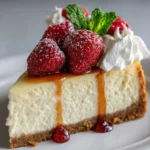
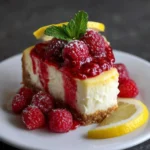
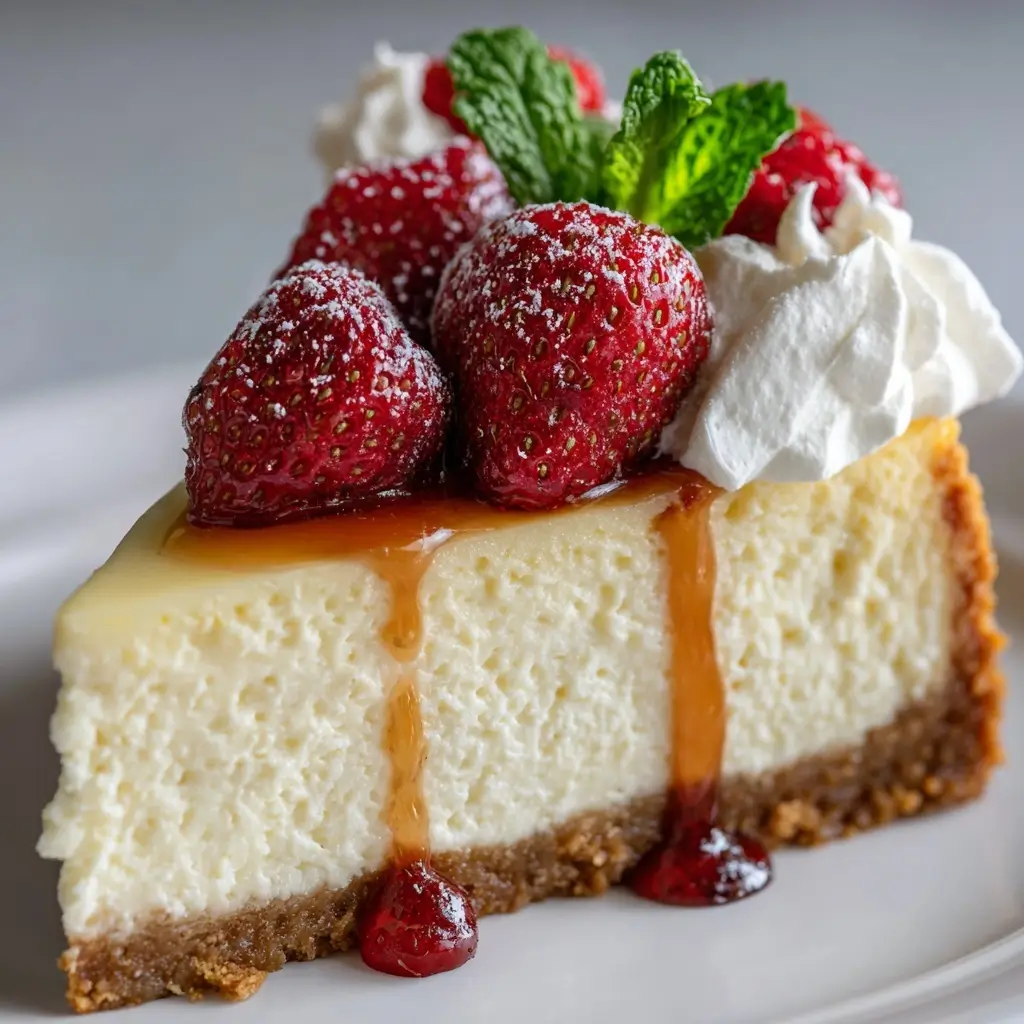
- Vanilla Bean Infused Caramel or Fresh Berry Compote (for garnish): Adds visual drama, textural contrast, and complementary flavor layers—caramel echoes vanilla’s roasted notes; berries offer acidity and freshness.
Step-by-Step Recipe
This meticulously engineered method prioritizes control, consistency, and reverence for the science of cheesecake. Total active time: ~45 minutes. Total time including cooling and chilling: 18–24 hours.
- Prep the Pan (Day Before Baking): Wrap the *outside* of a 9-inch springform pan tightly with two overlapping 18-inch squares of heavy-duty aluminum foil—ensure no gaps at the seam or base. This prevents water seepage during the essential water bath. Lightly grease the *inside* bottom and sides with unsalted butter, then line the bottom with a parchment round (cut to fit precisely). Set aside.
- Prepare the Crust: In a food processor, pulse graham crackers until fine crumbs form (no visible shards). Add sugar and salt; pulse 2–3 times to combine. Drizzle in melted butter while pulsing continuously until mixture resembles wet sand and holds together when pinched. Transfer to prepared pan. Use the flat bottom of a measuring cup or glass to press *evenly and firmly* into pan—first the base (apply steady 10-lb pressure), then 1 inch up the sides. Chill uncovered for at least 30 minutes (or freeze 15 min) to solidify butter and prevent slumping during baking.
- Pre-Bake the Crust: Preheat oven to 350°F (175°C). Bake chilled crust on middle rack for 10 minutes. Remove, gently run a knife around inner edge to loosen, and cool completely on wire rack (≈30 min). Reduce oven temp to 325°F (163°C) for filling.
- Infuse the Vanilla: Split vanilla bean lengthwise with paring knife; scrape seeds into a small saucepan. Add pod, heavy cream, and lemon juice. Warm over medium-low heat—do not boil—until steaming (170°F), about 3–4 minutes. Remove from heat, cover, and steep 15 minutes. Strain through fine-mesh sieve, pressing seeds with back of spoon to extract maximum essence. Discard pod. Cool infusion to room temperature (≈20 min).
- Cream the Base: Using stand mixer with paddle attachment (or hand mixer on medium-low), beat room-temp cream cheese on medium speed for 2 minutes until perfectly smooth and glossy—scrape bowl thoroughly. Add sugar; beat 2 more minutes until lightened and fluffy. Add sour cream; mix 1 minute until homogenous. Scrape bowl.
- Incorporate Eggs with Precision: Add eggs one at a time on low speed, mixing *just until yellow disappears* (≈15 seconds per egg). Add extra yolk; mix until just combined. Overbeating = trapped air = cracks. Scrape bowl after each addition.
- Finish the Batter: With mixer on lowest speed, slowly drizzle in cooled vanilla-cream infusion. Mix only until fully incorporated (≈20 seconds). Add lemon zest and salt; mix 10 seconds. Batter should be thick, pourable, and satiny—no streaks or lumps. Do *not* fold or whisk by hand.
- Water Bath Setup: Place springform pan inside a larger roasting pan. Carefully pour batter into crust. Tap pan sharply 3x on counter to release air bubbles. Pour hot (not boiling) water into roasting pan until it reaches halfway up springform’s sides (≈1.5 inches). Use a kettle with spout for controlled pouring.
- Bake with Thermal Control: Place roasting pan on center rack. Bake at 325°F for 75–85 minutes. Cake is done when edges are set and puffed slightly, center jiggles *like firm Jell-O* (not liquid), and internal temperature reads 150–152°F on instant-read thermometer inserted 1 inch from center. Rotate pan 180° at 45 minutes for even baking.
- Slow-Cooling Protocol (Non-Negotiable): Turn off oven. Crack door open 1 inch with wooden spoon handle. Let cake cool *in water bath, in oven*, for 1 hour. Remove roasting pan; carefully lift springform from water. Run thin knife around inner edge to loosen. Cool on wire rack for 1 hour at room temperature. Refrigerate *uncovered* for at least 12 hours—preferably 24—for full texture development and clean slicing.
- Final Touch & Serve: Remove side band. Slide offset spatula under parchment to lift cake onto serving plate. Peel off parchment. If using crème fraîche topping: whisk ½ cup crème fraîche, 1 tbsp sugar, and ¼ tsp vanilla seeds; spread thinly over top during last 10 minutes of baking (after initial cooling phase). Garnish with fresh berries, edible flowers, or vanilla bean flecks.
Tips
- Room Temperature Is Non-Negotiable: Take cream cheese, sour cream, heavy cream, eggs, and even butter for the crust out of the fridge 4–6 hours ahead—or place sealed packages in cool water for 20 minutes. Cold ingredients cause separation, lumps, and poor emulsion.
- Scrape the Bowl Religiously: After every mixing step—especially after cream cheese, sugar, and eggs—pause to scrape the paddle, sides, and bottom of bowl with flexible silicone spatula. Hidden lumps become permanent flaws.
- Measure by Weight When Possible: Use a digital scale for cream cheese (24 oz = 680 g), sugar (1 ¼ cups = 250 g), and graham crackers (1 ½ cups = 120 g). Volume measurements vary wildly based on packing and crumb size.
- Strain Your Vanilla Infusion: Even if you scrape thoroughly, tiny pod fragments remain. Straining guarantees silky-smooth texture and prevents gritty surprises.
- Use a Thermometer—Not Just Visual Cues: The jiggle test is subjective. An instant-read thermometer eliminates guesswork: 150–152°F signals perfect carryover cooking without overbaking.
- Chill Overnight—Then Bring to Cool Room Temp Before Serving: Slicing straight from the fridge yields crumbly edges. Let cake sit at 65–68°F for 20–30 minutes pre-slicing for clean, glossy cuts.
- Sanitize Your Knife Between Cuts: Dip a long, thin, non-serrated knife in hot water, wipe dry, slice, repeat. This prevents dragging and preserves the pristine surface.
- Freeze for Long-Term Storage: Wrap fully chilled, uncut cake tightly in plastic wrap, then aluminum foil. Freeze up to 3 months. Thaw overnight in fridge, then rest at cool room temp before serving.
- Rescue a Cracked Cake: Gently warm ¼ cup sour cream with 1 tsp sugar and ⅛ tsp vanilla seeds. Brush over cracks with pastry brush—creates a seamless, flavorful glaze.
- Prevent Water Bath Leaks: Double-wrap foil, then test with cold water before adding batter. If water seeps in, rewrap with fresh foil—never proceed with a compromised seal.
Variations and Customizations
This Vanilla Bean Cheesecake is a master canvas—adaptable to seasons, cultures, dietary needs, and creative whims—without sacrificing its core identity. All variations preserve the vanilla bean’s starring role:
Flavor Infusions
- Lavender-Vanilla Bean: Add ½ tsp culinary-grade dried lavender buds to vanilla cream infusion. Steep 10 minutes (not longer—bitterness develops). Strain meticulously. Complement with candied lavender garnish.
- Cardamom-Bean Swirl: Whisk 1 tsp freshly ground green cardamom into ¼ cup batter; gently swirl into main batter before baking for aromatic marbling.
- Roasted Fig & Vanilla Bean: Fold ½ cup finely chopped roasted figs (tossed in 1 tsp balsamic) into batter. Top with fig compote and crumbled amaretti cookies.
Crust Innovations
- Speculoos (Biscoff) Crust: Substitute graham crackers with 1 ½ cups finely ground speculoos cookies + reduce sugar to 2 tbsp. Adds warm spice and caramelized depth.
- Almond-Ginger Crust: Replace ¼ cup graham crumbs with toasted almond flour; add 1 tsp crystallized ginger, finely minced. Pairs beautifully with poached pears.
- Dark Chocolate Shortbread Crust: Use 1 cup shortbread crumbs + ½ cup cocoa powder + 2 tbsp brown sugar. Introduces sophisticated bitterness that offsets vanilla’s sweetness.
Dietary Adaptations
- Gluten-Free: Use certified GF graham-style crackers or almond flour–coconut flour blend (1:1 ratio) for crust. Ensure all other ingredients (vanilla, baking powder if used) are GF-certified.
- Lower-Sugar (Not “Sugar-Free”): Reduce granulated sugar to 1 cup; add 2 tbsp inulin (chicory root fiber) for bulk and prebiotic benefits. Texture remains lush; sweetness is balanced, not diminished.
- Lighter Dairy Option: Substitute ½ cup of sour cream with full-fat Greek yogurt (strained 24 hrs). Maintains tang and thickness without heaviness.
Global Inspirations
- Japanese Cotton Cheesecake Style: Fold 3 stiffly beaten egg whites into batter for ethereal, cloud-like texture. Bake in water bath at 300°F for 90 minutes. Results in delicate, jiggly, nearly soufflé-like cake with intensified vanilla perfume.
- Mexican Vanilla-Quince: Swirl in ⅓ cup membrillo (quince paste) before baking; garnish with crumbled panela and epazote salt.
- French Vanilla-Clafoutis Swirl: Pour batter into pan, then spoon ⅓ cup cherry clafoutis batter (eggs, milk, flour, kirsch) over top and marble gently. Bakes into a stunning two-texture dessert.
Health Considerations and Nutritional Value
While Vanilla Bean Cheesecake is inherently a celebratory, calorie-dense dessert, understanding its nutritional composition empowers mindful enjoyment—and reveals surprising virtues beyond pure indulgence:
Nutritional Profile (Per Standard Slice, 1/12th of 9-inch cake)
- Calories: ≈ 420–460 kcal
- Total Fat: 31–34 g (19–21 g saturated)
- Carbohydrates: 28–32 g (22–25 g sugars)
- Protein: 7–9 g
- Calcium: ≈ 120 mg (12% DV)
- Vitamin A: ≈ 380 IU (8% DV) — from dairy fat
- Choline: ≈ 45 mg — vital for liver and brain health (egg yolks are rich sources)
Functional Benefits of Key Ingredients
- Vanilla Beans: Contain potent antioxidants (vanillic acid, ferulic acid) shown in vitro to inhibit oxidative stress and support neuroprotective pathways. Their aroma alone has demonstrated calming effects on autonomic nervous system activity in clinical aromatherapy trials.
- Full-Fat Dairy: Provides bioavailable calcium, vitamin D (if fortified), and conjugated linoleic acid (CLA)—a fatty acid linked in epidemiological studies to reduced inflammation and improved metabolic markers when consumed as part of balanced diet.
- Egg Yolks: Rich in lutein and zeaxanthin—carotenoids critical for macular health and blue-light filtration in the eyes.
Mindful Enjoyment Guidelines
- Portion Mindfully: A 2-ounce slice (≈⅔ inch tall x 2 inches wide) delivers satisfaction without excess. Serve on smaller plates to enhance perceived portion size.
- Pair Strategically: Balance richness with tart fruit (raspberries, passionfruit), bitter greens (arugula salad with lemon vinaigrette), or herbal tea (peppermint or chamomile) to aid digestion and cleanse the palate.
- Avoid “Diet” Substitutions That Backfire: Low-fat cream cheese increases water content, leading to weeping and graininess. Artificial sweeteners (erythritol, sucralose) often cause gastrointestinal distress and lack the functional properties of sugar in baking. Focus on quality, not reduction.
- Consider Frequency, Not Just Quantity: Enjoying one exceptional slice monthly delivers more psychological and sensory benefit—and less metabolic impact—than weekly servings of lower-quality, highly processed desserts.
Ingredients
Makes one 9-inch cheesecake (12 servings)
- For the Crust:
– 1 ½ cups (120 g) graham cracker crumbs (about 12 full sheets)
– ¼ cup (50 g) granulated sugar
– 6 tablespoons (85 g) unsalted butter, melted and cooled
– ¼ teaspoon fine sea salt - For the Filling:
– 24 oz (680 g) full-fat brick-style cream cheese, at room temperature (3 blocks)
– 1 cup (240 g) full-fat sour cream, at room temperature
– ⅓ cup (80 ml) heavy cream (36–40% fat), at room temperature
– 1 ¼ cups (250 g) granulated sugar
– 3 large eggs + 1 large egg yolk, at room temperature
– 1–2 plump Madagascar Bourbon vanilla beans
– 1 teaspoon (5 ml) fresh lemon juice
– ½ teaspoon (2 g) finely grated lemon zest
– ¾ teaspoon (4 g) fine sea salt - For Optional Crème Fraîche Topping:
– ½ cup (120 g) crème fraîche or full-fat sour cream
– 1 tablespoon (12 g) granulated sugar
– ¼ teaspoon scraped seeds from ½ vanilla bean
Directions
- Preheat oven to 350°F (175°C). Prepare a 9-inch springform pan: wrap exterior tightly with two 18-inch squares heavy-duty foil. Grease interior bottom and sides; line bottom with parchment round.
- Make crust: Pulse graham crackers in food processor until fine. Add sugar and salt; pulse to combine. Drizzle in melted butter while pulsing until mixture resembles wet sand. Press firmly into pan bottom and 1 inch up sides. Chill 30 minutes.
- Bake crust 10 minutes at 350°F. Cool completely on wire rack (≈30 min). Reduce oven to 325°F (163°C).
- Split vanilla beans; scrape seeds into small saucepan. Add pods, heavy cream, and lemon juice. Warm over medium-low heat to 170°F (steaming, not boiling). Cover; steep 15 minutes. Strain; cool to room temperature.
- In stand mixer with paddle, beat cream cheese on medium 2 minutes until smooth. Add sugar; beat 2 minutes until fluffy. Add sour cream; beat 1 minute. Scrape bowl.
- Add eggs one at a time on low speed, mixing just until incorporated (≈15 sec each). Add yolk; mix until just combined.
- On lowest speed, slowly drizzle in cooled vanilla-cream infusion. Mix until fully incorporated (≈20 sec). Add lemon zest and salt; mix 10 sec. Batter should be thick, glossy, lump-free.
- Place springform in roasting pan. Pour batter in. Tap pan sharply 3x. Pour hot water into roasting pan to 1.5-inch depth.
- Bake at 325°F for 75–85 minutes, until edges are set and center jiggles like firm Jell-O. Internal temp: 150–152°F.
- Turn off oven. Crack door 1 inch with spoon handle. Cool cake in water bath, in oven, for 1 hour.
- Remove roasting pan. Run knife around edge. Cool on wire rack 1 hour. Refrigerate uncovered ≥12 hours (ideally 24).
- Before serving: remove side band, peel off parchment. For topping: whisk crème fraîche, sugar, and vanilla seeds; spread thinly over top during final 10 minutes of baking (optional). Garnish as desired.
FAQ
- Q: Can I use vanilla extract instead of vanilla beans?
- A: Yes—but it’s a compromise. Use 2 tsp high-quality, double-strength pure vanilla extract *only if beans are unavailable*. You’ll lose the visual speckling, nuanced floral notes, and complex terroir-driven depth. Never use imitation vanilla—it contains synthetic vanillin and harsh solvents that taste medicinal and disrupt dairy emulsion.
- Q: Why does my cheesecake always crack?
- A: Cracking is almost always caused by rapid temperature change or overbaking. Key fixes: (1) Use a water bath for even, gentle heat; (2) Cool gradually—in oven with door cracked, then on rack, then refrigerate; (3) Never open oven during first 70 minutes; (4) Bake to 150–152°F—not higher; (5) Ensure room-temp ingredients to prevent seizing.
- Q: Can I make this without a springform pan?
- A: Not recommended. Springform pans allow clean removal and even baking. Alternatives: a 9-inch cake pan with parchment sling (two overlapping strips), but removal is riskier and water bath is impractical. Avoid glass or ceramic pans—they conduct heat unevenly