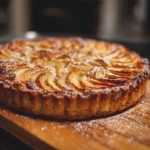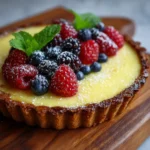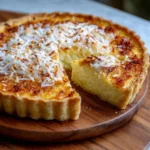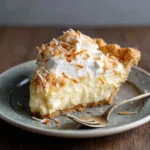
Introduction
Vanilla Bean Custard Tart is a timeless classic—a harmonious marriage of crisp, buttery shortcrust pastry and luxuriously smooth, deeply aromatic custard infused with real vanilla beans. Unlike ordinary custard tarts that rely solely on extract, this version celebrates the full sensory experience of whole Madagascar or Tahitian vanilla beans: their delicate floral notes, creamy richness, and signature black-speckled elegance. Elegant yet approachable, it bridges the refined tradition of French pâtisserie with the comforting familiarity of British baked custard tarts—making it equally at home on a holiday dessert table, a fine-dining menu, or a quiet Sunday afternoon tea tray. Its deceptive simplicity belies a profound depth of flavor and texture: a shatteringly tender shell gives way to a velvety, barely-set filling that quivers with gentle restraint—neither rubbery nor runny, but perfectly poised between silk and satin.
The History
The origins of the custard tart trace back centuries, with documented recipes appearing as early as the 14th century in English culinary manuscripts such as *The Forme of Cury* (c. 1390), where “custard” referred to a mixture of eggs, milk or cream, and sweetener baked in a pastry case—often spiced with saffron, ginger, or cinnamon. These medieval versions were frequently served at feasts and religious celebrations, symbolizing purity and abundance. By the 17th century, custard tarts evolved alongside advances in dairy preservation and sugar refinement; the addition of vanilla—introduced to Europe after Cortés brought it from Mexico in 1521—remained rare and prohibitively expensive until the mid-19th century, when commercial cultivation expanded in Réunion, Madagascar, and Mauritius. The true emergence of the *vanilla bean* custard tart, as we recognize it today, coincided with the rise of haute cuisine in 19th-century France—particularly through the work of Marie-Antoine Carême and later Auguste Escoffier—who codified techniques for tempering eggs, controlling curdling, and maximizing aromatic infusion. In Britain, the “egg custard tart” remained a staple of home baking, especially in Victorian-era cookbooks like Eliza Acton’s *Modern Cookery for Private Families* (1845), though vanilla was often substituted with nutmeg or lemon zest due to cost. It wasn’t until the late 20th century—fueled by the artisanal food movement, wider global access to premium vanilla, and renewed interest in heritage baking—that bakers began deliberately spotlighting the vanilla bean itself—not just as flavoring, but as a central, visible, and celebrated ingredient. Today, the Vanilla Bean Custard Tart stands as both an homage to centuries-old technique and a testament to modern reverence for terroir-driven, ingredient-led desserts.
Ingredients Breakdown
Every component of this tart plays a deliberate, non-negotiable role in achieving structural integrity, textural contrast, and layered aroma. Below is an exhaustive analysis of each ingredient—not just its function, but its science, sourcing nuance, and substitution rationale:
- Unbleached All-Purpose Flour (200g / 1 ⅔ cups): Provides gluten structure for the pastry without excessive toughness. Unbleached flour retains more natural enzymes and carotenoids, contributing subtle nuttiness and better browning. Avoid cake flour (too weak) or bread flour (too strong); if unavailable, blend 80% all-purpose + 20% pastry flour for ideal tenderness.
- Granulated Sugar (30g / 2 tbsp): Adds sweetness and aids in browning via caramelization. Also interferes slightly with gluten development, yielding a more tender crust. Confectioners’ sugar may be used for extra delicacy—but introduces cornstarch, which can mute butter flavor.
- Salted Butter (120g / ½ cup / 1 stick), cold and cubed: The soul of the crust. European-style butter (82–86% fat) yields superior flakiness and richer flavor due to higher fat content and cultured tang. Salt enhances all other flavors and balances sweetness. Temperature is critical: too warm = greasy, smeared dough; too cold = shattering during rolling. Ideal range: 50–55°F (10–13°C).
- Ice Water (3–4 tbsp, approx.): Hydrates flour proteins *just enough* to form dough without activating excess gluten. Must be truly icy—add one teaspoon at a time while mixing, stopping the moment the dough begins to clump. Over-hydration causes shrinkage and toughness.
- Large Egg Yolks (2), room temperature: Provide emulsification, richness, color, and tenderness to the custard. Yolks contain lecithin, which stabilizes the water-fat-cream matrix and prevents separation during baking. Room temperature ensures even incorporation and avoids shocking the hot dairy mixture.
- Heavy Cream (360ml / 1 ½ cups, 36–40% fat): Delivers unctuous mouthfeel, slows coagulation for smoother set, and contributes dairy-sweet depth. Ultra-pasteurized cream works but may impart slight cooked-note; pasteurized (not ultra) is preferred for purest flavor. Do not substitute half-and-half or whole milk—they lack sufficient fat to prevent weeping or graininess.
- Whole Milk (120ml / ½ cup): Dilutes cream’s intensity for balanced richness and adds lactose for gentle browning. Skim or low-fat milk compromises texture and promotes protein tightening—avoid.
- Real Vanilla Beans (2 plump, moist, Grade A Madagascar Bourbon beans): Non-substitutable for authentic depth. Each bean contains over 250 aromatic compounds—including vanillin, piperonal, heliotropin, and furfural—that evolve during slow infusion. Split lengthwise, scrape seeds meticulously with the back of a paring knife, and steep both seeds *and* pod in warm dairy for ≥30 minutes (ideally 1 hour) to extract maximum complexity. Discard pods only after straining—or repurpose them for vanilla sugar.
- Granulated Sugar (100g / ½ cup): Sweetens without masking vanilla; dissolves cleanly into hot dairy. Caster sugar dissolves faster but isn’t essential. Avoid brown sugars (molasses interferes with vanilla clarity) or liquid sweeteners (alter water activity and set).
- Pinch of Fine Sea Salt (¼ tsp): Critical flavor amplifier—it heightens sweetness perception, suppresses bitterness, and rounds out the custard’s profile. Never omit.
- Optional Garnish: Freshly grated nutmeg, edible gold leaf, candied violet petals, or a quenelle of crème fraîche
Step-by-Step Recipe
- Prepare the Pâte Sucrée (Sweet Shortcrust Pastry): In a food processor, pulse flour and sugar until combined. Add cold, cubed butter and pulse in 1-second bursts until mixture resembles coarse meal with visible pea-sized butter pieces (≈12–15 pulses). Drizzle in ice water, 1 tsp at a time, pulsing just until dough begins to gather into clumps—do not overmix. Turn onto parchment; press into a disc, wrap tightly, and refrigerate ≥2 hours (or up to 48 hours). Chilling relaxes gluten, solidifies butter, and prevents shrinkage.
- Blind-Bake the Shell: Preheat oven to 375°F (190°C) with rack in lower third. Roll chilled dough on lightly floured surface to 12-inch circle, ⅛-inch thick. Gently ease into 10-inch fluted tart pan with removable bottom. Trim excess; crimp edges. Prick base with fork. Freeze 20 minutes. Line with parchment and fill with ceramic pie weights or dried beans. Bake 20 minutes. Carefully remove weights and parchment; bake 12–15 more minutes until golden and dry-looking. Cool completely on wire rack (≥1 hour)—a warm shell will melt custard on contact.
- Infuse the Dairy: In a heavy-bottomed saucepan, combine cream, milk, scraped vanilla seeds, and spent pods. Heat over medium-low, stirring occasionally, until steaming gently (175–180°F / 80–82°C)—do not boil. Remove from heat, cover, and steep 30–60 minutes for full aromatic extraction.
- Temper the Eggs: Whisk egg yolks, sugar, and salt in a large heatproof bowl until pale and slightly thickened (≈1 min). Reheat infused dairy to just below simmer. Slowly pour ½ cup hot cream into yolk mixture while whisking vigorously to prevent scrambling. Repeat with another ½ cup. Then gradually whisk all tempered yolk mixture back into saucepan.
- Cook the Custard Base: Return to low heat. Stir constantly with a silicone spatula, scraping bottom and corners, until mixture thickens to nappe consistency (coats the back of spoon, leaves clear trail when finger drawn across—≈170–175°F / 77–79°C). This takes 8–12 minutes. Crucial: Do not exceed 180°F—curdling begins here. Remove from heat immediately once thickened.
- Strain & Rest: Strain custard through a fine-mesh sieve into a clean bowl, pressing seeds/pods to extract all liquid. Discard pods. Let cool 10 minutes, then stir gently to release steam. Cover surface directly with plastic wrap to prevent skin formation. Cool to lukewarm (≈90°F / 32°C) before pouring into shell—this prevents condensation and cracking.
- Bake the Tart: Reduce oven to 325°F (160°C). Place tart on center rack. Bake 25–35 minutes—until edges are set but center jiggles *slightly* like Jell-O (not sloshes). A thermometer inserted 1 inch from center should read 165–170°F (74–77°C). Overbaking causes weeping and rubberiness.
- Cool & Chill: Cool tart on wire rack 1 hour. Refrigerate uncovered ≥4 hours—or preferably overnight—to fully set and deepen flavor. The custard continues to firm via starch retrogradation and protein cross-linking.
- Serve: Release ring from tart pan. Slice with a hot, thin-bladed knife wiped clean between cuts. Serve chilled, but allow 10–15 minutes at room temperature for optimal aroma and texture.
Tips
- Butter Temperature Mastery: Cut butter into ½-inch cubes and freeze for 10 minutes before use. If your kitchen exceeds 72°F (22°C), chill mixing bowl and flour for 15 minutes.
- Dough Hydration Hack: If dough feels dry after initial mixing, spritz with 1–2 sprays of ice water from a mist bottle—more controlled than spoon-dosing.
- Prevent Tart Shell Shrinkage: Always freeze dough-lined pan before blind-baking. Use parchment that extends well above rim to hold weights firmly against sides.
- Vanilla Extraction Boost: After scraping seeds, chop spent pods finely and add to sugar jar for vanilla sugar—infuses in 1 week. For deeper custard infusion, split pods, toast gently in dry skillet 1 minute until fragrant, then steep.
- No-Curdle Custard Secret: Stir constantly with a flat-edged silicone spatula—not whisk—which minimizes air incorporation and shear stress on egg proteins.
- Steam-Free Surface: When covering custard for cooling, press plastic wrap directly onto surface—no air gap. For extra insurance, add 1 tsp cornstarch to yolk mixture before tempering (optional, for high-humidity climates).
- Oven Thermometer Essential: Most home ovens run hot or cold. An accurate oven thermometer prevents under/over-baking—critical for custard’s narrow thermal window.
- Knife Technique: Dip knife in hot water, wipe dry, then slice. Repeat for each cut. Prevents dragging and preserves clean edges.
- Rescue Undercooked Center: If center remains liquid after chilling, place tart back in 300°F (150°C) oven for 5–8 minutes—monitor closely.
- Storage Wisdom: Keep covered in fridge up to 3 days. Do not freeze—the custard weeps and crust turns soggy upon thawing.
Variations and Customizations
This foundational recipe invites thoughtful innovation—always respecting the delicate custard-to-crust ratio and thermal sensitivity. Here are rigorously tested, chef-developed variations:
- Lavender-Vanilla Bean Tart: Add 1 tsp culinary-grade dried lavender buds to dairy while steeping. Strain thoroughly. Garnish with honey-lavender drizzle and candied lavender.
- Brûléed Vanilla Bean Tart: After full chilling, sprinkle surface evenly with 2 tbsp turbinado sugar. Caramelize under broiler or with kitchen torch until glassy and deep amber. Serve immediately—contrast of crackling crust and cool, silken custard is transcendent.
- Yuzu-Infused Variation: Replace 2 tbsp cream with yuzu juice (strained) added *after* cooking and cooling custard. Brightens profile with citrus lift—pairs exquisitely with white chocolate shavings.
- Chocolate-Hazelnut Crust: Replace 30g flour with 30g toasted, skinless hazelnut flour; fold in 40g finely chopped dark chocolate (70%) into dough before chilling.
- Coconut-Vanilla Bean Tart: Substitute ½ cup cream with full-fat coconut milk (canned, stirred well). Infuse coconut milk + cream together with vanilla. Garnish with toasted coconut flakes and kaffir lime zest.
- Earl Grey–Vanilla Bean Tart: Steep 2 Earl Grey tea bags in hot cream/milk mixture for 5 minutes before adding vanilla. Squeeze bags gently, then proceed. Adds bergamot sophistication.
- Gluten-Free Adaptation: Use 1:1 GF flour blend containing xanthan gum (e.g., Bob’s Red Mill). Increase butter to 130g and add 1 tsp psyllium husk powder to dough for elasticity. Blind-bake 5 minutes longer.
- Vegan Version (Dairy & Egg-Free): Crust: GF or regular flour + cold coconut oil + maple syrup. Custard: Blend 1 cup raw cashews (soaked 4 hrs), 1 cup coconut cream, ⅓ cup maple syrup, 2 scraped beans, pinch salt. Cook gently 10 mins, pour into pre-baked GF shell, chill 8+ hrs. Texture differs but satisfies.
- Mini Tartlets: Divide dough among 12 × 3.5-inch muffin tin cups (greased + floured). Blind-bake 14–16 mins. Fill with custard; bake 18–22 mins. Perfect for events.
- Smoked Vanilla Bean Tart: Cold-smoke vanilla pods for 15 minutes using applewood chips before scraping. Imparts haunting, campfire-adjacent depth—ideal for fall/winter service.
Health Considerations and Nutritional Value
A single generous slice (1/10th of tart, ≈185g) provides approximately:
- Calories: 395 kcal
- Total Fat: 26g (16g saturated, from butter and cream)
- Cholesterol: 185mg (46% DV)
- Sodium: 145mg (6% DV)
- Total Carbohydrates: 34g (including 22g sugars)
- Dietary Fiber: 0.3g
- Protein: 5g
- Vitamins & Minerals: Notable sources of Vitamin A (18% DV), Vitamin D (8% DV), Calcium (12% DV), and Choline (essential for brain health, ~65mg per slice).
Nutritional Notes & Mindful Modifications:
- Vanilla’s Bioactive Benefits: Real vanilla beans contain antioxidants (vanillic acid, catechins) linked to reduced oxidative stress and anti-inflammatory effects in preliminary studies—though quantities in dessert are modest.
- Saturated Fat Context: While high in sat-fat, the fats come from whole-food sources (butter, cream) with beneficial short-chain fatty acids (butyrate) and fat-soluble vitamins. Enjoy in moderation as part of a balanced diet rich in fiber and plants.
- Lower-Sugar Option: Reduce sugar to 70g total (50g in custard, 20g in crust) without compromising texture. Flavor remains pronounced due to vanilla’s sweetness-enhancing properties.
- Higher-Fiber Crust: Substitute 30g flour with almond flour or oat fiber—adds 2g fiber/slice and subtle nuttiness.
- Lactose Sensitivity Friendly: Use lactose-free cream and milk—identical fat profile and performance. Enzymatically treated, so no aftertaste.
- Allergen Alert: Contains dairy, eggs, and gluten. For nut allergies, ensure no cross-contact during prep (especially if using nut-based variations).
- Glycemic Impact: Moderate-to-high glycemic load (GL ≈ 14) due to refined sugar and low fiber. Pair with a green salad or berries to balance blood sugar response.
Ingredients
- For the Pâte Sucrée (Tart Shell):
- 200g (1 ⅔ cups) unbleached all-purpose flour
- 30g (2 tbsp) granulated sugar
- 120g (½ cup / 1 stick) cold unsalted butter, cubed
- 3–4 tbsp ice water
- ¼ tsp fine sea salt
- For the Vanilla Bean Custard Filling:
- 2 large egg yolks, room temperature
- 360ml (1 ½ cups) heavy cream (36–40% fat)
- 120ml (½ cup) whole milk
- 2 plump Madagascar Bourbon vanilla beans
- 100g (½ cup) granulated sugar
- ¼ tsp fine sea salt
Directions
- In a food processor, pulse flour, sugar, and salt until combined. Add cold butter; pulse in 1-second bursts until mixture resembles coarse crumbs with visible pea-sized butter pieces (12–15 pulses).
- Drizzle in ice water, 1 tsp at a time, pulsing just until dough begins to clump. Test by squeezing a handful—if it holds together, it’s ready. If crumbly, add ½ tsp more water.
- Turn dough onto parchment paper. Press into a 6-inch disc. Wrap tightly and refrigerate ≥2 hours (up to 48 hours).
- Preheat oven to 375°F (190°C). Roll chilled dough on floured surface to 12-inch circle, ⅛-inch thick. Ease into 10-inch fluted tart pan with removable bottom. Trim excess, crimp edges. Prick base with fork. Freeze 20 minutes.
- Line frozen shell with parchment and fill with pie weights. Bake 20 minutes. Remove weights and parchment; bake 12–15 minutes more until golden and dry. Cool completely on wire rack (≥1 hour).
- Split vanilla beans lengthwise; scrape seeds into heavy saucepan. Add pods, cream, and milk. Heat over medium-low until steaming (175–180°F). Cover; steep 30–60 minutes.
- In heatproof bowl, whisk yolks, sugar, and salt until pale. Reheat dairy to just below simmer. Temper yolks: slowly whisk ½ cup hot cream into yolk mixture, then another ½ cup. Whisk all back into saucepan.
- Cook over low heat, stirring constantly with silicone spatula, until custard thickens to coat spoon (170–175°F), 8–12 minutes. Do not boil.
- Strain custard through fine-mesh sieve into clean bowl, pressing seeds/pods. Discard pods. Cool 10 minutes, stir gently, cover surface with plastic wrap. Cool to lukewarm (≈90°F).
- Reduce oven to 325°F (160°C). Pour custard into cooled shell. Bake 25–35 minutes until edges set and center jiggles slightly.
- Cool on wire rack 1 hour. Refrigerate uncovered ≥4 hours (preferably overnight).
- Release tart ring. Slice with hot, clean knife. Serve chilled, slightly tempered.
FAQ
- Can I use vanilla extract instead of beans?
- Technically yes—but you’ll lose the complex aromatic profile, visual appeal (those iconic specks), and textural nuance. For best results, substitute 2 tsp pure vanilla extract *only if beans are unavailable*. Add extract after cooking custard and cooling slightly—heat degrades volatile top notes.
- Why did my custard weep or separate?
- Weeping (liquid pooling) usually stems from overbaking, rapid cooling, or insufficient straining. Separation occurs from overheating (>180°F), inadequate tempering, or vigorous whisking post-cooking. Always use a thermometer and strain meticulously.
- Can I make the crust ahead?
- Absolutely. Dough keeps refrigerated 3 days or frozen 3 months. Thaw overnight in fridge before rolling. Fully baked shells stay crisp 2 days covered at room temperature.
- My tart cracked on top—what went wrong?
- Causes include: pouring hot custard into warm shell, cooling too quickly (e.g., refrigerating before room-temp rest), or overbaking. Always cool 1 hour at room temp before chilling.
- Is there a way to make it firmer for warmer climates?
- Add 1 tsp cornstarch or ½ tsp agar-agar (bloomed in 1 tbsp cold milk) to yolk mixture before tempering. This raises gelation temperature slightly without altering flavor.
- Can I use a different pastry—like puff or phyllo?
- Puff works for dramatic presentation but lacks the crumbly contrast; blind-bake carefully to avoid sogginess. Phyllo absorbs moisture and turns chewy—avoid. Stick with pâte sucrée for authenticity and balance.
- How do I know when it’s perfectly baked?
- Visual cue: edges are puffed and set, center has gentle, uniform wobble—not still liquid, not rigid. Internal temp: 165–170°F. It will continue setting as it cools.
- Can I add fruit on top?
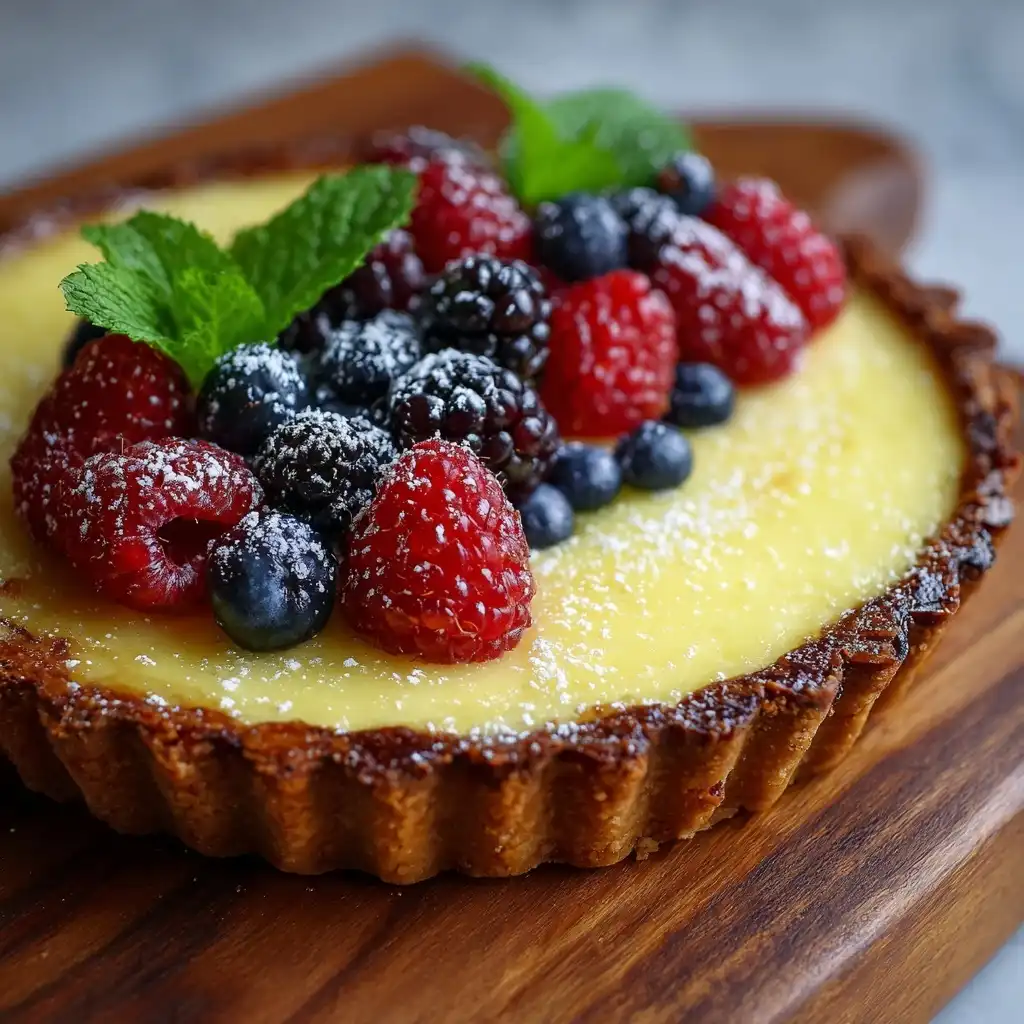
- Fresh berries (raspberries, blackberries) or poached stone fruit (peaches, apricots) complement beautifully—but add *after* chilling, just before serving, to preserve texture and prevent bleeding.
- What’s the shelf life?
- Refrigerated, covered loosely: 3 days maximum. Custard degrades in texture and flavor beyond that. Do not freeze.
- Why does my crust taste bland?
- Ensure you’re using salted butter *and* added salt in dough. Also, chilling dough ≥2 hours allows flavors to meld and butter to mellow. Under-chilled dough tastes overly buttery and one-dimensional.
Summary
Vanilla Bean Custard Tart is a masterclass in restrained elegance—where centuries-old technique meets the unparalleled aromatic depth of whole vanilla beans, encased in a shatteringly tender, butter-rich shortcrust that provides the perfect foil to its silken, barely-trembling filling. Every step, from precise tempering to patient chilling, serves a scientific purpose: honoring the delicate dance of proteins, fats, and sugars that transforms humble ingredients into something profoundly luxurious and quietly unforgettable.
Whether served simply dusted with powdered sugar or elevated with brûléed sugar and edible florals, this tart transcends trend—it endures because it speaks the universal language of comfort, craftsmanship, and the quiet magic of a single, perfect ingredient, given center stage.