Vanilla Greek Yogurt Cheesecake: A Lighter, Creamier Delight
Introduction
The cheesecake has long reigned as a beloved dessert across cultures, celebrated for its rich, velvety texture and indulgent flavor. But what if you could enjoy all the luxurious creaminess of a classic cheesecake while also embracing a healthier, protein-packed alternative? Enter the Vanilla Greek Yogurt Cheesecake — a modern twist on the traditional favorite that combines the tangy depth of Greek yogurt with the sweet warmth of vanilla to create a dessert that’s both satisfying and nourishing.
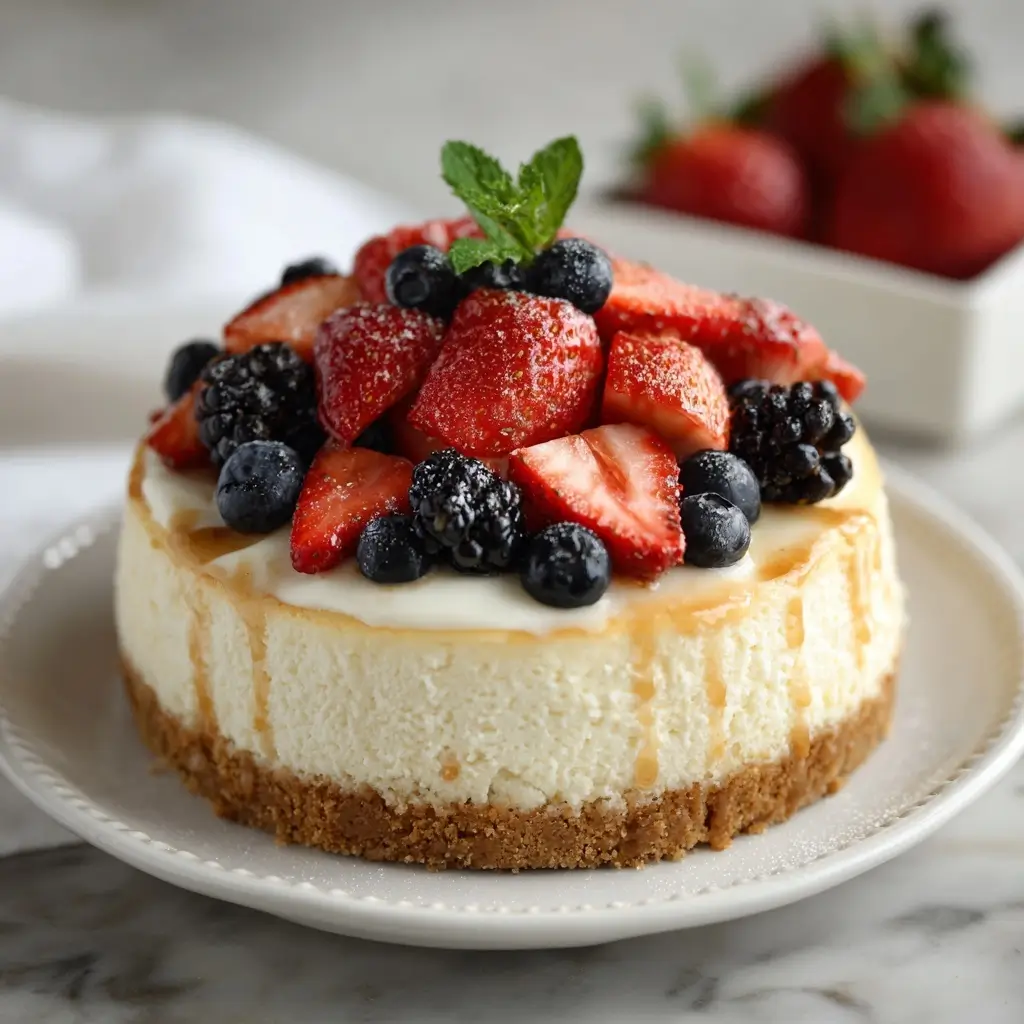
This version swaps out some (or all) of the heavy cream cheese for thick, full-fat Greek yogurt, resulting in a lighter texture without sacrificing the luscious mouthfeel we crave. Whether you’re health-conscious, watching your fat intake, or simply looking to try something refreshingly different, this cheesecake delivers on every front. With a buttery graham cracker crust, a silky-smooth filling infused with real vanilla bean, and an elegant finish of fresh berries or fruit compote, it’s perfect for dinner parties, holiday spreads, or a quiet treat after a long day.
The History
Cheesecake itself traces its origins back over 4,000 years to ancient Greece, where it was served to athletes during the first Olympic Games as a source of energy. The Romans later adopted and spread the recipe throughout their empire, refining it with different cheeses and crusts. Fast forward to the 19th century, and American bakers began using cream cheese — particularly after the invention of Philadelphia-brand cream cheese in 1872 — giving rise to the dense, rich New York-style cheesecake we know today.
The incorporation of yogurt into cheesecakes is a more recent innovation, emerging prominently in the late 20th and early 21st centuries as global interest in Mediterranean diets and probiotic-rich foods grew. Greek yogurt, known for its high protein content, creamy consistency, and slightly tart profile, became a popular substitute in baked goods, especially desserts aiming to reduce fat and increase nutritional value. Chefs and home bakers alike began experimenting by blending Greek yogurt with cream cheese or replacing it entirely, discovering that the result was not only lower in fat but also delightfully tangy and balanced — ideal for pairing with natural sweetness and aromatic vanilla.
The Vanilla Greek Yogurt Cheesecake, therefore, stands at the intersection of tradition and modern wellness trends. It honors the legacy of cheesemaking while adapting to contemporary tastes and dietary preferences, making it a symbol of culinary evolution.
Ingredients Breakdown
To truly appreciate the magic of this dessert, let’s break down each component and understand why it matters:
For the Crust:
- Graham Cracker Crumbs (1 ½ cups): These form the base of the classic cheesecake crust. Their mild sweetness and slight honeyed flavor complement the tang of the filling. For a gluten-free option, use certified gluten-free graham crackers or substitute with digestive biscuits or almond flour.
- Unsalted Butter (6 tablespoons, melted): Adds richness and helps bind the crumbs together, creating a firm, golden crust when baked. Use high-quality European-style butter for a deeper flavor.
- Brown Sugar (2 tablespoons): Enhances caramel notes and adds depth. You can substitute with coconut sugar for a refined sugar-free version.
- Pinch of Salt: Balances sweetness and enhances overall flavor.
For the Filling:
- Cream Cheese (16 oz, full-fat, room temperature): The backbone of any great cheesecake. Full-fat blocks ensure smoothness and prevent curdling. Never use whipped or low-fat versions here.
- Plain Greek Yogurt (1 cup, 2% or full-fat): Provides a protein boost, tanginess, and moisture. Full-fat yields a creamier texture; strained varieties work best.
- Granulated Sugar (⅔ cup): Sweetens the filling and balances acidity. Can be reduced or replaced with erythritol or monk fruit for keto-friendly versions.
- Large Eggs (3, room temperature): Act as a binder and give structure. Cold eggs can cause the batter to split, so always bring them to room temp.
- Pure Vanilla Extract (2 teaspoons): Or better yet, scrape seeds from 1 vanilla bean for a more intense, floral aroma. Avoid artificial vanilla.
- Lemon Zest (from 1 lemon): Brightens the flavor and cuts through richness. Optional but highly recommended.
- Cornstarch (1 tablespoon): Helps stabilize the filling and prevents cracking during baking.
- Salt (¼ teaspoon): Enhances all other flavors and rounds out the sweetness.
Optional Toppings:
- Fresh berries (strawberries, blueberries, raspberries)
- Vanilla glaze or Greek yogurt drizzle
- Honey or maple syrup
- Mint leaves for garnish
- Whipped cream or coconut whipped cream
Step-by-Step Recipe
Preparation Time:
30 minutes | Bake Time: 50–60 minutes | Cooling/Chilling Time: 6–8 hours (overnight preferred)
- Preheat Oven & Prepare Pan: Preheat your oven to 325°F (160°C). Grease a 9-inch springform pan thoroughly, then line the bottom with parchment paper for easy removal. Wrap the outside of the pan tightly with aluminum foil to prevent water seepage if using a water bath.
- Make the Crust: In a medium bowl, combine graham cracker crumbs, melted butter, brown sugar, and salt. Mix until the crumbs are evenly moistened. Press the mixture firmly into the bottom of the prepared pan using the back of a spoon or a flat-bottomed glass. Bake for 8–10 minutes until lightly golden. Remove and let cool while you prepare the filling.
- Beat Cream Cheese: In a large mixing bowl, beat the softened cream cheese with an electric mixer on medium speed until completely smooth and creamy (about 2 minutes). Scrape down the sides as needed.
- Add Sugar & Flavorings: Add granulated sugar and continue beating until well incorporated and fluffy. Mix in vanilla extract (or vanilla bean seeds), lemon zest, cornstarch, and salt. Beat just until combined.
- Incorporate Eggs: Add eggs one at a time, beating on low speed after each addition just until blended. Overmixing can incorporate too much air, leading to cracks. Do not rush this step.
- Stir in Greek Yogurt: Gently fold in the Greek yogurt by hand using a spatula until the batter is uniform and silky. This preserves the airy texture without deflating the mixture.
- Pour & Smooth: Carefully pour the filling over the cooled crust. Use a spatula to smooth the top into an even layer.
- Bake with Water Bath: Place the springform pan inside a larger roasting pan. Fill the outer pan with hot water until it reaches halfway up the sides of the springform (this is the water bath, or bain-marie). The steam helps cook the cheesecake gently and prevents cracking. Carefully transfer to the oven.
- Bake Until Set: Bake for 50–60 minutes. The edges should be slightly puffed and set, but the center should still have a gentle jiggle — like Jell-O — when nudged. Turn off the oven, crack the door open slightly, and let the cheesecake cool inside for 1 hour. This gradual cooling minimizes thermal shock and further reduces cracking risk.
- Chill Thoroughly: Remove from the water bath, run a knife around the edge to loosen, and refrigerate uncovered for at least 6 hours, preferably overnight. This ensures full setting and optimal texture.
- Serve: Release the springform clamp, lift off the sides, and peel away the parchment. Slice with a warm, clean knife for neat pieces. Top with fresh fruit, a drizzle of honey, or a dollop of extra Greek yogurt.
Tips
- Room Temperature Ingredients Are Crucial: Cold cream cheese, eggs, or yogurt can lead to a lumpy batter. Let everything sit out for at least 1–2 hours before starting.
- Don’t Overmix: Once eggs are added, mix only until just combined. Overbeating introduces excess air, which expands and collapses during baking, causing cracks.
- Use a Water Bath: Even though it requires extra care, a water bath is the best way to ensure even, gentle heat distribution and a flawlessly smooth texture.
- Avoid Sudden Temperature Changes: Going from hot oven to cold counter causes stress fractures. Letting the cake cool slowly in the turned-off oven prevents this.
- Chill Overnight: Patience pays off. A longer chill allows flavors to meld and the texture to firm up perfectly.
- Wipe the Bowl: After mixing, wipe down the sides of the bowl with a spatula to ensure no unmixed ingredients fall into the pan.
- Check Doneness Properly: The center should wobble slightly — if it’s liquidy, bake longer; if completely still, it may be overbaked and dry.
Variations and Customizations
The beauty of this Vanilla Greek Yogurt Cheesecake lies in its versatility. Here are some delicious ways to customize it:
Flavor Twists:
- Lemon-Greek Yogurt Cheesecake: Replace vanilla with lemon extract and add extra zest. Top with lemon curd.
- Chocolate Swirl: Melt ¼ cup dark chocolate and swirl into the batter before baking.
- Berry Swirl: Fold in ½ cup mashed raspberries or strawberries, or swirl fruit compote on top before baking.
- Maple Cinnamon: Swap sugar for maple syrup and add ½ tsp cinnamon to the filling.
Dietary Modifications:
- Gluten-Free: Use gluten-free graham crackers or a nut-based crust (e.g., almonds, pecans, dates).
- Keto/Low-Carb: Replace sugar with powdered erythritol or allulose, and use a crust made from almond flour, butter, and sweetener.
- Dairy-Free: Use vegan cream cheese and coconut-based Greek-style yogurt. Substitute butter in the crust with coconut oil.
- Egg-Free: Try a flax egg (1 tbsp ground flax + 3 tbsp water per egg), though results may vary in texture.
Crust Alternatives:
- Oreo cookie crust (for a fun twist)
- Shortbread or ginger snap crust
- Coconut macaroon crust for tropical flair
- Nut-based crusts (pecan, walnut, or hazelnut) for richer flavor and healthy fats
Topper Ideas:
- Warm berry compote (simmer berries with a touch of honey)
- Fresh figs and honey drizzle
- Toasted nuts (pistachios, almonds)
- Edible flowers for elegance
- Dark chocolate shavings
Health Considerations and Nutritional Value
One of the standout features of the Vanilla Greek Yogurt Cheesecake is its improved nutritional profile compared to traditional versions. Here’s how it stacks up (per slice, assuming 12 servings):
| Nutrient | Amount (Approximate) | Benefits |
|---|---|---|
| Calories | 280–320 | Lower than traditional cheesecake (often 400+) |
| Protein | 10–12g | High due to Greek yogurt — supports muscle repair and satiety |
| Fat | 16–18g | Mainly from cream cheese and butter; mostly saturated, but balanced with protein |
| Saturated Fat | 9–10g | Present but mitigated by substitution with yogurt |
| Carbohydrates | 25–28g | Includes natural sugars and fiber from crust |
| Sugars | 18–20g | Can be reduced with sugar substitutes |
| Fiber | 1–2g | Depends on crust; higher with whole grain or nut bases |
| Calcium | 15% DV | From dairy products — supports bone health |
| Probiotics | Yes (live cultures in yogurt) | Supports gut health and digestion |
Why It’s Healthier?
By replacing part of the cream cheese with Greek yogurt, you significantly increase protein content while reducing total fat and calories. Greek yogurt also introduces beneficial probiotics, which support digestive health — something traditional cheesecake lacks. Additionally, the presence of protein helps slow sugar absorption, preventing blood sugar spikes.
Who Should Be Cautious?
While healthier, this dessert still contains dairy, sugar, and saturated fat. Those with lactose intolerance may need lactose-free alternatives. Diabetics should monitor portion sizes or opt for sugar-free sweeteners. Individuals on very low-fat diets may prefer a fully yogurt-based version with nonfat dairy.
Ingredients
Crust:
- 1 ½ cups graham cracker crumbs
- 6 tablespoons unsalted butter, melted
- 2 tablespoons brown sugar
- Pinch of salt
Filling:
- 16 oz (2 packages) full-fat cream cheese, room temperature
- 1 cup plain Greek yogurt (2% or full-fat)
- ⅔ cup granulated sugar
- 3 large eggs, room temperature
- 2 teaspoons pure vanilla extract (or seeds from 1 vanilla bean)
- Zest of 1 lemon
- 1 tablespoon cornstarch
- ¼ teaspoon salt
Directions
- Preheat oven to 325°F (160°C). Grease and line a 9-inch springform pan; wrap exterior with foil.
- Combine crust ingredients and press into pan. Bake 10 minutes, then cool.
- Beat cream cheese until smooth. Add sugar and beat until fluffy.
- Mix in vanilla, lemon zest, cornstarch, and salt.
- Add eggs one at a time, mixing on low until just blended.
- Fold in Greek yogurt by hand until smooth.
- Pour over crust and smooth top.
- Place in water bath and bake 50–60 minutes until edges are set and center jiggles slightly.
- Turn off oven, leave door ajar, and cool inside for 1 hour.
- Remove, loosen edges, and chill in refrigerator for 6–8 hours or overnight.
- Serve cold with desired toppings.
FAQ
Can I make this cheesecake without a water bath?
Yes, but not recommended. Without a water bath, the cheesecake is more prone to cracking and uneven baking. If you must skip it, place a pan of water on the rack below the cheesecake to add humidity.
Can I use low-fat or nonfat Greek yogurt?
You can, but the texture will be less creamy and more prone to separation. Full-fat or 2% works best for richness and stability.
Why did my cheesecake crack?
Common causes include overmixing, sudden temperature changes, overbaking, or skipping the water bath. If it cracks, don’t panic — cover it with fruit, whipped cream, or a sauce!
Can I freeze this cheesecake?
Yes! Wrap tightly in plastic and foil. Freeze for up to 2 months. Thaw overnight in the fridge before serving.
Can I make it ahead of time?
Absolutely. This cheesecake actually improves in flavor after 24 hours in the fridge. Make it 1–2 days in advance for best results.
Is Greek yogurt safe to bake with?
Yes, especially full-fat, plain varieties. They’re less likely to curdle. Always bring to room temperature and avoid boiling or overheating.
Can I make this in a regular pie dish?
Only if it’s deep-dish and oven-safe. A springform pan is ideal for easy release and proper height.
How do I get clean slices?
Dip a sharp knife in hot water, wipe dry, and slice between cuts. Wipe the knife after each slice for clean edges.
Summary
The Vanilla Greek Yogurt Cheesecake is a harmonious blend of tradition and innovation — delivering the creamy indulgence of classic cheesecake with the added benefits of protein, probiotics, and reduced fat. Luxurious yet mindful, it’s the perfect dessert for those who want to savor every bite without compromise.