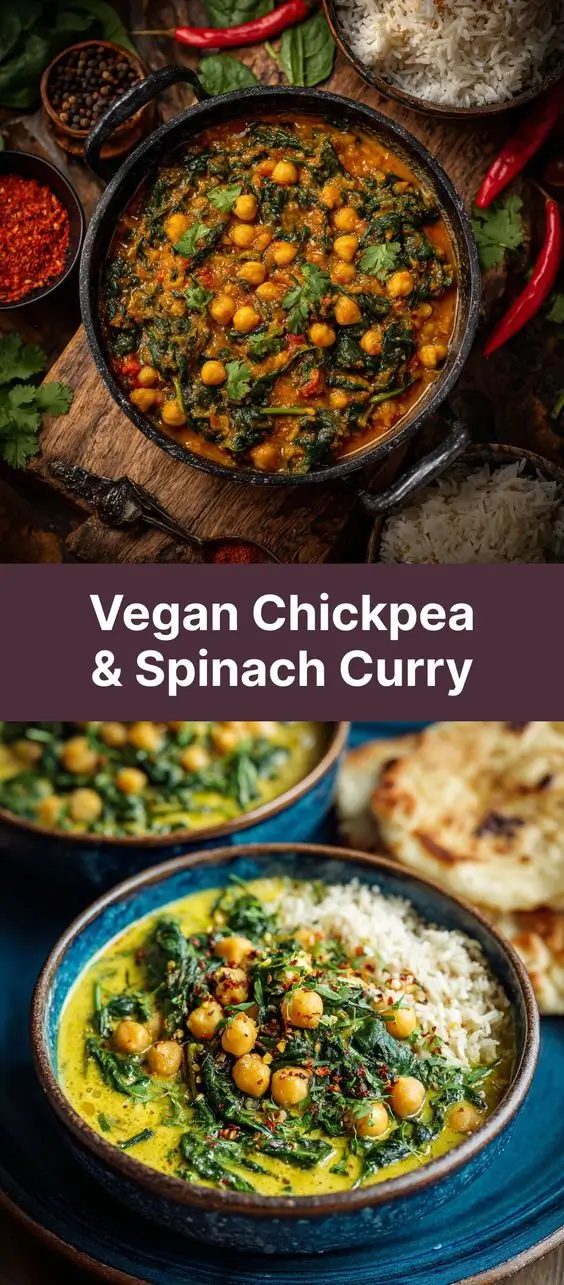
Vegan Chickpea & Spinach Curry: A Flavorful, Nutrient-Rich Plant-Based Delight
Introduction
If you’re on the hunt for a hearty, satisfying, and deeply nourishing plant-based meal, look no further than Vegan Chickpea & Spinach Curry. This vibrant dish combines the earthy richness of chickpeas with the tender freshness of spinach, all simmered in a luscious sauce infused with aromatic spices. It’s not just a curry—it’s comfort in a bowl. Perfect for weeknight dinners, meal prep, or impressing guests with your culinary prowess, this vegan curry is both simple to prepare and bursting with flavor. Whether you’re fully plant-based or simply looking to incorporate more vegetables and legumes into your diet, this recipe delivers on every level—taste, texture, and nutrition.
The History
The roots of chickpea-based curries stretch back centuries across South Asia, particularly in India, where legumes have long been dietary staples due to their abundance, affordability, and high protein content. Chickpeas, known as “chana” in Hindi, are central to many traditional Indian dishes such as chana masala and kadhi. In coastal regions like Gujarat and Maharashtra, spiced lentil and legume stews have been enjoyed for generations, often served with flatbreads or rice.
Spinach, or “palak,” has also played a significant role in Indian cuisine, most famously featured in palak paneer. The fusion of chickpeas and spinach likely emerged from home kitchens seeking nutrient-dense, balanced meals that combined plant protein with iron-rich greens. Over time, this combination gained popularity beyond India’s borders, embraced by global food lovers and adapted into countless vegan and vegetarian variations. Today, Vegan Chickpea & Spinach Curry stands as a modern homage to these traditions—updated for contemporary palates and dietary preferences while honoring its cultural heritage.
Ingredients Breakdown
The magic of this curry lies in the harmony of its ingredients—each one contributing to the overall depth, texture, and health benefits of the dish.
- Chickpeas: Canned or cooked dried chickpeas provide a meaty texture and are packed with plant-based protein and fiber, making them ideal for sustaining energy and promoting digestive health.
- Fresh Spinach: Rich in iron, vitamin K, folate, and antioxidants, spinach wilts beautifully into the curry, adding color, nutrients, and a mild earthy sweetness.
- Onion, Garlic, and Ginger: These aromatics form the flavor base of the curry, offering pungency, warmth, and complexity.
- Tomatoes: Fresh or canned diced tomatoes lend natural acidity and body to the sauce, helping to balance the spices.
- Coconut Milk: Full-fat coconut milk adds creaminess and a subtle tropical sweetness that complements the spices without overpowering them.
- Curry Spices: Turmeric (anti-inflammatory), cumin (digestive aid), coriander (citrusy warmth), smoked paprika (depth), garam masala (aromatic finish), and chili powder (heat) come together to create a layered, fragrant profile.
- Olive Oil or Coconut Oil: Used for sautéing, it helps bloom the spices and carry fat-soluble nutrients like beta-carotene from the vegetables.
- Lime Juice and Fresh Cilantro: Added at the end for brightness and freshness, they elevate the entire dish.
- Vegetable Broth: Enhances moisture and deepens flavor without adding animal products.
Step-by-Step Recipe
- Prepare Your Ingredients: Drain and rinse the chickpeas thoroughly. Wash and roughly chop the spinach. Mince the garlic and ginger. Dice the onion and tomatoes if using fresh.
- Sauté the Aromatics: Heat 2 tablespoons of oil in a large, deep skillet or pot over medium heat. Add the chopped onion and cook for 5–7 minutes until translucent and beginning to caramelize. Stir in the minced garlic and ginger, cooking for another minute until fragrant—be careful not to burn them.
- Bloom the Spices: Add 1 teaspoon ground cumin, 1 teaspoon ground coriander, ½ teaspoon turmeric, ½ teaspoon smoked paprika, and a pinch of chili powder (adjust to taste). Stir constantly for about 30 seconds to release their essential oils and deepen their flavor.
- Add Tomatoes: Stir in 1 cup of diced tomatoes (fresh or canned). Cook for 4–5 minutes, allowing the mixture to thicken slightly and the raw tomato taste to mellow.
- Incorporate Liquids: Pour in 1 can (13.5 oz) of full-fat coconut milk and ½ cup of vegetable broth. Stir well to combine, scraping any bits from the bottom of the pan.
- Add Chickpeas: Gently fold in 2 cups of drained chickpeas. Bring the mixture to a gentle simmer and let it cook uncovered for 10–12 minutes, stirring occasionally, so the sauce reduces and coats the chickpeas.
- Season with Garam Masala: Sprinkle in 1 teaspoon garam masala and stir. Taste and adjust salt and pepper accordingly.
- Wilt in the Spinach: Gradually add the chopped spinach in batches, stirring until each addition is wilted before adding more. This should take about 3–4 minutes total. The vibrant green color will brighten the curry significantly.
- Finish with Freshness: Remove from heat. Stir in the juice of half a lime and a generous handful of chopped fresh cilantro.
- Serve Warm: Ladle into bowls and serve immediately over basmati rice, quinoa, or with warm naan bread.
Tips
- Use Full-Fat Coconut Milk: It provides the richest texture. Shake the can well before opening, or better yet, use homemade coconut milk for an even creamier result.
- Don’t Rush the Onion Sauté: Taking time to slowly caramelize the onions enhances sweetness and depth in the final dish.
- Bloom Spices Properly: Always add dry spices after aromatics but before liquids to maximize their flavor potential.
- Adjust Heat Gradually: Start with less chili powder and increase to taste. You can always add more heat later, but you can’t remove it!
- Add Greens Smartly: If using tougher greens like kale or collards, sauté them a few minutes longer before adding spinach.
- Make Ahead Friendly: This curry tastes even better the next day as flavors meld. Store in an airtight container for up to 5 days.
- Freeze for Later: Cool completely and freeze in portion-sized containers for up to 3 months. Thaw overnight in the fridge and reheat gently on the stove.
Variations and Customizations
This recipe is incredibly versatile—here are some delicious ways to switch it up:
- Protein Boost: Add cubed tofu, tempeh, or cooked red lentils for extra protein.
- Different Legumes: Substitute chickpeas with white beans, kidney beans, or lentils for variety.
- Other Greens: Swap spinach with Swiss chard, arugula, or mustard greens for a peppery kick.
- Spice Level: For a fiery version, add fresh chopped green chilies or a dash of cayenne pepper.
- Creamier Texture: Blend ½ cup of the curry (without spinach) and stir it back in for a silkier consistency.
- Low-Fat Option: Replace coconut milk with light coconut milk or cashew cream made from blended soaked cashews and water.
- Roasted Vegetables: Stir in roasted sweet potatoes, cauliflower, or bell peppers for added texture and flavor.
- Aromatic Twists: Infuse the oil with a cinnamon stick, cardamom pods, or star anise during sautéing for a more complex aroma.
- Gluten-Free Serving: Serve with rice, millet, or gluten-free flatbread to keep it GF-friendly.
- Oil-Free Version: Sauté aromatics in a splash of vegetable broth or water instead of oil for a whole-food, plant-based approach.
Health Considerations and Nutritional Value
Vegan Chickpea & Spinach Curry isn’t just delicious—it’s a powerhouse of nutrition tailored to support overall wellness.
- High in Plant Protein: Chickpeas offer about 15 grams of protein per cup, making this dish excellent for muscle repair and satiety.
- Fiber-Rich: With nearly 10 grams of fiber per serving, this curry supports gut health, regulates blood sugar, and promotes fullness.
- Iron Source: Spinach and chickpeas contribute non-heme iron. Pair with vitamin C (like lime juice) to enhance absorption.
- Anti-Inflammatory Properties: Turmeric contains curcumin, a compound studied for its anti-inflammatory and antioxidant effects.
- Healthy Fats: Coconut milk provides medium-chain triglycerides (MCTs), which may support metabolism and heart health in moderation.
- Low in Saturated Fat (if prepared mindfully): By using light coconut milk or limiting oil, this dish remains heart-healthy.
- Supports Weight Management: High fiber and protein content help control appetite and reduce snacking.
- Diabetes-Friendly: Low glycemic index ingredients make this suitable for blood sugar management when portion-controlled.
- Rich in Vitamins: Packed with vitamins A (from spinach), C (lime), K, folate, and several B vitamins.
- Allergen-Friendly: Naturally free of dairy, eggs, nuts (unless substituted), soy (if using soy-free broth), and gluten (when served appropriately).
Nutritional Estimate (per serving, serves 4):
| Nutrient | Amount |
|---|---|
| Calories | ~320 kcal |
| Protein | 10–12g |
| Total Fat | 18g (mostly healthy fats) |
| Saturated Fat | 12g (primarily from coconut) |
| Carbohydrates | 30g |
| Dietary Fiber | 9g |
| Sugars | 6g (naturally occurring) |
| Sodium | Varies (reduce with low-sodium broth) |
| Iron | 25% DV |
| Vitamin A | 70% DV |
| Vitamin C | 30% DV |
| Calcium | 10% DV |
Ingredients
- 2 tablespoons olive oil or coconut oil
- 1 large yellow onion, finely diced
- 3 cloves garlic, minced
- 1 tablespoon fresh ginger, grated
- 1 teaspoon ground cumin
- 1 teaspoon ground coriander
- ½ teaspoon ground turmeric
- ½ teaspoon smoked paprika
- ¼–½ teaspoon chili powder (to taste)
- 1 cup diced tomatoes (canned or fresh)
- 1 can (13.5 oz) full-fat coconut milk
- ½ cup vegetable broth (low sodium preferred)
- 2 cups cooked chickpeas (about 1 can, drained and rinsed)
- 1 teaspoon garam masala
- Salt and freshly ground black pepper, to taste
- 4 cups fresh spinach (packed)
- Juice of ½ lime
- ¼ cup fresh cilantro, chopped
Directions
- Heat oil in a large skillet or saucepan over medium heat. Add diced onion and sauté for 5–7 minutes until soft and golden.
- Stir in garlic and ginger; cook for 1 minute until fragrant.
- Add cumin, coriander, turmeric, smoked paprika, and chili powder. Stir for 30 seconds to toast the spices.
- Pour in diced tomatoes and cook for 4–5 minutes, stirring occasionally, until thickened.
- Reduce heat slightly and stir in coconut milk and vegetable broth. Mix well.
- Add chickpeas and bring to a gentle simmer. Cook for 10–12 minutes, allowing the sauce to thicken and coat the chickpeas.
- Stir in garam masala, then season with salt and pepper to taste.
- Add spinach in batches, stirring until fully wilted—about 3–4 minutes.
- Remove from heat. Stir in lime juice and chopped cilantro.
- Serve hot over rice, quinoa, or with warm flatbread. Garnish with extra cilantro or a dollop of vegan yogurt if desired.
FAQ
- Can I use frozen spinach?
- Yes! Just thaw and squeeze out excess water before adding. Use about 2 cups once drained.
- Is this curry spicy?
- It has mild heat from chili powder, but you can easily adjust it. Omit chili for a kid-friendly version.
- How do I store leftovers?
- Keep in an airtight container in the refrigerator for up to 5 days. Reheat on the stove with a splash of water or broth.
- Can I make it in a slow cooker?
- Absolutely. Sauté onions, garlic, and spices first, then transfer to a slow cooker with remaining ingredients (except spinach, lime, and cilantro). Cook on low for 6 hours or high for 3. Stir in spinach last 15 minutes.
- What can I serve with this curry?
- Basmati rice, jasmine rice, quinoa, couscous, or roti/naan bread are excellent choices. A side of mango chutney or pickled onions adds tangy contrast.
- Is canned chickpea safe? Should I rinse them?
- Yes, canned chickpeas are convenient and safe. Always rinse and drain them to remove excess sodium and preservatives.
- Can I make this nut-free?
- Yes—this recipe is naturally nut-free. Just ensure your vegetable broth and spices are certified nut-free if needed.
- Why did my coconut milk separate?
- Coconut milk can “break” when heated too quickly or exposed to acid. To prevent this, keep heat moderate and stir frequently. Separation is safe and can be whisked back together.
Summary
Vegan Chickpea & Spinach Curry is a wholesome, aromatic dish that marries creamy chickpeas and tender spinach in a spiced coconut-tomato sauce, delivering bold flavors and exceptional nutrition. Easy to customize, rich in protein and fiber, and perfect for any occasion—it’s comfort food redefined for the modern, mindful eater.