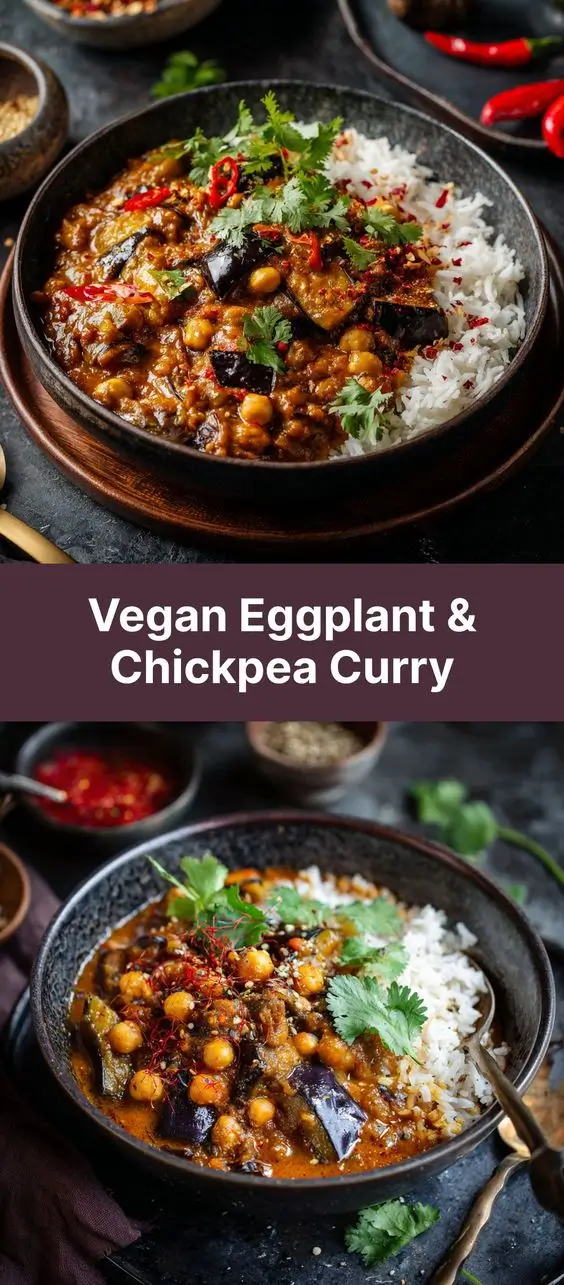
Vegan Eggplant & Chickpea Curry: A Hearty, Flavorful Plant-Based Delight
Introduction
Immerse yourself in the rich, aromatic world of plant-based comfort food with this delectable Vegan Eggplant & Chickpea Curry. A harmonious blend of tender eggplant, protein-packed chickpeas, and a fragrant spiced tomato sauce, this curry is more than just a meal—it’s a celebration of bold flavors, wholesome ingredients, and culinary tradition. Perfect for weeknight dinners or weekend feasts, this dish is satisfying, nutritious, and deeply comforting. Whether you’re a long-time vegan, flexitarian, or simply looking to incorporate more plant-based meals into your diet, this curry will quickly become a staple in your kitchen.
The History
Curry, as a culinary concept, has deep roots across South Asia, particularly in India, where regional variations have evolved over centuries based on local ingredients, climate, and cultural influences. The word “curry” itself comes from the Tamil word kari, meaning ‘sauce’ or ‘relish for rice.’ While the British colonial era popularized a generalized version of ‘curry’ in the Western world, traditional Indian cooking features an array of complex dishes using spices, vegetables, legumes, and sometimes meat or dairy.
Eggplant (also known as brinjal or aubergine) has been cultivated in India for thousands of years and is a key ingredient in many regional curries, such as Bengali begun bhaja, Maharashtrian vangi bhat, and Tamil kathirikai sambar. Chickpeas, another ancient legume native to the Mediterranean and Middle East, made their way into Indian cuisine early on and are now essential in dishes like chana masala and various dals.
This Vegan Eggplant & Chickpea Curry draws inspiration from these traditions—marrying the velvety texture of cooked eggplant with the hearty bite of chickpeas in a spiced coconut-tomato gravy. It reflects the fusion of Indian spice techniques with modern plant-based preferences, making it accessible and nourishing for today’s global home cooks.
Ingredients Breakdown
Every ingredient in this recipe plays a vital role in building layers of flavor, texture, and nutrition. Let’s dive into what goes into this vibrant curry:
- Eggplant – Also called aubergine, eggplant adds a meaty, spongy texture that absorbs the curry sauce beautifully. When cooked properly, it becomes creamy and luxurious. Choose firm, glossy eggplants without soft spots. Salting them before cooking helps reduce bitterness and prevents excess oil absorption.
- Chickpeas – Canned or cooked from dry, chickpeas bring plant-based protein and fiber. They hold their shape well during simmering and add a nutty, earthy flavor.
- Onion – Yellow or red onions form the aromatic base of the curry, caramelizing slightly to add sweetness and depth.
- Garlic & Ginger – Freshly minced garlic and grated ginger provide pungency and warmth, essential for authentic curry flavor.
- Tomatoes – Diced canned tomatoes (preferably fire-roasted) offer acidity and body. Fresh tomatoes can be used when in season.
- Coconut Milk – Full-fat coconut milk lends creaminess and balances the spices. Light coconut milk can be substituted for a thinner consistency.
- Olive Oil or Coconut Oil – Used for sautéing, both oils add richness. Coconut oil complements the tropical notes of the dish.
- Spices – Ground cumin, coriander, turmeric, smoked paprika, and garam masala create the signature flavor profile. Turmeric gives the curry its golden hue and anti-inflammatory benefits; garam masala adds warmth and complexity.
- Fresh Herbs – Cilantro (coriander leaves) adds a bright, citrusy finish. Thai basil or parsley can be used as alternatives.
- Lime Juice – A splash at the end enhances freshness and balances the richness.
- Vegetable Broth – Helps adjust the consistency and deepen the savory notes.
- Optional Add-ins – Spinach, bell peppers, zucchini, or sweet potatoes can be added for extra nutrients and color.
Step-by-Step Recipe
Follow these detailed steps to create a perfectly balanced Vegan Eggplant & Chickpea Curry:
- Prepare the Eggplant: Cut 1 large eggplant (about 1 lb / 450g) into 1-inch cubes. Place in a colander, sprinkle with salt (about 1 tsp), and let sit for 20–30 minutes. This draws out moisture and reduces bitterness. Rinse and pat dry.
- Sauté the Eggplant: Heat 2 tbsp olive oil in a large pot or Dutch oven over medium heat. Add eggplant in batches and cook until golden brown on all sides, about 8–10 minutes per batch. Remove and set aside.
- Build the Aromatics: In the same pot, add another tablespoon of oil if needed. Sauté 1 diced onion for 5–7 minutes until translucent. Add 3 cloves minced garlic and 1 tbsp grated ginger; cook for 1 minute until fragrant.
- Bloom the Spices: Stir in 1 tsp ground cumin, 1 tsp ground coriander, 1/2 tsp turmeric, 1/2 tsp smoked paprika, and 1/2 tsp salt. Cook for 30 seconds to release their essential oils—be careful not to burn.
- Add Tomatoes: Pour in 1 can (14 oz / 400g) diced tomatoes with juices. Simmer for 5–7 minutes, stirring occasionally, until the mixture thickens slightly.
- Incorporate Liquids: Stir in 1 can (13.5 oz / 400ml) full-fat coconut milk and 1/2 cup vegetable broth. Bring to a gentle simmer.
- Add Chickpeas and Eggplant: Drain and rinse 2 cans (15 oz / 425g each) chickpeas. Add them along with the sautéed eggplant to the pot. Stir gently to combine.
- Simmer: Reduce heat to low, cover, and simmer for 20–25 minutes, allowing the flavors to meld and the eggplant to become tender. Stir occasionally.
- Finish with Garam Masala and Lime: Stir in 1–2 tsp garam masala (to taste) and the juice of half a lime. Taste and adjust seasoning with salt, pepper, or more spice.
- Garnish and Serve: Sprinkle generously with chopped fresh cilantro. For extra richness, swirl in a spoonful of coconut yogurt or cashew cream.
Tips
- Don’t Skip Salting the Eggplant: While modern eggplants are less bitter, salting improves texture by reducing sponginess and preventing excessive oil absorption.
- Cook Eggplant in Batches: Overcrowding leads to steaming instead of browning. Take time to sear each batch for deeper flavor.
- Bloom Spices Properly: Always cook ground spices in oil for 20–30 seconds to unlock their full aroma and flavor.
- Use Full-Fat Coconut Milk: It provides the richest texture. Shake the can well before opening to mix the cream and liquid.
- Adjust Consistency: If the curry is too thick, add more vegetable broth. If too thin, simmer uncovered for a few extra minutes.
- Make Ahead Friendly: This curry tastes even better the next day as the flavors continue to develop. Store in the fridge for up to 5 days or freeze for up to 3 months.
- Serve with Absorbent Sides: Pair with basmati rice, quinoa, naan bread, or roti to soak up every drop of the delicious sauce.
Variations and Customizations
This recipe is highly adaptable. Here are some creative ways to switch it up:
- Thai-Inspired Version: Replace garam masala with red or green curry paste, use Thai eggplant if available, and add lemongrass, kaffir lime leaves, and bamboo shoots.
- Mediterranean Twist: Omit garam masala and cumin; instead, use oregano, thyme, and olives. Add roasted red peppers and serve with couscous.
- Extra Protein: Add cubed tofu, tempeh, or lentils during the simmering stage.
- Low-Fat Option: Skip pre-sautéing the eggplant and roast it in the oven with minimal oil. Use light coconut milk or replace part with broth.
- Spicier Kick: Add fresh chopped green chilies, serrano peppers, or a pinch of cayenne during sautéing.
- Root Vegetable Addition: Include diced carrots, sweet potatoes, or butternut squash for a heartier winter version.
- Green Power Boost: Stir in a couple of handfuls of baby spinach or kale during the last 5 minutes of cooking.
- Oil-Free Version: Sauté using water or vegetable broth instead of oil, and bake the eggplant at 400°F (200°C) for 25 minutes.
Health Considerations and Nutritional Value
This Vegan Eggplant & Chickpea Curry isn’t just delicious—it’s packed with health-promoting nutrients:
- Fiber-Rich: Both eggplant and chickpeas are excellent sources of dietary fiber, supporting digestive health, blood sugar regulation, and satiety.
- Plant-Based Protein: Chickpeas deliver about 15g of protein per cup, making this dish satisfying and muscle-supportive.
- Antioxidant Powerhouse: Eggplant skin contains nasunin, an antioxidant that supports brain health. Tomatoes provide lycopene, especially when cooked, which is linked to reduced risk of heart disease and certain cancers.
- Anti-Inflammatory Spices: Turmeric contains curcumin, a potent anti-inflammatory compound. Pairing it with black pepper (optional addition) enhances absorption.
- Healthy Fats: Coconut milk provides medium-chain triglycerides (MCTs), which are metabolized differently and may support energy and metabolism.
- Low Glycemic Index: The combination of fiber, protein, and healthy fats makes this curry blood sugar-friendly, ideal for diabetics or those managing insulin levels.
- Allergen-Friendly: Naturally gluten-free, soy-free (if using no soy-based broth), and nut-free (unless garnished with cashews).
Nutritional Estimate (per serving, serves 6):
Calories: ~320 | Protein: 11g | Fat: 18g (mostly saturated from coconut, but beneficial in moderation) | Carbohydrates: 32g | Fiber: 9g | Sugar: 8g (naturally occurring) | Sodium: ~600mg (adjustable by using low-sodium broth and tomatoes)
Ingredients
- 1 large eggplant (about 1 lb / 450g), cubed
- 1 tsp salt (for sweating eggplant)
- 3 tbsp olive oil or coconut oil, divided
- 1 large yellow onion, finely diced
- 3 cloves garlic, minced
- 1 tbsp fresh ginger, grated
- 1 tsp ground cumin
- 1 tsp ground coriander
- 1/2 tsp ground turmeric
- 1/2 tsp smoked paprika
- 1/2 tsp salt (plus more to taste)
- 1 can (14 oz / 400g) diced tomatoes (fire-roasted preferred)
- 1 can (13.5 oz / 400ml) full-fat coconut milk
- 1/2 cup vegetable broth (low sodium if preferred)
- 2 cans (15 oz / 425g each) chickpeas, drained and rinsed
- 1–2 tsp garam masala (to taste)
- Juice of 1/2 lime
- 1/4 cup fresh cilantro, chopped
- Cooked basmati rice, quinoa, or naan (for serving)
Directions
- Place cubed eggplant in a colander, sprinkle with 1 tsp salt, and let sit for 20–30 minutes. Rinse well and pat dry with a clean towel.
- Heat 2 tbsp oil in a large heavy-bottomed pot over medium heat. Working in batches, sauté eggplant until golden brown on all sides, about 8–10 minutes per batch. Transfer to a plate and set aside.
- Reduce heat to medium-low. Add remaining 1 tbsp oil to the pot. Sauté onion for 5–7 minutes until soft and translucent.
- Add garlic and ginger; cook for 1 minute until fragrant.
- Stir in cumin, coriander, turmeric, smoked paprika, and 1/2 tsp salt. Cook for 30 seconds, stirring constantly.
- Pour in diced tomatoes with their juices. Simmer for 5–7 minutes, stirring occasionally, until the mixture reduces slightly.
- Stir in coconut milk and vegetable broth. Bring to a gentle simmer.
- Add cooked eggplant and chickpeas. Stir gently to combine.
- Cover and simmer on low heat for 20–25 minutes, stirring occasionally, until eggplant is very tender and flavors are well blended.
- Stir in garam masala and lime juice. Taste and adjust seasoning—add more salt, spice, or acidity as needed.
- Remove from heat. Garnish with fresh cilantro.
- Serve hot over basmati rice or with warm naan bread. Optional: top with a dollop of coconut yogurt or a sprinkle of toasted coconut flakes.
FAQ
Can I use frozen eggplant?
Yes, but fresh is best. If using frozen, thaw and drain excess water before adding to the curry.
Is this curry spicy?
Not inherently. It has warmth from spices but isn’t hot. Add chili flakes, fresh chilies, or cayenne for heat.
Can I make this in a slow cooker?
Absolutely! After sautéing eggplant, onions, garlic, and spices, transfer everything to a slow cooker. Add remaining ingredients and cook on low for 6–8 hours or high for 3–4 hours.
How do I store leftovers?
Cool completely and store in an airtight container in the refrigerator for up to 5 days. Reheat on the stove with a splash of water or broth.
Can I freeze this curry?
Yes. Freeze in portion-sized containers for up to 3 months. Thaw overnight in the fridge and reheat gently.
What can I substitute for coconut milk?
Cashew cream, almond milk (thinner), or oat milk (creamier versions) work, though the flavor and richness will vary.
Why did my curry separate?
Coconut milk can sometimes separate when heated too quickly or if acidic ingredients (like tomatoes) are present. Stirring frequently and maintaining a gentle simmer helps prevent this. If separation occurs, whisk in a bit of broth to re-emulsify.
Can I use dried chickpeas instead of canned?
Yes. Soak 1 cup dried chickpeas overnight, then boil until tender (about 60–90 minutes) before using. You’ll need about 3 cups cooked chickpeas.
Summary
A rich, creamy, and aromatic Vegan Eggplant & Chickpea Curry that combines tender eggplant, hearty chickpeas, and a spiced coconut-tomato sauce for a satisfying plant-based meal.
This nutritious, fiber-rich dish is easy to customize, stores well, and delivers bold flavors inspired by Indian cuisine with a modern, wholesome twist.