Vegan Pad Thai: A Flavorful Plant-Based Twist on a Classic Thai Dish
Introduction
Pad Thai is one of the most beloved Thai dishes around the world, known for its perfect balance of sweet, sour, salty, and umami flavors. Traditionally made with rice noodles, tamarind paste, fish sauce, eggs, and shrimp or chicken, this iconic street food dish has won hearts across continents. But in today’s plant-forward culinary landscape, Vegan Pad Thai offers a compassionate, cruelty-free alternative without sacrificing any of the bold tastes and satisfying textures that make the original so irresistible.
This vegan version swaps out animal products while amplifying the richness of plant-based ingredients like tofu, fresh vegetables, and a savory-sweet sauce crafted from natural, pantry-friendly components. Whether you’re fully plant-based, exploring meatless meals, or simply looking to enjoy a lighter, healthier take on an Asian classic, Vegan Pad Thai delivers on every front—flavor, nutrition, and ease of preparation. Let’s dive into the vibrant world of this modern twist on a timeless favorite.
The History
Pad Thai, as we know it today, was not always a staple of Thai cuisine. Its origins trace back to the 1930s and 1940s during the rule of Prime Minister Plaek Phibunsongkhram, who sought to modernize Thailand and promote national unity through cultural reforms—including food. At the time, Thailand (then Siam) faced economic challenges and rising foreign influence, particularly from Chinese immigrants whose noodle dishes were gaining popularity.
To reduce dependence on imported rice and encourage wheat consumption, the government launched a campaign promoting stir-fried rice noodles as a national dish. The result was Pad Thai—a fusion creation inspired by Chinese stir-fry techniques but adapted with local Thai ingredients such as tamarind, palm sugar, dried shrimp, and fish sauce. It was even given patriotic names like “Thai-style fried noodles” to instill national pride.
Street vendors were encouraged to sell Pad Thai, often with a side of crushed peanuts and lime, helping it become synonymous with Thai street food culture. Over time, it gained international fame, especially after Thai governments promoted it globally through initiatives like “Global Thai,” which opened Thai restaurants worldwide.
The vegan adaptation of Pad Thai emerged more recently, responding to growing demand for plant-based options. While traditional versions rely on fish sauce and eggs, modern chefs and home cooks have reimagined the dish using soy sauce or tamari, liquid aminos, and tofu to maintain authenticity in flavor while aligning with ethical and dietary preferences. Today, Vegan Pad Thai stands as a testament to how traditional dishes can evolve—honoring their roots while embracing inclusivity and sustainability.
Ingredients Breakdown
Creating authentic-tasting Vegan Pad Thai hinges on using the right combination of ingredients that deliver complexity, depth, and balance. Here’s a detailed breakdown of each component and its role in the final dish:
- Rice Noodles (Sen Lek): Flat, thin rice noodles are essential—they’re gluten-free and provide the chewy texture characteristic of Pad Thai. Soaking them properly ensures they don’t turn mushy when stir-fried.
- Firm or Extra-Firm Tofu: Pressed and cubed tofu acts as the protein base. When pan-fried until golden, it develops a slightly crispy exterior while staying tender inside, mimicking the mouthfeel of meat or seafood.
- Tamarind Paste: This is the soul of Pad Thai. Made from the pulp of the tamarind fruit, it provides the signature tangy, slightly fruity sourness. If unavailable, substitutes like lime juice + brown sugar can work, but tamarind is irreplaceable for authenticity.
- Palm Sugar: Adds caramel-like sweetness with floral notes. Brown sugar is a common substitute, though less complex in flavor.
- Soy Sauce or Tamari: Provides saltiness and umami. Tamari is preferred for gluten-free versions and has a richer taste than regular soy sauce.
- Maple Syrup or Coconut Aminos (optional): Used to fine-tune sweetness or replace sugar if needed, especially in refined sugar-free diets.
- Garlic and Shallots: Aromatics that build flavor foundation. Minced garlic adds pungency, while shallots bring mild onion sweetness.
- Vegetable Oil: High smoke point oils like peanut, avocado, or sunflower oil are ideal for high-heat stir-frying without burning.
- Bean Sprouts: Raw mung bean sprouts add crunch and freshness. They’re typically added at the end or served on top.
- Green Onions (Scallions): Provide a sharp, mild onion bite and bright color contrast when sliced diagonally.
- Lime Wedges: Squeezed over the finished dish to enhance brightness and cut through richness.
- Crushed Peanuts: Roasted, unsalted peanuts offer nuttiness and texture. Cashews can be used for variation or allergy considerations.
- Chili Flakes or Fresh Red Chilies: For heat lovers, these add a spicy kick. Adjust according to tolerance.
- Nutritional Yeast (optional): Some vegans use this for a cheesy, umami boost, though not traditional.
- Vegetables (carrots, bell peppers, broccoli, bok choy): Optional additions for color, nutrients, and texture. Julienned vegetables integrate well without overpowering the dish.
Step-by-Step Recipe
- Prepare the Rice Noodles: Soak flat rice noodles in warm (not boiling) water for 8–10 minutes, or according to package instructions, until pliable but still slightly firm. Drain and set aside. Do not overcook at this stage, as they will continue cooking during stir-frying.
- Press and Prepare the Tofu: Remove tofu from packaging, drain liquid, and wrap in clean kitchen towels or paper towels. Place under a heavy object (like a skillet or books) for 15–20 minutes to press out excess moisture. Once pressed, cut into small cubes.
- Cook the Tofu: Heat 1 tablespoon of oil in a large wok or non-stick skillet over medium-high heat. Add tofu cubes and cook for 5–7 minutes, turning occasionally, until golden brown on all sides. Remove and set aside.
- Make the Sauce: In a mixing bowl, whisk together:
- 3 tablespoons tamarind paste (dissolved in 2 tablespoons warm water)
- 2 tablespoons soy sauce or tamari
- 1–2 tablespoons palm sugar or brown sugar (adjust to taste)
- 1 tablespoon lime juice
- 1 teaspoon chili flakes (optional)
Set aside.
- Stir-Fry Aromatics: In the same wok, add another tablespoon of oil. Sauté 2 minced garlic cloves and 1 chopped shallot (or 1/2 small onion) for 1–2 minutes until fragrant and translucent.
- Add Noodles and Sauce: Add drained rice noodles to the wok. Pour the prepared sauce over the noodles and toss gently using tongs or two spatulas to coat evenly. Cook for 2–3 minutes, allowing the noodles to absorb the sauce and finish softening.
- Incorporate Tofu and Vegetables: Return the cooked tofu to the wok. Add julienned carrots, sliced bell peppers, or other quick-cooking vegetables. Stir-fry for another 2–3 minutes until vegetables are tender-crisp.
- Add Eggs (Optional Vegan Version): For a traditional egg element without animal products, scramble some chickpea flour mixed with water and turmeric (1/4 cup chickpea flour + 1/4 cup water + pinch turmeric), pour into the wok, and scramble quickly before folding into the noodles. Alternatively, skip entirely for strict vegan simplicity.
- Finish with Fresh Ingredients: Turn off heat. Fold in half of the bean sprouts, sliced green onions, and a squeeze of fresh lime juice. Toss gently to combine.
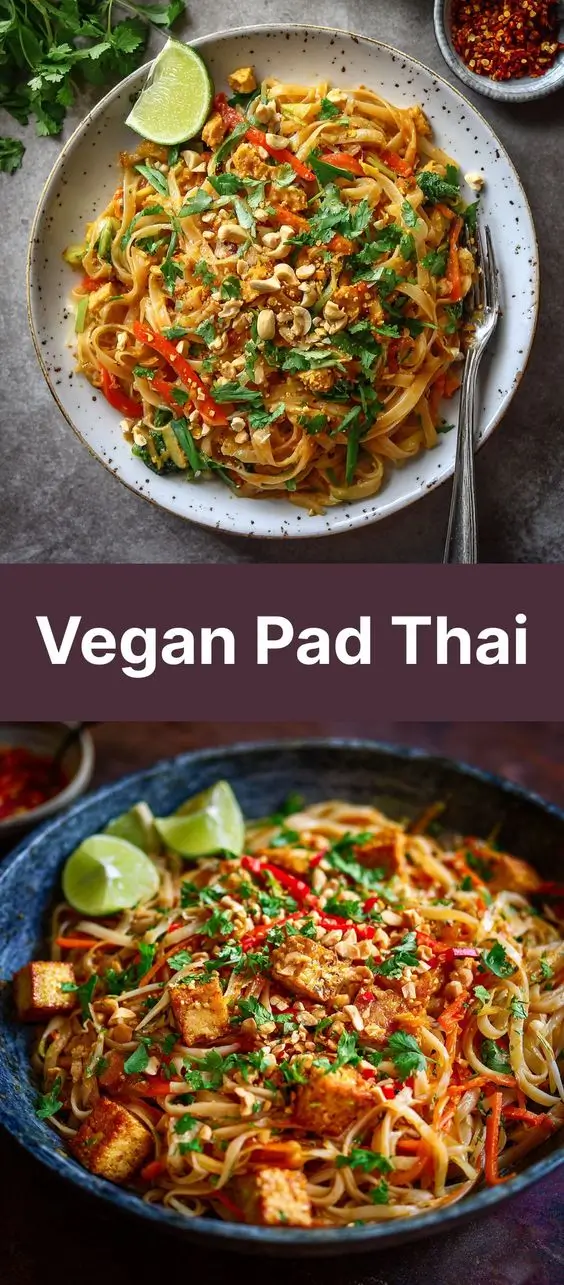
- Serve Immediately: Plate the Vegan Pad Thai hot, garnished generously with remaining bean sprouts, crushed roasted peanuts, additional lime wedges, red chili slices, and a sprinkle of chopped cilantro if desired.
Tips
- Prep Ahead: Chop all ingredients and make the sauce before starting to cook. Stir-frying happens quickly, so having everything ready (“mise en place”) is crucial.
- Don’t Over-Soak Noodles: Over-hydrated noodles turn gummy. Test one strand—it should bend easily but still have a slight resistance.
- High Heat is Key: Use the highest heat your stove allows to achieve the smoky “wok hei” flavor, but monitor closely to prevent burning.
- Use a Wok or Large Skillet: A carbon steel wok distributes heat best, but a wide non-stick pan works too.
- Balance the Flavors: Taste your sauce before adding—adjust tamarind (sour), sugar (sweet), soy sauce (salty), and chili (spicy) until balanced.
- Avoid Crowding the Pan: Cook in batches if necessary to prevent steaming instead of searing.
- Keep Bean Sprouts Raw: Adding them at the end preserves their crunch and freshness.
- Garnish Generously: Peanuts, lime, herbs, and chili make each bite dynamic—don’t skimp!
- Serve Immediately: Pad Thai doesn’t reheat perfectly; texture changes upon sitting. Best enjoyed fresh.
- Oil Amount: Use enough oil to prevent sticking but not so much that the dish becomes greasy. Two tablespoons total is usually sufficient.
Variations and Customizations
Vegan Pad Thai is incredibly versatile and welcomes creative tweaks based on dietary needs, flavor preferences, or seasonal availability. Here are several popular variations:
- Gluten-Free Pad Thai: Ensure tamari (gluten-free soy sauce) is used instead of regular soy sauce. Confirm rice noodles are certified gluten-free.
- Low-Sugar Version: Replace palm sugar with monk fruit syrup or reduce sweetener significantly. Rely more on natural vegetable sweetness.
- Extra Protein Boost: Add edamame, tempeh, seitan, or baked marinated chickpeas for added protein.
- Nut-Free Option: Skip peanuts and use toasted sunflower or pumpkin seeds for crunch. Serve with a side of chili-lime seasoning for garnish.
- Spicy Sriracha Pad Thai: Mix in sriracha or sambal oelek for extra heat. Drizzle more on top before serving.
- Coconut Milk Infusion: Add a splash of light coconut milk to the sauce for creaminess and tropical flair.
- Curried Vegan Pad Thai: Stir in 1 teaspoon red or yellow curry paste during sautéing for an aromatic twist.
- Spring Roll Style: Serve cold or room temperature with lettuce cups, making it perfect for summer picnics or low-cook days.
- Colorful Veggie-Packed: Include purple cabbage, zucchini ribbons, snap peas, baby corn, or mushrooms for visual appeal and nutrition.
- Raw Pad Thai (Zoodle Version): Use spiralized zucchini or sweet potato noodles soaked briefly in sauce for a raw, no-cook version.
- Smoked Tofu Alternative: Swap regular tofu for store-bought smoked tofu for deeper flavor without extra prep.
- Sea Vegetable Touch: Add crumbled nori or dulse flakes to mimic the oceanic essence lost by omitting fish sauce.
Health Considerations and Nutritional Value
Vegan Pad Thai can be a nutritious, well-rounded meal when prepared thoughtfully. Here’s a look at its health profile:
Nutritional Highlights:
- Low in Saturated Fat: Especially when using minimal oil and avoiding coconut cream.
- Rich in Plant-Based Protein: Tofu contributes about 8–10g of protein per 3-ounce serving.
- Good Source of Fiber: From rice noodles (moderate), vegetables, and bean sprouts, aiding digestion and satiety.
- Antioxidant-Rich: Garlic, chilies, lime, and colorful veggies provide vitamins C, E, and various phytonutrients.
- Gluten-Free Potential: Easily adaptable for those avoiding gluten with proper ingredient choices.
- No Cholesterol: Naturally cholesterol-free due to absence of animal products.
Considerations:
- Sodium Content: Soy sauce and store-bought sauces can be high in sodium. Opt for reduced-sodium versions or dilute with water.
- Sugar Levels: Traditional recipes use significant palm or brown sugar. To lower glycemic load, reduce sugar or use alternatives like date syrup in moderation.
- Portion Control: Rice noodles are carbohydrate-dense. Balance with plenty of vegetables and moderate portions, especially for blood sugar management.
- Allergens: Common allergens include soy (tofu, soy sauce), peanuts, and sometimes tree nuts. Always label accordingly when serving others.
Estimated Nutritional Value (per serving, approx. 1.5 cups):
| Calories | Approx. 400–500 kcal |
| Protein | 12–15g |
| Carbohydrates | 60–70g |
| Dietary Fiber | 4–6g |
| Fat | 10–14g (mostly unsaturated) |
| Sugars | 10–15g (varies with sweetener amount) |
| Sodium | 600–900mg (depends on soy sauce) |
Note: Values vary widely depending on specific ingredients and portion size. Using whole food ingredients and minimizing processed sauces enhances overall nutritional quality.
Ingredients
- 8 oz (225g) dried flat rice noodles (approx. 1/4 inch wide)
- 1 block (14 oz) extra-firm tofu, pressed and cubed
- 3 tbsp tamarind paste (mixed with 2 tbsp warm water)
- 2 tbsp soy sauce or tamari (use gluten-free if needed)
- 1–2 tbsp palm sugar or brown sugar (to taste)
- 1 tbsp lime juice (about 1/2 lime)
- 2 cloves garlic, minced
- 1 medium shallot or 1/2 small onion, thinly sliced
- 2 tbsp neutral oil (peanut, avocado, or sunflower)
- 1 cup mung bean sprouts, divided
- 2 green onions, sliced diagonally
- 1 small carrot, julienned (optional)
- 1/2 red bell pepper, thinly sliced (optional)
- 1/4 tsp chili flakes (adjust to taste)
- 1/4 cup crushed roasted peanuts (unsalted preferred)
- Lime wedges, for serving
- Fresh cilantro, for garnish (optional)
- Red chili slices, for heat (optional)
Directions
- In a large bowl, cover rice noodles with warm water and soak for 8–10 minutes until flexible but still slightly firm. Drain and set aside.
- Press tofu for 15–20 minutes, then cut into 1-inch cubes.
- Heat 1 tbsp oil in a wok or large skillet over medium-high heat. Add tofu and cook 5–7 minutes until golden and crisp on all sides. Remove and set aside.
- In a small bowl, prepare the sauce: mix tamarind paste (diluted in water), soy sauce, sugar, lime juice, and chili flakes. Stir until sugar dissolves. Set aside.
- Add remaining 1 tbsp oil to the wok. Sauté garlic and shallot for 1–2 minutes until fragrant.
- Add drained noodles to the wok. Pour sauce over and toss continuously for 2–3 minutes until well coated and heated through.
- Return tofu to the wok. Add carrots, bell peppers, and any other vegetables. Stir-fry 2–3 minutes until tender-crisp.
- Remove from heat. Fold in half the bean sprouts, green onions, and a squeeze of lime juice.
- Plate immediately. Top with remaining bean sprouts, crushed peanuts, cilantro, chili slices, and lime wedges.
- Serve hot and enjoy!
FAQ
- Can I make Vegan Pad Thai ahead of time?
- Yes, but it’s best fresh. You can prep ingredients (chop veggies, press tofu, make sauce) up to a day in advance. Assemble and cook just before serving for optimal texture.
- What can I use instead of tamarind?
- While tamarind is ideal, you can substitute with a mix of 1 tbsp lime juice + 1 tsp brown sugar + 1 tsp apple cider vinegar. However, the unique tangy-sweet depth of tamarind will be somewhat lost.
- Is Pad Thai naturally vegan?
- No. Traditional Pad Thai contains fish sauce and eggs. Always confirm ingredients when ordering out.
- How do I store leftovers?
- Store in an airtight container in the refrigerator for up to 3 days. Reheat gently in a skillet with a splash of water to loosen noodles. Microwave may make them rubbery.
- Can I freeze Vegan Pad Thai?
- Not recommended. Rice noodles tend to become mushy and lose texture after freezing and thawing.
- Why are my noodles sticky or clumpy?
- This happens if noodles are overcooked or not tossed frequently during stir-frying. Rinse soaked noodles lightly with cool water to remove surface starch before cooking.
- Is Vegan Pad Thai healthy?
- It can be! Focus on reducing sugar and sodium, increasing vegetables, and using heart-healthy oils. Portion control also matters for balanced eating.
- Can I use different noodles?
- For authenticity, stick to rice noodles. However, soba (buckwheat) or kelp noodles can be experimented with, though flavors and textures will differ.
- How do I make it spicier?
- Add more chili flakes, fresh bird’s eye chilies, or serve with sriracha and chili oil on the side.
- Can I bake the tofu instead of frying?
- Absolutely! Bake at 400°F (200°C) for 25–30 minutes, flipping halfway, for a healthier, oil-reduced option.
Summary
Vegan Pad Thai is a vibrant, flavorful, and wholesome plant-based reinterpretation of Thailand’s iconic stir-fried noodle dish, combining chewy rice noodles, tangy-sweet tamarind sauce, crisp vegetables, and golden tofu.
Easy to customize, rich in flavor, and perfect for weeknight dinners or entertaining, this dish proves that compassionate cooking can be both delicious and deeply satisfying.