Introduction
Welcome to a hearty, wholesome, and entirely plant-based take on a classic comfort food favorite: Vegan Spaghetti & Meatless Meatballs in Marinara. This dish captures all the warmth, flavor, and satisfaction of traditional spaghetti and meatballs—without any animal products. Whether you’re following a vegan lifestyle, exploring plant-based eating for health or environmental reasons, or simply looking for a delicious meal that everyone can enjoy, this recipe is crafted to delight your taste buds while nourishing your body.
The History
Spaghetti and meatballs has long been celebrated as an iconic Italian-American dish, though its roots are more complex than they appear. While pasta is undeniably Italian, the combination of spaghetti with large, round meatballs is actually believed to have been popularized in the United States by Italian immigrants in the late 19th and early 20th centuries. In Italy, meatballs (polpette) are typically smaller and served as a standalone course or with different types of pasta, often without tomato sauce.
The rise of canned tomatoes, ground beef availability, and home ovens in American kitchens allowed families to create rich, simmered marinara sauces and baked meatballs—eventually merging into the beloved one-dish meal we know today. As dietary preferences evolved and plant-based eating gained momentum, especially in the 21st century, innovative cooks began reimagining the “meatball” using legumes, grains, mushrooms, and plant proteins. The result? A cruelty-free, eco-friendly version that honors tradition while embracing modern values of sustainability and wellness. Today’s Vegan Spaghetti & Meatless Meatballs in Marinara continues this culinary evolution, offering a compassionate twist on a timeless classic.
Ingredients Breakdown
Every great dish starts with quality ingredients, and this vegan version is no exception. Each component is carefully selected not only for flavor but also for texture, nutrition, and how well it holds up during cooking.
- Soy-based or Lentil-Based Meatless Ground: Provides the base for the meatless meatballs, offering a chewy, savory texture similar to ground beef. Brands like Beyond Meat, Impossible Ground, or homemade lentil-walnut mixtures work beautifully.
- Breadcrumbs (Gluten-Free Option Available): Acts as a binder to hold the meatballs together. Use regular whole wheat breadcrumbs or certified gluten-free oats processed into crumbs for sensitivity.
- Flaxseed Meal + Water: Serves as a vegan egg substitute. When mixed with water, flaxseeds form a gel-like consistency that binds ingredients just like eggs.
- Onion and Garlic: Essential aromatics that build depth of flavor. Finely minced or grated for even distribution.
- Nutritional Yeast: Adds a cheesy, umami richness without dairy. Also boosts B-vitamin content.
- Dried Herbs (Oregano, Basil, Thyme): Classic Italian seasoning profile enhances both meatballs and sauce.
- Tomato Paste: Concentrated tomato flavor used in both meatballs and marinara to deepen the savoriness.
- Fresh Parsley: Brightens the mixture with a fresh herbal note and adds color contrast.
- Olive Oil: Used for sautéing and adding moisture; choose extra virgin for best flavor.
- Marinara Sauce: Can be store-bought organic or homemade from crushed San Marzano tomatoes, simmered with garlic, herbs, and a touch of sweetness (like carrot or a pinch of sugar).
- Spaghetti: Traditional durum wheat pasta works, but use brown rice, chickpea, or lentil spaghetti for added protein and fiber. Always check labels for vegan certification if strict.
- Salt & Black Pepper: For seasoning throughout—don’t underestimate their power!
- Optional Add-ins: Grated carrots or mushrooms in the meatballs add moisture and earthiness; red pepper flakes bring heat; capers or olives offer briny complexity.
Step-by-Step Recipe
- Prepare the Flax Egg: In a small bowl, combine 1 tablespoon ground flaxseed with 3 tablespoons warm water. Stir and let sit for 10–15 minutes until thickened and gelatinous.
- Sauté Aromatics: Heat 1 tablespoon olive oil in a skillet over medium heat. Add ½ finely diced onion and 3 minced garlic cloves. Cook until soft and fragrant (about 5 minutes), then set aside to cool slightly.
- Mix Meatball Ingredients: In a large mixing bowl, combine 1 cup meatless ground (or cooked lentils/mushroom mixture), ¾ cup breadcrumbs, the prepared flax egg, sautéed onions and garlic, 2 tablespoons nutritional yeast, 1 tablespoon tomato paste, 1 teaspoon dried oregano, ½ teaspoon dried basil, ¼ cup chopped fresh parsley, ½ teaspoon salt, and ¼ teaspoon black pepper. Mix thoroughly with hands or a spoon until evenly combined.
- Form the Meatballs: Scoop out about 1½ tablespoons of mixture per meatball. Roll gently between palms into smooth, compact balls (you should get around 16–18). Place on a parchment-lined tray.
- Chill (Optional but Recommended): Refrigerate meatballs for 20–30 minutes to help them firm up and reduce crumbling during cooking.
- Cook the Meatballs: Preheat oven to 375°F (190°C). Lightly brush or spray meatballs with olive oil. Bake for 20–25 minutes, flipping halfway through, until golden brown and slightly crisp on the outside. Alternatively, pan-sear in olive oil over medium heat for 8–10 minutes, turning frequently.
- Prepare the Marinara: While meatballs bake, heat 1 tablespoon olive oil in a saucepan. Add 1 minced garlic clove and cook for 30 seconds. Stir in 2 cups high-quality marinara sauce (homemade or store-bought). Add ½ teaspoon dried basil, ¼ teaspoon oregano, a pinch of red pepper flakes (optional), and a splash of water if needed. Simmer uncovered for 10–15 minutes to meld flavors.
- Combine or Serve Separately: You can gently place baked meatballs into the simmering sauce and let them soak for 5–10 minutes to absorb flavor—or serve them nestled atop spaghetti with sauce ladled over.
- Cook the Spaghetti: Bring a large pot of salted water to a boil. Add spaghetti and cook according to package instructions until al dente. Drain and toss with a drizzle of olive oil to prevent sticking.
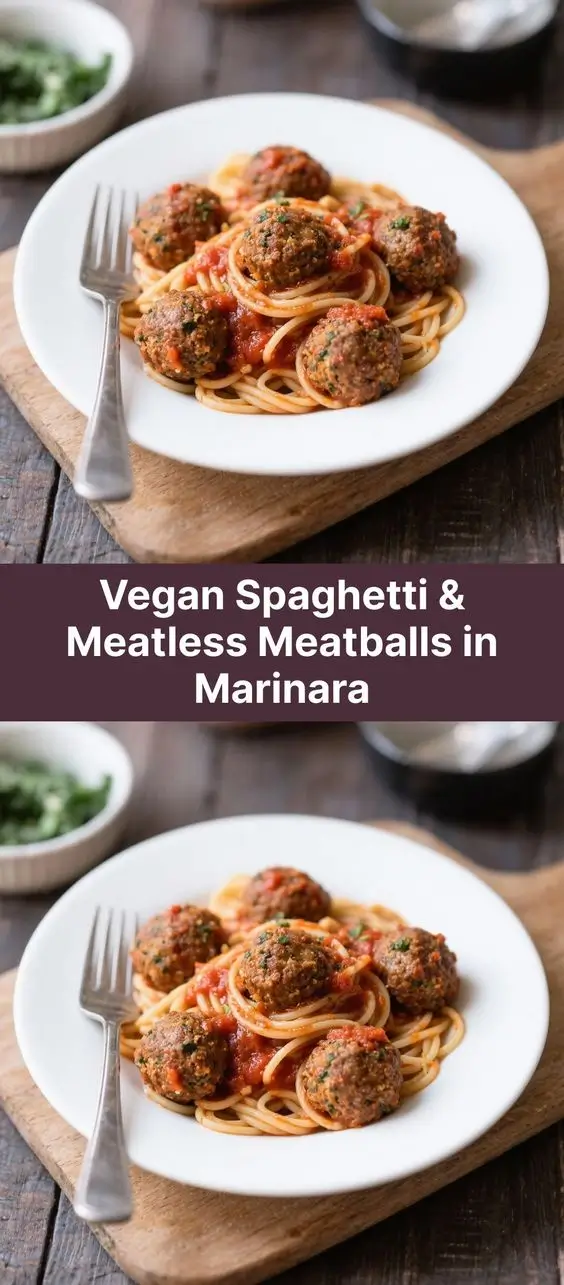
- Assemble: Plate a portion of spaghetti, top with 4–5 meatless meatballs, and generously spoon marinara sauce over everything. Garnish with fresh basil, parsley, or vegan Parmesan cheese if desired.
Tips
- Don’t Overmix: When combining meatball ingredients, mix just until incorporated. Overworking can make them dense.
- Uniform Size Matters: Keep meatballs consistent in size so they cook evenly.
- Baking vs. Frying: Baking yields a healthier, firmer texture with less oil; pan-frying gives a richer crust but requires more attention.
- Sauce Absorption: Letting meatballs rest in warm sauce before serving allows them to absorb flavor and stay moist.
- Make Ahead: Both meatballs and marinara can be made 2–3 days in advance and stored separately in the fridge. Reheat gently when ready to serve.
- Freezing Friendly: Fully cooked meatballs freeze well for up to 3 months. Cool completely, then store in an airtight container or freezer bag. Thaw overnight in the fridge before reheating in sauce.
- Al Dente Pasta: Undercook spaghetti by 1 minute if planning to finish it in the sauce—this prevents mushiness.
- Use Parchment Paper: Prevents sticking and makes cleanup easier when baking meatballs.
- Season in Layers: Taste and adjust seasoning at multiple stages—after sautéing aromatics, in the meatball mix, and in the sauce—for balanced flavor.
- Add Umami Boosters: A dash of soy sauce, miso paste, or smoked paprika in the meatball mix deepens savory notes.
Variations and Customizations
This recipe is highly adaptable based on dietary needs, ingredient availability, and personal taste. Here are some creative ways to switch it up:
- Gluten-Free Version: Use gluten-free breadcrumbs or rolled oats pulsed into crumbs. Pair with gluten-free spaghetti made from rice, quinoa, or legumes.
- Legume-Based Meatballs: Replace commercial meatless ground with mashed cooked lentils, black beans, or chickpeas. Add extra breadcrumbs if too wet.
- Mushroom-Walnut Blend: Pulse cremini mushrooms and toasted walnuts in a food processor for a rustic, earthy meatball base rich in texture and omega-3s.
- Low-FODMAP Option: Omit garlic and onion; use garlic-infused oil and green onion tops (green part only). Choose low-FODMAP marinara and ensure no hidden garlic powder.
- Protein-Packed Upgrade: Add crumbled tempeh or textured vegetable protein (TVP) to the meatball mixture for extra chew and protein.
- Kid-Friendly Twist: Make mini meatballs (“spaghetti bites”) and let kids dip them in sauce. Hide finely grated carrots or zucchini in the mix for added veggies.
- Global Flair: Swap Italian herbs for Indian spices (curry powder, cumin, coriander) and serve over brown rice with coconut-tomato sauce.
- Creamy Marinara: Stir in a splash of unsweetened cashew cream or blended silken tofu to the sauce for a luxuriously creamy texture.
- Stuffed Meatballs: Insert a small cube of vegan mozzarella into the center of each meatball before baking for a melty surprise.
- Zoodle Alternative: Serve meatballs and sauce over spiralized zucchini noodles for a raw, low-carb option.
Health Considerations and Nutritional Value
Vegan Spaghetti & Meatless Meatballs in Marinara isn’t just comforting—it can be a nutritious addition to your diet when prepared thoughtfully. Here’s a breakdown of the health benefits and considerations:
- Heart-Healthy Fats: Olive oil provides monounsaturated fats, which support cardiovascular health. Nuts (if used) contribute healthy omega-3 fatty acids.
- High in Fiber: Whole grain pasta, lentils, vegetables, and whole food ingredients boost dietary fiber, aiding digestion and promoting satiety.
- Lower in Saturated Fat: Compared to traditional beef meatballs, this vegan version contains little to no saturated fat, reducing risk factors for heart disease.
- Rich in Plant Protein: Depending on the base (lentils, soy, tempeh), these meatballs deliver 8–15 grams of protein per serving, supporting muscle maintenance and repair.
- Packed with Antioxidants: Tomatoes contain lycopene, a powerful antioxidant linked to reduced inflammation and cancer prevention. Garlic and onions contribute allicin and quercetin, known for immune support.
- Nutrient-Dense Seasonings: Nutritional yeast adds B12 (often fortified), crucial for vegans, along with other B vitamins important for energy metabolism.
- Low Cholesterol: Entirely free of dietary cholesterol, making it ideal for those managing cholesterol levels.
- Watch Sodium Levels: Some store-bought meatless grounds and marinara sauces can be high in sodium. Opt for low-sodium versions or make your own to control salt content.
- Allergen Awareness: Check labels for soy, gluten, or nut allergens depending on the meatball base and pasta used.
- Balanced Meal Potential: Serve with a side salad or steamed greens to increase micronutrient intake and create a well-rounded plate.
Ingredients
- 1 tbsp ground flaxseed + 3 tbsp water (flax egg)
- 1 tbsp olive oil (plus more for baking/sautéing)
- ½ medium yellow onion, finely diced
- 4 cloves garlic, minced
- 1 cup plant-based ground (e.g., Beyond Beef, lentils, or mushroom-walnut blend)
- ¾ cup breadcrumbs (regular or gluten-free)
- 2 tbsp nutritional yeast
- 1 tbsp tomato paste
- 1 tsp dried oregano
- ½ tsp dried basil
- ¼ tsp black pepper
- ½ tsp salt (adjust to taste)
- ¼ cup fresh parsley, chopped
- 2 cups marinara sauce (homemade or organic store-bought)
- 8 oz spaghetti (whole wheat, legume-based, or gluten-free)
- Optional: red pepper flakes, fresh basil, vegan Parmesan, nutritional yeast for garnish
Directions
- In a small bowl, whisk together flaxseed meal and water. Set aside for 10–15 minutes to thicken into a gel.
- Heat 1 tablespoon olive oil in a skillet over medium heat. Add diced onion and cook for 4–5 minutes until translucent. Add 3 minced garlic cloves and sauté another 1–2 minutes. Remove from heat and allow to cool slightly.
- Preheat oven to 375°F (190°C). Line a baking sheet with parchment paper.
- In a large bowl, combine meatless ground, cooled onion-garlic mixture, flax egg, breadcrumbs, nutritional yeast, tomato paste, oregano, basil, salt, pepper, and chopped parsley. Mix with clean hands until uniform.
- Roll mixture into 1½-tablespoon-sized balls (about 16–18 total). Place on prepared baking sheet.
- Refrigerate for 20–30 minutes to firm (optional but helpful).
- Bake for 20–25 minutes, flipping halfway, until golden and firm. Alternatively, pan-fry in olive oil over medium heat for 8–10 minutes, turning often.
- While meatballs cook, prepare marinara: In a saucepan, warm 1 tbsp olive oil, add remaining minced garlic, cook 30 seconds, then stir in marinara sauce, herbs, and red pepper flakes if using. Simmer 10–15 minutes.
- Bring a large pot of salted water to boil. Cook spaghetti according to package directions until al dente. Drain and reserve ½ cup pasta water.
- To serve: Toss spaghetti with a bit of sauce and optional pasta water to coat. Plate spaghetti, top with meatless meatballs, and ladle additional marinara over top. Garnish with fresh herbs and vegan Parmesan.
FAQ
Can I make these meatballs ahead of time?
Yes! Prepare and bake the meatballs up to 3 days in advance and store in an airtight container in the fridge. Reheat gently in sauce. They also freeze beautifully for up to 3 months.
Why did my meatballs fall apart?
This usually happens due to insufficient binder (not enough flax egg or breadcrumbs) or over-handling. Chilling before baking helps. If mixture feels too wet, add more breadcrumbs; if too dry, add a splash of plant milk.
Can I use canned lentils instead of meatless ground?
Absolutely. Drain and rinse 1 cup canned lentils, mash slightly, and use as a base. You may need to adjust breadcrumb quantity to achieve the right consistency.
Is this recipe gluten-free?
It can be! Use gluten-free breadcrumbs and certified gluten-free pasta. Double-check all packaged ingredients (like marinara) for hidden gluten.
How do I get a “meatier” texture?
Try using vital wheat gluten (seitan base), TVP, or a blend of mushrooms and walnuts. These provide a chewier, denser bite that mimics real meat closely.
Can I cook the meatballs directly in the sauce?
Yes, but they may break apart more easily. For stovetop simmering, brown them first, then gently place in simmering sauce and cook covered for 15–20 minutes.
What can I substitute for flaxseed?
Use chia seeds (same ratio), commercial egg replacer, or applesauce (¼ cup per egg), though flax and chia work best for binding.
Are these kid-approved?
Many children love this dish, especially when served with fun shapes like spirals or stars. Sneaking in pureed vegetables into the sauce or meatballs can boost nutrition without sacrificing taste.
Summary
Vegan Spaghetti & Meatless Meatballs in Marinara brings the comfort of classic Italian-American cuisine into the plant-based kitchen with rich flavors, satisfying textures, and wholesome ingredients. Hearty, healthy, and endlessly customizable, this dish proves that compassion and deliciousness go hand in hand on every plate.