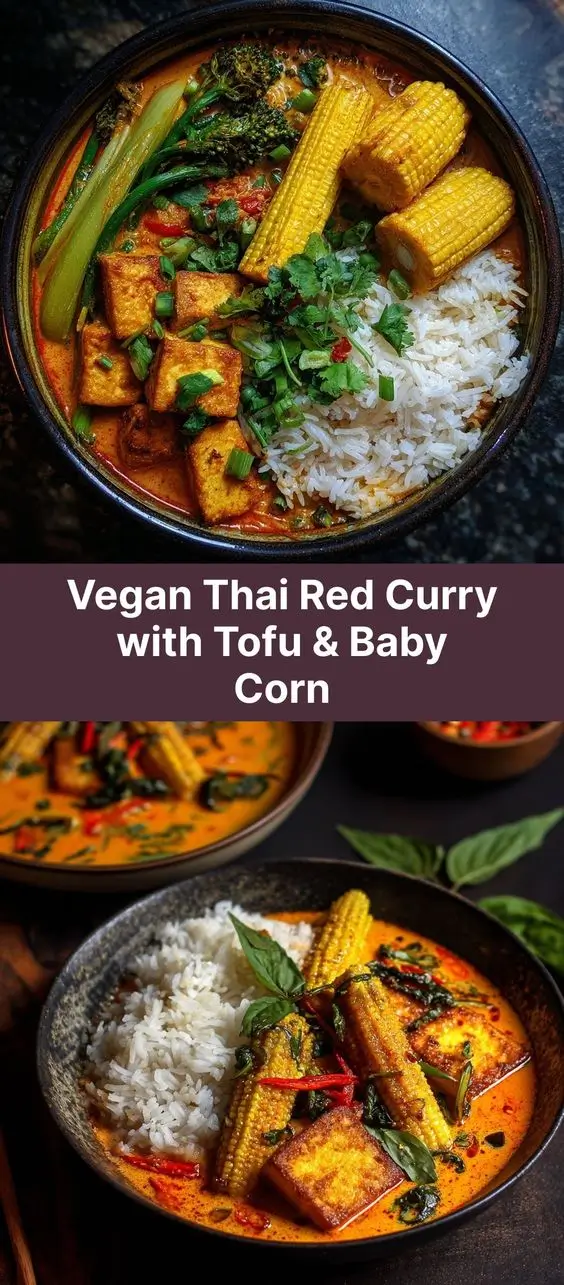
Vegan Thai Red Curry with Tofu & Baby Corn
Indulge in the vibrant and aromatic flavors of Southeast Asia with this rich and satisfying Vegan Thai Red Curry with Tofu & Baby Corn. A harmonious blend of creamy coconut milk, fragrant red curry paste, tender cubes of tofu, and crisp baby corn come together in a dish that’s both comforting and exotic. Whether you’re new to plant-based cooking or a seasoned vegan chef, this recipe offers an accessible gateway into the bold world of Thai cuisine—all while being entirely free of animal products.
The History of Thai Red Curry
Thai red curry, known as kaeng phet (แกงเผ็ด) in Thai, has its roots deeply embedded in the culinary traditions of central Thailand. The term “red” refers not to the color of the meat or vegetables but to the deep crimson hue imparted by dried red chilies, which are a foundational ingredient in the curry paste. Historically, Thai curries evolved from Indian and Malaysian influences, adapted over centuries using local ingredients like lemongrass, galangal, kaffir lime leaves, and shrimp paste.
Originally, most Thai curries included animal-based components—shrimp paste for umami depth and fish sauce for saltiness. However, with the growing popularity of vegetarianism and veganism in Thailand—especially during Buddhist festivals like Vegetarian Festival (เทศกาลกินเจ)—plant-based versions have become increasingly refined and widely accepted. Today’s vegan adaptations maintain authenticity through clever substitutions, such as soy sauce or tamari for fish sauce and miso or fermented mushroom paste for shrimp paste.
This Vegan Thai Red Curry with Tofu & Baby Corn pays homage to these evolving traditions, combining classic techniques with modern ethical and dietary preferences. It reflects a global shift toward mindful eating without sacrificing flavor, texture, or cultural integrity.
Ingredients Breakdown: What Makes This Dish Special
Every component in this curry plays a crucial role in building layers of flavor, aroma, and nutrition. Let’s take a closer look at the key ingredients and why they matter:
- Red Curry Paste (Vegan): The soul of the dish. Traditional red curry paste contains shrimp paste, but vegan versions use ingredients like sun-dried tomatoes, miso, or nutritional yeast to replicate the savory umami depth. Look for certified vegan brands or make your own at home.
- Coconut Milk: Full-fat canned coconut milk provides the luxurious creaminess that balances the heat from the chilies. It also carries fat-soluble flavor compounds, enhancing overall taste perception.
- Firm or Extra-Firm Tofu: A high-protein meat substitute that absorbs the curry’s flavors beautifully. Pressing and cubing it ensures a firmer texture and better browning when pan-seared.
- Baby Corn: Adds sweetness, crunch, and visual appeal. Unlike mature corn, baby corn is harvested young and is edible whole, including the cob.
- Lemongrass: Imparts a bright, citrusy note essential to Thai cooking. Bruising the stalk before adding releases more aromatic oils.
- Kaffir Lime Leaves: These uniquely fragrant leaves contribute a floral-citrus complexity unmatched by any other herb. Remove the tough central vein before tearing them.
- Galangal: Often mistaken for ginger, galangal is sharper, pine-like, and less sweet. It’s a non-negotiable in authentic Thai pastes.
- Thai Basil: Different from sweet Italian basil, Thai basil has purple stems and an anise-like flavor that stands up well to cooking.
- Vegetable Broth: Used to adjust consistency; choose low-sodium varieties to control salt levels.
- Soy Sauce or Tamari: For saltiness and depth. Tamari is gluten-free and richer in flavor, ideal for those with sensitivities.
- Palm Sugar or Coconut Sugar: Balances spice and acidity with a caramel-like sweetness. Less processed than white sugar and lower on the glycemic index.
- Bell Peppers & Bamboo Shoots: Add color, texture, and subtle sweetness. Green bell pepper adds freshness, while bamboo shoots offer a mild, earthy contrast.
Step-by-Step Recipe
Follow this detailed guide to create a restaurant-quality Vegan Thai Red Curry with Tofu & Baby Corn right in your kitchen.
Preparation Time:
20 minutes
Cooking Time:
25 minutes
Total Time:
45 minutes
Servings:
4 main course servings
Ingredients
- 1 block (14 oz / 400g) extra-firm tofu, pressed and cubed
- 2 tbsp cornstarch (optional, for crispier tofu)
- 3 tbsp neutral oil (like avocado or grapeseed)
- 3–4 tbsp vegan red curry paste (adjust to taste)
- 1 can (13.5 oz / 400ml) full-fat coconut milk
- 1 cup vegetable broth (low sodium preferred)
- 1 cup baby corn, halved diagonally
- 1 red bell pepper, thinly sliced
- 1 cup bamboo shoots, drained and rinsed
- 1 stalk lemongrass, outer layer removed, bruised and cut into 2-inch pieces
- 3–4 kaffir lime leaves, torn (remove central stem)
- 1-inch piece galangal, thinly sliced (or substitute ginger if unavailable)
- 2 tbsp soy sauce or tamari
- 1 tbsp palm sugar or coconut sugar
- Juice of 1/2 lime
- 1/2 cup fresh Thai basil leaves
- Optional garnishes: sliced red chili, chopped cilantro, lime wedges, toasted cashews
Directions
- Prepare the Tofu: Drain the tofu and wrap it in a clean kitchen towel or paper towels. Place a heavy object (like a skillet or books) on top to press out excess water for 15–20 minutes. Once pressed, cut into 1-inch cubes. For a crispier texture, toss the cubes in cornstarch.
- Pan-Fry the Tofu: Heat 2 tablespoons of oil in a large wok or deep skillet over medium-high heat. Add tofu in a single layer and cook until golden brown on all sides, about 6–8 minutes. Remove and set aside.
- Sauté the Curry Paste: In the same pan, add 1 tablespoon of oil. Reduce heat to medium and add 3–4 tablespoons of red curry paste. Stir constantly for 1–2 minutes until highly fragrant—this step “blooms” the spices and intensifies flavor.
- Add Aromatics: Pour in about 1/2 cup of coconut milk and stir vigorously to dissolve the paste into the liquid. Add lemongrass, kaffir lime leaves, and galangal. Simmer gently for 2–3 minutes.
- Build the Curry Base: Add the remaining coconut milk and vegetable broth. Stir well and bring to a gentle simmer (do not boil rapidly, or coconut milk may separate).
- Add Vegetables: Stir in baby corn, bell pepper, and bamboo shoots. Cook for 6–8 minutes until vegetables are tender-crisp.
- Incorporate Tofu: Return the cooked tofu to the pan. Add soy sauce, palm sugar, and lime juice. Stir gently to combine. Simmer for another 5 minutes to allow flavors to meld.
- Finish with Herbs: Remove lemongrass, lime leaves, and galangal pieces (if desired). Stir in fresh Thai basil just before serving—it wilts quickly and loses aroma if overcooked.
- Taste and Adjust: Balance the flavors—add more sugar for sweetness, lime for acidity, or curry paste for heat. If too thick, thin with a splash of broth. If too thin, simmer uncovered for a few extra minutes.
- Serve: Ladle hot curry over steamed jasmine rice or brown rice noodles. Garnish with sliced chilies, cilantro, lime wedges, and crushed cashews for added texture and flair.
Tips for the Perfect Vegan Thai Red Curry
- Press Your Tofu: Never skip pressing! Wet tofu will splatter when frying and won’t absorb flavors well.
- Bloom the Paste: Frying the curry paste in oil unlocks volatile oils and deepens flavor—don’t rush this step.
- Use Full-Fat Coconut Milk: Light versions lack richness and may curdle when heated.
- Don’t Boil Vigorously: Gentle simmering prevents coconut milk from separating into oil and solids.
- Add Delicate Ingredients Last: Thai basil, lime juice, and tofu should go in near the end to preserve freshness and texture.
- Taste As You Go: Curry flavors evolve as they cook. Adjust seasoning progressively rather than all at once at the end.
- Make Ahead Friendly: This curry tastes even better the next day as flavors continue to meld. Reheat gently on the stove.
- Freeze Well: Store in airtight containers for up to 3 months. Thaw overnight in the fridge and reheat slowly.
Variations and Customizations
This recipe is highly adaptable based on seasonal availability, dietary needs, or personal taste:
- Protein Swaps: Replace tofu with tempeh, seitan, chickpeas, lentils, or edamame for variety.
- Vegetable Options: Swap in zucchini, eggplant, broccoli, snap peas, mushrooms (shiitake works wonderfully), carrots, or spinach.
- Spice Level: Use 2 tbsp curry paste for mild, 3 for medium, and 4+ for spicy. You can also deseed chilies in homemade paste for less heat.
- Gluten-Free: Ensure your curry paste and soy sauce (use tamari) are certified gluten-free.
- Oil-Free Version: Sauté aromatics and paste in 1/4 cup water or broth instead of oil. Texture will differ slightly, but still flavorful.
- Creamier Texture: Blend 1/2 cup silken tofu into the coconut milk base before adding vegetables.
- Nut-Free: Omit cashew garnish or replace with pumpkin seeds or fried shallots.
- Low-Sodium: Use reduced-sodium soy sauce or coconut aminos, and low-salt vegetable broth.
- Curry Paste From Scratch: Make your own vegan red curry paste with dried red chilies, garlic, shallots, lemongrass, galangal, kaffir lime zest, coriander root, cumin, and white pepper—blended with a touch of olive oil.
- Serve With: Instead of rice, try quinoa, cauliflower rice, rice noodles, or even baked sweet potatoes for a nutrient boost.
Health Considerations and Nutritional Value
This Vegan Thai Red Curry isn’t just delicious—it’s packed with wholesome nutrients that support a balanced diet.
Nutritional Highlights (Per Serving, approx. 1.5 cups with tofu and vegetables over 1/2 cup jasmine rice):
- Calories: ~380–420 kcal
- Protein: 16–19g (from tofu and legumes)
- Fat: 22–26g (mostly healthy saturated and monounsaturated fats from coconut)
- Carbohydrates: 35–40g
- Dietary Fiber: 6–8g (from vegetables, baby corn, and whole grains)
- Sodium: Varies (300–700mg depending on broth and soy sauce used)
Key Health Benefits:
- Heart-Healthy Fats: While coconut milk contains saturated fat, emerging research suggests that lauric acid in coconut may have neutral or beneficial effects on cholesterol when consumed as part of a balanced diet.
- Rich in Plant Protein: Tofu is a complete protein, providing all nine essential amino acids vital for muscle repair and immune function.
- Antioxidant-Rich: Lemongrass, galangal, and chilies contain antioxidants and anti-inflammatory compounds like citral and gingerols.
- Low in Cholesterol: Naturally cholesterol-free, making it ideal for cardiovascular health.
- Supports Gut Health: Fermented ingredients like miso (in some vegan pastes) act as prebiotics, supporting beneficial gut bacteria.
- Diabetes-Friendly Option: When made with brown rice or cauliflower rice and minimal added sugar, this dish has a moderate glycemic load.
Dietary Notes:
- ✅ Vegan
- ✅ Dairy-Free
- ✅ Egg-Free
- ✅ Nut-Free (if garnish omitted)
- ✅ Gluten-Free (with tamari and GF-certified curry paste)
- ⚠️ Contains Soy (tofu, soy sauce)
- ⚠️ May Contain Allergens depending on brand-specific curry paste (always check labels)
Frequently Asked Questions (FAQ)
Can I use canned baby corn?
Yes, canned baby corn is perfectly acceptable and widely used in Thai cooking. Just drain and rinse it thoroughly to remove excess sodium and preservatives.
Is coconut milk unhealthy because of its fat content?
While coconut milk is high in saturated fat, it also contains medium-chain triglycerides (MCTs) that are metabolized differently than long-chain fats. When consumed in moderation as part of a balanced diet, it can be a nutritious addition. Opt for BPA-free cans and organic varieties when possible.
Can I make this curry ahead of time?
Absolutely! In fact, many find that the flavors deepen and improve after sitting for a few hours or overnight. Store in the refrigerator for up to 4 days. Reheat gently on the stove, adding a splash of water or broth if needed.
What can I substitute for kaffir lime leaves?
If unavailable, you can use 1 tsp grated lime zest + 1/2 tsp lemon juice as a partial substitute. However, nothing truly replicates their unique fragrance. Dried kaffir lime leaves (available online) are better than no leaves at all—just soak them briefly before use.
Why did my coconut milk separate?
Coconut milk separates when exposed to high heat or rapid boiling. To prevent this, keep the curry at a gentle simmer and avoid stirring too aggressively. If separation occurs, whisk in a little cold coconut milk or broth to re-emulsify.
Is store-bought red curry paste vegan?
Not always. Many commercial brands contain shrimp paste or fish derivatives. Always read the label carefully. Recommended vegan brands include Maesri (check label), Thai Kitchen (some varieties), and Minor’s Vegan Red Curry Paste.
Can I use light coconut milk?
You can, but the curry will be significantly thinner and less creamy. For best results, use full-fat coconut milk. If reducing fat intake, consider using half full-fat and half vegetable broth.
How spicy is Thai red curry?
Traditionally quite spicy, but you can control the heat by adjusting the amount of curry paste. Start with less and add gradually to suit your palate.
Can I freeze this curry?
Yes, this curry freezes exceptionally well. Cool completely, then transfer to freezer-safe containers, leaving 1-inch headspace. Freeze for up to 3 months. Thaw in the refrigerator overnight and reheat slowly on the stove.
What kind of rice pairs best with this curry?
Steamed jasmine rice is traditional due to its fragrant, slightly sticky texture. Alternatives include basmati rice, brown jasmine rice, black rice, or rice noodles for a “drunken noodle” style presentation.
Summary
This Vegan Thai Red Curry with Tofu & Baby Corn delivers an explosion of aromatic spices, creamy coconut, and tender plant-based proteins in every bite. A nutritionally balanced, culturally rich meal that’s easy to customize and perfect for weeknight dinners or entertaining guests.