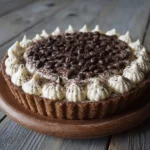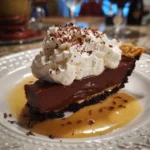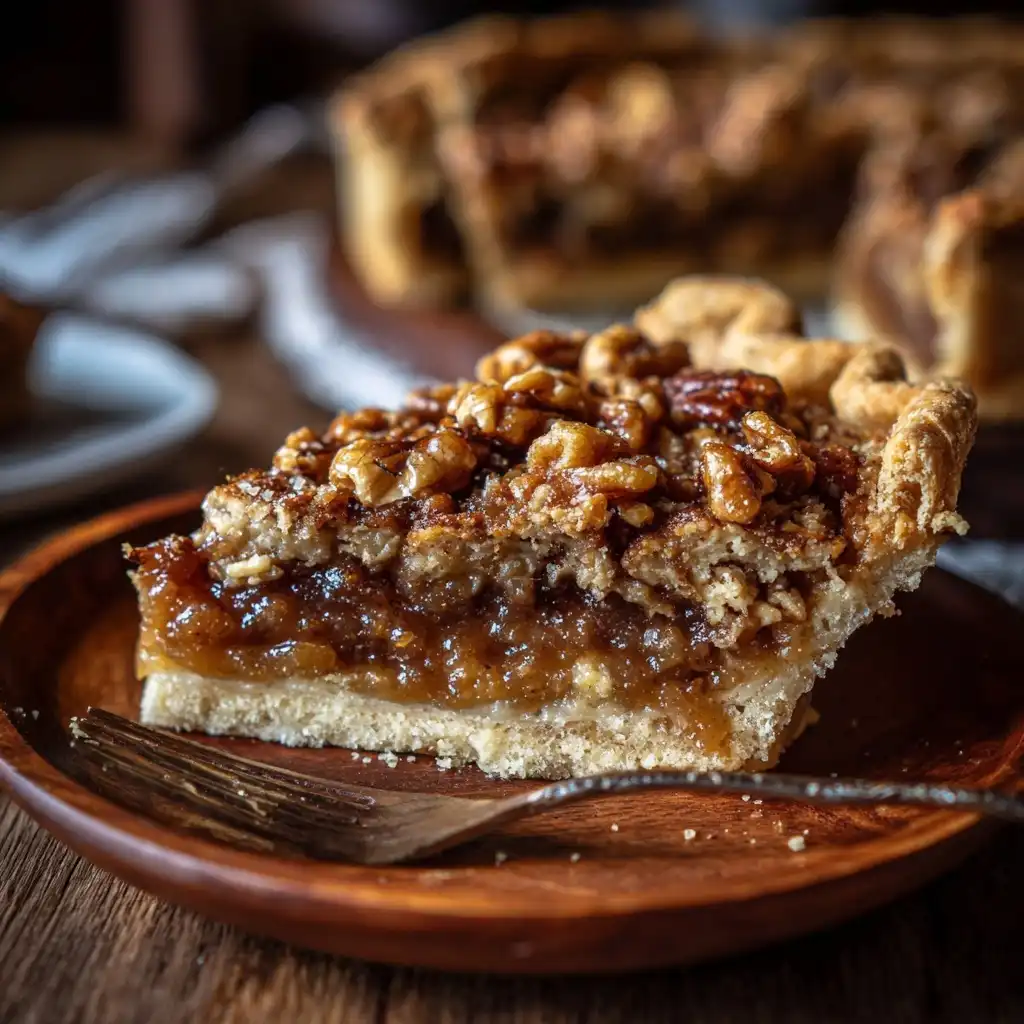
Introduction
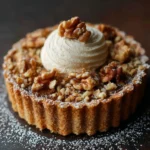
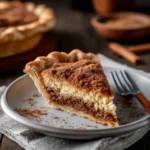
Walnut Honey Pie is a sumptuous, time-honored dessert that marries the earthy richness of toasted walnuts with the floral depth and golden sweetness of pure, raw honey—creating a pie that is at once rustic, elegant, and deeply comforting. Unlike its more ubiquitous cousins like pecan or chess pie, Walnut Honey Pie occupies a distinctive niche in American regional baking, particularly cherished in the Midwest and Appalachian regions where walnut trees thrive and local beekeeping traditions run deep. Its allure lies not only in its luscious, custard-like filling and buttery, flaky crust but also in its nuanced flavor profile: warm, caramelized notes from slow-cooked honey; subtle bitterness and crunch from premium walnuts; and a gentle, almost nutty undertone reminiscent of browned butter and toasted grain. Whether served warm with a scoop of bourbon-vanilla ice cream or chilled and dusted with flaky sea salt, this pie evokes nostalgia, craftsmanship, and the quiet luxury of seasonal, hyper-local ingredients. It’s more than dessert—it’s an edible heirloom.
The History
The origins of Walnut Honey Pie trace back to the early-to-mid 19th century, emerging organically from resourceful farmhouse kitchens where pantry staples were few but ingenuity was abundant. Before commercially produced corn syrup became widely available (post-1880s), American bakers relied on native sweeteners—including maple syrup, sorghum molasses, and wildflower honey—combined with foraged or homegrown nuts. Black walnuts—native to eastern North America—were especially prized by Indigenous communities and later adopted by settlers for their bold, tannic flavor and high oil content, ideal for rich fillings. As European honeybee colonies expanded across the U.S. in the 1800s, honey gained prominence as a shelf-stable, naturally preservative sweetener, often traded alongside cured meats and dried fruits. Early versions of walnut-based honey pies appeared in handwritten community cookbooks from Ohio, Kentucky, and Missouri as early as 1847—often labeled “Honey-Nut Custard Pie” or “Autumn Harvest Tart.” By the Great Depression era, the pie evolved into a thrifty yet celebratory treat: honey provided sweetness without rationed sugar, walnuts added protein and texture, and basic pantry eggs and flour completed the ensemble. Regional variations blossomed—some families added a splash of apple cider vinegar for brightness; others folded in a spoonful of whole-grain mustard for complexity; still others used sour cream or buttermilk for tang and tenderness. Today, Walnut Honey Pie enjoys a renaissance among artisanal bakers, heritage grain advocates, and slow-food chefs who honor its roots while elevating it with single-origin honey varietals (like tupelo, orange blossom, or black locust) and heirloom walnut cultivars such as Thomas or Carpathian.
Ingredients Breakdown
Every exceptional Walnut Honey Pie begins with intentionality—not just in measurement, but in selection, sourcing, and understanding how each component contributes to structure, flavor balance, and mouthfeel. Below is a comprehensive, chef-level breakdown of the core ingredients and their functional roles:
- Unbleached All-Purpose Flour (for crust): Provides gluten structure for flakiness and tenderness. Opt for a lower-protein flour (10–11% protein) for optimal tenderness; avoid bread flour, which yields toughness.
- Unsalted Butter (cold, cubed): The gold standard for flavor and laminated layers. Its water content creates steam during baking—lifting dough into flaky strata—while its milk solids caramelize for nutty depth. European-style butter (82–86% fat) yields even richer results.
- Apple Cider Vinegar (1 tsp): A secret weapon: acid inhibits gluten formation, ensuring tenderness, while contributing a faint, bright counterpoint that prevents cloying sweetness.
- Raw, Unfiltered Wildflower Honey (preferably local): Not merely a sweetener—honey is the soul of the pie. Its enzymatic activity, mineral content, and volatile aromatic compounds (e.g., linalool, benzaldehyde) define the pie’s fragrance and finish. Lighter honeys (clover, acacia) offer delicate sweetness; darker honeys (buckwheat, chestnut) lend robust, molasses-like complexity and deeper color. Pasteurized honey lacks nuanced flavor and may crystallize unevenly.
- Granulated Sugar (small amount): Added not for sweetness alone, but for caramelization control and moisture retention. Sugar lowers the boiling point of the honey mixture slightly, allowing gentler cooking and preventing premature curdling.
- Large Eggs (room temperature): Act as emulsifiers and structural binders. Their proteins coagulate slowly, yielding a silken, sliceable custard—not rubbery or weepy. Room temperature ensures uniform incorporation and avoids shocking the warm honey mixture.
- Heavy Cream (or full-fat coconut milk for dairy-free): Adds unctuousness, slows coagulation, and enhances browning. Its fat content buffers heat, preventing egg scramble and encouraging gradual set. Avoid half-and-half or low-fat alternatives—they lack sufficient fat for stability.
- Vanilla Extract (pure, Madagascar Bourbon): Complements honey’s floral notes and rounds out sharp edges. Alcohol-based extract carries volatile aromatics better than paste or powder.
- Freshly Ground Nutmeg & Kosher Salt: Nutmeg adds warm, woody resonance that harmonizes with walnut and honey; salt intensifies all flavors and balances sweetness at a molecular level—never omit.
- Walnuts (toasted, chopped, and cooled): Use fresh, raw English walnuts (Juglans regia) for best flavor and texture. Toasting is non-negotiable—it drives off raw bitterness, develops Maillard compounds (toasty, buttery, umami notes), and improves crunch retention. Chop uniformly (¼-inch pieces) to ensure even distribution and prevent sinkage.
- Optional Enhancements: A tablespoon of dark rum or bourbon (added off-heat) deepens complexity; a teaspoon of orange zest lifts aroma; a pinch of ground cardamom adds exotic warmth; a drizzle of walnut oil brushed on the baked crust imparts finishing nuance.
Step-by-Step Recipe
This meticulously tested, professional-grade method yields a Walnut Honey Pie with a shatteringly crisp, golden-brown crust; a luxuriously smooth, glossy filling with perfect jiggle; and walnuts suspended evenly—not sunk, not floating—like amber jewels in a sunlit river.
- Prepare the Pie Dough (at least 1 hour ahead—or overnight): In a food processor, pulse 1¼ cups (160g) chilled, cubed unsalted butter with 1½ cups (188g) unbleached all-purpose flour, ½ tsp kosher salt, and 1 tsp apple cider vinegar until mixture resembles coarse meal with visible pea-sized butter bits. Gradually add ¼–⅓ cup (60–80ml) ice water, 1 tbsp at a time, pulsing just until dough begins to clump. Turn onto parchment, divide into two unequal disks (⅔ for bottom crust, ⅓ for top/lattice), wrap tightly, and refrigerate ≥1 hour (or freeze up to 3 months).
- Toast the Walnuts (3–5 minutes): Preheat oven to 350°F (175°C). Spread 1¾ cups (180g) raw walnut halves on a parchment-lined sheet. Bake until fragrant and lightly golden (edges darken first), shaking pan halfway. Cool completely—then chop coarsely (¼-inch pieces) with a chef’s knife. Set aside.
- Blind-Bake the Bottom Crust (25–30 minutes): Roll the larger dough disk on a floured surface to a 12-inch circle (~⅛-inch thick). Fit gently into a 9-inch deep-dish pie plate, trim overhang to ½ inch, crimp decoratively, and freeze 15 minutes. Line with parchment and pie weights (or dried beans). Bake at 400°F (200°C) for 18 minutes. Remove weights/parchment; prick base with fork and bake 5–7 more minutes until pale gold and dry. Cool completely on a wire rack—this prevents sogginess.
- Prepare the Honey Filling (stovetop tempering): In a heavy-bottomed, light-colored saucepan (for easy color monitoring), combine 1 cup (340g) raw honey, ½ cup (100g) granulated sugar, ¼ tsp kosher salt, and ¼ tsp freshly grated nutmeg. Warm over medium-low heat, stirring constantly, until mixture reaches 225°F (107°C)—the soft-ball stage—about 8–12 minutes. Do not boil rapidly; gentle simmer only. Remove from heat.
- Temper the Eggs (critical step): In a large heatproof bowl, whisk 3 large room-temperature eggs, ½ cup (120ml) heavy cream, and 1 tsp pure vanilla until frothy. Slowly drizzle in ½ cup of the hot honey mixture while whisking vigorously. Once incorporated, gradually whisk this tempered mixture back into the saucepan.
- Finish the Filling (low-and-slow cook): Return pan to low heat. Stir constantly with a silicone spatula, scraping the bottom and corners, until mixture thickens slightly and coats the back of a spoon (≈170°F / 77°C internal temp), ~4–6 minutes. Do NOT let it boil or exceed 175°F—curdling occurs instantly. Remove from heat; stir in toasted walnuts and optional 1 tbsp bourbon. Cool 10 minutes, skimming any foam.
- Assemble & Bake: Pour warm filling into cooled crust. If making a lattice or full top crust, roll second dough disk, cut strips or shape top, and apply. Seal edges, crimp, and vent. Brush top with egg wash (1 egg + 1 tsp water) and sprinkle with flaky sea salt and reserved walnut pieces. Bake at 350°F (175°C) on lowest oven rack for 45–55 minutes—until crust is deep golden and filling is set at edges but retains a slight wobble (like Jell-O) in the center. Shield crust edges with foil if browning too fast after 30 minutes.
- Cool Completely (non-negotiable): Transfer pie to a wire rack. Cool at room temperature for 2 hours, then refrigerate uncovered for at least 4 hours—or ideally overnight. This allows starches and proteins to fully set, prevents slicing slippage, and deepens flavor integration.
Tips
- Chill Everything, Twice: Cold butter + cold dough = flaky layers. Chill dough before rolling and again after crimping. Even chilling the pie plate for 10 minutes before fitting dough helps prevent shrinkage.
- Honey Hydration Matters: Raw honey varies in moisture content. If your honey is very thick/crystallized, gently warm it in a bowl over simmering water (not direct heat) until fluid—then measure. Never microwave honey for baking—it degrades enzymes and alters flavor.
- Toasting Is Transformative: Under-toasted walnuts taste raw and bitter; over-toasted turn acrid. Watch closely—their color change happens in seconds. When you smell warm toast and see light golden edges, they’re ready.
- Tempering Prevents Scramble: Always temper eggs by adding hot liquid gradually while whisking. Dumping hot honey directly into cold eggs = instant curds. Patience here guarantees silk.
- Low Heat Is Law: The filling must never boil. Use a reliable candy thermometer and stir constantly. A heavy-bottomed pan ensures even heat distribution and prevents scorching.
- Cooling Is Part of Baking: Cutting into a warm pie releases steam and causes weeping or cracking. Overnight chilling also firms the filling, improves slice definition, and mellows sharp edges.
- Crust Protection: Aluminum foil strips bent into “collars” work better than commercial pie shields—they conform perfectly and reflect heat evenly.
- Freeze for Later: Baked, fully cooled pie freezes beautifully for up to 3 months. Wrap tightly in plastic + foil. Thaw overnight in fridge, then refresh in a 325°F oven for 15 minutes before serving.
- Revive Stale Crust: If crust softens during storage, place whole pie on a preheated baking stone at 350°F for 8–10 minutes before serving—restores crispness.
- Leftover Filling? Make Mini Tarts: Spoon excess filling into greased muffin tins lined with small dough circles. Bake 18–22 minutes. Perfect for gifting or sampling varietals.
Variations and Customizations
Walnut Honey Pie is gloriously adaptable—respecting its soul while inviting creativity. Here are thoughtfully curated variations, each tested for structural integrity and flavor harmony:
- Maple-Walnut Honey Fusion: Replace ¼ cup honey with Grade B dark maple syrup for deeper, woodsy notes. Add ½ tsp cinnamon and a pinch of black pepper. Toast walnuts with 1 tsp maple sugar for extra crunch.
- Spiced Chai Walnut Pie: Infuse the honey-sugar mixture with 1 black tea bag, 3 crushed green cardamom pods, 1 star anise, and ¼ tsp ground ginger. Steep 5 minutes off-heat, strain, then proceed. Garnish with candied ginger.
- Gluten-Free Walnut Honey Pie: Use a 1:1 GF flour blend (with xanthan gum) for crust. For filling, replace 1 tbsp flour with 1 tsp tapioca starch to aid thickening. Ensure certified GF oats if using oat-based crust alternatives.
- Vegan Walnut Honey Pie (Honey-Substitute Version): Use high-quality date syrup or organic brown rice syrup (½ cup) + 2 tbsp molasses for depth. Replace eggs with flax “eggs” (3 tbsp ground flax + 9 tbsp water, rested 10 min) and cream with full-fat coconut milk. Note: texture will be denser, not custard-like—but rich and satisfying.
- Black Walnut Heritage Pie: Substitute 100% black walnuts (foraged or sourced) for English walnuts. Their intense, earthy, slightly funky flavor pairs exceptionally well with buckwheat honey and a dash of balsamic reduction swirled in pre-bake.
- Lavender-Honey Walnut Pie: Steep 1 tsp culinary lavender buds in warm cream for 15 minutes; strain before adding to eggs. Use orange-blossom honey. Top with edible lavender flowers and lemon zest.
- Savory-Sweet Herb Variation: Add 1 tsp finely minced fresh rosemary (toasted with walnuts) and ½ tsp cracked black pepper to filling. Serve with crumbled goat cheese on the side.
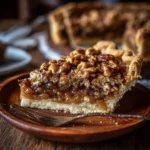
- Streusel-Topped Rustic Pie: Skip top crust. Mix ½ cup flour, ⅓ cup brown sugar, ¼ cup cold butter, ½ cup chopped walnuts, and ¼ tsp cinnamon into coarse crumbs. Sprinkle generously over filling pre-bake.
- Mini Mason Jar Pies: Par-bake mini pie shells (4-inch) 12 minutes. Fill with warm mixture, top with walnut-streusel, and bake 22–25 minutes. Perfect for parties or portion control.
- Boozy Bourbon Caramel Swirl: Drizzle 2 tbsp bourbon caramel sauce (simmer ½ cup honey + ¼ cup brown sugar + 2 tbsp bourbon to 235°F) into filling just before pouring into crust—swirl gently with a knife for marbling.
Health Considerations and Nutritional Value
While Walnut Honey Pie is undeniably indulgent, its core ingredients offer meaningful nutritional benefits when enjoyed mindfully and in appropriate portions. Understanding its composition supports informed enjoyment—not guilt-free eating, but *value-aware* eating.
Nutritional Snapshot (per standard 1/8 slice, ~185g, made with traditional ingredients):
- Calories: ~420–460 kcal
- Total Fat: 24–27g (mostly unsaturated—walnuts provide heart-healthy omega-3 ALA)
- Saturated Fat: 11–13g (primarily from butter; moderate intake advised)
- Carbohydrates: 48–52g (of which 38–42g natural sugars from honey + minimal added sugar)
- Dietary Fiber: 2.5–3g (from walnuts and whole-grain crust options)
- Protein: 5–6g (eggs + walnuts provide complete amino acid profile)
- Key Micronutrients: Magnesium (walnuts), manganese (honey, walnuts), vitamin E (walnut oil), B vitamins (eggs, honey), polyphenols (raw honey antioxidants), and plant sterols (walnuts).
Health Highlights:
- Honey’s Bioactive Power: Raw, unfiltered honey contains hydrogen peroxide, methylglyoxal (MGO), bee pollen, and >180 phytonutrients—contributing antimicrobial, anti-inflammatory, and prebiotic effects. Its lower glycemic index (GI ≈ 58) vs. table sugar (GI ≈ 65) offers slightly gentler blood sugar impact—though portion control remains essential for diabetics.
- Walnut Wellness: A single ounce (¼ cup) delivers 2.5g plant-based omega-3s (ALA), shown in studies to support endothelial function and reduce LDL oxidation. Walnuts also contain ellagic acid and melatonin—linked to neuroprotection and sleep regulation.
- Butter Nuance: Grass-fed butter provides vitamin K2 (critical for calcium metabolism) and butyrate (a gut-soothing short-chain fatty acid), though saturated fat warrants moderation within daily limits (American Heart Association recommends <5–6% of total calories).
Considerations & Modifications:
- For Blood Sugar Management: Reduce honey by 2 tbsp and add 1 tbsp inulin or resistant dextrin (prebiotic fiber) to maintain volume and texture without spiking glucose. Pair slice with Greek yogurt for protein buffering.
- Lower-Fat Option: Replace half the butter in crust with avocado oil or walnut oil (adds flavor); use low-fat evaporated milk instead of heavy cream (slightly less rich, but stable).
- Allergen Note: Tree nut allergy is serious—do not substitute walnuts with other nuts unless confirmed safe. Sunflower seed “butters” or roasted pepitas offer crunch alternatives, but flavor profile shifts significantly.
- Gluten Sensitivity: Certified GF oats or almond flour blends work well in crust—but always verify cross-contamination protocols with brands.
- Mindful Indulgence Tip: Savor one thoughtful slice slowly—with no distractions—to enhance satiety signals and reduce likelihood of overeating.
Ingredients
For the Flaky All-Butter Pie Crust:
- 1½ cups (188g) unbleached all-purpose flour, plus extra for dusting
- 1¼ cups (280g) unsalted butter, cold and cubed (preferably European-style, 82% fat)
- ½ tsp fine sea salt
- 1 tsp apple cider vinegar
- ¼–⅓ cup (60–80ml) ice water
For the Walnut Honey Filling:
- 1¾ cups (180g) raw English walnuts, toasted and coarsely chopped
- 1 cup (340g) raw, unfiltered wildflower honey (local preferred)
- ½ cup (100g) granulated cane sugar
- ¼ tsp fine sea salt
- ¼ tsp freshly grated nutmeg
- 3 large eggs, room temperature
- ½ cup (120ml) heavy cream (or full-fat coconut milk)
- 1 tsp pure Madagascar bourbon vanilla extract
- 1 tbsp bourbon or dark rum (optional, but recommended)
For Assembly & Finish:
- 1 large egg + 1 tsp water (egg wash)
- Fine sea salt or flaky Maldon salt, for sprinkling
- Extra chopped walnuts, for garnish
Directions
- Make the Dough: In a food processor, pulse flour, salt, and cold butter until mixture resembles coarse crumbs with visible pea-sized butter pieces (15–20 sec). Add vinegar; pulse 2x. Gradually add ice water, 1 tbsp at a time, pulsing just until dough begins to clump. Turn onto parchment; divide into two disks (14 oz for bottom, 7 oz for top). Wrap tightly; refrigerate ≥1 hr (or freeze up to 3 months).
- Toast Walnuts: Preheat oven to 350°F. Spread walnuts on parchment-lined sheet. Bake 3–5 min, until fragrant and golden at edges. Cool completely, then chop to ¼-inch pieces.
- Blind-Bake Crust: Roll larger dough disk to 12-inch circle. Fit into 9-inch deep-dish pie plate; trim to ½-inch overhang; crimp edges. Freeze 15 min. Line with parchment + pie weights. Bake at 400°F for 18 min. Remove weights/parchment; prick base; bake 5–7 min more until pale gold. Cool completely on wire rack.
- Warm Honey Mixture: In heavy saucepan, combine honey, sugar, salt, and nutmeg. Heat over medium-low, stirring, until mixture reaches 225°F (soft-ball stage), ~8–12 min. Do not boil rapidly. Remove from heat.
- Temper Eggs: Whisk eggs, cream, and vanilla in heatproof bowl. Slowly drizzle in ½ cup hot honey mixture while whisking vigorously. Then whisk tempered mixture back into saucepan.
- Cook Filling: Return to low heat. Stir constantly with silicone spatula until mixture thickens and coats spoon (~170°F), 4–6 min. Do not boil. Remove from heat; stir in walnuts and bourbon. Cool 10 min, skimming foam.
- Assemble: Pour filling into cooled crust. Roll smaller dough disk; cut into ½-inch strips for lattice (or cover with full top). Seal, crimp, and vent. Brush with egg wash; sprinkle with salt and extra walnuts.
- Bake: Place on lowest oven rack. Bake at 350°F for 45–55 min—until crust is deep golden and filling is set at edges but slightly jiggly center. Shield crust with foil if browning too fast after 30 min.
- Cool & Serve: Cool on wire rack 2 hours at room temp. Refrigerate uncovered ≥4 hours (ideally overnight). Slice with a sharp, hot knife dipped in warm water. Serve chilled or gently warmed.
FAQ
- Q: Can I use store-bought pie crust?
- A: Yes—but with caveats. Most pre-made crusts contain shortening or palm oil, yielding less flavor and poorer honey absorption. For best results, use all-butter frozen crusts (like Wholly Wholesome or Trader Joe’s), thawed and blind-baked as directed. Expect slightly less flakiness and subtle flavor dilution.
- Q: Why did my filling crack or weep?
- A: Cracking usually stems from rapid cooling or overbaking—filling contracts too quickly. Weeping (liquid pooling) occurs from underbaking, overmixing post-tempering, or cutting into pie before full chill. Always cool fully and refrigerate ≥4 hours.
- Q: Can I make this pie ahead for Thanksgiving?
- A: Absolutely—and recommended! Bake 1–2 days ahead. Store covered at room temp for day 1, then refrigerate. Reheat slices gently (300°F for 10 min) or serve cold. Flavor deepens beautifully over 24–48 hours.
- Q: My honey is crystallized. Can I still use it?
- A: Yes—gently warm the jar in a bowl of warm (not boiling) water until fluid. Never microwave or boil honey—it destroys delicate volatiles and can create off-flavors.
- Q: Can I substitute pecans or almonds?
- A: Pecans work beautifully (reduce toasting time by 1 minute—they burn faster). Almonds lack the same fat profile and can turn chewy; blanch and toast carefully. Avoid cashews or macadamias—they overpower.
- Q: Is there a way to make it less sweet?
- A: Yes—reduce honey to ¾ cup and add 2 tbsp unsweetened applesauce + 1 tsp lemon juice to retain volume, moisture, and brightness without added sugar.
- Q