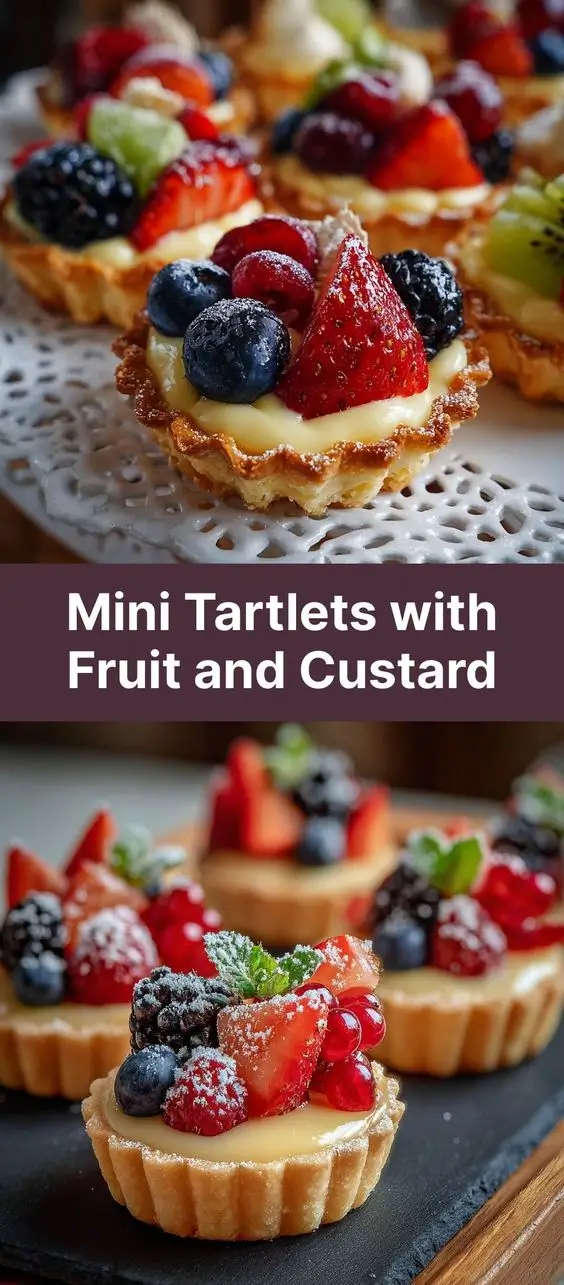
Mini Tartlets with Fruit and Custard: A Delightful Bite of Elegance
Nothing says sophistication quite like a perfectly crafted mini tartlet filled with rich custard and topped with fresh, vibrant fruit. These bite-sized desserts are not only visually stunning but also offer a harmonious balance of creamy texture and natural sweetness. Whether you’re hosting an elegant afternoon tea, a bridal shower, or simply treating yourself to a little indulgence, these mini tartlets are sure to impress. In this comprehensive guide, we’ll walk you through the history, ingredients, preparation techniques, variations, health considerations, and more for creating flawless Mini Tartlets with Fruit and Custard.
The History of Tartlets
Tartlets trace their origins back to medieval Europe, where small open-faced pastries were commonly served in royal courts and noble households. The word “tart” comes from the Old French term tarte, which itself may have roots in the Frankish or Germanic languages. Early tarts were often savory, filled with meats, cheeses, or vegetables, and baked in communal ovens.
By the 15th century, sweet tarts began gaining popularity, especially in France and Italy. The addition of custard fillings evolved during the Renaissance, when egg-based creams became fashionable among European aristocrats. Pastry chefs refined their techniques, using buttery shortcrust pastry and delicate fruit arrangements to create miniature masterpieces.
In the Victorian era, dainty desserts like mini tartlets became staples at high tea gatherings. Their petite size made them ideal for serving alongside tea and conversation. Today, mini tartlets remain a symbol of culinary elegance, frequently featured in patisseries, wedding buffets, and gourmet dessert platters around the world.
Ingredients Breakdown
The beauty of mini tartlets lies in their simplicity and quality of ingredients. Each component plays a crucial role in achieving the perfect balance of flavor, texture, and appearance.
- Shortcrust Pastry: Made from flour, butter, sugar, salt, and a touch of cold water, this forms the crisp, buttery shell that holds everything together. Using high-fat butter ensures flakiness and richness.
- Custard Filling: A classic custard is composed of whole milk or cream, egg yolks, granulated sugar, cornstarch (for thickening), and vanilla extract. Some recipes use a combination of milk and heavy cream for extra silkiness.
- Fresh Fruit: Berries such as strawberries, raspberries, blueberries, blackberries, kiwi slices, mango cubes, or even figs work beautifully. The fruit should be ripe but firm to maintain structure and add natural sweetness and color.
- Glaze (Optional): A light apricot or neutral glaze brushed over the fruit enhances shine and prevents drying. It also gives the tartlets a professional finish.
- Additional Flavor Enhancers: Lemon zest, almond extract, or a splash of liqueur (like Grand Marnier or Chambord) can elevate the custard’s flavor profile.
For those with dietary restrictions, substitutions are available—such as gluten-free flour blends for the crust, plant-based milk alternatives, and agar-agar instead of gelatin-based glazes.
Step-by-Step Recipe
Ingredients
For the Shortcrust Pastry (makes about 12 mini tartlets):
- 1 cup (120g) all-purpose flour
- ¼ teaspoon salt
- ½ cup (115g) unsalted butter, cold and cubed
- 3 tablespoons powdered sugar
- 1 large egg yolk
- 2–3 tablespoons ice-cold water
For the Vanilla Custard:
- 2 cups (480ml) whole milk
- 4 large egg yolks
- ⅓ cup (65g) granulated sugar
- 3 tablespoons cornstarch
- 1 teaspoon pure vanilla extract
- 2 tablespoons unsalted butter (optional, for added richness)
For Topping:
- 1½ cups mixed fresh fruit (e.g., strawberries, blueberries, raspberries, kiwi)
- 2 tablespoons apricot jam or neutral glaze, warmed
- Mint leaves for garnish (optional)
Directions
- Prepare the Pastry Dough: In a food processor, pulse flour, salt, and powdered sugar. Add cold cubed butter and pulse until the mixture resembles coarse breadcrumbs. Add egg yolk and 1 tablespoon of ice water. Pulse again, adding more water one teaspoon at a time until the dough begins to clump. Do not overmix.
- Chill the Dough: Turn the dough onto a lightly floured surface and shape into a flat disk. Wrap in plastic wrap and refrigerate for at least 1 hour (or up to 2 days).
- Preheat Oven & Prepare Pan: Preheat oven to 375°F (190°C). Lightly grease a 12-cup mini muffin tin or use silicone molds for easy release.
- Roll and Line Tart Molds: On a floured surface, roll the chilled dough to about 1/8-inch thickness. Cut out circles slightly larger than the muffin cups (use a round cutter or glass). Gently press each circle into the molds, ensuring no air pockets. Trim excess dough if needed.
- Blind Bake the Crusts: Prick the bottom of each crust with a fork. Line with parchment paper and fill with pie weights or dried beans. Bake for 12 minutes. Remove weights and parchment, then bake another 5–7 minutes until golden. Let cool completely on a wire rack.
- Make the Custard: Warm milk in a saucepan over medium heat until steaming (do not boil). In a bowl, whisk egg yolks, sugar, and cornstarch until pale and smooth. Slowly pour hot milk into the yolk mixture while whisking constantly (this tempers the eggs).
- Thicken the Custard: Pour the mixture back into the saucepan. Cook over medium-low heat, stirring continuously with a wooden spoon or silicone spatula, until it thickens into a pudding-like consistency (about 5–7 minutes). Remove from heat and stir in vanilla extract and optional butter.
- Cool the Custard: Transfer custard to a bowl. Press plastic wrap directly onto the surface to prevent a skin from forming. Chill in the refrigerator for at least 2 hours or until completely cool.
- Fill the Tartlets: Once the shells are cooled and custard is set, spoon or pipe the custard into each shell, filling almost to the top.
- Arrange the Fruit: Artfully place sliced or whole fruits on top of the custard. Be creative—alternate colors and textures for visual appeal.
- Glaze the Fruit: Warm apricot jam with a teaspoon of water and strain if desired. Brush gently over the fruit to give a glossy finish.
- Garnish and Serve: Add a mint leaf for freshness if desired. Serve immediately or chill for 30 minutes before serving for a firmer texture.
Tips for Perfect Mini Tartlets
- Keep Ingredients Cold: For flaky pastry, ensure butter and water are very cold. Warm ingredients lead to greasy, tough crusts.
- Don’t Skip Blind Baking: This step prevents soggy bottoms. Always use weights to keep the shape intact.
- Avoid Overworking the Dough: Too much handling develops gluten, making the crust chewy instead of tender.
- Temper Eggs Carefully: When adding hot milk to yolks, do it slowly while whisking to avoid scrambling.
- Use Fresh, Dry Fruit: Wet fruit can make the custard runny. Pat berries dry with a paper towel before placing.
- Pipe for Precision: Use a piping bag with a plain tip to fill tartlets neatly and evenly.
- Serve Fresh: These tartlets are best enjoyed within 4–6 hours of assembly. If storing, cover loosely and refrigerate—but expect some softening of the crust.
Variations and Customizations
One of the joys of mini tartlets is their versatility. Here are some creative twists to suit different tastes and occasions:
- Lemon Curd Tartlets: Replace vanilla custard with homemade lemon curd for a tangy twist. Top with meringue peaks or thin lemon slices.
- Chocolate Custard: Add 2 tablespoons cocoa powder or melted dark chocolate to the custard base. Garnish with raspberries for a classic pairing.
- Coconut Custard: Substitute coconut milk for half the dairy milk and add shredded coconut to the crust for a tropical flair.
- Savory Option: Omit sugar from the crust and custard, add herbs like chives or thyme, and fill with a spinach-artichoke custard. Top with cherry tomatoes.
- Gluten-Free: Use a blend of almond flour, rice flour, and xanthan gum for the pastry. Ensure cornstarch is labeled gluten-free.
- Vegan Version: Use vegan butter, oat or almond milk, and replace eggs with cornstarch and silken tofu blended smooth for the custard.
- Festive Themes: Create holiday-themed tartlets—pumpkin custard with whipped cream for fall, peppermint-infused custard with crushed candy cane for winter.
- Alcohol-Infused: Add a tablespoon of Grand Marnier, Amaretto, or Kirsch to the custard for adult-only treats.
Health Considerations and Nutritional Value
While mini tartlets are undeniably decadent, mindful ingredient choices can make them slightly healthier without sacrificing taste.
Nutritional Profile (approximate per tartlet):
- Calories: 180–220
- Fat: 11–14g (mostly from butter and egg yolks)
- Carbohydrates: 18–22g
- Sugar: 10–14g (varies with fruit and added sugar)
- Protein: 3–4g
- Cholesterol: Moderate (from egg yolks)
Health Tips:
- Reduce Sugar: Use less sugar in both crust and custard, relying on naturally sweet fruits for flavor.
- Boost Fiber: Incorporate whole wheat pastry flour or oat flour into the crust for added fiber.
- Lower Fat Options: Substitute part of the butter with applesauce or mashed banana in the crust (though this affects texture).
- Portion Control: Their small size makes them ideal for moderation—stick to one or two servings.
- Dairy Alternatives: Use lactose-free milk or plant-based options like soy or oat milk for those with sensitivities.
- Egg Substitutes: For custard, try commercial egg replacers or cornstarch slurry, though results may vary in creaminess.
Despite being a treat, the inclusion of fresh fruit adds vitamins, antioxidants, and fiber. Berries, in particular, are rich in vitamin C and anthocyanins, which support heart health and reduce inflammation.
Frequently Asked Questions (FAQ)
Can I make the tart shells ahead of time?
Yes! Bake and cool the shells up to 2 days in advance. Store in an airtight container at room temperature to maintain crispness.
Can I freeze mini tartlets?
It’s not recommended to freeze assembled tartlets—they become soggy. However, unbaked or baked shells can be frozen for up to 3 months. Thaw before using.
Why did my custard curdle?
Custard curdles when heated too quickly or not stirred constantly. Always cook on low to medium heat and temper eggs properly.
Can I use store-bought pastry?
Absolutely. A good-quality pre-made shortcrust or puff pastry sheet works in a pinch. Roll and fit into molds as directed.
How long do mini tartlets last in the fridge?
They’re best consumed within 24 hours. After that, the crust softens due to moisture from the custard and fruit.
What fruits should I avoid?
Avoid overly juicy fruits like watermelon or orange segments unless well-drained. Pineapple contains enzymes that can break down custard; blanching or using canned pineapple reduces this effect.
Can I make a dairy-free custard?
Yes. Use full-fat coconut milk and a plant-based butter substitute. Thicken with cornstarch or arrowroot powder.
How do I prevent a soggy bottom?
Ensure the crust is fully blind-baked and cooled before filling. You can also brush the inside of the baked shell with a thin layer of melted white chocolate or egg white to create a moisture barrier.
Summary
Mini Tartlets with Fruit and Custard are a timeless dessert that combines a buttery, crisp shell with a velvety custard center and a crown of fresh, colorful fruit. Elegant yet approachable, they’re perfect for any occasion that calls for a touch of sweetness and style.