Thai Basil Chicken Stir-Fry: A Flavorful Journey Through Thailand’s Most Beloved Street Food
Introduction
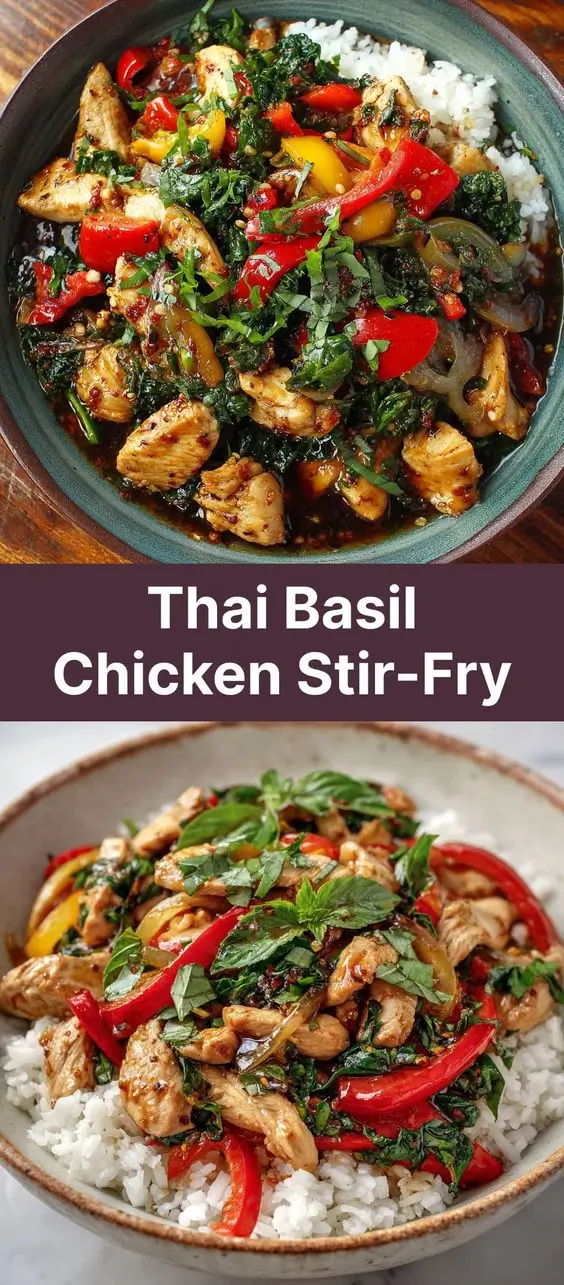
Thai Basil Chicken Stir-Fry, known locally as Pad Kra Pao Gai (ผัดกระเพราไก่), is one of the most iconic and beloved dishes in Thai cuisine. Found on street corners, bustling night markets, and family dinner tables across Thailand, this sizzling stir-fry combines bold flavors—spicy, savory, sweet, and aromatic—into a single satisfying dish. With its fragrant basil leaves, tender chicken, and punchy chili-garlic sauce, Pad Kra Pao Gai captures the essence of Thai home cooking: quick, flavorful, and deeply comforting.
This dish isn’t just popular in Thailand—it has gained a global following for its vibrant taste and ease of preparation. Whether served over steamed jasmine rice with a fried egg on top or tucked into a lettuce wrap for a lighter meal, Thai Basil Chicken Stir-Fry delivers an explosion of flavor in every bite. In this comprehensive guide, we’ll explore the history, ingredients, techniques, and variations of this culinary gem so you can recreate it perfectly at home.
The History
The origins of Thai Basil Chicken Stir-Fry are rooted in the everyday cooking traditions of central and southern Thailand. While exact historical records are scarce, food historians believe that stir-fried dishes like Pad Kra Pao evolved from Chinese culinary influences introduced to Thailand through centuries of trade and migration. The wok-based stir-frying technique, rapid cooking over high heat, and use of soy sauce all point to Chinese roots, but Thais have transformed these methods into something uniquely their own.
The name “Kra Pao” refers specifically to holy basil (Ocimum tenuiflorum), a sacred herb used both in cooking and religious ceremonies throughout Southeast Asia. Unlike sweet basil common in Western kitchens, holy basil has a peppery, clove-like flavor that defines the character of this dish. Over time, Pad Kra Pao became a staple of Thai street food culture, especially among workers and students seeking a fast, affordable, and flavorful meal.
In modern times, Pad Kra Pao Gai has become a national favorite. It’s often seen as comfort food—simple yet deeply satisfying—and is frequently ordered with a “dai kai dao” (extra fried egg) request. Its popularity has surged internationally, appearing on menus from Bangkok food carts to upscale fusion restaurants in New York and London. Today, it stands as a symbol of Thailand’s rich culinary heritage and its ability to balance complex flavors in harmony.
Ingredients Breakdown
The magic of Thai Basil Chicken Stir-Fry lies in its carefully balanced ingredients. Each component plays a crucial role in building layers of flavor, aroma, and texture. Let’s take a closer look at what goes into an authentic version of this dish:
- Chicken: Traditionally, ground or minced chicken is used for its quick cooking time and ability to absorb flavors. Boneless thigh meat is preferred over breast for its juiciness and richer taste, though breast can be used for a leaner option.
- Holy Basil (Kra Pao): This is the star herb. Holy basil has a spicy, slightly minty, and clove-like flavor that distinguishes it from Italian sweet basil or even Thai sweet basil. It wilts quickly when cooked, releasing its essential oils into the dish. If unavailable, Thai sweet basil can be substituted, but the flavor profile will shift slightly.
- Garlic: Freshly minced garlic forms the aromatic base of the stir-fry, providing pungency and depth.
- Chilies: Bird’s eye chilies (prik kee noo) are traditionally used for their intense heat. The number can be adjusted based on spice tolerance, but even one or two add significant kick.
- Fish Sauce (Nam Pla): A cornerstone of Thai seasoning, fish sauce adds umami and saltiness without overpowering the dish. It enhances savory notes while complementing the other ingredients.
- Oyster Sauce: Adds sweetness, body, and a rich savory depth. It helps create a glossy coating on the chicken.
- Soy Sauce: Light soy sauce contributes color and additional saltiness. Dark soy may be used sparingly for deeper color, but it’s not traditional in this dish.
- Sugar (Palm or White): A small amount of sugar balances the saltiness and heat, rounding out the overall flavor. Palm sugar is traditional and imparts a subtle caramel note.
- Vegetable Oil: High smoke point oil like peanut, canola, or sunflower is ideal for high-heat stir-frying.
- Jasmine Rice: While not part of the stir-fry itself, steamed jasmine rice is the classic accompaniment, serving as the perfect neutral base to soak up the flavorful sauce.
- Fried Egg (Optional but Recommended): A sunny-side-up or over-easy fried egg placed on top adds richness and creaminess, especially when the yolk breaks and mingles with the rice and chicken.
Step-by-Step Recipe
Follow these detailed steps to prepare an authentic and delicious Thai Basil Chicken Stir-Fry at home. With proper prep and high heat, this dish comes together in under 15 minutes.
- Prep Ingredients: Mince 3–4 cloves of garlic and slice 2–4 bird’s eye chilies (adjust to taste). Measure out 1 tablespoon fish sauce, 1 tablespoon oyster sauce, 1 teaspoon soy sauce, and 1/2 teaspoon sugar. Have 1 cup of fresh holy basil leaves ready (washed and dried). Prepare 1 pound (450g) of ground chicken.
- Heat the Wok or Pan: Place a wok or large skillet over high heat. Add 2 tablespoons of vegetable oil and swirl to coat the surface. Allow the oil to get very hot—just before smoking.
- Sauté Aromatics: Add the minced garlic and sliced chilies. Stir-fry for about 15–20 seconds until fragrant but not browned. Be careful not to burn them, as this will make the dish bitter.
- Cook the Chicken: Add the ground chicken to the wok. Use a spatula to break it apart and cook for 3–4 minutes, stirring frequently, until fully cooked and lightly browned in spots.
- Add Sauces: Pour in the fish sauce, oyster sauce, soy sauce, and sugar. Stir well to combine and allow the mixture to simmer for another 1–2 minutes, letting the flavors meld and the sauce reduce slightly.
- Incorporate Basil: Toss in the holy basil leaves. Stir vigorously for 30 seconds to 1 minute until the leaves are wilted and aromatic. The heat should release their essential oils, filling your kitchen with fragrance.
- Taste and Adjust: Give the dish a final taste. You may want to add a pinch more sugar for balance or a splash more fish sauce for saltiness, depending on your preference.
- Serve Immediately: Spoon the hot stir-fry over a bed of freshly steamed jasmine rice. Top with a fried egg if desired, and serve with optional garnishes like cucumber slices or extra chilies on the side.
Tips
- Use High Heat: Authentic stir-fries require high heat to achieve the smoky “wok hei” flavor. Don’t overcrowd the pan, and make sure your wok is properly preheated.
- Don’t Skip the Holy Basil: Substituting sweet basil changes the character of the dish. If you can’t find fresh holy basil, look for frozen versions or grow your own plant. Dried basil won’t work—it loses too much flavor.
- Pre-Mix the Sauce: Combine all sauces and sugar in a small bowl before cooking. This ensures even distribution and faster cooking.
- Chicken Texture: For a more textured result, consider finely dicing chicken instead of using ground. Some street vendors even use chopped chicken with a bit of fat for juiciness.
- Egg Perfection: Fry your egg in the same wok after cooking the chicken for residual flavor, or use a separate non-stick pan for better control. Aim for a runny yolk to mix into the rice.
- Serve Immediately: This dish is best enjoyed fresh off the stove. The basil loses its vibrancy if left to sit.
- Customize Heat Level: Remove chili seeds to reduce spiciness, or increase the number of chilies for extra fire.
Variations and Customizations
While chicken is the most common protein, Thai Basil Stir-Fry is highly adaptable. Here are some popular variations:
- Pad Kra Pao Moo: Substitute ground pork for chicken. Pork has a richer fat content, adding depth to the dish.
- Pad Kra Pao Neua: Use thinly sliced beef or ground beef for a heartier version.
- Seafood Version: Try with ground shrimp, squid, or scallops. Reduce cooking time since seafood cooks quickly.
- Vegetarian/Vegan Option: Replace meat with crumbled tofu, tempeh, or plant-based ground “meat.” Use vegan oyster sauce (mushroom-based) and ensure fish sauce is replaced with soy sauce or a vegan alternative.
- Different Basils: In absence of holy basil, Thai sweet basil (with purple stems) is acceptable. Avoid Italian basil, which lacks the necessary spice.
- Add Vegetables: Stir in bell peppers, green beans, baby corn, or mushrooms for added texture and nutrition.
- Noodle Version: Serve over rice noodles instead of jasmine rice for a hybrid dish reminiscent of Drunken Noodles.
- Crispy Shallots: Garnish with store-bought or homemade crispy shallots for extra crunch and flavor.
Health Considerations and Nutritional Value
Thai Basil Chicken Stir-Fry can be a healthy and balanced meal when prepared with mindful ingredient choices. Here’s a nutritional breakdown per serving (approx. 1 cup stir-fry + 1/2 cup rice, without egg):
- Calories: ~350–400 kcal
- Protein: ~25–30g (excellent source)
- Fat: ~10–15g (mostly from chicken and oil)
- Carbohydrates: ~40–45g (primarily from rice and sauces)
- Sodium: ~900–1200mg (mainly from fish and soy sauces)
Health Benefits:
- Holy Basil: Contains antioxidants and anti-inflammatory compounds. Traditionally used in herbal medicine to support digestion and reduce stress.
- Lean Protein: Chicken provides essential amino acids for muscle repair and satiety.
- Low in Added Sugar: When prepared with minimal sugar, this dish has a relatively low glycemic load.
Considerations:
- Sodium Content: Can be high due to fish and soy sauces. Reduce sodium by using low-sodium versions or cutting back on amounts.
- Oil Usage: Control portion size of oil to manage fat intake. Non-stick pans can help reduce needed oil.
- Balanced Meal: Pair with extra vegetables or a side salad to increase fiber and micronutrient intake.
- Egg Addition: Adds healthy fats and choline but increases calories (~70–90 per egg).
Ingredients
- 2 tablespoons vegetable oil (peanut, canola, or sunflower)
- 4 cloves garlic, minced
- 2–4 bird’s eye chilies, sliced (adjust to spice preference)
- 1 pound (450g) ground chicken (preferably thigh)
- 1 tablespoon fish sauce
- 1 tablespoon oyster sauce
- 1 teaspoon light soy sauce
- ½ teaspoon palm or white sugar
- 1 cup fresh holy basil leaves (Kra Pao), loosely packed
- Cooked jasmine rice, for serving
- 1–2 eggs (optional, for topping)
- Cucumber slices, for garnish (optional)
Directions
- In a small bowl, mix together fish sauce, oyster sauce, soy sauce, and sugar. Set aside.
- Heat a wok or large skillet over high heat. Add oil and swirl to coat.
- Add minced garlic and sliced chilies. Stir-fry for 15–20 seconds until fragrant.
- Add ground chicken. Break it apart with a spatula and stir-fry for 3–4 minutes until cooked through and lightly browned.
- Pour in the sauce mixture. Stir well and cook for 1–2 minutes, allowing the sauce to coat the chicken and reduce slightly.
- Add holy basil leaves. Toss continuously for 30 seconds to 1 minute until wilted and aromatic.
- Taste and adjust seasoning—add more sugar for sweetness or fish sauce for saltiness if needed.
- Meanwhile, cook eggs to preference (sunny-side-up or over-easy).
- Serve hot stir-fry immediately over steamed jasmine rice, topped with a fried egg and garnished with cucumber slices if desired.
FAQ
Q: Can I use regular basil instead of holy basil?
A: Regular sweet basil lacks the peppery, clove-like flavor of holy basil. Thai sweet basil is a better substitute. Avoid Italian basil if possible.
Q: Is Pad Kra Pao spicy?
A: Yes, traditionally it is spicy due to bird’s eye chilies. You can reduce or omit chilies for a milder version.
Q: Can I make this ahead of time?
A: Best eaten fresh. However, you can prep ingredients in advance and cook quickly when ready to serve.
Q: What kind of rice should I use?
A: Steamed jasmine rice is traditional. Sticky rice or brown rice can also be used.
Q: Can I freeze leftovers?
A: The stir-fry doesn’t freeze well due to the herbs and texture changes. Eat within 1–2 days if refrigerated.
Q: Why is my dish too salty?
A: Too much fish or soy sauce. Balance with a bit more sugar or serve with extra rice. Use reduced-sodium sauces next time.
Q: Where can I buy holy basil?
A: Asian grocery stores, farmers’ markets, or online herb suppliers. Some Thai restaurants sell fresh bunches.
Summary
Thai Basil Chicken Stir-Fry is a fiery, fragrant, and deeply satisfying dish that embodies the soul of Thai street food. Quick to prepare and bursting with umami, heat, and aroma, it’s a must-try for anyone exploring Southeast Asian cuisine.
With simple ingredients, bold flavors, and endless customization options, Pad Kra Pao Gai is more than just a meal—it’s a culinary experience that brings the vibrant streets of Bangkok straight to your kitchen.