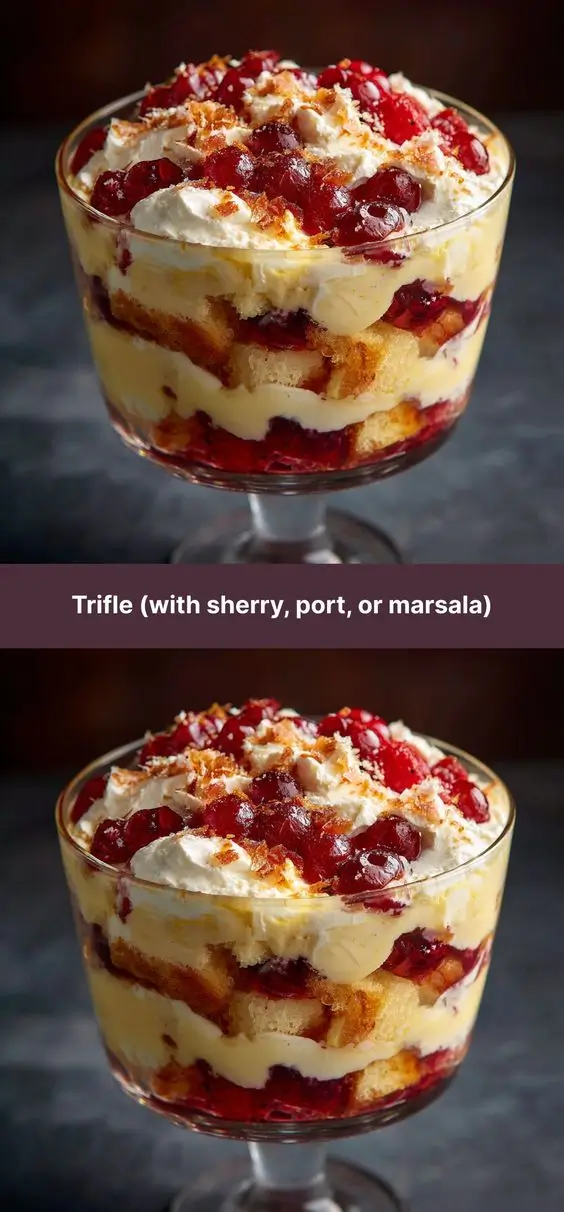
Trifle (with Sherry, Port, or Marsala): A Classic British Dessert Reimagined
The History of Trifle: A Timeless British Delight
Trifle is one of the most iconic desserts in British culinary history, with roots stretching back over 500 years. Originally derived from a dish known as a “fool,” which combined sweetened fruit and cream, trifle evolved during the Renaissance into a more elaborate confection. The earliest known reference to trifle comes from Thomas Dawson’s 1596 cookbook The Good Huswifes Jewell, where it was described as a thick custard flavored with rosewater and cinnamon.
By the 17th century, trifle began to incorporate more luxurious ingredients such as wine-soaked sponge cake—often using sack (a type of fortified wine similar to modern-day sherry)—which gave the dessert its signature moistness and depth of flavor. The use of gelatin in the 18th century allowed for the creation of the layered, jellied version that many recognize today. Victorian-era cooks elevated trifle further by adding layers of custard, jam, fruit, whipped cream, and decorative elements like slivered almonds or candied peel.
Today, trifle remains a staple at British celebrations, especially during holidays like Christmas and Easter. Its versatility allows home bakers and professional chefs alike to experiment with different alcohols, fruits, and textures. Whether made with sherry, port, marsala, or even non-alcoholic substitutes, trifle continues to captivate palates around the world with its rich heritage and indulgent complexity.
Ingredients Breakdown: What Makes a Perfect Trifle?
A traditional trifle is not just a random stack of ingredients—it’s a carefully constructed symphony of flavors, textures, and visual appeal. Each layer plays a vital role in creating the final masterpiece. Here’s a detailed breakdown of the core components used in a classic trifle enhanced with sherry, port, or marsala:
- Sponge Cake or Ladyfingers: Acts as the base and absorbs the alcohol and fruit juices. Store-bought sponge works well, but homemade genoise adds an elegant touch.
- Fortified Wine (Sherry, Port, or Marsala): Adds richness, moisture, and a complex depth of flavor. Each wine brings a unique character—sherry offers nuttiness, port delivers dark fruit notes, and marsala contributes warm caramel tones.
- Fresh Fruit: Traditionally, raspberries and sliced strawberries are used for their bright color and tart-sweet balance. Other options include peaches, cherries, or blackberries depending on the season.
- Jam or Jelly: Often raspberry or apricot, this thin layer enhances sweetness and helps bind the sponge to the custard.
- Custard: A thick, creamy vanilla custard made from scratch using egg yolks, sugar, milk, cornstarch, and vanilla bean or extract. This is the heart of the trifle, providing smooth richness.
- Whipped Cream: Lightly sweetened double (heavy) cream, whipped until soft peaks form, crowns the trifle with airy indulgence.
- Garnishes: Optional additions like toasted almonds, chocolate shavings, edible flowers, or maraschino cherries elevate presentation and add contrasting texture.
The choice of alcohol significantly influences the overall profile. Sherry, particularly cream sherry, lends a velvety, slightly sweet backbone ideal for delicate fruits. Ruby port introduces bold berry notes perfect for winter trifles, while marsala—originally from Sicily—brings a sophisticated warmth that pairs beautifully with peaches and custard.
Step-by-Step Recipe: How to Make a Luxurious Trifle with Fortified Wine
Follow these meticulous steps to create a stunning, restaurant-quality trifle that will impress your guests and satisfy every craving for something rich and nostalgic.
Ingredients
- 1 store-bought or homemade sponge cake (approx. 10-inch round), sliced horizontally into three layers
- ½ cup (120 ml) fortified wine (choose high-quality dry sherry, ruby port, or sweet marsala)
- ¼ cup (80 g) seedless raspberry jam, gently warmed
- 2 cups (300 g) mixed fresh berries (e.g., raspberries, strawberries, blueberries)
- 4 large egg yolks
- ¾ cup (150 g) granulated sugar
- ¼ cup (30 g) cornstarch
- 2 cups (480 ml) whole milk
- 1 tsp pure vanilla extract or seeds from ½ vanilla bean
- 1 tbsp unsalted butter (optional, for silkier custard)
- 2 cups (480 ml) heavy cream (double cream)
- 2 tbsp powdered sugar
- ½ tsp vanilla extract
- Optional garnishes: toasted flaked almonds, chocolate curls, mint leaves, extra berries
Directions
- Prepare the Base Layer: Cut the sponge cake into even slices if needed. Arrange one layer of sponge at the bottom of a clear glass trifle bowl (preferably 3–4 quart capacity). Brush generously with the chosen fortified wine—about ⅓ of the total amount—ensuring full coverage without oversaturating.
- Add Jam and Fruit: Warm the raspberry jam slightly so it spreads easily. Drizzle or spread a thin layer over the soaked sponge. Scatter a third of the fresh berries evenly across the surface.
- Repeat Layers: Add a second sponge layer, brush with another third of the wine, apply a light smear of jam (if desired), and top with more berries. Finish with the final sponge layer, remaining wine, and remaining fruit. Set aside while preparing the custard.
- Make the Custard: In a medium bowl, whisk together egg yolks, sugar, and cornstarch until pale and smooth. Heat milk in a saucepan over medium heat until steaming (do not boil). Slowly pour about half of the hot milk into the yolk mixture, whisking constantly to temper the eggs. Pour everything back into the saucepan.
- Cook the Custard: Stir continuously over medium-low heat until the mixture thickens and coats the back of a spoon (about 5–7 minutes). Avoid boiling to prevent curdling. Remove from heat and stir in vanilla and butter (if using). Strain through a fine-mesh sieve into a clean bowl to ensure smoothness.
- Cool the Custard: Press plastic wrap directly onto the surface of the custard to prevent a skin from forming. Chill in the refrigerator for at least 2 hours, or until completely cold.
- Whip the Cream: In a chilled bowl, beat the heavy cream, powdered sugar, and vanilla extract until soft peaks form. Be careful not to over-whip.
- Combine Custard and Cream: Once chilled, fold the custard gently into the whipped cream until fully incorporated and mousse-like. Do this slowly to maintain airiness.
- Assemble Final Layers: Carefully spread the custard-cream mixture over the fruit and sponge layers in the trifle bowl. Use a spatula to smooth the top evenly.
- Chill Again: Cover loosely with plastic wrap and refrigerate for at least 4 hours—or ideally overnight—to allow flavors to meld and textures to set.
- Garnish and Serve: Just before serving, decorate with additional whipped cream swirls, fresh berries, toasted almonds, chocolate shavings, or mint leaves for a polished finish.
Tips for the Perfect Trifle Every Time
- Don’t Oversoak the Sponge: While the cake should be moist, too much liquid can turn it mushy. Apply wine gradually and let it absorb between layers.
- Use High-Quality Alcohol: Since the wine infuses the entire dessert, choose a brand you’d enjoy drinking. Avoid cooking sherry; opt for real fino, amontillado, or oloroso sherry instead.
- Make Custard Ahead: Preparing the custard a day in advance ensures proper chilling and makes assembly easier.
- Layer Thoughtfully: For visual appeal in a glass bowl, keep layers distinct yet harmonious. Place vibrant berries strategically near the edges.
- Refrigerate Overnight: Allowing the trifle to rest overnight deepens the flavor and improves texture cohesion.
- Whip Cream Cold: Chill the bowl and beaters before whipping cream for faster results and better volume.
- Serve Chilled: Always serve trifle cold to enhance freshness and contrast the richness of the custard and alcohol.
- Portion Neatly: Use a large serving spoon or ladle to scoop through all layers cleanly when presenting to guests.
Variations and Customizations: Make It Your Own
One of the greatest strengths of trifle is its adaptability. You can tailor it to suit seasonal ingredients, dietary needs, or personal taste preferences. Here are some inspired variations:
Seasonal Twists
- Summer Berry Trifle: Use strawberries, raspberries, blueberries, and white peaches. Pair with dry sherry for brightness.
- Autumn Apple & Pear Trifle: Replace berries with spiced poached pears or apples. Use tawny port for earthy warmth.
- Winter Citrus Trifle: Incorporate orange segments, blood oranges, or clementines with a splash of marsala. Garnish with candied ginger.
- Spring Rhubarb Trifle: Stew rhubarb with a bit of sugar and orange zest. Combine with custard and ladyfingers soaked in sherry.
Alcohol Substitutions
- Madeira or Marsala: Offers a richer, slightly sweeter profile than sherry—ideal for holiday trifles.
- Ruby Port: Best with dark fruits like blackberries, plums, or cherries.
- Grand Marnier or Cointreau: For a citrus-forward twist, replace part of the wine with orange liqueur.
- Non-Alcoholic Version: Substitute wine with grape juice, apple juice, or strong tea infused with vanilla and lemon peel.
Dietary Modifications
- Dairy-Free: Use coconut milk-based custard and dairy-free whipped topping (like Cocowhip).
- Egg-Free Custard: Replace egg yolks with additional cornstarch or arrowroot powder and plant-based milk.
- Gluten-Free: Use gluten-free sponge cake or ladyfingers (available commercially).
- Lower Sugar: Reduce sugar in custard and jam, use monk fruit sweetener, and rely on naturally sweet ripe fruit.
Flavor Infusions
- Add a pinch of cinnamon or nutmeg to the custard for warmth.
- Infuse the milk with lavender, cardamom, or Earl Grey tea before making custard.
- Drizzle a thin layer of chocolate ganache between layers for a decadent twist.
- Incorporate lemon curd instead of jam for a tangy surprise.
Health Considerations and Nutritional Value
While trifle is undeniably indulgent, understanding its nutritional content can help you enjoy it mindfully. A typical serving (1/8 of a standard trifle) contains approximately:
- Calories: 350–450 kcal
- Fat: 20–28g (mostly from cream and custard)
- Saturated Fat: 12–16g
- Carbohydrates: 35–45g
- Sugars: 28–38g (natural and added)
- Protein: 5–7g (from eggs and dairy)
- Cholesterol: Moderate due to egg yolks and cream
- Sodium: Low to moderate
Key Health Notes:
- Contains alcohol, which may not be suitable for children, pregnant women, or those avoiding ethanol.
- Rich in saturated fats—consume in moderation, especially for individuals managing heart health.
- Lacks significant fiber unless fruit-heavy versions are made.
- Provides calcium and vitamin D from dairy, plus antioxidants from berries.
- Can be adapted for lower-calorie diets using light dairy alternatives and reduced sugar.
To make trifle healthier:
- Reduce jam and sugar in custard.
- Boost fruit content and minimize sponge.
- Use low-fat Greek yogurt in place of some cream.
- Serve smaller portions alongside herbal tea to aid digestion.
Frequently Asked Questions (FAQ)
Can I make trifle without alcohol?
Yes! Replace the sherry, port, or marsala with fruit juice (such as white grape, apple, or orange), strong brewed tea, or a syrup made from water, sugar, and vanilla. The dessert will still be flavorful, though less complex.
How far in advance can I make trifle?
Trifle actually benefits from being made 12–24 hours ahead. The resting time allows the sponge to fully absorb the liquid and the flavors to blend. It can be stored in the fridge for up to 3 days.
Why did my custard curdle?
Custard curdles when heated too quickly or boiled. To avoid this, temper the eggs slowly and cook over low to medium heat, stirring constantly. If minor curdling occurs, strain the custard through a fine sieve.
Can I freeze trifle?
No, freezing is not recommended. The texture of the custard, cream, and fruit deteriorates upon thawing, resulting in separation and sogginess.
What kind of bowl should I use?
A large, transparent glass trifle bowl (3–4 quarts) is traditional because it showcases the beautiful layers. Alternatives include a punch bowl, large serving dish, or individual parfait glasses for portioned servings.
Can I use instant custard instead of homemade?
You can, but homemade custard offers superior flavor and texture. If using instant, follow package instructions and chill thoroughly before folding into whipped cream.
Is trifle safe for kids?
If made with alcohol, some ethanol remains even after soaking. For children, prepare a separate non-alcoholic version or allow the alcohol to evaporate by lightly warming the soaked sponge (though this alters texture).
Can I add gelatin to stabilize the trifle?
Traditional Victorian trifles included gelatin to firm the custard layer, but modern versions usually skip it. If desired, dissolve 1 tsp unflavored gelatin in cold water, then mix into warm custard before chilling.
Summary
Trifle is a magnificent layered dessert combining wine-soaked sponge, vibrant fruit, luscious custard, and cloud-like whipped cream, offering both visual drama and exquisite flavor. Whether enriched with sherry, port, or marsala, this timeless British classic remains a celebration favorite for good reason—rich tradition meets indulgent delight in every spoonful.