Introduction
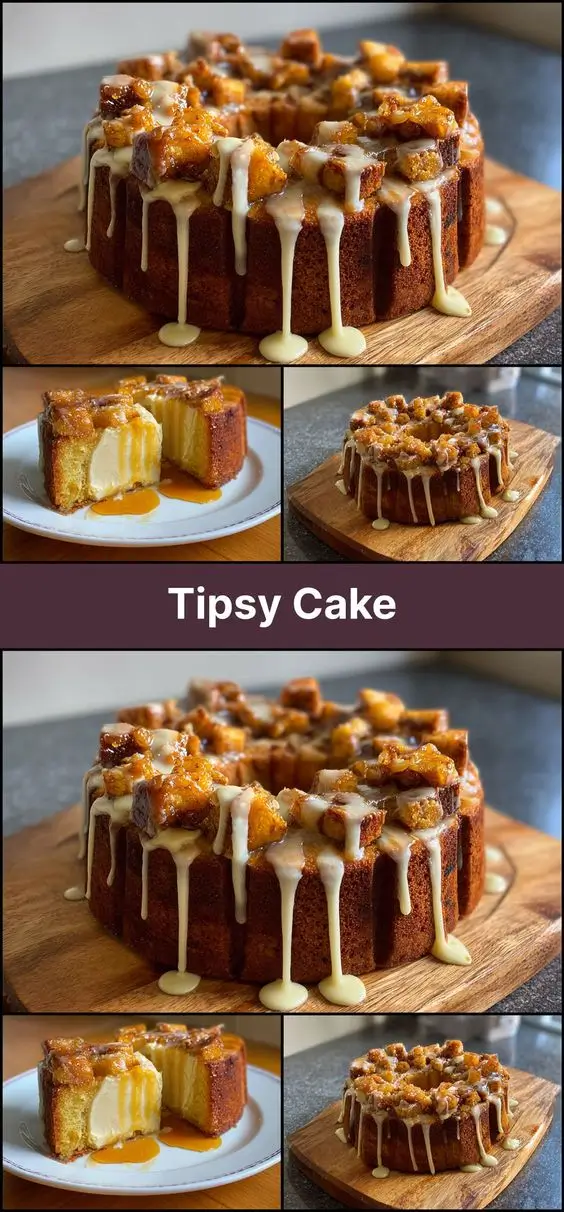
The Tipsy Cake, a decadent and indulgent dessert with roots in British culinary tradition, is a beloved treat that combines the rich flavors of alcohol-soaked sponge cake with creamy fillings and luscious toppings. Known for its moist texture and bold taste, this dessert has evolved over centuries, making appearances in aristocratic banquets and humble family kitchens alike. Whether served at festive gatherings or enjoyed as an after-dinner delight, the Tipsy Cake never fails to impress with its elegance and depth of flavor. Its name, “Tipsy,” hints at its spirited character—infused generously with liquor—and its ability to leave diners feeling pleasantly giddy, much like a gentle buzz from fine wine.
The History
The origins of the Tipsy Cake can be traced back to 18th-century England, where it emerged as a variation of the classic trifle. Originally called “Tipsy Squire,” this dessert was a favorite among the English gentry who had access to imported spirits, sherry, and Madeira wine. The dish was typically made by soaking slices of sponge or pound cake in fortified wine or brandy, then layering them with custard, whipped cream, and preserved fruits. Over time, the recipe traveled across Europe and the Americas, adapting to local tastes and ingredients. In Victorian times, it became a staple at dinner parties, symbolizing refinement and hospitality. By the 20th century, bakers began experimenting with different alcohols—rum, bourbon, amaretto—giving rise to numerous regional interpretations. Today, the Tipsy Cake stands as a testament to culinary evolution, blending historical charm with modern creativity.
Ingredients Breakdown
The magic of a perfect Tipsy Cake lies in the harmony of its components. Each ingredient plays a crucial role in building layers of flavor, moisture, and texture:
- Sponge or Pound Cake: The foundation of the dessert. A light, airy sponge cake absorbs the alcohol beautifully without disintegrating. Homemade is ideal, but store-bought works well for convenience.
- Alcohol: The soul of the cake. Traditionally, sherry or Madeira is used, but rum, brandy, bourbon, or even Baileys are popular alternatives. The spirit not only adds flavor but also preserves the cake and enhances its richness.
- Custard or Pastry Cream: Provides a velvety contrast to the boozy cake. Made from milk, egg yolks, sugar, and cornstarch, it’s cooked until thick and smooth, often flavored with vanilla.
- Whipped Cream: Adds lightness and balances the intensity of the alcohol. Freshly whipped cream with a touch of sugar and vanilla is preferred over canned versions.
- Fresh or Preserved Fruits: Strawberries, raspberries, peaches, or cherries add brightness and acidity. Canned fruits like apricots or mandarin oranges were traditionally used when fresh ones weren’t available.
- Sugar Syrup (Optional): A simple syrup infused with citrus zest or spices can enhance sweetness and moisture before adding the alcohol.
- Garnishes: Mint leaves, chocolate shavings, toasted almonds, or edible flowers elevate presentation and add subtle textural contrast.
The quality of ingredients directly affects the final result—using real dairy, farm-fresh eggs, and premium spirits makes a noticeable difference in taste and mouthfeel.
Step-by-Step Recipe
- Prepare the Cake Base: Bake a sponge or pound cake ahead of time and let it cool completely. Cut it horizontally into even layers using a serrated knife. Alternatively, use cubed pieces if making a trifle-style Tipsy Cake.
- Make the Soaking Liquid: In a bowl, combine 1 cup of your chosen alcohol (e.g., dark rum or sherry) with ¼ cup simple syrup (equal parts sugar and water, heated until dissolved). Cool before use. For extra flavor, infuse the syrup with lemon zest, cinnamon sticks, or vanilla beans.
- Soak the Cake: Place the first layer of cake in a serving dish. Brush or drizzle the alcohol mixture evenly over the surface, allowing it to absorb slowly. Repeat for each layer, being careful not to oversaturate—too much liquid can turn the cake mushy.
- Prepare the Custard: Heat 2 cups whole milk with a split vanilla bean. In a separate bowl, whisk together 4 egg yolks and ½ cup sugar until pale. Temper the yolks with hot milk, then return to the stove and cook on low heat, stirring constantly, until thickened. Strain and chill.
- Whip the Cream: In a cold bowl, beat 1 cup heavy cream with 2 tablespoons powdered sugar and ½ teaspoon vanilla extract until stiff peaks form.
- Layer the Dessert: On top of the soaked cake layer, spread a generous amount of chilled custard. Add a layer of fresh fruit. Repeat the sequence: cake, soak, custard, fruit. Top with the final cake layer.
- Add Final Touches: Cover the top with whipped cream. Decorate with more fruit, chocolate curls, or a dusting of cocoa powder.
- Chill Thoroughly: Refrigerate the assembled Tipsy Cake for at least 4 hours, preferably overnight. This allows flavors to meld and textures to stabilize.
- Serve: Slice with a sharp knife dipped in warm water for clean cuts. Serve chilled in elegant glassware or individual dessert cups.
Tips
Creating the perfect Tipsy Cake requires attention to detail, patience, and a few insider techniques. Here are comprehensive tips to ensure success every time:
- Use Room-Temperature Ingredients: Especially important for eggs and dairy used in custard and whipped cream. Cold ingredients don’t emulsify well and may result in lumpy or grainy textures.
- Don’t Rush the Soaking Process: Apply the alcohol mixture gradually, letting each layer absorb fully before adding more. This prevents sogginess while ensuring deep flavor penetration.
- Balance Sweetness: Alcohol can amplify perceived sweetness. Taste your soaking liquid before applying—it should be slightly sweeter than desired since the cake will mellow it out.
- Choose the Right Alcohol: Match the spirit to the flavor profile you want. Rum pairs well with tropical fruits like mango and pineapple; brandy complements stone fruits such as peaches and plums; amaretto adds nuttiness that goes perfectly with cherries.
- Avoid Grainy Custard: Cook the custard over low heat and stir continuously. Remove from heat just before it reaches boiling point. Straining through a fine-mesh sieve removes any cooked egg bits.
- Stabilize Whipped Cream (Optional): To prevent weeping during long chilling times, add 1 tablespoon of cornstarch or 1 teaspoon of gelatin (dissolved in water) while whipping.
- Toast Nuts or Coconut Flakes: Adding toasted elements between layers introduces a delightful crunch and aromatic depth.
- Layer in Clear Glassware: Serving in trifle bowls or mason jars showcases the beautiful strata of cake, fruit, and cream—ideal for dinner parties or special occasions.
- Freeze Leftover Cake Layers: If not using immediately, wrap unfilled cake tightly in plastic and freeze for up to 3 months. Thaw at room temperature before assembling.
- Let It Rest Overnight: Chilling for 8–12 hours dramatically improves flavor integration. The alcohol mellows, the custard firms, and the entire dessert becomes cohesive.
- Prevent Browning of Fruit: Toss apples, bananas, or pears in a little lemon juice to keep them fresh-looking. Avoid watery fruits like watermelon that could dilute the layers.
- Customize for Holidays: Add holiday flair with peppermint extract and crushed candy canes at Christmas, or pastel-colored sprinkles and strawberry glaze for Easter.
- Check Alcohol Content: Be mindful when serving to guests who may avoid alcohol. You can reduce the amount or substitute with non-alcoholic vanilla syrup, though the authentic “tipsy” experience will be lost.
- Use Fresh Eggs for Custard: Since custard is made with raw yolks (even though cooked), freshness ensures safety and optimal texture.
- Keep Utensils Clean: Any trace of oil or yolk in the whipping cream bowl can prevent proper aeration. Wipe bowls with vinegar before whipping.
- Label Your Versions: If experimenting with multiple alcohols or variations, label containers clearly so you can replicate successes later.
- Serve on a Bed of Cookies: For added texture, place a thin layer of ladyfingers or amaretti cookies at the bottom before the cake layer.
- Drizzle with Sauce: Before serving, add visual appeal with a ribbon of chocolate ganache, caramel, or fruit coulis around the plate.
- Portion Control: This is a rich dessert—smaller servings are often sufficient. Use mini mason jars for individual portions at buffets.
- Photograph Before Serving: Due to its layered beauty, capture high-quality images before digging in—especially if sharing on social media or food blogs.
Variations and Customizations
The versatility of the Tipsy Cake makes it a canvas for endless creativity. Here are some inspired variations:
- Tropical Tipsy Cake: Use coconut-rum (like Malibu), pineapple chunks, mango puree, and toasted coconut flakes. Garnish with maraschino cherries and paper umbrellas for a vacation vibe.
- Chocolate Lover’s Version: Incorporate chocolate sponge cake, soak with coffee-infused Kahlúa, layer with chocolate ganache, and top with chocolate whipped cream and raspberries.
- Berry Medley Trifle-Style: Combine blueberries, blackberries, strawberries, and raspberries with vanilla cake soaked in Chambord liqueur. Layer with mascarpone-custard blend for extra richness.
- Spiced Autumn Edition: Use pumpkin spice cake, soak with bourbon and maple syrup, layer with spiced apple compote and cinnamon whipped cream. Perfect for Thanksgiving.
- Italian-Inspired Amaretto Delight: Use almond-flavored cake, soak with amaretto di Saronno, layer with cherry filling and ricotta-cheese mixture sweetened with honey.
- Coffee & Walnut Fusion: Brush espresso-soaked cake with Irish cream liqueur, layer with coffee pastry cream, chopped walnuts, and dulce de leche swirls.
- Gluten-Free Option: Substitute regular cake with gluten-free sponge or almond flour cake. Ensure all other ingredients (like liqueurs) are certified gluten-free.
- Vegan Tipsy Cake: Use plant-based sponge (flax eggs, almond milk), coconut cream instead of dairy, and vegan custard made with agar-agar. Soak with alcohol-safe vegan liqueurs.
- Kid-Friendly Mocktail Version: Replace alcohol with grape juice, apple cider reduction, or flavored syrups. Keep the fun layering and colors intact.
- Luxury Champagne Cake: Use champagne or prosecco to soak delicate genoise layers, pair with white chocolate mousse and macerated strawberries—ideal for weddings or anniversaries.
Health Considerations and Nutritional Value
While undeniably delicious, the Tipsy Cake is a high-calorie, rich dessert best enjoyed in moderation. A typical serving (1/8th of a standard cake) contains approximately:
- Calories: 350–500 kcal depending on size and ingredients
- Fat: 18–25g (mostly saturated from cream and egg yolks)
- Carbohydrates: 50–70g (from sugar, cake, and fruit)
- Protein: 6–8g (mainly from eggs and dairy)
- Alcohol Content: Varies widely—from 1 to 3 tablespoons per serving, equating to roughly 10–30ml of pure ethanol.
Considerations:
- Not Suitable for Certain Groups: Pregnant women, recovering alcoholics, children, and those with liver conditions should avoid alcoholic versions.
- Sugar Sensitivity: High sugar content may affect diabetics. Use sugar substitutes like erythritol or stevia in custard and syrup, though texture may vary.
- Lactose Intolerance: Substitute dairy with lactose-free milk, yogurt, or coconut-based creams.
- Egg Allergies: Custard can be replaced with cornstarch-thickened plant milk or commercial egg-free puddings.
- Portion Awareness: Due to density and richness, smaller slices satisfy better than large servings.
- Balanced Diet: Best paired with a light meal and followed by a walk to aid digestion.
Despite its indulgence, the Tipsy Cake can fit into a balanced lifestyle when consumed occasionally and mindfully.
Ingredients
- 1 homemade or store-bought sponge cake (9-inch round, ~2 lb)
- 1 cup dark rum, sherry, or preferred alcohol
- ¼ cup granulated sugar
- ¼ cup water
- 2 cups whole milk
- 4 large egg yolks
- ½ cup sugar (for custard)
- 3 tablespoons cornstarch
- 1 vanilla bean or 1 tsp vanilla extract
- 1 cup heavy whipping cream
- 2 tbsp powdered sugar
- 2 cups mixed fresh fruit (strawberries, raspberries, peaches)
- Optional: mint leaves, chocolate shavings, toasted nuts
Directions
- Bake and cool the sponge cake. Slice into three horizontal layers.
- Prepare simple syrup: Combine sugar and water in a small saucepan. Heat until sugar dissolves. Let cool. Mix with alcohol.
- Place first cake layer in a trifle dish. Brush generously with alcohol-syrup mixture. Repeat for remaining layers.
- Heat milk with vanilla bean (scraped seeds and pod) until steaming. Discard pod after infusion.
- In a bowl, whisk egg yolks, sugar, and cornstarch until pale and thick.
- Slowly pour hot milk into yolk mixture, whisking constantly (tempering).
- Return mixture to saucepan. Cook over medium-low heat, stirring constantly, until thick and bubbling. Remove from heat.
- Strain custard into a clean bowl. Press plastic wrap directly onto surface to prevent skin. Chill for 2+ hours.
- In a chilled bowl, whip cream with powdered sugar and vanilla until stiff peaks form.
- Fold one-third of whipped cream into custard for lightness. Reserve the rest for topping.
- On the soaked cake base, spread half the custard mixture. Add a layer of sliced fruit.
- Repeat: another cake layer, soak, custard, fruit. Top with final cake layer and soak lightly.
- Spread remaining whipped cream over the top. Decorate with fruit, chocolate, or mint.
- Refrigerate for at least 4 hours, preferably overnight.
- Before serving, allow to sit at room temperature for 10 minutes for optimal texture.
- Slice and serve in glasses or plates. Enjoy responsibly!
FAQ
Q: Can I make a Tipsy Cake without alcohol?
A: Yes! Substitute with strong brewed tea, fruit juice, or flavored syrups. The cake won’t have the same depth or preservation benefits, but it can still be delicious.
Q: How long does Tipsy Cake last in the fridge?
A: Up to 5 days when stored covered. However, peak flavor and texture occur within the first 48 hours.
Q: Can I freeze Tipsy Cake?
A: Not recommended once assembled due to custard and cream separating upon thawing. Freeze unsoaked cake layers instead.
Q: Why is my custard lumpy?
A: Likely due to overheating or insufficient tempering. Always cook low and slow, and strain afterward for smoothness.
Q: Can I use store-bought custard or pudding?
A: Absolutely. Good-quality instant or refrigerated pastry cream saves time, though homemade offers superior taste.
Q: What’s the difference between Tipsy Cake and Trifle?
A: Tipsy Cake is essentially a refined version of trifle, often with fewer ingredients and a focus on boozy cake and cream. Traditional trifles may include jelly, more fruit, and layers of jam.
Q: Is Tipsy Cake safe for kids?
A: Only if made alcohol-free. Even with cooking, significant alcohol remains in the cake unless omitted entirely.
Q: Can I prepare it in advance?
A: Yes—this dessert actually improves with time. Assemble up to 24 hours ahead for best results.
Q: What glassware should I use?
A: Trifle bowls, parfait glasses, mason jars, or wine goblets work beautifully. Choose clear containers to show off the layers.
Q: Can I use cake mix instead of homemade?
A: Definitely. A high-quality yellow or vanilla cake mix yields excellent results when baked and cooled properly.
Summary
The Tipsy Cake is a luxurious, alcohol-kissed dessert that blends tender sponge, rich custard, and vibrant fruit into a harmonious celebration of flavor and texture. With roots in British tradition and endless modern adaptations, it remains a timeless favorite for special occasions and indulgent moments alike.