Introduction
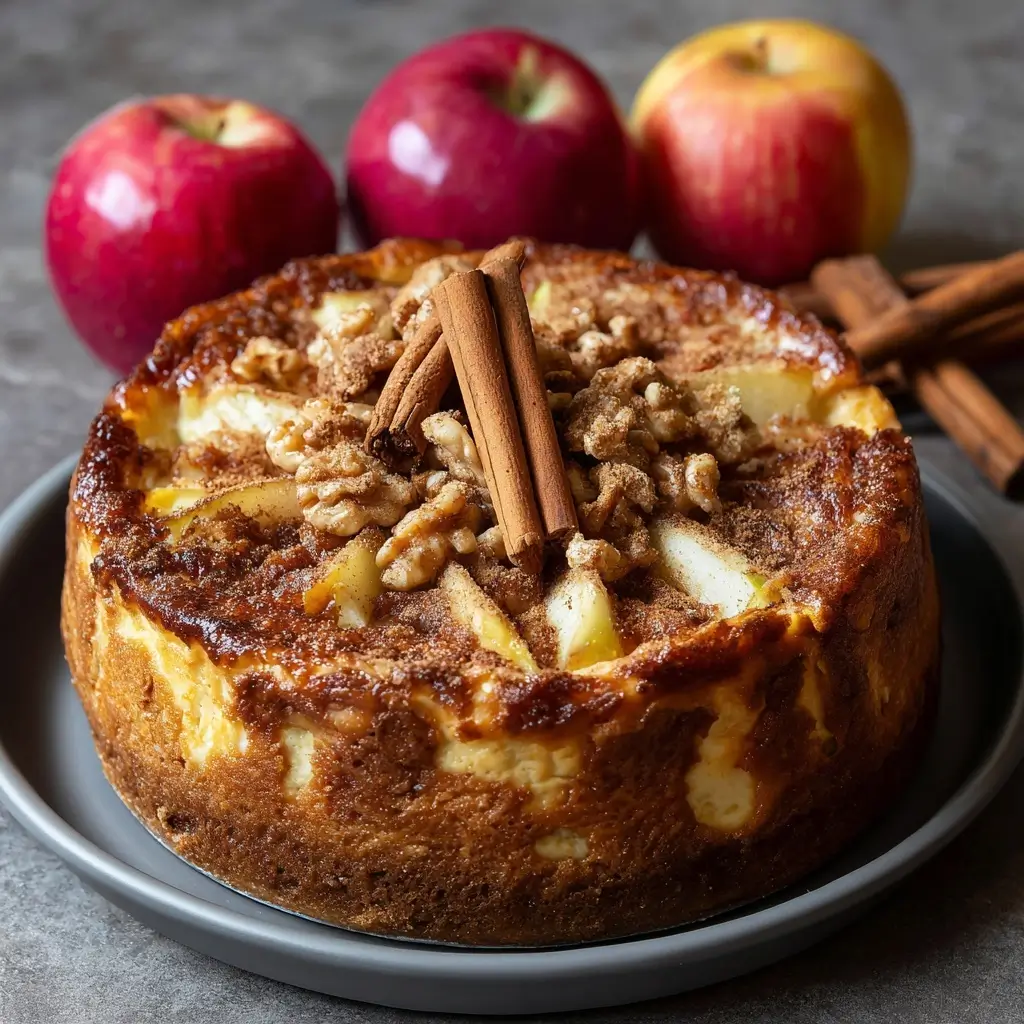
Welcome to the ultimate guide to Apple Cinnamon Cheesecake — a decadent, seasonally inspired fusion that marries the creamy richness of New York–style cheesecake with the warm, comforting aromas of autumn. This isn’t just dessert—it’s nostalgia in every bite: tender spiced apples nestled atop a velvety, crack-free cheesecake base, all cradled by a buttery graham cracker crust infused with cinnamon and brown sugar. Whether you’re baking for Thanksgiving, hosting a cozy fall gathering, or simply treating yourself on a crisp Sunday afternoon, this recipe delivers restaurant-quality elegance with approachable technique. From its origins rooted in American dairy traditions to modern interpretations featuring local orchard apples and organic spices, Apple Cinnamon Cheesecake stands as a timeless celebration of simplicity, balance, and soul-satisfying flavor.
The History
The story of Apple Cinnamon Cheesecake is one of culinary evolution—a delicious convergence of three iconic American dessert lineages. Cheesecake itself traces back to ancient Greece, where early versions made with honey-sweetened cheese and flour were served to athletes at the first Olympic Games in 776 BCE. It traveled through medieval Europe, evolved in England with curd-based recipes, and was reimagined in late 19th-century America using cream cheese—a product pioneered by William Lawrence in Chester, New York, in 1872. By the 1920s, Arnold Reuben’s “New York Cheesecake” (reportedly created in 1923 at his deli) set the gold standard for dense, rich, oven-baked perfection.
Meanwhile, apple pie—often dubbed “as American as apple pie”—has roots stretching from 14th-century England (where early “appel pies” contained figs, pomegranates, and spices) to colonial America, where settlers planted apple orchards and baked fruit desserts over open hearths. Cinnamon, originally traded along the Silk Road from Sri Lanka and India, became widely available in North America by the 1700s and was soon paired with apples for both preservation and enhanced warmth—especially during long winters.
The marriage of these traditions—cheesecake + spiced apples—gained traction in the mid-20th century, appearing in regional cookbooks like the 1951 *Betty Crocker Picture Cook Book* and gaining momentum through 1970s home economics classes and church socials. The 1990s brought gourmet reinterpretations, with chefs layering caramelized apples, adding bourbon-infused glazes, or incorporating streusel toppings. Today, Apple Cinnamon Cheesecake symbolizes mindful indulgence: a dessert that honors tradition while inviting creativity—from heirloom Honeycrisp apples to sustainably sourced Saigon cinnamon and grass-fed cream cheese.
Ingredients Breakdown
Every extraordinary Apple Cinnamon Cheesecake begins with thoughtfully selected, high-quality components. Below is a detailed breakdown—not just of *what* goes in, but *why* each ingredient matters:
- Graham Cracker Crust Base: Whole-grain graham crackers provide structure, subtle molasses sweetness, and a delicate crunch. Using full-sheet crackers (not honey-flavored variants) ensures consistent texture and neutral pH, critical for even baking. Finely crushed crumbs bind seamlessly with melted unsalted butter and dark brown sugar—the latter contributes moisture, caramel notes, and acidity that balances the filling’s richness.
- Cream Cheese: Full-fat, brick-style cream cheese (e.g., Philadelphia or Kraft) is non-negotiable. Low-fat versions contain stabilizers and added water that cause weeping, cracking, and graininess. For best results, use blocks that have been softened at room temperature for 2–3 hours—never microwaved—so they whip smoothly without over-aerating.
- Sour Cream & Heavy Cream: Sour cream adds tang, tenderness, and moisture retention; heavy cream (not half-and-half or milk) enriches mouthfeel and promotes a luxuriously smooth, custard-like crumb. Both should be at room temperature to prevent lumps and thermal shock during mixing.
- Granulated & Brown Sugar: Granulated sugar dissolves cleanly into the batter, aiding in aeration and stability. Dark brown sugar (not light) in the apple layer provides deep molasses complexity, humectant properties (retaining moisture), and natural acidity that enhances cinnamon’s warmth.
- Eggs: Large, cage-free eggs at room temperature act as emulsifiers and leaveners. Adding them one at a time—and mixing *just until incorporated*—prevents excess air entrapment, which leads to cracks and sinking.
- Fresh Apples: Choose firm, tart-sweet varieties with high pectin content: Granny Smith (classic for structure and brightness), Honeycrisp (juicy and aromatic), Braeburn (spice-forward), or Pink Lady (balanced acidity). Avoid Red Delicious or Gala—they break down too easily. Peel, core, and dice into uniform ¼-inch cubes for even cooking and visual appeal.
- Cinnamon: Opt for freshly ground Ceylon or Saigon cinnamon—not pre-ground supermarket blends. Ceylon offers floral, delicate warmth; Saigon delivers bold, fiery-sweet intensity. Both contain higher volatile oil concentrations than cassia, resulting in more nuanced aroma and superior binding with dairy proteins.
- Lemon Juice & Zest: Freshly squeezed lemon juice brightens the entire profile, cuts through fat, and helps stabilize egg proteins. Microplaned zest adds aromatic citrus oils that elevate the cinnamon-apple harmony without detectable sourness.
- Vanilla Extract: Use pure, double-fold Madagascar bourbon vanilla (not imitation) for layered depth—vanillin, coumarin, and woody undertones that complement both fruit and spice.
- Optional Enhancements: A pinch of freshly grated nutmeg or allspice intensifies warmth; a tablespoon of Calvados or apple brandy deepens fruit nuance; a swirl of salted caramel drizzle adds glossy contrast; toasted pecans or walnuts lend textural intrigue and toasted-oil richness.
Step-by-Step Recipe
This meticulously tested, fail-safe method ensures a flawlessly smooth, golden, jiggly-but-set cheesecake with no cracks, no sinkage, and maximum apple-cinnamon resonance:
- Prep & Preheat: At least 24 hours before baking, remove cream cheese, sour cream, heavy cream, eggs, and butter from the refrigerator. Let them warm to true room temperature (68–72°F / 20–22°C)—this can take 2–3 hours depending on ambient conditions. Position oven rack in center position. Preheat oven to 325°F (163°C). Wrap exterior of a 9-inch springform pan *completely* with two overlapping layers of heavy-duty aluminum foil—ensure no gaps at the seam or bottom—to prevent water bath leakage.
- Prepare Crust: In a food processor, pulse 1 ½ cups (150g) graham cracker crumbs, ⅓ cup (70g) dark brown sugar, 1 tsp ground cinnamon, and ¼ tsp fine sea salt until evenly combined. Add 6 tbsp (85g) unsalted butter, melted and slightly cooled, and pulse until mixture resembles wet sand and holds together when pinched. Press firmly and evenly into bottom and 1 inch up sides of prepared pan using flat-bottomed measuring cup or glass. Chill crust uncovered for 30 minutes.
- Bake Crust: Bake chilled crust at 325°F for 10 minutes. Remove, tap gently on counter to settle, and cool completely on wire rack (≈20 min). Reduce oven temp to 300°F (149°C) for cheesecake bake.
- Make Apple Topping: While crust cools, heat 2 tbsp (28g) unsalted butter in medium skillet over medium heat. Add 2 medium peeled, cored, and diced apples (≈3 cups / 360g), ¼ cup (50g) dark brown sugar, 1 tsp ground cinnamon, ¼ tsp ground nutmeg, 1 tbsp (15ml) fresh lemon juice, and pinch of salt. Sauté 6–8 minutes, stirring occasionally, until apples are tender but still hold shape—do not overcook. Cool completely (≈30 min); excess steam will make filling watery.
- Prepare Cheesecake Batter: Using stand mixer with paddle attachment (or hand mixer on low speed), beat softened cream cheese on medium-low for 2 minutes until completely smooth and glossy—scrape bowl thoroughly. Add granulated sugar (¾ cup / 150g) and beat 1 minute more until homogeneous. Scrape bowl. Add sour cream (1 cup / 240g), heavy cream (½ cup / 120ml), lemon juice (1 tbsp), lemon zest (1 tsp), and vanilla (2 tsp). Beat 1 minute on medium-low until fully incorporated—no streaks. Scrape bowl meticulously.
- Incorporate Eggs: With mixer on lowest speed (stir setting), add eggs one at a time, beating *just until yolk disappears* after each addition (≈10–15 seconds per egg). Overmixing introduces air → cracks. Scrape bowl after each addition. Batter should be thick, glossy, and pourable—not foamy.
- Assemble & Water Bath: Pour batter into cooled crust. Gently tap pan on counter 3x to release air bubbles. Spoon cooled apple mixture evenly over batter. Use offset spatula to lightly swirl apples *just once*—don’t over-swirl. Place springform pan inside larger roasting pan. Carefully pour hot (not boiling) water into roasting pan until it reaches halfway up sides of springform (≈1–1.5 inches deep).
- Bake: Bake at 300°F for 1 hour 45 minutes–1 hour 55 minutes. Cheesecake is done when edges are set and center jiggles *slightly* like Jell-O—no liquid sloshing. Turn OFF oven, crack door open 1 inch with wooden spoon, and let cheesecake cool inside oven for 1 hour. This gradual cooling prevents thermal shock and cracking.
- Chill & Set: Remove from water bath, run thin knife around edge to loosen, and cool completely on wire rack (≈2 hours). Refrigerate uncovered for minimum 12 hours—or ideally 24–48 hours—to allow full texture development, flavor melding, and clean slicing.
- Final Touches: Before serving, dip springform knife in hot water, wipe dry, and release ring. Garnish with optional cinnamon whipped cream, extra sautéed apples, candied walnuts, or a glossy apple-cider reduction.
Tips
- Room Temperature Is Non-Negotiable: Cold ingredients cause lumps, poor emulsion, and uneven baking. If short on time, cut cream cheese into ½-inch cubes and let sit 45 minutes—never microwave.
- No-Mix Zones: Never use high speed when adding eggs or folding in apples. Use “stir” or “low” setting only. Stop mixing the *instant* ingredients are incorporated.
- Water Bath Precision: Use hot (180°F) tap water—not boiling—to avoid sudden steam bursts. Line roasting pan with towel to prevent pan sliding. Check water level halfway—if evaporating, top up with more hot water.
- Crack Prevention Trio: (1) Room-temp ingredients, (2) No overmixing, (3) Gradual cooling (oven-off + cracked-door rest). Even if minor surface fissures appear, they’ll vanish under apple topping or glaze.
- Knife Science: For clean slices: dip sharp, thin-bladed knife in hot water, wipe dry, slice, then repeat between *every* cut. Wipe blade after each pass to prevent dragging.
- Freezer-Friendly: Unfrosted, fully chilled cheesecake freezes beautifully for up to 3 months. Wrap tightly in plastic, then foil. Thaw overnight in fridge—never at room temperature—to preserve texture.
- Acid Balance: If apples taste too tart, add 1 tsp extra brown sugar to sauté step. If too sweet, add another ½ tsp lemon juice. Taste apples *after cooling*—acidity mellows with temperature drop.
- Altitude Adjustments: Above 3,000 ft: reduce sugar by 1 tbsp, increase flour in crust by 1 tsp, bake 5–10 minutes longer, and cool in oven for 90 minutes.
Variations and Customizations
This recipe serves as a vibrant canvas—adaptable to dietary needs, seasonal abundance, and global inspirations:
- Gluten-Free: Substitute gluten-free graham crackers (like Kinnikinnick or Pamela’s) and verify all spices are certified GF. Add 1 tsp xanthan gum to crust for binding.
- Vegan: Use soaked raw cashews (blended ultra-smooth), coconut cream, silken tofu, and vegan butter. Replace eggs with flax “eggs” (2 tbsp ground flax + 6 tbsp water, rested 10 min). Sweeten with maple syrup and use apple butter instead of sautéed apples for cohesion.
- Low-Sugar/Keto: Swap granulated and brown sugars with erythritol-monkfruit blend (1:1 ratio). Use almond flour + coconut flour crust (¾ cup almond, ¼ cup coconut, 3 tbsp erythritol, 5 tbsp butter). Opt for tart green apples and skip added sugar in topping—rely on cinnamon and vanilla for sweetness perception.
- Spiced Chai Infusion: Steep 2 chai tea bags in warm heavy cream for 10 minutes; strain before adding to batter. Add ¼ tsp cardamom + ⅛ tsp black pepper to apple sauté.
- Maple-Bourbon Swirl: Whisk ¼ cup pure maple syrup + 1 tbsp bourbon + 1 tsp cornstarch (heated to thicken) and ripple into batter before adding apples.
- Streusel-Topped: Mix ½ cup flour, ⅓ cup brown sugar, 1 tsp cinnamon, ¼ tsp salt, and 4 tbsp cold butter (cut in) until pea-sized. Sprinkle over apples before baking.
- Mini Jar Versions: Bake in 4-oz mason jars (lined with parchment) for individual servings—reduce bake time to 35–40 minutes in water bath.
- Deconstructed Parfait: Layer crumbled crust, no-bake cheesecake mousse (whipped cream cheese + Greek yogurt), spiced apples, and granola in glasses for elegant, portable servings.
- International Twists: Japanese-style (add matcha to batter and top with yuzu-apple compote); Dutch-inspired (fold in stroopwafel crumbles); Southern (add 2 tbsp sorghum syrup and toasted pecans).
Health Considerations and Nutritional Value
While Apple Cinnamon Cheesecake is inherently indulgent, mindful preparation transforms it into a dessert with meaningful nutritional merit—especially when enjoyed in balanced portions. Per standard slice (1/12 of 9-inch cake, ≈210g), here’s a science-informed analysis:
- Macronutrients (approx.): 420 kcal | 28g fat (16g sat) | 38g carbs (26g sugar, 2g fiber) | 7g protein. The apples contribute 2g of soluble fiber (pectin), supporting gut health and gentle blood sugar modulation.
- Cinnamon Benefits: Just 1 tsp contains 1.4mg manganese (65% DV), plus potent polyphenols like cinnamaldehyde and proanthocyanidins—shown in clinical studies to improve insulin sensitivity, reduce postprandial glucose spikes, and exhibit anti-inflammatory activity (Journal of the Academy of Nutrition and Dietetics, 2021).
- Dairy Nuances: Full-fat dairy provides conjugated linoleic acid (CLA) and vitamin K2—linked to cardiovascular and bone health. Sour cream contributes live cultures (if unpasteurized post-culturing), offering modest probiotic support.
- Antioxidant Powerhouse: Apples (especially with skin—though peeled here for texture) contain quercetin, chlorogenic acid, and vitamin C. Combined with cinnamon’s polyphenols, this creates synergistic antioxidant capacity—measured at ORAC value ≈1,800 μmol TE/100g.
- Dietary Notes: Naturally free of nuts and soy (unless added), low in histamines (when baked fresh), and suitable for lactose-sensitive individuals in small servings (lactase enzyme activity increases with aging and baking). Not appropriate for strict vegans, gluten-free unless adapted, or those with severe dairy allergy.
- Mindful Enjoyment Tips: Serve chilled (slows gastric emptying → sustained satiety), pair with herbal tea (cinnamon or ginger), savor slowly (activates cephalic phase digestion), and consider one slice as a complete dessert—no need for additional sweets. For metabolic health, enjoy within 2 hours of physical activity to optimize glucose disposal.
Ingredients
Makes one 9-inch cheesecake (12 servings)
For the Crust:
- 1 ½ cups (150g) finely crushed whole-grain graham cracker crumbs (about 12 full-sheet crackers)
- ⅓ cup (70g) packed dark brown sugar
- 1 teaspoon ground cinnamon (preferably Saigon or Ceylon)
- ¼ teaspoon fine sea salt
- 6 tablespoons (85g) unsalted butter, melted and slightly cooled
For the Apple Topping:
- 2 medium firm-tart apples (Granny Smith or Honeycrisp), peeled, cored, and diced into ¼-inch cubes (≈3 cups / 360g)
- 2 tablespoons (28g) unsalted butter
- ¼ cup (50g) packed dark brown sugar
- 1 teaspoon ground cinnamon
- ¼ teaspoon freshly grated nutmeg
- 1 tablespoon (15ml) fresh lemon juice
- Pinch of fine sea salt
For the Cheesecake Filling:
- 24 ounces (680g) full-fat brick-style cream cheese, at room temperature
- ¾ cup (150g) granulated sugar
- 1 cup (240g) full-fat sour cream, at room temperature
- ½ cup (120ml) heavy cream (36–40% fat), at room temperature
- 3 large eggs, at room temperature
- 1 tablespoon (15ml) fresh lemon juice
- 1 teaspoon finely grated lemon zest
- 2 teaspoons pure Madagascar bourbon vanilla extract
- ¼ teaspoon fine sea salt
Directions
- Bring Ingredients to Room Temperature: Allow cream cheese, sour cream, heavy cream, eggs, and butter to sit at room temperature (68–72°F) for 2–3 hours. Do not rush—microwaving or hot-water baths compromise texture.
- Prepare Springform Pan: Wrap exterior of 9-inch springform pan with two overlapping layers of heavy-duty aluminum foil. Ensure seams are tightly sealed and bottom is fully covered to prevent water intrusion.
- Make Crust: In food processor, combine graham crumbs, brown sugar, 1 tsp cinnamon, and salt. Pulse 5 times. Add melted butter; pulse until mixture resembles damp sand and clumps when squeezed. Press evenly into bottom and 1 inch up sides of pan using flat-bottomed cup. Chill 30 minutes.
- Bake Crust: Preheat oven to 325°F (163°C). Bake chilled crust 10 minutes. Tap pan gently on counter, then cool completely on wire rack (≈20 min). Reduce oven temp to 300°F (149°C).
- Cook Apples: Melt butter in skillet over medium heat. Add apples, brown sugar, 1 tsp cinnamon, nutmeg, lemon juice, and salt. Sauté 6–8 min until tender-crisp. Spread on parchment; cool completely (≈30 min).
- Beat Cream Cheese: Using stand mixer with paddle, beat cream cheese on medium-low 2 min until ultra-smooth. Scrape bowl.
- Add Sugar: Add granulated sugar; beat 1 min until blended. Scrape bowl.
- Incorporate Dairy: Add sour cream, heavy cream, lemon juice, zest, vanilla, and salt. Beat 1 min on medium-low until homogeneous. Scrape bowl thoroughly.
- Add Eggs: On lowest speed (“stir”), add eggs one at a time—beat only until yolk disappears (≈10 sec each). Scrape bowl after each. Batter should be thick, glossy, and lump-free.
- Assemble: Pour batter into cooled crust. Gently tap pan 3x. Spoon cooled apples evenly over top. Lightly swirl with spatula—once only.
- Water Bath: Place springform in roasting pan. Carefully pour hot water (180°F) into roasting pan until halfway up springform sides.
- Bake: Bake at 300°F 1 hr 45 min–1 hr 55 min. Center should jiggle slightly like Jell-O—no liquid movement. Turn OFF oven, crack door 1 inch with spoon, rest 60 min.
- Cool & Chill: Remove from water bath. Run thin knife around edge. Cool on wire rack 2 hrs. Refrigerate uncovered ≥12 hrs (ideally 24–48 hrs).
- Unmold & Serve: Dip knife in hot water, wipe dry, release springform. Slice with hot-wiped knife between cuts. Garnish as desired.
FAQ
- Can I make this ahead?
- Absolutely. In fact, it improves with time! Fully chilled cheesecake keeps beautifully for 5 days refrigerated. Freeze unfrosted for up to 3 months—wrap in plastic, then foil. Thaw overnight in fridge.
- Why did my cheesecake crack?
- Most common causes: (1) Cold ingredients → always use room-temp dairy/eggs; (2) Overmixing → especially eggs; (3) Rapid cooling → never skip the oven-off rest; (4) Overbaking → pull out when center is *just* set. Minor cracks vanish under apple topping.
- Can I skip the water bath?
- You *can*, but don’t. Without it, edges overbake before center sets, causing doming, cracking, and dryness. The water bath ensures gentle, even, humid heat—essential for silkiness. Foil-wrap properly and it’s foolproof.
- What apples are best—and can I use frozen?
- Firm, tart-sweet varieties only: Granny Smith, Honeycrisp, Braeburn, or Pink Lady. Avoid soft apples (Gala, Fuji, Red Delicious). Frozen apples release too much water and turn mushy—always use fresh.
- Can I use low-fat cream cheese or sour cream?
- No. Reduced-fat versions contain gums, starches, and added water that destabilize the custard matrix, leading to weeping, graininess, and structural collapse. Full-fat is essential.
- My apples sank to the bottom—why?
- Apples were too warm or too juicy when added. Always cool sautéed apples completely and drain any excess liquid before spooning over batter.
- How do I prevent soggy crust?
- Pre-bake thoroughly, cool completely before filling, and ensure no water leaks into pan during bath. If foil fails, place roasting pan on lower oven rack and use shallow water depth.
- Can I double the recipe for a 10-inch pan?
- Yes—but increase bake time by 15–20 minutes and monitor closely. A 10-inch pan yields thinner layers, so check at 1 hr 30 min. Don’t exceed 2 inches water depth.
- Is there a no-bake version?
- Yes—with caveats: Use stabilized whipped cream cheese mousse (gelatin-bloomed), chilled graham crust, and quick-cooled apples. Texture will be lighter, less dense, and best consumed within 48 hours.
- How do I fix a cracked top?
- Embrace it—or disguise it! Top generously with spiced apples, drizzle with salted caramel, pipe cinnamon whipped cream rosettes, or dust with powdered sugar + cinnamon stencil. Imperfections add artisanal charm.
Summary
Apple Cinnamon Cheesecake is a masterclass in harmonious contrasts—creamy yet bright, rich yet refreshing, rustic yet refined—where slow-simmered apples and fragrant cinnamon elevate a velvety, perfectly set New York–style cheesecake built on a buttery graham cracker foundation.
With meticulous attention to ingredient temperature, gentle mixing, precise water-bath baking, and patient chilling, this dessert delivers showstopping elegance, deep