Introduction
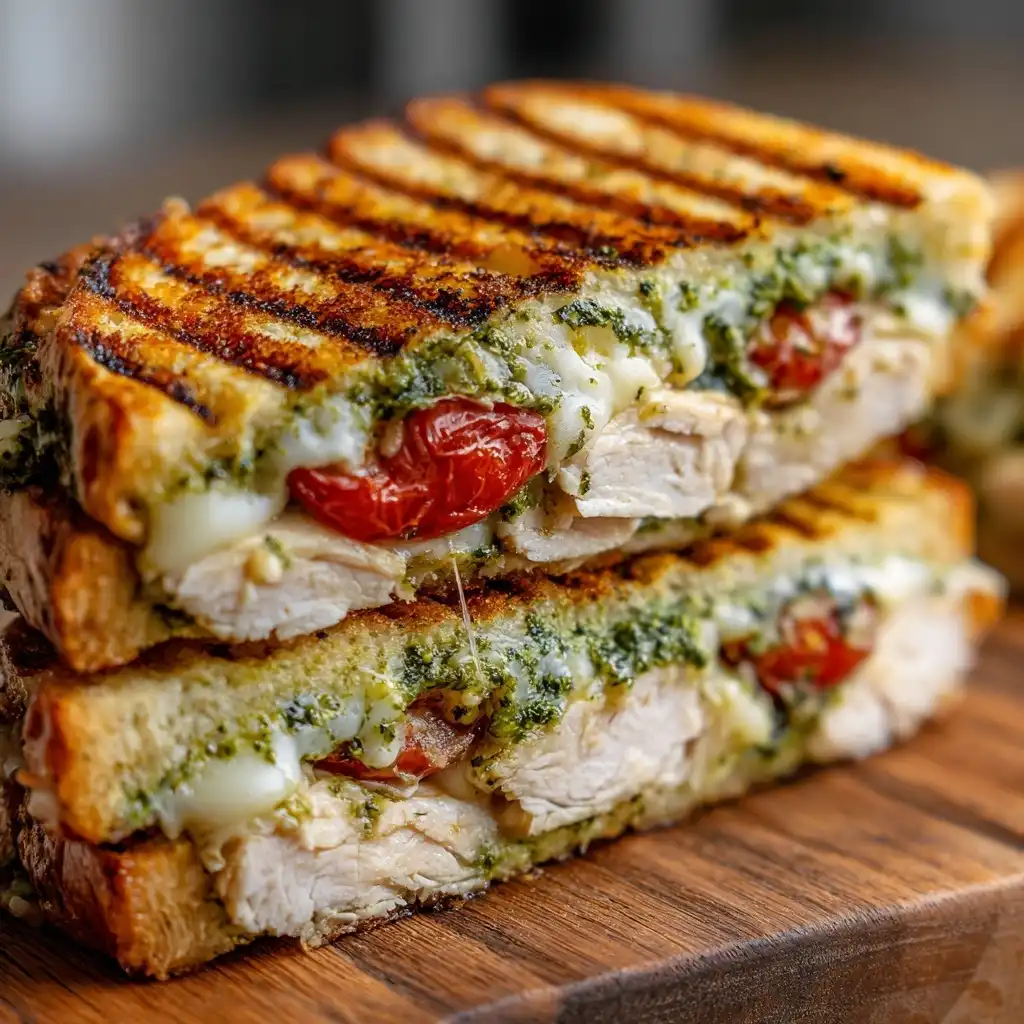
The Grilled Chicken Pesto Panini is a beloved modern classic that marries the smoky richness of grilled chicken with the vibrant, herbaceous depth of fresh basil pesto—all pressed between golden, crisp, and buttery artisanal bread. More than just a sandwich, it’s a harmonious convergence of Mediterranean flavors and American grilling tradition, delivering a satisfying balance of protein, healthy fats, aromatic herbs, and toasted carbohydrates in every bite. Whether served as a gourmet lunch, a hearty picnic staple, or an elegant appetizer at summer gatherings, this panini consistently impresses with its simplicity, versatility, and bold yet refined flavor profile. Its appeal spans home cooks and professional chefs alike—effortless to prepare yet sophisticated enough to elevate any meal.
The History
The origins of the Grilled Chicken Pesto Panini are deeply rooted in culinary cross-pollination across continents and decades. While the panini itself traces back to Italy—where “panino” (plural: panini) originally referred to any small sandwich made with Italian bread like ciabatta or focaccia—the pressed, grilled version popularized in the U.S. gained traction in the 1980s and ’90s, thanks to rising interest in artisanal baking and café culture. Pesto, meanwhile, hails from Genoa in Liguria, Italy, where traditional pesto alla genovese has been hand-ground for centuries using basil, pine nuts, garlic, Parmigiano-Reggiano, Pecorino, and extra-virgin olive oil. Grilled chicken emerged as a lean, globally embraced protein in post–World War II America, particularly gaining prominence in the 1970s health-food movement. The fusion of these elements—grilled chicken + pesto + pressed bread—began appearing on upscale deli menus and food magazines in the late 1990s and exploded in popularity during the early 2000s, aided by cooking shows, food blogs, and the rise of the “gourmet sandwich” trend. Today, it stands as a benchmark of accessible elegance—a testament to how regional traditions can evolve into universally cherished comfort food.
Ingredients Breakdown
Every exceptional Grilled Chicken Pesto Panini begins with thoughtfully selected, high-quality components. Below is a comprehensive breakdown of each ingredient—not only what goes into the sandwich, but why it matters:
- Chicken Breast (boneless, skinless): Lean, mild-flavored, and highly versatile; optimal for absorbing marinade and achieving tender-yet-firm texture when grilled. Organic, air-chilled, or pasture-raised options offer superior taste and ethical sourcing.
- Extra-Virgin Olive Oil (EVOO): Used for marinating, brushing, and finishing. Authentic EVOO contributes polyphenols, antioxidants, and a peppery, fruity backbone essential to both chicken and pesto integrity.
- Fresh Garlic: Raw or lightly sautéed—it adds pungent depth to the marinade and complements basil’s sweetness without overpowering.
- Fresh Basil Leaves: Non-negotiable for authentic pesto. Sweet Genovese basil provides the ideal clove-anise nuance and vivid green hue; avoid dried or supermarket “basil blends” for true flavor.
- Pine Nuts: Toasted gently to release nutty, buttery notes; they provide creamy body and richness. Alternatives include walnuts (earthier), slivered almonds (crunchier), or sunflower seeds (nut-free).
- Grated Parmigiano-Reggiano & Pecorino Romano: A dual-cheese approach balances umami (Parmigiano) with salty, tangy sharpness (Pecorino)—essential for layered complexity. Pre-grated cheeses contain anti-caking agents that inhibit smooth emulsification; always grate fresh.
- Lemon Juice & Zest: Bright acidity cuts through fat, enhances herbal notes, and prevents pesto from oxidizing too quickly. Zest adds volatile citrus oils for aromatic lift.
- Artisan Bread (ciabatta, sourdough boule, or focaccia): Must be sturdy enough to hold up to grilling and moisture without disintegrating, yet porous enough to absorb pesto. Day-old bread works best—slightly drier, less prone to sogginess, and crisps beautifully under pressure.
- Unsalted Butter or Compound Butter: For exterior browning—butter adds Maillard-rich flavor and golden lacquer. A compound version (e.g., garlic-herb or lemon-thyme) elevates aroma and cohesion.
- Optional Enhancements: Roasted red peppers (sweet-smoky contrast), sun-dried tomatoes (tangy chew), caramelized onions (deep umami), arugula (peppery freshness), or a light drizzle of balsamic glaze (sweet-tart finish).
Step-by-Step Recipe
This meticulously tested method ensures restaurant-quality results at home—with attention to timing, temperature control, and layering logic:
- Marinate the Chicken (30 min–2 hrs): Pound chicken breasts to ½-inch uniform thickness. Whisk together 3 tbsp EVOO, 2 minced garlic cloves, 1 tsp lemon zest, 1 tbsp lemon juice, ½ tsp sea salt, ¼ tsp black pepper, and ½ tsp dried oregano (optional). Coat chicken thoroughly and refrigerate—no longer than 2 hours to prevent texture degradation.
- Prepare Fresh Basil Pesto (5 min): In a food processor, pulse 2 cups packed fresh basil leaves, ⅓ cup toasted pine nuts, 2 garlic cloves, and ¼ tsp sea salt until finely chopped. With motor running, slowly stream in ⅓ cup EVOO until emulsified. Add ½ cup grated Parmigiano-Reggiano and ¼ cup grated Pecorino Romano; pulse to combine. Stir in 1 tsp lemon juice. Taste and adjust salt/acid. Set aside—cover surface with thin EVOO layer to prevent browning.
- Grill the Chicken (6–8 min): Preheat grill or cast-iron grill pan to medium-high (400°F/200°C). Lightly oil grates. Grill marinated chicken 4–5 minutes per side until internal temp reaches 165°F (74°C) and distinct grill marks appear. Rest 5 minutes before slicing thinly against the grain—this preserves juiciness and ensures even distribution across the panini.
- Prep the Bread (2 min): Slice bread into ¾-inch thick pieces (cut horizontally if using a round boule). Hollow out slight indentations in center of each slice to create “pesto reservoirs”—prevents oozing and concentrates flavor. Brush outer surfaces generously with melted butter or compound butter.
- Assemble with Precision (1 min): Spread 1½ tbsp pesto on one inner surface. Layer 3–4 overlapping chicken slices. Top with optional extras (e.g., 2 strips roasted red pepper + 6–8 arugula leaves). Cap with second bread slice, pesto-side down. Press gently to adhere.
- Grill the Panini (4–5 min): Heat panini press, grill pan, or skillet over medium-low heat (325°F/160°C). Place sandwich in press—or use heavy skillet + foil-wrapped brick for DIY weight. Grill 2–2.5 minutes per side, rotating 90° halfway for diamond grill marks. Press firmly but gently—over-compression squeezes out pesto and flattens texture. Cook until crust is deep amber, crisp, and audible “crackle” occurs upon lifting.
- Rest & Serve (2 min): Transfer panini to wire rack—never plate directly—to prevent steam-induced sogginess. Let rest 60–90 seconds. Slice diagonally with serrated knife. Serve immediately with lemon wedge and extra pesto on the side for dipping.
Tips
- Temperature Is Everything: Grill chicken at medium-high—but never scorching—to avoid charring before interior cooks. Conversely, panini require medium-low heat: too hot = burnt exterior/raw center; too low = greasy, limp bread.
- Pesto Consistency Matters: Aim for “soft-serve ice cream” texture—not runny, not paste-like. Too thin? Add more cheese. Too thick? A teaspoon of EVOO or lemon juice restores balance.
- Bread Selection Science: Ciabatta offers open crumb and chew; sourdough adds subtle tang and structural resilience; focaccia brings olive oil richness and dimpled surface for pesto pooling. Avoid soft sandwich loaves—they compress into cardboard under heat.
- Marinade ≠ Brine: Acidic marinades (lemon/vinegar) begin breaking down proteins after 2 hours—leading to mushy chicken. For deeper flavor without texture loss, dry-brine instead: rub chicken with salt, garlic powder, and herbs 1 hour ahead, then grill.
- The Pressing Principle: Use steady, even pressure—not force. If using a skillet + weight, maintain consistent contact. Lift lid only once at the end to check doneness—frequent opening causes heat loss and steaming.
- Prevent Pesto Browning: Store leftover pesto with a ⅛-inch layer of EVOO on top and refrigerate up to 1 week. Freeze in ice cube trays for long-term use (thaw overnight in fridge).
- Rest Before Slicing: This allows juices to reabsorb—critical for moist chicken and cohesive layers. Cutting too soon releases steam and destabilizes structure.
- Double Duty Ingredients: Reserve 2 tbsp pesto to mix into Greek yogurt for a cooling dip. Use leftover grilled chicken in salads, grain bowls, or pasta—zero waste, maximum flavor ROI.
Variations and Customizations
This recipe is a dynamic canvas—adaptable to dietary needs, seasonal produce, global pantry staples, and personal preference:
- Vegan/Vegetarian: Substitute grilled marinated tempeh, portobello caps, or halloumi cheese. Use nutritional yeast + cashew cream + lemon for “pesto.” Swap butter for vegan spread or olive oil.
- Gluten-Free: Choose certified GF sourdough or artisanal GF panini rolls (look for tapioca/cassava-based with xanthan gum for elasticity). Verify all sauces and cheeses are GF-certified.
- Keto/Low-Carb: Replace bread with large grilled portobello “buns,” sliced roasted eggplant, or cloud bread. Boost fat with avocado slices or extra pesto.
- Mediterranean Twist: Add crumbled feta, kalamata olives, chopped cucumber, and a sprinkle of za’atar. Swap pine nuts for pistachios.
- Spicy Southwest: Infuse pesto with chipotle in adobo or ancho chili powder. Marinate chicken with cumin, smoked paprika, and lime. Top with pickled red onions and jalapeños.
- Asian Fusion: Blend pesto with miso paste, toasted sesame oil, and ginger. Marinate chicken in tamari, rice vinegar, and brown sugar. Garnish with scallions and sesame seeds.
- Herb-Forward Garden: Fold in fresh mint, parsley, and chives into pesto. Add heirloom tomato slices and microgreens. Finish with flaky Maldon salt.
- Breakfast Panini: Add a fried or poached egg, crispy prosciutto, and a swipe of lemon-herb ricotta. Grill briefly just to melt cheese and warm egg yolk.
- Dessert “Panini”: Sweeten pesto with honey and almond extract; spread on brioche with mascarpone and grilled peaches or figs.
Health Considerations and Nutritional Value
A single serving (one 6-inch panini, ~320g) delivers approximately 520–580 calories, with nutrient density far exceeding typical sandwiches—when prepared mindfully. Here’s how it stacks up nutritionally and how to optimize wellness impact:
- Protein Powerhouse: ~38g high-biological-value protein from chicken and cheese supports muscle synthesis, satiety, and metabolic function. Pairing with whole-grain bread further boosts complete amino acid profile.
- Heart-Healthy Fats: Monounsaturated fats from EVOO and pine nuts lower LDL cholesterol and reduce inflammation. Omega-3s from walnuts (if substituted) support cognitive and cardiovascular health.
- Antioxidant-Rich Phytonutrients: Basil contains eugenol (anti-inflammatory), rosmarinic acid (neuroprotective), and vitamin K (bone health). Lemon zest contributes limonene (anticancer properties) and bioflavonoids.
- Fiber & Gut Health: Whole-grain or seeded bread contributes 5–7g fiber—feeding beneficial gut microbiota and stabilizing blood sugar. Pesto’s garlic and basil also act as prebiotics.
- Sodium Awareness: Traditional pesto and cheeses contribute ~650–850mg sodium/serving. Reduce by using low-sodium cheese, omitting added salt in marinade, and boosting herbs/spices for flavor.
- Glycemic Impact: With refined white bread, GI may reach 65–70. Lower to 45–50 by choosing sourdough (natural fermentation lowers starch digestibility) or sprouted grain bread.
- Allergen Notes: Contains dairy (cheese/butter), tree nuts (pine nuts), gluten (bread), and potential sulfites (wine vinegar in some pestos). Nut-free versions use sunflower or pumpkin seeds; dairy-free uses nutritional yeast + coconut milk base.
- Meal Timing Benefit: Balanced macros make it ideal for post-workout recovery (protein + complex carbs) or sustained afternoon energy—avoiding insulin spikes common with high-sugar lunches.
For those managing specific conditions: consult a registered dietitian to adapt portions for hypertension (reduce sodium), diabetes (prioritize low-GI bread and monitor carb counts), or PCOS (emphasize anti-inflammatory fats and fiber).
Ingredients
- 2 (6-oz) boneless, skinless chicken breasts, pounded to ½-inch thickness
- 3 tbsp extra-virgin olive oil (plus ⅓ cup for pesto)
- 2 garlic cloves, minced (1 for marinade, 1 for pesto)
- 1 tsp lemon zest + 2 tbsp fresh lemon juice (divided)
- ½ tsp fine sea salt (plus more to taste)
- ¼ tsp freshly ground black pepper
- ½ tsp dried oregano (optional)
- 2 cups fresh basil leaves, packed (stems removed)
- ⅓ cup raw pine nuts, toasted
- ½ cup freshly grated Parmigiano-Reggiano
- ¼ cup freshly grated Pecorino Romano
- 1 (8-inch) loaf artisan ciabatta or sourdough, cut into 4 equal sections
- 3 tbsp unsalted butter, softened (or garlic-herb compound butter)
- Handful of baby arugula (optional)
- 2 strips roasted red pepper (optional)
- Lemon wedges, for serving
Directions
- In a shallow dish, whisk together 3 tbsp olive oil, 1 minced garlic clove, lemon zest, 1 tbsp lemon juice, ½ tsp salt, pepper, and oregano. Add chicken and turn to coat. Refrigerate 30 minutes (up to 2 hours).
- Meanwhile, make pesto: In a food processor, pulse basil, toasted pine nuts, remaining garlic clove, and ¼ tsp salt until finely chopped. With motor running, slowly drizzle in ⅓ cup olive oil until smooth. Add cheeses and 1 tsp lemon juice; pulse until combined. Transfer to a bowl; cover surface with thin layer of olive oil. Set aside.
- Preheat grill or grill pan to medium-high (400°F). Lightly oil grates. Grill chicken 4–5 minutes per side until internal temperature reaches 165°F. Transfer to cutting board; rest 5 minutes, then slice thinly against the grain.
- Heat panini press or skillet over medium-low heat (325°F). Slice bread into 4 equal portions (~¾-inch thick). Using a small spoon, gently hollow out slight depressions in center of each inner surface. Brush outer sides generously with softened butter.
- Spread 1½ tbsp pesto onto one inner surface of each bread piece. Layer 3–4 chicken slices, arugula, and roasted red pepper (if using). Top with second bread slice, pesto-side down.
- Place panini in press or skillet. Close lid and cook 2–2.5 minutes per side, rotating sandwich 90° halfway through first side for signature grill marks. Apply gentle, even pressure. Cook until deeply golden, crisp, and heated through.
- Transfer to wire rack; rest 60–90 seconds. Slice diagonally with serrated knife. Serve immediately with lemon wedges and extra pesto for dipping.
FAQ
- Can I make this panini without a panini press?
- Absolutely. Use a heavy-bottomed skillet (cast iron preferred) and a foil-wrapped brick, another heavy skillet, or a dedicated panini weight. Preheat both skillet and weight for 2 minutes before adding sandwich. Press firmly but avoid slamming—consistent, moderate pressure yields best results.
- Why does my pesto turn brown so quickly?
- Oxidation—exposure to air—causes enzymatic browning in basil. To prevent: blanch basil leaves for 10 seconds in boiling water, then shock in ice water before making pesto; store with EVOO seal; or add ¼ tsp vitamin C (ascorbic acid) powder when blending.
- Can I prep components ahead of time?
- Yes! Marinate chicken up to 24 hours in fridge (omit lemon juice until just before grilling to prevent mushiness). Pesto keeps 1 week refrigerated or 6 months frozen. Cooked chicken stores 4 days refrigerated or 3 months frozen. Assemble and grill only just before serving for optimal texture.
- What’s the best cheese substitute for dairy-free pesto?
- Nutritional yeast provides savory umami and B-vitamins. Blend ¼ cup yeast + 2 tbsp lemon juice + 1 tbsp white miso + 2 tbsp soaked cashews + EVOO to desired consistency. For meltability in the panini, add 1 tsp coconut oil.
- My bread gets soggy—how do I fix it?
- Sogginess stems from moisture migration. Solutions: toast bread lightly before assembling; blot excess moisture from grilled chicken with paper towels; use thicker pesto (less oil); hollow bread centers; and always rest panini on a wire rack—not a plate—post-grilling.
- Is there a low-calorie version?
- Yes. Use grilled chicken breast only (no added butter), replace half the cheese with whipped ricotta or reduced-fat mozzarella, opt for whole-wheat pita or lettuce wrap instead of bread, and boost volume with unlimited non-starchy veggies (zucchini ribbons, spinach, shredded carrots).
- Can I freeze assembled panini?
- Not recommended—freezing degrades bread texture and causes pesto separation. However, you can freeze grilled chicken and pesto separately, then assemble and grill fresh within 10 minutes.
- What wine or beverage pairs well?
- Light-bodied Italian whites shine: Vermentino (citrus-herbal), Pinot Grigio (crisp minerality), or Soave (almond-tinged). For red lovers, chilled Barbera or Lambrusco offer bright acidity to cut richness. Non-alcoholic: sparkling lemon-ginger water or basil-infused iced green tea.
Summary
The Grilled Chicken Pesto Panini is a masterclass in balanced, intentional cooking—celebrating fresh, whole ingredients, precise technique, and cross-cultural inspiration to deliver extraordinary flavor in humble form. It’s endlessly adaptable, nutritionally robust, and deeply satisfying—proving that exceptional meals need not be complicated, only thoughtful.
Whether you’re crafting it for a quiet weekday lunch, entertaining guests, or meal-prepping with purpose, this panini invites creativity, honors seasonality, and consistently delivers joy—one golden, aromatic, herb-kissed bite at a time.