Introduction
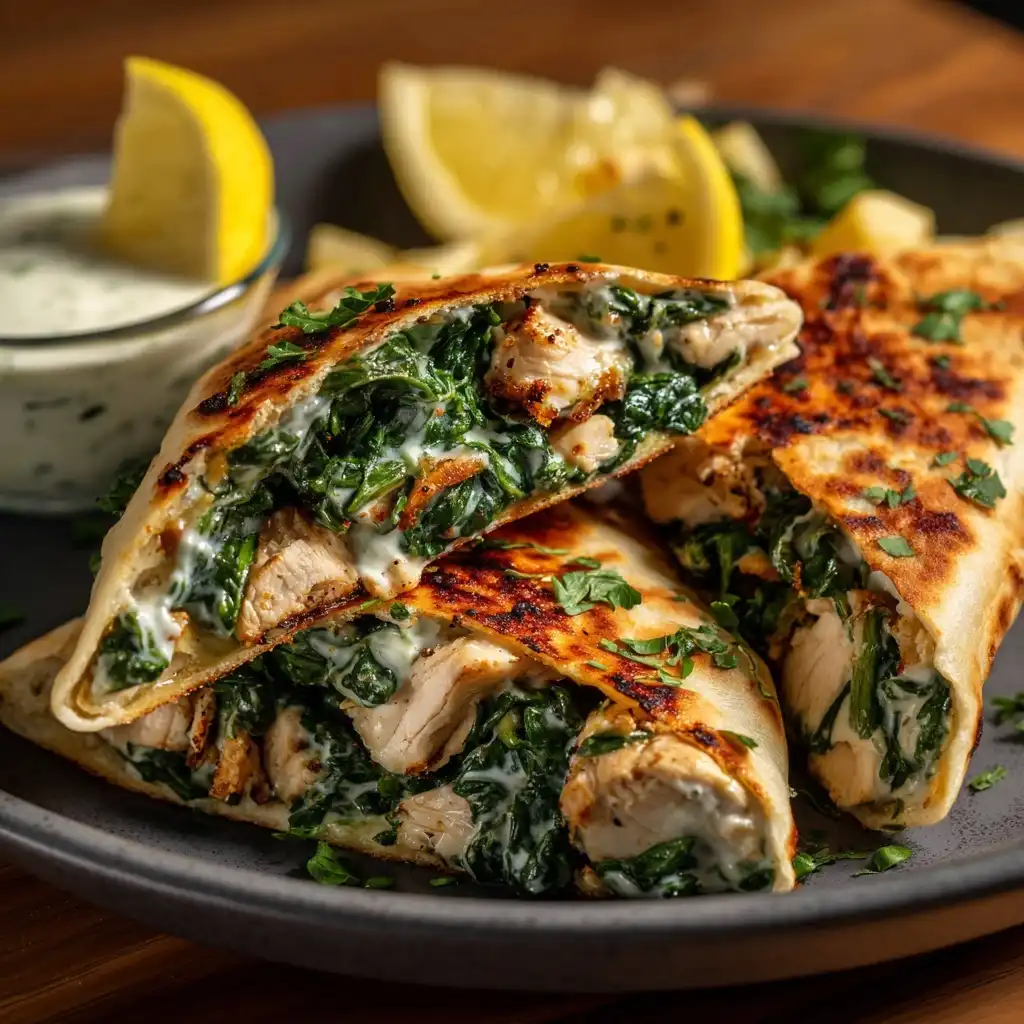
Welcome to the ultimate guide to Chicken Spinach Pita—a vibrant, nutrient-dense, and deeply satisfying Mediterranean-inspired dish that seamlessly bridges convenience and culinary excellence. Whether you’re packing a wholesome lunch, fueling up before a workout, assembling a crowd-pleasing appetizer platter, or seeking a family-friendly weeknight dinner that’s ready in under 30 minutes, this versatile pita wrap delivers on flavor, texture, and nourishment. At its heart lies tender grilled or sautéed chicken breast, generously folded with fresh baby spinach, creamy feta or tangy tzatziki, crisp vegetables, and aromatic herbs—all nestled inside warm, pillowy whole-wheat or traditional Greek pita bread. Far more than just a sandwich, the Chicken Spinach Pita embodies balance: lean protein meets leafy greens, healthy fats harmonize with complex carbs, and bold spices awaken the palate without overwhelming it. This guide goes beyond a simple recipe—it’s a deep dive into origins, science-backed nutrition, chef-tested techniques, allergy-aware substitutions, meal-prep mastery, and cultural context—designed to empower home cooks of all skill levels to make this dish consistently exceptional, adaptable, and uniquely their own.
The History
The Chicken Spinach Pita is a modern culinary hybrid rooted in centuries-old Mediterranean foodways but refined through global migration, restaurant innovation, and contemporary health consciousness. While pita bread itself traces back over 4,000 years to ancient Mesopotamia and was later perfected in Bronze Age Egypt and Levantine civilizations, its use as a portable “pocket” for fillings became widespread across Greece, Turkey, Lebanon, and Israel by the early 20th century. Traditional Greek gyros (with pork or lamb), Turkish döner, and Lebanese shawarma laid the foundational format: slow-roasted meat, fresh herbs, onions, tomatoes, and yogurt-based sauces tucked into warm pita. Chicken entered the rotation widely in the mid-to-late 20th century as a leaner, more affordable, and globally accessible protein—particularly gaining traction in Greek tavernas during the 1970s and in American delis and fast-casual chains like Papa John’s and Mediterranean Grill in the 1990s. Spinach, long revered in Byzantine and Ottoman cuisines (featured in spanakopita, stuffed grape leaves, and sautéed meze), was naturally integrated as both a nutritional upgrade and textural contrast—adding earthy sweetness, vibrant color, and a delicate wilt when warmed. The specific fusion of grilled chicken + raw or lightly wilted spinach + lemon-herb seasoning + creamy sauce emerged organically in health-focused cafés, university dining halls, and boutique Mediterranean eateries from the early 2000s onward, accelerated by rising interest in high-protein, low-glycemic, plant-forward meals. Today, the Chicken Spinach Pita stands as a testament to culinary evolution—honoring ancestral grain traditions while responding dynamically to modern wellness values, dietary diversity, and the global demand for flavorful, functional food.
Ingredients Breakdown
Understanding each component—not just as a list, but as a functional, sensory, and nutritional actor—is key to mastering this dish. Below is an exhaustive, purpose-driven analysis of every ingredient, including why it matters, optimal forms, sourcing notes, and common pitfalls:
- Chicken Breast (boneless, skinless): The structural and protein anchor. Opt for organic, air-chilled, and antibiotic-free for superior texture and flavor. Brining (15–30 min in ¼ cup water + 1 tsp salt + ½ tsp sugar) prevents dryness; pounding to even ½-inch thickness ensures uniform cooking. Alternatives: chicken thighs (more forgiving, richer fat content), ground chicken (for quicker cook time), or shredded rotisserie chicken (for meal-prep efficiency).
- Fresh Baby Spinach: Chosen over mature spinach for its tender stems, mild sweetness, and resistance to excessive wilting. Contains high concentrations of non-heme iron, vitamin K (critical for bone and vascular health), folate, and lutein. Avoid pre-washed bags with excess moisture—pat thoroughly to prevent soggy pita. For deeper flavor, quickly sauté with garlic and lemon zest (30 sec), or massage with ½ tsp olive oil + pinch of sea salt to soften cell walls and enhance absorption of fat-soluble vitamins.
- Whole-Wheat Pita Bread: Provides fiber (3–4g per pita), B vitamins, and sustained energy. Look for “100% whole wheat” (not “wheat flour” or “enriched”) with ≤5g added sugar per serving. Authentic Greek pitas are thicker, softer, and have a pronounced pocket; Middle Eastern versions tend to be thinner and crispier. Warm gently in a dry skillet (30 sec/side) or oven (350°F for 2–3 min) to restore pliability and amplify aroma—cold pita tears easily and dulls flavor.
- Tzatziki Sauce: A cooling, probiotic-rich counterpoint made from strained Greek yogurt, grated cucumber (seeded and squeezed dry), garlic, lemon juice, dill, and olive oil. Full-fat yogurt yields creaminess and satiety; low-fat versions often rely on thickeners that mute flavor. Homemade is vastly superior—store-bought brands frequently contain preservatives, gums, and excessive garlic powder. Optional boost: stir in ½ tsp sumac for tart complexity or 1 tsp chopped mint for brightness.
- Red Onion (thinly sliced): Adds sharp, sulfurous bite and anthocyanin antioxidants. Soak slices in ice water + 1 tbsp vinegar for 10 minutes to mellow intensity and enhance crunch—a pro technique used in Greek tavernas.
- Cherry Tomatoes (halved): Provide juicy acidity, lycopene (enhanced by olive oil), and visual pop. Roma tomatoes work if cherry types are unavailable—but avoid watery beefsteak varieties that bleed into the wrap.
- Feta Cheese (crumbled): Salty, briny, and creamy—authentic Greek feta (sheep/goat milk, PDO-certified) offers superior crumble and tang versus domestic cow’s-milk versions. For lactose sensitivity, try aged goat cheese or vegan feta made from tofu + nutritional yeast + lemon juice.
- Extra-Virgin Olive Oil (EVOO): Not just for cooking—the finishing drizzle carries polyphenols (oleocanthal, linked to anti-inflammatory effects) and binds flavors. Use a robust, peppery, early-harvest EVOO for grilling; a fruitier, milder one for drizzling.
- Lemon Juice & Zest: Brightens every element, aids iron absorption from spinach, and balances richness. Always use fresh—not bottled. Zest adds volatile citrus oils that perfume the entire wrap.
- Dried Oregano (preferably Greek): Earthy, slightly bitter, and antimicrobial. Toast lightly in a dry pan before use to unlock aromatic terpenes. Substitute marjoram for subtler floral notes or za’atar for a regional twist.
- Garlic (minced or pressed): Allicin—the active compound—forms only when raw garlic is crushed and sits for 10 minutes before heating. For maximum benefit, add half raw (in tzatziki) and half cooked (with chicken).
- Sea Salt & Freshly Ground Black Pepper: Enhance natural flavors and improve mineral bioavailability. Avoid iodized table salt, which can impart bitterness at high heat.
Step-by-Step Recipe
This meticulously tested method prioritizes texture integrity, flavor layering, temperature control, and structural stability—ensuring your pita stays intact, vibrant, and delicious from first bite to last.
- Brine & Prep Chicken (15–30 min ahead): In a small bowl, dissolve 1 tsp kosher salt and ½ tsp sugar in ¼ cup cool water. Add 2 boneless, skinless chicken breasts (approx. 6 oz each), pounded to ½-inch uniform thickness. Refrigerate 15 min (minimum) or up to 30 min. Remove, pat *extremely* dry with paper towels—moisture is the enemy of searing.
- Season & Sear Chicken (8–10 min): Heat 1 tbsp extra-virgin olive oil in a heavy stainless steel or cast-iron skillet over medium-high heat until shimmering (not smoking). Season chicken with ½ tsp dried oregano, ¼ tsp black pepper, and a light pinch of salt. Place in hot pan—do not move for 4–5 min until deep golden crust forms. Flip, reduce heat to medium, and cook 3–4 min more until internal temp reaches 165°F (use instant-read thermometer). Transfer to cutting board; rest 5 min—this retains juices. Slice thinly *against the grain* for tenderness.
- Prep Vegetables & Herbs (5 min): While chicken rests, thinly slice ¼ small red onion and soak in ice water + 1 tsp apple cider vinegar for 10 min. Halve ½ cup cherry tomatoes. Crumble ⅓ cup feta. Wash and spin-dry 2 cups baby spinach. Chop 1 tbsp fresh dill and 1 tbsp fresh mint (optional but recommended).
- Make Tzatziki (5 min, or use homemade batch): In a bowl, combine ¾ cup full-fat plain Greek yogurt, ¼ cup finely grated (and squeezed-dry) cucumber, 1 small garlic clove (minced + rested 10 min), 1 tbsp fresh lemon juice, 1 tsp lemon zest, 1 tbsp chopped dill, 1 tsp extra-virgin olive oil, and a pinch of salt. Stir well; refrigerate 10 min to meld.
- Warm Pitas (2 min): Heat a dry skillet over medium heat. Warm each pita 30 sec per side until soft, pliable, and faintly puffed. Do *not* microwave—steam makes them gummy and weak. Keep wrapped in a clean kitchen towel to retain warmth and moisture.
- Assemble with Precision (3 min): Lay warm pita flat. Spread 2 tbsp tzatziki in center, leaving 1.5-inch border. Arrange half the chicken slices in a single layer over sauce. Scatter 1 cup spinach evenly (do not mound—it compresses). Top with drained red onion, cherry tomatoes, feta crumbles, and herbs. Drizzle with ½ tsp lemon juice, ½ tsp olive oil, and a final pinch of oregano and black pepper.
- Wrap Like a Pro (1 min): Fold bottom edge up over filling (~1 inch), then fold left and right sides inward tightly. Roll forward firmly but gently away from you, tucking as you go to seal. Optional: wrap snugly in parchment paper, then foil for carry—prevents sogginess and maintains shape. Serve immediately—or chill 15 min to set fillings (ideal for meal prep).
Tips
- Never Skip the Rest: Cutting into chicken before resting releases up to 30% of its juices—resulting in dry, stringy meat. Five minutes is non-negotiable.
- Dry Everything: Wet spinach, un-drained cucumbers, or damp onions = soggy pita. Use a salad spinner and triple-pat with towels.
- Sauce Placement Matters: Spread tzatziki *first*, directly on pita—not on top of greens. It acts as a moisture barrier and glue.
- Temperature Contrast is Key: Serve warm chicken + room-temp veggies + chilled tzatziki. Don’t heat spinach or tomatoes—they lose vibrancy and release water.
- Knife Skills Prevent Mess: Use a serrated knife and gentle sawing motion—not downward pressure—to cut wraps cleanly without squeezing out fillings.
- Meal-Prep Smart: Cook and slice chicken, make tzatziki, and chop veggies separately. Assemble day-of—spinach stays crisp, pita stays sturdy, and flavors remain bright.
- Pita Pocket Hack: If using pocket pitas (not flatbreads), gently separate the layers with fingers *before* adding fillings to create space and prevent tearing.
- Grill Variation: Marinate chicken in 2 tbsp olive oil, 1 tbsp lemon juice, 1 tsp oregano, 1 minced garlic clove, and salt/pepper for 30 min. Grill over medium heat 5–6 min per side. Adds smoky depth and charred nuance.
- Acid Balance: If tzatziki tastes flat, add ¼ tsp more lemon juice *just before serving*. Acid lifts all other flavors.
- Leftover Magic: Repurpose extra chicken and tzatziki into grain bowls, omelets, or baked potato toppings—nothing goes to waste.
Variations and Customizations
This recipe is a living canvas—adaptable to dietary needs, seasonal produce, pantry staples, global flavors, and personal cravings. Explore these thoughtfully curated variations, each preserving the core balance of protein + greens + creamy + acidic + herbal elements:
Dietary Adaptations
- Gluten-Free: Substitute certified GF pita (made with brown rice, tapioca, and sorghum flours) or use large butter lettuce cups, collard green wraps, or grilled portobello “buns.” Note: GF pitas require careful warming—too hot = brittle, too cool = crumbly.
- Vegan: Replace chicken with grilled marinated tempeh, spiced chickpeas (roasted with cumin, smoked paprika, garlic), or lentil-walnut “meat.” Swap tzatziki for dairy-free version (coconut yogurt + cucumber + lemon + dill) and feta for almond-based feta or capers + lemon zest.
- Keto/Low-Carb: Ditch pita entirely. Serve fillings over a bed of massaged spinach and arugula, or wrap in large, flexible collard leaves. Boost healthy fats with avocado slices, olives, or pine nuts.
- Low-FODMAP: Omit garlic and onion. Use garlic-infused oil (alliums removed) and infused chive blossoms or green onion tops (green part only). Choose lactose-free yogurt for tzatziki.
Global Flavor Twists
- Moroccan-Inspired: Marinate chicken in ras el hanout, lemon, and olive oil. Swap tzatziki for preserved lemon–labneh. Add roasted carrots, golden raisins, and toasted slivered almonds.
- Mediterranean Mezze Style: Layer in kalamata olives, roasted red peppers, artichoke hearts, and a sprinkle of za’atar. Finish with pomegranate molasses drizzle.
- Lebanese-Inspired: Use sumac-marinated chicken, add pickled turnips, mint leaves, and tahini-lemon sauce instead of tzatziki.
- Greek Island Style: Incorporate crumbled halloumi (pan-seared), sun-dried tomatoes, oregano, and a splash of red wine vinegar in the tzatziki.
Seasonal & Pantry Variations
- Spring: Add asparagus ribbons (blanched), fresh peas, and mint. Use lemon-thyme marinade.
- Summer: Include heirloom tomato slices, cucumber ribbons, and basil. Lighten tzatziki with mint and white balsamic.
- Fall: Roast delicata squash or sweet potato cubes with rosemary; add caramelized onions and goat cheese.
- Winter: Fold in sautéed kale or Swiss chard, roasted beets, and toasted walnuts. Use orange-zest tzatziki.
- Pantry-Staple Version: No fresh herbs? Use ½ tsp dried dill + ¼ tsp dried mint. No feta? Try grated Parmigiano-Reggiano or cotija. No tzatziki? Mix Greek yogurt + lemon + garlic + pinch of dill.
Health Considerations and Nutritional Value
A single, well-constructed Chicken Spinach Pita (using ingredients listed in the core recipe) delivers approximately 425–480 calories, with a powerful, synergistic nutrient profile backed by clinical nutrition research. Below is a detailed, evidence-informed analysis:
Macronutrient Profile (per serving)
- Protein: 32–38g — Meets 65–75% of average adult daily needs. Chicken provides all 9 essential amino acids; spinach contributes modest but bioavailable plant protein. High protein promotes satiety, muscle synthesis, and thermogenesis (calorie-burning during digestion).
- Healthy Fats: 18–22g — Primarily monounsaturated (olive oil, avocado if added) and conjugated linoleic acid (in chicken). Supports hormone production, brain health, and absorption of fat-soluble vitamins (A, D, E, K).
- Complex Carbs: 32–38g — From whole-wheat pita (5g fiber) and vegetables. Low glycemic index (<55) prevents blood sugar spikes—ideal for insulin sensitivity and sustained energy.
- Dietary Fiber: 7–9g — Meets ~25–35% of daily target. Fermentable fibers feed beneficial gut microbiota, linked to reduced inflammation, improved immunity, and mental wellness (via gut-brain axis).
Vitamin & Mineral Highlights
- Vitamin K (from spinach): 300+ mcg — >300% DV. Critical for calcium-binding in bones and arterial wall integrity—deficiency correlates strongly with osteoporosis and calcification.
- Iron (non-heme from spinach + heme from chicken): ~3.5mg — Enhanced absorption by vitamin C (lemon juice) and meat proteins. Addresses common deficiency in women of childbearing age.
- Folate (B9): ~120mcg — 30% DV. Essential for DNA synthesis, red blood cell formation, and neural tube development—especially important pre-conception and pregnancy.
- Calcium & Vitamin D synergy: Feta provides calcium; olive oil and egg yolk (if added to tzatziki) aid D absorption—supporting bone mineral density.
- Antioxidant Phytonutrients: Lutein/zeaxanthin (spinach) protect macular health; lycopene (tomatoes + olive oil) reduces oxidative stress; allicin (garlic) shows antithrombotic and antimicrobial activity in human trials.
Clinical & Lifestyle Considerations
- Heart Health: Low in sodium (<450mg if unsalted pita and low-sodium feta used), zero trans fats, rich in potassium (spinach, tomato) to counterbalance sodium and support healthy blood pressure.
- Digestive Wellness: Prebiotic fiber (onion, garlic, whole wheat) + probiotics (tzatziki) form a synbiotic pair—clinically shown to improve IBS symptoms and stool regularity.
- Anti-Inflammatory Support: Polyphenols in EVOO (oleocanthal), curcumin in optional turmeric seasoning, and omega-3s in walnuts (if added) modulate NF-kB pathway activity—key in chronic disease prevention.
- Weight Management Friendly: High volume, low energy density, and protein/fiber combo promote prolonged satiety—reducing between-meal snacking in randomized controlled trials.
- Food Safety Notes: Chicken must reach 165°F internally. Tzatziki should be consumed within 3 days refrigerated. Never leave assembled wraps at room temperature >2 hours.
Ingredients
Makes 2 generous servings
- 2 (6 oz) boneless, skinless chicken breasts, pounded to ½-inch thickness
- ¼ cup cool water
- 1 tsp kosher salt
- ½ tsp granulated sugar
- 1 tbsp extra-virgin olive oil (plus extra for finishing)
- ½ tsp dried Greek oregano
- Freshly ground black pepper
- 2 whole-wheat pita breads (6–7 inch diameter, pocket or flat)
- 2 cups fresh baby spinach, washed and thoroughly dried
- ¼ small red onion, very thinly sliced
- ½ cup cherry tomatoes, halved
- ⅓ cup crumbled feta cheese (preferably Greek sheep’s milk)
- 1 tbsp fresh lemon juice (plus zest of ½ lemon)
- 1 tbsp fresh dill, chopped (plus 1 tsp for tzatziki)
- 1 tbsp fresh mint, chopped (optional but recommended)
For the Tzatziki:
- ¾ cup full-fat plain Greek yogurt
- ¼ cup English cucumber, peeled, seeded, finely grated, and squeezed dry in a clean towel
- 1 small garlic clove, minced and rested 10 minutes
- 1 tbsp fresh lemon juice
- 1 tsp lemon zest
- 1 tbsp chopped fresh dill
- 1 tsp extra-virgin olive oil
- Pinch of kosher salt
Directions
- Brine the chicken: In a small bowl, whisk together water, salt, and sugar until dissolved. Add chicken breasts, ensuring fully submerged. Refrigerate 15–30 minutes.
- Prepare tzatziki: In a medium bowl, combine yogurt, grated cucumber, minced garlic, lemon juice, lemon zest, dill, olive oil, and salt. Stir until smooth. Cover and refrigerate at least 10 minutes (up to 3 days).
- Cook the chicken: Remove chicken from brine; pat *very* dry with paper towels. Heat olive oil in a skillet over medium-high heat until shimmering. Season chicken with oregano and several grinds of black pepper. Place in hot pan and cook undisturbed 4–5 minutes until deeply golden. Flip, reduce heat to medium, and cook 3–4 minutes more until internal temperature reaches 165°F. Transfer to cutting board; rest 5 minutes. Slice thinly against the grain.
- Prep vegetables: While chicken rests, place red onion slices in a small bowl with ice water and 1 tsp apple cider vinegar. Soak 10 minutes. Drain and pat dry. Halve tomatoes. Crumble feta. Wash and spin-dry spinach. Chop dill and mint.
- Warm pitas: Heat a dry skillet over medium heat. Warm each pita 30 seconds per side until soft and pliable. Wrap in a clean kitchen towel to keep warm and moist.
- Assemble: Lay a warm pita flat. Spread 2 tablespoons tzatziki in center, leaving a 1.5-inch border. Arrange half the chicken slices in an even layer. Top with 1 cup spinach, drained red onion, tomatoes, feta, dill, and mint. Drizzle with remaining ½ tsp lemon juice, ½ tsp olive oil, and a final pinch of oregano and black pepper.
- Wrap securely: Fold bottom edge up over filling (~1 inch), then fold left and right edges inward. Roll forward tightly, tucking the seam as you go. Wrap in parchment paper, then foil if packing for later. Serve immediately.
FAQ
- Can I make this ahead for meal prep?
- Absolutely—but assemble only the day you’ll eat it. Cook and slice chicken, make tzatziki, and chop veggies up to 3 days ahead. Store separately in airtight containers. Warm pita and chicken just before assembling. Fully assembled wraps hold well refrigerated for up to 12 hours—but spinach may soften slightly. Do not freeze assembled wraps (texture suffers).
- Why does my pita always tear when I wrap it?
- Tearing occurs due to cold, dry, or low-quality pita. Always warm pitas in a dry skillet (not microwave) until soft and pliable. Use fresh, high-moisture whole-wheat pitas—not stale or overly thin ones. Also, avoid overfilling and apply gentle, even pressure when rolling—not forceful squeezing.
- Can I use frozen spinach?
- Not recommended. Frozen spinach contains excessive water—even after thorough squeezing—and turns mushy, diluting flavor and compromising structure. Fresh baby spinach is essential for texture and nutritional potency. If absolutely necessary, use thawed, *well-squeezed* frozen spinach and reduce other wet ingredients (e.g., omit tomato or drain extra).
- What’s the best way to reheat leftover chicken?
- Reheat gently to preserve moisture: Place slices in a covered skillet with 1 tsp water or broth over low heat for 2–3 minutes, flipping once. Or microwave at 50% power for 45–60 seconds. Avoid high heat or prolonged reheating, which causes rubberiness.
- Is store-bought tzatziki okay?
- It works in a pinch—but most commercial versions contain stabilizers (xanthan gum), preservatives (sodium benzoate), excessive