Introduction
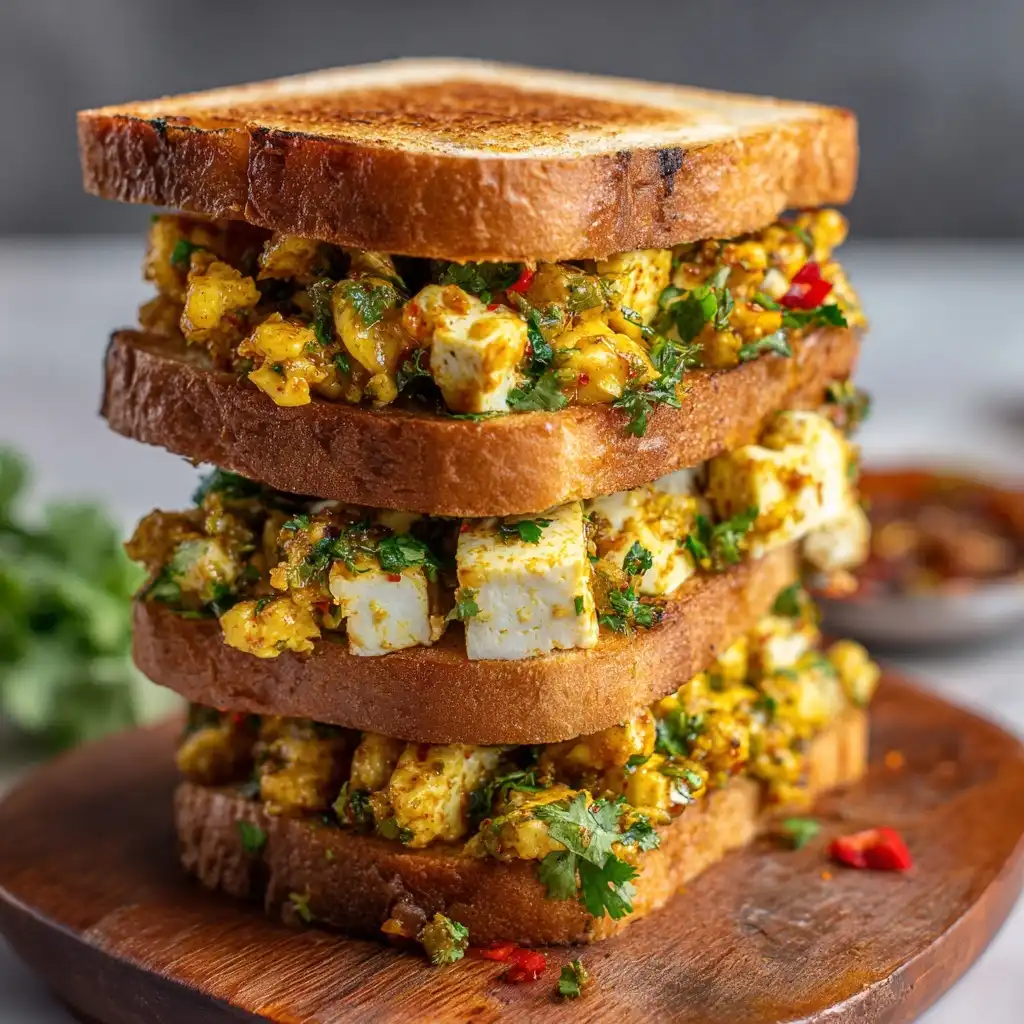
The Butter Paneer Sandwich is a beloved Indian street food classic that masterfully bridges comfort and sophistication—melding the creamy richness of fresh paneer with the nostalgic warmth of buttered toast. Unlike ordinary sandwiches, this version elevates simplicity into indulgence: soft, golden-brown bread slices envelop a luxuriously spiced, gently sautéed paneer filling, generously slathered with aromatic butter (often garlic-infused or herb-flecked) and finished with subtle garnishes like fresh coriander, mint chutney, or a whisper of chaat masala. It’s more than just a quick bite—it’s a sensory experience rooted in home kitchens, college canteens, roadside dhabas, and modern café menus across India and the global South Asian diaspora. Whether enjoyed as a hearty breakfast, a monsoon snack with piping hot ginger tea, or a late-night craving-satisfier, the Butter Paneer Sandwich embodies culinary ingenuity—transforming humble, pantry-staple ingredients into something deeply satisfying, deeply Indian, and universally craveable.
The History
While no single documented “invention date” exists for the Butter Paneer Sandwich, its origins are deeply interwoven with the evolution of Indian sandwich culture in the 20th century. The concept of the sandwich itself entered India during the British colonial era, but it was local adaptation—not imitation—that gave rise to uniquely Indian iterations. Early versions were simple: buttered white bread, sometimes with boiled potato or cucumber. As dairy infrastructure expanded post-independence—particularly with the success of the White Revolution and the proliferation of Amul-style cooperative dairy units—fresh, affordable, high-quality paneer became widely accessible across urban and semi-urban India. By the 1970s and ’80s, Mumbai’s iconic “sandwich walas” began experimenting beyond the basic veggie fillings. Vendors at Churchgate Station, Juhu Beach, and Crawford Market started griddling paneer cubes with onions, green chilies, and garam masala—then pressing them between butter-laden bread slices on a tawa (flat griddle), creating a crisp-yet-tender, fragrant, and deeply savory handheld meal. The dish gained further momentum in the 1990s and early 2000s through popular TV cooking shows, regional food blogs, and college hostel culture—where students perfected “dorm-friendly” versions using basic utensils and minimal ingredients. Today, the Butter Paneer Sandwich has transcended its street food roots: it appears on fine-dining menus reimagined with heirloom grains, artisanal paneer, and fusion elements (think smoked paprika or roasted garlic aioli), while remaining fiercely authentic in its core philosophy—celebrating freshness, balance, and the quiet magic of butter + paneer + spice.
Ingredients Breakdown
Every exceptional Butter Paneer Sandwich begins not with technique—but with intention behind each ingredient. Here’s a detailed, chef-level breakdown of why each component matters—and how to select, prepare, and optimize it:
- Paneer (Indian Cottage Cheese): Use fresh, firm, non-squeaky paneer—ideally made the same day or within 24 hours. Avoid vacuum-packed or overly dry store-bought varieties; they lack moisture and tend to crumble or turn rubbery when cooked. For best results, lightly press excess water with muslin cloth for 5–7 minutes—not to desiccate, but to achieve ideal texture cohesion. Crumble or cube uniformly (½-inch pieces) so it cooks evenly and integrates seamlessly into the filling.
- Bread: Soft, slightly sweet, milk-enriched white sandwich bread (like Mother Dairy, Harvest, or local bakery loaves) remains the gold standard—not for lack of alternatives, but for its structural integrity and butter-absorption capacity. The bread must be fresh (not stale, not overly fluffy), with a tight, even crumb. Slightly stale bread (12–18 hours old) can work well for griddling, as it holds up better against butter saturation without turning soggy. Whole wheat or multigrain options are viable for health-conscious versions—but require careful butter-to-bread ratio adjustment and often benefit from light toasting before assembly to prevent gumminess.
- Butter: This isn’t mere fat—it’s the soul of the sandwich. Unsalted, cultured, high-fat (82%+) butter is preferred for depth and controlled salinity. Clarified butter (ghee) adds nuttiness and higher smoke point but sacrifices the creamy mouthfeel and emulsified richness that defines the classic. For elevated flavor, infuse butter with crushed garlic, finely chopped ginger, dried fenugreek leaves (kasuri methi), or fresh herbs like cilantro stems or curry leaves—simmered gently, then cooled to room temperature before use.
- Aromatics & Vegetables: Yellow or red onion (finely minced—not grated) provides sweetness and crunch without overpowering. Green chilies (Serrano or Indian jalandhar/green finger chilies) contribute bright, vegetal heat—not just spice. Fresh ginger (grated or microplaned) adds pungent warmth and enzymatic brightness that lifts the paneer. Optional additions like capsicum (bell pepper) or tomato should be finely diced and pre-sautéed until moisture evaporates—raw tomato introduces unwanted water and acidity that dulls the butter’s richness.
- Spices: Ground garam masala (a balanced blend of cinnamon, cardamom, cloves, cumin, coriander, black pepper) is essential—not for heat, but for aromatic complexity. A pinch of turmeric lends golden hue and subtle earthiness. Kasuri methi adds umami depth and a faint maple-like nuance. Avoid heavy-handed use of red chili powder—its bitterness can dominate; instead, rely on fresh chilies for heat and balance.
- Acid & Freshness: A splash of fresh lemon juice (added after cooking, off-heat) brightens the entire profile and cuts through richness. Fresh coriander leaves (cilantro) add herbal lift and visual appeal. Mint leaves (optional) offer cooling contrast. Chaat masala—a tangy, savory blend of amchoor, black salt, cumin, and asafoetida—can be sprinkled sparingly on the final layer for that quintessential Indian street food zing.
Step-by-Step Recipe
- Prepare the Paneer: Gently crumble or dice 200g fresh paneer into ½-inch pieces. Place in a colander and rinse briefly under cold water to remove any surface whey or residual acidity. Pat *very* gently with a clean muslin cloth or paper towel—just enough to remove surface moisture, not to squeeze out internal moisture. Set aside.
- Infuse the Butter: In a small saucepan over low heat, melt 3 tbsp unsalted butter. Add 1 tsp finely minced garlic, ½ tsp grated ginger, and a pinch of kasuri methi. Cook gently for 60–90 seconds—just until fragrant and sizzling begins, but *do not brown*. Remove from heat and let cool slightly (to warm, not hot) so it won’t cook the paneer prematurely when mixed.
- Sauté the Aromatics: Heat 1 tsp neutral oil (e.g., sunflower or refined coconut) in a non-stick skillet or tawa over medium heat. Add ¼ cup finely minced red onion and 1–2 finely chopped green chilies. Sauté for 2–3 minutes until onions soften and turn translucent but retain bite—do not caramelize. Stir in ½ tsp grated ginger and cook 30 seconds more until aromatic.
- Cook the Paneer: Add the prepared paneer pieces. Sprinkle with ½ tsp turmeric, ¾ tsp garam masala, and ¼ tsp freshly ground black pepper. Gently fold using a silicone spatula—do not stir vigorously—to coat evenly and avoid breaking. Cook for 3–4 minutes, stirring every 60 seconds, until paneer turns lightly golden at edges and absorbs spices. The mixture should be moist but not wet—no visible liquid pooling. If excess moisture appears, increase heat slightly and cook 30 seconds longer.
- Finish & Season: Remove pan from heat. Immediately stir in the infused butter mixture. Add juice of ½ lemon (approx. 1 tsp), 1 tbsp finely chopped fresh coriander, and a pinch of salt (taste first—butter and paneer may already provide sufficient salinity). Fold gently to combine. Let cool for 2 minutes—this allows flavors to meld and prevents steam from softening the bread.
- Toast the Bread: While paneer cools, lightly butter *one side only* of 4 slices of bread (use approx. 1 tsp softened butter per slice, spread evenly to edges). Heat a clean tawa or skillet over medium-low heat. Place bread, butter-side down, and toast for 1.5–2 minutes until golden brown and crisp—but still pliable (not brittle). Flip and toast the unbuttered side for 45 seconds—just to warm and dry surface moisture. Repeat for all slices.
- Assemble with Precision: Place two toasted slices butter-side *up* on a clean surface. Divide warm paneer filling evenly between them—do not overfill (max ⅓ cup per sandwich). Top with remaining two toasted slices, butter-side *down*. Press *gently* with flat palm—just enough to adhere, not to squeeze out filling.
- Griddle-Finish (Optional but Recommended): Return assembled sandwiches to the warm tawa (no additional butter needed). Press lightly with a spatula and cook 1.5 minutes per side, flipping once, until both outer surfaces are deeply golden, crisp, and faintly blistered. This step creates structural integrity, enhances Maillard-driven flavor, and gently melts residual butter into the bread’s crumb.
- Rest & Serve: Transfer to a wire rack for 60 seconds—this allows residual steam to escape and prevents sogginess. Slice diagonally with a serrated knife (prevents filling displacement). Serve immediately, ideally with mint-coriander chutney, sliced red onions, or a wedge of lime.
Tips
- Paneer Temperature Matters: Always use room-temperature paneer—not chilled straight from the fridge. Cold paneer lowers pan temperature, causing steaming instead of searing, resulting in bland, waterlogged texture.
- Butter Timing is Critical: Never add melted butter directly to hot paneer off the stove—residual heat will cause separation and greasiness. Let butter cool to ~110°F (43°C) before folding in.
- The “No Steam” Rule: When assembling, ensure filling is warm—not hot—and bread is toasted but not scorching. Trapped steam = soggy sandwich. Resting post-griddling is non-negotiable.
- Knife Discipline: Use a sharp, serrated bread knife—and saw gently. A dull or pressed-down cut smears the filling and compresses layers, ruining textural contrast.
- Batch Cooking Hack: For parties or meal prep: prepare spiced paneer filling up to 24 hours ahead and refrigerate in an airtight container. Reheat gently in a pan with ½ tsp butter before assembling—never microwave, which makes paneer rubbery.
- Griddle Control: If using electric stovetops, reduce heat by one notch after initial toast—electric elements retain heat longer and can burn butter before bread crisps.
- Chutney Integration: For next-level depth, spread a *thin* layer (¼ tsp) of mint-coriander chutney on the *inner side* of the top bread slice *before* adding paneer—this creates a flavor barrier that prevents absorption while boosting freshness.
- Crust Integrity Secret: Lightly dusting the outer buttered surface with ⅛ tsp semolina (rava) or fine breadcrumbs before griddling adds subtle crunch and improves browning consistency.
Variations and Customizations
The Butter Paneer Sandwich is gloriously adaptable—serving as a canvas for regional preferences, dietary needs, seasonal produce, and creative innovation. Below are meticulously curated variations, each tested for structural integrity, flavor harmony, and authenticity:
- Mumbai Masala Style: Add 1 tbsp boiled and mashed potato + 1 tsp finely chopped boiled beetroot for color and earthiness. Finish with a sprinkle of sev (crunchy chickpea noodles) and tamarind-date chutney drizzle.
- Punjabi Tandoori Twist: Marinate paneer in 1 tbsp hung curd, ½ tsp smoked paprika, ¼ tsp garam masala, and 1 tsp ginger-garlic paste for 20 minutes before sautéing. Grill on tawa until charred at edges. Top with raw red onion rings and fresh pomegranate arils.
- South Indian Coconut-Pepper: Replace half the butter with coconut oil. Add 1 tbsp freshly grated coconut and ¼ tsp crushed black peppercorns while cooking paneer. Garnish with curry leaves and thin banana leaf wrap (for presentation).
- Vegan Adaptation: Substitute paneer with pressed, baked tofu cubes (marinated in nutritional yeast, lemon, and turmeric) or crumbled firm tempeh. Use vegan butter (e.g., Miyoko’s or homemade cashew butter blend) and replace ghee with refined coconut oil. Add 1 tsp amchoor for tang.
- High-Protein Fitness Version: Use whole wheat multigrain bread, low-fat paneer (or cottage cheese blended with 1 tbsp Greek yogurt), and replace half the butter with mashed avocado. Add spinach purée (½ tbsp) to paneer mix for iron boost and vibrant green hue.
- Gourmet Artisanal: Use farmhouse paneer infused with saffron and rosewater, sourdough boule slices brushed with browned butter and thyme, and finishing touches of edible flowers, candied ginger slivers, and house-made mango-habanero chutney.
- Kid-Friendly Mild: Omit green chilies entirely. Add 1 tbsp mild tomato ketchup + ½ tsp honey to paneer mix for gentle sweetness. Use processed cheese slices (1 per sandwich) melted between paneer and bread for extra meltiness and familiarity.
- Gluten-Free Option: Substitute certified GF bread (e.g., almond-flour or rice-based loaves with xanthan gum). Toast thoroughly to improve rigidity. Add ½ tsp psyllium husk to paneer mix for binding if needed.
Health Considerations and Nutritional Value
A standard Butter Paneer Sandwich (2 slices white bread, 200g paneer, 3 tbsp butter, aromatics, spices) delivers approximately 580–640 kcal, with a balanced macro profile: ~28g protein, ~38g carbohydrates (of which ~4g fiber), and ~36g total fat (~22g saturated). However, nutritional impact hinges entirely on ingredient quality, portion discipline, and preparation method—not inherent “guilt.” Let’s break down key considerations:
- Paneer: The Protein Powerhouse: Naturally rich in complete protein (all 9 essential amino acids), calcium, phosphorus, and selenium. Traditional full-fat paneer supports fat-soluble vitamin absorption (A, D, K) and satiety hormones. Low-fat versions sacrifice conjugated linoleic acid (CLA) and may contain stabilizers—opt for minimally processed, enzyme-set paneer whenever possible.
- Butter: Beyond Saturated Fat: Grass-fed butter contains butyrate (a short-chain fatty acid shown to support gut barrier function and reduce inflammation), vitamin K2 (critical for calcium metabolism), and CLA (linked to improved body composition in clinical studies). Moderation is key—3 tbsp is generous; reducing to 2 tbsp saves ~100 kcal and 11g saturated fat without sacrificing sensory pleasure.
- Bread: Context Is Crucial: Refined white bread lacks fiber but offers rapid glucose for energy—ideal pre-workout or for growing children. For sustained energy and glycemic control, choose sprouted grain or 100% whole wheat with visible bran flecks and minimal added sugar (<2g/slice). Always check labels—many “multigrain” loaves are mostly refined flour with seed sprinkles.
- Spice Synergy: Turmeric’s curcumin exhibits potent anti-inflammatory and antioxidant activity—enhanced dramatically when paired with black pepper (piperine) and healthy fats (butter). Ginger aids digestion and reduces nausea; garlic supports cardiovascular health via allicin release upon crushing.
- Dietary Alignment: Naturally lactose-free (paneer contains negligible lactose), vegetarian, and easily adaptable for halal/kosher diets. Not suitable for strict vegans or those with severe dairy allergies (casein sensitivity). For PCOS or insulin resistance, prioritize whole-grain bread, reduce butter to 1.5 tbsp, and add 1 tsp flaxseed powder to paneer for omega-3s and lignans.
- Portion Intelligence: One well-made Butter Paneer Sandwich is nutritionally dense and satisfying—designed as a complete meal, not a snack. Pairing with a side salad (cucumber-tomato-onion with lemon) or fresh fruit enhances micronutrient diversity without caloric overload.
Ingredients
- 200 g fresh, firm paneer, crumbled or cubed (½-inch)
- 4 slices soft white sandwich bread (approx. 30 g each)
- 3 tbsp unsalted, high-fat butter (preferably cultured)
- 1 tsp neutral cooking oil (sunflower, refined coconut, or grapeseed)
- ¼ cup finely minced red or yellow onion
- 1–2 green chilies (Serrano or Indian variety), finely chopped (seeds removed for milder heat)
- ½ tsp grated fresh ginger
- ½ tsp turmeric powder
- ¾ tsp garam masala (homemade preferred)
- ¼ tsp freshly ground black pepper
- Pinch of kasuri methi (dried fenugreek leaves)
- Juice of ½ lemon (approx. 1 tsp)
- 1 tbsp fresh coriander leaves, finely chopped
- ¼ tsp sea salt or pink Himalayan salt (adjust to taste)
- Optional garnishes: mint leaves, extra coriander, lemon wedge, mint-coriander chutney
Directions
- Prepare paneer by gently patting with muslin cloth to remove surface moisture—do not squeeze dry.
- In a small saucepan, melt butter over low heat. Add minced garlic, grated ginger, and kasuri methi. Cook 60–90 seconds until fragrant. Remove from heat and cool to warm (110°F/43°C).
- Heat oil in a non-stick skillet over medium heat. Sauté onions and green chilies 2–3 minutes until soft but not browned. Add ginger; cook 30 seconds.
- Add paneer, turmeric, garam masala, black pepper, and salt. Fold gently. Cook 3–4 minutes until paneer is lightly golden and moisture is absorbed.
- Remove from heat. Stir in infused butter, lemon juice, and coriander. Let cool 2 minutes.
- Butter one side of each bread slice (1 tsp per slice). Toast butter-side down on a warm tawa 1.5–2 minutes until golden. Flip; toast unbuttered side 45 seconds.
- Assemble: Place two toasted slices butter-side up. Divide paneer evenly. Top with remaining slices, butter-side down. Press gently.
- Griddle-finish: Cook assembled sandwiches on medium-low tawa 1.5 minutes per side, pressing lightly, until deeply golden and crisp.
- Rest on wire rack 60 seconds. Slice diagonally with serrated knife. Serve immediately.
FAQ
- Can I make this sandwich ahead of time?
- Yes—with caveats. Fully assembled sandwiches become soggy after 30 minutes. Instead: prepare spiced paneer filling up to 24 hours ahead and refrigerate. Toast bread fresh and assemble just before serving—or griddle-finish immediately after assembly. For meal prep: freeze uncooked paneer filling in portioned bags for up to 3 weeks; thaw overnight, reheat gently, then proceed.
- Why does my paneer turn rubbery?
- Rubbery paneer results from either: (1) Overcooking at high heat (causes protein tightening), (2) Using ultra-firm, aged, or frozen-thawed paneer (loses moisture-binding capacity), or (3) Adding cold paneer to hot pan (shocks proteins). Solution: use fresh, room-temp paneer; cook medium-low; fold—not stir; and never exceed 4 minutes of direct heat.
- Can I air-fry this sandwich instead of griddling?
- Air frying works—but alters texture. Preheat air fryer to 180°C (350°F). Lightly spray assembled sandwich with oil. Cook 4 minutes, flip, cook 3–4 more minutes until golden. Result is crispier exterior but drier interior and less butter integration. Not recommended for first-time attempts.
- Is there a gluten-free bread that works well?
- Yes—but success depends on formulation. Opt for GF bread with xanthan gum or psyllium husk (e.g., Schär or local artisan GF bakeries). Toast thoroughly before assembly to improve structural resilience. Avoid rice-only loaves—they crumble. Consider using large lettuce leaves (romaine or butter lettuce) as a low-carb, GF “wrap” alternative.
- What’s the best chutney pairing?
- Mint-coriander chutney is classic—its acidity and herbal notes cut richness perfectly. For depth, try tamarind-date chutney (sweet-tart) or roasted garlic raita (cooling, creamy). Avoid overly vinegary or sugary commercial chutneys—they overwhelm delicate paneer flavor.
- Can I use leftover paneer curry as filling?
- Not directly—curry sauce adds too much moisture. Instead, drain curry thoroughly, reserve 1 tbsp gravy, and gently simmer drained paneer in that reduced gravy with extra garam masala and butter until dry. Texture must be cohesive, not saucy.
- How do I prevent the sandwich from falling apart while eating?
- Three keys: (1) Griddle-finish to fuse layers, (2) Use precise portioning (no overfilling), and (3) Slice with a serrated knife using gentle sawing motion—not downward pressure. Serving on parchment-lined plates also helps maintain integrity.
Summary
The Butter Paneer Sandwich is a deceptively simple yet profoundly layered celebration of Indian culinary wisdom—where fresh paneer, aromatic spices, and golden butter unite on perfectly toasted bread to create a handheld masterpiece of texture, temperature, and tradition.
It honors heritage without stagnation: equally at home in a Mumbai street cart, a Bangalore café menu, or your Sunday brunch table—with endless possibilities for customization, nutrition-conscious tweaks, and heartfelt reinvention—all anchored by the timeless, comforting truth that great food begins with respect for ingredients and intention in execution.