Introduction
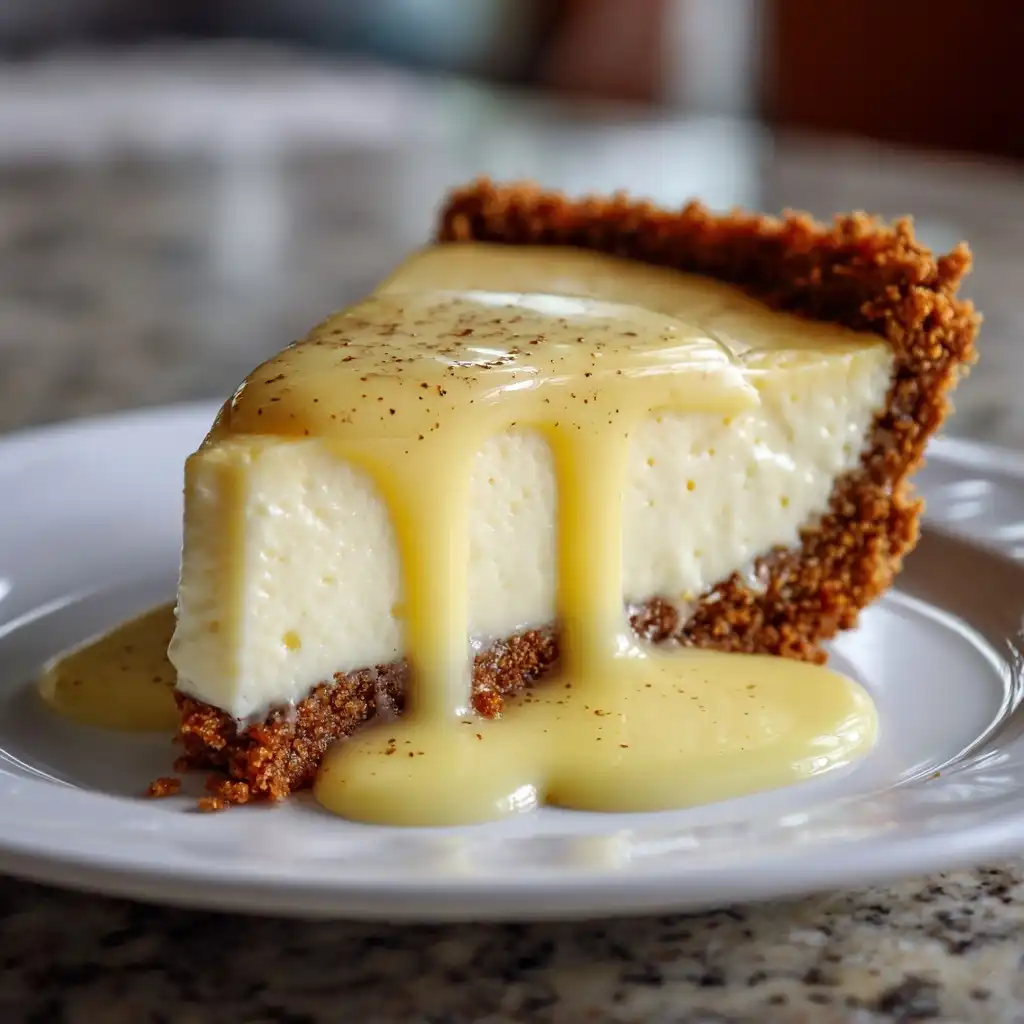
Vanilla Pudding Pie with Graham Crust is a timeless American dessert that embodies simplicity, comfort, and nostalgic charm. With its buttery, slightly sweet graham cracker crust and luxuriously smooth, creamy vanilla filling, this no-bake (or lightly cooked) pie delivers instant gratification without demanding advanced baking skills. It’s the kind of dessert that graces family dinners, potlucks, holiday tables, and summer picnics—equally at home in a rustic farmhouse kitchen or a modern urban apartment. Its gentle sweetness, velvety texture, and subtle warmth of real vanilla make it universally appealing across generations—and its versatility invites endless creativity, from elegant garnishes to playful seasonal twists.
The History
The origins of Vanilla Pudding Pie trace back to the early 20th century, a period marked by innovation in home economics, the rise of branded convenience foods, and the growing popularity of “set” desserts in American households. While custard pies have existed since colonial times—often baked with eggs, milk, and spices—the pudding pie evolved alongside the commercialization of instant pudding mixes. In 1934, Jell-O (a division of General Foods) introduced its first instant pudding mix—vanilla being among the earliest flavors—and by the 1950s, it had become a pantry staple. Cookbooks like The Joy of Cooking (1931, revised through the decades) and community church cookbooks began featuring “pudding pie” variations—blending the familiar graham cracker crust (popularized in the late 1800s by Sylvester Graham’s health-focused whole-wheat biscuits) with the newfound ease of stabilized pudding fillings. The graham cracker crust itself owes its legacy to the temperance movement and 19th-century dietary reformers who promoted whole-grain, low-fat, non-fermented foods; its crisp, sandy texture proved an ideal foil for rich, cool fillings. Over time, Vanilla Pudding Pie transitioned from a mid-century convenience dessert into a beloved heirloom recipe—handwritten on index cards, adapted across regions, and passed down with personal flourishes: a splash of bourbon, a swirl of caramel, or a dusting of freshly grated nutmeg.
Ingredients Breakdown
Understanding each component deepens both appreciation and control over the final result. Below is a detailed, chef-level breakdown of every ingredient—not just what goes in, but *why* it matters:
- Graham Crackers (1 ½ cups finely crushed): Use plain, uncoated, cinnamon-free graham crackers for clean flavor. Honey-sweetened versions add subtle floral depth; whole wheat offers earthier notes and more fiber. Avoid chocolate or cinnamon varieties unless intentionally adapting the recipe—they compete with delicate vanilla.
- Unsalted Butter (6 tbsp, melted): Provides richness, binding power, and flakiness when chilled. Unsalted ensures precise sodium control. Clarified butter may be substituted for enhanced browning and nuttiness—but reduce quantity by 10% due to lower water content.
- Granulated Sugar (¼ cup): Enhances crust browning via caramelization and balances graham’s natural bitterness. Brown sugar may replace up to half for molasses warmth—but increases moisture and softness.
- Pinch of Fine Sea Salt: Critical for flavor contrast—it lifts sweetness and deepens vanilla perception without tasting salty.
- Whole Milk (2 cups, cold or room temperature): Higher fat content (3.25%) yields creamier, more stable pudding. Skim milk results in thinner, less luxurious texture and reduced shelf life. For ultra-richness, substitute ½ cup heavy cream + 1 ½ cups whole milk.
- Instant Vanilla Pudding Mix (2 (3.4 oz) boxes): Standard brands contain modified food starch, disodium phosphate, tetrasodium pyrophosphate, and artificial or natural vanillin. For superior depth, choose “French Vanilla” or “Cook & Serve” versions (see Tips). Avoid sugar-free mixes unless specifically formulated for no-bake use—they often contain different thickeners that yield gummy or weeping textures.
- Heavy Whipping Cream (1 cup, cold): Not merely for topping—whipped cream folded *into* the set pudding adds air, silkiness, and temperature resilience. Ultra-cold cream whips faster and holds peaks longer.
- Pure Vanilla Extract (2 tsp), plus seeds from 1 vanilla bean (optional but highly recommended): Alcohol-based extract provides bright top notes; scraped vanilla bean paste or seeds contribute complex, floral, woody undertones and visible specks—a hallmark of artisanal quality. Imitation vanilla lacks nuance and can taste medicinal when amplified.
- Confectioners’ Sugar (1–2 tbsp, for whipped cream): Stabilizes whipped cream and subtly sweetens without graininess. Add only after soft peaks form to prevent deflation.
- Optional Enhancements: A tablespoon of bourbon or rum (adds aromatic complexity); ½ tsp almond extract (complements vanilla); a pinch of ground nutmeg or cardamom (warmth without dominance); 2 tbsp toasted coconut flakes (for crunch and tropical flair).
Step-by-Step Recipe
This method prioritizes texture integrity, flavor layering, and foolproof structure—whether you’re a novice or seasoned baker.
- Prepare the Graham Crust: Preheat oven to 375°F (190°C). In a food processor or sturdy zip-top bag with rolling pin, pulse or crush graham crackers into fine, sand-like crumbs (no large shards). Transfer to a medium bowl; whisk in granulated sugar and salt. Pour in melted butter and stir with a fork until all dry ingredients are evenly moistened and the mixture resembles wet sand. Press firmly and evenly into a 9-inch pie plate—first the bottom, then up the sides using the back of a measuring cup or flat-bottomed glass. Ensure thickness is uniform (⅛–¼ inch) and edges are neatly trimmed. Bake 8–10 minutes, until fragrant and lightly golden at the edges. Cool completely on a wire rack—*do not skip cooling*, as residual heat will melt the pudding filling.
- Make the Pudding Filling: In a large, non-reactive mixing bowl (glass or stainless steel), whisk together cold milk and instant pudding mix for exactly 2 minutes using a balloon whisk—this fully hydrates starches and prevents lumps. Let stand 2 minutes to allow initial thickening. Stir in pure vanilla extract and, if using, scraped seeds from the vanilla bean pod (rinse and save pod for vanilla sugar!). Gently fold in ¾ cup of the prepared whipped cream (see next step) to lighten the base—this creates a mousse-like texture and prevents dense settling. Refrigerate uncovered for 15 minutes to partially set.
- Whip the Cream: In a separate chilled metal or glass bowl, combine cold heavy cream, confectioners’ sugar, and optional extracts. Beat with electric mixer on medium-high until soft peaks form (~2–3 minutes). Do not overbeat—firm peaks are ideal; stiff peaks risk graininess and curdling when folded.
- Final Assembly: After the pudding has chilled 15 minutes, gently fold in the remaining ¼ cup whipped cream until fully incorporated and uniformly airy. Pour into the cooled graham crust. Smooth the top with an offset spatula or the back of a spoon. Refrigerate uncovered for *at least 4 hours*, preferably overnight (8–12 hours)—this allows full starch gelation, maximum firmness, and flavor melding. Do not freeze—ice crystals disrupt pudding’s colloidal structure.
- Finish & Serve: Just before serving, pipe or dollop reserved whipped cream around the perimeter or over the center. Garnish thoughtfully: fresh berries, shaved dark chocolate, edible flowers, candied ginger, or a light dusting of cinnamon. Slice with a sharp knife dipped in hot water and wiped clean between cuts for pristine edges.
Tips
- Cool the Crust Completely: Even 5 minutes too soon introduces steam that softens the bottom crust and causes “soggy bottom” syndrome. Patience here is non-negotiable.
- Use Cold, Not Ice-Cold, Milk: While cold milk helps pudding set faster, *ice-cold* milk can cause premature starch clumping. Aim for 45–55°F (7–13°C).
- Whisk, Don’t Stir: Vigorous whisking incorporates air and fully disperses starch granules. A spoon or spatula won’t achieve the same smoothness.
- Fold, Don’t Stir, the Whipped Cream: Use a silicone spatula and cut-and-fold motion—never circular stirring—to preserve air bubbles and maintain volume.
- Chill Time Is Functional, Not Optional: Under-chilled pudding lacks structural integrity and weeps liquid. Overnight chilling also mellows any raw starch or chemical aftertaste.
- Prevent Surface Skin: If refrigerating longer than 6 hours, press plastic wrap directly onto the pudding surface before chilling to inhibit skin formation.
- Crust Reinforcement Trick: For extra crunch and moisture barrier, brush cooled crust with a thin layer of melted white chocolate or apricot jam before filling—let set 5 minutes.
- Texture Rescue: If pudding separates or appears watery, blend with an immersion blender for 10 seconds—then rechill 1 hour. This re-emulsifies fats and redistributes starch.
- Altitude Adjustment: Above 3,000 ft, increase pudding mix by 1 tbsp per box and extend chill time by 1–2 hours—lower boiling points affect starch hydration.
- Make-Ahead Mastery: Crust can be baked and stored airtight at room temp for 3 days. Pudding filling (without whipped cream) can be made 1 day ahead—cover and refrigerate. Whip cream fresh for best texture.
Variations and Customizations
This foundational recipe serves as a canvas for infinite expression—cultural, seasonal, dietary, and stylistic. Explore these curated adaptations:
Flavor Infusions
- Bourbon-Vanilla: Replace ¼ cup milk with aged bourbon; add ¼ tsp smoked sea salt to crust.
- Lavender-Honey: Steep 1 tsp culinary lavender in warm milk for 10 minutes, strain, then proceed; substitute honey for 2 tbsp granulated sugar in crust.
- Coconut-Mango: Use coconut milk (full-fat canned) for half the dairy; swirl in ½ cup puréed ripe mango before chilling; top with toasted coconut and lime zest.
Crust Innovations
- Oat-Graham Hybrid: Replace ½ cup graham crumbs with certified gluten-free rolled oats (pulsed fine) for nutty depth and added soluble fiber.
- Chocolate-Graham: Add 2 tbsp unsweetened cocoa powder to crust mixture—balance with extra 1 tbsp sugar.
- Nut-Encrusted: Fold ¼ cup finely chopped toasted pecans or hazelnuts into crust crumbs for crunch and richness.
Dietary Adaptations
- Vegan: Use vegan graham crackers (check for honey), coconut oil or vegan butter, full-fat coconut milk, and a plant-based instant pudding mix (e.g., Simply Delish Natural Pudding). Top with coconut whipped cream.
- Gluten-Free: Certified GF graham-style crackers (like Schär or Kinnikinnick) + GF cornstarch-based pudding. Ensure oats in crust are certified GF.
- Lower-Sugar: Use sugar-free instant pudding formulated for no-bake use (e.g., Jell-O Sugar Free); reduce crust sugar to 1 tbsp; sweeten whipped cream with monk fruit or erythritol blend.
Textural & Presentation Twists
- Layered Parfait Jar Version: Alternate pudding, crumbled crust, and berries in 8-oz mason jars—refrigerate 2 hours.
- Blowtorch Caramelized Top: Sprinkle surface with turbinado sugar and brûlée with a kitchen torch for crackling contrast.
- “Deconstructed” Pie: Serve pudding in ramekins topped with crumbled crust, vanilla bean ice cream, and warm bourbon caramel sauce.
Health Considerations and Nutritional Value
A single standard slice (1/8 of a 9-inch pie) contains approximately:
- Calories: 320–380 kcal (varies by milk fat %, added cream, and crust butter)
- Total Fat: 16–20g (9–12g saturated)
- Carbohydrates: 42–48g (28–34g sugars, including ~12g added sugars)
- Protein: 5–7g
- Fiber: 0.8–1.2g (low unless oat or whole-grain crust used)
- Sodium: 280–360mg
Key Considerations:
- Sugar Content: Two boxes of instant pudding contribute ~32g added sugar alone. Opt for “reduced-sugar” versions or prepare from scratch using cornstarch, milk, egg yolks, and natural sweeteners (e.g., maple syrup + touch of honey) for greater control.
- Saturated Fat: Primarily from butter and cream. Substituting half the butter with unsweetened applesauce retains binding while cutting saturated fat by ~30%. Using 2% milk instead of whole reduces fat by ~2g/slice.
- Calcium & Vitamin D: Fortified milk contributes ~25% DV calcium and 15% DV vitamin D per serving—valuable for bone health.
- Food Additives: Conventional pudding mixes contain preservatives (e.g., BHA), emulsifiers (e.g., mono- and diglycerides), and artificial colors (in some flavors). Choosing organic or “clean-label” pudding alternatives minimizes exposure.
- Allergens: Contains dairy, wheat (unless GF crust used), and sometimes soy (lecithin in chocolate graham crackers). Tree nuts appear only in custom variations.
- Glycemic Impact: Moderate-to-high glycemic load due to refined carbs and sugars. Pairing with a protein-rich side (e.g., Greek yogurt drizzle) or serving smaller portions mitigates blood sugar spikes.
- Probiotic Potential (Fermented Twist): For gut-supportive variation, layer pudding with homemade kefir-soaked graham crumb topping or swirl in 2 tbsp plain, unsweetened kefir before chilling.
Ingredients
- 1 ½ cups (about 12 full-sheet) plain graham cracker crumbs (finely ground)
- 6 tablespoons unsalted butter, melted
- ¼ cup granulated sugar
- ¼ teaspoon fine sea salt
- 2 cups cold whole milk (not ultra-pasteurized if possible)
- 2 (3.4 oz) boxes instant vanilla pudding mix (regular, not sugar-free unless specified)
- 2 teaspoons pure vanilla extract
- Seeds from 1 whole vanilla bean (optional but recommended)
- 1 cup cold heavy whipping cream
- 1–2 tablespoons confectioners’ sugar (for whipped cream)
- Additional toppings for serving: fresh berries, shaved chocolate, toasted coconut, mint leaves, or a light dusting of cinnamon
Directions
- Preheat oven to 375°F (190°C). Pulse graham crackers in a food processor until fine crumbs form (about 15–20 seconds). Transfer to a medium bowl; whisk in sugar and salt. Pour in melted butter and stir with a fork until mixture resembles wet sand and holds together when pinched.
- Press crumb mixture evenly into bottom and up sides of a 9-inch pie plate. Use the flat bottom of a measuring cup to compact firmly. Bake 8–10 minutes, until edges are golden and fragrance is toasty. Cool completely on a wire rack—minimum 45 minutes.
- In a large mixing bowl, whisk cold milk and pudding mix vigorously for 2 minutes. Let stand 2 minutes. Whisk in vanilla extract and vanilla bean seeds.
- In a separate chilled bowl, beat heavy cream and confectioners’ sugar with electric mixer on medium-high until soft peaks form (~2–3 minutes).
- Fold ¾ cup of whipped cream into pudding mixture until fully combined and airy. Refrigerate uncovered 15 minutes.
- Gently fold in remaining ¼ cup whipped cream. Pour into cooled crust. Smooth top. Refrigerate uncovered for at least 4 hours—or ideally, overnight (8–12 hours).
- Before serving, pipe or dollop additional whipped cream around edge or over center. Garnish as desired. Slice with hot-water-dipped knife for clean cuts.
FAQ
- Can I use cook-and-serve pudding instead of instant?
- Yes—with modification: Prepare according to package directions (usually involves cooking on stove until thickened), then cool to room temperature before pouring into crust. Chill 6+ hours. Cook-and-serve yields richer, more custard-like texture and avoids artificial thickeners—but requires active stovetop time.
- Why does my pudding weep or release water?
- This “syneresis” occurs due to overmixing, under-chilling, temperature shock (e.g., warm crust), or using expired pudding mix. Ensure full chill time, avoid freezing, and never stir pudding once set—only fold gently.
- Can I freeze Vanilla Pudding Pie?
- Not recommended. Freezing disrupts starch gel networks, causing separation, graininess, and excessive weeping upon thawing. However, unbaked crust freezes well for 3 months—bake from frozen, adding 2 minutes.
- My crust is too hard/crumbly—what went wrong?
- Too much butter creates greasiness and hardness when chilled; too little leads to crumbling. Stick precisely to 6 tbsp. Also, pressing too lightly or unevenly compromises cohesion. Use firm, even pressure with a flat tool.
- Is there a way to make this without raw egg concerns?
- Absolutely—this recipe uses no eggs. Instant pudding relies on modified starches, not coagulation. For a cooked version with pasteurized eggs, use cook-and-serve pudding or make a homemade custard with pasteurized eggs and cornstarch.
- How long does it keep in the refrigerator?
- Up to 5 days covered tightly with plastic wrap pressed to surface. Flavor peaks at 24–48 hours; texture remains optimal through Day 4. Discard after Day 5 due to dairy spoilage risk.
- Can I use almond milk or oat milk?
- Yes—if using a pudding mix labeled “dairy-free” or “plant-based.” Regular instant pudding may not thicken properly in non-dairy milks due to differing pH and fat profiles. Always check packaging for compatibility.
- What’s the best way to crush graham crackers without a food processor?
- Place crackers in a heavy-duty zip-top bag. Use a rolling pin, meat mallet, or even a wine bottle—roll firmly and evenly until uniformly fine. Sift through a coarse sieve to remove any large pieces.
- Can I add fruit to the filling?
- Fresh fruit (especially high-moisture berries) should be added *just before serving* as a garnish—otherwise, juices dilute pudding. For mixed-in fruit, use well-drained, macerated, or cooked-down fruit (e.g., berry compote cooled completely).
- Why does my whipped cream deflate when folded in?
- Overbeaten cream loses elasticity; warm pudding melts air bubbles; or folding too vigorously collapses foam. Ensure cream is cold, pudding is chilled but not icy, and use gentle, wide folds—not stirring.
Summary
Vanilla Pudding Pie with Graham Crust is a masterclass in restrained elegance—where humble pantry staples transform into a dessert that balances buttery crunch, cloud-like creaminess, and aromatic vanilla depth through precise technique and patient chilling. Its enduring appeal lies not in complexity, but in its generous spirit: endlessly adaptable, deeply comforting, and effortlessly joyful to share.
From its mid-century roots in convenience culture to today’s mindful, customizable interpretations, this pie remains a resonant symbol of home—proving that the most memorable desserts aren’t always the most difficult, but those made with intention, care, and just the right amount of vanilla.