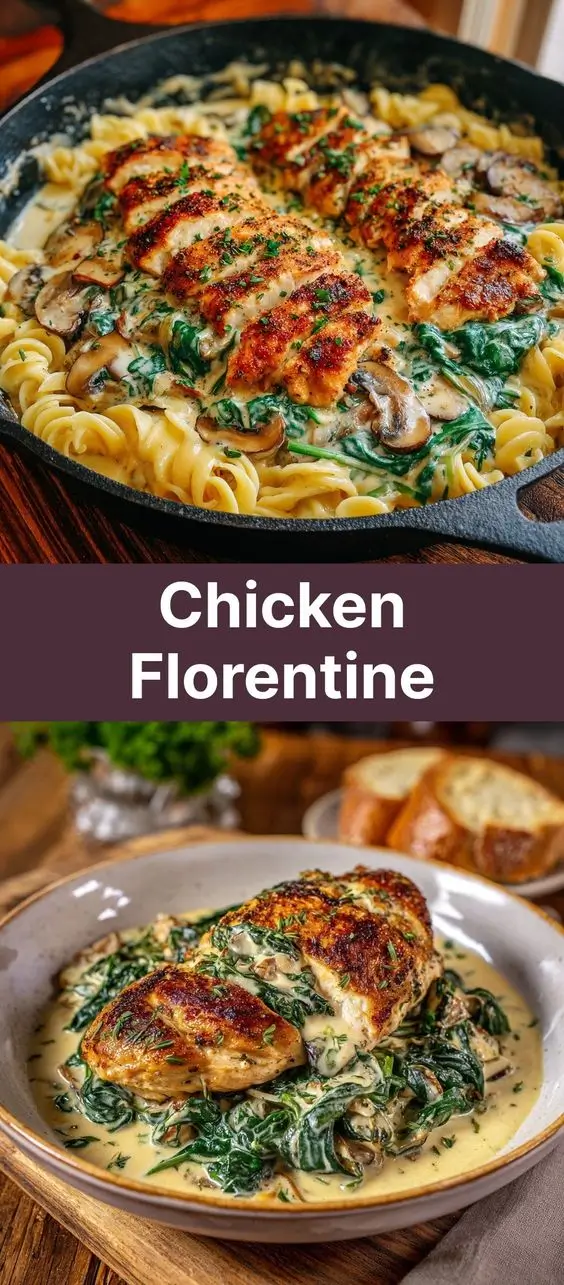
Chicken Florentine: A Luxurious and Flavorful Classic Dish
Introduction:
Chicken Florentine is an elegant, restaurant-quality dish that brings together the tender juiciness of chicken breast with the earthy richness of spinach and a creamy, savory sauce. Originating from Italian-American cuisine, this dish has become a staple in fine dining and home kitchens alike. With its vibrant green hues, delicate textures, and harmonious blend of flavors, Chicken Florentine offers a gourmet experience that’s surprisingly simple to prepare. Whether you’re cooking for a special occasion or simply craving comfort food with sophistication, Chicken Florentine delivers on every front—taste, presentation, and satisfaction.
The beauty of this dish lies not only in its taste but also in its versatility. It can be served over pasta, rice, mashed potatoes, or even enjoyed on its own for a low-carb option. Paired with a crisp white wine and a fresh garden salad, Chicken Florentine transforms any meal into a culinary celebration. In this comprehensive guide, we’ll take you through every aspect of creating the perfect Chicken Florentine—from its historical roots to ingredient breakdowns, step-by-step instructions, expert tips, variations, health considerations, and frequently asked questions.
The History:
While the exact origins of Chicken Florentine are somewhat debated, the name “Florentine” pays homage to Florence (Firenze), Italy—a city renowned for its rich culinary traditions. In French and Italian cuisines, dishes labeled “Florentine” typically feature spinach as a key ingredient, a nod to Catherine de’ Medici, a Florentine noblewoman who married King Henry II of France in the 16th century. Legend has it that she brought her love of spinach—and many Florentine chefs—with her to the French court, thereby popularizing the leafy green in French haute cuisine.
Over time, the term “Florentine” evolved in Western culinary language to denote any dish prepared with sautéed spinach, often accompanied by eggs, fish, or poultry. Chicken Florentine, as we know it today, emerged primarily in American-Italian restaurants during the mid-20th century. It combined European elegance with accessible ingredients, making it a favorite among diners seeking something both familiar and refined. The dish usually features pan-seared chicken breasts topped or served alongside wilted spinach and a creamy white sauce, sometimes enriched with Parmesan cheese, garlic, and herbs.
Today, Chicken Florentine remains a symbol of culinary fusion—where rustic Italian flavors meet creamy French techniques, all elevated by American innovation. Its enduring popularity speaks volumes about its universal appeal and timeless taste.
Ingredients Breakdown:
To create an authentic and delicious Chicken Florentine, it’s essential to understand each ingredient’s role in building layers of flavor and texture. Here’s a detailed look at what goes into this exquisite dish:
- Chicken Breasts (skinless, boneless): The star of the dish. Opt for evenly sized breasts to ensure uniform cooking. Pounding them slightly ensures tenderness and faster searing.
- Fresh Spinach: Preferably young, tender leaves. Fresh spinach provides a vibrant color and mild, slightly sweet flavor that complements the richness of the sauce. Frozen spinach can be used in a pinch but must be thoroughly drained to avoid watery results.
- Butter: Adds richness and aids in browning the chicken. Unsalted butter is preferred so you can control the salt level.
- Olive Oil: Used in combination with butter for searing—it raises the smoke point and prevents the butter from burning.
- Garlic (minced): Provides aromatic depth. Be careful not to burn it, as burnt garlic turns bitter.
- Shallots or White Onion (finely diced): Adds sweetness and complexity to the sauce base.
- All-Purpose Flour: Acts as a thickening agent when making the roux for the creamy sauce.
- Chicken Broth: Forms the liquid base of the sauce, adding savory umami notes.
- Heavy Cream: Gives the sauce its luxurious, velvety texture. For a lighter version, half-and-half or whole milk can be substituted, though the sauce will be less rich.
- Dry White Wine (optional): Enhances the sauce with acidity and complexity. Sauvignon Blanc or Pinot Grigio work well.
- Grated Parmesan Cheese: Salty, nutty, and deeply flavorful—melts into the sauce to boost savoriness.
- Fresh Herbs (parsley, thyme, or tarragon): Brightens the dish. Parsley is most common, while tarragon adds a subtle anise note.
- Salt and Black Pepper: Essential seasonings; use freshly cracked pepper for best flavor.
- Nutmeg (a pinch, optional): Complements spinach beautifully, enhancing its earthy profile without overpowering.
Optional additions include mushrooms (sautéed separately), sun-dried tomatoes, artichoke hearts, or a poached egg for a brunch twist.
Step-by-Step Recipe
Ingredients:
- 4 boneless, skinless chicken breasts (about 6 oz each)
- Salt and freshly ground black pepper, to taste
- ½ teaspoon garlic powder
- ½ teaspoon dried thyme (or 1 tsp fresh)
- 3 tablespoons olive oil, divided
- 3 tablespoons unsalted butter, divided
- 1 small shallot or ¼ cup finely diced onion
- 2 cloves garlic, minced
- ¼ cup dry white wine (optional)
- 1 cup chicken broth
- 1 tablespoon all-purpose flour
- 1 cup heavy cream
- 1 cup grated Parmesan cheese
- 8 cups fresh baby spinach (or 10 oz frozen, thawed and squeezed dry)
- 1 tablespoon fresh lemon juice
- 2 tablespoons chopped fresh parsley
- Pinch of ground nutmeg (optional)
Directions:
- Prepare the Chicken: Place chicken breasts between sheets of plastic wrap and gently pound to an even thickness (about ¾ inch). This ensures even cooking. Season both sides with salt, pepper, garlic powder, and thyme.
- Sear the Chicken: Heat 2 tablespoons olive oil and 1 tablespoon butter in a large skillet over medium-high heat. Once hot and shimmering, add the chicken breasts. Cook for 5–6 minutes per side, until golden brown and cooked through (internal temperature should reach 165°F). Transfer to a plate, cover loosely with foil, and let rest.
- Make the Sauce Base: In the same skillet, reduce heat to medium. Add the remaining 1 tablespoon olive oil if needed. Sauté shallot for 2–3 minutes until soft. Add garlic and cook for 30 seconds until fragrant.
- Optional Deglaze: Pour in white wine, scraping up any browned bits from the bottom of the pan. Let simmer for 2–3 minutes until reduced by half.
- Create the Roux: Push vegetables to the side. Melt 1 tablespoon butter in the center of the pan. Whisk in flour and cook for 1 minute, stirring constantly to form a blond roux.
- Add Liquids: Gradually whisk in chicken broth until smooth. Bring to a simmer, stirring frequently, until slightly thickened (about 3–4 minutes).
- Incorporate Cream and Cheese: Slowly stir in heavy cream, then gradually mix in Parmesan cheese. Continue stirring until the sauce is smooth and creamy. If too thick, add a splash more broth.
- Wilt the Spinach: Stir in fresh spinach in batches, allowing each addition to wilt before adding more. If using frozen spinach, squeeze out excess water and stir in until heated through.
- Season and Finish: Add lemon juice, nutmeg (if using), and chopped parsley. Taste and adjust seasoning with salt and pepper.
- Combine Chicken and Sauce: Return chicken breasts to the skillet, spooning the spinach-cream mixture over the top. Simmer gently for 2–3 minutes to reheat the chicken and meld flavors.
- Serve Immediately: Plate each chicken breast with a generous amount of sauce and spinach. Garnish with extra Parmesan and a sprinkle of fresh herbs.
Tips for Perfect Chicken Florentine
- Pound Evenly: Uniform thickness prevents overcooking and ensures even browning.
- Don’t Overcrowd the Pan: Sear chicken in batches if necessary to avoid steaming instead of browning.
- Use Fresh Garlic: Pre-minced garlic from jars lacks freshness and can have an off-flavor.
- Control the Heat: Keep the flame at medium when making the sauce to prevent curdling or scorching.
- Whisk Constantly: When adding flour and liquids, constant whisking prevents lumps in the sauce.
- Balance Acidity: A touch of lemon juice brightens the rich sauce—don’t skip it!
- Rest the Chicken: Letting the chicken rest after searing keeps it juicy when sliced.
- Prep Ahead: Chop herbs, measure ingredients, and have everything ready before you start cooking—this dish comes together quickly.
Variations and Customizations
One of the greatest strengths of Chicken Florentine is its adaptability. Here are some creative ways to personalize the dish:
- Creamy Mushroom Chicken Florentine: Sauté sliced cremini or wild mushrooms along with the shallots for an earthy, umami-rich upgrade.
- Dijon Chicken Florentine: Stir 1–2 teaspoons of Dijon mustard into the sauce for a tangy, sharp contrast.
- Lemon-Caper Version: Add 1 tablespoon of capers and extra lemon zest for a briny, citrusy kick.
- Low-Carb/Keto-Friendly: Serve over cauliflower mash or zucchini noodles. Use full-fat dairy and omit flour, thickening the sauce with a cornstarch alternative like xanthan gum (¼ tsp) or a cream reduction.
- Dairy-Free Option: Substitute butter with olive oil or vegan butter, heavy cream with coconut cream, and Parmesan with nutritional yeast or a plant-based cheese alternative.
- Gluten-Free: Replace all-purpose flour with gluten-free flour blend or arrowroot powder (use 2 tsp arrowroot mixed with cold broth before adding).
- Spicy Kick: Add red pepper flakes or a dash of cayenne to the sauce for heat.
- Brunch Style: Top each serving with a poached or fried egg for a decadent breakfast or brunch dish.
- Stuffed Chicken Florentine: Butterfly the chicken breasts and stuff them with spinach, cream cheese, and garlic before searing and baking.
- Baked Version: After searing, place chicken in a baking dish, top with spinach and sauce, sprinkle with mozzarella, and bake at 375°F for 15–20 minutes for a bubbly, golden finish.
Health Considerations and Nutritional Value
While Chicken Florentine is undeniably rich and indulgent, it can be adapted to suit various dietary needs and health goals. Here’s a general nutritional breakdown per serving (1 chicken breast with sauce and spinach, without side dish):
- Calories: ~450–550 kcal
- Protein: ~40–45 g (excellent source)
- Fat: ~30–35 g (mostly from cream and butter)
- Saturated Fat: ~15–18 g
- Carbohydrates: ~10–15 g (mainly from flour, wine, and natural sugars in vegetables)
- Fiber: ~2–3 g (from spinach)
- Sodium: ~600–900 mg (varies based on broth and cheese)
Health Benefits:
- Spinach: Rich in iron, vitamin K, vitamin A, folate, and antioxidants. Supports bone health, vision, and immune function.
- Chicken Breast: Lean protein source that supports muscle repair and satiety.
- Garlic and Onions: Contain anti-inflammatory and antimicrobial compounds.
- Cream and Cheese: Provide calcium and fat-soluble vitamins, though high in saturated fat.
For a Healthier Version:
- Use skinless chicken and limit butter.
- Substitute half the cream with evaporated milk or Greek yogurt (add at the end, off heat, to prevent curdling).
- Reduce or omit cheese and use a light roux or cornstarch slurry.
- Boost fiber and volume by increasing spinach or adding other greens like kale or chard.
- Choose low-sodium broth and season with herbs instead of salt.
Frequently Asked Questions (FAQ)
Q: Can I make Chicken Florentine ahead of time?
A: Yes, you can prep components in advance. Cook the sauce and store it in the fridge for up to 2 days. Reheat gently and add fresh spinach just before serving. Chicken can be seared ahead and reheated in the sauce. Avoid freezing the finished dish, as the cream may separate upon thawing.
Q: Why is my sauce lumpy?
A: Lumps usually form from insufficient whisking or adding cold liquids to a hot roux. Always whisk constantly and warm broth/cream slightly before incorporating. If lumps occur, blend the sauce briefly with an immersion blender.
Q: Can I use frozen spinach?
A: Absolutely, but it’s crucial to thaw and squeeze out all excess moisture. One 10-ounce package yields about 1 cup after squeezing—equivalent to 8 cups fresh spinach.
Q: What can I serve with Chicken Florentine?
A: Excellent pairings include fettuccine, angel hair pasta, risotto, mashed potatoes, roasted potatoes, or quinoa. A simple arugula salad with lemon vinaigrette balances the richness.
Q: Can I bake this instead of stovetop?
A: Yes! After searing, transfer everything to an oven-safe dish, top with mozzarella or breadcrumbs, and bake at 375°F for 15–20 minutes until bubbly and golden.
Q: Is Chicken Florentine the same as Chicken Parmesan?
A: No. Chicken Parmesan features breaded chicken topped with tomato sauce and melted mozzarella and Parmesan, while Chicken Florentine uses a creamy spinach sauce without breading or tomatoes.
Q: How do I store leftovers?
A: Store in an airtight container in the refrigerator for up to 3 days. Reheat gently on the stove over low heat, adding a splash of broth or cream to refresh the sauce. Do not microwave at high power, as it may cause separation.
Q: Can I make it without wine?
A: Yes, simply skip the wine and use extra chicken broth. The flavor will be milder but still delicious.
Summary
Chicken Florentine is a sumptuous, creamy dish that combines tender pan-seared chicken with garlicky spinach in a rich Parmesan-white sauce, rooted in Italian-French culinary tradition. Easy to customize and perfect for weeknight dinners or elegant gatherings, it’s a timeless recipe that delights with every bite.