Introduction
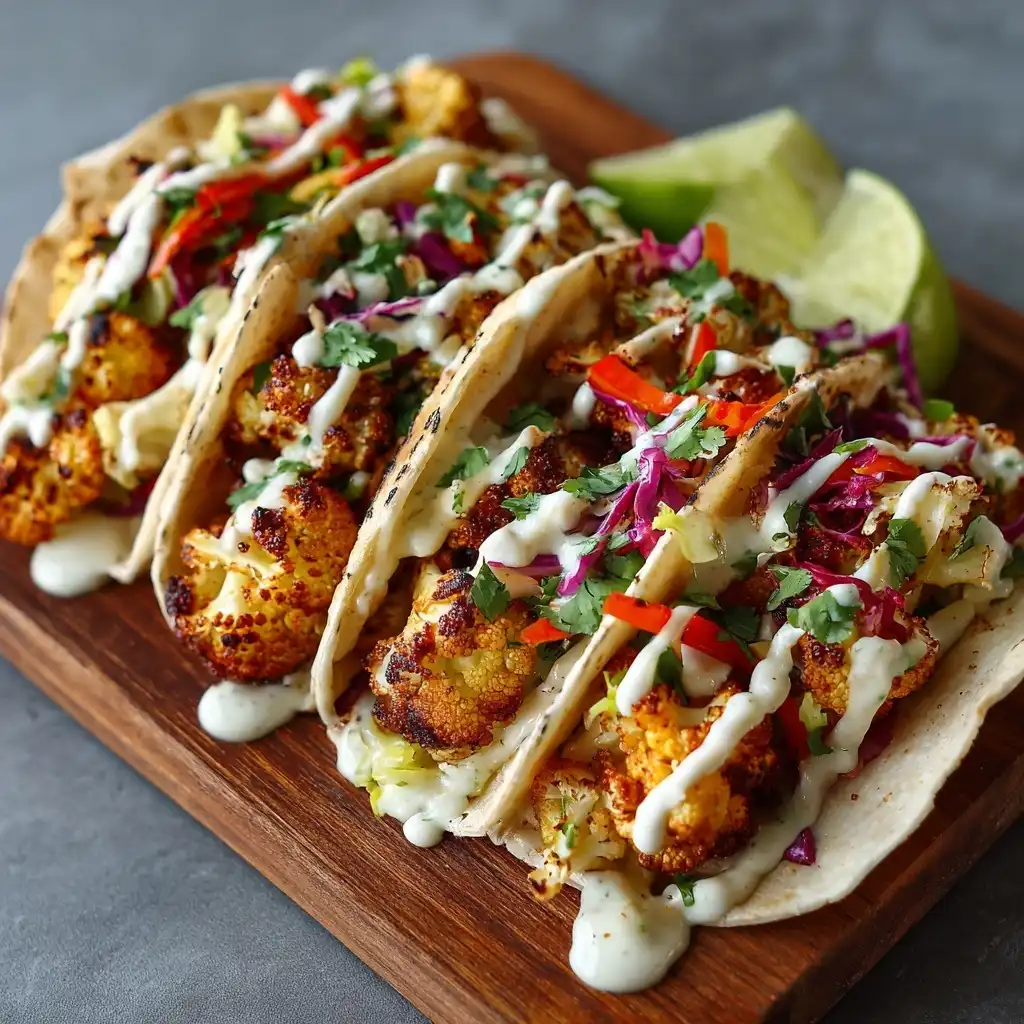
Roasted Cauliflower Tacos with Tahini Drizzle are a vibrant, plant-powered celebration of texture, flavor, and mindful eating. Far from being a mere meatless substitute, this dish stands confidently on its own—featuring golden-brown, caramelized cauliflower florets nestled in warm, pliable tortillas and crowned with a luxuriously creamy, nutty-sweet tahini drizzle, zesty lime, fresh herbs, and crunchy garnishes. Designed for weeknight ease yet elegant enough for weekend entertaining, these tacos bridge the gap between nourishment and indulgence, offering deep umami from roasted vegetables, bright acidity from citrus and pickled elements, and rich depth from toasted spices and sesame. Whether you’re vegan, vegetarian, flexitarian, or simply craving something colorful and satisfying, these tacos deliver bold taste without compromise—and prove that wholesome can be wildly delicious.
The History
While tacos themselves trace their roots to pre-Hispanic Mesoamerica—where indigenous peoples used soft maize tortillas as edible utensils for salsas, grilled fish, and roasted insects—the modern iteration of the roasted cauliflower taco is a relatively recent culinary evolution born from the 21st-century convergence of global food trends. Its rise parallels the broader “vegetable-forward” movement of the early 2010s, when chefs and home cooks alike began reimagining humble produce as center-of-plate stars. Cauliflower, long relegated to bland steamed side dishes, underwent a renaissance thanks to its remarkable ability to absorb bold seasonings and develop deep, meaty textures when roasted at high heat—a technique popularized by Middle Eastern and Mediterranean cuisines (think: muhammara and roasted cauliflower salads) and later embraced by American food media. The pairing with tahini—a centuries-old staple in Levantine cooking dating back to at least 13th-century Arabic culinary manuscripts—adds historical resonance and cultural layering. This fusion reflects a larger trend of cross-cultural ingredient synergy: Mexican street-food structure meets West Asian condiment tradition, grounded in California-inspired, farm-to-table sensibilities. Notably, early versions appeared in influential cookbooks like *Plenty* (Yotam Ottolenghi, 2010) and gained viral traction on platforms like Pinterest and Instagram around 2015–2016, cementing roasted cauliflower as a versatile, photogenic, and deeply flavorful canvas for global flavors.
Ingredients Breakdown
Every component in this recipe is intentionally selected for function, flavor harmony, and nutritional synergy:
- Cauliflower: The star—rich in fiber, vitamin C, folate, and glucosinolates (phytonutrients linked to antioxidant and anti-inflammatory activity). Its dense, slightly fibrous structure holds up beautifully to roasting, transforming into tender-crisp, nutty-sweet morsels with caramelized edges.
- Smoked Paprika & Ground Cumin: Provide earthy warmth and subtle smokiness; cumin adds digestive-supportive properties and enhances mineral absorption, while smoked paprika contributes lycopene and gentle antioxidant benefits.
- Maple Syrup (or Date Syrup): A touch of natural sweetness balances bitterness and accelerates caramelization. Unlike refined sugar, maple syrup contains zinc, manganese, and polyphenolic antioxidants.
- Extra-Virgin Olive Oil: High-phenol EVOO not only coats evenly for crisp roasting but delivers heart-healthy monounsaturated fats and oleocanthal—a potent anti-inflammatory compound.
- Garlic & Onion Powder: Concentrated allium power—supporting immune function, cardiovascular health, and adding savory depth without raw pungency.
- Warm Corn Tortillas: Preferably handmade or freshly pressed—providing complex carbohydrates, calcium (if nixtamalized), and essential amino acids when paired with legumes or seeds. Toasting them lightly adds structural integrity and toasty aroma.
- Tahini: Made from hulled, toasted sesame seeds—packed with calcium, magnesium, copper, healthy fats, and sesamin (a lignan shown to support liver detoxification and cholesterol metabolism).
- Fresh Lime Juice: Bright acidity cuts richness, boosts iron absorption from plant-based sources, and adds refreshing vibrancy.
- Raw Tahini Sauce Enhancers: A pinch of ground cumin ties the sauce to the spice profile of the cauliflower; a splash of warm water ensures silky, pourable consistency without thinning flavor; optional garlic or ginger adds enzymatic zing and digestive support.
- Garnishes: Red onion (crisp, sulfur-rich, antimicrobial); cilantro (detoxifying, rich in vitamins A and K); pickled red cabbage or jalapeños (probiotic potential, vitamin C boost, tangy contrast); avocado slices (creamy monounsaturated fats and potassium); microgreens or radish sprouts (enzyme-rich, peppery finish).
Step-by-Step Recipe
- Prep the Cauliflower: Remove outer leaves and tough stem base. Cut head into uniform 1–1.5-inch florets—ensuring even roasting. Rinse gently and pat *extremely* dry with clean kitchen towels or paper towels. Moisture is the enemy of crispiness!
- Make the Roasting Marinade: In a large bowl, whisk together 3 tbsp extra-virgin olive oil, 1½ tsp smoked paprika, 1 tsp ground cumin, 1 tsp garlic powder, 1 tsp onion powder, ½ tsp fine sea salt, ¼ tsp freshly ground black pepper, and 1 tbsp pure maple syrup (or date syrup). Taste marinade—it should be aromatic, balanced, and slightly sweet-savory.
- Coat Thoroughly: Add cauliflower to marinade. Use hands or tongs to toss vigorously until every nook and cranny is glistening and evenly coated. Let sit 10 minutes at room temperature to allow spices to penetrate.
- Arrange for Optimal Roasting: Preheat oven to 425°F (220°C) with rack positioned in the upper third. Line two large rimmed baking sheets with parchment paper (not foil—tahini residue sticks). Spread cauliflower in a *single layer* with space between florets—crowding causes steaming, not roasting. For extra crispness, use two sheets instead of overloading one.
- Roast with Intention: Place sheets in oven. Roast 20 minutes. Rotate pans front-to-back and top-to-bottom. Continue roasting 15–20 more minutes, until edges are deeply golden brown, undersides are caramelized, and centers are tender when pierced with a fork—but still hold shape. Optional: Broil 1–2 minutes at end for intensified char (watch closely!).
- Rest & Re-Crisp: Remove from oven and let rest 5 minutes—this allows residual heat to finish cooking interiors while letting surface moisture evaporate further. Gently stir once to redistribute any pooled syrup.
- Warm the Tortillas: Heat a dry cast-iron skillet or comal over medium-high heat. Warm each corn tortilla 30–45 seconds per side until pliable, slightly puffed, and flecked with light char. Stack in a clean cloth-lined tortilla warmer or covered bowl to retain steam and flexibility.
- Prepare the Tahini Drizzle: In a small bowl, combine ⅓ cup well-stirred tahini, 2 tbsp fresh lime juice, 1 tbsp warm water, ¼ tsp ground cumin, and a pinch of salt. Whisk vigorously until smooth and creamy—add water ½ tsp at a time if too thick (ideal consistency: ribbon-like, slowly falling off spoon). Optional additions: 1 small grated clove garlic (microwaved 5 sec to mellow), ½ tsp grated fresh ginger, or 1 tsp chopped fresh mint.
- Assemble with Care: Place 3–4 warm roasted florets down the center of each tortilla. Drizzle generously with tahini sauce (about 1 tbsp per taco). Top with thinly sliced red onion, a generous handful of fresh cilantro, a few strips of quick-pickled red cabbage, and optional avocado slices or crumbled cotija (for non-vegan variation). Finish with a final squeeze of lime and flaky sea salt.
- Serve Immediately: These tacos shine best within 10 minutes of assembly—while the cauliflower is still warm and the tortillas supple. Offer extra lime wedges, hot sauce, and extra tahini on the side.
Tips
- Dry Cauliflower = Crisp Cauliflower: This cannot be overstated. After washing, lay florets on triple-layered paper towels and gently press to extract excess water—or air-dry 10 minutes on a wire rack.
- Spice Bloom (Optional Pro Move): For deeper flavor, toast whole cumin seeds and smoked paprika in a dry pan over medium-low heat for 1–2 minutes until fragrant, then grind. Adds an unmistakable layered aroma.
- Oil Temperature Matters: If your olive oil starts smoking in the pan during prep, it’s too hot—use a lower smoke point oil like avocado oil for roasting if preferred, though EVOO’s flavor and phenols are worth the careful temp control.
- Rimmed Baking Sheets Are Essential: They prevent runaway florets and allow proper airflow underneath—critical for even browning.
- Don’t Skip the Rest: That 5-minute rest lets internal steam escape and firms up texture—roasted cauliflower continues to improve in mouthfeel post-oven.
- Tortilla Texture Hack: Lightly brush tortillas with olive oil before warming for extra pliability and subtle richness—or sprinkle with nutritional yeast for cheesy depth (vegan-friendly).
- Tahini Consistency Fix: If your tahini seizes or becomes grainy when acid is added, don’t panic—keep whisking and add warm water ½ tsp at a time. It *will* emulsify into silk.
- Meal Prep Friendly: Roast cauliflower up to 3 days ahead and refrigerate in an airtight container. Re-crisp in a 400°F oven for 8–10 minutes before serving. Tahini sauce keeps 5 days refrigerated—stir well before using.
- Char Control: For maximum smoky flavor without burning, roast on the top rack—but rotate pans halfway and check at 30 minutes. Darker florets near the edges? That’s where the magic lives.
- Serving Temperature Contrast: Serve garnishes chilled (onions, cabbage, lime) against warm cauliflower and tortillas—creates dynamic sensory experience.
Variations and Customizations
Global Flavor Twists
- Moroccan-Inspired: Swap smoked paprika for ras el hanout; add ½ tsp ground cinnamon and 1 tbsp chopped dried apricots to roasted cauliflower. Drizzle with lemon-tahini + harissa swirl.
- Thai Fusion: Replace cumin/smoked paprika with 1 tbsp red curry paste + 1 tsp grated ginger + 1 tbsp coconut aminos. Garnish with crushed peanuts, lime leaf ribbons, and Thai basil.
- Indian Chutney Style: Toss roasted cauliflower with garam masala and turmeric. Serve with mint-cilantro chutney instead of tahini—and top with mango pickle and sev.
- Mediterranean Za’atar: Season with za’atar blend and sumac instead of cumin/paprika. Drizzle with lemon-tahini + toasted pine nuts + crumbled feta (optional).
Dietary Adaptations
- Gluten-Free: Naturally compliant—just verify tortillas are certified GF (many corn varieties are, but cross-contamination happens).
- Nut-Free: Tahini is sesame-based—not a tree nut—so safe for most nut allergies. Double-check labels for shared facility warnings.
- Low-FODMAP: Omit garlic/onion powder; use garlic-infused oil and chives instead. Limit cauliflower to ½ cup per serving. Choose certified low-FODMAP tortillas (e.g., Siete Almond Flour Tortillas).
- Higher Protein: Add black beans (rinsed), spiced chickpeas, or baked tofu crumbles to the filling. Sprinkle with hemp hearts or pumpkin seeds.
- Oil-Free / Whole Food Plant-Based: Replace oil with 2–3 tbsp vegetable broth or aquafaba for roasting; use tahini made without added oil (some brands exist) or sub with blended raw sunflower seeds + lemon + water.
Texture & Temperature Play
- Crunch Factor: Add toasted pepitas, crushed roasted almonds, or crispy roasted chickpeas.
- Creamy Counterpoints: Avocado crema (blended avocado + lime + cilantro + garlic), cashew sour cream, or dairy-free queso fresco.
- Heat Level Control: Mild—omit chili entirely. Medium—add ½ tsp chipotle powder to marinade. Hot—include 1 minced serrano or habanero in tahini sauce.
- Grill Option: Skewer marinated florets and grill over medium charcoal for smoky char—great for summer.
Health Considerations and Nutritional Value
A single serving (2 tacos, ~1½ cups roasted cauliflower, 2 small corn tortillas, 2 tbsp tahini drizzle, and standard garnishes) delivers approximately:
- Calories: 380–420 kcal (balanced energy density—satiating without heaviness)
- Protein: 10–12g (from tahini, cauliflower, and corn—enhanced with legume additions)
- Fiber: 11–14g (nearly half the daily recommended intake—supports gut microbiome diversity, blood sugar regulation, and satiety)
- Healthy Fats: 22–26g (predominantly monounsaturated from olive oil and tahini; includes omega-6 in balance with anti-inflammatory compounds)
- Vitamins & Minerals: Exceptionally high in Vitamin C (120% DV), Vitamin K (45% DV), Folate (35% DV), Potassium (25% DV), Calcium (15% DV from tahini + fortified tortillas), and Magnesium (20% DV).
Functional Benefits:
- Digestive Support: Cauliflower’s glucosinolates may support Phase II liver detoxification; fiber feeds beneficial gut bacteria; fermented garnishes (pickled cabbage) introduce probiotics.
- Anti-Inflammatory Profile: Rich in polyphenols (olive oil, lime, spices), selenium (cauliflower), and sesamin (tahini)—all shown to modulate NF-kB and COX-2 pathways.
- Blood Sugar Balance: Low glycemic load due to high fiber and healthy fat content—slows glucose absorption and prevents spikes.
- Cardiovascular Protection: Monounsaturated fats, potassium, magnesium, and antioxidants collectively support endothelial function, arterial elasticity, and healthy blood pressure.
- Considerations: Those with IBS or sensitive digestion may benefit from smaller portions or low-FODMAP modifications (see Variations). Individuals on blood-thinning medication should maintain consistent vitamin K intake (cauliflower is high in K—don’t avoid, just keep intake stable day-to-day).
Ingredients
- 1 large head organic cauliflower (about 2 lbs / 900g), cored and cut into 1–1.5-inch florets
- 3 tablespoons extra-virgin olive oil (cold-pressed, high-phenol preferred)
- 1½ teaspoons smoked paprika (sweet or hot, depending on preference)
- 1 teaspoon ground cumin (toasted & ground for best flavor)
- 1 teaspoon garlic powder (or 2 cloves fresh, minced)
- 1 teaspoon onion powder (or ¼ cup finely diced red onion)
- ½ teaspoon fine sea salt (plus more to finish)
- ¼ teaspoon freshly ground black pepper
- 1 tablespoon pure maple syrup or date syrup
- 8–10 small (6-inch) organic corn tortillas (preferably stone-ground, non-GMO)
- ⅓ cup well-stirred, high-quality tahini (hulled, untoasted or lightly toasted)
- 2 tablespoons fresh lime juice (about 1 large lime)
- 1–2 tablespoons warm water (as needed for consistency)
- ¼ teaspoon ground cumin (for tahini sauce)
- Pinch of flaky sea salt (for tahini sauce)
- ½ cup thinly sliced red onion (soaked in lime juice 5 minutes to mellow)
- ½ cup chopped fresh cilantro (stems included for extra flavor)
- ½ cup quick-pickled red cabbage (see note below)
- 1 ripe Hass avocado, sliced or diced (optional)
- Lime wedges, for serving
- Hot sauce or chili flakes (optional)
Note: Quick-Pickled Red Cabbage – Thinly slice ½ cup red cabbage. Combine with 2 tbsp apple cider vinegar, 1 tsp maple syrup, ¼ tsp salt, and 1 pinch red pepper flakes. Let sit 15+ minutes.
Directions
- Prep & Dry Cauliflower: Remove outer leaves and tough core. Cut into uniform florets. Rinse under cool water, then spread on clean kitchen towels. Pat *thoroughly* dry—no visible moisture should remain.
- Make Marinade: In a large mixing bowl, whisk together olive oil, smoked paprika, ground cumin, garlic powder, onion powder, salt, pepper, and maple syrup until fully emulsified and fragrant.
- Marinate: Add cauliflower florets to bowl. Toss vigorously with hands or tongs until evenly coated. Let sit at room temperature 10 minutes.
- Preheat & Prep Pans: Position oven rack in upper third. Preheat oven to 425°F (220°C). Line two large rimmed baking sheets with parchment paper.
- Arrange for Roasting: Spread marinated cauliflower in a single layer across both sheets—do not overlap or crowd. Space matters for caramelization.
- Roast: Place sheets in oven. Roast 20 minutes. Rotate pans front-to-back and top-to-bottom. Continue roasting 15–20 minutes more, until florets are deeply golden, caramelized at edges, and tender-crisp when pierced.
- Rest: Remove from oven. Let rest on pans 5 minutes—do not stir yet. This sets texture and concentrates flavor.
- Warm Tortillas: Heat dry skillet over medium-high heat. Warm each tortilla 30–45 seconds per side until soft, pliable, and lightly speckled. Stack in cloth-lined basket or covered bowl.
- Make Tahini Drizzle: In small bowl, whisk tahini, lime juice, warm water (start with 1 tbsp), ground cumin, and pinch salt until smooth and pourable. Adjust water as needed.
- Assemble Tacos: Place 3–4 roasted florets down center of each tortilla. Drizzle generously with tahini sauce (~1 tbsp). Top with red onion, cilantro, pickled cabbage, avocado (if using), and extra lime juice. Finish with flaky salt and hot sauce.
- Serve Immediately: Enjoy while warm and vibrant—best within 10 minutes of assembly. Offer extra lime, hot sauce, and tahini on the side.
FAQ
- Can I use frozen cauliflower?
- Yes—but with caveats. Thaw completely and *pat bone-dry*. Frozen cauliflower has higher water content and may steam rather than roast. Expect softer texture and less caramelization. Fresh is strongly recommended for optimal results.
- Why does my tahini sauce separate or become bitter?
- Tahini can seize when cold or overly acidic ingredients are added too quickly. Always use room-temp tahini and whisk continuously while adding lime juice. If it separates, keep whisking and add warm water ½ tsp at a time. Bitterness usually indicates rancid or low-quality tahini—look for brands with <6 months shelf life, refrigerated storage, and no added oils or preservatives.
- Can I make these gluten-free and soy-free?
- Absolutely. Corn tortillas are naturally GF and soy-free—just verify certification on packaging. Tahini is sesame-based and inherently soy-free. Avoid soy-based sauces or tamari unless specified GF/soy-free.
- How do I store leftovers?
- Store roasted cauliflower separately in an airtight container for up to 4 days refrigerated. Tahini sauce lasts 5 days refrigerated—stir before reuse. Tortillas freeze beautifully for up to 3 months (wrap tightly in foil + freezer bag). Reheat cauliflower in oven or air fryer—not microwave—for best texture.
- What if I don’t have smoked paprika?
- You can substitute with regular sweet paprika + ¼ tsp liquid smoke (use sparingly) OR increase cumin to 1½ tsp and add ½ tsp chipotle powder for smoky heat. Alternatively, try 1 tsp ground coriander + ½ tsp ancho chili powder for nuanced earthiness.
- Are corn tortillas healthier than flour?
- Generally, yes—especially when made from 100% stone-ground, non-GMO corn and nixtamalized (treated with lime). They’re naturally gluten-free, higher in fiber and calcium, lower in sodium and fat, and contain resistant starch (a prebiotic). Look for minimal ingredients: corn, water, lime.
- Can I double this recipe?
- Yes—with adjustments. Use *four* rimmed baking sheets (not two doubled-up layers). Rotate pans every 15 minutes. Increase total roasting time by 3–5 minutes—rely on visual cues (deep gold, caramelized edges) over strict timing.
- What’s the best tahini brand to use?
- Look for: 100% hulled sesame seeds, no added oils, no preservatives, refrigerated section (indicates freshness), and a pourable, creamy texture—not stiff or chalky. Top-rated U.S. brands include Soom Foods, Seed + Mill, and Once Again. Middle Eastern markets often carry excellent imported varieties like Al Wadi or Al-Madina.
- Can I add cheese?
- Of course! Crumbled cotija, queso fresco, or vegan feta add salty, creamy contrast. Add just before serving to preserve texture. For lactose-sensitive folks, aged cheeses like manchego or pecorino are naturally lower in lactose.
- Is this recipe suitable for kids?
- Yes—with simple tweaks: omit spicy elements, reduce lime in tahini, add mild toppings like shredded carrots or corn kernels, and serve with mild salsa. Many children love the sweet-crispy texture of roasted cauliflower—especially when served “deconstructed” with dipping sauce.
Summary
Roasted Cauliflower Tacos with Tahini Drizzle are a nutritionally dense, globally inspired, and deeply satisfying plant-based meal that celebrates the transformative power of roasting, the creamy elegance of sesame, and the vibrant freshness of seasonal garnishes—all wrapped in a warm, pliable corn tortilla.
With customizable spice levels, adaptable for dietary needs, meal-prep friendly, and rich in fiber, antioxidants, and functional phytonutrients, these tacos deliver restaurant-worthy flavor and texture while supporting long-term wellness, gut health, and sustainable eating habits.