Introduction
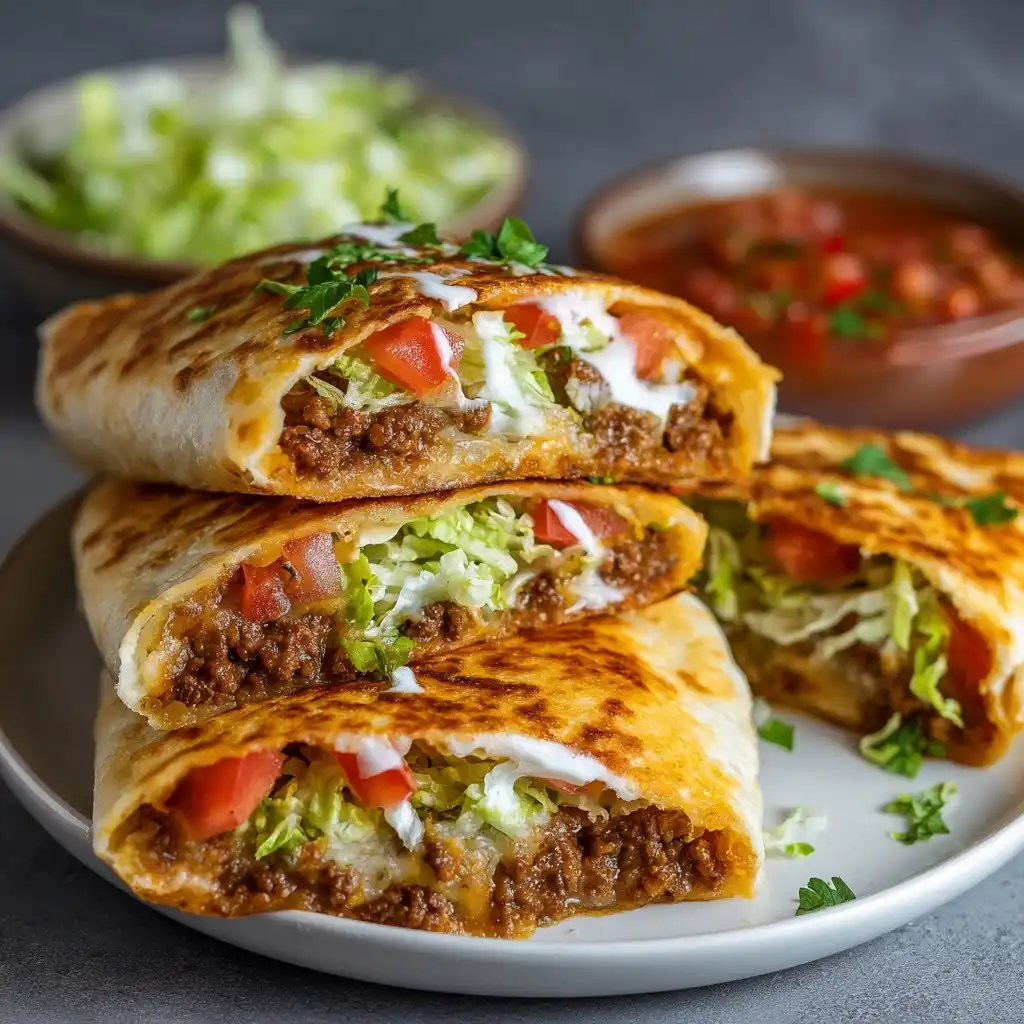
Beef Taco Crunchwraps are the ultimate fusion of Tex-Mex flavor, fast-food convenience, and homemade creativity—combining the bold, seasoned appeal of classic tacos with the satisfying, crispy-crunchy texture of a pan-fried or air-fried tortilla wrap. Unlike traditional soft tacos or hard-shell versions, the Crunchwrap is a self-contained, handheld marvel: a warm flour tortilla layered with seasoned ground beef, shredded cheese, crisp lettuce, diced tomatoes, cool sour cream, zesty salsa, and often a secret layer of crushed nacho chips or tostada shells for that signature “crunch.” Originating from a beloved national fast-food chain, the Crunchwrap has inspired countless home cooks to reimagine it with elevated ingredients, healthier swaps, and gourmet twists—all while preserving its irresistible textural contrast and bold, crave-worthy flavor profile. Whether you’re meal prepping for busy weeknights, hosting a casual game-day spread, or simply craving something fun, flavorful, and deeply satisfying, the Beef Taco Crunchwrap delivers on every front—and this guide walks you through everything you need to know to master it at home.
The History
The Crunchwrap Supreme was first introduced by Taco Bell in 2004 as part of a broader menu innovation strategy aimed at bridging the gap between handheld portability and layered, restaurant-style complexity. Conceived by then-chief marketing officer Greg Creed and developed by a cross-functional team including culinary R&D and packaging engineers, the Crunchwrap was designed with intention: its octagonal shape wasn’t just aesthetic—it optimized structural integrity, prevented fillings from leaking, and created eight distinct “crunch points” when folded and pressed. Early prototypes experimented with over 37 different folding techniques before landing on the now-iconic “star-fold” (also known as the “pinwheel fold”), which simultaneously seals ingredients inward while exposing the chip layer to direct heat for maximum crispness. Though initially met with skepticism—many assumed the concept was too complex for mass execution—the Crunchwrap quickly became a cult favorite, earning praise for its ingenious balance of temperature (warm beef + cool toppings), texture (soft tortilla + crunchy shell + creamy dairy), and flavor layering. By 2011, it had become one of Taco Bell’s top five best-selling items nationwide, inspiring viral TikTok trends like the #CrunchwrapHack and spawning dozens of copycat recipes across food blogs and YouTube channels. Today, the home version has evolved far beyond imitation: chefs, nutritionists, and home cooks alike have reimagined it using grass-fed beef, organic corn tortillas, fermented jalapeños, house-made pico de gallo, and even keto-friendly almond-flour shells—transforming a fast-food staple into a canvas for culinary expression, dietary customization, and cultural storytelling.
Ingredients Breakdown
Every exceptional Beef Taco Crunchwrap begins not with technique—but with thoughtful, high-quality ingredients. Below is a detailed breakdown of each component, explaining *why* it matters—not just *what* goes in:
- Ground Beef (80/20 lean-to-fat ratio): The ideal fat content ensures juiciness, flavor carry, and caramelization during browning. Leaner beef (90/10 or higher) can yield dry, crumbly filling; fattier blends (70/30) may pool excess grease and compromise crunch integrity. Grass-fed, antibiotic-free, or regeneratively raised options add depth of flavor and nutritional benefits like higher omega-3s and CLA.
- Taco Seasoning (Homemade vs. Packet): Store-bought packets often contain excessive sodium, anti-caking agents (like silicon dioxide), and artificial colors. A homemade blend—using toasted cumin seeds, smoked paprika, garlic powder, onion powder, chipotle powder, dried oregano, and a touch of cocoa powder—offers cleaner flavor, better control over salt, and aromatic complexity that deepens during cooking.
- Flour Tortillas (8-inch, low-moisture): Not all tortillas are created equal. Look for ones with minimal ingredients (flour, water, fat, salt) and no preservatives or dough conditioners. Slightly drier tortillas (aged 24–48 hours post-production) hold up better to folding and crisping without tearing. For gluten-free options, certified GF almond-coconut or cassava flour tortillas offer pliability and browning capability.
- Crunch Element (The Heart of the Crunchwrap): This is non-negotiable—and highly customizable. Traditional Taco Bell uses Nacho Cheese Doritos, but superior alternatives include: oven-baked tostada shells (crumbled fine for even distribution), air-fried corn tortilla strips (lighter, less oily), roasted pepitas (nutty, nutrient-dense), or even crushed plantain chips (tropical sweetness balances spice). Avoid overly salty or waxy chips that soften quickly.
- Cheese Blend: A mix of sharp cheddar (for tang and melt) and Monterey Jack (for creaminess and stretch) outperforms single-varietal shreds. Pre-shredded cheeses contain cellulose and anti-caking starches that inhibit melting and create graininess—always grate from block.
- Fresh Toppings: Iceberg lettuce offers clean crunch and neutral base; romaine adds more nutrients and sturdiness. Vine-ripened tomatoes should be seeded and patted dry to prevent sogginess. Red onion adds bite; pickled red onions introduce acidity and brightness. Fresh cilantro contributes volatile oils essential to authentic aroma.
- Creamy Elements: Sour cream provides cooling richness—but full-fat, cultured varieties (not “reduced-fat” or “sour cream substitute”) deliver optimal mouthfeel and stability. Greek yogurt (2% or whole milk) is an excellent high-protein, lower-calorie alternative with similar tang. Lime crema (sour cream + lime zest + juice + pinch of salt) adds vibrancy and cuts through richness.
- Salsa & Heat: Pico de gallo (fresh, uncooked) preserves brightness and texture; roasted tomato salsa adds smokiness and body. For heat lovers: finely minced serranos (seeds removed for milder heat) or chipotle-in-adobo purée lend layered, slow-building warmth—not just burn.
Step-by-Step Recipe
- Prep the Beef Filling: In a large skillet over medium-high heat, brown 1 lb (450g) 80/20 ground beef, breaking it apart with a wooden spoon. Once fully cooked and no pink remains (approx. 6–8 min), drain excess grease *but reserve 1 tbsp* for flavor. Return to skillet, reduce heat to medium-low, and stir in 2 tbsp homemade taco seasoning + ¼ cup water. Simmer uncovered 5 minutes, stirring frequently, until moisture evaporates and mixture thickens into a cohesive, slightly sticky filling. Remove from heat and let cool slightly (10 min)—this prevents tortilla steam-sogginess.
- Prepare Crunch Layer: While beef cools, crush ¾ cup baked tostada shells (or preferred crunch element) into coarse, pea-sized pieces—not dust, not large shards. Spread on parchment-lined baking sheet and bake at 325°F (163°C) for 4 minutes to enhance crispness and remove ambient moisture. Cool completely.
- Assemble the Base: Warm six 8-inch flour tortillas individually in a dry cast-iron skillet for 12 seconds per side—just enough to make pliable, not browned. Lay one flat on a clean surface. Center ⅓ cup cooled beef mixture in the middle. Top evenly with: 2 tbsp shredded cheddar-Monterey Jack blend, 1½ tbsp crushed crunch element, 2 tbsp shredded iceberg lettuce, 1 tbsp seeded & patted-dry diced tomato, 1 tsp finely minced red onion, and a small pinch of fresh cilantro.
- The Star Fold (Pinwheel Technique): This is where precision meets patience. First, gently lift the bottom edge (6 o’clock) and fold it upward about 1.5 inches to cover the bottom edge of the filling—don’t pull tight. Next, lift the top edge (12 o’clock) and fold down to meet the first fold. Then, working clockwise: fold the right edge (3 o’clock) diagonally across to meet the center, then the left edge (9 o’clock) similarly. You’ll now have a loose, lopsided square. Now—crucially—lift the bottom-left corner (7:30) and fold it sharply into the center, then the bottom-right (4:30), top-right (1:30), and top-left (10:30), rotating as you go. Press gently to seal layers. You should now have a compact, octagonal package with all edges tucked inward and no visible filling.
- Press & Crisp: Place assembled Crunchwrap seam-side down in a lightly greased (¼ tsp avocado oil) nonstick or well-seasoned cast-iron skillet over medium-low heat. Place a second smaller skillet or weighted press (a stainless steel ramekin filled with rice works perfectly) on top. Cook undisturbed for 3 minutes—this compresses layers, fuses cheese, and begins crisping the outer tortilla. Carefully flip using a wide spatula, reapply weight, and cook 3 more minutes until deep golden brown and audibly crisp.
- Add Creamy & Zesty Finishes: Remove from heat and let rest 1 minute (allows internal steam to redistribute and cheese to set). Using a paring knife, carefully slice in half diagonally. Immediately drizzle each half with 1 tsp lime crema and 1 tsp fresh pico de gallo. Serve hot—with extra lime wedges, hot sauce, and a small bowl of reserved crunch for topping.
Tips
- Temperature Control Is Everything: Too hot = burnt tortilla, raw interior. Too low = steamed, chewy wrap. Medium-low heat with consistent weight ensures even conduction and golden, shatter-prone crispness.
- Cool Fillings Before Assembly: Warm beef melts cheese prematurely and releases steam that softens the tortilla from within. Let beef, cheese, and crunch sit at room temp for 10–15 minutes before building.
- Pat Dry All Wet Ingredients: Tomatoes, onions, and even lettuce release water. Use paper towels to blot aggressively—moisture is the #1 enemy of crunch.
- Don’t Skip the Weighted Press: Without compression, layers separate during eating. A 1.5–2 lb weight yields optimal density and surface contact for browning.
- Use a Nonstick or Well-Seasoned Skillet: Sticky surfaces cause tearing during flipping. If using cast iron, ensure it’s dark, slick, and lightly oiled—not new or poorly maintained.
- Double-Wrap for Meal Prep: Wrap cooled Crunchwraps tightly in parchment, then foil. Freeze up to 3 months. Reheat directly from frozen in air fryer at 375°F (190°C) for 9–11 minutes—no thawing needed.
- Sharp Knife for Cutting: A dull blade smooshes layers instead of slicing cleanly. Chill assembled wraps for 10 minutes before cutting if serving cold.
- Build One at a Time: Don’t pre-assemble all six—tortillas dry out and lose pliability. Keep extras covered with a damp kitchen towel while working.
Variations and Customizations
The Beef Taco Crunchwrap is endlessly adaptable—whether you’re accommodating diets, celebrating global flavors, or simply chasing novelty. Here’s how to elevate and personalize it:
- Protein Swaps: Ground turkey (add 1 tsp poultry seasoning + extra ½ tsp smoked paprika), plant-based crumbles (Linda McCartney or black bean-walnut blend), shredded carnitas (slow-braised pork shoulder), or flaked grilled mahi-mahi with mango-jalapeño slaw.
- Dietary Adaptations: Gluten-Free: Use certified GF tortillas and GF-certified crunch (like Siete Grain-Free Tortilla Chips); Keto/Low-Carb: Replace tortilla with a thin, baked almond-flour “shell” (almond flour + egg + psyllium husk + baking powder) and use keto-approved cheese/salsa; Vegan: Swap beef for lentil-walnut-worcestershire mixture, cheese for cashew queso, sour cream for coconut yogurt, and use avocado oil for crisping.
- Global Twists: Korean BBQ: Marinated bulgogi beef, kimchi slaw, gochujang crema, sesame crunch; Mediterranean: Lemon-herb lamb, feta-tahini drizzle, cucumber-dill relish, za’atar-spiced pita chips; Thai Peanut: Ginger-garlic beef, shredded cabbage-carrot slaw, peanut-lime crema, crushed roasted peanuts.
- Breakfast Crunchwrap: Scrambled eggs or tofu scramble, chorizo, pepper jack, roasted poblano strips, avocado slices, and chipotle-maple syrup drizzle.
- Gourmet Upscale: Wagyu beef blend, aged gouda + manchego cheese, heirloom tomato confit, microgreens, truffle aioli, and black lava salt finish.
- Spice Level Tiers: Mild (paprika + oregano only), Medium (chipotle + jalapeño), Hot (habanero powder + pickled ghost pepper rings), Extreme (ghost pepper oil infusion + Carolina Reaper powder—use extreme caution).
- Texture Boosters: Toasted sunflower seeds, crispy fried shallots, crushed ramen noodles (low-sodium), or crumbled bacon for umami depth.
- Sweet-Savory Options: Add roasted sweet potato cubes, cinnamon-cayenne beef, cotija cheese, and pineapple pico—ideal for brunch or summer grilling.
Health Considerations and Nutritional Value
A standard homemade Beef Taco Crunchwrap (made with 80/20 beef, full-fat cheese, sour cream, and baked tostada crunch) contains approximately 480–540 calories, 24–28g protein, 22–26g total fat (8–10g saturated), 38–42g carbohydrates, and 5–7g fiber—depending on tortilla size and toppings. While indulgent, it’s nutritionally balanced *when built intentionally*. Key considerations:
- Protein Quality: Ground beef provides complete protein, heme iron (highly bioavailable), zinc, and B12. Choosing grass-fed increases omega-3s and conjugated linoleic acid (CLA), linked to anti-inflammatory effects.
- Fat Profile Matters: The saturated fat in beef and cheese isn’t inherently harmful in moderation—but pairing with fiber-rich veggies (lettuce, tomatoes, onions) slows gastric emptying and improves satiety and blood sugar response.
- Sodium Awareness: A major concern in fast-food versions (often 1,200+ mg per wrap). Homemade allows precise control: skip added salt in seasoning, use low-sodium cheese, rinse canned beans if adding, and rely on herbs/spices for flavor. Target ≤600mg per serving for heart health.
- Fiber Optimization: Traditional Crunchwraps are low in fiber. Boost significantly with: high-fiber tortillas (look for ≥5g/serving), black beans or lentils mixed into beef, jicama or radish slaw, and double portions of leafy greens.
- Digestive Wellness: Fermented toppings like kimchi, curtido (Salvadoran cabbage slaw), or pickled red onions introduce probiotics and digestive enzymes—supporting gut microbiome diversity.
- Glycemic Impact: White flour tortillas spike blood sugar. Opt for sprouted grain, whole wheat, or low-glycemic alternatives like coconut or cassava flour wraps to maintain steady energy.
- Allergen Notes: Common allergens include dairy (cheese, sour cream), wheat (tortilla), and soy (in some seasonings/oils). Always verify labels and consider substitutions: nutritional yeast for cheesy flavor, oat milk sour cream, or gluten-free certified tortillas.
- Balanced Indulgence Strategy: Enjoy as part of a varied diet—not daily, but meaningfully. Pair with a side of roasted vegetables or a simple green salad to increase micronutrient density and volume without excess calories.
Ingredients
- 1 lb (450g) 80/20 ground beef
- 2 tbsp homemade taco seasoning (see breakdown above) or 1 (1-oz) packet low-sodium seasoning
- ¼ cup water
- 6 (8-inch) high-quality flour tortillas (or gluten-free alternative)
- 1 cup shredded sharp cheddar cheese
- 1 cup shredded Monterey Jack cheese
- ¾ cup crushed baked tostada shells (or preferred crunch element)
- 1½ cups shredded iceberg or romaine lettuce
- 1 medium vine-ripened tomato, seeded, diced, and patted dry
- ¼ cup finely minced red onion
- ¼ cup fresh chopped cilantro
- ½ cup full-fat sour cream or Greek yogurt
- 2 tbsp fresh lime juice
- 1 tsp lime zest
- ¼ tsp sea salt (for lime crema)
- ½ cup fresh pico de gallo (store-bought or homemade)
- 1–2 tbsp avocado oil or refined coconut oil (for crisping)
- Lime wedges and hot sauce, for serving
Directions
- In a large skillet over medium-high heat, cook ground beef, breaking apart with a wooden spoon, until browned and no pink remains (6–8 minutes). Drain excess grease, reserving 1 tablespoon. Return beef to skillet; reduce heat to medium-low. Stir in taco seasoning and water. Simmer uncovered 5 minutes, stirring often, until thickened. Remove from heat and cool 10 minutes.
- Preheat oven to 325°F (163°C). Spread crushed tostada shells on parchment-lined baking sheet. Bake 4 minutes. Cool completely.
- Warm tortillas one at a time in dry skillet 12 seconds per side. Keep covered with damp towel.
- Assemble one wrap: Place tortilla flat. Center ⅓ cup beef, 2 tbsp cheddar-Jack blend, 1½ tbsp crunch, 2 tbsp lettuce, 1 tbsp tomato, 1 tsp red onion, and pinch cilantro.
- Perform star fold: Fold bottom edge up ~1.5″, then top edge down to meet it. Fold right edge diagonally into center, then left edge similarly. Fold bottom-left corner into center, then bottom-right, top-right, and top-left—rotating to form octagon. Press gently to seal.
- Heat ¼ tsp avocado oil in skillet over medium-low heat. Place wrap seam-side down. Top with weighted press. Cook 3 minutes. Flip, repress, cook 3 more minutes until deeply golden and crisp.
- Rest 1 minute. Slice diagonally. Drizzle each half with 1 tsp lime crema (sour cream + lime juice/zest + salt) and 1 tsp pico de gallo. Serve immediately with lime wedges and hot sauce.
FAQ
- Can I make Crunchwraps ahead of time?
- Yes! Assemble fully (uncooked), wrap tightly in parchment + foil, and freeze up to 3 months. Air fry frozen at 375°F (190°C) for 9–11 minutes—no thawing needed. For refrigeration, assemble up to 1 day ahead and cook just before serving (fillings may weep).
- Why does my Crunchwrap fall apart?
- Most commonly due to: warm fillings (steam loosens tortilla), insufficient pressing (layers don’t fuse), under-crisped tortilla (lacks structural integrity), or overfilling (exceeding ⅓ cup beef per wrap). Also ensure your star fold tucks *all* corners tightly inward—not just folded loosely.
- Can I air fry instead of pan-fry?
- Absolutely—and many prefer it! Spray assembled wraps lightly with avocado oil spray. Air fry at 375°F (190°C) for 6 minutes, flip, spray again, and air fry 4–5 more minutes until deeply golden and crisp. No press needed—air circulation creates even browning.
- What’s the best cheese for melt and flavor?
- A 50/50 blend of sharp cheddar (for tang and structure) and Monterey Jack (for creaminess and stretch) is ideal. Avoid pre-shredded—anti-caking agents hinder melt. For vegan, try Miyoko’s Liquid Vegan Mozzarella or cashew-based queso with tapioca starch for stretch.
- My Crunchwrap is soggy. How do I fix it?
- Sogginess almost always comes from moisture. Blot *all* wet ingredients (tomatoes, onions, lettuce) with paper towels. Cool beef completely. Use drier tortillas (slightly aged or lightly toasted pre-assembly). Never assemble and wait—cook immediately after folding.
- Are Crunchwraps gluten-free?
- Not by default—but easily made so. Use certified gluten-free tortillas (Siete, Canyon Bakehouse, or homemade cassava flour) and GF-certified crunch (like Late July Sea Salt Chips or homemade baked corn chips). Verify all seasonings and sauces are GF-labeled.
- Can I make a vegetarian Crunchwrap?
- Easily! Replace beef with 1.5 cups seasoned black beans + ½ cup cooked quinoa + ¼ cup sautéed mushrooms + 1 tsp liquid smoke. Add extra spices: cumin, chipotle, smoked paprika. Boost umami with tamari and nutritional yeast.
- How do I store leftovers?
- Store uncut cooked Crunchwraps in airtight container with paper towel underneath and on top to absorb condensation. Refrigerate up to 3 days. Reheat in air fryer (350°F/177°C, 4–5 min) or oven (375°F/190°C, 8–10 min) for best crispness. Avoid microwaving—it makes them rubbery.
- Can kids help make Crunchwraps?
- Yes! It’s a fantastic family activity. Assign age-appropriate tasks: toddlers tear lettuce, grade-schoolers crumble chips or sprinkle cheese, tweens mix seasoning or fold (with guidance), teens handle stove and flipping. Builds confidence, motor skills, and food literacy.
- What drinks pair best with Beef Taco Crunchwraps?
- Classic pairings: ice-cold Mexican lager (like Modelo Especial), hibiscus agua fresca (tart, refreshing, non-alcoholic), horchata (cinnamon-rice milk, soothing), or sparkling lime water with mint. For wine lovers: off-dry Riesling or chilled Tempranillo complement spice and richness beautifully.
Summary
The Beef Taco Crunchwrap is far more than a nostalgic fast-food copycat—it’s a dynamic, customizable, and deeply satisfying handheld meal that marries bold Tex-Mex flavors with brilliant textural contrast and smart, scalable technique. From its origins in Taco Bell’s culinary labs to your home kitchen, it invites creativity, accommodates diverse diets, and delivers consistent joy in every golden, crunchy, savory, creamy, fresh bite.
With attention to ingredient quality, temperature control, proper folding, and intentional layering, you’ll transform weeknight dinners into memorable experiences—proving that convenience and craftsmanship aren’t mutually exclusive, especially when there’s crunch involved.