Introduction
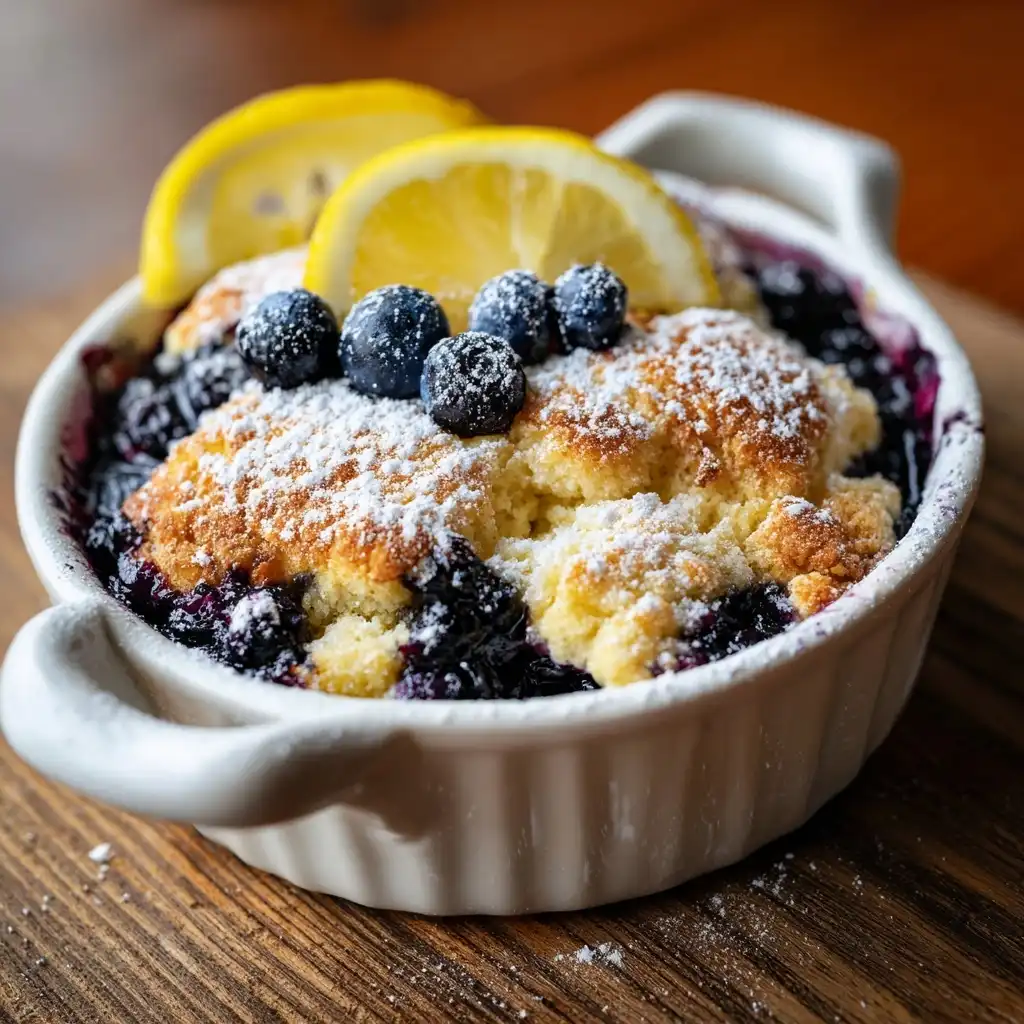
There’s something undeniably comforting—and unmistakably summery—about a warm, bubbling Lemon Blueberry Cobbler fresh from the oven. This beloved American dessert strikes the perfect balance between tart and sweet, juicy and tender, rustic and refined. With its vibrant blueberry filling kissed by bright lemon zest and juice, crowned with a golden, buttery biscuit-like topping that bakes up soft beneath and delicately crisp on top, it’s more than just a dessert—it’s nostalgia in a cast-iron skillet. Whether served solo, à la mode with vanilla bean ice cream, or drizzled with lemon-infused whipped cream, Lemon Blueberry Cobbler delivers soul-soothing warmth and seasonal elegance in every spoonful.
The History
Cobbler’s roots run deep in early American culinary tradition—born not from haute cuisine, but from necessity, ingenuity, and resourcefulness. The term “cobbler” first appeared in print in the United States in the early 1800s, though its origins likely trace back to British “cobs” (a dialectal word for lumps or dumplings) and colonial adaptations of English fruit “slump,” “grunts,” and “pan dowdy.” Early American settlers lacked access to refined pastry tools and consistent ovens, so they turned to simple, forgiving doughs dropped or spooned over stewed fruit—a method that required no rolling pin, minimal precision, and yielded reliably delicious results. By the mid-19th century, cobblers had become staples in Southern and Midwestern kitchens, often made with seasonal berries, stone fruits, or apples—and always baked in heavy cast-iron skillets or earthenware dishes over wood-burning stoves.
Blueberries, native to North America and long harvested by Indigenous peoples—including the Wabanaki, Ojibwe, and Cherokee—for food, medicine, and dye—became widely incorporated into desserts after commercial cultivation began in New Jersey in the early 1900s, thanks to Elizabeth White and Dr. Frederick Coville. Lemon, though not native, arrived via Spanish galleons and colonial trade routes, prized for its preservative qualities and bright acidity. The union of lemon and blueberry—two ingredients that naturally elevate each other’s flavor profiles—emerged as a classic pairing in mid-century American home cooking magazines like Betty Crocker’s Picture Cook Book (1950) and Woman’s Day, where home economists championed its zesty balance and visual appeal. Today, Lemon Blueberry Cobbler stands as both a time-honored tradition and a modern favorite—frequently featured at farmers’ markets, boutique bakeries, and viral food blogs alike—celebrating regional abundance, culinary heritage, and the joyful simplicity of fruit-forward baking.
Ingredients Breakdown
Understanding *why* each ingredient matters—and how it contributes to texture, structure, flavor, and chemistry—is key to mastering this cobbler. Below is an in-depth breakdown:
For the Blueberry-Lemon Filling:
- Fresh or frozen blueberries: The star. Fresh berries offer superior texture and burst-in-your-mouth juiciness during peak season (June–August); frozen work exceptionally well year-round—just don’t thaw them first (excess water dilutes flavor and encourages mushiness). Wild blueberries provide deeper color and more intense, tangy-sweet notes; cultivated varieties yield plumper, milder fruit.
- Granulated sugar: Not just for sweetness—it draws out natural juices via osmosis, helps thicken the filling as it cooks, and promotes caramelization during baking. Adjust downward if using very ripe or wild blueberries.
- Light brown sugar (optional but recommended): Adds subtle molasses depth, enhances berry richness, and contributes to a silkier, more complex syrup. Its slight acidity also balances lemon beautifully.
- Lemon zest: Packed with aromatic citrus oils (limonene, citral), zest provides concentrated fragrance and brightness without added liquid. Always use a microplane—not a grater—to avoid bitter pith.
- Fresh lemon juice: Adds essential acidity to cut through sweetness and prevent cloying richness. Juice quantity should be adjusted based on lemon variety (Meyer lemons are milder; Eureka or Lisbon are sharper) and personal preference. Never substitute bottled juice—it lacks volatile aromatics and often contains preservatives that mute flavor.
- Cornstarch: The preferred thickener for fruit fillings due to its clarity, neutral taste, and high gelatinization temperature (it sets firmly only when boiling). Too little leads to runny cobbler; too much yields gummy, gluey texture. For best results, whisk cornstarch with cold water or lemon juice *before* adding to berries to prevent clumping.
- Salted butter (small cubes): Enriches the filling with luxurious mouthfeel and nutty depth. Added at the end (off heat), it emulsifies the syrup, lending sheen and velvety body. Unsalted butter works—but remember to adjust added salt accordingly.
- Fine sea salt: A tiny amount (⅛ tsp) heightens all other flavors, reduces perceived bitterness, and creates harmony across sweet-tart-umami notes.
For the Lemon-Buttermilk Biscuit Topping:
- All-purpose flour: Provides gluten structure for lift and tenderness. For extra flakiness, substitute up to 25% with finely milled soft-wheat pastry flour.
- Granulated sugar: Sweetens the topping, aids browning (via Maillard reaction), and tenderizes by inhibiting gluten development.
- Baking powder & baking soda: Double-acting leaveners ensure reliable rise. Baking powder provides most lift; baking soda (activated by buttermilk’s acidity) adds extra oomph and neutralizes tang—critical for balanced flavor.
- Fine sea salt: Enhances sweetness and rounds out the biscuit’s flavor profile.
- Unsalted butter (cold, cubed): The secret to flaky, tender layers. Cold fat melts slowly in the oven, creating steam pockets that separate dough layers. Grate frozen butter for ultra-even distribution—or pulse in a food processor until pea-sized crumbs form.
- Buttermilk: Adds tang, moisture, and tenderness. Its acidity activates baking soda and denatures gluten proteins, yielding a supremely soft crumb. Full-fat buttermilk gives optimal richness; low-fat versions may produce drier biscuits. No buttermilk? Make a quick substitute: 1 cup whole milk + 1 tbsp lemon juice or white vinegar, rested 5–10 minutes until slightly curdled.
- Fresh lemon zest (second addition): Reinforces citrus notes in the topping—ensuring aroma carries through both layers. Don’t skip this layering technique!
- Heavy cream or whole milk (for brushing): Creates a luminous, golden-brown crust. Optional—but highly recommended—sprinkle of coarse turbinado sugar before baking adds delightful crunch and sparkle.
Step-by-Step Recipe
Yield: 6–8 servings | Prep time: 25 minutes | Bake time: 40–45 minutes | Total time: ~1 hour 10 minutes
Equipment: 9-inch cast-iron skillet (or 9×13-inch ceramic baking dish), medium bowl, large mixing bowl, whisk, rubber spatula, microplane, measuring cups/spoons, pastry cutter or food processor, oven thermometer (recommended)
Step 1: Preheat & Prep
Position oven rack in the lower third of your oven. Preheat to 375°F (190°C). While oven heats, generously grease your 9-inch cast-iron skillet (or baking dish) with unsalted butter or neutral oil. Place skillet on a parchment-lined baking sheet—this catches any potential bubbling-over and simplifies cleanup.
Step 2: Prepare the Blueberry-Lemon Filling
In a large bowl, combine 4 cups (about 18 oz / 510g) fresh or frozen (unthawed) blueberries, ¾ cup granulated sugar, ¼ cup light brown sugar, 1½ tsp finely grated lemon zest (from 1–2 medium lemons), 3 tbsp fresh lemon juice (from ~1½ lemons), 3 tbsp cornstarch, and ⅛ tsp fine sea salt. Gently fold with a silicone spatula until evenly coated—avoid crushing berries. Let sit 10 minutes at room temperature to macerate and release juices.
After resting, pour mixture into your prepared skillet. Dot evenly with 2 tbsp cold, unsalted butter, cut into small cubes. Set aside while preparing topping.
Step 3: Make the Lemon-Buttermilk Biscuit Topping
In a medium bowl, whisk together 1¾ cups (210g) all-purpose flour, ¼ cup granulated sugar, 2 tsp baking powder, ¼ tsp baking soda, and ½ tsp fine sea salt.
Add 6 tbsp (85g) cold, unsalted butter—cut into ½-inch cubes. Using a pastry cutter, two forks, or your fingertips, cut butter into flour mixture until it resembles coarse meal with some pea-sized pieces remaining. (Alternatively, pulse in a food processor 5–6 times.) Stir in 1 tsp additional lemon zest.
In a separate small bowl, whisk together ¾ cup (180ml) full-fat buttermilk and 1 large egg until smooth. Pour wet ingredients into dry ingredients. Using a fork or spatula, gently stir *just until* a shaggy dough forms—do not overmix. Batter will be thick, slightly sticky, and lumpy. Overworking develops gluten and yields tough biscuits.
Step 4: Assemble & Bake
Scoop dough by heaping ¼-cup portions (a cookie scoop works perfectly) and drop evenly over the blueberry filling—6–8 mounds total. Gently press each mound to slightly flatten (about ½-inch thick), leaving small gaps between for steam to escape and filling to bubble through. Brush tops lightly with 2 tbsp heavy cream or whole milk. Sprinkle generously with 1–2 tsp turbinado or raw sugar for crunch and caramelized sparkle.
Place skillet on center oven rack. Bake 40–45 minutes, rotating halfway through, until topping is deeply golden brown, firm to the touch, and the filling bubbles vigorously around the edges (look for thick, glossy syrup bubbling steadily—not thin or watery). Internal temperature of filling should read 205–210°F (96–99°C) on an instant-read thermometer.
Pro Tip: If topping browns too quickly before filling is fully set, loosely tent with aluminum foil for the final 10–15 minutes.
Step 5: Cool & Serve
Remove from oven and place skillet on a wire rack. Let cool *at least 30 minutes* before serving—this allows the filling to fully set and thicken. Cutting too soon releases precious syrup and collapses the delicate biscuit texture. For best results, serve warm—not hot—when flavors are most vivid and textures harmonious.
Tips
- Use frozen berries year-round: They’re often flash-frozen at peak ripeness and retain more anthocyanins (antioxidants) than off-season fresh berries shipped long distances. Just keep them frozen—no draining or thawing!
- Don’t skip the rest step: Allowing the filling to macerate for 10+ minutes draws out juice *before* baking, preventing a soggy bottom and ensuring even thickening.
- Chill your butter—and your bowl: For flakier topping, place butter cubes and mixing bowl in the freezer for 10 minutes before cutting in. Cold = steam = lift.
- Measure flour correctly: Spoon flour into measuring cup and level with a knife—don’t scoop directly from bag (compresses flour, leading to dry, dense topping). For precision, weigh flour (1¾ cups = 210g).
- Watch your oven temp: Many home ovens run hot or cold. Use an oven thermometer to verify accuracy—underbaking causes under-thickened filling; overheating burns topping before filling sets.
- Skillet size matters: A true 9-inch cast-iron skillet yields ideal depth-to-surface ratio. A larger dish spreads filling too thin (overcooks berries); smaller concentrates heat and may burn edges. If substituting, adjust bake time ±5 minutes.
- Boost lemon intensity: Add ¼ tsp pure lemon extract to buttermilk mixture for amplified aroma—without extra acidity.
- Prevent sticking: Let cooled cobbler sit overnight in fridge, then gently reheat individual portions in toaster oven or air fryer—topping stays crisp, filling reheats evenly.
- Make ahead smartly: Assemble filling and topping separately up to 1 day ahead; store covered in fridge. Bring topping to cool room temp (~15 min) before dropping onto cold filling and baking.
- Freeze for later: Fully baked cobbler freezes beautifully for up to 3 months. Cool completely, wrap tightly in double layers of plastic + foil, freeze. Thaw overnight in fridge, then reheat uncovered at 325°F (165°C) for 25–30 minutes until warmed through.
Variations and Customizations
This recipe is gloriously adaptable—whether accommodating dietary needs, seasonal availability, pantry constraints, or adventurous palates. Here are inspired, tested variations:
Dietary Adaptations
- Gluten-Free: Substitute 1:1 gluten-free all-purpose flour blend (like King Arthur or Bob’s Red Mill) + ½ tsp xanthan gum. Add 1 extra tbsp cold butter to topping for binding. Ensure cornstarch is certified GF (most are).
- Dairy-Free: Replace butter in filling and topping with high-quality vegan butter (e.g., Miyoko’s or Melt Organic). Swap buttermilk for ¾ cup unsweetened almond or oat milk + 1 tbsp apple cider vinegar. Use coconut cream instead of heavy cream for brushing.
- Refined Sugar-Free: Use maple sugar or coconut sugar (1:1) in filling and topping. Note: coconut sugar browns faster—reduce oven temp to 360°F and watch closely. Replace cornstarch with arrowroot powder (same amount).
- Vegan: Combine dairy-free swaps above + flax egg (1 tbsp ground flax + 2.5 tbsp water, rested 5 min) in topping. Ensure sugars are vegan-certified (some bone char–processed).
Flavor & Fruit Twists
- Lemon-Raspberry: Replace half the blueberries with fresh or frozen raspberries. Reduce lemon juice by 1 tsp—they’re naturally tarter.
- Blueberry-Lavender: Infuse ½ cup of the buttermilk with 1 tsp culinary-grade dried lavender (steep 10 min, strain). Add ¼ tsp to filling for subtle floral nuance.
- Maple-Blueberry: Replace brown sugar in filling with pure maple syrup (¼ cup), reduce granulated sugar by 2 tbsp, and add 1 tsp maple extract to topping.
- Blackberry-Lemon Thyme: Swap 50% blueberries for blackberries; add 1 tsp finely chopped fresh thyme to filling—earthy contrast to citrus.
- Spiced Blueberry: Add ½ tsp ground cardamom + ¼ tsp freshly grated nutmeg to dry topping ingredients.
Texture & Presentation Upgrades
- Crumb Topping Alternative: Skip biscuits—make a streusel with ¾ cup flour, ½ cup brown sugar, ¼ cup cold butter, ¼ tsp cinnamon, and 2 tbsp chopped toasted pecans or walnuts. Sprinkle thickly over filling.
- Drop Biscuit Swirl: Mix 2 tbsp lemon curd into biscuit dough before dropping—creates beautiful marbled ribbons of tangy richness.
- Skillet-to-Table Garnish: Top warm servings with lemon-thyme mascarpone (½ cup mascarpone + zest/juice of ½ lemon + 1 tsp chopped fresh thyme + pinch salt), a drizzle of local honey, and a few edible pansy blossoms.
- Mini Individual Cobblers: Divide filling among six 6-oz ramekins. Top with scaled-down biscuit dough (2 tbsp each). Bake 25–28 minutes at 375°F.
Health Considerations and Nutritional Value
Lemon Blueberry Cobbler isn’t marketed as a health food—but when approached mindfully, it can be part of a balanced, joyful eating pattern. Below is a detailed nutritional and wellness perspective:
Nutrient Highlights (per standard serving, ~1/8 of recipe):
- Antioxidant Powerhouse: Blueberries rank among the highest in ORAC (Oxygen Radical Absorbance Capacity) value—packed with anthocyanins, quercetin, and vitamin C. These compounds support cellular health, reduce oxidative stress, and may improve cognitive function and cardiovascular markers.
- Lemon Benefits: Rich in vitamin C, flavonoids (hesperidin, naringenin), and D-limonene—all linked to immune support, anti-inflammatory activity, and enhanced iron absorption from plant foods.
- Fiber Content: One serving provides ~3g dietary fiber (12% DV), supporting satiety, healthy digestion, and stable blood sugar—especially when paired with protein (e.g., Greek yogurt or cottage cheese).
- Phytonutrient Synergy: The combination of citrus bioflavonoids and blueberry anthocyanins demonstrates synergistic antioxidant effects—greater than either alone.
Considerations for Balanced Enjoyment:
- Sugar Awareness: Total sugar per serving is ~28g (including natural fruit sugars). To reduce added sugar: decrease granulated sugar in filling to ½ cup; omit sugar in topping; rely on ripe berries and lemon zest for brightness.
- Portion Mindfulness: Serve modest portions (⅔ cup filling + 1 biscuit) alongside nutrient-dense accompaniments—unsweetened Greek yogurt (15g protein), roasted almonds (healthy fats), or sautéed spinach (magnesium, folate).
- Glycemic Impact: The fiber and acidity from lemon slow carbohydrate absorption, moderating blood glucose response compared to refined-sugar-only desserts. Pairing with protein/fat further stabilizes insulin response.
- Gluten & Grain Notes: Traditional flour topping offers B vitamins and iron (enriched AP flour). For higher fiber, replace ¼ cup AP flour with white whole wheat flour or oat flour—adds nuttiness and prebiotic beta-glucan.
- Notable Absences: Naturally free of trans fats, artificial colors/flavors, and preservatives—especially when made from scratch with whole-food ingredients.
Who Might Modify Further?
- Diabetics: Consult a registered dietitian. Strategies include using monk fruit–erythritol blend (1:1 sugar substitute), increasing lemon juice/zest, adding cinnamon (may support glucose metabolism), and prioritizing portion control with protein-rich sides.
- Low-FODMAP: Blueberries are low-FODMAP in ½-cup servings; lemon is safe. Avoid honey, agave, or high-fructose corn syrup. Limit serving size to ½ cup filling + ½ biscuit.
- Keto/Low-Carb: Not inherently keto-friendly due to fruit and flour content—but creative alternatives exist: chia-blueberry “jam” layer (chia + mashed berries + lemon + erythritol), almond/coconut flour biscuit topping, and generous butter/ghee enrichment.
- Pregnancy/Nursing: A wholesome source of vitamin C, folate (from enriched flour), and antioxidants. Avoid unpasteurized dairy or raw eggs—this recipe uses fully cooked ingredients.
Ingredients
Makes one 9-inch skillet cobbler (6–8 servings)
Blueberry-Lemon Filling:
- 4 cups (18 oz / 510g) fresh or frozen unsweetened blueberries (do not thaw if frozen)
- ¾ cup (150g) granulated sugar
- ¼ cup (50g) light brown sugar, packed
- 1½ tsp finely grated lemon zest (from 1–2 medium lemons)
- 3 tbsp (45ml) fresh lemon juice (from ~1½ lemons)
- 3 tbsp (24g) cornstarch
- ⅛ tsp fine sea salt
- 2 tbsp (28g) cold unsalted butter, cubed
Lemon-Buttermilk Biscuit Topping:
- 1¾ cups (210g) all-purpose flour, spooned & leveled
- ¼ cup (50g) granulated sugar
- 2 tsp baking powder
- ¼ tsp baking soda
- ½ tsp fine sea salt
- 6 tbsp (85g) cold unsalted butter, cut into ½-inch cubes
- 1 tsp finely grated lemon zest
- ¾ cup (180ml) full-fat buttermilk
- 1 large egg
- 2 tbsp (30ml) heavy cream or whole milk, for brushing
- 1–2 tsp turbinado or raw sugar, for sprinkling
Directions
- Preheat oven to 375°F (190°C). Position rack in lower third. Generously grease a 9-inch cast-iron skillet (or 9×13-inch baking dish) and place on a parchment-lined baking sheet.
- In a large bowl, combine blueberries, granulated sugar, brown sugar, 1½ tsp lemon zest, lemon juice, cornstarch, and salt. Gently fold until evenly coated. Let sit 10 minutes at room temperature.
- Pour berry mixture into prepared skillet. Dot evenly with 2 tbsp cold butter cubes.
- In a medium bowl, whisk flour, ¼ cup sugar, baking powder, baking soda, and ½ tsp salt. Cut in cold butter using pastry cutter or fingers until mixture resembles coarse crumbs with pea-sized pieces. Stir in 1 tsp lemon zest.
- Using a ¼-cup cookie scoop or spoon, drop 6–8 mounds of dough evenly over blueberry filling. Gently press each mound to ~½-inch thickness, leaving space between. Brush tops with cream/milk; sprinkle generously with turbinado sugar.
- Bake 40–45 minutes, rotating skillet halfway, until topping is deep golden brown and filling bubbles thickly around edges. (Internal temp of filling should reach 205–210°F.) If topping browns too fast, tent loosely with foil last 10–15 minutes.
- Let cool on wire rack for at least 30 minutes before serving. Serve warm with vanilla ice cream, lemon-whipped cream, or plain Greek yogurt.
FAQ
- Can I use canned blueberries?
- No—we strongly advise against canned blueberries. They’re packed in heavy syrup, which overwhelms natural flavor, dilutes acidity, and prevents proper thickening. Their texture turns mushy and unappealing when baked. Stick with fresh or unsweetened frozen.
- Why did my filling turn purple-gray?
- That’s normal! Blueberry anthocyanins react to pH—lemon’s acidity shifts pigment toward vibrant red-purple. As it bakes and cools, color deepens. No cause for concern—it’s a sign of real fruit and proper acid balance.
- My biscuit topping sank or became gummy. What went wrong?
- Most common causes: (1) Overmixing topping batter—gluten development traps steam unevenly; (2) Adding warm or room-temp buttermilk—melts butter prematurely; (3) Underbaking—filling didn’t reach 205°F+, so steam couldn’t fully escape and condensed inside topping; (4) Skillet too large—filling spread too thin, failed to generate enough steam for lift.
- Can I make this vegetarian or vegan?
- Absolutely. See “Variations” section for full dairy-free, egg-free, and vegan substitutions—including tested brands and prep notes.
- How do I store leftovers?
- Cool completely, cover tightly with plastic wrap or lid, and refrigerate up to 5 days. Reheat individual portions in microwave (30 sec) or oven (325°F for 12–15 min). Do not freeze unbaked—raw biscuit dough suffers texture loss. Freeze *baked* cobbler instead (see Tips section).
- Is there a lower-sugar version that still tastes great?
- Yes! Reduce granulated sugar in filling to ½ cup, omit sugar in topping, and amplify lemon (add ½ tsp lemon extract to buttermilk). Ripe, in-season blue