Introduction
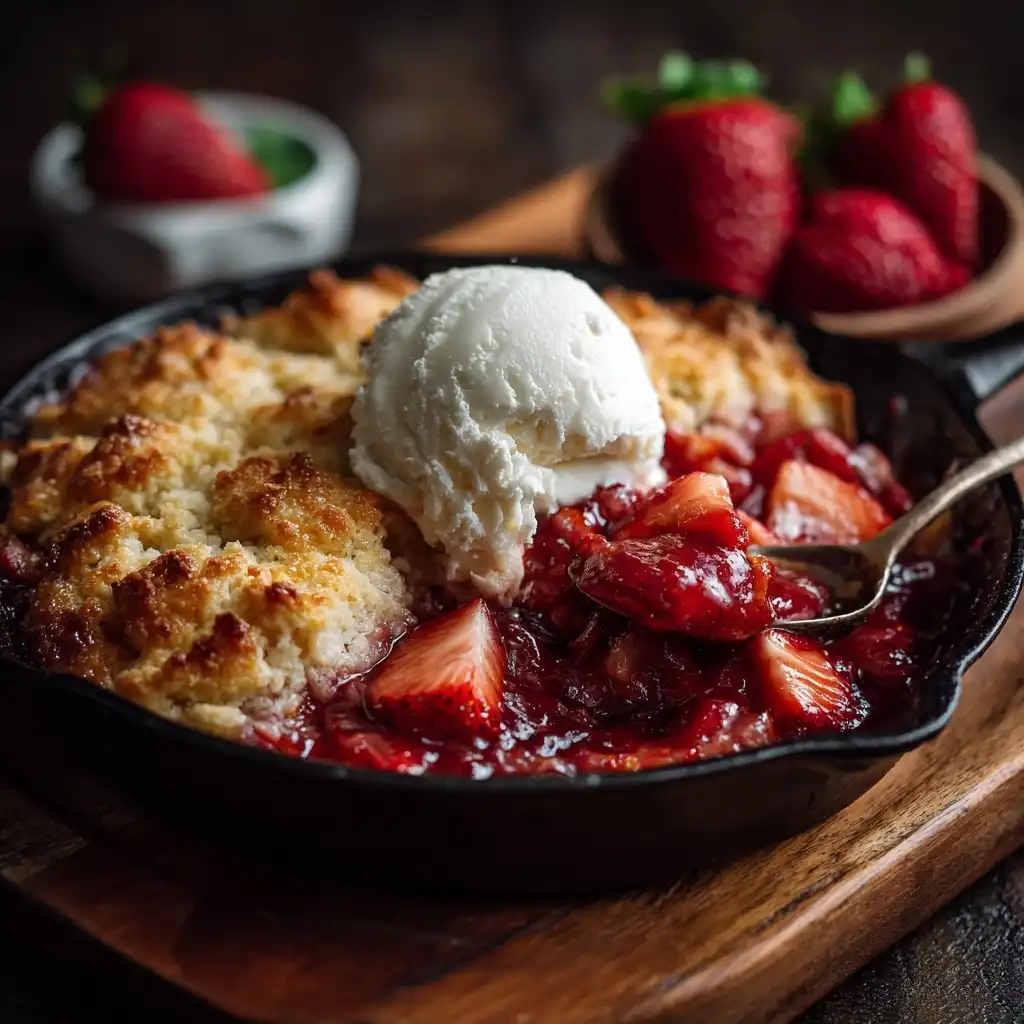
Strawberry Rhubarb Cobbler is a beloved American classic—a vibrant, rustic dessert that captures the essence of spring and early summer. With its tart-sweet balance, tender fruit filling, and golden, biscuit-like topping, it’s more than just a treat—it’s a nostalgic embrace of seasonal abundance, home baking, and comforting simplicity. Unlike pies or crisps, cobblers feature a distinctive dropped-batter or biscuit-style topping that bakes up fluffy, slightly crisp on top, and tender beneath, soaking up just enough fruit juices without becoming soggy. This recipe honors tradition while offering flexibility for modern kitchens, dietary preferences, and regional ingredient availability—making it as versatile as it is timeless.
The History
The origins of cobbler trace back to 17th-century England, where “coble” referred to something lumpy or uneven—aptly describing the rough, cobblestone-like appearance of early biscuit-topped fruit desserts baked in Dutch ovens over open fires. When English settlers arrived in North America, they adapted the technique using native and cultivated fruits—and rhubarb, though botanically a vegetable, quickly became a staple in colonial gardens for its hardy, early-spring growth and tart flavor. By the mid-1800s, strawberry rhubarb pairings gained popularity across New England and the Midwest, where both plants thrived in cool climates. The combination was not only practical (rhubarb’s tartness balanced strawberries’ fleeting sweetness) but also symbolic—representing resilience and renewal. During the Great Depression and WWII, cobblers surged in popularity due to their frugality: minimal butter, pantry-friendly flour and sugar, and no need for pie crusts or specialized equipment. Today, Strawberry Rhubarb Cobbler remains a hallmark of farmers’ markets, church suppers, and multigenerational recipe boxes—a living heirloom dessert that continues to evolve with each baker’s touch.
Ingredients Breakdown
Every exceptional Strawberry Rhubarb Cobbler begins with intentional, high-quality ingredients—each playing a precise role in flavor, texture, and structure:
- Fresh Rhubarb: Choose firm, ruby-red stalks (though greenish varieties work too)—they offer superior tartness and less stringiness. Avoid leaves entirely—they contain toxic oxalic acid. Rhubarb provides acidity, structure, and natural pectin, helping thicken the filling without excessive cornstarch.
- Ripe Strawberries: Opt for locally grown, in-season berries at peak ripeness—deep red, fragrant, and yielding slightly to pressure. Their natural sugars and juiciness create the base sweetness and luscious syrup. Frozen unsweetened strawberries may be substituted in winter, but thaw and drain well to prevent excess moisture.
- Granulated Sugar: Balances rhubarb’s sharpness and enhances strawberry flavor. A portion is mixed into the fruit; the rest is often added to the topping for subtle caramelization.
- Brown Sugar (optional but recommended): Adds molasses depth, moisture retention, and a warm, caramelized note—especially lovely in the biscuit topping.
- Lemon Juice & Zest: Brightens the entire profile, amplifying fruit notes and cutting richness. Freshly squeezed juice is non-negotiable for vibrancy.
- Cornstarch or Tapioca Starch: Acts as the primary thickener. Cornstarch yields a glossy, clear syrup; minute tapioca (not instant) creates a more traditional, slightly textured gel that holds up beautifully during baking and reheating.
- All-Purpose Flour: The structural backbone of the biscuit topping—provides gluten for lift and tenderness when properly handled.
- Baking Powder & Baking Soda: Double-acting leaveners ensure maximum rise and airy crumb. Baking soda also helps neutralize rhubarb’s acidity for optimal flavor balance.
- Salt: Enhances sweetness, deepens complexity, and tempers tartness—never omit, even in sweet desserts.
- Unsalted Butter: Cold, cubed butter is essential for flaky, tender biscuits. It creates steam pockets as it melts, resulting in layers and lift. European-style butter (higher fat content) adds luxurious richness.
- Heavy Cream or Buttermilk: Adds fat, tenderness, and acidity (especially buttermilk), which activates baking soda and contributes to browning. Half-and-half or whole milk can substitute—but reduce liquid slightly if using lower-fat options.
- Vanilla Extract: Pure, Madagascar bourbon vanilla rounds out the flavor profile with floral, woody warmth—add it to both filling and topping for harmony.
- Oats or Nut Topping (optional garnish): For textural contrast and visual appeal, a sprinkle of old-fashioned rolled oats, slivered almonds, or chopped pecans adds crunch and nuttiness.
Step-by-Step Recipe
- Prep the Fruit Filling (15 minutes): Wash, trim, and dice 4 cups of fresh rhubarb into ½-inch pieces. Hull and quarter 2 cups of ripe strawberries. In a large non-reactive bowl (glass or stainless steel), gently combine fruit, ¾ cup granulated sugar, 2 tbsp lemon juice, 1 tsp lemon zest, 1 tsp pure vanilla extract, and a generous pinch of fine sea salt. Let macerate at room temperature for 15–20 minutes—this draws out juices and begins softening the rhubarb.
- Thicken the Filling (3 minutes): Whisk ¼ cup cornstarch (or 3 tbsp minute tapioca) with 2 tbsp cold water until smooth. Pour into the macerated fruit and stir thoroughly to coat all pieces. Set aside while preparing the topping—do not skip this step, as premature thickening leads to clumping.
- Prepare the Biscuit Topping (12 minutes): In a chilled medium bowl, whisk together 1 ½ cups all-purpose flour, 2 tsp baking powder, ¼ tsp baking soda, ½ tsp salt, and ¼ cup granulated sugar (plus 2 tbsp brown sugar, if using). Add 6 tbsp cold, cubed unsalted butter. Using a pastry cutter, two forks, or fingertips, cut butter into flour mixture until it resembles coarse crumbs with some pea-sized pieces remaining. Avoid overworking—cold butter = flaky texture.
- Hydrate the Dough (2 minutes): Make a well in the center. Pour in ⅔ cup cold heavy cream (or buttermilk) and 1 tsp vanilla. Stir with a fork just until a shaggy dough forms—no more than 12–15 strokes. Do not knead. If dough seems dry, add cream 1 tsp at a time; if sticky, dust lightly with flour. It should hold together when pinched but remain slightly moist.
- Assemble the Cobbler (5 minutes): Preheat oven to 375°F (190°C). Grease a 9×13-inch ceramic or glass baking dish (or cast-iron skillet for rustic charm). Pour fruit mixture evenly into the dish, spreading gently—do not press down. Drop heaping tablespoonfuls of biscuit dough across the surface, spacing them about ½ inch apart. They will expand and join as they bake. For extra elegance, use an ice cream scoop for uniform mounds.
- Finish & Bake (45–55 minutes): Brush tops lightly with additional cream or milk. Sprinkle with coarse turbinado sugar and/or chopped toasted nuts. Place dish on a parchment-lined baking sheet (to catch potential bubbling overflow). Bake on center rack for 45 minutes—then rotate pan 180°. Continue baking 10–15 minutes longer, until topping is deeply golden brown, firm to the touch, and internal fruit filling bubbles vigorously at the edges. A toothpick inserted into the center of a biscuit should emerge clean or with moist crumbs (not wet batter).
- Cool & Serve (Critical Step!): Remove from oven and let rest on a wire rack for *at least 30 minutes* before serving. This allows the filling to fully set—preventing a runny, soupy mess and letting flavors meld. Serve warm—not hot—with a scoop of premium vanilla bean ice cream, crème fraîche, or softly whipped cream infused with orange blossom water.
Tips
- Chill Everything: Chill your mixing bowl, butter, and even cream for 15–20 minutes before making the topping. Cold ingredients = better rise and flakier texture.
- Don’t Overmix the Batter: Stir only until the dough just comes together. Overmixing develops gluten, leading to tough, dense biscuits instead of light, tender ones.
- Rhubarb Ripeness Matters: Underripe rhubarb is excessively sour and fibrous; overripe stalks become mushy. Look for firm, glossy stalks with no browning or hollow centers.
- Sugar Adjustment Guide: Taste your rhubarb before adding sugar—if extremely tart, increase granulated sugar by 1–2 tbsp. If strawberries are very sweet, reduce sugar by 1–2 tbsp. Always adjust based on actual fruit—not just the recipe.
- Thickener Tip: For ultra-clear, glossy filling, use cornstarch. For a more traditional, jammy texture that holds up to leftovers, use minute tapioca. Arrowroot works in a pinch but breaks down under prolonged heat.
- Oven Thermometer Check: Many ovens run hot or cold. Use an oven thermometer to verify accuracy—especially critical for delicate biscuit rise.
- Even Baking Secret: Place a pizza stone or inverted baking sheet on the oven’s lowest rack before preheating. This creates radiant bottom heat that ensures the fruit cooks through and the biscuit base doesn’t stay doughy.
- No Soggy Bottom: To prevent a wet underside, avoid stirring the fruit after thickener is added—and never pour unthickened juices into the dish. Let the mixture sit so starch can begin hydrating.
- Freeze for Later: Assemble unbaked cobbler (fruit in dish + unbaked topping dollops), cover tightly with foil, and freeze up to 3 months. Bake from frozen—add 15–20 minutes to total time and tent loosely with foil first 30 minutes to prevent over-browning.
- Reviving Leftovers: Reheat individual portions in a toaster oven or air fryer (350°F for 8–10 min) for crisp topping revival. Microwaving makes biscuits gummy.
Variations and Customizations
This recipe is gloriously adaptable—here are inspired riffs tested across decades and kitchens:
- Vegan Strawberry Rhubarb Cobbler: Substitute cold coconut oil or vegan butter for dairy butter; use unsweetened almond or oat milk + 1 tsp apple cider vinegar (to mimic buttermilk); replace honey or maple syrup for part of the sugar; and opt for cornstarch (not tapioca, which sometimes contains dairy derivatives). Top with toasted coconut flakes.
- Gluten-Free Version: Swap 1:1 gluten-free all-purpose flour blend (with xanthan gum included); add ½ tsp xanthan gum if blend doesn’t contain it. Use certified GF oats if adding oat topping. Ensure baking powder is GF-certified.
- Spiced Chai Cobbler: Infuse the cream with 2 chai tea bags (steep 5 min, cool completely); add ½ tsp ground ginger, ¼ tsp cardamom, and a pinch of black pepper to the dry topping mix. Garnish with candied ginger.
- Maple-Bourbon Swirl: Replace 2 tbsp granulated sugar in filling with pure maple syrup; stir 1 tbsp aged bourbon and 1 tsp maple extract into the cream before mixing topping. Drizzle warm cobbler with reduced bourbon-maple glaze.
- Herbal Elegance: Fold 1 tbsp finely chopped fresh basil or mint into the fruit filling just before baking. Finish with edible flowers (violets, pansies) and a basil-infused crème anglaise.
- Nutty Streusel Twist: Skip the biscuit topping. Instead, make a streusel with ¾ cup flour, ½ cup brown sugar, ½ cup chopped walnuts or hazelnuts, ¼ tsp cinnamon, and 6 tbsp cold butter. Crumble evenly over fruit.
- Mini Individual Cobblers: Divide filling and topping among six 6-oz ramekins. Reduce baking time to 28–32 minutes. Perfect for dinner parties or portion control.
- Summer Berry Medley: Replace 1 cup strawberries with equal parts blackberries and raspberries—add 1 tsp balsamic vinegar to filling for brightness and complexity.
- Overnight “No-Stir” Prep: Combine fruit, sugar, lemon, and thickener in jar; refrigerate up to 24 hours. Mix dry and wet topping ingredients separately (keep cold), then assemble and bake same day—ideal for stress-free entertaining.
Health Considerations and Nutritional Value
While Strawberry Rhubarb Cobbler is undeniably indulgent, thoughtful modifications can enhance its nutritional profile without sacrificing soul-satisfying comfort:
- Natural Antioxidants: Strawberries rank among the highest fruit sources of vitamin C and anthocyanins—powerful antioxidants linked to reduced inflammation and improved cardiovascular health. Rhubarb contributes lutein, beta-carotene, and dietary fiber—particularly soluble fiber that supports gut microbiota and cholesterol regulation.
- Lower-Sugar Options: Reduce total sugar by up to ⅓ without compromising structure—rhubarb’s tartness and strawberries’ natural sweetness carry much of the load. Use erythritol or monk fruit blends (not stevia alone, which can impart bitterness) for keto-friendly versions—adjust thickener slightly, as sugar aids gel formation.
- Fiber Boost: Add 2 tbsp ground flaxseed or chia seeds to the dry topping mix for omega-3s and extra soluble fiber. Or fold ¼ cup cooked quinoa into the fruit filling for protein and texture.
- Whole Grain Upgrade: Substitute up to ½ cup of the all-purpose flour with white whole wheat flour or spelt flour—retains tenderness while adding B vitamins, magnesium, and satiating fiber.
- Dairy Alternatives: Use grass-fed ghee instead of butter for lactose-free richness and higher smoke point. Opt for full-fat coconut milk (canned, stirred well) in place of cream for MCT fats and dairy-free luxury.
- Portion Awareness: A standard serving (about 1 cup with ice cream) contains approximately 380–420 calories, 55g carbs (28g sugars), 5g protein, 16g fat, and 4g fiber. Serving with Greek yogurt instead of ice cream cuts ~100 calories and adds 10g protein.
- Watch the Sodium: Most sodium comes from baking soda/powder and salt—reduce salt to ¼ tsp without affecting chemistry. Avoid salted butter unless adjusting elsewhere.
- Not for Everyone: Rhubarb leaves are poisonous (oxalates); always discard. Those with kidney stones or gout should moderate rhubarb intake due to its oxalic acid and purine content. Individuals managing blood sugar should pair with protein/fat (e.g., nuts, cheese) to slow glucose response.
Ingredients
For the Fruit Filling:
- 4 cups fresh rhubarb, trimmed and diced into ½-inch pieces (about 6–7 medium stalks)
- 2 cups fresh strawberries, hulled and quartered (or halved if small)
- ¾ cup granulated sugar (adjust ±2 tbsp based on fruit tartness)
- 2 tablespoons freshly squeezed lemon juice
- 1 teaspoon finely grated lemon zest
- 1 teaspoon pure vanilla extract
- ¼ cup cornstarch (or 3 tablespoons minute tapioca)
- 2 tablespoons cold water (for slurry)
- ¼ teaspoon fine sea salt
For the Biscuit Topping:
- 1 ½ cups all-purpose flour (spooned & leveled)
- 2 teaspoons baking powder
- ¼ teaspoon baking soda
- ½ teaspoon fine sea salt
- ¼ cup granulated sugar
- 2 tablespoons packed light brown sugar (optional, for depth)
- 6 tablespoons unsalted butter, very cold and cubed
- ⅔ cup cold heavy cream or full-fat buttermilk
- 1 teaspoon pure vanilla extract
For Finishing:
- 1 tablespoon heavy cream or milk (for brushing)
- 1 tablespoon turbinado (raw) sugar
- 2 tablespoons chopped toasted almonds or pecans (optional)
Directions
- Preheat oven to 375°F (190°C). Position rack in center. Lightly grease a 9×13-inch baking dish (or 10-inch cast-iron skillet) and place on a parchment-lined baking sheet.
- Prepare fruit: In a large bowl, combine rhubarb, strawberries, granulated sugar, lemon juice, lemon zest, vanilla, and salt. Gently toss. Let sit 15 minutes at room temperature.
- Thicken: In a small bowl, whisk cornstarch with cold water until smooth. Pour into fruit and stir gently but thoroughly until evenly coated. Set aside.
- Make topping: In another bowl, whisk flour, baking powder, baking soda, salt, granulated sugar, and brown sugar (if using). Add cold butter cubes. Cut in with pastry cutter or fingers until mixture resembles coarse meal with visible butter pieces (pea-sized).
- Hydrate: Make a well in center. Pour in cold cream and vanilla. Stir with fork just until dough begins to clump—about 12–15 strokes. Do not overmix. Dough should be shaggy and moist but hold together when squeezed.
- Assemble: Pour fruit mixture into prepared dish, spreading evenly. Drop dough by heaping tablespoons (about 12–14 mounds) over fruit, spacing evenly.
- Finish: Brush tops lightly with cream or milk. Sprinkle with turbinado sugar and nuts (if using).
- Bake: 45 minutes. Rotate pan. Continue baking 10–15 minutes, until topping is deep golden and filling bubbles thickly around edges. Internal temperature of fruit should reach 205°F (96°C) when checked with instant-read thermometer.
- Cool: Let rest on wire rack for minimum 30 minutes—ideally 45—to allow filling to fully set.
- Serve: Scoop warm into bowls. Top generously with vanilla ice cream, crème fraîche, or lightly sweetened whipped cream.
FAQ
- Can I use frozen rhubarb or strawberries?
- Yes—but thaw completely and drain *very* well in a colander, pressing gently to remove excess liquid. Frozen fruit releases significantly more water, so increase cornstarch by 1 tbsp. Do not refreeze thawed fruit.
- Why is my cobbler runny?
- Most commonly: insufficient thickener, underbaking (filling didn’t reach 205°F), or stirring fruit after thickener was added (breaking down starch chains). Also, letting it cool fully is non-negotiable—filling continues setting as it cools.
- Can I prepare this ahead of time?
- Absolutely. Assemble up to 1 day ahead—cover tightly and refrigerate unbaked cobbler. Add 5–8 minutes to bake time. You may also bake completely, cool, refrigerate up to 4 days, and reheat covered at 325°F until warmed through (20–25 min).
- What’s the difference between a cobbler, crisp, and crumble?
- A cobbler features a biscuit or dumpling-style topping (often dropped or rolled). A crisp uses an oat-based, buttery streusel with flour, sugar, oats, and spices. A crumble (UK term) is similar to a crisp but traditionally lacks oats—just flour, sugar, and butter. All share fruit fillings but differ structurally and texturally.
- My topping sank into the fruit. What went wrong?
- Common causes: topping batter too wet (add flour 1 tsp at a time next time), fruit too juicy (drain excess or increase thickener), or oven not hot enough at start (preheat thoroughly). Also, avoid opening oven door before 35 minutes—steam loss collapses rising biscuits.
- Can I double this recipe?
- Yes—use two 9×13 dishes or one 14×10-inch roasting pan. Increase bake time by 5–8 minutes and check for doneness visually and with thermometer. Rotate pans halfway through.
- Is rhubarb safe to eat raw?
- Rhubarb stalks are safe (though extremely tart) when raw. However, rhubarb leaves contain lethal levels of oxalic acid and must never be consumed. Always discard leaves completely.
- How do I store leftovers?
- Cover tightly and refrigerate up to 4 days. Freeze baked cobbler (without ice cream) for up to 3 months—thaw overnight in fridge, then reheat covered at 325°F until bubbly (30–40 min).
- Can I make this dairy-free?
- Yes—substitute cold refined coconut oil or vegan butter for dairy butter; use unsweetened almond or oat milk + 1 tsp vinegar for buttermilk; and ensure cornstarch is non-GMO/certified vegan. Top with coconut whipped cream.
- What’s the best way to hull strawberries?
- Use a paring knife to cut a shallow cone around the stem and core, removing green cap and white core in one motion. Or use a strawberry huller tool for speed and minimal waste.
Summary
Strawberry Rhubarb Cobbler is a harmonious celebration of seasonal contrast—where rhubarb’s bold tartness meets strawberry’s sun-kissed sweetness, all crowned with a golden, tender biscuit topping that bakes to buttery perfection. It’s a time-honored dessert rooted in resourcefulness, adaptable to dietary needs, and endlessly customizable—yet always deeply comforting, vibrant, and unmistakably homegrown.
Whether baked in a vintage enamel dish for Sunday supper or prepped ahead for a weeknight treat, every spoonful delivers nostalgia, balance, and the quiet joy of fruit at its fleeting, glorious peak—proof that the simplest combinations, treated with care and respect, yield the most resonant flavors.