Introduction
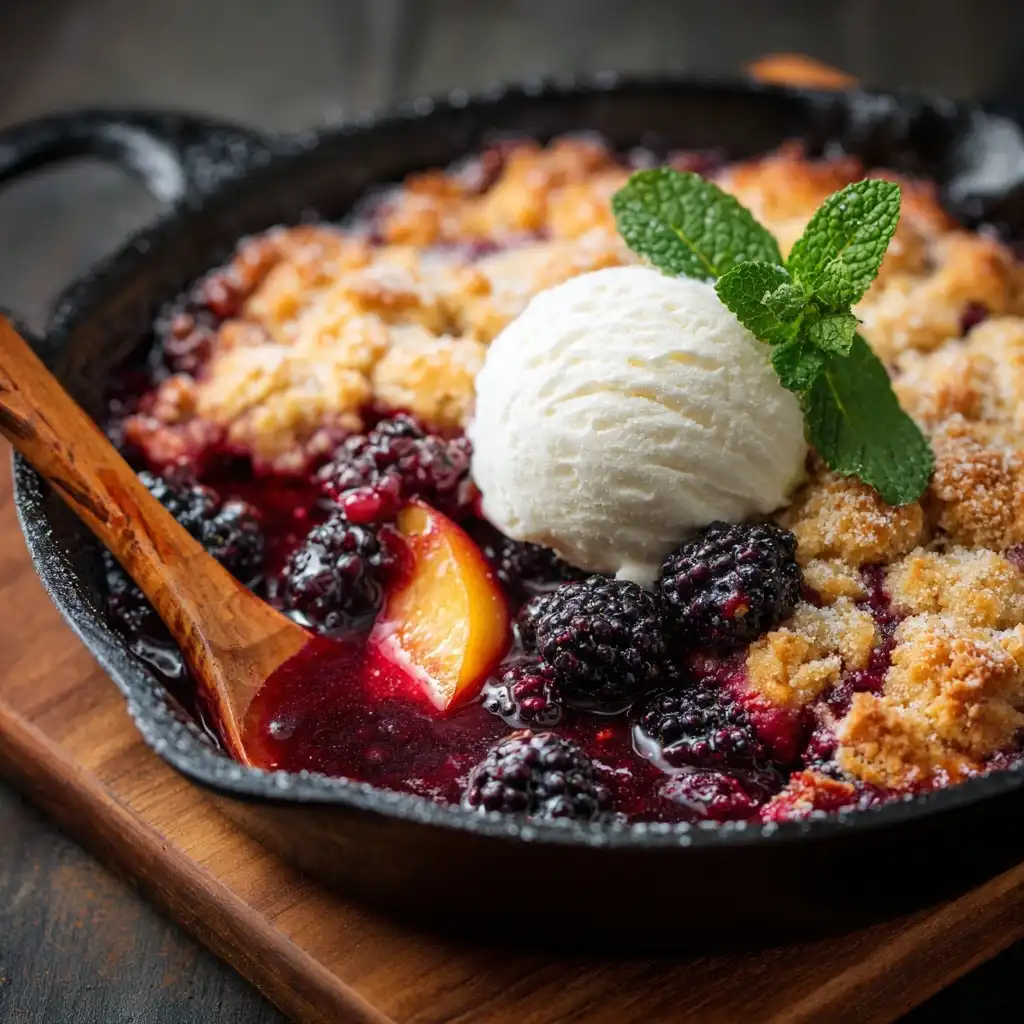
Blackberry Peach Cobbler is a beloved American dessert that embodies the very essence of summer—bursting with sun-ripened fruit, warm spices, and a golden, buttery topping that crisps to perfection in the oven. This soul-satisfying cobbler strikes a masterful balance between tart and sweet, juicy and textured, rustic and refined. Whether served at a backyard barbecue, a church potluck, or a quiet family dinner, it evokes nostalgia, comfort, and the simple joy of seasonal abundance. Unlike pies with their precise crusts or crisps with their oat-strewn tops, cobblers feature a distinctive biscuit- or cake-like batter that bakes *over* (not under or around) the fruit—creating tender dumpling-like pockets nestled into bubbling, syrupy compote. The blackberry-peach pairing is especially inspired: peaches lend lush, floral sweetness and velvety texture, while blackberries contribute deep berry tang, vibrant color, and natural pectin for ideal thickening. It’s more than dessert—it’s a celebration of orchards and brambles, patience and generosity, and the alchemy that happens when humble ingredients transform in the heat of the oven.
The History
The origins of cobbler stretch back centuries, with roots in early English culinary traditions where “cobbled” or “roughly assembled” fruit desserts were baked in Dutch ovens over open fires. However, the cobbler as we know it today is an unmistakably American innovation born from frontier resourcefulness and regional ingenuity. In the 18th and 19th centuries, settlers across Appalachia and the American South adapted English suet puddings and fruit tarts using what was available: wild berries, heirloom peaches, buttermilk, lard or butter, and stone-ground cornmeal or soft wheat flour. The term “cobbler” likely emerged from the visual resemblance of the uneven, cobblestone-like surface created by spooned biscuit dough—though some historians suggest it derived from the archaic verb “to cobble,” meaning *to put together hastily*. Blackberries grew prolifically in uncultivated fields and forest edges across the eastern U.S., while peach cultivation thrived in Georgia, South Carolina, and later California. By the late 1800s, regional cookbooks—including the iconic 1887 Buckeye Cookery and the 1931 Community Cookbook from Asheville, NC—featured variations blending native blackberries with orchard-grown peaches, often sweetened with sorghum molasses or raw cane sugar and spiced with cinnamon or nutmeg. During the Great Depression, cobblers became symbols of resilience: affordable, filling, and endlessly adaptable with pantry staples. Today, Blackberry Peach Cobbler holds pride of place at farmers’ markets, Southern food festivals, and multigenerational tables—honoring its humble past while inspiring modern interpretations with heirloom fruit, organic sweeteners, and gluten-free flours.
Ingredients Breakdown
Every exceptional Blackberry Peach Cobbler begins with thoughtful, high-quality ingredients—each playing a distinct and indispensable role in flavor, texture, and structure:
- Fresh Blackberries: Preferably locally foraged or farm-stand picked at peak ripeness—plump, deeply purple-black, and slightly dusty (the natural bloom indicates freshness). They provide bright acidity, tannic depth, anthocyanin-rich color, and natural pectin to help thicken the filling without excessive cornstarch. Avoid overly soft or fermented berries, which can turn mushy or sour.
- Ripe Freestone Peaches: Yellow or white varieties (e.g., Elberta, Red Haven, or O’Henry) are ideal—they separate cleanly from the pit and hold their shape better during baking than clingstones. Look for fragrant, yielding fruit with golden or blush-red skin and no green undertones. Underripe peaches lack sweetness and aroma; overripe ones disintegrate. Blanching (30-second dip in boiling water, then ice bath) makes peeling effortless and preserves texture.
- Granulated Sugar: The backbone of sweetness and caramelization. Adjust quantity based on fruit ripeness—riper fruit needs less sugar. Organic cane sugar adds subtle molasses notes; superfine sugar dissolves faster for smoother fillings.
- Light Brown Sugar: Adds moisture, rich caramel-molasses complexity, and enhances browning in the topping. Its acidity also balances the fruit’s natural tartness.
- Lemon Juice & Zest: Freshly squeezed lemon juice heightens brightness and prevents browning; zest contributes aromatic citrus oil that lifts the entire profile without adding sourness. Never substitute bottled juice—it lacks nuance and contains preservatives.
- Spices: Ground cinnamon offers warmth and familiarity; a whisper of freshly grated nutmeg adds sophistication and depth. Optional additions include cardamom (for floral intrigue) or a pinch of ground ginger (for gentle heat).
- Thickener: A blend of cornstarch and quick-cooking tapioca flour is ideal—cornstarch gives immediate thickening and clarity; tapioca adds glossy sheen, chewy viscosity, and freeze-thaw stability. Arrowroot works well for paleo diets; all-purpose flour is acceptable but yields a slightly cloudy, heavier sauce.
- Unsalted Butter: Used both in the filling (for richness and mouthfeel) and the topping (for flakiness and browning). European-style butter (82–84% fat) delivers superior flavor and tenderness. Salted butter may be used—but reduce added salt accordingly.
- All-Purpose Flour: Provides structure to the biscuit topping. For extra tenderness, substitute up to ¼ cup with cake flour; for rustic heartiness, add 2 tbsp whole wheat or oat flour.
- Baking Powder & Baking Soda: Double-acting baking powder provides primary lift; a tiny amount of baking soda (activated by buttermilk’s acid) enhances browning and neutralizes excess acidity for balanced flavor.
- Buttermilk: The secret weapon—its acidity tenderizes gluten, activates leaveners, and imparts subtle tang and moist crumb. Homemade buttermilk (1 cup milk + 1 tbsp vinegar or lemon juice, rested 5 minutes) works perfectly if store-bought isn’t available.
- Vanilla Extract: Pure Madagascar bourbon vanilla adds floral, creamy depth. Avoid imitation—its harsh alcohol notes clash with delicate fruit.
- Coarse Turbinado Sugar (Demerara): Sprinkled atop before baking for crunch, sparkle, and caramelized sweetness—a textural counterpoint to the soft biscuit and jammy fruit.
Step-by-Step Recipe
- Preheat & Prep: Position oven rack in the lower third. Preheat oven to 375°F (190°C). Generously butter a 9×13-inch ceramic or glass baking dish (or two 8-inch square dishes for even baking). Set aside.
- Prepare Fruit: Wash blackberries gently in cool water; drain thoroughly in a colander and pat dry with paper towels (excess water dilutes flavor and inhibits thickening). Peel, pit, and dice peaches into ¾-inch chunks—aim for uniform size to ensure even cooking. Place both fruits in a large stainless steel or glass mixing bowl.
- Make Filling: Add granulated sugar, brown sugar, lemon juice, lemon zest, cinnamon, nutmeg, salt, and thickener (cornstarch + tapioca) to the fruit. Gently fold with a silicone spatula until evenly coated—avoid crushing berries. Let macerate 20 minutes at room temperature, stirring once halfway. This draws out juices and allows starches to hydrate.
- Enhance Flavor & Texture: After maceration, stir in 2 tablespoons cold unsalted butter, cut into small cubes. The butter will melt into the fruit during baking, enriching the syrup and preventing dry spots. Taste filling (it should be vibrant—not overly sweet—and pleasantly tart). Adjust lemon or spice if needed.
- Transfer to Dish: Pour fruit mixture into the prepared baking dish, spreading evenly. Do not press down—preserve air pockets for optimal bubbling.
- Prepare Topping Batter: In a medium bowl, whisk together flour, baking powder, baking soda, and salt. Cut in 6 tablespoons cold unsalted butter using a pastry cutter or two forks until mixture resembles coarse crumbs with some pea-sized pieces remaining. Stir in brown sugar and vanilla. Gradually pour in buttermilk while stirring with a fork—just until a shaggy, slightly sticky dough forms (do not overmix; lumps are desirable). Batter should be thick enough to hold its shape when scooped but soft enough to spread slightly.
- Top & Finish: Drop generous ¼-cup portions of batter evenly over the fruit—12 mounds for a 9×13 dish. Gently flatten each mound with the back of a spoon to create overlapping “cobblestones.” Brush tops lightly with heavy cream or melted butter for extra browning. Sprinkle generously with turbinado sugar.
- Bake: Place dish on a parchment-lined baking sheet (to catch potential bubbles). Bake 50–65 minutes—until topping is deep golden brown, edges are bubbling vigorously, and center registers 205–210°F on an instant-read thermometer. Rotate dish halfway through for even baking. If topping browns too quickly, loosely tent with foil after 35 minutes.
- Cool & Set: Remove from oven and let rest on a wire rack for *at least 45 minutes*—this crucial step allows the filling to thicken fully and prevents scalding bites. The cobbler will continue to set as it cools. Serve warm, never piping hot.
Tips
- Fruit Selection Matters: Use peak-season fruit only. Off-season peaches are mealy and bland; frozen blackberries (unsweetened, unthawed) work well in winter—add 1 extra tsp cornstarch to compensate for ice crystals.
- No Overmixing: Stir fruit just until coated. Overworking releases too much juice prematurely, leading to a watery filling. Likewise, mix topping batter *only until combined*—overmixing develops gluten, resulting in tough, dense biscuits.
- Butter Temperature Is Key: Cold butter in the topping creates steam pockets for flakiness. Warm butter melts too fast, producing greasy, flat biscuits. Chill butter for 15 minutes before cutting in if your kitchen is warm.
- Resting Is Non-Negotiable: Cutting into cobbler too soon causes filling to run like syrup. That 45-minute rest allows starches to fully gel and flavors to harmonize.
- Prevent Overflow: Always bake on a lined sheet tray—fruit syrups bubble dramatically in the final 10 minutes. A light dusting of flour on the dish’s rim helps contain spills.
- Golden Browning Hack: For deeper color and shine, brush topping with egg wash (1 egg + 1 tsp water) instead of cream—or use maple syrup thinned with ½ tsp water for caramelized sweetness.
- Altitude Adjustment: At elevations above 3,000 ft, increase oven temp by 15–25°F and reduce baking powder by ⅛ tsp to prevent over-rising and collapse.
- Storage Wisdom: Cool completely before covering. Refrigerate up to 5 days (reheat individual portions in oven or toaster oven—not microwave—to preserve texture). Freeze unbaked cobbler for up to 3 months: assemble, cover tightly, freeze solid, then bake from frozen (+15–20 min added time).
- Serve Strategically: A scoop of high-fat vanilla bean ice cream (18%+ butterfat) melts into ribbons of luxury. Crème fraîche adds elegant tang; whipped coconut cream satisfies dairy-free guests. For brunch, serve with a drizzle of local honey and toasted pecans.
Variations and Customizations
Blackberry Peach Cobbler is gloriously adaptable—here are inspired twists tested for flavor integrity and structural success:
- Gluten-Free Version: Substitute 1:1 gluten-free all-purpose flour blend (with xanthan gum) for regular flour. Add ½ tsp psyllium husk powder to topping batter for elasticity. Ensure oats (if using) are certified GF.
- Vegan Adaptation: Replace butter with chilled coconut oil or vegan butter (Miyoko’s or Melt); use unsweetened almond or soy milk + 1 tbsp apple cider vinegar for buttermilk; swap honey for maple syrup in filling; top with coconut sugar instead of turbinado.
- Herb-Infused: Add 1 tsp finely chopped fresh basil or thyme to the fruit filling—herbs amplify peach’s floral notes and cut blackberry’s intensity. Lavender (¼ tsp culinary-grade dried buds) adds Provence elegance.
- Nutty Crunch: Fold ½ cup toasted sliced almonds or chopped pecans into the topping batter—or sprinkle over turbinado sugar before baking for caramelized texture.
- Spiced Chai Cobbler: Infuse filling with 1 chai tea bag (steeped 5 min in 2 tbsp hot water, cooled) + ¼ tsp ground cardamom, cloves, and black pepper. Omit cinnamon/nutmeg.
- Boozy Upgrade: Stir 2 tbsp bourbon, amaretto, or elderflower liqueur into macerating fruit. Reduce lemon juice by ½ tsp to balance added sweetness.
- Deconstructed Individual Servings: Layer fruit and biscuit batter in ramekins (⅔ full). Bake 25–30 min. Top with candied ginger and mascarpone.
- Low-Sugar/Keto-Friendly: Use monk fruit-erythritol blend (1:1 sugar ratio), chia seeds instead of cornstarch, and almond/coconut flour topping. Expect softer texture—best served same-day.
- Grilled Cobbler: Prepare filling and topping as directed. Bake topping separately on parchment at 375°F for 20 min. Grill fruit mixture in cast-iron skillet over medium coals 12–15 min until blistered and syrupy. Combine and serve sizzling.
- Breakfast Cobbler: Reduce sugar by ⅓, add ½ tsp ground ginger and 2 tbsp rolled oats to topping, and serve with Greek yogurt and fresh mint.
Health Considerations and Nutritional Value
While undeniably indulgent, Blackberry Peach Cobbler offers meaningful nutritional benefits when made mindfully—and understanding its composition supports informed enjoyment:
- Antioxidant Powerhouse: Blackberries rank among the highest fruits in ORAC (Oxygen Radical Absorbance Capacity) value—rich in anthocyanins, ellagic acid, and vitamin C, which combat oxidative stress and support cellular health. Peaches contribute beta-carotene (vitamin A precursor) and chlorogenic acid, linked to reduced inflammation.
- Fiber-Rich Foundation: One serving (⅙ of a 9×13 dish) provides ~5g dietary fiber—nearly 20% of daily needs—primarily from fruit skins and natural pectin. Fiber promotes satiety, gut microbiome diversity, and healthy blood sugar response.
- Smart Sweetening Strategies: Using ripe fruit minimizes added sugar needs. Swapping half granulated sugar for pure maple syrup or date paste adds trace minerals (zinc, potassium) and lowers glycemic impact. Monk fruit blends offer zero-calorie sweetness without aftertaste.
- Healthy Fat Integration: Butter provides fat-soluble vitamins (A, D, E, K) and butyrate, which nourishes colon cells. Grass-fed butter adds conjugated linoleic acid (CLA), associated with metabolic benefits. For heart health, replace 2 tbsp butter with avocado oil in the topping.
- Glycemic Awareness: Traditional cobbler has moderate-to-high glycemic load (~35–45 per serving). Pairing with protein (Greek yogurt) or healthy fats (walnut crumble) slows glucose absorption. Diabetics may enjoy smaller portions (⅛ dish) with fiber-rich sides.
- Portion Intelligence: A standard serving is 1 cup (fruit + topping). Visually, this equals a baseball-sized portion—not the “second helping” often encouraged. Using smaller baking dishes (like 6-oz ramekins) naturally controls intake.
- Allergen Notes: Naturally nut-free and egg-free (in classic version). Gluten-free and dairy-free adaptations are highly successful. Always verify ingredient labels for hidden gluten (e.g., in vanilla extract) or dairy derivatives (e.g., whey in some sugars).
- Balance Perspective: Enjoy cobbler as part of a varied diet—not daily, but meaningfully. Its fruit content contributes to the USDA’s “MyPlate” recommendation of 1.5–2 cups fruit per day. Think of it as fruit-forward dessert, not empty-calorie treat.
Note: Exact nutrition varies by ingredients and portion. A typical serving (based on standard recipe) contains approximately: 320 calories, 52g carbs (34g sugars), 3g protein, 11g fat (7g saturated), 5g fiber, 18mg vitamin C (20% DV), 420IU vitamin A (8% DV), and 280mg potassium (6% DV).
Ingredients
- For the Fruit Filling:
- 4 cups fresh blackberries (about 1 pint), rinsed and patted dry
- 4 cups peeled, pitted, and diced ripe freestone peaches (about 6 medium)
- ¾ cup granulated sugar (adjust ±¼ cup based on fruit sweetness)
- ¼ cup light brown sugar, firmly packed
- 2 tbsp fresh lemon juice (about 1 lemon)
- 1 tsp finely grated lemon zest
- 1½ tsp ground cinnamon
- ¼ tsp freshly grated nutmeg
- ¼ tsp fine sea salt
- 3 tbsp cornstarch
- 1 tbsp quick-cooking tapioca flour
- 2 tbsp cold unsalted butter, cut into small cubes
- For the Biscuit Topping:
- 1¾ cups all-purpose flour (spooned & leveled)
- 2 tsp baking powder
- ½ tsp fine sea salt
- ⅓ cup light brown sugar, firmly packed
- 6 tbsp cold unsalted butter, cubed
- 1 tsp pure vanilla extract
- ¾ cup cold buttermilk (full-fat preferred)
- 2 tbsp heavy cream or melted butter (for brushing)
- 2 tbsp turbinado (Demerara) sugar, for sprinkling
Directions
- Preheat oven to 375°F (190°C). Butter a 9×13-inch baking dish; set aside.
- In a large bowl, combine blackberries, peaches, granulated sugar, brown sugar, lemon juice, lemon zest, cinnamon, nutmeg, salt, cornstarch, and tapioca flour. Gently fold until evenly coated. Let sit at room temperature for 20 minutes, stirring once.
- After maceration, stir in 2 tbsp cold butter cubes. Pour mixture into prepared baking dish, spreading evenly.
- In a medium bowl, whisk flour, baking powder, baking soda, and salt. Cut in 6 tbsp cold butter using a pastry cutter until mixture resembles coarse crumbs with pea-sized butter pieces. Stir in brown sugar and vanilla. Gradually add buttermilk, stirring with a fork just until a shaggy, slightly sticky dough forms (do not overmix).
- Drop 12 generous ¼-cup portions of dough over fruit. Gently flatten each with the back of a spoon to form overlapping mounds.
- Brush tops lightly with cream or melted butter. Sprinkle evenly with turbinado sugar.
- Place dish on a parchment-lined baking sheet. Bake 50–65 minutes, until topping is deep golden brown and filling bubbles vigorously at the edges. Rotate dish halfway through. Tent loosely with foil if topping browns too quickly.
- Let cool on a wire rack for at least 45 minutes before serving. Serve warm with ice cream, crème fraîche, or whipped cream.
FAQ
- Can I use frozen fruit?
- Yes! Use 4 cups frozen blackberries (no need to thaw) and 4 cups frozen peach slices (thawed and drained well). Add 1 extra tsp cornstarch to filling to absorb excess liquid.
- Why does my cobbler have a soggy bottom?
- Common causes: underbaking (filling must bubble vigorously for 10+ minutes), excess fruit moisture (pat berries dry; don’t skip maceration), or cold fruit placed directly into a cold dish (preheat dish with butter for 5 minutes in oven before adding filling).
- Can I make this ahead?
- Absolutely. Assemble up to 1 day ahead (unbaked), cover tightly, and refrigerate. Add 5–8 minutes to baking time. For longer storage, freeze unbaked cobbler up to 3 months—bake from frozen, adding 15–20 minutes.
- What’s the best way to reheat leftovers?
- Individual portions: 350°F oven or toaster oven for 12–15 minutes until heated through and topping crisps. Avoid microwaving—it steams the topping and makes it gummy.
- Can I substitute other berries?
- Raspberries or blueberries work beautifully—reduce sugar by 1–2 tbsp for raspberries (more tart) or increase by 1 tbsp for blueberries (milder). Avoid strawberries—they release too much water unless halved and drained.
- Is there a way to reduce the sugar without sacrificing texture?
- Yes. Replace up to half the granulated sugar with erythritol-monk fruit blend. Increase lemon juice by ½ tsp to brighten flavor. Add 1 tsp apple butter to filling for natural sweetness and body.
- Why did my topping sink into the fruit?
- This usually occurs when batter is too thin (too much buttermilk), fruit is too hot when topped, or oven wasn’t fully preheated. Ensure batter is thick enough to hold its shape when scooped, and always preheat oven completely.
- Can I use canned peaches?
- Only if packed in 100% juice (not syrup) and thoroughly drained. Expect softer texture and milder flavor. Reduce added sugar by ¼ cup and add ½ tsp almond extract to enhance peach aroma.
- How do I know when it’s done?
- Visual cues: deep golden-brown topping, vigorous bubbling *around the entire edge*, and a clean toothpick inserted into a biscuit mound (not fruit) coming out with moist crumbs—not wet batter. Internal temp of filling should be 205–210°F.
- Can I double the recipe?
- Yes—but bake in two separate 9×13 dishes (not one larger pan) for even heat distribution and proper rising. Do not double leaveners—use original amounts per batch.
Summary
Blackberry Peach Cobbler is a timeless, fruit-forward dessert that marries the floral sweetness of ripe peaches with the vibrant tartness of wild blackberries beneath a tender, golden biscuit topping—baked to bubbling perfection and best enjoyed warm with a scoop of premium ice cream.
Rooted in American ingenuity and seasonal abundance, it’s endlessly customizable for dietary needs, celebratory occasions, or cozy weeknight treats—proving that the simplest ingredients, treated with care and respect, yield extraordinary comfort and joy.