Introduction
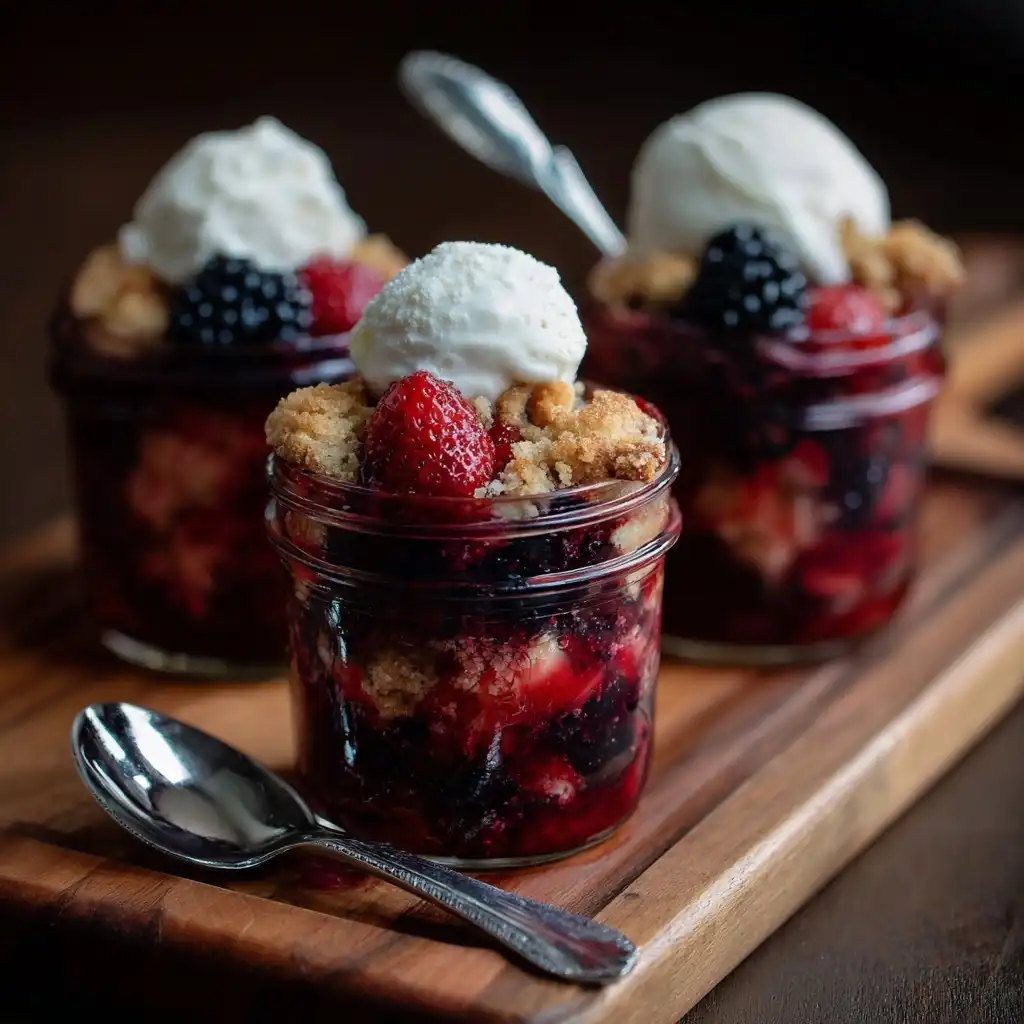
Mini Mason Jar Berry Cobblers are the perfect marriage of rustic charm and modern convenience—individual-sized, oven-baked desserts served in charming 4-ounce or 8-ounce mason jars that double as both vessel and serving dish. These delightful treats capture the essence of classic Southern cobbler—warm, juicy berries crowned with a tender, golden-brown biscuit or crumble topping—but scaled down for portion control, visual appeal, and effortless gifting or entertaining. Whether you’re hosting a summer garden party, packing a picnic, prepping grab-and-go breakfasts, or simply craving a cozy, nostalgic dessert without the mess of a full baking dish, these miniature cobblers deliver big flavor in a pint-sized package. Their versatility shines across seasons: fresh strawberries in spring, blueberries at peak summer ripeness, blackberries in late summer, and even frozen or mixed berries year-round. Plus, their charming presentation makes them Instagram-worthy without extra styling—just a dusting of powdered sugar, a dollop of whipped cream, or a fresh mint leaf completes the picture.
The History
The cobbler’s roots stretch back to 18th-century American colonial kitchens, where resourceful settlers adapted English fruit pies using available ingredients—often without pie tins or precise measurements. The term “cobbler” likely derives from the “cobbled” appearance of the rough, dropped-biscuit or spooned dough topping, resembling cobblestone streets. Early versions used wild foraged berries (like blackberries and raspberries), stewed with sugar and thickened naturally by fruit pectin, then baked under a simple flour-and-lard crust or batter. As mason jars became widely available following John Landis Mason’s 1858 patent—and especially during the Great Depression and WWII home canning boom—they evolved from preservation tools into beloved kitchen staples. The idea of baking *in* mason jars gained traction in the early 2000s with the rise of DIY culture, Pinterest aesthetics, and the farm-to-table movement. Chefs and home bakers alike embraced the jars’ heat-resistant glass (specifically wide-mouth, regular- or Bernardin-brand jars rated for oven use), uniform sizing, and nostalgic Americana appeal. Mini Mason Jar Berry Cobblers emerged as a natural evolution: combining the time-honored cobbler tradition with the practicality and whimsy of single-serve, portable, and visually cohesive desserts—now a mainstay at farmers’ markets, bridal showers, baby sprinkles, and holiday cookie exchanges.
Ingredients Breakdown
Every exceptional Mini Mason Jar Berry Cobbler relies on thoughtfully balanced components—each playing a distinct structural and flavor role:
- Fruit Base: A vibrant blend of fresh or frozen berries (strawberries, blueberries, raspberries, blackberries, or combinations) provides natural sweetness, acidity, and pectin. Strawberries add bright tartness and juiciness; blueberries lend earthy depth and thickening power; raspberries contribute floral notes and delicate texture; blackberries bring bold tannins and jammy richness. A touch of lemon juice enhances brightness and balances sweetness, while lemon zest adds aromatic lift.
- Sweetener: Granulated sugar is standard for reliable dissolution and caramelization, but brown sugar (light or dark) introduces molasses notes and moisture retention. For refined options, coconut sugar offers low-glycemic depth, while maple syrup or honey (added to the fruit, not the topping) contributes nuanced flavor—though they may require slight thickener adjustments due to added liquid.
- Thickener: Cornstarch is the most common choice—effective, neutral-tasting, and clear when cooked. Tapioca starch (instant or pearls) yields a glossier, more resilient gel ideal for juicy berries like strawberries; arrowroot works well for dairy-free versions but breaks down under prolonged heat. Flour is traditional but can cloud the filling and requires longer cooking to eliminate raw taste.
- Butter: Unsalted butter is essential—not only for richness in the fruit layer (a small pat melted into the berries before baking adds luxury) but critically in the topping, where cold cubed butter creates flaky, tender layers when cut into flour. European-style butter (higher fat content) delivers superior flavor and browning.
- Topping Base: All-purpose flour forms the structure, while a blend with whole wheat, oat, or almond flour adds nuttiness and fiber. Leavening agents—baking powder for lift and baking soda (when paired with acidic buttermilk or yogurt)—ensure height and tenderness. Salt intensifies all flavors and balances sweetness.
- Liquid: Buttermilk is the gold standard—its acidity reacts with baking soda for optimal rise and imparts subtle tang and tenderness. Alternatives include plain yogurt thinned with milk, kefir, or a DIY buttermilk substitute (1 tsp vinegar or lemon juice + ½ cup milk, rested 5 minutes). Heavy cream yields ultra-rich, tender biscuits; oat milk or almond milk work for vegan versions (paired with vegan butter).
- Finishing Touches: Turbinado or demerara sugar sprinkled pre-bake creates a delightful crunchy, sparkling crust. A brush of cream or egg wash (1 yolk + 1 tbsp milk) deepens golden color. Post-bake, vanilla bean-infused whipped cream, crème fraîche, toasted nuts, edible flowers, or a drizzle of reduced balsamic glaze elevate complexity.
Step-by-Step Recipe
- Prep & Preheat: Position oven rack in center position. Preheat oven to 375°F (190°C). Ensure you’re using *oven-safe*, wide-mouth mason jars (e.g., Ball® Regular Mouth 4 oz or 8 oz, or Bernardin Wide Mouth)—verify manufacturer guidelines. Wash and thoroughly dry jars; place upright on a parchment-lined baking sheet (for stability and easy handling).
- Prepare Fruit Filling: In a large bowl, gently combine 4 cups mixed fresh or thawed frozen berries (no need to drain excess liquid if frozen—this helps activate thickener), ¾ cup granulated sugar (adjust ±¼ cup based on berry tartness), 3 tbsp cornstarch (or 2 tbsp tapioca starch), 1 tbsp fresh lemon juice, 1 tsp finely grated lemon zest, and a pinch of salt. Fold until evenly coated. Let sit 10 minutes to macerate and release juices.
- Divide Filling: Spoon filling evenly into prepared jars, filling each about ⅔ full (approx. ½ cup per 4 oz jar; 1 cup per 8 oz jar). Gently press down to compact slightly. Dot each jar with ½ tsp cold unsalted butter (total 1 tbsp for 12 jars).
- Make Biscuit Topping: In a food processor or large bowl, whisk together 1½ cups all-purpose flour, ¼ cup granulated sugar, 1 tbsp baking powder, ½ tsp baking soda, and 1 tsp salt. Add 6 tbsp very cold unsalted butter (cut into ½-inch cubes). Pulse (or cut in with pastry blender) until mixture resembles coarse crumbs with some pea-sized pieces remaining. Gradually add ¾ cup cold buttermilk, pulsing or stirring just until a shaggy dough forms—do not overmix. Dough should hold together when pinched but remain slightly lumpy.
- Top & Finish: Using a small scoop or spoon, portion dough over each jar (about 2–3 tbsp per 4 oz jar; 4–5 tbsp per 8 oz jar). Gently spread or pat to cover fruit completely—don’t worry about perfection; rustic is charming! Sprinkle generously with turbinado sugar. Optional: Brush tops lightly with heavy cream or egg wash for extra shine.
- Bake: Place baking sheet with jars in preheated oven. Bake 35–45 minutes (4 oz jars: 35–38 min; 8 oz jars: 40–45 min), rotating halfway, until topping is deeply golden brown, edges are bubbling vigorously, and a toothpick inserted into the center of the topping (not touching fruit) comes out clean. Internal temperature of filling should reach 205–210°F for proper thickening.
- Cool & Serve: Remove from oven and let cool on wire rack for *at least 20–25 minutes*. This critical step allows filling to set—serving too soon results in runny cobbler. Cool fully (1–2 hours) for make-ahead or chilled serving. Serve warm or at room temperature, garnished as desired.
Tips
- Jar Safety First: Never use decorative, painted, or non-tempered glass jars. Only use jars explicitly labeled “oven-safe” or “Mason jars designed for baking.” Avoid sudden temperature changes—never place cold jars directly into hot ovens or add cold filling to preheated jars. Always place jars on a cold baking sheet, not directly on oven racks.
- Fruit Prep Precision: If using frozen berries, do *not* thaw and drain—excess draining removes precious pectin and flavor. Instead, toss frozen berries directly with sugar and thickener; the ice crystals help distribute starch evenly. For fresh berries, hull and slice strawberries uniformly; rinse delicate raspberries/blackberries last-minute and pat *very* dry to prevent dilution.
- Topping Texture Mastery: Keep butter COLD and handle dough minimally. Overworking develops gluten, leading to tough, dense topping. If dough feels too wet, add 1 tsp flour; if too dry, mist with ½ tsp cold milk. For crumb topping instead of biscuit, pulse oats, brown sugar, cinnamon, and cold butter until clumpy—skip leaveners.
- Baking Consistency: Jars bake unevenly due to glass thickness—always rotate baking sheet halfway. If tops brown too fast, tent loosely with foil for final 10 minutes. Insert thermometer into filling (not jar bottom) to confirm 205°F+—this ensures starch gelatinization and prevents soupy results.
- Cooling is Non-Negotiable: Resist cutting into jars immediately. The filling continues thickening as it cools via starch retrogradation. Cutting too soon releases steam and liquefies the gel. For best texture, chill overnight—filling firms beautifully and flavors meld.
- Storage Savvy: Cool completely before sealing with lids (leave rings loose for airflow). Refrigerate up to 5 days. Reheat individual jars at 350°F for 12–15 minutes (cover with foil first 10 min). Freeze unbaked jars (assemble filling + topping, freeze solid, then wrap tightly) up to 3 months—bake from frozen, adding 8–10 minutes.
- Garnish Gracefully: Add delicate toppings *after* baking: whipped cream softens if added pre-bake; fresh herbs wilt; citrus zest loses volatility. Toast nuts separately for maximum aroma. A microplane-grated lemon or orange zest over warm cobbler right before serving adds incredible fragrance.
Variations and Customizations
The Mini Mason Jar Berry Cobbler framework is gloriously adaptable—here’s how to make it uniquely yours:
- Dietary Accommodations: Gluten-Free: Swap flour 1:1 with certified GF all-purpose blend (like King Arthur or Bob’s Red Mill); add ½ tsp xanthan gum if blend doesn’t include it. Vegan: Use plant-based butter (Miyoko’s or Earth Balance), unsweetened almond milk + 1 tsp apple cider vinegar (for “buttermilk”), flax egg (1 tbsp ground flax + 3 tbsp water) in topping, and maple syrup instead of honey. Low-Sugar: Reduce sugar by ⅓, boost with 1 tsp pure vanilla extract, ½ tsp almond extract, and a pinch of cardamom; use erythritol or monk fruit blend (not stevia) for bulk.
- Flavor Twists: Spiced Blueberry-Lavender: Add 1 tsp culinary lavender buds + ½ tsp ground cardamom to filling; top with lemon-zest crumble. Strawberry-Rhubarb: Replace 1 cup berries with 1 cup diced rhubarb + extra 2 tbsp sugar. Blackberry-Bourbon: Macerate berries with 1 tbsp bourbon + 1 tsp vanilla bean paste. Tropical Berry: Add ½ cup diced mango or pineapple and ¼ tsp ground ginger.
- Topping Transformations: Oat Crumble: Mix ¾ cup old-fashioned oats, ⅓ cup brown sugar, ¼ cup cold butter, 1 tsp cinnamon, pinch salt—press over fruit. Coconut-Almond: Use almond flour + shredded coconut in biscuit; top with toasted coconut flakes. Cheesecake Swirl: Dollop 1 tbsp sweetened cream cheese mixture (cream cheese + 1 tsp sugar + ¼ tsp vanilla) onto filling before adding biscuit dough; swirl gently with knife.
- Seasonal & Savory-Sweet: Fall Harvest: Swap half berries for roasted diced apples/pears + ½ tsp nutmeg. Winter Citrus: Use cranberry-orange filling (cranberries + orange zest/juice + orange liqueur) with ginger-spiced biscuit. Herb-Infused: Add 1 tbsp finely chopped rosemary or thyme to filling for sophisticated depth (pairs beautifully with blackberries).
- Presentation Upgrades: Use vintage-style jars with twine-wrapped lids for weddings. Label with chalkboard tags for gifts. Create a “cobbler bar” with mini jars of different berries and assorted toppings (nuts, seeds, spices) for interactive serving. For brunch, add a poached egg and arugula on top of a warm, savory-sweet version (reduce sugar, add goat cheese to topping).
Health Considerations and Nutritional Value
A single 4-ounce Mini Mason Jar Berry Cobbler (made with standard ingredients) typically contains approximately 280–320 calories, 42–48g carbohydrates (22–26g sugars), 3–4g protein, 10–12g fat (6–7g saturated), and 2–3g dietary fiber. While undeniably a dessert, thoughtful modifications significantly enhance its nutritional profile:
- Berry Benefits: Berries are nutritional powerhouses—rich in anthocyanins (anti-inflammatory antioxidants), vitamin C (immune support), manganese (bone health), and soluble fiber (promotes satiety and gut microbiome diversity). One cup of blueberries provides 24% DV vitamin C and 14% DV vitamin K.
- Smart Swaps for Wellness: Replace half the all-purpose flour with white whole wheat or oat flour to boost fiber (adds ~2g/serving) and lower glycemic impact. Use Greek yogurt instead of butter in topping for added protein (adds ~3g/serving) and probiotics. Opt for coconut sugar or date paste to retain trace minerals (iron, potassium) and reduce refined sugar load.
- Portion Power: The mini-jar format inherently supports mindful eating—eliminating the temptation of “just one more slice” from a large pan. At 300 calories, it fits neatly into balanced meal plans, unlike traditional cobblers (often 500–700 calories per serving).
- Allergen Awareness: Easily made nut-free, soy-free, and egg-free. For those with lactose intolerance, lactose-free buttermilk or coconut yogurt works seamlessly. Always verify jar lid materials—some zinc lids contain BPA; opt for BPA-free or silicone-sealed alternatives.
- Mindful Indulgence Notes: While higher in natural sugars, berries’ fiber slows glucose absorption. Pairing with protein (Greek yogurt topping) or healthy fats (almond butter drizzle) further stabilizes blood sugar. Enjoy as part of a varied diet—not daily, but meaningfully. The joy of homemade, real-food ingredients outweighs highly processed store-bought desserts laden with preservatives and artificial flavors.
Ingredients
- For the Berry Filling:
- 4 cups mixed fresh or frozen unsweetened berries (e.g., 2 cups blueberries, 1 cup sliced strawberries, 1 cup raspberries)
- ¾ cup granulated sugar (adjust to taste and berry tartness)
- 3 tablespoons cornstarch (or 2 tbsp quick-cooking tapioca)
- 1 tablespoon fresh lemon juice
- 1 teaspoon finely grated lemon zest
- ¼ teaspoon fine sea salt
- 1 tablespoon unsalted butter, cold and cut into small pieces
- For the Biscuit Topping:
- 1½ cups all-purpose flour (plus extra for dusting)
- ¼ cup granulated sugar
- 1 tablespoon baking powder
- ½ teaspoon baking soda
- 1 teaspoon fine sea salt
- 6 tablespoons unsalted butter, very cold and cubed
- ¾ cup cold buttermilk (or DIY: 1 tsp vinegar + ¾ cup milk, rested 5 min)
- For Finishing:
- 2–3 tablespoons turbinado or demerara sugar
- Optional: 1 tablespoon heavy cream or egg wash (1 egg yolk + 1 tbsp milk) for brushing
- Garnishes: Vanilla bean whipped cream, fresh mint, additional berries, lemon zest
Directions
- Preheat & Prepare: Preheat oven to 375°F (190°C). Line a large baking sheet with parchment paper. Gather twelve 4-ounce wide-mouth oven-safe mason jars (or eight 8-ounce jars). Wash, dry thoroughly, and place upright on the prepared sheet.
- Make Filling: In a large mixing bowl, gently combine berries, granulated sugar, cornstarch, lemon juice, lemon zest, and salt. Stir just until berries are evenly coated. Let stand 10 minutes to release juices.
- Fill Jars: Spoon berry mixture evenly into each jar, filling to about ⅔ capacity (≈½ cup per 4 oz jar; ≈1 cup per 8 oz jar). Press down gently. Top each with ½ tsp cold butter pieces.
- Make Topping: In a food processor or large bowl, whisk together flour, ¼ cup sugar, baking powder, baking soda, and salt. Add cold cubed butter. Pulse (or cut in with pastry cutter) until mixture resembles coarse crumbs with visible butter bits. Gradually add cold buttermilk, pulsing or stirring just until dough begins to clump together. Do not overmix—dough should be shaggy and moist but not wet.
- Top Jars: Use a small cookie scoop or spoon to portion dough over each jar (2–3 tbsp per 4 oz jar; 4–5 tbsp per 8 oz jar). Gently spread or pat to cover fruit completely. Sprinkle generously with turbinado sugar. Optional: Lightly brush tops with cream or egg wash.
- Bake: Place baking sheet in center oven rack. Bake 35–45 minutes (35–38 min for 4 oz; 40–45 min for 8 oz), rotating sheet halfway through, until topping is deep golden brown and filling bubbles vigorously around edges. Internal filling temp should read 205–210°F.
- Cool & Serve: Remove from oven and cool on wire rack for minimum 20–25 minutes before serving. For best texture and flavor, cool completely (1–2 hours) or refrigerate overnight. Serve warm or at room temperature, garnished as desired.
FAQ
- Can I use regular mason jar lids during baking?
- No—never bake with metal lids or rings on. They are not oven-safe and pose fire/steam explosion risks. Only use jars *without* lids during baking. Lids are for storage *after* cooling.
- Why did my filling turn out runny?
- Common causes: Under-baking (didn’t reach 205°F), using too much liquid (drained frozen berries), insufficient thickener, or stirring filling after thickener is added (breaks starch chains). Next time, bake until vigorous bubbling occurs at edges and internal temp hits target.
- Can I prepare these ahead of time?
- Absolutely! Assemble jars (filling + uncooked topping), cover tightly with plastic wrap, and refrigerate up to 24 hours before baking. Or freeze assembled jars (unbaked) up to 3 months—bake from frozen, adding 8–10 minutes to bake time.
- What’s the best way to reheat leftovers?
- Place jar on a small baking sheet. Reheat in a 350°F oven for 12–15 minutes (cover with foil first 10 min to prevent over-browning). Microwaving is not recommended—it makes topping soggy and heats unevenly.
- Are all mason jars safe for the oven?
- No. Only jars specifically manufactured for oven use (e.g., Ball® Oven-Safe Mason Jars, Bernardin Wide Mouth) are safe. Standard canning jars are *not* tempered for thermal shock and may shatter. Always check manufacturer instructions.
- Can I double this recipe?
- Yes—scale all ingredients proportionally. Use two baking sheets to ensure even air circulation. Rotate sheets top-to-bottom and front-to-back halfway through baking for consistent results.
- My biscuit topping didn’t rise properly—what went wrong?
- Leavening failure usually stems from expired baking powder/soda, overmixing dough (develops gluten), using warm butter (melts before steam forms), or opening oven door too early. Always test leaveners: 1 tsp baking powder + ¼ cup hot water should fizz vigorously.
- How do I prevent jars from cracking?
- Start with room-temperature jars (never cold from fridge). Place jars on a cold baking sheet—not hot rack. Avoid placing jars directly on stovetop, under broiler, or near oven walls. Cool gradually after baking—don’t set hot jars on cold surfaces.
Summary
Mini Mason Jar Berry Cobblers are a timeless, versatile, and visually enchanting dessert that honors centuries-old cobbler traditions while embracing modern convenience, portion control, and customizable nutrition—perfect for everything from intimate dinners to festive gatherings.
Built on vibrant, antioxidant-rich berries and crowned with tender, golden biscuit topping, each jar delivers comforting warmth, rustic charm, and endless creative potential—all safely baked in trusted, oven-ready glass vessels.