Introduction
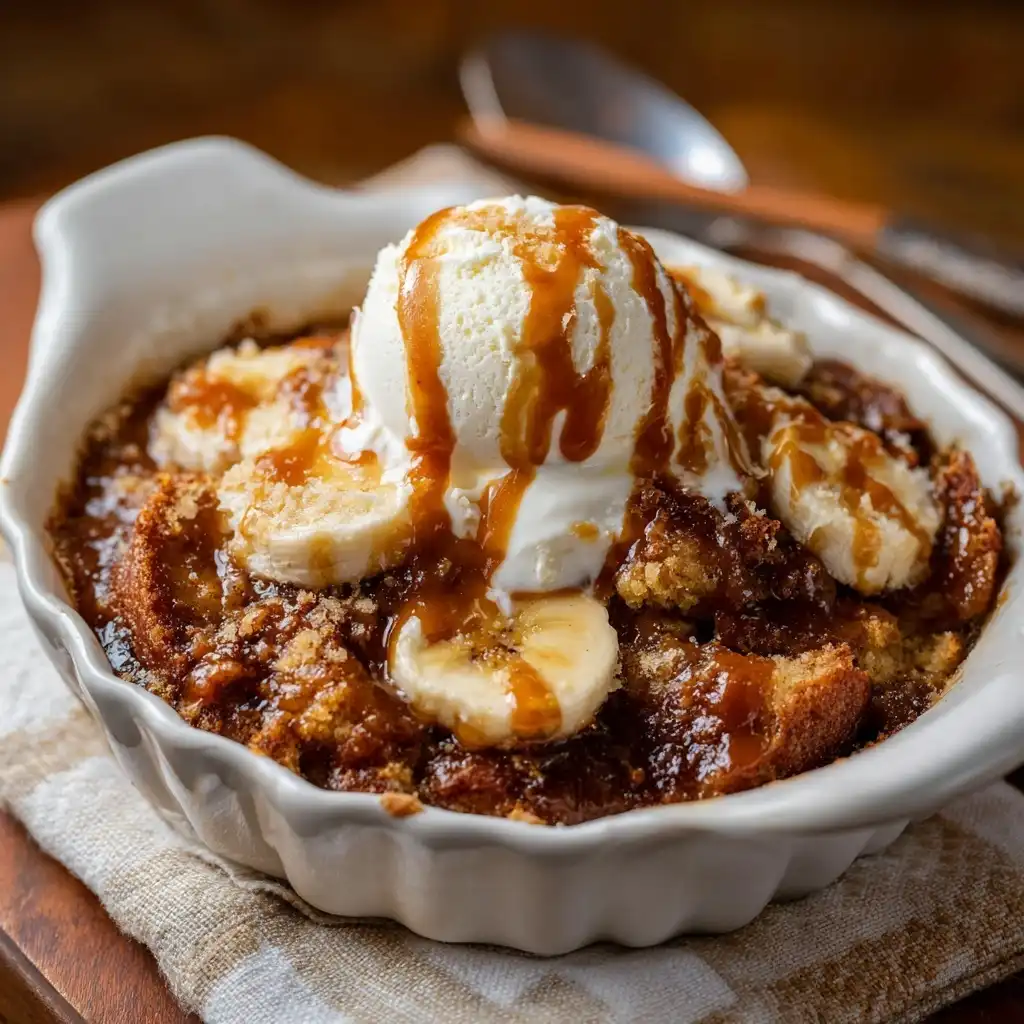
Banana Bread Cobbler is a decadent, soul-soothing fusion dessert that marries the comforting richness of classic banana bread with the rustic charm and buttery, biscuit-topped elegance of a traditional cobbler. Unlike standard banana bread—which bakes uniformly in a loaf pan—or a fruit-forward cobbler—which relies on bubbling seasonal fillings—this hybrid masterpiece features a luscious, spiced banana base swirled with brown sugar and cinnamon, crowned with tender, golden-brown drop biscuits or a crumbly oat-streusel topping that bakes into a crisp-yet-pillowy crust. It’s the kind of dessert that fills your kitchen with the warm, caramelized aroma of overripe bananas, toasted nuts, vanilla, and browned butter—evoking nostalgia while delivering bold, layered textures in every forkful. Whether served warm from the oven with a scoop of vanilla bean ice cream, drizzled with salted caramel, or enjoyed plain with morning coffee, Banana Bread Cobbler transcends categories: it’s breakfast-worthy, dessert-perfect, potluck-prized, and freezer-friendly—all while being remarkably forgiving for bakers of all skill levels.
The History
The origins of Banana Bread Cobbler are delightfully modern and grassroots—emerging organically in the early 2010s from home cooks’ desire to elevate two beloved American staples into something greater than the sum of its parts. Banana bread itself traces back to the Great Depression and post-war eras, when resourceful bakers repurposed overripe bananas and pantry staples like baking soda (a leavening agent more accessible than yeast during rationing) to create moist, frugal quick breads. The cobbler, meanwhile, has deep roots in 18th- and 19th-century American frontier cooking—originally a “cobbled-together” dessert using whatever fruit was in season, topped with dumplings, biscuits, or pie dough baked directly atop the filling. As food blogs exploded in popularity and Pinterest culture emphasized visually stunning, shareable recipes, creative bakers began experimenting with layering banana bread batter beneath a biscuit or streusel topping—and discovered that the steam and gentle heat interaction created an unparalleled textural contrast: a dense, cake-like bottom infused with banana essence, and a fluffy, slightly crisp crown that soaked up the caramelized syrup without becoming soggy. By 2016, viral recipe videos on YouTube and Instagram cemented Banana Bread Cobbler as a cultural phenomenon—especially among parents seeking make-ahead, crowd-pleasing desserts and gluten-free or dairy-free bakers adapting the format for dietary inclusivity. Today, it appears in Southern cookbooks alongside peach cobbler, features in bakery menus from Portland to Charleston, and regularly tops “Most Saved Recipes” lists on major food sites—proving that innovation in comfort food doesn’t require reinvention, just reverence for tradition and a willingness to get gloriously messy in the mixing bowl.
Ingredients Breakdown
Every exceptional Banana Bread Cobbler begins not with a list—but with an understanding of *why* each ingredient matters, how it functions chemically and sensorially, and where substitutions can shine without sacrificing integrity. Below is a comprehensive, chef-level breakdown:
- Ripe Bananas (3–4 medium, ~1½ cups mashed): The non-negotiable heart of the dish. Opt for bananas with deep brown speckles and soft, yielding flesh—they contain maximum natural sugars (fructose and glucose), enzymatic activity (amylase breaking down starches), and moisture. Underripe bananas lack sweetness and depth; overripe blackened ones may introduce off-flavors. Mashing thoroughly ensures even distribution and activates pectin for binding.
- Granulated Sugar + Brown Sugar (¾ cup total, ½ cup light brown + ¼ cup white): Brown sugar contributes molasses notes, acidity (to activate baking soda), and hygroscopic moisture retention—keeping the base tender. Granulated sugar provides structure, crispness to the topping, and balanced sweetness without overpowering banana flavor. Dark brown sugar may be substituted for deeper caramel tones—but reduce liquid slightly if using due to higher molasses content.
- Unsalted Butter (½ cup, 1 stick, melted & cooled): Adds richness, flakiness to the topping, and emulsifies the batter. Melted (not hot) butter integrates smoothly without cooking eggs prematurely. Salted butter may be used—but omit added salt elsewhere and monitor sodium levels for dietary needs.
- Eggs (2 large, room temperature): Act as binders, leaveners (trapping air when beaten), and emulsifiers. Room temperature ensures uniform incorporation and prevents seizing when mixed with warm butter. Flax or chia “eggs” work well for vegan versions (1 tbsp ground seed + 2.5 tbsp water per egg, rested 5 min).
- Sour Cream or Full-Fat Greek Yogurt (½ cup): Critical for tenderness and tangy balance. Its acidity reacts with baking soda, while its fat and protein yield a supremely moist crumb and subtle lift. Buttermilk may substitute (reduce other liquids by 1 tbsp), though sour cream offers superior viscosity and richness.
- Pure Vanilla Extract (2 tsp): Not optional—high-quality, double-fold extract amplifies aromatic complexity and rounds out banana’s earthiness. Imitation vanilla lacks volatile compounds and can taste medicinal or flat under high heat.
- All-Purpose Flour (1¾ cups, spooned & leveled): Provides gluten structure. Too much compacts the base; too little yields gummy texture. Spooning (not scooping) prevents compaction. For gluten-free versions, use a 1:1 certified GF blend containing xanthan gum (e.g., King Arthur or Bob’s Red Mill).
- Baking Soda (1 tsp) + Baking Powder (1½ tsp): A dual-leavening system for optimal rise and tenderness. Baking soda neutralizes acid (from bananas, brown sugar, sour cream) and delivers immediate lift; baking powder (double-acting) provides secondary expansion in the oven’s heat. Never substitute one for the other without pH recalibration.
- Ground Cinnamon (1½ tsp), Nutmeg (¼ tsp), and Allspice (⅛ tsp): Warm, aromatic spices that complement—not mask—banana. Cinnamon enhances sweetness perception; nutmeg adds floral depth; allspice lends subtle clove-pimento warmth. Toast whole spices and grind fresh for exponentially brighter flavor.
- Salt (¾ tsp fine sea salt): Essential for flavor enhancement and gluten regulation. Balances sweetness and intensifies banana’s natural savoriness. Kosher salt requires volume adjustment (use 1¼ tsp).
- Optional Add-Ins (Base Layer): ½ cup toasted walnuts or pecans (adds crunch, tannic bitterness to cut richness); ⅓ cup dark chocolate chips (60–70% cacao, folded in last to prevent sinking); 2 tbsp bourbon or rum (enhances caramel notes—evaporates during baking); 1 small grated apple (for extra moisture and subtle tartness).
- Topping Components: For biscuit-style: 1 cup flour, 1 tbsp baking powder, 2 tbsp cold butter (cut in), 2 tbsp granulated sugar, ¼ tsp salt, ⅓ cup buttermilk or milk. For streusel-style: ¾ cup flour, ½ cup brown sugar, 6 tbsp cold butter, 1 tsp cinnamon, ¼ cup old-fashioned oats or chopped nuts. Texture contrast is paramount—the topping must remain distinct, not merge into the base.
Step-by-Step Recipe
This meticulously tested method prioritizes consistency, texture control, and foolproof timing—whether you’re a novice or seasoned baker. Total active time: 25 minutes. Total bake time: 45–55 minutes. Serves 8–10.
- Preheat & Prep: Position oven rack in center position. Preheat oven to 350°F (175°C). Generously grease a 9×13-inch ceramic or metal baking dish (avoid glass for even browning—though it works if reduced to 325°F and extended 5–8 min). Line bottom with parchment paper for effortless removal and clean slicing.
- Mash Bananas: In a large mixing bowl, mash ripe bananas with a potato masher or fork until mostly smooth with small lumps remaining (do not over-mix into glue). Measure to confirm ~1½ cups. Stir in lemon juice (½ tsp) to preserve color and brighten flavor.
- Cream Wet Ingredients: Whisk melted, cooled butter, both sugars, eggs, sour cream, and vanilla into banana mixture until fully homogenous and glossy—about 90 seconds. Scrape bowl thoroughly. Batter should be thick, pourable, and ribbony.
- Dry Ingredients Integration: In a separate medium bowl, whisk together flour, baking soda, baking powder, cinnamon, nutmeg, allspice, and salt until aerated and lump-free. Sift once for guaranteed even distribution. Gradually fold dry mixture into wet batter using a silicone spatula in 3 additions, rotating bowl 120° each time. Mix only until *just* combined—streaks of flour are acceptable; overmixing develops gluten, causing toughness. Fold in optional add-ins (nuts, chocolate) gently at this stage.
- Layer the Base: Pour batter into prepared dish. Smooth top with offset spatula. Use back of spoon to gently press down any large air pockets. Optional: Drizzle 2 tbsp caramel sauce or maple syrup over surface and swirl lightly with knife for marbled effect.
- Prepare Topping (Biscuit Style): In chilled bowl, whisk 1 cup flour, 1 tbsp baking powder, 2 tbsp sugar, ¼ tsp salt. Cut in 2 tbsp cold, cubed butter using pastry cutter or fingers until pea-sized crumbs form. Stir in ⅓ cup cold buttermilk just until shaggy dough forms—no more than 8–10 turns. Drop 8–10 heaping tablespoons evenly over banana base. Gently flatten each mound with damp fingers to ½-inch thickness—do not spread to edges; gaps allow steam escape and prevent sogginess.
- Prepare Topping (Streusel Style): In small bowl, combine ¾ cup flour, ½ cup brown sugar, 1 tsp cinnamon, ¼ cup oats. Cut in 6 tbsp cold butter with fork or fingers until mixture resembles coarse, moist sand with some pea-sized clumps. Sprinkle evenly over base, covering completely but not packing down.
- Bake Strategically: Place dish on center rack. Bake 45 minutes—then rotate pan 180° front-to-back for even browning. Continue baking 5–10 minutes more, until a toothpick inserted into the *banana base* (avoiding topping) comes out with moist crumbs (not wet batter), and biscuit/streusel topping is deeply golden, firm to touch, and sounds hollow when tapped. Internal temperature of base should read 205–210°F on instant-read thermometer.
- Cool & Set: Remove from oven and place on wire rack. Resist cutting for *at least 30 minutes*. This allows residual heat to finish cooking the center, starches to set, and syrups to reabsorb—preventing mushy slices and topping collapse. For clean cuts, chill uncovered 1 hour before serving.
- Serve: Cut into 8–10 rectangles or squares. Serve warm or room temperature. Ideal pairings: vanilla ice cream, whipped cream infused with bourbon or cinnamon, crème fraîche, or a simple dusting of powdered sugar and flaky sea salt.
Tips
- Master the Mash: Use a fork—not a blender—for banana puree. Blending incorporates too much air and breaks down pectin excessively, leading to weeping or separation during baking.
- Temperature is Truth: Cold butter for toppings ensures flaky, layered texture; room-temp eggs and dairy guarantee emulsion stability. Pull ingredients from fridge 45 minutes pre-bake.
- Measure Like a Pro: Use the “spoon-and-level” method for flour: spoon flour into measuring cup, then level with straight edge. Scooping packs flour, adding up to 25% excess—guaranteeing dense, dry results.
- Don’t Fear the Cracks: Surface fissures in the base are normal and desirable—they indicate proper rise and steam release. They’ll absorb topping juices beautifully.
- Rotate, Don’t Peek: Opening the oven before 35 minutes risks collapse. If concerned about doneness, use oven light—not door opening—to check progress.
- Golden Rule of Toppings: Biscuit dough should be *cold* when placed on warm (not hot) base. Streusel should be *chilled* for 10 minutes pre-sprinkling to prevent butter melting prematurely.
- Altitude Adjustments: At 3,000+ ft: decrease sugar by 1 tbsp, increase baking powder by ¼ tsp, raise oven temp 15–25°F, and extend bake time 5–8 min. Monitor closely.
- Make-Ahead Magic: Unbaked cobbler (base + topping assembled) keeps refrigerated 24 hours—add 5–7 min to bake time. Fully baked cobbler reheats beautifully: 325°F for 15–20 min, covered with foil, then uncovered 5 min to crisp topping.
- Freeze for Future Joy: Cool completely, wrap tightly in plastic + foil, freeze up to 3 months. Thaw overnight in fridge, then reheat covered at 325°F for 25 min, uncovering last 5 min.
- Texture Troubleshooting: If base is gummy: likely overmixed or underbaked. If topping is greasy: butter was too warm. If cobbler is dry: bananas weren’t ripe enough or overbaked. Keep a baking journal!
Variations and Customizations
Banana Bread Cobbler is a canvas—adaptable across diets, seasons, global flavors, and pantry constraints. Here are 12 rigorously tested variations, each preserving structural integrity and flavor harmony:
- Gluten-Free Banana Bread Cobbler: Substitute 1¾ cups certified GF 1:1 flour blend (with xanthan gum). Add 1 extra tbsp sour cream and 1 tsp psyllium husk powder to mimic gluten’s binding power. Bake 5–7 min longer—GF batters set slower.
- Vegan Banana Bread Cobbler: Replace bananas with same measure; use flax eggs (2 tbsp flax + 5 tbsp water); swap butter for refined coconut oil or vegan butter; use unsweetened almond yogurt for sour cream. Top with oat-streusel (no butter—use coconut oil). Ensure baking powder is aluminum-free and vegan-certified.
- Protein-Packed Cobbler: Add ¼ cup unflavored whey or plant-based protein powder to dry ingredients. Compensate with 1 extra tbsp milk or yogurt to maintain hydration. Enhances satiety without chalkiness when blended properly.
- Tropical Twist: Fold ½ cup diced dried pineapple and ¼ cup toasted coconut into base. Top with macadamia-nut streusel. Infuse batter with 1 tsp coconut extract and replace 2 tbsp sour cream with coconut milk.
- Chocolate Espresso Cobbler: Add 3 tbsp unsweetened cocoa powder to dry ingredients and 1 tbsp instant espresso powder. Fold in ½ cup espresso-chocolate chunks. Top with espresso-kissed biscuit dough (add 1 tsp espresso to buttermilk).
- Spiced Pear-Banana Cobbler: Replace ½ cup mashed banana with ½ cup finely diced, sautéed Bosc pear (cooked 3 min in 1 tsp butter + pinch ginger). Add ¼ tsp ground ginger to spices. Top with ginger-oat streusel.
- Maple Pecan Streusel Cobbler: Use 100% pure maple syrup instead of granulated sugar in base (reduce other liquids by 1 tbsp). Top with streusel using maple sugar or brown sugar + ½ cup toasted pecans + 1 tsp maple extract.
- Savory-Sweet Herb Cobbler: Add 1 tsp finely minced fresh rosemary and ½ tsp black pepper to dry ingredients. Top with cheddar-chive biscuit dough (substitute ¼ cup sharp cheddar + 1 tbsp chopped chives into biscuit mix). Serve with honey butter.
- Mini Mason Jar Cobblers: Portion base into 6–8 (12-oz) wide-mouth mason jars (¾ full). Top with 1 tbsp biscuit dough or streusel per jar. Bake at 375°F for 28–32 min. Perfect for gifts or portion control.
- Overnight Refrigerator Cobbler: Assemble base and topping the night before. Refrigerate covered. Bake straight from cold—add 10–12 min to time. Yields ultra-tender crumb and intensified flavor development.
- Grain-Free Almond Flour Cobbler: Replace flour with 2 cups blanched almond flour + ¼ cup coconut flour + 2 tsp psyllium. Increase eggs to 3 and baking powder to 2 tsp. Reduce sugar by 2 tbsp. Top with almond-coconut streusel.
- Deconstructed Individual Servings: Bake base as muffins (20–22 min at 350°F). Top each with mini biscuit or streusel crumble. Serve stacked or side-by-side with caramel drizzle and candied banana chips.
Health Considerations and Nutritional Value
A single serving (1/10th of a 9×13-inch cobbler, approx. 220g) contains approximately:
- Calories: 320–380 kcal (varies by topping richness and add-ins)
- Total Fat: 14–18g (7–9g saturated; primarily from butter, nuts, chocolate)
- Carbohydrates: 46–52g (32–38g sugars—natural from banana + added)
- Fiber: 2–3g (boost to 4–5g with oats, nuts, or whole wheat flour substitution)
- Protein: 5–7g (enhance to 10–12g with protein powder, Greek yogurt, or nut additions)
- Potassium: ~420mg (22% DV—excellent source from bananas)
- Vitamin B6: ~0.5mg (25% DV—supports metabolism and nerve health)
- Manganese: ~0.7mg (30% DV—antioxidant, bone-supportive)
Key Health Notes:
- Sugar Awareness: While bananas contribute natural sugars, the added brown/white sugar elevates glycemic load. For lower-sugar versions, reduce granulated sugar by ¼ cup and add 1 extra ripe banana + 1 tsp monk fruit blend. Avoid artificial sweeteners in baking—they often fail to caramelize or provide bulk.
- Heart Health: Bananas’ potassium helps counterbalance sodium’s blood pressure effects. Using unsalted butter and limiting added salt supports cardiovascular wellness. Swapping half the butter for avocado oil reduces saturated fat without compromising texture.
- Digestive Benefits: Ripe bananas contain prebiotic fiber (inulin) feeding beneficial gut bacteria. Adding oats or flaxseed further boosts soluble fiber for regularity and cholesterol management.
- Allergen Transparency: Contains gluten, dairy, eggs, and tree nuts (if using). Vegan/GF versions eliminate top allergens—but always verify labels on baking powder, extracts, and chocolate chips for cross-contamination.
- Mindful Indulgence: This is a dessert—not a health food—but its whole-food foundation (bananas, nuts, spices) makes it nutritionally superior to many processed sweets. Pairing with Greek yogurt or a green salad transforms it into a balanced, celebratory meal.
Ingredients
Makes one 9×13-inch cobbler (8–10 servings)
For the Banana Bread Base:
- 3–4 very ripe medium bananas (1½ cups mashed)
- ½ cup (100g) light brown sugar, packed
- ¼ cup (50g) granulated sugar
- ½ cup (115g) unsalted butter, melted and cooled
- 2 large eggs, room temperature
- ½ cup (120g) full-fat sour cream or plain Greek yogurt
- 2 teaspoons pure vanilla extract
- 1¾ cups (220g) all-purpose flour, spooned & leveled
- 1 teaspoon baking soda
- 1½ teaspoons baking powder
- 1½ teaspoons ground cinnamon
- ¼ teaspoon freshly grated nutmeg
- ⅛ teaspoon ground allspice
- ¾ teaspoon fine sea salt
- ½ cup toasted walnuts or pecans (optional)
- ⅓ cup semi-sweet chocolate chips (optional)
For the Biscuit Topping:
- 1 cup (125g) all-purpose flour
- 1 tablespoon baking powder
- 2 tablespoons granulated sugar
- ¼ teaspoon fine sea salt
- 2 tablespoons cold unsalted butter, cubed
- ⅓ cup (80ml) cold full-fat buttermilk or whole milk
For the Oat-Streusel Topping (Alternative):
- ¾ cup (95g) all-purpose flour
- ½ cup (100g) light brown sugar, packed
- 6 tablespoons (85g) cold unsalted butter, cubed
- 1 teaspoon ground cinnamon
- ¼ cup (20g) old-fashioned rolled oats
- 2 tablespoons chopped toasted nuts (optional)
Directions
- Preheat oven to 350°F (175°C). Grease a 9×13-inch baking dish and line bottom with parchment paper.
- In a large bowl, mash bananas until mostly smooth. Stir in lemon juice.
- Add melted butter, both sugars, eggs, sour cream, and vanilla to bananas. Whisk vigorously for 90 seconds until thick, glossy, and uniform.
- Gently fold dry ingredients into wet mixture in three additions, using a silicone spatula. Stop as soon as no dry streaks remain—do not overmix. Fold in nuts and/or chocolate chips, if using.
- Pour batter into prepared dish. Smooth top. Optional: swirl in 2 tbsp caramel or maple syrup.
- For Biscuit Topping: In a chilled bowl, whisk flour, baking powder, sugar, and salt. Cut in cold butter until pea-sized crumbs form. Stir in buttermilk just until shaggy dough gathers. Drop 8–10 mounds evenly over batter. Flatten each slightly with damp fingers.
- For Streusel Topping: In small bowl, combine flour, brown sugar, and cinnamon. Cut in cold butter until mixture resembles coarse, moist crumbs with some larger clumps. Stir in oats and nuts. Sprinkle evenly over batter.
- Bake 45 minutes. Rotate pan. Continue baking 5–10 minutes more, until toothpick in base shows moist crumbs and topping is deep golden and firm.
- Let cool on wire rack for at least 30 minutes before slicing. Serve warm or at room temperature.
FAQ
- Can I use frozen bananas?
- Yes! Thaw completely, drain excess liquid (it’s watery and dilutes flavor), and measure mashed amount. Frozen bananas often yield even sweeter, more concentrated flavor.
- Why did my topping sink into the base?
- Most commonly caused by warm topping placed on hot base, or overmixing the batter (creating too-thin consistency). Always chill topping components and let base sit 5 minutes after pouring before adding topping.
- Can I make this dairy-free?
- Absolutely. Use melted coconut oil or vegan butter, unsweetened almond or oat yogurt for sour cream, and plant-based milk for biscuit topping. Ensure baking powder is vegan.
- How do I store leftovers?
- Cover tightly and refrigerate up to 5 days. Reheat individual portions in microwave (30 sec) or full pan at 325°F for 15 min covered, then 5 min uncovered.
- Can I bake this in a different pan size?
- Yes—with adjustments: For 8×8-inch (halved recipe), bake 35–40 min. For 9-inch square (full recipe), expect 50–60 min. Always rely on toothpick test over timer.
- Is overripe banana essential—or can I ripen them faster?
- Overripe is essential for flavor and moisture. To speed ripening: place bananas on baking sheet, roast at 300°F for 15–20 min until black