Introduction
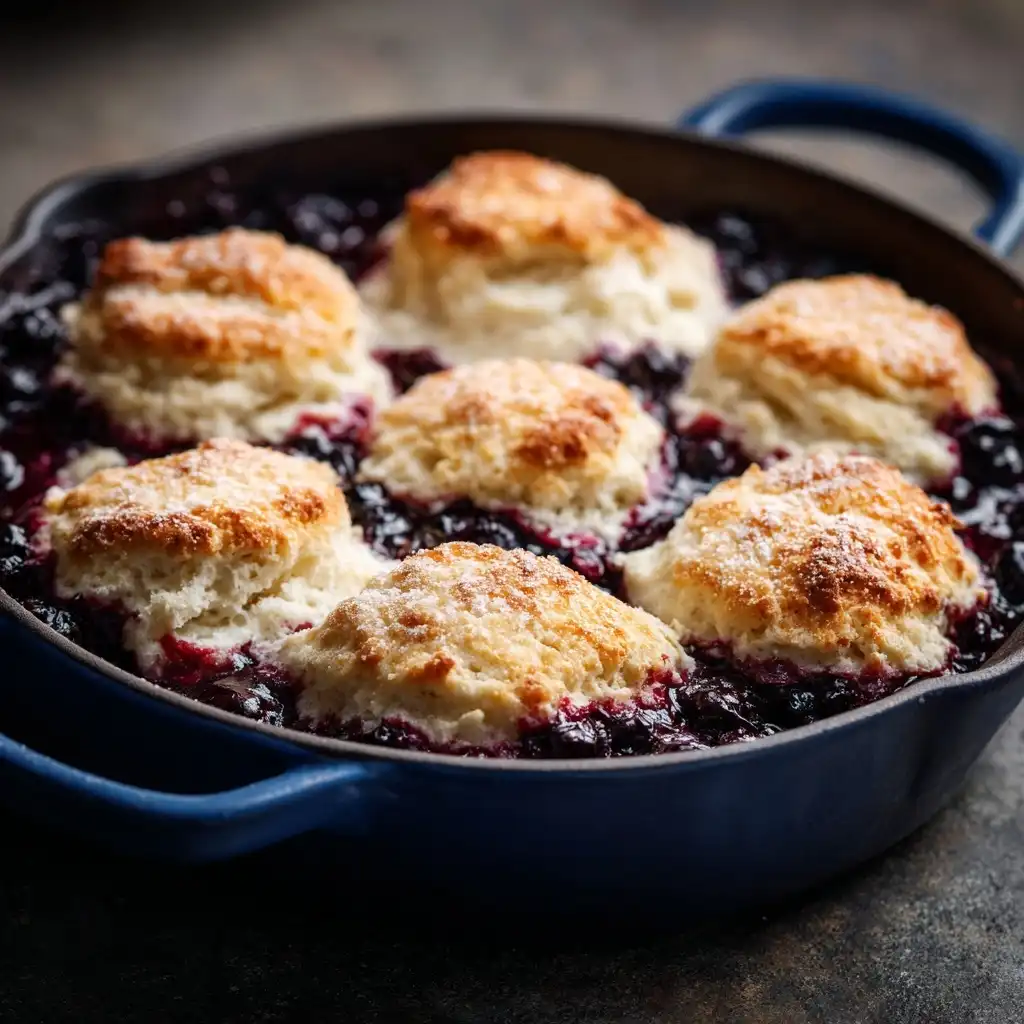
Southern Blueberry Cobbler with Biscuits is more than just a dessert—it’s a cherished tradition, a warm embrace in edible form, and a cornerstone of Southern hospitality. Unlike fruit crisps or crumbles, this iconic cobbler features tender, golden-brown drop biscuits that bake *on top* of a bubbling, syrupy blueberry filling—creating a textural symphony of crisp edges, soft centers, and juicy, tart-sweet berries beneath. Originating in the rural kitchens of the American South where resourcefulness met reverence for seasonal produce, it embodies simplicity, soul, and deep-rooted comfort. Whether served straight from the cast-iron skillet at a family Sunday supper, crowned with a scoop of vanilla bean ice cream at a church potluck, or enjoyed as a quiet midnight treat with a drizzle of buttermilk biscuit gravy (a lesser-known but beloved regional twist), this cobbler speaks the language of home, history, and heartfelt generosity.
The History
The roots of Southern Blueberry Cobbler stretch back to the 19th century, evolving from English “cobbled” or “lumpy” desserts—early versions of what we now call cobblers, slumps, grunts, and pandowdies—brought over by British colonists. In the American South, where wild lowbush and cultivated highbush blueberries thrived in acidic soils from North Carolina to Georgia and beyond, settlers adapted these recipes using native ingredients and available pantry staples: lard or butter, buttermilk, self-rising flour (popularized in the South after the 1889 introduction of White Lily flour), and cane sugar or sorghum molasses. The term “cobbler” likely derives from the rough, “cobbled” appearance of the biscuit topping—uneven, rustic, and hand-formed rather than rolled or cut. By the early 20th century, Southern cookbooks like The Southern Cook Book (1934) and community church collections featured dozens of regional variations, often distinguishing “cobbler” (biscuit or dumpling topping) from “crisp” (oat-and-butter streusel) and “pie” (double-crust). Notably, the biscuit-topped version became especially beloved across the Piedmont and Coastal Plain regions, where blueberry season overlapped with summer canning traditions—and where sharing a still-warm cobbler signaled kinship, resilience, and celebration. Today, it remains a staple at Southern food festivals, Juneteenth gatherings, and generational reunions—its aroma alone capable of evoking memory, place, and belonging.
Ingredients Breakdown
Every ingredient in this cobbler serves both functional and cultural purpose—nothing is arbitrary, and substitutions carry meaning:
- Fresh Blueberries (6 cups): The heart and soul. Look for plump, deeply colored, slightly dusty-skinned berries—preferably locally grown or wild-picked if possible. Fresh berries yield superior texture and nuanced floral-tart complexity versus frozen (though frozen unsweetened work in a pinch—just don’t thaw them fully to avoid excess water).
- Granulated Sugar (1¼ cups): Balances blueberry acidity while caramelizing the biscuit edges. Traditional Southern versions sometimes use a blend of cane sugar and light brown sugar (¼ cup) for subtle molasses depth—but purists stick with pure white for clarity of blueberry flavor.
- Lemon Zest (1 Tbsp) & Juice (2 Tbsp): Brightens the filling and prevents cloying sweetness. The zest oils add aromatic lift; juice enhances natural pectin activation for ideal, glossy-thick (not runny) consistency.
- Cornstarch (¼ cup): The preferred thickener in Southern cobblers—cleaner taste and clearer sheen than flour, which can mute flavor and create pastiness. Mixed with sugar first to prevent clumping.
- Ground Cinnamon (½ tsp) & Nutmeg (¼ tsp, freshly grated if possible): Warm, subtle spices—not dominant, but essential for rounding out fruit flavor. A whisper of clove (⅛ tsp) appears in some Lowcountry versions.
- Salted Butter (6 Tbsp, cold and cubed): For the biscuit dough. Cold fat creates flaky layers and steam pockets as it melts in the oven. Unsalted butter is fine—but then adjust added salt carefully.
- Self-Rising Flour (2 cups): The quintessential Southern choice—pre-mixed leavening (baking powder + salt) ensures reliable rise and tenderness without guesswork. If unavailable, substitute 2 cups all-purpose flour + 3 tsp baking powder + 1 tsp fine sea salt.
- Buttermilk (¾ cup, well-shaken): Provides acidity for tenderness, tangy contrast, and activates baking powder. Full-fat, cultured buttermilk yields the richest, most tender biscuits. Avoid “buttermilk-style” substitutes unless necessary—they lack the enzymatic activity crucial for proper texture.
- Heavy Cream (2 Tbsp, for brushing): Adds golden color, subtle richness, and a delicate sheen. Some cooks use an egg wash (1 yolk + 1 Tbsp milk), but cream is more traditional and less eggy.
- Coarse Turbinado Sugar (2 Tbsp): Sprinkled on top pre-bake for crunch, sparkle, and caramelized sweetness—non-negotiable for authentic Southern presentation and mouthfeel.
Step-by-Step Recipe
- Preheat & Prep: Position oven rack in the lower third. Preheat oven to 375°F (190°C). Generously grease a deep 12-inch cast-iron skillet (or 9×13-inch ceramic baking dish) with lard, bacon grease, or unsalted butter—this adds flavor and prevents sticking during the vigorous bubble phase.
- Make the Filling: In a large bowl, gently toss blueberries with granulated sugar, cornstarch, lemon zest, lemon juice, cinnamon, nutmeg, and a generous pinch of fine sea salt (about ¼ tsp). Let macerate 15–20 minutes—berries will soften and release vivid purple juice. Stir once halfway through.
- Transfer & Simmer (Optional but Recommended): Pour berry mixture into a heavy-bottomed saucepan. Bring to a gentle simmer over medium-low heat, stirring constantly, until thickened to a glossy, spoon-coating consistency (about 5–7 minutes). This step—called “pre-cooking”—ensures perfect thickness, eliminates raw starch taste, and prevents undercooked filling beneath biscuits. Cool slightly (5 minutes) before pouring into prepared skillet.
- Make the Biscuit Dough: In a chilled bowl, whisk together self-rising flour and 1 Tbsp granulated sugar. Cut in cold, cubed butter using a pastry cutter or two forks until mixture resembles coarse crumbs with pea-sized butter pieces. Gradually pour in buttermilk while stirring with a fork just until a shaggy, slightly sticky dough forms—do not overmix. It should hold together when pinched but not be smooth or elastic.
- Drop the Biscuits: Using a ¼-cup measuring cup or large cookie scoop, portion 8–10 mounds of dough directly onto the hot blueberry filling. Space evenly—don’t press down. They’ll spread naturally as they bake.
- Finish & Bake: Brush tops lightly with heavy cream. Sprinkle generously with turbinado sugar. Place skillet on a parchment-lined baking sheet (to catch any potential bubbles/overflow). Bake 45–55 minutes—until biscuits are deeply golden brown, puffed, and spring back when lightly touched, and filling is vigorously bubbling around the edges. Rotate pan halfway through for even browning.
- Cool Slightly: Let rest 20–25 minutes before serving. This allows filling to set further (preventing “soupiness”) and biscuits to firm up enough to hold shape when scooped. Resist cutting too soon—the steam needs time to redistribute.
Tips
- Cast Iron Is King: A well-seasoned 12-inch skillet delivers superior heat retention and radiant browning—especially crucial for getting the biscuit bottoms cooked through without burning the top. Preheating the empty skillet in the oven for 5 minutes before adding filling? An advanced pro tip for extra-crisp biscuit bases.
- Chill Everything: Cold butter + cold buttermilk + chilled mixing bowl = flakier, taller biscuits. Pop the dough bowl in the freezer for 10 minutes before scooping if your kitchen is warm.
- Gentle Handling Wins: Overmixing biscuit dough develops gluten → tough, dense biscuits. Mix only until *just combined*. Lumps are welcome. Use a light touch when scooping—don’t compact the dough.
- Don’t Fear the Bubble: Vigorous bubbling at the edges is your cue that the filling has reached ideal temperature (212°F) and thickened properly. If bubbling is weak after 50 minutes, extend bake time in 3-minute increments.
- Resting Is Non-Negotiable: Cutting into piping-hot cobbler releases steam explosively—resulting in collapsed biscuits and soupy filling. That 20-minute wait isn’t patience—it’s science.
- Skillet Serving Style: Serve directly from the skillet at the table. The residual heat keeps it warm longer, and the rustic vessel honors tradition. Provide wide spoons—this is a shared, communal dessert.
- Revive Leftovers Right: Reheat individual portions in a toaster oven or air fryer (350°F, 5–7 min) to restore biscuit crispness. Microwaving makes biscuits gummy.
Variations and Customizations
This cobbler is gloriously adaptable—here are time-tested Southern twists, each rooted in regional practice:
- Pecan-Blueberry Cobbler: Fold 1 cup toasted, chopped pecans into the berry filling before baking. Adds earthy crunch and rich depth—especially popular in Georgia and Alabama.
- Buttermilk-Biscuit Gravy Drizzle: Whisk together 1 cup warm whole milk, 2 Tbsp reserved blueberry syrup (strained from cooled leftovers), 1 Tbsp flour, and a pat of butter. Simmer until thickened; pour over warm cobbler slices. A decadent, savory-sweet riff from East Texas.
- Black Pepper & Basil Infusion: Add ¼ tsp freshly cracked black pepper and 1 Tbsp finely chopped fresh basil to the filling. Surprising, sophisticated, and increasingly common in modern Southern farm-to-table kitchens.
- Cheddar-Biscuit Top: Stir ½ cup shredded sharp white cheddar into the biscuit dough. Salty, tangy, and deeply comforting—favored in Appalachian mountain communities.
- Summer Stone Fruit Blend: Replace 2 cups blueberries with ripe, peeled, diced peaches or nectarines (toss with extra 1 tsp cornstarch). Celebrates peak summer abundance without straying from tradition.
- Oat-Butter Crumble Variation: For those preferring texture contrast over biscuits, replace half the biscuit dough with a mix of ½ cup old-fashioned oats, ¼ cup brown sugar, 3 Tbsp cold butter, and ¼ tsp cinnamon—sprinkled over dough mounds before baking.
- Boozy Blueberry: Stir 2 Tbsp bourbon or elderflower liqueur into the filling after maceration. Adds warmth and aromatic complexity—best for adult gatherings.
- Vegan-Southern Style: Use plant-based buttermilk (soy milk + 1 Tbsp apple cider vinegar), vegan butter, and flax “egg” wash (1 Tbsp ground flax + 3 Tbsp water). Thickener: arrowroot instead of cornstarch. Still deeply satisfying—and increasingly common at Southern vegan soul food pop-ups.
Health Considerations and Nutritional Value
A single generous serving (about 1 cup, including biscuit and filling) contains approximately 380–420 calories, with notable nutritional highlights and mindful considerations:
- Antioxidant Powerhouse: Blueberries rank among the highest in anthocyanins—the pigments responsible for their deep blue-purple hue—which support cognitive health, reduce oxidative stress, and exhibit anti-inflammatory properties.
- Fiber-Rich: One serving provides ~4–5g dietary fiber (nearly 20% DV), supporting digestive regularity and satiety—thanks to whole berries and the modest whole-grain content if using whole-wheat self-rising flour blends.
- Vitamin C & K Boost: Blueberries supply ~25% DV vitamin C per cup (raw), plus meaningful vitamin K—important for bone metabolism and blood clotting.
- Considerations: Naturally occurring sugars from fruit are beneficial, but added sugars (1¼ cups total) bring the dish to ~32g added sugar per serving—well above the AHA’s recommended max of 25g/day for women. To reduce: decrease granulated sugar to ¾ cup and rely on riper berries; omit turbinado topping; or serve smaller portions with unsweetened whipped cream.
- Gluten Awareness: Traditional self-rising flour contains wheat. For gluten-free versions, use certified GF self-rising blends (like Bob’s Red Mill) and ensure xanthan gum is included for structure.
- Dairy Notes: Buttermilk’s lactic acid aids digestibility for many lactose-sensitive individuals—even more so when fermented longer. For strict dairy-free, coconut milk kefir (unsweetened) works surprisingly well in biscuit dough.
- Balanced Enjoyment: This cobbler shines as an occasional, celebratory food—not daily fare. Paired with a leafy green salad and grilled protein, it becomes part of a nourishing, culturally grounded meal—not just dessert.
Ingredients
- 6 cups fresh blueberries (about 1 lb 12 oz), rinsed and picked over
- 1¼ cups granulated cane sugar, plus 1 Tbsp for biscuit dough, plus 2 Tbsp turbinado sugar for topping
- ¼ cup cornstarch
- Zest of 1 large lemon (about 1 Tbsp)
- 2 Tbsp fresh lemon juice
- ½ tsp ground cinnamon
- ¼ tsp freshly grated nutmeg
- ¼ tsp fine sea salt (plus pinch for filling)
- 6 Tbsp unsalted butter, very cold and cubed
- 2 cups Southern-style self-rising flour (e.g., White Lily or Martha White), plus extra for dusting
- ¾ cup full-fat cultured buttermilk, well-shaken and chilled
- 2 Tbsp heavy cream or whole milk, for brushing
Directions
- Preheat oven to 375°F (190°C). Place a large, well-seasoned 12-inch cast-iron skillet in the oven to preheat for 5 minutes (optional but highly recommended for optimal biscuit base crispness).
- In a large bowl, combine blueberries, 1¼ cups granulated sugar, cornstarch, lemon zest, lemon juice, cinnamon, nutmeg, and a pinch of salt. Gently toss until evenly coated. Let sit at room temperature for 15 minutes to macerate.
- (Optional but advised) Transfer macerated blueberries and juices to a heavy-bottomed saucepan. Cook over medium-low heat, stirring constantly with a heatproof spatula, until thickened to a glossy, jam-like consistency that coats the back of a spoon (5–7 minutes). Remove from heat and cool slightly (5 minutes).
- Remove hot skillet from oven. Carefully pour blueberry mixture into skillet. Set aside.
- In a large chilled bowl, whisk together self-rising flour and 1 Tbsp granulated sugar. Add cold cubed butter. Using a pastry cutter or two forks, cut in butter until mixture resembles coarse crumbs with visible pea-sized butter pieces.
- Gradually pour in chilled buttermilk, stirring with a fork just until a shaggy, slightly sticky dough forms—about 12–15 strokes. Do not overmix. Dough should hold together when squeezed but remain lumpy.
- Using a ¼-cup dry measuring cup or large cookie scoop, portion 8–10 mounds of dough onto the hot blueberry filling, spacing evenly. Do not flatten—let them rise freely.
- Brush tops of biscuits lightly with heavy cream. Sprinkle generously with turbinado sugar.
- Place skillet on a parchment-lined baking sheet (to catch any bubbling overflow). Bake on lowest oven rack for 45–55 minutes, rotating halfway through, until biscuits are deep golden brown, puffed, and spring back when gently pressed—and filling is bubbling vigorously at the edges.
- Remove from oven and let rest undisturbed for 20–25 minutes to allow filling to set and biscuits to firm.
- Serve warm, directly from the skillet, with unsweetened whipped cream, real vanilla ice cream, or a drizzle of buttermilk biscuit gravy (see Variations).
FAQ
- Can I use frozen blueberries?
- Yes—but do not thaw them first. Toss frozen berries directly with sugar and cornstarch, then add 1 extra tsp cornstarch to absorb excess liquid. Expect a 5–8 minute longer bake time. Texture will be slightly softer, but flavor remains excellent.
- Why does my cobbler have a soggy bottom?
- Most commonly: biscuits were placed on cold (not preheated) filling, or skillet wasn’t hot enough. Preheating the skillet and/or pre-cooking the filling ensures immediate steam generation, lifting biscuits away from the wet layer. Also, ensure your biscuit dough isn’t overly wet—measure buttermilk precisely.
- Can I make the biscuit dough ahead?
- Absolutely. Prepare dough, cover tightly, and refrigerate up to 24 hours. Scoop cold dough directly onto hot filling—it holds up beautifully and actually improves flavor development.
- What’s the difference between cobbler, crisp, and buckle?
- A true Southern cobbler has a biscuit, dumpling, or pie-crust topping baked *on top* of fruit. A crisp features an oat-and-butter streusel. A buckle is a cake-like batter with fruit folded in, topped with streusel—and *rises around* the fruit. Confusing them is a cardinal sin in Southern dessert taxonomy!
- How do I store leftovers?
- Cool completely, then cover skillet tightly with plastic wrap or transfer to an airtight container. Refrigerate up to 4 days. Reheat portions in a 350°F oven or air fryer (5–7 min) for best texture. Avoid microwaving unless absolutely necessary.
- Can I double this recipe?
- Yes—use two skillets or a 13×18-inch commercial baking sheet. Increase bake time by 5–10 minutes and check for doneness visually (golden biscuits + bubbling edges). Do not overcrowd the oven—ensure airflow.
- Is there a way to make it lower-sugar without sacrificing texture?
- Reduce granulated sugar to ¾ cup and add 2 Tbsp pure monk fruit-erythritol blend (like Lakanto Golden) for bulk and browning. Keep cornstarch at full amount—reducing thickener causes runniness. Omit turbinado topping.
- What’s the best ice cream pairing?
- Classic Southern preference is pure, creamy **vanilla bean**—but **brown sugar–pecan**, **sweet cream**, or even **lavender honey** elevate it beautifully. Avoid overly sweet or artificial flavors—they overwhelm the blueberry’s nuance.
Summary
Southern Blueberry Cobbler with Biscuits is a time-honored, multi-sensory celebration of regional abundance, culinary ingenuity, and intergenerational love—where wild-harvested or garden-grown blueberries meet flaky, golden, buttermilk biscuits in a harmony of tart, sweet, and warmly spiced comfort.
It demands respect for technique—chilled fat, rested filling, patient baking—but rewards with unparalleled depth, nostalgia, and the kind of soul-satisfying warmth that transforms any ordinary moment into something sacred, shared, and unmistakably Southern.