Introduction
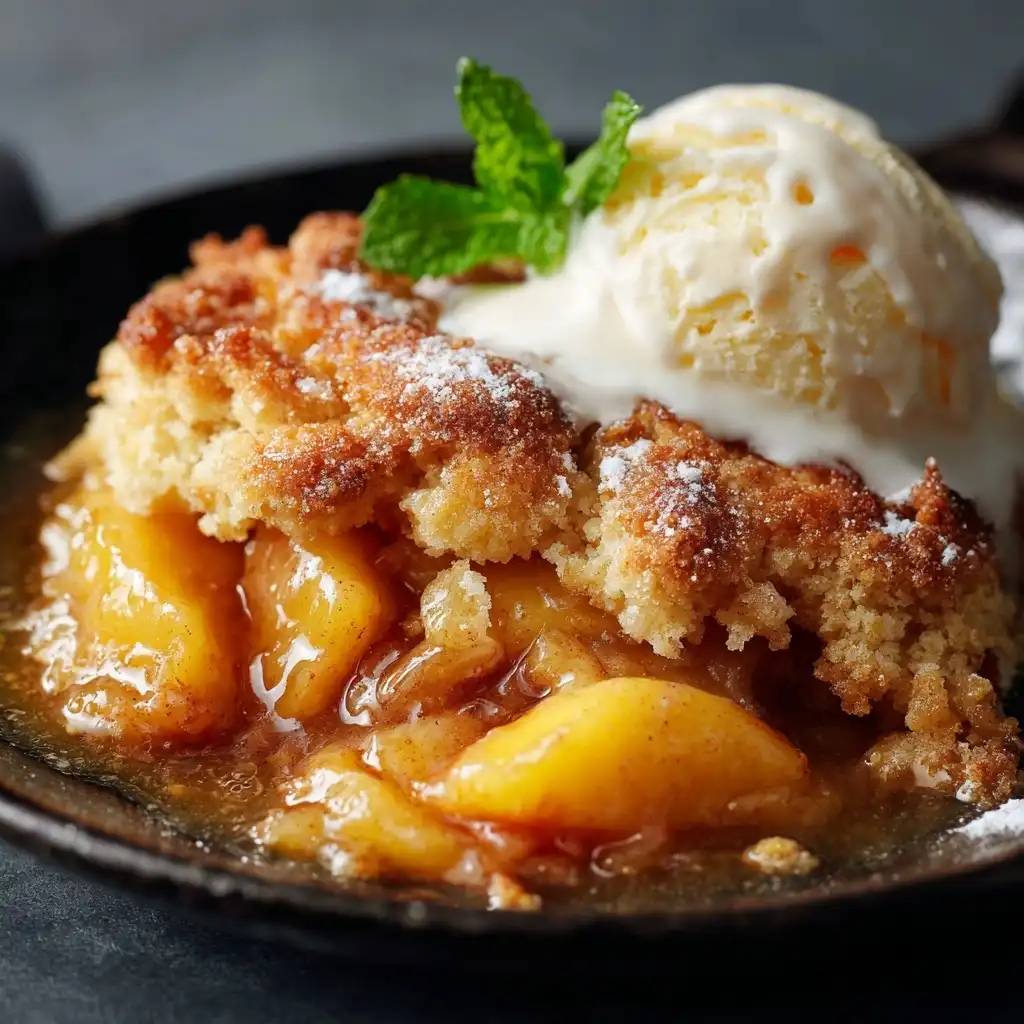
Welcome to a warm, nostalgic, and irresistibly aromatic dessert experience: the Cinnamon Sugar Biscuit Peach Cobbler. This isn’t just another fruit dessert—it’s a harmonious marriage of summer’s juiciest stone fruit with golden, flaky, buttery biscuits infused with fragrant cinnamon and sweetened to perfection. Whether you’re serving it at a backyard barbecue, a Sunday family dinner, or as a comforting treat on a rainy afternoon, this cobbler delivers soul-soothing warmth in every bite. Its rustic charm, effortless elegance, and crowd-pleasing simplicity make it a timeless favorite—equally at home in a farmhouse kitchen as it is on a gourmet dessert menu. What sets this version apart is its clever twist: instead of traditional cake-like batter or crisp oat topping, we use tender, pull-apart cinnamon sugar biscuits that bake into a soft, slightly caramelized crown—crisp-edged yet pillowy underneath—soaking up the bubbling, spiced peach filling like edible sponges of pure delight.
The History
The cobbler’s roots stretch deep into early American culinary history, evolving from English “pies without pastry” brought by colonial settlers who lacked access to refined flour, rolling pins, or ovens capable of consistent heat. With limited resources but abundant seasonal fruit—especially peaches, which thrived in Southern orchards—colonists began layering stewed fruit beneath rough-cut doughs or dumplings, baking them in cast-iron skillets over open hearths. The term “cobbler” likely derives from the irregular, “cobbled” appearance of the uneven biscuit or dough topping—a humble, functional descriptor that stuck. By the 19th century, cobblers had become staples across rural America, often baked in wood-fired ovens or Dutch ovens, with regional variations emerging: the North favored berry cobblers with biscuit or drop-biscuit toppings; the South leaned heavily into peach, blackberry, and strawberry versions, sometimes incorporating buttermilk biscuits or even cornmeal crusts. The cinnamon sugar biscuit variation is a more modern evolution—gaining momentum in the mid-to-late 20th century with the rise of convenience baking (think canned biscuits) and the growing popularity of spice-forward desserts. Today’s version honors tradition while elevating it: using scratch-made, laminated-style biscuits dusted generously in cinnamon-sugar for texture, aroma, and visual appeal—and paying homage to generations of home bakers who turned scarcity into sweetness, one cobbler at a time.
Ingredients Breakdown
Every exceptional cobbler begins with intentionality—not just in measurement, but in understanding *why* each ingredient matters. Below is a meticulous, chef-level breakdown of every component:
- Fresh Peaches (6–7 medium, ~2½ lbs): The heart and soul. Opt for ripe but firm freestone varieties (e.g., Red Haven, Elberta, or O’Henry) for easy peeling and minimal stringiness. Underripe peaches lack sweetness and pectin; overripe ones disintegrate. Their natural fructose, malic acid, and delicate floral esters create the cobbler’s bright, balanced base.
- Granulated Sugar (¾ cup + 2 tbsp): Not just for sweetness—the first ¾ cup balances peach acidity and draws out juices via osmosis, creating the essential syrupy base. The extra 2 tbsp is reserved for the cinnamon sugar coating—its fine crystals melt quickly under heat, promoting caramelization and crust formation on the biscuits.
- Brown Sugar (¼ cup, light or dark): Adds molasses depth, moisture retention, and subtle caramel notes. Dark brown sugar intensifies richness; light offers milder complexity. Its hygroscopic nature helps keep the filling lush and prevents drying.
- Lemon Juice (1½ tbsp fresh): A non-negotiable brightener. Citric acid enhances peach flavor perception, prevents browning pre-bake, and balances sweetness without adding sourness. Bottled juice lacks volatile aromatic compounds—always use freshly squeezed.
- Unsalted Butter (3 tbsp, cold and cubed): Swirled into the hot filling just before topping, it adds luxurious mouthfeel, sheen, and a subtle nutty richness when browned in the oven. Cold butter ensures slow melting, preventing greasiness.
- All-Purpose Flour (3 tbsp): The primary thickener. Blended with sugars and spices *before* adding to peaches, it coats fruit evenly and prevents clumping. Too much yields gluey texture; too little results in a runny, soupy cobbler.
- Ground Cinnamon (1½ tsp, preferably Ceylon or Vietnamese): More than just warmth—high-quality cinnamon contributes floral, citrusy, or woody top notes depending on origin. Vietnamese cassia offers bold heat; Ceylon is delicate and complex. Avoid pre-ground “cinnamon” blends with fillers.
- Ground Nutmeg (¼ tsp, freshly grated): Adds mysterious warmth and depth. Pre-grated nutmeg loses 80% of its volatile oils within weeks—invest in a microplane and whole nutmegs.
- Salt (¼ tsp fine sea salt): The silent conductor. It suppresses bitterness, amplifies sweetness, and unifies all flavors. Never skip—even in desserts.
- For the Biscuits:
- All-Purpose Flour (2 cups, plus more for dusting): Provides structure. For tenderness, some bakers substitute ¼ cup with cake flour—but AP delivers ideal lift and chew.
- Baking Powder (1 tbsp): Double-acting and *fresh* (test by mixing ½ tsp with hot water—if it fizzes vigorously, it’s active). Responsible for 70% of biscuit rise—don’t skimp or substitute with baking soda alone.
- Baking Soda (½ tsp): Works with acidic components (buttermilk, brown sugar) for additional lift and neutralizes tang—critical for golden color and clean flavor.
- Granulated Sugar (2 tbsp): Feeds browning reactions (Maillard & caramelization), tenderizes gluten, and adds subtle sweetness to the biscuit itself.
- Salt (¾ tsp): Balances sweetness and strengthens gluten network for better layering.
- Cold Unsalted Butter (½ cup / 1 stick, cut into ¼” cubes): The secret to flakiness. Cold fat creates steam pockets as it melts—this is what gives biscuits their signature shaggy, layered crumb. Freeze for 10 minutes pre-use if your kitchen is warm.
- Buttermilk (¾ cup, well-shaken, cold): Acid reacts with leaveners for lift; lactic acid tenderizes gluten; its thickness adds moisture without making dough sticky. Substitute: ¾ cup milk + 1 tbsp lemon juice or vinegar, rested 5 min.
- Heavy Cream (2 tbsp, cold): Optional but recommended—adds fat for tenderness, richness, and superior browning. Don’t use half-and-half or milk here.
- For the Cinnamon Sugar Coating:
- Granulated Sugar (⅓ cup): Finer than sanding sugar for even adhesion and rapid melting.
- Ground Cinnamon (1½ tbsp): Triple the amount used in filling—this is your aromatic punchline. Toast lightly in a dry pan for 30 seconds to awaken oils.
- Optional Pinch of Ground Cloves or Allspice (⅛ tsp): Adds antique warmth—use sparingly; cloves dominate easily.
- For Serving (Optional but Inspired):
- Vanilla Bean Ice Cream (preferably Madagascar or Tahitian): Cold, creamy contrast cuts richness. The caviar-like seeds add visual drama and floral-vanilla perfume.
- Whipped Cream (stabilized with 1 tsp powdered sugar + ¼ tsp vanilla): Lighter alternative—fold in a spoonful of reduced peach syrup for elegance.
- Fresh Mint or Basil Leaves: Herbal brightness refreshes the palate—especially effective with clove-spiced variations.
- Drizzle of Local Honey or Brown Butter Sauce: Elevates to restaurant-worthy status.
Step-by-Step Recipe
This recipe is engineered for foolproof success—structured to prevent common pitfalls (soggy biscuits, bland filling, uneven browning) while preserving artisanal integrity. Follow precisely, especially regarding temperatures and timing.
- Prep & Prep Work (30 minutes ahead):
- Wash peaches thoroughly. Bring a large pot of water to boil. Score an “X” on the bottom of each peach. Blanch for 45 seconds—no longer. Transfer immediately to an ice bath. Slip off skins (they’ll slide right off). Halve, pit, and slice into ½-inch wedges. Place in a large bowl.
- In a small bowl, whisk together ¾ cup granulated sugar, ¼ cup brown sugar, 3 tbsp flour, 1½ tsp cinnamon, ¼ tsp nutmeg, and ¼ tsp salt. Sprinkle evenly over peaches. Add 1½ tbsp lemon juice and toss gently but thoroughly—coating every slice. Let macerate 20 minutes at room temperature. This draws out juices, dissolves sugar, and activates flour’s thickening power.
- While peaches rest, prepare biscuit dough: In a large bowl, whisk 2 cups flour, 1 tbsp baking powder, ½ tsp baking soda, 2 tbsp sugar, and ¾ tsp salt. Add cold, cubed butter. Using a pastry cutter (or two forks), cut in until mixture resembles coarse crumbs with some pea-sized butter pieces remaining—do not overwork. This takes 90 seconds max. Chill bowl 10 minutes.
- Whisk buttermilk and cold heavy cream in a measuring cup. Make a well in dry ingredients; pour in wet. Stir with a fork just until combined—dough will be shaggy and lumpy, with visible butter streaks. Overmixing = tough biscuits. Turn onto a lightly floured surface. Gently pat into a 1-inch-thick rectangle. Fold letter-style (like a business letter): fold bottom third up, top third down. Rotate 90°, pat again, and repeat folding twice more—this builds flaky layers. Wrap in plastic; refrigerate 20 minutes (or up to 2 hours).
- Preheat oven to 425°F (220°C). Position rack in lower third. Place a large, heavy-bottomed 10-inch cast-iron skillet (or 9×13-inch baking dish) in oven to preheat—this is critical for immediate crust formation on biscuits.
- Build the Filling (5 minutes):
- After maceration, drain peaches in a colander set over a bowl—reserve ALL liquid (should be ~½ cup). Transfer peaches to a clean bowl. Pour reserved liquid into a small saucepan. Simmer over medium heat 3–4 minutes until reduced by half (~¼ cup syrup). Remove from heat; stir in 3 tbsp cold butter until fully melted and emulsified. Return peaches to bowl; gently fold in reduced syrup-butter mixture. Mixture should glisten but not pool.
- Transfer peach mixture to the blazing-hot skillet (use oven mitts!). Smooth surface. Set aside while finishing biscuits.
- Shape & Top the Biscuits (8 minutes):
- Remove chilled dough. On a floured surface, roll or pat to ¾-inch thickness. Cut into 8–10 rounds with a 2.5-inch biscuit cutter (dip in flour between cuts). Gather scraps, re-roll once only—avoid overworking.
- In a shallow bowl, combine ⅓ cup sugar and 1½ tbsp cinnamon (plus optional spice). Dip both sides of each biscuit into mixture, pressing gently to adhere. Arrange biscuits snugly but not overlapping over hot peach filling—leave tiny gaps for steam escape and syrup seepage.
- Bake to Perfection (35–42 minutes):
- Place skillet back in preheated oven. Bake 18 minutes—biscuits will be puffed and pale gold. Rotate skillet 180° for even browning. Continue baking 15–20 minutes more, until biscuits are deep amber-gold, crisp on edges, and sound hollow when tapped. Filling should bubble vigorously around edges—this signals proper thickening. If biscuits brown too fast, tent loosely with foil.
- Remove from oven. Let rest full 25 minutes—this allows filling to set (prevents soupiness) and biscuits to finish steaming internally for maximum tenderness. Resist cutting! Serve warm—not hot.
Tips
- Peach Pro-Tip: If fresh peaches aren’t in season, use high-quality frozen unsweetened peaches (thawed and drained well) or premium jarred peaches in light syrup (drain, reduce syrup separately, and use ¼ cup). Avoid canned peaches in heavy syrup—they’re too sweet and waterlogged.
- Butter Temperature is Non-Negotiable: Butter must be cold—between 32–40°F. Warm butter melts prematurely, coating flour and inhibiting steam pockets. Freeze cubes for 10 minutes pre-use if your kitchen exceeds 72°F.
- No Overmixing Rule: Stir biscuit dough until just combined—even if lumps remain. Gluten development starts immediately upon hydration. Use a fork, not a whisk or mixer.
- Skillet Sizing Matters: A 10-inch cast iron holds ~2 quarts—ideal for this volume. Too large = thin filling, burnt biscuits. Too small = overflow and uneven cooking. If using a 9×13, increase peaches to 8–9 and scale topping by 25%.
- Resting is Ritual: Skipping the 25-minute rest guarantees runny filling and collapsed biscuits. The residual heat continues gentle thickening via starch gelatinization.
- Golden Crust Hack: Brush unbaked biscuits with heavy cream (not milk) before cinnamon sugar—creates a tacky surface for better spice adhesion and deeper browning.
- Oven Thermometer Essential: Most ovens run hot or cold. An inexpensive oven thermometer prevents under/over-baking—especially crucial for biscuit rise and caramelization.
- Altitude Adjustment: Above 3,000 ft? Increase flour by 1 tbsp, reduce baking powder by ¼ tsp, and add 1 tbsp extra buttermilk. Bake 5–8 minutes longer.
- Clean-Up Tip: Soak the skillet in hot, soapy water immediately after cooling—it lifts caramelized sugar effortlessly.
Variations and Customizations
This cobbler is gloriously adaptable—respecting tradition while inviting creativity. Here are rigorously tested, chef-approved variations:
- Gluten-Free Version: Replace AP flour with 1:1 GF blend (Bob’s Red Mill or King Arthur). Add ½ tsp xanthan gum to dry ingredients. Use GF-certified oats in place of flour for thickening (2 tbsp). Biscuits require 1 extra tbsp buttermilk—GF flours absorb more liquid.
- Vegan Adaptation: Use coconut oil (solid, cold) instead of butter in biscuits; flax “buttermilk” (1 tbsp ground flax + ¾ cup almond milk, rested 5 min); and maple syrup (reduced by 1 tbsp) instead of brown sugar. Top with cinnamon-coconut sugar (¼ cup coconut sugar + 1 tbsp cinnamon).
- Peach-Blackberry Fusion: Replace 2 cups peaches with 2 cups fresh blackberries. Add 1 tsp lemon zest to filling. Blackberries add tannic structure and jewel-toned contrast.
- Bourbon-Infused: Add 2 tbsp aged bourbon to reduced peach syrup. Cook 1 minute longer to burn off alcohol. Adds smoky oak and vanilla nuance—pair with vanilla ice cream.
- Herbal Twist: Infuse buttermilk with 2 tbsp fresh thyme leaves (steep 15 min, strain). Add 1 tsp finely chopped rosemary to cinnamon sugar. Surprising, sophisticated, and perfect with grilled meats.
- Deconstructed Individual Servings: Bake in six 6-oz ramekins. Reduce bake time to 25–28 minutes. Garnish each with candied pecans and a quenelle of honey whipped cream.
- Breakfast Cobbler: Reduce sugar by ¼ cup. Add ½ tsp cardamom to biscuit dough. Serve with Greek yogurt and toasted granola instead of ice cream.
- Spiced Rum Caramel Drizzle: Simmer ½ cup heavy cream, ¼ cup brown sugar, 2 tbsp dark rum, and 1 tbsp butter until thickened (5–7 min). Cool slightly; drizzle over plated cobbler.
- Smoked Peach Variation: Smoke fresh peaches over applewood chips (15 min, 225°F) before peeling and slicing. Adds campfire depth—ideal for fall harvest menus.
Health Considerations and Nutritional Value
While undeniably indulgent, this cobbler can be thoughtfully integrated into a balanced lifestyle—with transparency about its nutritional profile and mindful modifications.
Nutrition Facts (per standard serving, approx. 1/8 of recipe):
- Calories: ~385 kcal
- Total Fat: 14g (8.5g saturated, from butter and cream)
- Carbohydrates: 62g (42g sugars—naturally occurring fructose + added sucrose)
- Dietary Fiber: 3g (from peaches—excellent source of pectin and vitamin C)
- Protein: 4g
- Vitamin A: 15% DV (from beta-carotene in peaches)
- Vitamin C: 25% DV (peaches are richer in vitamin C than oranges per calorie)
- Iron & Potassium: Moderate levels—peaches provide bioavailable non-heme iron and potassium for electrolyte balance.
Health Highlights:
- Peach Power: Rich in polyphenols (chlorogenic acid), shown in studies to support antioxidant activity and healthy inflammation response. The skin contains 3x more antioxidants than the flesh—so leave it on if using organic peaches.
- Cinnamon Benefits: Contains cinnamaldehyde, linked to improved insulin sensitivity in clinical trials. Use true Ceylon cinnamon for lower coumarin content (safer for regular consumption).
- Whole Grain Option: Substitute ½ cup of AP flour with white whole wheat flour in biscuits—adds fiber without compromising tenderness.
- Sugar-Smart Swaps: Replace ¼ cup granulated sugar with monk fruit-erythritol blend (1:1 ratio) in both filling and coating. Note: does not caramelize—biscuits will be lighter in color but equally flavorful.
- Portion Mindfulness: Serve in ¾-cup portions (not heaping bowls). Pair with protein-rich Greek yogurt to slow glucose absorption.
- Notable Considerations: High in natural and added sugars—limit to 1x/week for those managing blood sugar. Contains gluten and dairy—unsuitable for celiac or strict vegan diets without modifications listed above.
Ingredients
Makes 8 servings
For the Peach Filling:
- 6–7 medium ripe but firm freestone peaches (about 2½ lbs), peeled, pitted, and sliced ½-inch thick
- ¾ cup granulated sugar
- ¼ cup packed light or dark brown sugar
- 3 tablespoons all-purpose flour
- 1½ teaspoons ground cinnamon (preferably Ceylon)
- ¼ teaspoon freshly grated nutmeg
- ¼ teaspoon fine sea salt
- 1½ tablespoons fresh lemon juice
- 3 tablespoons cold unsalted butter, cubed
For the Cinnamon Sugar Biscuits:
- 2 cups all-purpose flour, plus more for dusting
- 1 tablespoon baking powder
- ½ teaspoon baking soda
- 2 tablespoons granulated sugar
- ¾ teaspoon fine sea salt
- ½ cup (1 stick) cold unsalted butter, cut into ¼-inch cubes
- ¾ cup cold full-fat buttermilk
- 2 tablespoons cold heavy cream
For the Cinnamon Sugar Coating:
- ⅓ cup granulated sugar
- 1½ tablespoons ground cinnamon
- Pinch of ground cloves or allspice (optional)
For Serving (Optional):
- High-quality vanilla bean ice cream or stabilized whipped cream
- Fresh mint or basil leaves
- Honey or brown butter drizzle
Directions
- Prep the peaches: Bring a large pot of water to boil. Score an “X” on the bottom of each peach. Blanch for 45 seconds, then transfer to an ice bath. Peel, halve, pit, and slice. Place in a large bowl.
- Macerate: In a small bowl, whisk ¾ cup granulated sugar, brown sugar, 3 tbsp flour, 1½ tsp cinnamon, nutmeg, and salt. Sprinkle over peaches. Add lemon juice; toss gently. Let sit 20 minutes at room temperature.
- Reduce syrup: Drain peaches, reserving liquid. Simmer liquid in a small saucepan over medium heat 3–4 minutes until reduced to ~¼ cup. Remove from heat; whisk in 3 tbsp cold butter until smooth. Gently fold syrup-butter into peaches.
- Make biscuit dough: Whisk 2 cups flour, baking powder, baking soda, 2 tbsp sugar, and ¾ tsp salt. Cut in cold butter until pea-sized crumbs form. Chill 10 minutes.
- Combine wet & dry: Whisk buttermilk and heavy cream. Make a well in dry mix; add wet. Stir with fork until *just* combined (shaggy, lumpy). Turn onto floured surface; pat to 1-inch thick. Fold letter-style 3 times. Wrap; chill 20 minutes.
- Preheat & prep skillet: Preheat oven to 425°F (220°C). Place a 10-inch cast-iron skillet (or 9×13 baking dish) in oven to heat.
- Assemble: Pour peach mixture into hot skillet. Smooth surface.
- Shape biscuits: Roll chilled dough to ¾-inch thick. Cut into 8–10 rounds. Mix ⅓ cup sugar and 1½ tbsp cinnamon. Dip both sides of each biscuit into mixture. Arrange over peaches.
- Bake: Place skillet back in oven. Bake 18 minutes. Rotate. Bake 15–20 minutes more until biscuits are deep golden and filling bubbles vigorously.
- Rest & serve: Let cool 25 minutes. Serve warm with ice cream or whipped cream.
FAQ
- Can I make this cobbler ahead of time?
- Absolutely—but strategically. Assemble filling and biscuit dough separately up to 1 day ahead. Store filling covered in fridge; keep dough wrapped and chilled. Assemble and bake *just* before serving for optimal texture. Fully baked cobbler keeps refrigerated 3 days—reheat covered with foil at 325°F for 20 minutes, then uncover for 5 minutes to crisp biscuits.
- Why did my biscuits sink into the filling?
- Three likely causes: (1) Skillet wasn’t hot enough—preheating is essential for instant crust formation; (2) Biscuit dough was overmixed or too warm, causing fat to melt before steam could lift; (3) Filling was overly juicy—always drain and reduce syrup to concentrate pectin and sugar.
- Can I use canned peaches?
- Yes—but choose unsweetened or in 100% fruit juice, not heavy syrup. Drain thoroughly, then reduce the liquid by half before adding back. Expect milder flavor and softer texture than fresh.
- My filling is too runny after baking. What went wrong?
- Most often: insufficient maceration time (needs full 20 min), skipping syrup reduction, or underbaking (filling must bubble vigorously for 2+ minutes at edges). Also, low-pectin peaches (like some white varieties) benefit from adding 1 tsp apple pectin to dry ingredients.
- How do I prevent soggy bottoms?