Introduction
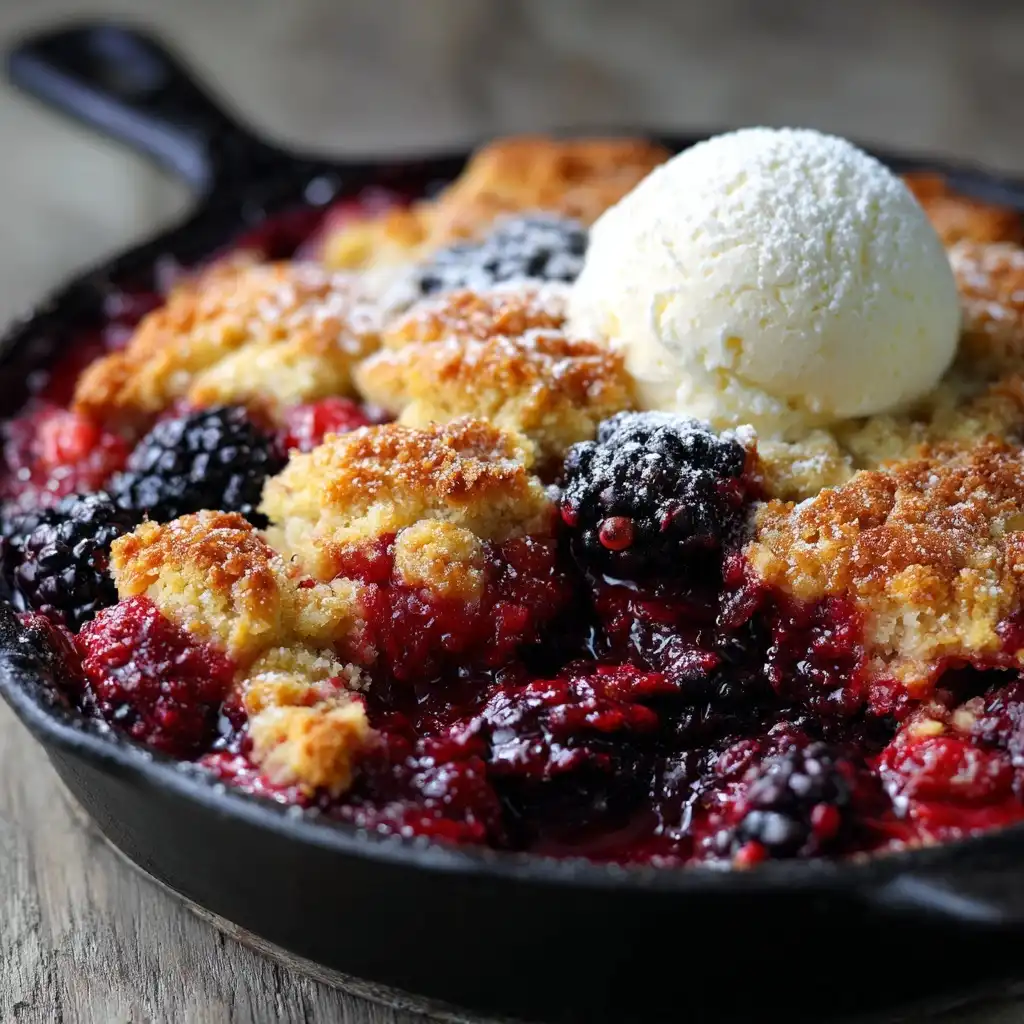
Apple Blackberry Cobbler is a timeless American dessert that marries the comforting warmth of baked apples with the vibrant, tart-sweet burst of fresh blackberries—topped with a golden, biscuit-like crust that bakes up tender, slightly crisp, and irresistibly fragrant. This cobbler embodies the soul of seasonal baking: rustic yet refined, nostalgic yet endlessly adaptable. Whether served warm from the oven with a scoop of vanilla ice cream melting into its juicy, cinnamon-kissed filling or enjoyed the next day with a dollop of crème fraîche, it evokes orchards in autumn, sun-drenched berry patches in late summer, and the quiet joy of homemade hospitality. More than just a dessert, it’s a celebration of simplicity, balance, and the alchemy that happens when fruit, spice, butter, and flour come together under gentle heat.
The History
The origins of cobbler stretch back to 17th-century England, where early versions—known as “cobs” or “cobblers”—were rustic fruit desserts baked with dumpling-like doughs or cake batters rather than traditional pastry. When English settlers brought these techniques to colonial America, they adapted them using locally abundant fruits and available grains. By the 19th century, cobblers had evolved into distinctly American staples, particularly across the South and Midwest, where they became synonymous with resourcefulness: no pie plate? No problem—bake it in a cast-iron skillet. No rolling pin? Drop biscuits or pour batter instead. The apple-blackberry combination, while not historically documented as a classic pairing like peach or cherry, emerged organically in regions where both fruits thrived—especially in Appalachia, the Pacific Northwest, and parts of New England—where foragers and small-scale growers harvested wild blackberries alongside heirloom apple varieties such as Winesap, Rome, or Jonathan. Cookbooks from the early 1900s occasionally reference “mixed berry-apple desserts,” but it wasn’t until mid-century home economics publications and regional culinary magazines began highlighting seasonal fruit combinations that Apple Blackberry Cobbler gained dedicated recognition. Its rise accelerated with the farm-to-table movement of the 1990s and 2000s, as chefs and home bakers rediscovered the nuanced contrast between tannic, firm apples and deeply floral, seedy blackberries—celebrating terroir, biodiversity, and the beauty of imperfect, unpeeled fruit.
Ingredients Breakdown
Every exceptional Apple Blackberry Cobbler begins with intentionality—not just in selection, but in understanding how each component functions chemically and sensorially:
- Apples (4–5 medium, ~2 lbs): A blend is key—use 2–3 Granny Smith for bright acidity and structure, plus 1–2 sweeter, aromatic varieties like Honeycrisp, Braeburn, or Fuji for depth and caramelized sweetness. Peel or leave skins on depending on preference (skins add fiber, color, and subtle tannin; peeled apples yield a silkier texture). Core and slice uniformly (¼-inch thick) to ensure even cooking.
- Fresh blackberries (3 cups, lightly rinsed & stemmed): Opt for plump, deep purple-black berries with a dusty bloom—avoid mushy or dull-looking fruit. Wild blackberries offer intense perfume and higher antioxidant content, while cultivated varieties (e.g., ‘Triple Crown’ or ‘Navaho’) provide larger, juicier berries with milder acidity. Frozen blackberries (unsweetened, thawed & well-drained) work year-round but release more liquid—add 1 extra tsp cornstarch.
- Sugar (¾ cup granulated + 2 tbsp for topping): Adjust based on fruit ripeness—reduce by 1–2 tbsp if apples are very sweet or blackberries are exceptionally ripe. Consider substituting ¼ cup of the granulated sugar with light brown sugar for molasses-infused warmth and moisture retention.
- Thickener (3 tbsp cornstarch or 4 tbsp all-purpose flour): Cornstarch yields a glossier, clearer, more stable filling ideal for juicy blackberries; flour gives a matte, homestyle finish and adds slight softness. Tapioca starch (2 tbsp quick-cooking) is an excellent gluten-free alternative offering superior clarity and freeze-thaw stability.
- Spices (1½ tsp ground cinnamon, ¼ tsp ground nutmeg, pinch of ground cloves or cardamom): Toast whole spices in a dry pan before grinding for maximum aroma. Cinnamon anchors the profile; nutmeg adds roundness; cloves lend complexity without dominance—omit if sensitive to pungency.
- Acid (1 tbsp fresh lemon juice): Brightens flavor, balances sweetness, and prevents enzymatic browning in apples. Apple cider vinegar (½ tsp) can be added for additional tang and depth.
- Salt (½ tsp fine sea salt): Enhances all other flavors—don’t skip. Use flaky sea salt only for finishing the top crust, not mixing into batter.
- For the Cobbler Topping: All-purpose flour (1¼ cups), baking powder (2 tsp), cold unsalted butter (6 tbsp, cubed), heavy cream or buttermilk (⅓–½ cup), vanilla extract (1 tsp), coarse turbinado sugar (for sparkle and crunch).
- Optional Enhancements: 1 tbsp Calvados or apple brandy (folded into filling), ¼ cup toasted walnuts or pecans (sprinkled over topping before baking), 1 tsp orange zest (added with lemon juice), or a drizzle of local honey (swirled into filling post-baking for glossy sheen).
Step-by-Step Recipe
- Preheat & Prep: Position oven rack in the lower third. Preheat oven to 375°F (190°C). Lightly butter a 9×13-inch ceramic or glass baking dish (or 10-inch cast-iron skillet for rustic presentation). Set aside.
- Prepare the Filling: In a large bowl, combine sliced apples, blackberries, granulated sugar, cornstarch, cinnamon, nutmeg, cloves, salt, lemon juice, and optional Calvados. Gently toss with a silicone spatula—just until evenly coated. Let sit 15 minutes to macerate and release natural juices. Stir once more, then transfer mixture (including all accumulated liquid) into the prepared baking dish. Smooth surface evenly with spatula.
- Make the Cobbler Topping: In a medium bowl, whisk together flour, baking powder, and remaining ½ tsp salt. Add cold, cubed butter. Using a pastry cutter, two forks, or fingertips, work butter into flour until mixture resembles coarse crumbs with some pea-sized pieces remaining. Stir in vanilla. Gradually add heavy cream (start with ⅓ cup), stirring with a fork until shaggy clumps form—dough should hold together when pinched but not be wet or sticky. Add extra cream, 1 tsp at a time, only if needed.
- Assemble: Drop heaping tablespoons of dough evenly over the fruit filling, spacing them about 1 inch apart. Do not flatten—allow natural mounding for optimal rise and crust texture. Lightly press edges to seal gaps. Sprinkle entire surface with 2 tbsp granulated sugar, then finish with 1 tbsp turbinado sugar for crunch and visual appeal.
- Bake: Place dish on a parchment-lined baking sheet (to catch potential bubbling over). Bake for 45–55 minutes, rotating halfway through, until topping is deeply golden brown, puffed, and springy to the touch—and filling is thickened and bubbling vigorously around the edges (a knife inserted into center of topping should come out clean; filling should bubble thickly, not runny). If topping browns too quickly, tent loosely with foil after 30 minutes.
- Cool & Serve: Remove from oven and place on a wire rack. Let rest for *at least 30 minutes* before serving—this allows the filling to fully set and prevents scalding bites. For best texture, cool 45–60 minutes. Serve warm, not hot.
Tips
- Fruit Consistency Is Key: Overripe apples turn mealy; underripe ones stay hard. Test with a paring knife—if it slides in with gentle resistance, they’re perfect. Blackberries should be plump but not leaking juice excessively—discard any moldy or fermented berries.
- Butter Temperature Matters: Butter must be *cold* (refrigerated, not frozen) for the topping. Warm butter melts prematurely, creating greasy, dense biscuits instead of flaky, layered ones. Chill bowl and utensils for 10 minutes pre-mixing if kitchen is warm.
- Don’t Overmix the Topping: Stir only until dough just comes together. Overworking develops gluten, leading to tough, chewy biscuits. Lumps are welcome!
- Thickener Timing: Always mix thickener with sugar *before* adding to fruit—this prevents clumping and ensures even distribution. Never add cornstarch directly to hot liquid—it will seize.
- Baking Vessel Affects Timing: Dark metal pans bake faster—reduce temp by 25°F and check 5 minutes earlier. Glass/ceramic retains heat longer—ensure full bubbling before removing. Cast iron provides superior browning but may require 5 extra minutes.
- Resting Is Non-Negotiable: Cutting into cobbler too soon releases steam and liquefies the filling. Patience = perfect consistency. Overnight refrigeration actually improves texture—the filling firms further and flavors meld beautifully.
- Freeze Smart: Assemble unbaked cobbler (filling + raw topping), wrap tightly in plastic + foil, and freeze up to 3 months. Bake from frozen—add 20–25 minutes to bake time and cover with foil first 30 minutes to prevent over-browning.
- Revive Leftovers: Reheat individual portions in a toaster oven or air fryer (350°F, 8–10 min) for crisp topping revival. Microwaving softens crust—only use if speed is essential, then top with fresh crumbled shortbread.
Variations and Customizations
This cobbler is gloriously versatile—here are inspired adaptations for every palate, season, and pantry:
- Gluten-Free: Substitute 1:1 gluten-free all-purpose flour blend (with xanthan gum) for topping; use tapioca starch instead of cornstarch. Ensure oats (if adding) are certified GF.
- Vegan: Replace butter with cold vegan butter or refined coconut oil; use unsweetened almond or oat milk + 1 tsp apple cider vinegar (vegan “buttermilk”). Sweeten with organic cane sugar or maple syrup (reduce liquid by 1 tsp).
- Oat-Infused Topping: Swap ¼ cup flour for old-fashioned rolled oats (not instant) in topping—adds nuttiness and chew. Toast oats first for deeper flavor.
- Spiced Chai Cobbler: Infuse filling with 1 chai tea bag (steeped 5 min in 2 tbsp hot water, cooled) + ¼ tsp ginger powder + ⅛ tsp black pepper.
- Maple-Bourbon Blackberry: Replace 2 tbsp sugar with pure maple syrup; add 1 tbsp bourbon and ½ tsp smoked sea salt to filling.
- Herb-Forward: Fold 1 tsp finely chopped fresh thyme or rosemary into filling—pairs magically with blackberries’ earthiness.
- Double-Crust “Cobbler Pie”: Roll half the topping dough into a thin sheet, lay over filling, cut steam vents, then add dollops of remaining dough on top for hybrid texture.
- Mini Individual Cobblers: Portion filling into 6–8 ramekins; top with smaller dough rounds. Bake 25–30 min at 375°F. Perfect for portion control or elegant entertaining.
- Autumn Harvest Twist: Add ½ cup diced pear, ¼ cup dried cranberries (plumped in warm apple cider), and 1 tsp star anise (ground) to filling.
- Summer Berry Medley: Replace 1 cup blackberries with raspberries or blueberries—reduce sugar by 1 tbsp to account for added tartness.
Health Considerations and Nutritional Value
A 1-cup serving (approx. 1/8 of a 9×13 recipe) contains roughly 280–320 calories, with notable nutritional benefits rooted in whole-food ingredients:
- Fiber Powerhouse: Apples (with skin) provide ~4g dietary fiber per medium fruit—including soluble pectin, shown to support healthy cholesterol and gut microbiome diversity. Blackberries deliver ~8g fiber per cup—among the highest of all fruits—alongside anthocyanins, potent antioxidants linked to reduced inflammation and cognitive support.
- Vitamin & Mineral Rich: Blackberries are exceptionally high in vitamin C (30mg/cup), vitamin K (28mcg), manganese (0.9mg), and folate. Apples contribute quercetin (anti-allergy flavonoid) and potassium (195mg/medium apple).
- Lower Glycemic Impact: Despite natural sugars, the fiber and polyphenol content slows glucose absorption—making this dessert gentler on blood sugar than many refined-sugar treats. Using less sugar and whole-grain flour options further lowers glycemic load.
- Heart-Healthy Fats: Butter contributes fat-soluble vitamins (A, D, E, K2), but moderation matters. For cardiovascular focus, substitute half the butter with avocado oil or walnut oil in the topping.
- Considerations: Contains gluten (unless adapted), dairy (butter, cream), and moderate added sugar. Those managing diabetes should monitor portions and consider pairing with protein (e.g., Greek yogurt) to slow digestion. High-fiber content may cause bloating in sensitive individuals—introduce gradually.
- Nutrition Spotlight: Research from the Journal of Nutrition (2022) confirms that regular consumption of mixed berry-apple combinations correlates with improved endothelial function and reduced oxidative stress markers in adults—underscoring why this dessert belongs in a balanced, plant-forward diet.
Ingredients
Makes one 9×13-inch cobbler (12–14 servings)
- 4–5 medium apples (about 2 lbs), such as Granny Smith + Honeycrisp, peeled or unpeeled, cored and sliced ¼-inch thick
- 3 cups fresh blackberries (lightly rinsed, stems removed)
- ¾ cup granulated sugar (plus 2 tbsp for topping)
- 3 tbsp cornstarch (or 4 tbsp all-purpose flour)
- 1½ tsp ground cinnamon
- ¼ tsp freshly grated nutmeg
- Pinch of ground cloves or cardamom (optional)
- ½ tsp fine sea salt
- 1 tbsp fresh lemon juice
- 1 tsp pure vanilla extract
- 1¼ cups all-purpose flour (plus extra for dusting)
- 2 tsp baking powder
- 6 tbsp unsalted butter, cold and cubed
- ⅓–½ cup heavy cream or full-fat buttermilk
- 1 tbsp turbinado or demerara sugar (for finishing)
Directions
- Preheat oven to 375°F (190°C). Generously butter a 9×13-inch baking dish or 10-inch cast-iron skillet. Set aside.
- In a large mixing bowl, combine apples, blackberries, ¾ cup sugar, cornstarch, cinnamon, nutmeg, cloves, salt, lemon juice, and vanilla. Gently fold with a spatula until evenly coated. Let sit 15 minutes at room temperature to draw out juices.
- Pour fruit mixture (including all liquid) into prepared baking dish. Smooth top with spatula.
- In a separate medium bowl, whisk together flour, baking powder, and ½ tsp salt. Add cold cubed butter. Cut in with a pastry cutter or fork until mixture resembles coarse crumbs with visible butter pieces (pea-sized).
- Stir in vanilla. Gradually add cream, 1 tablespoon at a time, stirring with fork just until dough begins to clump and hold together when pressed. Do not overmix.
- Drop dough by heaping tablespoonfuls evenly over fruit, leaving small gaps between mounds. Gently press edges to seal. Sprinkle with 2 tbsp granulated sugar, then turbinado sugar.
- Place dish on a parchment-lined baking sheet. Bake 45–55 minutes, rotating halfway, until topping is deep golden, puffed, and firm to touch—and filling bubbles thickly around edges. If topping browns too fast, tent with foil after 30 minutes.
- Remove from oven. Cool on wire rack for minimum 30 minutes (ideally 45–60) before serving. Serve warm, topped with vanilla ice cream, whipped cream, or crème fraîche.
FAQ
- Can I make this cobbler ahead of time?
- Absolutely! Assemble up to 24 hours in advance, cover tightly, and refrigerate unbaked. Add 5–8 minutes to bake time. Fully baked cobbler keeps refrigerated for 4 days—reheat gently before serving.
- Why did my filling turn out runny?
- Likely causes: insufficient thickener, under-baking (filling must bubble vigorously for 5+ minutes), using overly juicy blackberries without adjusting starch, or cutting into cobbler too soon. Next time, add ½ tsp extra cornstarch or extend bake time until thick, syrupy bubbles form steadily.
- Can I use frozen blackberries?
- Yes—but thaw completely, then drain *very well* in a fine-mesh sieve, pressing gently. Add 1 extra tsp cornstarch to compensate for excess liquid. Do not rinse thawed berries—they’ll disintegrate.
- What’s the best apple for cobbler?
- A blend wins every time. Tart, firm apples (Granny Smith, Pink Lady) hold shape and provide acidity; aromatic, sweeter apples (Honeycrisp, Braeburn, Jonagold) add complexity and natural sweetness. Avoid Red Delicious or Golden Delicious—they turn mushy.
- My topping sank or became gummy—what went wrong?
- Overmixing the dough, using warm butter, or adding too much liquid creates gluten development and steam loss. Also, opening the oven too early (before 30 minutes) causes collapse. Always use cold ingredients and resist peeking!
- Is there a way to reduce the sugar without ruining texture?
- Yes! Reduce granulated sugar to ½ cup and add 2 tbsp pure apple butter or unsweetened applesauce to filling for moisture and body. Compensate with extra spice to maintain flavor intensity.
- Can I freeze baked cobbler?
- Baked cobbler freezes well for up to 3 months. Cool completely, wrap tightly in plastic + foil, and thaw overnight in fridge before reheating covered at 325°F until warmed through (30–40 min). Top crust may soften slightly—refresh in air fryer for 3 min.
- What’s the difference between cobbler, crisp, and crumble?
- A cobbler features a biscuit or scone-like dropped or rolled topping. A crisp uses an oat-based, buttery streusel with flour, sugar, oats, and often nuts. A crumble (UK term) is similar to crisp but typically oat-free, relying on flour, butter, and sugar alone. Texture and technique define them—not ingredients alone.
Summary
Apple Blackberry Cobbler is a masterclass in seasonal harmony—where tart-sweet apples and vivid, floral blackberries meld beneath a golden, tender biscuit crust, delivering comfort with botanical sophistication and nutritional integrity. With thoughtful ingredient choices, precise technique, and endless room for creativity, it remains as relevant on a modern wellness-focused table as it was on a farmhouse stove in 1923.