Introduction
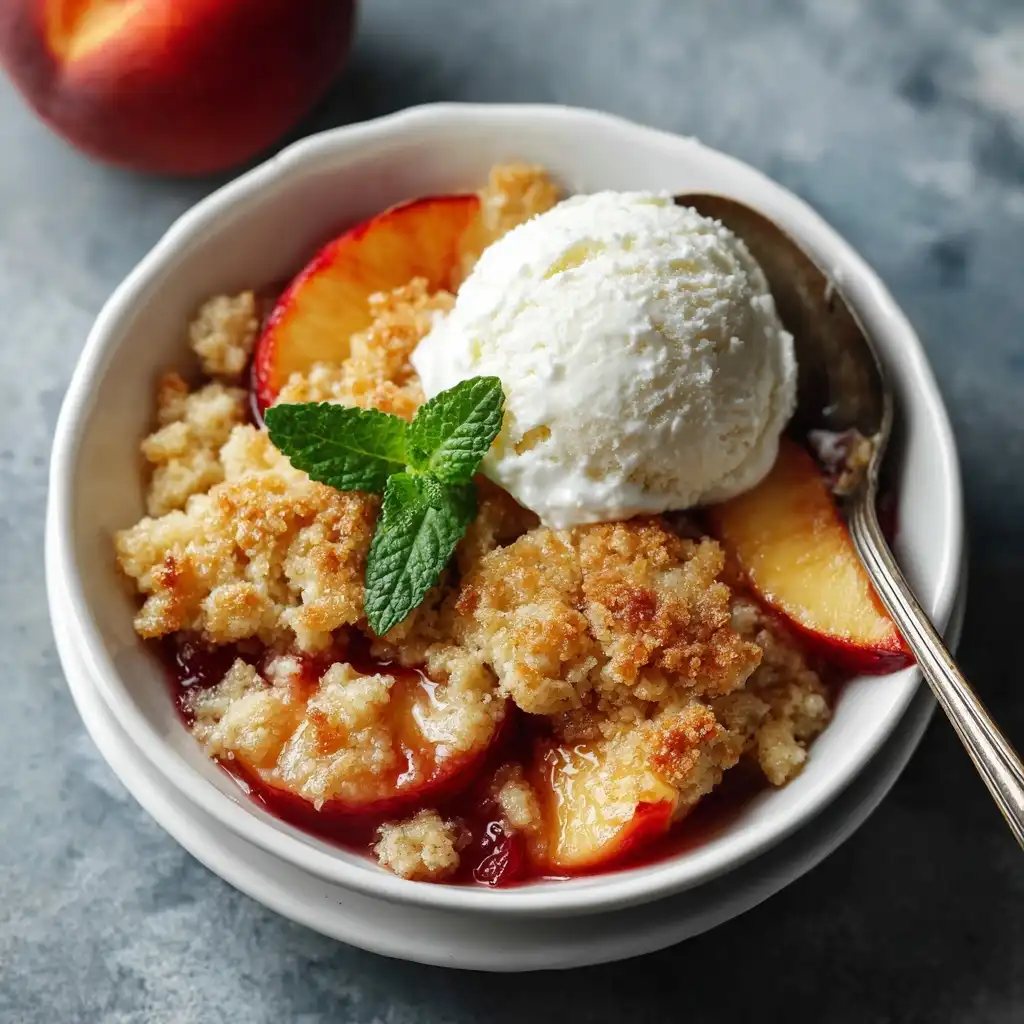
Easy Nectarine Cobbler is the quintessential summer dessert—warm, fragrant, buttery, and bursting with the sun-ripened sweetness of fresh nectarines. Unlike fussy pies or labor-intensive tarts, this cobbler celebrates simplicity without sacrificing depth of flavor or comforting texture. It’s a rustic, home-style treat that requires no special equipment, minimal prep time, and delivers maximum satisfaction with every spoonful. Whether served straight from the oven with a scoop of vanilla ice cream melting into its golden crust or enjoyed the next day slightly warmed with a drizzle of honeyed cream, Easy Nectarine Cobbler embodies the joyful ease of seasonal cooking—effortless elegance on a plate.
The History
Cobbler’s roots stretch back to 18th-century England, where early versions—known as “cobs” or “cobblers”—were essentially fruit-filled dumplings baked under a crust of biscuit-like dough. When British settlers brought the concept to colonial America, regional adaptations flourished: in the South, cobblers evolved into fruit-based desserts topped with dropped batter or rolled biscuit dough; in New England, they leaned toward pie-like crusts; and in the Midwest, oat or crumble toppings gained popularity. The word “cobbler” itself likely derives from the visual resemblance of the uneven, “cobbled” surface of the baked topping—rough-hewn and charmingly irregular. Nectarines, though often mistaken for a cross between peaches and plums, are actually a natural smooth-skinned variant of the peach (Prunus persica), cultivated for over 2,000 years in China before arriving in Europe and later North America. Their introduction into American cobblers surged in the mid-20th century as orchard cultivation expanded across California’s Central Valley—the nation’s largest nectarine producer—making this stone fruit an accessible, beloved staple for warm-weather desserts. Today, Easy Nectarine Cobbler stands as both a tribute to culinary heritage and a testament to modern home cooks’ desire for approachable, ingredient-driven sweets that honor peak-season produce.
Ingredients Breakdown
Every exceptional cobbler begins with intention behind each ingredient—not just for flavor, but for function and harmony:
- Fresh Nectarines (6–7 medium, ~2¼ lbs): The star—choose firm-ripe, fragrant fruit with vibrant blush and slight give near the stem. Their high pectin content helps thicken the filling naturally, while their balanced acidity prevents cloying sweetness. Avoid overly soft or bruised fruit, which can turn mushy during baking.
- Granulated Sugar (¾ cup, plus 2 tbsp for topping): Provides structure, caramelization, and moisture control. The base amount sweetens without masking nectarine’s floral notes; extra sugar sprinkled pre-bake encourages crust browning and adds delicate crunch.
- Brown Sugar (¼ cup, light or dark): Adds molasses depth, moisture retention, and rich caramel undertones—critical for balancing tartness and enhancing the filling’s luscious syrup.
- Lemon Juice (1 tbsp freshly squeezed): Brightens flavor, preserves vibrant color, and activates pectin for optimal thickening. Bottled juice lacks nuance and can impart bitterness.
- Unsalted Butter (½ cup / 1 stick, cold and cubed): Creates flakiness and richness in the biscuit topping. Cold butter melts slowly in the oven, generating steam pockets that lift the dough and yield tender layers.
- All-Purpose Flour (1¾ cups): The structural backbone—provides gluten for cohesion without toughness when mixed minimally. For gluten-free options, see Variations.
- Baking Powder (2 tsp) & Baking Soda (¼ tsp): Dual leaveners—baking powder offers reliable lift, while baking soda (activated by brown sugar’s acidity) ensures optimal rise and neutralizes any metallic aftertaste.
- Salt (¾ tsp fine sea salt): Enhances all flavors, reduces perceived sweetness, and strengthens gluten formation for better texture.
- Heavy Cream (¾ cup, cold): Adds fat, tenderness, and luxurious mouthfeel—more stable than milk or buttermilk, yielding a richer, more cohesive biscuit. For dairy-free, see substitutions.
- Vanilla Extract (1 tsp pure): Warm, aromatic complexity—use only real vanilla; imitation extract lacks depth and can taste artificial when baked.
- Optional Additions: A pinch of ground cinnamon (¼ tsp) or cardamom (⅛ tsp) complements nectarines’ floral notes; 1 tbsp cornstarch (if fruit is very juicy) ensures glossy, spoonable syrup; a splash of amaretto or elderflower liqueur (1 tsp) adds sophisticated nuance.
Step-by-Step Recipe
Yield: 9×9-inch baking dish (serves 8–10)
Prep time: 25 minutes | Bake time: 45–50 minutes | Rest time: 20 minutes minimum
- Preheat & Prep: Position oven rack to center position. Preheat oven to 375°F (190°C). Lightly grease a 9×9-inch metal or ceramic baking dish (avoid glass for most even browning—though it works if adjusted). Line a large plate with parchment paper for biscuit dough.
- Prepare the Filling: Wash nectarines thoroughly. Slice in half around the pit, twist gently to separate, then remove pit. Cut flesh into ½-inch thick wedges (no need to peel—nectarine skin is tender and flavorful). In a large bowl, gently toss nectarine pieces with granulated sugar, brown sugar, lemon juice, and salt until evenly coated. Let sit 10 minutes to macerate and release juices.
- Make the Biscuit Topping: In a food processor fitted with a steel blade (or large mixing bowl), combine flour, baking powder, baking soda, and remaining ¼ tsp salt. Pulse (or whisk) 3 times to aerate. Add cold, cubed butter. Pulse 8–10 times in 1-second bursts until mixture resembles coarse meal with visible pea-sized butter pieces. Transfer to a bowl. Stir in cold heavy cream and vanilla with a fork until *just* combined—dough should be shaggy and moist but not wet or sticky. If too dry, add 1 tsp cream; if too wet, sprinkle in 1 tsp flour. Do not overmix—gluten development leads to toughness.
- Assemble: Pour macerated nectarines and accumulated syrup into prepared baking dish, spreading evenly. Using a ¼-cup measuring cup or cookie scoop, portion chilled biscuit dough directly over fruit in 8–10 mounds—do not flatten. Gently press edges to seal gaps (this prevents bubbling over). Sprinkle entire surface with reserved 2 tbsp granulated sugar.
- Bake: Place dish on center oven rack. Bake 45–50 minutes, rotating halfway through, until topping is deeply golden brown, crisp at edges, and springy to light touch—and fruit filling bubbles vigorously at sides (a thermometer inserted into filling should read 205–210°F for ideal thickening). If topping browns too quickly, loosely tent with foil after 30 minutes.
- Cool & Serve: Remove from oven and place on a wire rack. Let rest *at least* 20 minutes—this allows filling to set and syrup to thicken further. Serving too soon results in runny cobbler and collapsed topping. For best texture, serve warm (not hot) with accompaniments.
Tips
- Fruit Selection Matters: Use nectarines harvested at peak ripeness—check for a fragrant, honeyed aroma near the stem end and avoid green-tinged or hard fruit. Underripe nectarines lack sweetness and won’t soften properly; overripe ones disintegrate. If using store-bought out-of-season fruit, add 1 tsp cornstarch to filling to compensate for excess water.
- Butter Temperature Is Non-Negotiable: Cold butter = flaky, layered topping. Grate frozen butter on a box grater for fastest, most even incorporation—or freeze cubed butter for 15 minutes before use. Warm butter creates greasy, dense biscuits.
- Mix Like You Mean It (Gently): Overmixing develops gluten, turning tender biscuits into tough hockey pucks. Mix dough *only* until no dry flour remains. Lumps and shagginess are your friends.
- Don’t Skip the Rest: That 20-minute cool-down isn’t optional—it’s science. As the cobbler rests, residual heat continues to thicken the syrup via starch gelatinization and pectin setting. Cutting in too soon releases steam and liquefies the filling.
- Maximize Browning: For an ultra-crisp, caramelized top, brush chilled dough mounds lightly with heavy cream or whole milk before sugar sprinkling—or add 1 tsp turbinado sugar for sparkle and crunch.
- Oven Thermometer Check: Many ovens run hot or cold. Use an inexpensive oven thermometer to verify accuracy—baking at 350°F instead of 375°F yields soggy topping; 400°F risks burnt edges and undercooked centers.
- Double Batch Smartly: To bake two cobblers simultaneously, rotate pans top-to-bottom and front-to-back every 15 minutes—and increase total bake time by 5–7 minutes. Avoid crowding oven space.
- Leftover Magic: Store cooled cobbler covered at room temperature up to 2 days or refrigerated up to 5 days. Reheat individual portions in toaster oven or air fryer (350°F, 8–10 min) for crisp topping revival—microwaving makes biscuits rubbery.
Variations and Customizations
This recipe is gloriously adaptable—here’s how to make it your own while preserving its soul:
- Gluten-Free Cobbler: Substitute 1¾ cups certified gluten-free all-purpose flour blend (with xanthan gum included, like Bob’s Red Mill 1-to-1 or King Arthur Measure for Measure). Add ½ tsp xanthan gum if blend doesn’t contain it. Ensure baking powder is GF-certified.
- Dairy-Free/Vegan Version: Replace butter with ½ cup cold refined coconut oil or vegan butter (Miyoko’s or Earth Balance); swap heavy cream for full-fat canned coconut milk (chilled overnight, use only thick cream layer). Use maple syrup instead of brown sugar for depth. Note: topping will be slightly denser but still delicious.
- Nectarine-Peach Fusion: Swap 2 nectarines for ripe yellow peaches—adds floral brightness and subtle tang. Reduce lemon juice to 2 tsp to avoid sharpness.
- Spiced Stone Fruit: Add ¼ tsp ground ginger + ⅛ tsp nutmeg to dry ingredients; stir 1 tsp orange zest into filling. Pairs beautifully with bourbon-infused whipped cream.
- Herb-Infused Elegance: Toss nectarines with 1 tsp finely chopped fresh basil or thyme before adding sugars—herbs bloom in heat, lending unexpected sophistication.
- Crumb Topping Alternative: Skip biscuit dough. Combine 1 cup flour, ½ cup oats, ½ cup brown sugar, ½ tsp cinnamon, ¼ tsp salt, and 6 tbsp cold butter. Cut in until crumbly. Sprinkle over fruit pre-bake.
- Mini Individual Cobblers: Divide filling among 6–8 lightly greased ramekins (6 oz each). Portion dough, top, and bake at 375°F for 28–32 minutes. Perfect for portion control and elegant presentation.
- Breakfast Cobbler: Reduce sugar to ½ cup total. Add 1 beaten egg to cream mixture for richer biscuits. Serve warm with Greek yogurt instead of ice cream.
Health Considerations and Nutritional Value
While traditionally viewed as indulgent, Easy Nectarine Cobbler offers meaningful nutritional benefits when approached mindfully—especially when highlighting whole-food ingredients and moderating added sugars:
- Nectarines: Nature’s Powerhouse: One medium nectarine (150g) provides ~60 calories, 1.5g fiber (6% DV), 10% DV vitamin C (immune support & collagen synthesis), 8% DV potassium (blood pressure regulation), plus antioxidants like chlorogenic acid (anti-inflammatory) and beta-carotene (vision health). Their skin contains nearly 3x more polyphenols than flesh—so leave it on!
- Sugar Awareness: This recipe uses 1 cup total sugar (¾ cup in filling + 2 tbsp topping)—significantly less than many bakery cobblers (often 1¼–1½ cups). Natural fructose from fruit offsets glycemic impact; pairing with protein/fat (ice cream, whipped cream, nuts) further slows sugar absorption.
- Whole Grain Option: Substituting ½ cup of the all-purpose flour with white whole wheat flour adds 2g extra fiber per serving and B-vitamins without compromising tenderness.
- Fat Profile: Butter contributes saturated fat—but also vital fat-soluble vitamins (A, D, E, K) and butyrate (gut-health supporting short-chain fatty acid). For heart-health focus, replace half the butter with avocado oil in the topping (though texture shifts slightly).
- Portion Control Guidance: A standard serving (⅛ of 9×9 dish ≈ 1 cup) contains ~320–360 calories, 55g carbs (22g natural sugar), 5g protein, 12g fat (7g sat), 3g fiber. Pair with ½ cup low-fat Greek yogurt (+12g protein) or a small handful of almonds (+6g healthy fat, 3g fiber) to balance macros.
- Dietary Notes: Naturally cholesterol-free if made vegan; nut-free and soy-free as written; easily adapted for low-FODMAP (use lactose-free cream, omit brown sugar or substitute maple syrup in moderation). Always consult a registered dietitian for personalized medical nutrition therapy.
Ingredients
- 6–7 medium ripe nectarines (about 2¼ lbs), washed, pitted, and sliced ½-inch thick (skin on)
- ¾ cup granulated sugar, divided
- ¼ cup light or dark brown sugar
- 1 tablespoon freshly squeezed lemon juice
- ¾ teaspoon fine sea salt, divided
- ½ cup (1 stick) unsalted butter, cold and cubed
- 1¾ cups all-purpose flour
- 2 teaspoons baking powder
- ¼ teaspoon baking soda
- ¾ cup cold heavy cream
- 1 teaspoon pure vanilla extract
Directions
- Preheat oven to 375°F (190°C). Grease a 9×9-inch baking dish.
- In a large bowl, gently toss nectarines with ½ cup granulated sugar, brown sugar, lemon juice, and ½ tsp salt. Let sit 10 minutes.
- In a food processor (or bowl), pulse flour, baking powder, baking soda, and remaining ¼ tsp salt. Add cold butter; pulse until pea-sized crumbs form.
- Transfer to bowl; stir in heavy cream and vanilla with fork until shaggy dough forms—do not overmix.
- Pour fruit mixture (including juices) into baking dish. Drop dough by ¼-cup portions over fruit. Gently press edges to seal. Sprinkle with remaining ¼ cup granulated sugar.
- Bake 45–50 minutes until topping is deep golden and filling bubbles vigorously at edges.
- Cool on wire rack at least 20 minutes before serving.
FAQ
- Can I use canned or frozen nectarines?
- Yes—with adjustments. Drain canned nectarines well (reserve syrup for glaze or drinks) and reduce added sugar by ¼ cup. For frozen, thaw completely, drain *thoroughly*, and add 1 tsp cornstarch to filling to absorb excess liquid.
- Why did my topping sink into the fruit?
- Most commonly caused by underbaking (topping didn’t set), overmixing dough (too much gluten), or fruit being too juicy/under-macerated. Ensure vigorous bubbling at edges before removing from oven—and always let rest fully.
- Can I prepare this ahead of time?
- Absolutely! Assemble up to 1 day ahead: prepare filling and refrigerate separately; make dough, shape into disk, wrap tightly, and chill. Assemble cold—bake 5–7 minutes longer. Or freeze unbaked cobbler up to 3 months—bake from frozen, adding 15–20 minutes.
- What’s the best way to reheat leftovers?
- For crispy topping: 350°F toaster oven or air fryer, 8–10 minutes. For speed: microwave individual portions 30 seconds, then finish 2 minutes in toaster oven. Never microwave covered—it steams the crust.
- My cobbler is too runny—how do I fix it?
- Next time: add 1 tsp cornstarch to filling pre-bake. For current batch: Simmer leftover syrup on stove with ½ tsp cornstarch slurry until thickened, then spoon over servings.
- Can I use other stone fruits?
- Yes! Plums (reduce sugar by 2 tbsp), apricots (add 1 tsp almond extract), or cherries (pit first, add 1 tsp kirsch) work beautifully. Adjust sugar based on fruit tartness.
- Is there a lower-sugar version?
- Reduce total sugar to ⅔ cup (use ½ cup granulated + 2 tbsp brown), add 1 tsp pure monk fruit or erythritol blend if desired, and boost flavor with 1 tsp orange zest + extra ½ tsp vanilla.
- What’s the difference between cobbler, crisp, and crumble?
- Cobbler has a biscuit or pie-crust topping; crisp features an oat-and-butter streusel; crumble is similar but typically uses flour instead of oats and omits oats. All share fruit bases—but textures differ dramatically.
Summary
Easy Nectarine Cobbler is a timeless, forgiving dessert that transforms humble, seasonal fruit into a golden-crusted celebration of summer—requiring no fancy skills, just ripe nectarines, pantry staples, and mindful technique. With its tender, buttery biscuit crown and luxuriously thick, floral-sweet filling, it’s equally at home on a rustic farmhouse table or a polished dinner party spread—always warm, always welcoming, and endlessly customizable to suit dietary needs and creative whims.
Whether you’re a novice baker gaining confidence or a seasoned cook seeking nostalgic comfort, this cobbler delivers consistent magic: minimal effort, maximum reward, and the profound satisfaction of transforming simple ingredients into something deeply nourishing—body and soul alike.